
- LOGIN
- MemberShip
- 2026-04-24 02:52:28

- Company
- Will CDK4/6 inhibitors be reimbursed for early breast cancer?
- by Son, Hyung Min Apr 22, 2026 08:53am
- Despite significant improvements in survival rates for early-stage breast cancer patients, concerns have been raised about how treatment access to reduce long-term recurrence risk remains limited.In particular, as the clinical value of CDK4/6 inhibitors has been proven in patients at high risk of recurrence, the treatment strategy is clearly shifting beyond simple treatment toward recurrence prevention, yet it has become increasingly clear that reimbursement is failing to keep pace with these developments.On the 21st, Rep. Mi-hwa Seo of the People Power Party hosted a policy forum titled “The Era of 300,000 Female Breast Cancer Patients: Current Status and Challenges in Recurrence Management,” and intensively discussed recurrence management and treatment access issues for patients with early breast cancer.On the 21st, experts gathered at the National Assembly Members’ Office Building to discuss measures for managing recurrence in early breast cancer.Early-stage breast cancer refers to a condition where cancer cells have not spread beyond the axillary lymph nodes, and accounts for approximately 95% of all breast cancer patients.The 5-year survival rate is high, at 96.6% for Stage 1 and 91.8% for Stage 2, but the problem raised is that, regardless of survival rates, the risk of recurrence remains considerable. In particular, for hormone receptor-positive (HR+) patients, recurrence can continue beyond 5 years after diagnosis and even up to 20 years, underscoring the need for long-term management.Over the past 20 years, treatment strategies for early breast cancer have centered on surgery, radiation therapy, chemotherapy, and endocrine therapy. However, limitations regarding the inability to sufficiently reduce recurrence rates have been consistently raised.Professor Hyun-jae Yoo, Sogang UniversityIn response, a research team led by Professor Hyun-jae Yoo at Sogang University conducted a study to quantitatively analyze the socioeconomic burden on early-stage breast cancer patients.The study was conducted using a combination of surveys and expert advisory interviews with 150 patients aged 19 to 60 who had stage 1 to 3 breast cancer.The analysis revealed that patients who experienced recurrence incurred approximately KRW 29 million more in total economic losses compared to those who did not.In particular, indirect medical costs were found to increase by more than KRW 13.3 million on average, and the burden of indirect costs in recurrent patients was confirmed to be about 1.8 times higher.Professor Yoo explained, “Breast cancer is not a disease that simply ends with treatment, but a disease that affects overall quality of life and social roles after treatment. A treatment strategy that prevents recurrence has important meaning not only for the individual but also from the perspective of social cost.”Need for treatment centered on high-risk recurrence groups… “unmet need remains”Given that the risk of recurrence does not completely disappear even in early breast cancer, there is a growing consensus that more aggressive treatment strategies are needed, particularly for high-risk groups.In particular, it has been pointed out that in patient groups with a high risk of recurrence due to lymph node metastasis or tumor size, such as some late Stage 2 or Stage 3 patients, existing treatment alone has limitations.In this field, CDK4/6 inhibitor-based therapies are emerging as a new alternative. Novartis’ ‘Kisqali (ribociclib)’ and Lilly’s ‘Verzenio (abemaciclib)’ have demonstrated their efficacy in reducing the risk of recurrence through clinical trials.Professor Ji-hyun Kim, Seoul National University Bundang HospitalProfessor Ji-hyun Kim of Seoul National University Bundang Hospital emphasized, “CDK4/6 inhibitors are treatments whose efficacy in reducing recurrence and clinical utility have already been confirmed through large-scale clinical trials. They should be considered as a new standard of care for high-risk patients with early-stage breast cancer.”The problem is that these treatments are not being fully utilized in actual clinical practice.Although CDK4/6 inhibitors have been approved in Korea, reimbursement is not applied in adjuvant therapy for early breast cancer, forcing patients to bear the full cost of these expensive drugs.In contrast, Verzenio is already covered by national health insurance in major countries such as the United Kingdom, Australia, Canada, France, Germany, Italy, China, and Singapore, ensuring access to treatment.Professor Ji-hyun Kim added, “From the perspective of an individual patient, one would want to try every possible treatment, but in terms of national finances, there is the difficulty of balancing resources across various diseases. There needs to be a social discussion on how to rate the value of therapies that prevent recurrence in advance.”“Financial resources and equity are variables”… attention on government’s judgment over reimbursement criteriaIn the panel discussion that followed, policy issues surrounding access to new drugs for early breast cancer were intensively discussed.Professor Seong-bae Kim of Asan Medical Center in Seoul, who moderated the discussion, emphasized, “While triple-negative breast cancer is generally known to be more aggressive, some hormone receptor-positive breast cancers also present a higher risk of recurrence. It is important to identify high-risk groups and apply appropriate treatments.”He added, “The efficacy of CDK4/6 inhibitors has already been clinically proven. The issue lies in reaching a social consensus on how to apply this in actual clinical practice and which patient groups should be prioritized within limited financial resources.”Professor In-Hae Park of Korea University Guro Hospital said, “Even in high-risk patients, there are cases in which it is difficult to actively explain or recommend treatment because of the economic burden. The reality itself, in which treatment strategy must be adjusted in consideration of the patient’s financial situation, places a burden on medical staff as well.”The panelists also pointed out that the threshold for reimbursement has risen as the weight of financial impact assessments has increased in recent Cancer Disease Deliberation Committee meetings.A view of the panel discussionYoon-ho Eo, a reporter for Daily Pharm, stated, “Currently, the results of reimbursement reviews are structured such that only the decision to approve or deny coverage is disclosed, lacking transparency regarding the basis for the judgment. There is a need to strengthen the transparency and flexibility of the evaluation process.”The government maintains a cautious stance but intends to continue related discussions.Min-jung Kim, an official at the Division of Pharmaceutical Benefits at the Ministry of Health and Welfare, stated, “Reimbursement applications for Verzenio and Kisqali have been submitted, and discussions are expected to proceed in the Cancer Disease Deliberation Committee within the first half of the year. We plan to conduct a fair review by comprehensively considering clinical utility, patient access, and the impact on National Health Insurance finances.”She continued, “In line with the recent trend toward strengthening coverage for anticancer drugs, the scope of reimbursement has been continuously expanding. Since equity must be maintained within limited financial resources, careful review of the patient group setting and the scope of application is necessary.”The Health Insurance Review and Assessment Service presented a similar position.Ae-ran Park, Director of the Pharmaceutical Benefits Standards Division at HIRA, explained, “We are fully aware of the clinical necessity and field demands for preventing early recurrence of breast cancer. The demand to apply follow-up treatments at an early stage is a trend common not only in breast cancer but across various cancer types.”Park added, “While expanding treatment accessibility based on clinical utility is important, we must also consider the balance with the sustainability of the National Health Insurance finances. Setting the criteria for which patient groups should be prioritized is the key task.”
- Policy
- Xtandi generics signal June showdown as patent expiry nears
- by Lee, Tak-Sun Apr 21, 2026 07:33am
- Astellas’ newly launched ‘Xtandi Tab’GL Pharma has thrown its hat into the ring for the generic market of Astellas Pharma Korea’s blockbuster prostate cancer treatment, ‘Xtandi (enzalutamide).’ With the compound patent set to expire in June, domestic pharmaceutical companies are securing approvals one after another, and fierce competition is expected in the second half of the year to gain market leadership.GL Pharma’s ‘Proenza’ approved… expands generic lineupAccording to industry sources on the 20th, the Ministry of Food and Drug Safety (MFDS) granted marketing authorization for GL Pharma’s ‘Proenza Soft Cap 40mg.’ This product is manufactured under a contract manufacturing (CMO) arrangement with Cosmax Pharma.With this approval, the number of domestic companies holding approvals for Xtandi generics has increased to include GL Pharma, joining existing holders Alvogen Korea (Anamide), Daewon Pharmaceutical (Enzadex), Hanall Biopharma (Enzaluta), Menarini Korea (Enzal-X), and Hanmi Pharmaceutical (Enzaron).In particular, following Hanmi Pharmaceutical’s approval last month for the first domestically manufactured product, GL Pharma has also secured a domestically produced product, improving supply stability.AI-generated imageFormulation patent through 2033 also avoided… launch barriers eliminatedThe patent barriers, which had been the biggest obstacle for generic companies, have in effect all been removed. Xtandi had been protected mainly by two patents.The compound patent (diaryl hydantoin compound) expires on June 27, 2026. Generic drugs are expected to enter the market starting at this point.The formulation patent (enzalutamide formulation) was scheduled to expire in September 2033. However, five domestic companies, including GL Pharma, Hanmi Pharmaceutical, Chong Kun Dang, JW Pharmaceutical, and Alvogen Korea, recently succeeded in circumventing it by securing a favorable ruling after obtaining favorable decisions in passive scope confirmation trials.As a result, domestic companies have fully secured the legal basis to launch generics early, from June 28.Astellas’ last stand “tablet conversion”… can it defend the market?The defense strategy of the originator company, Astellas Pharma Korea, is no less formidable. Astellas moved to defend the market by abruptly listing ‘Xtandi Tab (40 mg, 80 mg)’ for reimbursement this month, immediately before generic launch, which improves ease of administration.Compared to the existing 40 mg soft capsule, the 40mg tablet version is about half the size, and with the addition of the 80 mg high-dose product, the daily dosage has also been reduced. Consequently, the medication burden of patients who had to take four 40 mg capsules per day is expected to be significantly eased.The price for the 40mg product remains unchanged at KRW 14,167 per tablet, the same as the existing soft capsules, while the 80mg product is priced at KRW 21,251 per tablet. Notably, for the 80mg product, the monthly medication cost (based on 56 tablets) is approximately 25% lower than that of the existing 40mg capsules (112 capsules), which is expected to reduce the financial burden on patients.Astellas’ strategy is to use the tablet formulation to penetrate the generic drug market, which currently consists solely of capsule formulations.According to pharmaceutical market research firm UBIST, Xtandi recorded KRW 38 billion in sales last year, up 26% from KRW 30.2 billion the previous year. Industry attention is focused on whether Astellas can defend the market with the new tablet product.A pharmaceutical industry source said, “With GL Pharma joining the fray, the scale of generics to be launched in line with the June compound patent expiry has grown even larger. Going forward, who secures pricing competitiveness will be one of the decisive factors.”

- Company
- Merz Aesthetics Korea successfully holds ‘Confidence To Be Conference’
- by Hwang, byoung woo Apr 21, 2026 07:33am
- Scene from the ‘Confidence To Be Conference 2026’ eventMerz Aesthetics Korea announced on the 20th that it held the “Confidence To Be Conference 2026.”The event was held on the 16th at Dongdaemun Design Plaza in Seoul under the theme “Finding the answer in being myself,” and was planned as part of the company’s global consumer ESG campaign “Confidence To Be.”The event was also based on the company’s mission, “Look Better, Feel Better, Live Better,” helping all people live with greater confidence through the journey of finding a better self.The event highlighted the correlation between medical aesthetics and confidence, drawing on data from the global study “Pillars of Confidence,” which surveyed 15,000 people across 15 countries, as well as big-data trends.Through this, the company presented expanded value that extends beyond individual physical transformation to include enhanced social confidence and improved quality of life.Experts from various fields then participated to share their experiences and philosophies of living a confident life.Strength coach Eunseo Kim emphasized the importance of self-understanding and attitude and conducted practical exercises on site, while Mickey Kim introduced his experience of career transition and mindset for change. Choreographer Monica highlighted the importance of making choices at life’s turning points and living proactively.In addition, the event addressed the importance of proper self-perception in the social media environment and presented a healthy approach to medical aesthetics, including consultations with medical professionals, long-term planning, and the sharing of procedure history.Su Yeon Yu, General Manager of Merz Aesthetics Korea, said, “Medical aesthetics is not about standardized beauty, but a process of enhancing quality of life through confidence that is true to oneself. We will continue to expand our positive impact.”

- Company
- "Companion diagnostics…ovarian cancer diagnostic paradigm shift"
- by Hwang, byoung woo Apr 21, 2026 07:33am
- A shift in the treatment paradigm for platinum-resistant ovarian cancer, a field with historically limited options, is anticipated following the arrival of antibody-drug conjugate (ADC) therapies.Notably, the introduction of new treatments has highlighted the growing importance of companion diagnostics in determining 'which patients should receive the therapy?'Daily Pharm met with Min Ae Baek, Manager of the Pathology Diagnostics Division at Roche Diagnostics Korea, to discuss the significance of companion diagnostics in ovarian cancer, practical clinical application, and the substantial value to patients.Platinum-resistant ovarian cancer, a disease without alternative options…addressing treatments and diagnostics altogetherOvarian cancer is classified as a high-risk malignancy due to the difficulty of early detection and high recurrence rates. Most patients are diagnosed at advanced stages and frequently experience recurrence even after standard therapy. Platinum-resistant ovarian cancer, which recurs within six months of platinum-based chemotherapy, poses a particularly restrictive environment due to low response rates to conventional therapies and poor prognosis.Manager of the Pathology Diagnostics Division at Roche Diagnostics KoreaBaek identified the 'treatment void' as the primary unmet need in platinum-resistant ovarian cancer. Baek explained, "Reaching the platinum-resistant stage effectively leaves patients with no viable alternatives. As response rates to existing drugs decrease and life expectancy drops to approximately one year, both patients and guardians find themselves in a desperate situation," she explained.Baek said, "Most patients with ovarian cancer are diagnosed at stage 3-4, and in many cases, patients experience relapses; the majority of patients reach these stages."The recently introduced targeted therapy, Elahere (mirvetuximab soravtansine), and its companion diagnostic are viewed as pivotal elements that could alter the current treatment landscape.Baek said, "The emergence of a new option in an area where alternatives were non-existent, coupled with a test to screen for patients who can benefit from it, represents a significant evolution."Treatment success is dependent on patient selection…the significance of companion diagnosticsThe oncology paradigm is rapidly evolving. Previously, treatment relied on broad application. Currently, it is moving toward precision medicine based on specific biomarkers. In this transition, companion diagnostics function as the starting point of the treatment strategy."The core value of companion diagnostics lies in selecting the appropriate patient group, thereby simultaneously enhancing treatment efficiency and safety," Baek stated. "Identifying suitable patients through testing reduces the burden of side effects and costs associated with unnecessary treatments while increasing the efficiency of the clinical decision-making process."Baek's view is that these trajectories not only help medical professionals to make decisions but also directly impact patients.At the center of this shift is the biomarker folate receptor alpha (FRα). As a protein highly expressed on ovarian cancer cells, FRα has gained clinical utility as a target for ADC therapies. Baek explained, "Ovarian cancers require folate for proliferation and overexpress these receptors to absorb folate for proliferation. This characteristic is utilized for targeted anticancer strategies."The VENTANA FOLR1 (FOLR1-2.1) RxDx Assay plays a crucial role here. This immunohistochemistry (IHC)-based companion diagnostic assesses FRα expression in tumor tissue to identify eligible patients. Baek mentioned, "This approach is a dye-based assay, where FRα protein expression is checked, and pathologists confirm these under a microscope," and "It does not simply check for presence but evaluates expression levels against criteria to determine if treatment is applicable."The value of diagnostic-led therapy has been substantiated in clinical studies such as the Phase 2 SORAYA and Phase 3 MIRASOL trials. Baek stated, "The SORAYA study provided initial evidence showing a meaningful objective response rate for Elahere monotherapy," and added, "In the MIRASOL study, superior therapeutic effects compared to conventional chemotherapy were confirmed when treatment was applied after selecting patients with high FRα expression.Specifically, in clinical trials, Elahere has been shown to improve major clinical indicators compared to existing treatments. Significant improvements in progression-free survival and objective response rate have been reported, along with a reduction in the risk of disease progression or death.Current guidelines from the Korean Society of Gynecologic Oncology (KSGO) already recommend Elahere for FRα-positive platinum-resistant ovarian cancer with the highest level of evidence (Level I) and recommendation grade (Grade A).Domestic launch imminent in May..."Will help in deciding treatment options"In Korea, the treatment environment based on companion diagnostics is also entering the full-scale introduction stage.Both Elahere and Roche Diagnostics Korea's companion diagnostic (VENTANA FOLR1 (FOLR1-2.1) RxDx Assay) have already received approval from the Ministry of Food and Drug Safety, and clinical use is expected once test supplies begin.Baek said, "To prescribe medicines, assays must be available. Assays will be supplied in Korea starting this May," and added, "Pathological divisions in Korea already have an established platform to deliver these assays. The view is that it will be effectively implemented, considering the established diagnostics infrastructure."Baek also mentioned, "There have been continuous inquiries from the field regarding the ability to provide new treatment options to patients with platinum-resistant ovarian cancer," and conveyed, "As it is a test that already has high awareness among medical staff and has been awaited for introduction, expectations are also high from patients."As the treatment and companion diagnostic are ahead of their launch, there is an opinion in the clinical field that it is necessary to preemptively establish treatment plans by performing the FRα test during the initial diagnosis stage rather than at the stage of treatment use.Regarding this, Baek projected that if the test is conducted within the approved criteria, it could help consider future treatment options.Baek stated, "The current approval criteria allow for testing on specimens from patients diagnosed with high-grade serous epithelial ovarian cancer, fallopian tube cancer, or primary peritoneal cancer," and noted, "Checking each patient's information in advance could assist medical staff in establishing treatment plans."Ultimately, as the expansion of companion diagnostics leads beyond simple technology introduction to a change in the treatment structure, the role of Roche Diagnostics Korea is also expanding.The company is focusing on more than just supplying testing products. It is building an environment where pathology medical staff can perform tests reliably and support the smooth implementation of companion diagnostic-based treatment.Baek added, "As companion diagnostics are a critical area directly linked to treatment, it is important to ensure that patients are appropriately selected through standardized tests in a stable environment and that the results lead to treatment," and added, "We will continue to prepare the foundation so that companion diagnostics can be implemented in the medical field in line with the trend of emerging new biomarkers and treatments."
- Policy
- HER2-mutated NSCLC treatment 'Hyrnuo Tab' approved
- by Lee, Tak-Sun Apr 21, 2026 07:33am
- The Ministry of Food and Drug Safety (MFDS, Minister Yu-Kyoung Oh) announced that it has approved the imported orphan drug 'Hyrnuo Tab (sevabertinib, Bayer Korea)' on the 20th.Hyrnuo Tab is a medication used to treat patients with locally advanced or metastatic non-squamous non-small cell lung cancer (NSCLC) who have HER2 (ERBB2) tyrosine kinase domain (TKD) activating mutations and have previously received systemic therapy.HER2 (Human Epidermal Growth Factor Receptor 2) is a protein involved in the regulation of cell growth. When a mutation occurs in the HER2 TKD (Tyrosine Kinase Domain), downstream signaling pathways involved in cell proliferation and survival are excessively activated, promoting the growth and survival of cancer cells.This drug is an oral reversible tyrosine kinase inhibitor (TKI) targeting HER2, exhibiting anticancer effects by inhibiting the growth of cancer cells expressing mutated HER2.The MFDS explained that it designated Hyrnuo Tab as the 43rd product under the 'Global Innovative Product on Fast Track (GIFT) support system' and conducted an expedited review to ensure its rapid introduction into the medical field.The GIFT system is a program designed to quickly review global innovative medical products with outstanding innovation in treatments for life-threatening, serious, or rare diseases.A MFDS official stated, "We will continue to put our efforts into ensuring that treatments with sufficiently confirmed safety and efficacy are reviewed and approved promptly based on our regulatory science expertise, thereby contributing to expanding treatment opportunities for patients."
- Company
- ‘Lower and Faster’…Dyslipidemia treatment strategy evolves
- by Son, Hyung Min Apr 21, 2026 07:33am
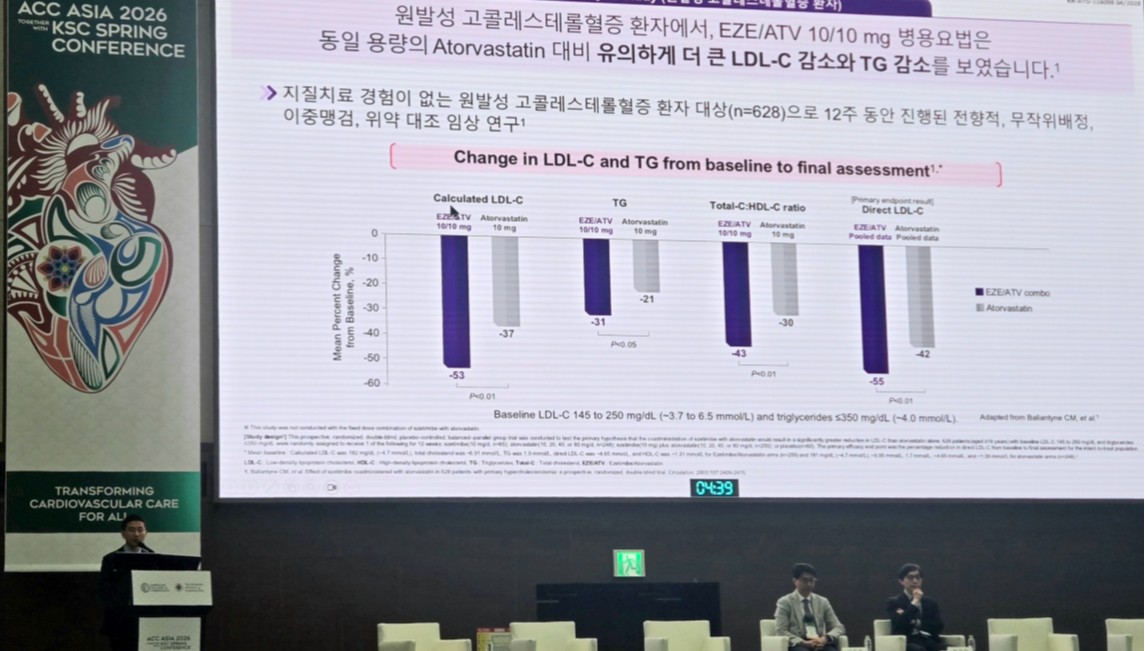
- Beyond the question of “how low to lower” LDL cholesterol, “how quickly to reach the target level” is emerging as a key variable in the treatment of dyslipidemia.As the target has been tightened to below 55 mg/dL, an approach aimed at reaching the goal quickly through initial combination therapy is emerging as an alternative.According to industry sources on the 21st, treatment strategies for dyslipidemia based on early combination therapy were presented as a major topic at the ACC Asia 2026 Together With KSC Spring Conference held recently in Gyeongju.Cardiovascular disease is one of the major causes of death in Korea, and dyslipidemia is considered a representative risk factor that can be corrected through treatment.Nevertheless, the 30-day and 1-year mortality rates of acute myocardial infarction patients in Korea still stand at approximately 9% and 16%, respectively, indicating that existing treatment strategies alone have not been sufficient to adequately reduce early mortality risk. This, together with the fact that the LDL cholesterol target attainment rate in very high-risk patients remains limited, suggests the need for a more aggressive treatment approach.Against this backdrop, the need for a combination therapy that can overcome the limitations of statin monotherapy has been consistently raised. Notably, the IMPROVE-IT study reported that adding ezetimibe to statins resulted in an additional approximately 24% reduction in LDL-cholesterol, along with a 24% and 32% reduction in the risk of myocardial infarction and ischemic stroke, respectively.With long-term safety and efficacy subsequently confirmed, ezetimibe has become established in major guidelines as a preferred combination and second-line treatment option.Professor Jin Wi of the Division of Cardiology at Gachon University Gil Medical Center emphasized the importance of statin + ezetimibe combination therapy at the ACC Asia 2026 Together With KSC Spring Conference.Professor Jin Wi of the Division of Cardiology at Gachon University Gil Medical Center said, “Dyslipidemia treatment is shifting from a high-intensity statin-centered approach to a more aggressive cholesterol-lowering strategy. It is important to reach LDL cholesterol targets quickly through early combination therapy.”In particular, he emphasized the importance of dyslipidemia management from a CKM (Cardio-Kidney-Metabolic) perspective, where cardiovascular, kidney, and metabolic diseases are interconnected, saying, “In these patients especially, LDL cholesterol should be controlled aggressively at an early stage.”He added, “Atorvastatin can be used in chronic kidney disease patients without dose adjustment, which gives it high clinical utility.”Professor Suk Min Seo, Division of Cardiology at Eunpyeong St. Mary’s Hospital, also noted, “In actual clinical practice, it is difficult to fully implement stepwise therapy due to limitations in patient follow-up. Applying high-intensity statin and ezetimibe combination therapy from the outset is a realistic strategy in terms of achieving the target within a short period and managing risk.”At the session that day, the ezetimibe/atorvastatin combination product ‘Atozet’ was also introduced as one of the initial combination therapy options.Beyond ‘lower’ to ‘faster’… guidelines and clinical evidence alignRecent guidelines are demanding changes not only in treatment goals but also in the treatment approach itself.The 2025 European Society of Cardiology / European Atherosclerosis Society (ESC/EAS) guidelines presented the LDL cholesterol goal for patients with atherosclerotic cardiovascular disease (ASCVD) as below 55 mg/dL and at least a 50% reduction from baseline, and in some very high-risk groups, recommended below 40 mg/dL.Furthermore, for treatment-naïve ACS patients, the guidelines explicitly recommend considering combination therapy with high-intensity statins and ezetimibe from the outset, emphasizing aggressive intervention at the start of treatment.The 2026 American College of Cardiology / American Heart Association (ACC/AHA) guidelines likewise presented an LDL cholesterol goal of below 55 mg/dL for very high-risk patients in secondary prevention, and recommend early addition of non-statin agents when the target is difficult to achieve with statin monotherapy alone. Accordingly, the treatment paradigm appears to be shifting from the existing stepwise approach to an early combination-centered strategy.Professor Suk Min Seo, Division of Cardiology at Eunpyeong St. Mary’s Hospital, presenting at the ACC Asia 2026 Together With KSC Spring ConferenceThis shift is supported by clinical research. The Ez-PAVE trial was a study designed to verify the clinical validity of lowering the LDL cholesterol target from the conventional 70 mg/dL to 55 mg/dL.In this study, which enrolled 3,048 Korean ASCVD patients, the group targeting an LDL-cholesterol level below 55 mg/dL achieved a statistically significant reduction of approximately 33% in major adverse cardiovascular events (MACE) over three years compared to the group targeting below 70 mg/dL. This suggests that a strategy of controlling LDL cholesterol to a lower level can lead not only to numerical improvement but also to an actual reduction in clinical events.Furthermore, the BETTER TRIAL study showed that early combination therapy resulted in significant improvements in both the magnitude of LDL-cholesterol reduction and the rate of target achievement compared to monotherapy. In this study of Korean patients with very high-risk ASCVD, early combination therapy with ezetimibe and atorvastatin, administered before reaching the maximum statin dose, demonstrated significant improvements in both the magnitude of LDL-cholesterol reduction and the rate of target achievement compared to monotherapy.In particular, the rate of achieving LDL-cholesterol levels below 55 mg/dL was 46.2% versus 9.0% at 6 weeks and 55.0% versus 15.4% at 12 weeks, clearly demonstrating the efficacy of the early combination strategy.Ultimately, the treatment of dyslipidemia is expanding beyond the question of “how low to lower” to include “how quickly to achieve” the target level. Considering changes in guidelines and clinical evidence, a strategy of applying aggressive combination therapy from the outset is expected to emerge as a key factor in improving patient outcomes.

- Company
- Amgen’s BiTE platform to become a pillar of solid tumor strategy
- by Son, Hyung Min Apr 20, 2026 04:58pm
- Bispecific antibody-based immuno-oncology platforms are expanding beyond hematologic malignancies into solid tumors, emerging as a new axis of treatment strategy transformation.Amgen is rapidly expanding its position as a next-generation immuno-oncology strategy by broadening the application scope of its ‘BiTE (Bispecific T-cell Engager)’ technology based on a research and development system that combines genetics and artificial intelligence (AI).Meejin Cho, Hematology-Oncology TA Lead, Medical Affairs, Amgen KoreaOn the 17th, Amgen Korea held a media session at its Seoul headquarters under the theme “AMGEN INNOVATION TALK BiTE – Innovation Driving Changes in Patient Treatment,” and unveiled its R&D strategy and direction for BiTE platform expansion.Under its mission of “To Serve Patients,” Amgen has been developing treatment options in areas of serious diseases such as cancer, cardiovascular disease, inflammation, and rare diseases. Recently, the company has been focusing on simultaneously enhancing the precision and speed of new drug development by integrating AI technology based on its understanding of human genetics and disease biology.The R&D strategy is structured around three pillars: ▲identifying the root causes of diseases and discovering new targets, ▲developing diverse treatment modalities, and ▲innovating clinical trial design.These strategies are being implemented in actual research processes. Amgen uses large-scale genetic data accumulated through its subsidiary deCODE Genetics to analyze disease causes and treatment responses with high precision. In addition, it applies the AI platform ‘Freyja,’ developed in collaboration with NVIDIA, to predict the probability of success of candidate substances in advance, thereby improving development efficiency.The use of AI is also expanding in the clinical stage. By analyzing real-world patient data through its proprietary machine learning model ‘ATOMIC’ and identifying institutions with a high likelihood of participating in clinical trials, the company claims to have increased patient recruitment speed by approximately threefold compared to previous methods. This directly contributes to shortening the drug development timeline and improving patient access.On this foundation, Amgen’s core platform is BiTE. BiTE is a bispecific antibody-based immuno-oncology platform that enables a patient’s immune T cells to directly recognize and attack cancer cells.Cancer cells evade immune surveillance through various mechanisms. While existing immune checkpoint inhibitors restore T-cell activity by blocking the PD-1/PD-L1 binding, BiTE represents a more advanced approach.In some cancers, cells evade T-cell recognition by reducing MHC class I expression, but BiTE bypasses this limitation. Its structure allows it to bind simultaneously to the T-cell’s CD3 and the target antigen on the cancer cell, thereby inducing immune cells to directly attack cancer cells without relying on the TCR-MHC class I recognition process.In other words, unlike previous approaches that only activated immune responses, BiTE physically connects T cells and cancer cells, inducing immediate cell death.Based on these mechanistic strengths, BiTE is expanding its application across various cancer types and has already proven its clinical value in hematologic malignancies.‘Blincyto (blinatumomab),’ a treatment for acute lymphoblastic leukemia (ALL), induces anti-cancer effects by linking CD19-positive B cells and T cells and has demonstrated improved survival compared to existing treatments. Based on this evidence, it is recommended as first-line consolidation therapy in the NCCN guidelines.Building on this success, Amgen is expanding the application of BiTE technology to solid tumors. A prime example is “Imdelltra (tarlatamab),” a treatment for extensive-stage small cell lung cancer.Small-cell lung cancer is a disease with rapid progression and high recurrence rates, representing an area of significant unmet medical need. Imdelltra is a BiTE-based therapy that targets DLL3 to induce T cells to directly attack cancer cells.Clinical results have also demonstrated meaningful outcomes. In patients whose disease progressed after receiving at least two prior treatments, including platinum-based chemotherapy, Imdelltra achieved an objective response rate of approximately 40% and a median overall survival (mOS) of 14.3 months. In the Asian patient population, this was extended to 19 months.Based on these data, Imdelltra was approved in the United States in 2024 and recommended as a subsequent therapy (Category 1) in NCCN guidelines. In Korea, it has been designated as a Global Innovative product on Fast Track (GIFT) and approved, with reimbursement procedures currently underway.The emergence of Imdelltra is evaluated as a turning point in small cell lung cancer treatment, which has seen little change over the past 30 years.Meejin Cho, Hematology-Oncology TA Lead at Amgen Korea, explained, “BiTE is particularly effective in diseases with clear target antigens and rapid progression. Expanding from ALL to small cell lung cancer, which has a clear target, DLL3, is an extension of this strategy.”She added, “Among our current pipeline, we view prostate cancer as the area closest to commercialization. We will continue to expand our scope of application, focusing on cancer types with high unmet medical needs.”
- Company
- GE HealthCare rebounded with 300B won sales last year
- by Hwang, byoung woo Apr 20, 2026 04:58pm
- GE HealthCare, which is pushing for an "Integrated Precision Healthcare" that combines hardware with digital solutions, successfully led a sales rebound last year.Following the medical-government conflict that hit the industry in 2024, the expansion of communication with hospitals and clinics in South Korea via digital platforms is cited as a key factor in improving performance.After the 2024 medical-government crisis…V-shaped rebound in one year According to recently released audit reports, GE HealthCare Korea's sales in 2025 reached KRW 317.1 billion, a 14.9% increase from KRW 275.8 billion the previous year.After sales dropped 6.8% in 2024 to KRW 295.9 billion from 2023, the company quickly surpassed the KRW 300 billion the following year, signaling a significant recovery.Operating profit also increased by 13.4%, from KRW 16.86 billion in 2024 to KRW 19.13 billion in 2025. During the same period, net income rose from KRW 14.57 billion to KRW 17.09 billion. However, the operating profit margin remained stable at around 6.0% (6.1% in 2023, 6.1% in 2024, and 6.0% in 2025), indicating steady maintenance rather than a drastic improvement in profitability.GE HealthCare Korea's 4-Year Sales & Operating Profits: GE HealthCare Korea's sales in 2025 reached KRW 317.1 billion. Source: FSS DART, unit: KRW 100 million (Audit report re-graphed by Daily Pharm)As the medical-government conflict issues gradually resolve, the company's efforts to strengthen capabilities and improve its internal structure have been proven through these figures, suggesting a structural rebound rather than a simple recovery.In 2024, the decline in sales was largely due to a decrease in product sale, which dropped from KRW 193.8 billion to KRW 170.8 billion.In contrast, service sales increased from KRW 102.1 billion to KRW 104.9 billion during the same period, acting as a buffer while equipment sales were shaken.In 2025, both products and services rebounded simultaneously. Product sales reached KRW 203.9 billion, and service sales rose to KRW 113.2 billion.GE HealthCare Korea's Product Sales & Service Sales Ratio: GREEN-product sales, BLUE-service sales. Source: FSS DART, Unit: KRW 100 million. (Audit report re-graphed by Daily Pharm)GE HealthCare strengthens platform strategy…Expanding hospital collaborationsGE HealthCare is shifting its weight from a structure centered on equipment sales to a platform-based strategy.The core of this is the 'D3 Strategy,' which encompasses Device, Disease, and Digital. It aims to use AI to improve quality, support customized treatment, and ultimately integrate data into a cloud-based platform.Globally, GE HealthCare has obtained FDA clearance for 100 AI-enabled medical devices, setting a record for the most listings in four consecutive years.A representative technology, 'AIR Recon DL,' which offers both reduced MRI scan times and improved image quality, has been introduced to more than 20 medical institutions in Korea.SPI index displayed on the CARESCAPE CanvasAdditionally, in February, the Surgical Pleth Index (SPI), a monitoring indicator that quantifies pain responses during surgery, was listed as a "New Medical Technology." This expanded the company's presence beyond imaging into the operating room and patient monitoring sectors.The technology portfolio is shifting from simple imaging equipment to clinical decision-support tools.Consequently, partnerships with major hospitals are expanding beyond simple supply contracts into a system of "Reference Sites" and cooperative hospital networks.For example, Dongtan City Hospital was designated as an Asian regional reference site in January. Its AI Radiology Center serves as a hub where customers from Korea, ASEAN, Australia, and New Zealand can refer to operational cases.Gumi Gangdong Hospital signed an MOU for clinical cooperation and equipment operational efficiency. Daegu Miracle Women's Clinic is partnering to advance infertility treatment based on high-end ultrasound technology.These structures integrates everything from equipment supply to operational training, protocol sharing, and the expansion of clinical utilization into a single package.Yong-duck Kim, President & CEO of GE HealthCare Korea, stated, "The designation of Dongtan City Hospital as an Asian regional reference site signifies that the equipment operation and clinical environment of medical institutions in South Korea have been recognized as excellent global reference cases," and added, "GE HealthCare will continue to actively support Dongtan City Hospital in maintaining efficient and stable equipment operation and building a sustainable medical environment."
- Company
- Pfizer Korea’s dividend returns to ₩12.48 million
- by Chon, Seung-Hyun Apr 20, 2026 04:58pm
- Pfizer Korea paid a dividend of KRW 12.48 million to its parent company last year. While the company paid KRW 160 billion in dividends in 2023 and 2024 as earnings surged due to pandemic-related benefits, it returned to its “20% of preferred stock capital” dividend policy after 3 years, resulting in a dividend payout ratio of just 0.06%.According to the Financial Supervisory Service on the 18th, Pfizer Korea’s dividends paid to its parent company last year totaled KRW 12.48 million. The dividend payout ratio was 0.06%. This means that only 0.06% of last year’s net profit of KRW 19.8 billion was distributed to the parent company.Pfizer Korea’s dividend for last year was reduced by 99.98% compared to the previous year’s KRW 60.01 billion. In 2023, Pfizer Korea paid out KRW 100.012 billion in dividends. This is the first time in 3 years, since 2022, that Pfizer Korea has set its dividend at KRW 12.48 million.Pfizer Korea’s annual revenue (left) and operating profit (right) (Unit: KRW 100 million, Source: Financial Supervisory Service)Pfizer Korea’s largest shareholder is Pfizer’s Dutch subsidiary, ‘PF OFG South Korea 1 B.V.’, which holds a 99.99% stake.Pfizer Korea has maintained a unique dividend policy of keeping the annual dividend at KRW 12.48 million. From 2018 to 2022, it paid the same dividend of KRW 12.48 million for 5 consecutive years.Pfizer Korea calculated the dividend by applying a 20% dividend payout ratio to the preferred stock capital. Pfizer Korea’s total capital stock is KRW 922.92 million. Of this, common stock (172,104 shares) accounts for KRW 860.52 million, and preferred stock (12,480 shares) accounts for KRW 62.40 million. A dividend of KRW 12.48 million , 20% of the KRW 62.40 million in preferred stock capital, was set.The high dividends in 2023 and 2024 are analyzed as a result of significantly improved performance during the COVID-19 pandemic.Pfizer Korea recorded revenue of KRW 391.9 billion in 2020, which increased more than fourfold to KRW 1.694 trillion in 2021, and surged to KRW 3.2254 trillion in 2022, marking more than an eightfold increase over two years. Revenue in 2023 decreased to KRW 1.6018 trillion, about half of the previous year, but this figure is still more than four times higher than in 2020.Pfizer Korea recorded an operating loss of KRW 7.2 billion and a net loss of KRW 21.2 billion in 2020, but in 2022, operating profit and net profit reached KRW 120.1 billion and KRW 119.5 billion, respectively. In 2023, operating profit was KRW 59.2 billion and net profit was KRW 84.9 billion.Pfizer partnered with Germany’s BioNTech in March 2020, when COVID-19 began spreading globally, to develop an mRNA vaccine. The combination of BioNTech’s mRNA technology and Pfizer’s extensive global clinical experience created synergy.Pfizer successfully developed the Comirnaty vaccine with 95% efficacy in less than a year after the outbreak. It received emergency use authorization from the U.S. FDA in December 2020 and was approved in Korea in March of the following year, leading to full-scale supply through its Korean subsidiary. Pfizer also successfully developed the COVID-19 treatment Paxlovid, which the Korean government procured and used.In 2023 and 2024, annual dividends were maintained at KRW 12.48 million, but interim dividends of KRW 100 billion and KRW 60 billion were additionally paid, respectively. Dividend payout ratios reached 117.76% and 168.17% for 2023 and 2024.As performance declined after the COVID-19 pandemic phase, the company appears to have returned to its previous dividend policy. Pfizer Korea’s revenue in 2024 was KRW 783.7 billion, down 75.7% from two years prior, and operating profit decreased by 77.4% from KRW 120.1 billion to KRW 27.2 billion. Last year’s revenue and operating profit were KRW 586.1 billion and KRW 6 billion, respectively, decreasing by 25.2% and 77.9% year-on-year. Compared to 2022, revenue dropped by 81.9% and operating profit by 95.0%Over the past 20 years since 2005, Pfizer Korea has paid dividends of KRW 12.48 million based on the “20% preferred stock” rule in all but four years.In 2017, the dividend was set at KRW 79.794 billion, exceeding net profit. At the time, both common and preferred shares had a dividend rate of 660% of par value, increasing the total payout. In 2008, a dividend of KRW 190 billion was set. Despite recording a loss of KRW 600 million that year, the company set a dividend payout ratio of 3,045% relative to par value.
- Company
- 'Fruzaqla' passes the Cancer Disease Review Committee
- by Eo, Yun-Ho Apr 20, 2026 04:58pm
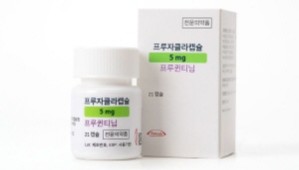
- Product photo of FruzaqlaInterest is drawn to the health insurance reimbursement listing process for 'Fruzaqla,' a new treatment for colorectal cancer.According to industry sources, Takeda Pharmaceuticals Korea's Fruzaqla (fruquintinib), a colorectal cancer treatment that selectively inhibits Vascular Endothelial Growth Factor Receptor (VEGFR) 1, 2, and 3, is currently under discussion at the subcommittee level. This drug passed the Cancer Disease Review Committee of the Health Insurance Review and Assessment Service (HIRA) last March.It is to be seen whether Fruzaqla will pass the Pharmaceutical Reimbursement Evaluation Committee, the final hurdle at the HIRA stage, this year to become a standard treatment option for colorectal cancer.Approved in South Korea in March of last year, Fruzaqla is an innovative anti-cancer drug previously designated as both an Orphan Drug and the item for the Global Innovative products on Fast Track (GIFT) program.The specific indication for this drug is: "The treatment of adult patients with metastatic colorectal cancer (mCRC) who have been previously treated with fluoropyrimidine-, oxaliplatin-, and irinotecan-based chemotherapy, an anti-VEGF therapy, and, if RAS wild-type, an anti-EGFR therapy."Currently, Fruzaqla remains a non-reimbursed drug. Takeda submitted an application for reimbursement to the health authorities last year and is currently proceeding through the listing steps. It remains to be seen if Fruzaqla will successfully secure reimbursement to allow for seamless prescribing to patients.The clinical utility of Fruzaqla was confirmed through the FRESCO and FRESCO-2 Phase 3 studies.Results from these trials demonstrated that Fruzaqla extended the median overall survival (mOS) to 9.3 months in previously treated metastatic colorectal cancer patients, a 2.7-month increase compared to the placebo group. Furthermore, it reduced the risk of death by 35%.In addition to its clinical efficacy, Fruzaqla is an oral medication taken once daily without complex dietary restrictions. This convenience is expected to have a positive impact on patients' quality of life alongside its therapeutic effects.Professor Dong-hoe Koo of the Department of Oncology at Kangbuk Samsung Hospital stated, "Fruzaqla has high drug specificity because it does not target unnecessary receptors. This allows for efficient VEGFR inhibition and continuous drug exposure. Its potential for combination therapy with existing agents is also worth evaluating in future clinical settings."Meanwhile, colorectal cancer refers to malignant tumors occurring in the colon and rectum, categorized into colon cancer or rectal cancer depending on the location. Metastatic colorectal cancer (mCRC) occurs when the tumor spreads beyond the primary site to invade other organs.As of 2022, the incidence rate of colorectal cancer in South Korea was 61.1 per 100,000 people, ranking second to thyroid cancer. Notably, the incidence rate among the younger population aged 40 and under stands at 12.9 per 100,000, the highest in the world. It poses a serious public health situation.
