
- LOGIN
- MemberShip
- 2026-07-25 13:54:19
- Company
- Invossa still mired in legal battles 7 years after license revocation
- by Kim, Jin-Gu Jul 24, 2026 08:21am
- Kolon TissueGene's knee osteoarthritis candidate TG-C failed to demonstrate improvements in pain and physical function in its U.S. Phase III trial. The clinical setback is expected to have a significant impact on the ongoing litigation involving Invossa Invossa-K Inj (Invossa), which is being pursued against Kolon TissueGene and Kolon Life Science. The two companies are currently involved in a total of 55 Invossa-related lawsuits with claims exceeding KRW 100 billion.Kolon TissueGene and Kolon Life Science in 55 damages lawsuits worth KRW 104.1 billionAccording to Korea's Financial Supervisory Service on July 23, Kolon TissueGene and Kolon Life Science are currently involved in 55 lawsuits related to Invossa—32 involving Kolon Life Science and 23 involving Kolon TissueGene. Most are claims seeking damages related to Invossa, with the total amount in dispute near KRW 104.1 billion.The plaintiffs who filed the lawsuit claim that they suffered physical and financial damages due to the change in Invossa's main cell line, which was revealed in 2019.Invossa drew global attention after receiving approval from Korea's Ministry of Food and Drug Safety (MFDS) in July 2017 as the world's first gene therapy for knee osteoarthritis. TG-C is the product's US development name.However, during the US Phase III trial in March 2019, it was discovered that one of the product's principal components, originally described as cartilage-derived cells, had in fact been replaced with kidney-derived cells that carry tumorigenic potential. The MFDS revoked Invossa's marketing authorization in April 2019, while the US Food and Drug Administration (FDA) placed the clinical trial on hold. The FDA later lifted the clinical hold in April 2020.Kolon TissueGene is currently facing 16 shareholder lawsuits seeking damages for investment losses. A total of 2,048 shareholders are participating in these cases, with claims amounting to KRW 55.5 billion. In addition, 931 patients who received Invossa have filed 6 damages lawsuits against Kolon TissueGene for KRW 12.2 billion.Kolon Life Science is also engaged in large-scale litigation with both shareholders and patients. Shareholders have filed 21 lawsuits seeking KRW 24.1 billion in damages, while 941 patients have filed 10 lawsuits seeking KRW 12.4 billion. The company is also being sued by multiple domestic insurers seeking reimbursement through subrogation claims.Industry and legal experts expect the latest US Phase III results to have little direct impact on the outcome of the damages lawsuits. However, they say the failed trial could increase the companies' financial and legal burdens when courts determine damages or during settlement negotiations.Most cases still await first-instance rulings at 7 years…Kolon loses first patient lawsuitAlthough more than 7 years have passed since the first wave of litigation began, the vast majority of cases have yet to receive even a first-instance ruling.A recent damages lawsuit filed by Invossa patients, however, resulted in the first trial court decision. On July 9, the Seoul Central District Court ruled entirely in favor of 139 patients who sued Kolon TissueGene and Kolon Life Science for damages.The court found that Invossa had been manufactured using kidney-derived cells rather than the cartilage-derived cells identified in the original marketing application, recognizing this as a “manufacturing defect.” It also concluded that marketing and selling the product while labeling it as containing cartilage-derived cells violated both the Pharmaceutical Affairs Act and the Act on Fair Labeling and Advertising. Accordingly, the court held the companies liable for both economic damages and emotional distress suffered by the patients. It rejected Kolon's argument that the defect could not have been identified based on the scientific knowledge available at the time of manufacture.Despite prevailing at trial, it will take more time for patients to receive compensation, as Kolon has appealed the ruling to the Seoul High Court. In addition, Kolon has blocked enforcement actions such as the seizure and collection of claims by patients by filing for a stay of execution.Most shareholder lawsuits likewise remain at the first instance stage. Three lawsuits against Kolon TissueGene have already concluded after plaintiffs withdrew their claims or courts recommended settlement. In 4 of the company's 16 shareholder lawsuits, however, trial courts ruled in favor of Kolon. The plaintiffs have appealed, with those cases now before the appellate court.By contrast, the dispute with Mitsubishi Tanabe Pharma over the return of upfront payments and damages arising from the terminated licensing agreement was resolved early on. In 2016, Kolon Life Science signed a technology licensing agreement with Mitsubishi Tanabe worth up to JPY 50 billion and received an upfront payment of JPY 2.5 billion. Mitsubishi Tanabe terminated the agreement in December 2017 and filed arbitration with the International Chamber of Commerce (ICC) the following April. After the changed cell line issue emerged in May 2019, it was added as an additional ground for termination. Ultimately, Kolon returned the JPY 2.5 billion upfront payment along with JPY 134 million in damages in April 2021.Administrative appeal over ‘Invossa license revocation’ still pending before Supreme CourtKolon Life Science is also pursuing administrative litigation in addition to the civil lawsuits. After the Ministry of Food and Drug Safety (MFDS) revoked Invossa's marketing authorization in 2019, the company filed an administrative lawsuit challenging the decision.Both the Seoul Administrative Court (first instance) in February 2021 and the Seoul High Court (second instance) in February 2024 ruled in favor of the MFDS. The courts found that the discrepancy between the cell component described in the marketing authorization application and the one actually detected constituted a material defect, dismissing Kolon's claims. Kolon subsequently appealed to the Supreme Court, where the case remains pending.In addition to the lawsuit over the revocation of Invossa's marketing authorization, Kolon Life Science also filed lawsuits seeking to ▲overturn the MFDS Commissioner's revocation of its clinical trial authorization, ▲ invalidate the Daejeon Regional Office of Food and Drug Safety's order to recall and dispose of Invossa, and ▲cancel the Ministry of Health and Welfare's and the Ministry of Science and ICT's orders to recover government research funding.Among these, the lawsuits challenging the revocation of the clinical trial authorization and the recall and disposal order were voluntarily withdrawn by Kolon Life Science. Meanwhile, the lawsuit seeking to overturn the government's recovery of research funding ultimately ended in Kolon's favor after reaching the Supreme Court. The company had received KRW 1.25 billion in government funding during the development of Invossa.Executives including former Chairman Woong-yeol Lee and CEO Woosok Lee were acquitted in criminal casesCriminal proceedings against Honorary Chairman Woong-yeol Lee, former CEO Lee Woo-seok, and other Kolon Life Science executives concluded with acquittals.Honorary Chairman Woong-yeol Lee and former CEO Lee Woo-seok were indicted on charges including violations of the Capital Markets Act and the Pharmaceutical Affairs Act. Prosecutors alleged that they concealed the US Food and Drug Administration's clinical hold order, attracted investment through the company's listing, manipulated the share price, and made false disclosures in violation of capital markets regulations.Both the first- and second-instance courts acquitted the defendants. The trial court found that the evidence presented was insufficient to conclude that the defendants knowingly concealed the cell line change or intentionally made false disclosures to attract investment.The appellate court (second instance) ruling was also handed down in February of this year. The Seoul High Court also upheld the acquittals. The appellate court ruled that the misunderstanding regarding the origin of the cells was recognized only after the product had already been manufactured and marketed, characterizing it as an error made during the development process rather than a deliberate cover-up. The acquittals became final after prosecutors decided not to appeal to the Supreme Court.The former head of Kolon Life Science's Bio New Drug Research Center and its former medical team leader were also acquitted by the Supreme Court. They had been charged with obstruction of official duties by fraudulent means, fraud under the Act on the Aggravated Punishment of Specific Economic Crimes, and violations of the Subsidies Management Act.The trial court ruled that there was insufficient evidence to conclude that they had interfered with the MFDS's review process or fraudulently obtained government R&D subsidies by deceiving government evaluators. However, the former medical team leader was found guilty of providing entertainment to an MFDS official and was fined KRW 10 million. The appellate court likewise found no evidence of intentional submission of false data or subsidy fraud, and the Supreme Court upheld those findings by dismissing the prosecution's appeal. The bribery conviction, however, was ultimately upheld, leaving the fine in place.
- Company
- HIV treatment evolving beyond 'once-daily'
- by Son, Hyung Min Jul 23, 2026 09:09am
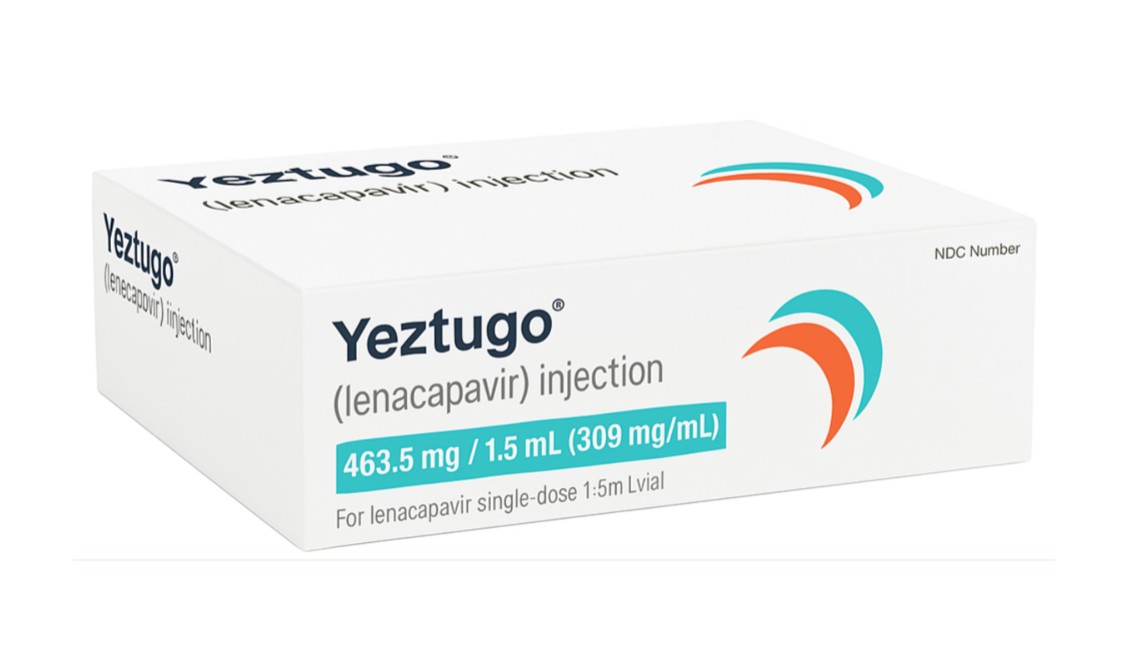
- Competition in human immunodeficiency virus (HIV) treatment development is shifting from viral suppression efficacy toward enhancing patient dosing convenience.As once-daily oral therapy has become the standard of care, clinical outcomes for once-weekly oral treatments and twice-yearly preventive injections are being disclosed, demonstrating shifts in both therapeutic and preventive strategies.According to industry sources on July 23, major global pharmaceutical companies are scheduled to present research results on long-acting treatment strategies, including once-weekly HIV therapies and twice-yearly pre-exposure prophylaxis (PrEP), at the 26th International AIDS Conference (AIDS 2026) starting on July 26 in Rio de Janeiro, Brazil.First Phase 3 success for a once-weekly oral treatmentThe most highlighted result is the Phase 3 clinical trial results of an oral combination therapy combining Gilead's lenacapavir and MSD's islatravir.Lenacapavir is a long-acting agent that inhibits viral replication by targeting the HIV capsid. Islatravir is a nucleoside reverse transcriptase translocation inhibitor (NRTTI) with a mechanism distinct from conventional reverse transcriptase inhibitors, acting to block viral replication.Gilead is expanding its long-acting strategy in both treatment and prevention based on lenacapavir. Following the launch of 'Sunlenca' as a therapeutic agent, the company applied a separate product name, 'Yeztugo,' for its preventive indication.Until now, long-acting HIV treatment has centered on injectable agents administered up to once every two months or once-daily oral regimens. To achieve injectable-level dosing convenience with an oral formulation, both companies have been developing a once-weekly oral therapy combining the long-acting agent lenacapavir with the novel-mechanism islatravir.The global Phase 3 trials, designated ISLEND-1 and ISLEND-2, evaluated the efficacy and safety of switching from conventional daily oral therapy to once-weekly treatment (lenacapavir + islatravir) in virologically suppressed people living with HIV. Both studies demonstrated non-inferiority in viral suppression efficacy at 48 weeks compared to existing daily oral regimens.ISLEND-1 is a study comparing maintenance therapy with Gilead's 'Biktarvy' (bictegravir + emtricitabine + tenofovir alafenamide) against switching to lenacapavir + islatravir following Biktarvy administration.Among 607 patients evaluated, none in the lenacapavir + islatravir arm failed to maintain viral suppression at week 48, compared with 1 patient (0.3%) in the Biktarvy maintenance arm.Similar results were confirmed in ISLEND-2, which enrolled patients maintaining various daily oral regimens. At week 48, the proportion of patients with HIV RNA at or above 50 copies/mL (the threshold for viral suppression) was 1 patient (0.3%) in the lenacapavir + islatravir group and 4 patients (1.3%) in the baseline regimen group.Safety profiles were also comparable to existing therapies. Concerns regarding decreases in lymphocyte and CD4+ T-cell counts, previously raised during high-dose development, were not observed in these trials.If approved by regulatory authorities, lenacapavir + islatravir will become the world's first once-weekly oral HIV treatment.Twice-yearly era for prevention… Expanding long-acting strategiesGilead 'Yeztugo'In addition to HIV treatment, long-acting strategies are expanding into pre-exposure prophylaxis (PrEP) to prevent infection.Gilead will also present long-term follow-up data for its twice-yearly HIV prevention injection, Yeztugo. This study evaluated post-approval long-term preventive efficacy and real-world persistence, focusing on confirming the clinical value of long-acting PrEP.n the PURPOSE 1 trial, 95% of eligible participants chose to continue with Yeztugo in the open-label extension, with zero incident HIV cases reported during the 52-week follow-up period.In PURPOSE 2 as well, 95% of participants selected Yeztugo administration, maintaining adherence rates above 90%.The twice-yearly administration regimen is recognized as a strategy that reduces pill burden and improves persistence compared to daily oral PrEP.Beyond efficacy into a 'dosing interval' competitionGSK 'Cabenuva'In addition to Gilead, GSK's injectable 'Cabenuva' (cabotegravir + rilpivirine), administered once monthly or once every two months, holds an established position in the long-acting HIV treatment market.Gilead is also pursuing the development of next-generation long-acting therapeutics, including once-weekly oral treatments, twice-yearly preventive injections, and combinations of lenacapavir with broadly neutralizing antibodies (bNAbs).MSD also recently secured FDA approval for its once-daily islatravir-based combination tablet, 'Idvynso,' while concurrently advancing the development of a once-monthly oral PrEP candidate (MK-8527) and a once-weekly oral treatment.Currently, daily oral medication is the standard of care in HIV treatment. As development progresses from long-acting injectables to once-weekly oral therapeutics, options personalized to patients' lifestyles and treatment preferences are expected to become increasingly diverse.
- Company
- Pyderin’s choice as PDRN is trending
- by Hwang, byoung woo Jul 23, 2026 09:08am
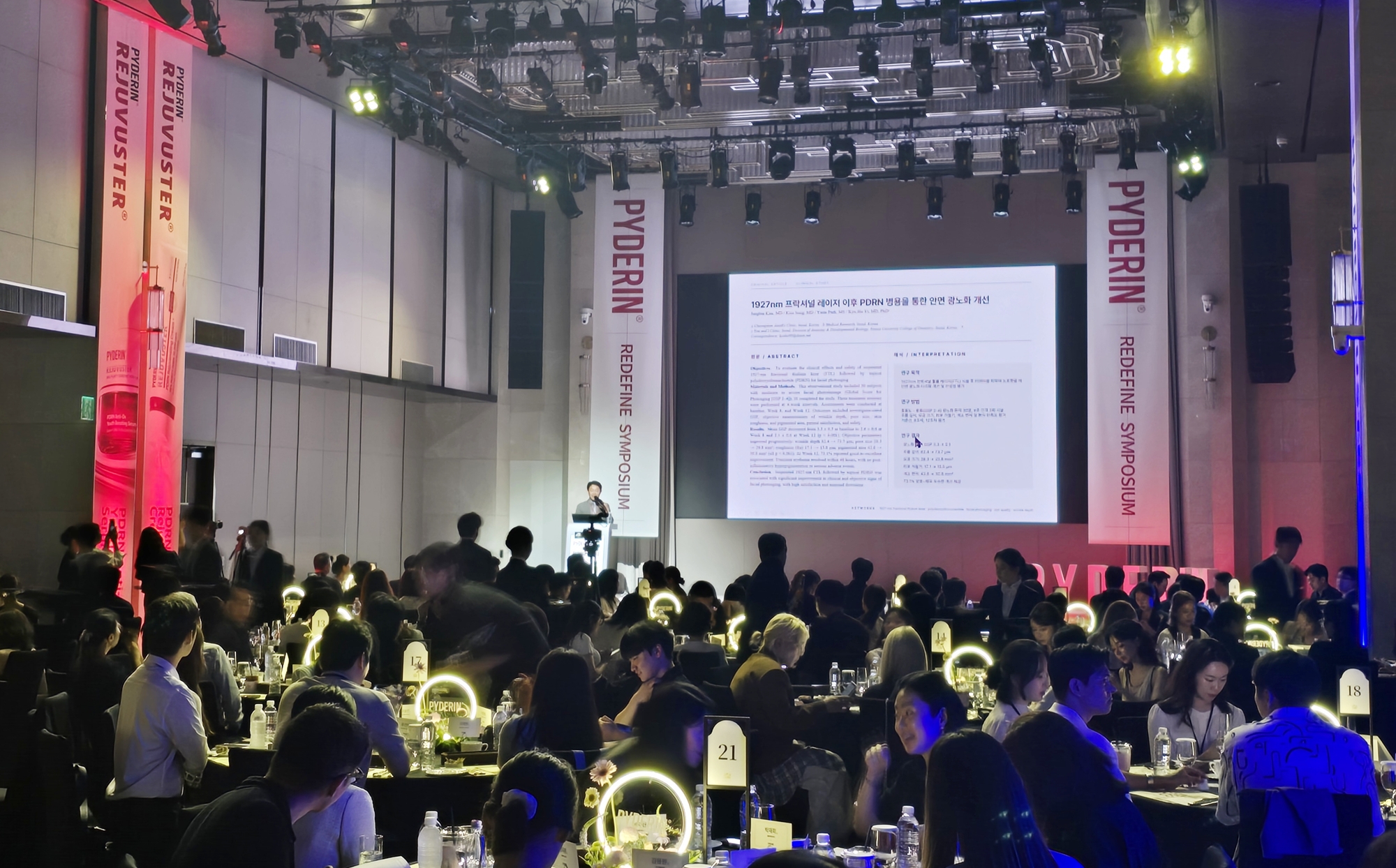
- Pyderin symposium landscapeAmid the rapid rise in PDRN products, Pyderin is demonstrating distinction in the market, highlighting its raw-material technology and studies on human application.Rather than expanding its product lineup by riding trends, the company's strategy is to establish a trustworthy benchmark for pharmacists and consumers by scientifically validating PDRN's origin, purity, molecular size, and skin-delivery capacity.On July 21, Pyderin held the 'REDEFINE SYMPOSIUM' at Josun Palace in Seoul, unveiling the PDRN raw material technology and research findings applied to its products."Not all PDRN Is created equal…raw material specifications are the starting point"First, CEO Hye Won Lim of Shebah Biotech described PDRN as a DNA-based biopolymer, emphasizing that the required characteristics of the raw material vary by application, including cosmetics, medical devices, and pharmaceuticals.PDRN is utilized across various sectors, including cosmetics, medical devices, and pharmaceuticals, based on its mechanisms of action, which involve anti-inflammation, cell and tissue regeneration, and angiogenesis. However, Lim explained that because required functionalities and applicable regulations differ by industry, it is difficult to apply a single raw material specification to all products uniformly.Cosmetics require a relatively small molecular size to facilitate skin delivery. Conversely, medical devices must also consider physical properties such as viscosity and skin retention time. This implies that technology engineered to tailor PDRN's molecular size to the product's intended use is essential.Under these circumstances, Pyderin used PDRN raw materials with molecular sizes specifically tailored for cosmetic applications. Rather than simply formulating the PDRN ingredient, the company engineered the size and specifications right from the raw material stage centering on skin delivery.During the symposium, Pyderin highlighted the differentiation of the PDRN raw materials used in its products through a symposium booth.CEO Lim stated, "PDRN for cosmetics must be designed in relatively smaller sizes for absorption, while PDRN for medical devices requires larger sizes for retention and viscosity," adding, "Technology that can adjust the raw material size according to the industry and product purpose is crucial."The raw material used in Pyderin products is also verified to confirm its biological species. After receiving the raw materials, Sheba Biotech verifies the salmonid species through genetic analysis, then purifies and adjusts the molecular size of the raw material for use in Pyderin products.CEO Lim emphasized, "We utilize genetic analysis methods to distinguish whether the raw materials actually originate from salmon," and added, "Once the origin of the raw material is confirmed, we extract the DNA and process it according to the intended use of the product."Human application studies confirm changes in skin metricsIn the subsequent presentation, Dr. Ki Su Sung of Chungdam Jeunex Clinic (Director of the Korean Society for Obesity and Aesthetic Medicine) presented the results of a human application study evaluating the feasibility of applying PDRN formulations to the skin.The research team created micro-channels in the skin using a fractional laser and then applied the PDRN formulation. Subsequently, the treatment was repeated at set intervals, and changes in skin condition were evaluated.The study went beyond simple visual assessment to measure skin-related parameters such as wrinkle depth and pigmented area. Participant satisfaction and any adverse sensations or discomfort experienced during product use were also monitored.Dr. Sung explained that major skin metrics improved after application of the PDRN formulation, and the improvement trend continued during follow-up. He added that virtually no distinct adverse reactions were reported during the study.A key feature of this study was the application of PDRN after creating skin delivery pathways via laser treatment. It explored the potential to overcome the skin-delivery limitations of large-molecule PDRN and to utilize it for post-dermatological-procedure recovery and care.Dr. Sung explained that combining dermatological procedures with PDRN formulations and applying the product repeatedly could also assist in post-procedure skin management.(From left) Hye Won Lim, CEO of Shebah Biotech; Dr. Ki Su Sung of Chungdam Jeunex Clinic; Jung Bin Kim, Chief Medical Director of Chungdam Jeunex ClinicDosage alone cannot judge topical PDRNJung Bin Kim, Chief Medical Director of Chungdam Jeunex Clinic, noted that while PDRN has emerged as a mainstream ingredient in the cosmetics market, the quality of the raw material and its skin-delivery efficacy can vary from product to product.This means that for topical PDRN to function effectively on the skin, it is not enough to simply blend the ingredient. Raw material purification, molecular size, application concentration, and delivery mechanism must all be scientifically engineered.Dr. Kim stated, "Topical PDRN is effective, but on one condition," adding that, "It must be purified and properly manufactured based on solid science. Simply producing it haphazardly will not yield results."PDRN has a relatively larger molecular size compared to general cosmetic ingredients like vitamin C. It is difficult to assume that a sufficient amount is delivered merely by applying it onto the skin surface; thus, the molecular size and formulation must be designed specifically for optimal skin absorption.Even if a product contains a high concentration of PDRN, if the actual percentage delivered into the skin is low, it is difficult to achieve the expected results. This is why product efficacy should be evaluated by examining the molecule size, concentration, and delivery system that can actually reach the skin, rather than judging by raw material content alone.Dr. Kim said, "The core criteria for selecting a good PDRN product come down to two factors: purity and molecular size," and highlighted, "Designing a smaller molecular size to enhance skin delivery and purifying the DNA raw material to high purity are where the true technological capabilities lie."Pyderin was designed by increasing the purity of the PDRN raw materials and reducing their molecular size to suit cosmetic applications. During the presentation, it was also explained that Pyderin's raw material was engineered with a smaller molecular size than conventional PDRN raw materials.In particular, Dr. Kim evaluated this raw material engineering as the key driver in enhancing the skin delivery capacity of Pyderin's PDRN formulation.He also introduced cases of Pyderin product use after dermatological laser and injection procedures. This approach manages skin dryness and irritation that may occur immediately after a procedure and supports the recovery of damaged skin through repeated applications thereafter.Accordingly, it was explained that this can serve as a rationale not only for post-procedure care at clinics but also for pharmacists to recommend appropriate products based on a consumer's skin condition and procedure history."Validation, Not Trends"... Targeting global markets on a foundation of pharmacy trustPyderin structured this symposium not merely as a product launch event but as a platform for disclosing raw material technology and research evidence.Min-Geon Kim, CEO of Pyderin, defined the brand's starting point as "validation, not trends." He explained that establishing a steadfast standard over time by confirming the product's value through scientific evidence and data was the reason for launching Pyderin.Min-Geon Kim, CEO of PyderinCommunity pharmacies were selcted for Pyderin as its initial distribution channel in November last year. According to CEO Kim, the products entered over 2,000 pharmacies nationwide within just eight months of launch.The company currently collaborates with Baekje Pharmaceutical, a domestic pharmaceutical distributor, to supply products to pharmacies.CEO Kim viewed this not merely as a count of store placements, but as the accumulated result of trust built with pharmacists who gave a new brand an opportunity.Furthermore, Pyderin disclosed that while it expanded into the Shinsegae Duty Free Myeongdong store in April this year to gauge consumer feedback, it withdrew just 45 days after entry due to concerns that expanding distribution channels might undermine the trust established with its existing pharmacy network.CEO Kim stated, "We believed that expanding into new channels should not compromise the value and trust of our existing network," adding, "Rather than focusing simply on selling more, we aim to become a brand that our partners can trust over the long term."He added, "We will build a brand that pharmacists can confidently recommend as experts, and one where domestic and international partners can grow together believing in Pyderin's values and principles. We will prove our product capabilities in the global market."Amid intensifying competition in the PDRN market, Pyderin presented the origin and specifications of its raw materials, skin delivery efficiency, and human application evidence as its key differentiators.In the future, how Pyderin specifically accumulates raw material test results and human application data, and connects them into actionable rationale for pharmacy settings, is expected to determine the success of its validation strategy.

- Company
- Government-Industry clash over price-cut base date
- by Kim, Jin-Gu Jul 23, 2026 09:08am
- With the revised drug pricing system set to take effect in just over a month, the base date used to determine the extent of price cuts for already-listed generics has emerged as a key variable.The government maintains that the 45% pricing rate should be applied based on drug prices at the time the revised system takes effect. The pharmaceutical industry, however, argues that the base should be the prices in place at the time of the across-the-board drug price cuts in 2012, given that prices have since been reduced several times afterwards.As the difference in the base date could result in additional losses amounting to hundreds of billions of won, industry anxiety is rising.September 2026 vs April 2012…Disagreement over base date used for pricing rateAccording to the industry sources on July 22, the core of the reform is to lower the generic drug pricing rate from the current 53.55% to 45%. On the surface, this appears to be a reduction of 8.55 percentage points, but the actual size of the cut can vary significantly depending on which point in time is used to determine the original price to which the rate is applied.The government plans to regard the price in place at the time of the September 2026 pricing reform as 53.55% of the original drug price and apply the new 45% pricing rate on that The pharmaceutical industry, by contrast, argues that the base should be the price in April 2012, when the 53.55% standard was first introduced, or in January 2014, when the system had become established. The industry submitted this position during the recent public comment period for the drug pricing reform proposal.Repeated price cuts made through Price-Volume Agreements and Actual Transaction Pricing…Concerns over “double cuts”The pharmaceutical industry points out that reimbursed drug prices have continued to decline under the government’s post-listing management measures, including the price-volume agreement system and actual transaction price-based reductions.It also notes that many products have had their prices cut through generic drug price reevaluations, reimbursement and clinical reevaluations, or voluntary price reductions. The industry therefore argues that using the current point in time (September 2026) as the base amounts to double regulation.An industry official said, “Drug prices have already been reduced several times under the government’s various post-listing management measures. The government’s proposal would cut these already-lowered prices once again, effectively disregarding previous reductions and imposing regulation twice.”“The 53.55% rate itself was created in conjunction with the across-the-board drug price cuts in 2012. It would therefore be reasonable to apply the 45% generic pricing rate based on prices at the time of implementation.”Plavitor price cut 7.5% over 14 Years…may incur an additional KRW 5.7 billion loss depending on the base dateThe impact of the base-date difference on projected pharmaceutical sales is clearly illustrated by Samjin Pharmaceutical’s clopidogrel antiplatelet drug ‘Platless.’ Even when the price is reduced to the same 45% level, selecting a different base date results in an additional annual loss of KRW 5.7 billion.Immediately after the across-the-board price cuts in April 2012, Platless was priced at KRW 1,164 per tablet. Its current price is KRW 1,077, representing a 7.5% decline over 14 years.Under the government proposal, which uses 2026 as the base, dividing the current price of KRW 1,077 by 0.5355 produces an original drug price equivalent to KRW 2,011. Under the industry proposal, which uses 2012 as the base, the then-price of KRW 1,164 produces an original price of KRW 2,174.In other words, using the current price, which has already been reduced through mechanisms such as the price-volume agreement system, means beginning with an original-price equivalent that is KRW 163 lower.Applying the government’s new 45% pricing rate to the converted original price would be 45% of KRW 2,011, resulting in a final price of KRW 905. This is KRW 172 below the current price of KRW 1,077, representing an effective price cut of 16.0%.Applying 45% to KRW 2,173 under the industry’s proposed method would produce a price of KRW 978. This is KRW 99 below the current price of KRW 1,077, representing an effective reduction of around 9.2%. As a result, using the current price rather than the 2012 price as the base creates a 6.8-percentage-point difference in the effective reduction, at 16.0% versus 9.2%.Applying these reduction rates to Platless prescription sales last year produces a clear difference in the projected decline in sales.Under the government method, a 16.0% reduction would result in annual prescription sales losses of KRW 13.4 billion. Under the industry’s requested method, a 9.2% reduction would result in annual losses of around KRW 7.7 billion. A change in the base date alone would therefore cost Samjin Pharmaceutical an additional KRW 5.7 billion in losses annually from a single product.Additional loss near KRW 27 billion across all clopidogrel productsThe difference is not limited to one product. Other clopidogrel generics have undergone almost the same drug price reduction mechanisms as Platless.The current outpatient prescription market for clopidogrel antiplatelet drugs is estimated at approximately KRW 530 billion. Excluding the original product Plavix (KRW 130 billion), the generic market totals approximately KRW 400 billion.Applying the difference between the government’s and industry’s reduction rates to the entire clopidogrel generic market produces a gap of KRW 27 billion. Under the government method, total losses across generics would amount to approximately KRW 63.9 billion, compared with KRW 36.7 billion under the industry’s proposed method.Korea’s generic drug market includes numerous large-volume ingredients with annual sales in the hundreds of billions of won, including valsartan, amlodipine and atorvastatin. If the same calculation is extended across the entire market, the annual loss gap for the domestic pharmaceutical industry could expand into the hundreds of billions of won, depending on which base date is selected.
- Company
- Will Blenrep be reimbursed in the second half of this year?
- by Eo, Yun-Ho Jul 23, 2026 09:08am
- Attention is turning to whether the reimbursement listing process for Blenrep, a new antibody-drug conjugate (ADC) treatment for multiple myeloma, will finally make progress.According to DailyPharm’s reporting, Blenrep (belantamab mafodotin), GSK Korea’s first-in-class anti-BCMA antibody-drug conjugate (ADC) targeting B-cell maturation antigen (BCMA), is expected to be placed on the agenda of an upcoming meeting of the Health Insurance Review and Assessment Service’s Cancer Disease Deliberation Committee.Blenrep was designated under Korea’s Global Innovative Products on Fast Track, or GIFT, program. It received domestic approval in December last year and was launched without reimbursement in April.Therefore, it remains to be seen whether Blenrep will secure reimbursement and establish itself as a viable prescribing option.Specifically, Blenrep is indicated ▲ in combination with bortezomib and dexamethasone for adult patients with multiple myeloma who have received at least one prior therapy; and ▲ in combination with pomalidomide and dexamethasone for adult patients with multiple myeloma who have received at least one prior therapy, including lenalidomide.Blenrep demonstrated efficacy in the open-label Phase III DREAMM-7 and DREAMM-8 trials.In DREAMM-7, median progression-free survival was 36.6 months in the Blenrep combination group (BVd: belantamab mafodotin, bortezomib, dexamethasone), showing a statistically significant improvement compared with 13.4 months in the control group (DVd: daratumumab, bortezomib, dexamethasone). At a median follow-up of 39.4 months, overall survival was also significantly improved, with a 42% reduction in the risk of death.Interim analysis results of DREAMM-8 (median follow-up: 21.8 months) showed that median progression-free survival had not been reached in the Blenrep combination group. The regimen demonstrated a statistically significant improvement in progression-free survival, with a median of 12.7 months in the control group.Multiple myeloma is a blood cancer in which malignant plasma cells proliferate excessively in the bone marrow and replace normal plasma cells. These malignant plasma cells produce an abnormal protein known as M-protein, which can cause bone lesions accompanied by pain as well as anemia. In Korea, approximately 1,961 new cases of multiple myeloma are reported annually, accounting for around 0.7% of all cancer cases(2022, Korea Central Cancer Registry).
- Company
- Kolon TissueGene says ‘TG-C P3T is not a failure’
- by Cha, Ji-Hyun Jul 22, 2026 08:49am
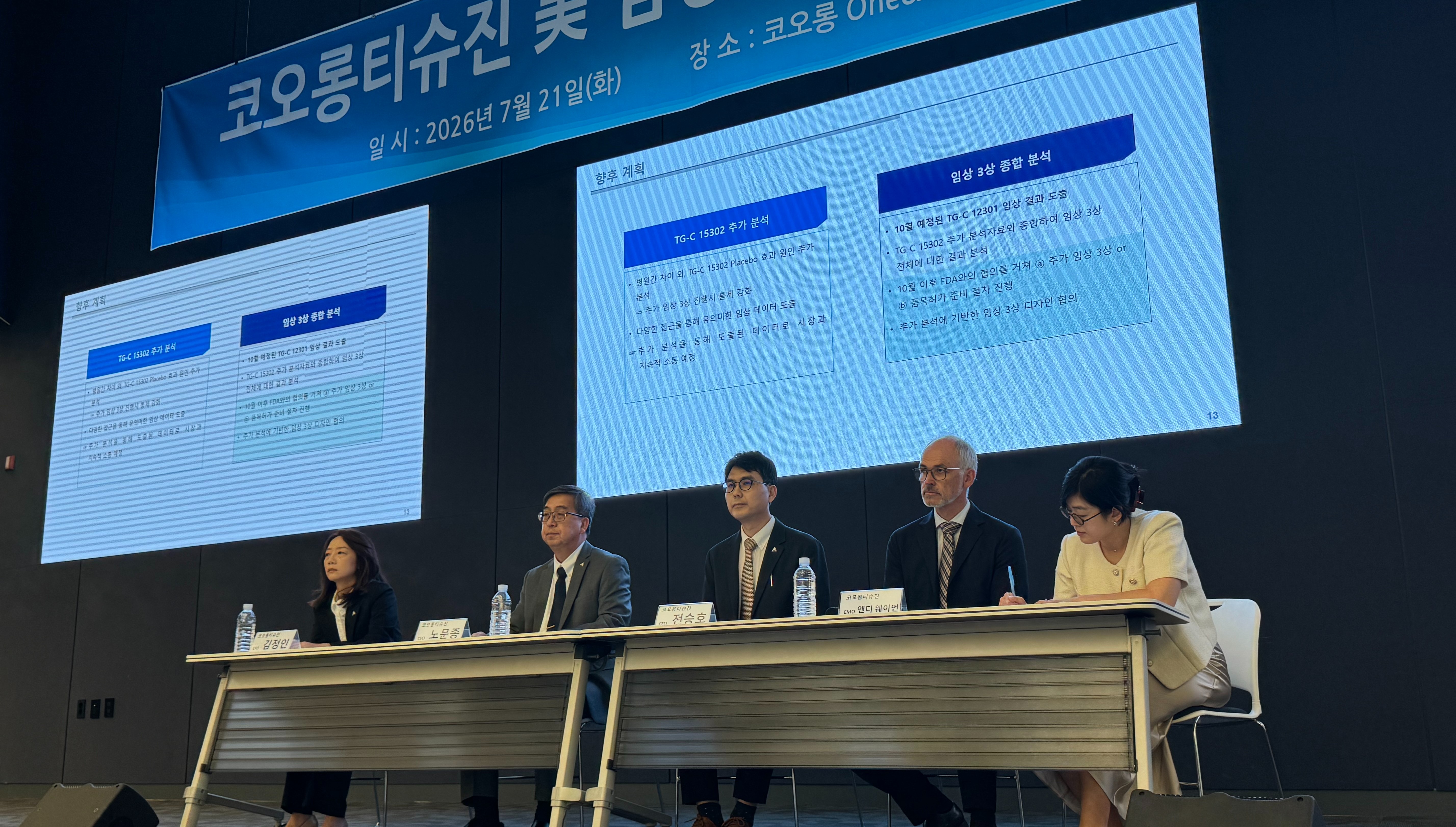
- Kolon TissueGene held a press briefing on the 21st to discuss results from the first US Phase 3 trial of its investigational knee osteoarthritis therapy, TG-C."We do not consider these results a clinical failure. Rather, we see them as a halfway success. Please consider it as part of our learning curve."At a press conference held on the 21st, Seong-Ho Jeon, co-CEO of Kolon TissueGene, explained so regarding the results from the first U.S. Phase 3 trial of TG-C, the company's investigational treatment for knee osteoarthritis. The briefing was held to explain the topline results released the previous day and outline the company's analysis and development plans. Jeon was joined by co-CEO Moon-Jong Noh, Chief Financial Officer Jung-In Kim, and newly appointed Chief Medical Officer Andy Weymann.On July 20, the company disclosed in a filing that its first US Phase 3 study, TGC-15302, failed to achieve statistical significance versus placebo for either of the co-primary endpoints, the Visual Analog Scale (VAS) for pain and the Western Ontario and McMaster Universities Osteoarthritis Index (WOMAC). VAS pain scores decreased by an average of 38.7 points from baseline in the TG-C group and 39.2 points in the placebo group, a between-group difference of 0.5 points (p=0.8322). Total WOMAC scores fell by 27.6 points in the TG-C group and 26.5 points in the placebo group, with a between-group difference of -1.1 points (p=0.5701).Seong-Ho Jeon, co-CEO of Kolon TissueGeneJeon said, “It is true that TG-C did not demonstrate a statistically significant advantage over placebo, but the treatment itself produced greater symptom improvement than those observed in previous clinical trials. We will spend the coming months investigating the unusually strong placebo response and incorporate the findings into subsequent development and regulatory strategies.The company also highlighted signals suggesting TG-C may have disease-modifying potential, citing total knee arthroplasty (TKA) rates. Only 2 of the 310 patients in the TG-C group underwent TKA, compared with 8 of 151 patients in the placebo group. The incidence rates were 0.6% and 5.3%, respectively, meaning the placebo group experienced TKA at a rate about 8.8 times higher than the TG-C group, which Jeon explained was a statistically significant difference."The ultimate goal of osteoarthritis treatment is to manage pain and function over the long term to avoid or delay total knee arthroplasty as much as possible. While this dataset alone cannot answer every question, we plan to continue following patients for 3, even 5 years or longer to determine whether the difference is sustained. The findings could prove valuable not only in discussions with regulators but also in reimbursement and health economic evaluations following commercialization.”Moon-Jong Noh, co-CEO of Kolon TissueGeneCo-CEO Moon-Jong Noh emphasized that all key efficacy measures in the TG-C group showed clinically meaningful improvement from baseline. Noh noted, “Analysis of the first completed study among the company's two U.S. Phase III trials demonstrated clinically meaningful improvements across both co-primary endpoints and all four secondary endpoints.Noh said, “In the earlier US Phase II trial, VAS pain scores improved by approximately 35–39 points and the effect was sustained for two years. In the current Phase III trial, pain scores improved by about 38 points at three months and were maintained through Week 104 (24 months). Symptom improvement observed in the Phase III study can be interpreted as being even greater than those seen in previous trials.”Noh added, “The placebo effect was unexpectedly strong and persistent, preventing the study from demonstrating a difference between treatment and placebo. Placebo groups in osteoarthritis trials typically show improvements of around 9–14 points in VAS and 9–19 points in WOMAC, with those effects generally fading after three to six months. In this trial, however, the placebo group showed improvements comparable to those in the TG-C group at about 40 points in VAS and 25 points in WOMAC, and were maintained through 24 months.”"Based on analysis of the pre-specified criteria, we concluded that no efficacy difference could be confirmed between the treatment and placebo groups. However, given these findings, we do not believe the therapeutic effect of TG-C itself should be called into question. Rather, we need to conduct further analysis to understand and manage the unusually strong placebo response."Because the first US Phase III study failed to meet its co-primary endpoints, the company's previously announced timeline of submitting a Biologics License Application to the U.S. Food and Drug Administration (FDA) in 2027 and launching the product in 2028 will likely be delayed. Jeon said, "Because we were unable to demonstrate a difference from placebo in this trial, the timeline will likely be delayed beyond our original expectation. We will establish a revised development timeline after completing a thorough analysis of the underlying causes."First, the company plans to comprehensively analyze patient- and site-level data from TGC-15302, as well as the use of concomitant analgesics, to determine the cause of the unusually strong placebo response. The new CMO Weymann will lead the analysis, and the company will integrate the final clinical study report, which is expected in Q4, with topline results from the second Phase III study, TGC-12301, scheduled for release in October, to determine its next development strategy. Although the second study has the same design, it is an independent trial involving different patients, investigators, and clinical sites, making its outcome difficult to predict.The company also plans to discuss regulatory pathways and any additional requirements with the FDA based on the supplementary analyses from the first study and data from the second Phase III trial. Jeon emphasized, "We will establish a clear path forward once a thorough root-cause analysis is complete. Development may take longer than expected, but our commitment to developing TG-C remains unchanged."

- Company
- Pharma biotech 'corporate name change' moves…12 companies this year
- by Cha, Ji-Hyun Jul 21, 2026 08:26am
- Pharmaceutical, biotech, and healthcare companies in South Korea are changing their corporate names one after another. This year alone, 12 companies have rebranded. While these changes aim to enhance brand value and clearly signal shifts in business structures and growth strategies, critics point out that without financial performance and business outcomes, they could end up as a mere “company signboard swap."According to the Financial Supervisory Service on July 20, DA Information, an IT subsidiary of Dong-A Socio Group, announced on July 16 that it will change its corporate name to 'DAI' (pronounced D-A-I). With this rebranding, the company aims to transition from its traditional focus on IT system operation and maintenance to become an AX (AI Transformation) partner that revolutionizes corporate decision-making and workflows. DAI plans to nurture AI-driven drug discovery platforms, AI-based healthcare platforms, pharmaceutical-specific GMP solutions, and AI agents as its new growth engines.Aptamer Sciences held an extraordinary general meeting of shareholders on July 8 and changed its corporate name to 'Choolip & Sciences'. Its English name was also changed from 'Aptamer Sciences Inc.' to 'CHOOLIP & SCIENCES Inc.' Regarding the reason for the change, the company explained, "The corporate name was changed in accordance with changes in management objectives and business diversification strategies."On the same day, Woojung Bio also changed its name to 'Kolmar Biotech' at an extraordinary shareholders' meeting. This is a follow-up measure following Kolmar Holdings' push to acquire management control. Previously, in March, Woojung Bio pursued a transfer of management rights by issuing KRW 35 billion in convertible bonds to Kolmar Holdings and delegating the voting rights of the then-largest shareholder. Accordingly, the blueprint is to reflect the Kolmar Group's identity in the new corporate name and enhance its brand value.2026 List of Corporate Name Changes for Pharma, Biotech, and Health Companies: SCM Lifescience changed its name to 'Poongjeon Pharmaceutical'. UBcare also changed its name to 'GC Medieye'. Neofect changed its corporate name to 'Dynamic Solution' on March 25. Seers Technology shortened its name to 'Seers' on March 27. U2Bio changed its name to 'Jigu Holdings' on March 30. Kukjeon Pharmaceutical changed its name to 'Kukjeon' on March 31. 'Orion Atomics' to AdBiotech. 'BNC Korea Co, Ltd' to 'BNC KOREA, Inc.' CHA Vaccine Research Institute changed its name to 'AriBio LAB' on April 30. Solux changed its name to 'AriBio Holdings' on June 29. Aptamer Sciences changed its corporate name to 'Choolip & Sciences'. Woojung Bio also changed its name to 'Kolmar Biotech'These are not the only companies changing their names. It is estimated that more than 13 pharmaceutical, biotech, and healthcare companies have changed their corporate names so far this year.Solux changed its name to 'AriBio Holdings' on June 29. This is part of an effort to restructure its governance and business framework around bio ahead of its upcoming merger with AriBio. Solux incorporated AriBio as a subsidiary after AriBio CEO Choung Jai-jun acquired management control of the company in 2023. It is currently pursuing an absorption merger with AriBio to pivot its LED-lighting-centered business model toward degenerative brain disease drug development and healthcare. Ahead of the merger, the company plans to align the group's governance and identity through the name change, ultimately building a holding company system that encompasses drug R&D·commercialization, and biotech investment functions.CHA Vaccine Research Institute changed its name to 'AriBio LAB' on April 30. This is also an extension of the plan to reorganize the biotech affiliate system around AriBio. In the process of pursuing the merger with AriBio, Solux also decided to acquire management control of Cha Vaccine Research Institute. This followed a contract signed in March, in which Solux and three other parties acquired a 33.3% stake in CHA Vaccine Research Institute, held by CHA Biotech, for KRW 23.8 billion. With this move, the goal is to reposition CHA Vaccine Research Institute as an R&D-specialized affiliate within the group and further solidify its biotech business foundation.Rebranding by traditional pharmaceutical firms is also noteworthy. Kukjeon Pharmaceutical changed its name to 'Kukjeon' on March 31, dropping the word 'Pharmaceutical'. The decision was made to expand its business scope beyond its existing image, which was limited to medicines, and to build a new corporate image. Based on its active pharmaceutical ingredient (API) business, Kukjeon aims to leap forward into an advanced materials company beyond pharma by nurturing electronic materials for semiconductors and displays as a new growth axis.There are also cases where companies reverted to their previous names during the process of realigning their business identity. AdBiotech, an animal health company, changed its name to 'Orion Atomics' last September, only to revert to its original name this March, about six months later. Along with the reinstatement of its old name, the company removed numerous business objectives unrelated to its core business, such as nuclear power, energy, batteries, and virtual assets. It reorganized its business structure around its traditional livestock and bio sectors, re-clarifying its corporate identity.In the case of BNC Korea, it retained its Korean corporate name and standardized only its English business name. It changed 'BNC Korea Co, Ltd' to 'BNC KOREA, Inc.' This measure was taken to unify the English trade names that had been used interchangeably in practice. There are no other corporate name changes for this company within the past two years.In addition, U2Bio, Seers Technology, Neofect, SCM Lifescience, and UBcare have also successively changed their names this year. U2Bio changed its name to 'Jigu Holdings' on March 30. It reflected its identity as a holding company in its name in line with its physical split-off plan to transition into a venture holding company. Seers Technology shortened its name to 'Seers' on March 27 to clarify its strategic direction toward becoming a patient-centered, next-generation healthcare platform company, on the basis of its technology commercialization capabilities.Neofect changed its corporate name to 'Dynamic Solution' on March 25, citing an enhanced corporate image and strengthened competitiveness. SCM Lifescience changed its name to 'Poongjeon Pharmaceutical' on March 24, a move aimed at strengthening brand competitiveness and laying the groundwork for sustainable growth.UBcare also changed its name to 'GC Medieye' on March 24. This comes six years after the company was incorporated into the Green Cross (GC) Group when GC Green Cross Healthcare (currently GC Care) acquired management control for 208.8 billion KRW in 2020. This name change is interpreted as a move to bring the GC Group's identity to the forefront and emphasize its direction to transcend its existing electronic medical record (EMR) business and leap forward as an AI-based digital healthcare company.Changing a corporate name is an effective tool for companies to communicate their altered business structures and mid- to long-term strategies to the market while enhancing brand value. In particular, when an existing corporate name is tied to a specific technology or traditional manufacturing sector, changing it to a more scalable name can signal a strategic pivot toward becoming a comprehensive bio-healthcare enterprise externally.However, changing a corporate name does not alter a company's own competitiveness. Experts point out that even if a company changes its name as part of business diversification and entry into new markets, the move could be a mere "signboard change" that only inflates expectations if revenue expansion, profitability improvements, and R&D achievements do not follow. Given that there are already numerous cases where performance improvements or new business outcomes failed to materialize despite a name change, some argue that strengthening the competitiveness of the core business must take priority over a new name.
- Company
- Kolon TissueGene’s osteoarthritis drug fails Phase 3 trial
- by Cha, Ji-Hyun Jul 21, 2026 08:25am
- Kolon TissueGene, Kolon Group’s biotechnology subsidiary, has failed to demonstrate improvements in pain and function in a US Phase III trial of its investigational drug for knee osteoarthritis.According to a regulatory filing disclosed to Korea's Financial Supervisory Service on July 20, the company announced topline results from the U.S. Phase III TG-G 15302 trial evaluating its knee osteoarthritis drug candidate ‘TG-C.’ At 12 months, TG-C failed to achieve statistical significance versus placebo on both co-primary endpoints: the Visual Analog Scale (VAS) pain score and the Western Ontario and McMaster Universities Osteoarthritis Index (WOMAC) total score.The VAS pain score decreased by an average of 38.7 points from baseline in the TG-C group and 39.2 points in the placebo group. The between-group difference was 0.5 points (p=0.8322). The WOMAC total score declined by 27.61 points in the TG-C group and 26.54 points in the placebo group. The between-group difference was -1.07 points (p=0.5701).The trial enrolled 531 patients with Kellgren-Lawrence Grade 2 or 3 knee osteoarthritis at 27 U.S. sites. Participants were randomized in a 2:1 ratio to receive a single intra-articular injection of TG-C or placebo and were followed for 24 months to evaluate efficacy and safety.No new or unexpected safety signals were identified. Treatment-emergent adverse events were reported in 83.9% of patients in the TG-C group and 78.1% in the placebo group, with most events classified as Grade 1 or 2. The overall rate of total knee replacement was 0.6% in the TG-C group compared with 5.3% in the placebo group.Kolon TissueGene plans to discuss the findings with the US Food and Drug Administration (FDA) after integrating the efficacy and safety results from this study with those from another ongoing U.S. Phase III trial.
- Company
- MSD develops first oral PCSK9 inhibitor
- by Son, Hyung Min Jul 20, 2026 08:51am
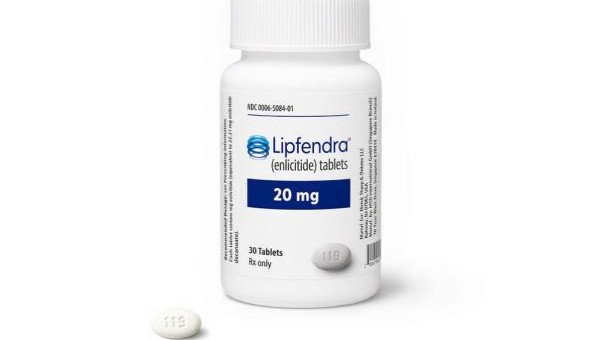
- MSD's launch of the world's first oral PCSK9 inhibitor is expected to reshape the dyslipidemia treatment market.The arrival of an oral therapy is likely to intensify competition over treatment convenience in a market that has until now evolved primarily by extending dosing intervals of injectable therapies.Oral PCSK9 inhibitor LipfendraAccording to industry sources, the U.S. Food and Drug Administration (FDA) approved Lipfendra (enlicitide) on July 16 for reducing low-density lipoprotein cholesterol (LDL-C) in adults with hypercholesterolemia and heterozygous familial hypercholesterolemia (HeFH).Lipfendra is an oral PCSK9 inhibitor taken once daily at a 20mg dose as an adjunct to diet and exercise.PCSK9 inhibitors are indicated for patients whose LDL-C levels remain inadequately controlled despite lipid-lowering therapy, including high-intensity statins and ezetimibe, or for those requiring additional LDL-C reduction because of a high risk of atherosclerotic cardiovascular disease (ASCVD).All currently marketed PCSK9 inhibitors are injectables. Amgen's ‘Repatha (evolocumab)’ and Sanofi/Regeneron's ‘Praluent (alirocumab)’ are monoclonal antibodies administered every two weeks.Novartis' ‘Leqvio (inclisiran)’ is an siRNA therapy that suppresses PCSK9 production in the liver. After the initial administration, the second dose is administered after three months, and then every six months.While the PCSK9 inhibitor market has focused on reducing injection frequency and extending dosing intervals, Lipfendra has differentiated itself with oral administration.Lipfendra is a macrocyclic peptide-based oral PCSK9 inhibitor. It inhibits PCSK9 to increase hepatic clearance of LDL cholesterol and targets the same pathway as injectable PCSK9 inhibitors as an oral formulation.However, there are certain restrictions during its intake. Lipfendra may be taken with water, coffee, or tea, but patients must avoid eating for at least 30 minutes afterward to ensure adequate drug absorption.Approval supported by two global Phase III trialsLipfendra's approval was based on results from the CORALreef Lipids and CORALreef HeFH studies, part of MSD's global Phase III CORALreef program.CORALreef Lipids was a multicenter, randomized, double-blind, placebo-controlled Phase III trial involving 2,904 patients with hypercholesterolemia.Participants were those receiving stable lipid-lowering therapy, including moderate- or high-intensity statins that still required additional LDL-C reduction.In the trial, Lipfendra reduced LDL-C by 56% versus placebo at Week 24. LDL-C fell 57% from baseline in the Lipfendra group, while it increased by 3% in the placebo group.In the CORALreef HeFH study, which involved 303 patients with heterozygous familial hypercholesterolemia, Lipfendra reduced LDL-C by 59% versus placebo at Week 24. LDL-C declined 58% from baseline in the Lipfendra group but increased by 3% in the placebo group.Beyond LDL-C reduction, Lipfendra also lowered non-high-density lipoprotein cholesterol (non-HDL-C) and apolipoprotein B (ApoB), both associated with ASCVD risk.Among patients with hypercholesterolemia, Lipfendra reduced non-HDL-C by an average of 54% and ApoB by 50%. In patients with HeFH, the corresponding reductions were 52% and 48%, respectively.Overall safety was comparable to placebo. In the hypercholesterolemia study, adverse event rates were similar between the two groups. In the HeFH study, however, diarrhea and dizziness occurred more frequently with Lipfendra.Diarrhea was reported in 7% of patients receiving Lipfendra versus 2% with placebo, while dizziness occurred in 9% and 4%, respectively. Treatment discontinuation due to adverse events was similar between groups.Although Lipfendra has demonstrated robust LDL-C lowering, it has yet to demonstrate reduction in major cardiovascular events such as myocardial infarction, stroke, or cardiovascular death.MSD is currently evaluating its effects on cardiovascular events and mortality in the CORALreef Outcomes trial involving more than 14,500 participants. Patient enrollment has been completed.The overall CORALreef clinical program includes more than 19,000 patients with hypercholesterolemia. In addition to the cardiovascular outcomes trial, MSD is conducting long-term extension studies as well as trials in pediatric patients and combination therapy with Lipfendra.Lipfendra is also expected to play an important role in MSD's long-term growth strategy. Its oral formulation and relatively lower price may act in favor when seeking to expand into the injectable-dominated PCSK9 inhibitor market.Lipfendra is priced at USD 315 per month in the United States. This is lower than some of the currently marketed PCSK9 therapies.The market expects Lipfendra to become one of MSD's key growth drivers following the loss of patent exclusivity for Keytruda (pembrolizumab), with peak annual global sales projected at up to USD 5 billion.
- Company
- Trajenta generics capture just 20% market share after 2 years
- by Kim, Jin-Gu Jul 16, 2026 08:52am
- Although more than 2 years have passed after generic versions of the DPP-4 inhibitor ‘Trajenta (linagliptin)’ entered the Korean market, the generics continue to account for only about 20% of prescriptions.The sluggish uptake contrasts with the intense interest shown around the time of the original drug’s patent expiry, when 68 companies obtained approval for 293 generic products. 2 years after launch, the average quarterly prescription value per company remains around KRW 100 million, while 87 products from more than 30 companies have been voluntarily withdrawn due to poor commercial performance.Trajenta and Trajenta Duo post KRW 19 billion in Q2 prescriptions…down 9% year over yearAccording to market research institution UBIST on the 16th, the combined outpatient prescription market for Trajenta and its generics totaled KRW 23.7 billion in Q2 2026, down 3% from a year earlier.The decline was driven primarily by lower sales of the original products. Prescriptions for Trajenta monotherapy fell 19%, from KRW 9.1 billion in Q2 2025 to KRW 7.4 billion in Q2 this year. Prescriptions for Trajenta Duo, the metformin combination, fell from KRW 11.7 billion to KRW 11.6 billion.The decline reflects both generic competition and reimbursement price reductions following the expiration of pricing premiums. The reimbursement price for Trajenta monotherapy was cut by 30% (from KRW 750 to KRW 525) when generics were launched in July 2024. Following the expiration of the one-year pricing premium in June 2025, the reimbursement price was further reduced to KRW 402. Prices for the fixed-dose combination Trajenta Duo were also reduced, depending on strength, from KRW 387 to KRW 338–344, then to KRW 259.Trajenta generics account for only 20% of market 2 years into launch….slowest penetration among DDP-4 inhibitorsSince the expiry of Trajenta's composition patent in June 2024, generic manufacturers have gradually increased prescription volumes. Combined prescriptions for Trajenta and Trajenta Duo generics reached KRW 4.8 billion in Q2, up 28% year-on-year.However, the prevailing industry assessment is that the penetration rate of Tradjenta generics has fallen short of expectations. The gap becomes even more pronounced when compared to the progress of other DPP-4 inhibitor generics whose patents expired earlier.For example, generics of ‘Tenelia (teneligliptin)’ had already captured 60% of the market 2 years after launch, and overtook the original drug.Generics of ‘Galvus (vildagliptin),’ the first DPP-4 inhibitor to lose patent protection, achieved a 48% market share within 2 years. Meanwhile, generics of ‘Januvia (sitagliptin),’ whose patent expired in September 2023, had reached a 23% market share after 2 years, three percentage points higher than Trajenta generics at the same stage (20%).Although the first generic exclusivity period expired in March last year, allowing many additional manufacturers to enter the market, the influx failed to lead to a rebound in the overall generic market.Average quarterly prescriptions remain around KRW 100 million per company…87 products withdraw from the market after ‘no-questions-asked generic approvals’Commercial performance has also been disappointing at the company level. As of Q2, no manufacturer had generated more than KRW 1 billion in combined quarterly prescriptions for Trajenta and Trajenta Duo generics. Only KyungDong Pharm (KRW 970 million) and Kyongbo Pharmaceutical (KRW 810 million) exceeded KRW 500 million in quarterly prescriptions.Most companies have failed to reach KRW 100 million in quarterly prescriptions. Among the 32 companies currently marketing Trajenta generics, 22 (68%) generated less than KRW 100 million in combined quarterly prescriptions. On average, quarterly prescriptions amount to just over KRW 100 million per company.The situation stands in sharp contrast to the enthusiasm seen during the approval stage. Following successful patent challenges in 2018, generic manufacturers aggressively pursued marketing authorizations. A total of 68 companies obtained approval for 293 generic products of Trajenta monotherapy and Trajenta Duo.In reality, however, only about half of the approved products were eventually launched. Instead, more companies have chosen to exit the market by voluntarily withdrawing approvals or declining to renew marketing authorizations upon expiration. To date, 87 products from 31 companies have been removed from the approval list.Industry observers attribute the trend to indiscriminate approval filings timed around the patent expiry of a blockbuster diabetes drug, resulting in excessive competition. As promotional costs to secure prescriptions have risen while profit margins have fallen short of expectations, many small and mid-sized pharmaceutical companies have entered a phase of portfolio rationalization by abandoning unprofitable products.Another factor behind the slow uptake is that Trajenta was the last major DPP-4 inhibitor to lose patent protection. By the time Trajenta generics entered the market, generics of Galvus, Tenelia, and Januvia had already established themselves, leaving late-arriving Trajenta generics struggling to compete for market share.
