
- LOGIN
- MemberShip
- 2026-07-25 03:07:43
- Policy
- “Division of industry within the MOHW”…fostering pharma biotech
- by Lee, Jeong-Hwan Jul 24, 2026 08:21am
- Sung-il Oh, the Head of the Division of Pharmaceutical and Biotech Industry"I consider the Division of Pharmaceutical and Biotech Industry as the Division of Industry within the Ministry of Health and Welfare. While the traditional duties of the Office for Healthcare Policy on regulatory laws under the Medical Services Act and the Pharmaceutical Affairs Act, the primary mission of the Division of Pharmaceutical and Biotech Industry is fundamentally to promote and foster technology, markets, and the industry. My priority is to listen extensively and meet as frequently as possible with pharma companies, biotech firms, and healthcare sector stakeholders to build an environment where the industry can perform at its best."Core mission of the Division of Pharmaceutical and Biotech Industry under the Ministry of Health and Welfare (MOHW) include fostering domestic blockbuster novel drugs, providing policy support for the pharmaceutical and biotech sectors to address supply instabilities of essential medicines, modernizing the Innovative Pharmaceutical Company certification system, and nurturing the global pharmaceutical and biotech industry.Sung-il Oh, newly appointed as the Head of the Division of Pharmaceutical and Biotech Industry on July 22, clearly understood the aim of the division and its key responsibilities, despite returning to healthcare administration after a hiatus.Meeting with the press that day, Oh explained that while the current government, including the MOHW, considers strengthening public access to healthcare and enhancing patient convenience a major pillar of healthcare policy, it also recognizes the promotion and development of the pharmaceutical and biotech industry as a vital task to achieve.In outlining his aspirations as the new division head, Oh pledged to "listen as much as possible and meet as many people as possible." As the administration has defined the pharmaceutical and biotech industry as a key growth driver for the nation's future and signaled regulatory rationalization for its fostering and promotion, his commitment signifies an intention to directly observe and hear what regulatory improvements and policies the market actually requires.Oh highlighted, "The current government has a very keen interest in promoting the pharmaceutical and biotech industry, something I observed during my previous role as the Regulatory Reform and Legal Affairs Officer," and added, "Unlike the previous administration where the Regulatory Reform Committee functioned under the Prime Minister, the current administration's Regulatory Rationalization Committee is chaired directly by the President. Biotech has consistently been a major agenda item at presidential meetings."Oh continued, "The advice from senior officials was to listen first. I am personally experiencing that the pharmaceutical and biotech industry has many factors distinct from general healthcare administration, and I am studying various issues extensively." He stated, "I maintain an open-minded approach toward everyone who comes to visit. For now, my focus will be on properly executing well-crafted existing policies, such as the reform plan for the Innovative Pharmaceutical Company criteria."Oh concluded by stating, "Government interest in regulatory rationalization is high, and as the government believes that promoting the pharmaceutical and biotech industry will expand the nation's future growth engines, there seems to be deep deliberation at the top," and added, "While general healthcare administration primarily deals with occupational disputes and conflict mediation, and national health insurance focuses on fee adjustments, the Division of Pharmaceutical and Biotech Industry is a unit built to promote and foster. Perspective needs to shift significantly. I intend to learn thoroughly right from the basics."
- Policy
- Ban on succession of price caps deferred until next year
- by Jung, Heung-Jun Jul 24, 2026 08:21am
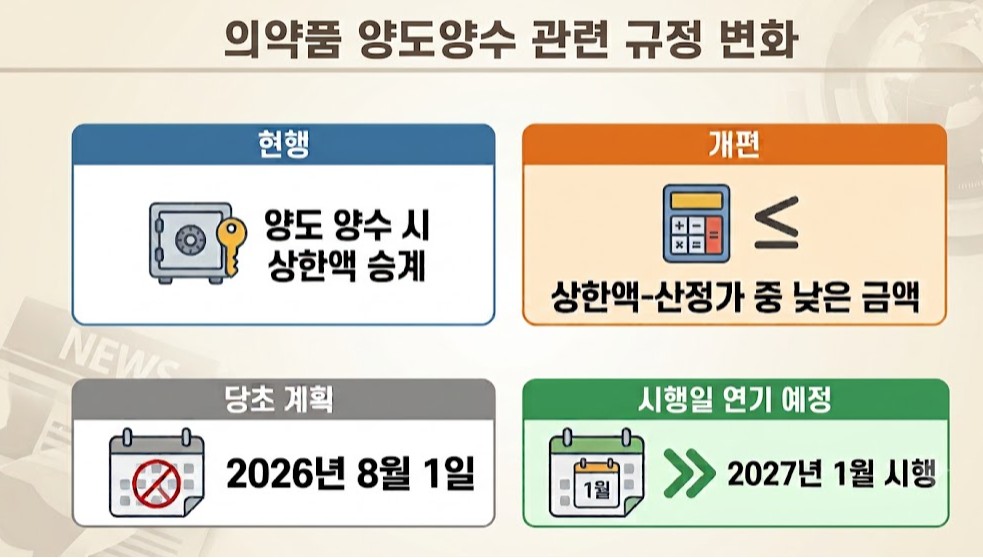
- The government will postpone implementation of a new rule blocking the succession of reimbursement price caps during pharmaceutical product transfers and acquisitions until next year, following a grace period through the second half of this year.The change regarding price cap succession in product transfers was not included in the drug pricing reform agenda reviewed by the Health Insurance Policy Deliberation Committee (HIPDC) in March. The government has likely decided to delay implementation in consideration of on-site acceptability.Discussions on improving the implementation of the revised drug transfer and acquisition rules took place during a public-private consultative meeting involving the Ministry of Health and Welfare, the Health Insurance Review and Assessment Service (HIRA), the National Health Insurance Service (NHIS), and industry representatives on July 22.AI-generated imageThe revision to the drug product transfer and acquisition system was included in the Ministry’s May amendment to the 'Standards for Drug Pricing Decisions and Adjustments.' Until now, for products transferred between companies, the same reimbursement price ceiling as before the transfer was applied.Under the revised system, however, products acquired through transfers will instead receive whichever is lower—the newly calculated reimbursement price or the existing price ceiling—to prevent companies from using transfers to circumvent the revised drug pricing system.Because the generic drug pricing rate will change under the new pricing framework, transferred products will effectively be subject to the newly calculated reimbursement price rather than retaining the previous reimbursement ceiling.The rules governing pharmaceutical product transfers have undergone several revisions over the years. Since 2021, however, transferred products have generally been allowed to inherit the existing reimbursement price ceiling.Because the Ministry had initially planned to implement the revised notification on Aug. 1 following its administrative notice in May, the timeline was considered too tight, prompting agreement to introduce a grace period.With implementation now postponed until January next year, products currently under transfer negotiations are expected to proceed without disruption.A wave of last-minute product transfers is expected as companies reorganize their product portfolios in the second half of the year in response to the broader drug pricing reform,Since this will be the final grace period during which acquiring companies can still inherit the existing reimbursement price ceiling, transfer activity is expected to become more active than usual.
- Policy
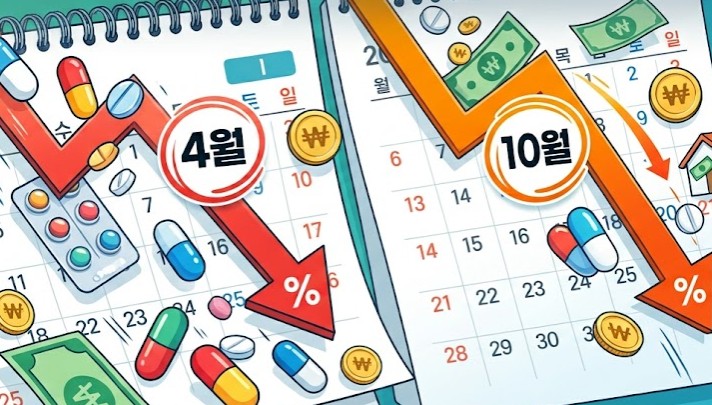
- Post-listing price cuts to be made every April and October
- by Jung, Heung-Jun Jul 24, 2026 08:20am
- The government is expected to exclude reimbursement expansion-related price cuts from its routine post-listing price cuts, which will take effect next year. The decision reflects concerns that patients could face delays in benefiting from lower drug costs, as well as the administrative complexity of refund procedures.At a public-private consultative meeting on drug pricing reform held on July 22, government and industry representatives discussed measures to improve the standardization of post-listing price cuts.In March, the Health Insurance Policy Deliberation Committee (HIPDC) agreed to align the timing of price cuts under various post-listing management mechanisms to April and October to improve the predictability of reimbursement price reductions.The routine post-listing price cut measure was approved by the HIPDC in March. Price cuts resulting from reimbursement expansions are expected to be excluded.Until now, reimbursement prices have been adjusted whenever a new indication was approved, or reimbursement coverage was expanded. The government sought to reduce these post-listing price cuts to two scheduled adjustments each year—in the first and second half of the year—to improve predictability for the industry.Under the original proposal, reimbursement expansions themselves would still take effect immediately. However, the resulting reimbursement price reduction was set to be deferred until the next scheduled adjustment, with pharmaceutical companies later refunding the difference.For example, if reimbursement coverage were expanded in January and the reimbursement price was therefore subject to a reduction, the amount corresponding to the delayed price cut until the April adjustment would be refunded afterward by the pharmaceutical company.However, this approach raised concerns that patients would not immediately benefit from lower drug costs at the time of reimbursement expansion.In addition, implementing the refund mechanism was expected to create a substantial and unnecessary administrative burden for both pharmaceutical companies and the National Health Insurance Service. As a result, the government has largely decided to exclude reimbursement expansion-related price cuts from the routine post-listing price adjustment schedule.Meanwhile, the government had previously planned to abolish actual transaction price-based price cuts after expanding incentives for lower-price drug purchasing but has decided to maintain the current system due to concerns about potential drawbacks. Reimbursement re-evaluations will also continue to be conducted when warranted rather than on an annual basis. The timing of price adjustments under these mechanisms will likely be brought into line with the new routine schedule.
- Policy
- Novartis to build ₩140 Billion RLT Plant in Korea
- by Lee, Jeong-Hwan Jul 23, 2026 09:08am
- The multinational pharmaceutical company Novartis will make a major investment of approximately KRW 140 billion to foster a radioligand therapy ecosystem in Korea.The investment is expected not only to establish a domestic production base for the company, but also to significantly improve access to treatment.The fact that investment in Korea by Novartis and other global pharmaceutical companies is expanding beyond clinical trials, research and development, and open innovation into the construction of manufacturing facilities is also significant.On the 21st, the Ministry of Health and Welfare (Eun-Kyeong Jeong, Minister) signed a memorandum of understanding with Novartis (Judith Love, President of Asia Pacific, Middle East and Africa) on the creation of an ecosystem for radioligand therapy in Korea at Novotel Ambassador Seoul Yongsan.Radioligand therapy combines a radioactive isotope with a ligand that binds to a target protein on cells. It is an innovative advanced biotherapeutic technology that kills cancer cells by directly breaking their DNA. One representative example is Novartis’ ‘Pluvicto Inj,’ which received approval from the Ministry of Food and Drug Safety in 2024 and has since been administered to patients in Korea.Under the agreement, Novartis plans to invest approximately KRW 140 billion to substantially strengthen Korea’s radiopharmaceutical industry capabilities.Specifically, Novartis will build an RLT manufacturing facility in Korea and establish an advanced cold-chain logistics network. It will also expand the number of hospitals capable of administering RLT from the current 10 to 30.Furthermore, the company will focus investment in building the broader RLT ecosystem, including the training of domestic specialist researchers to global standards.Novartis has invested in and collaborated with Korean pharmaceutical companies in various areas, including technology transfer and clinical research. Its latest investment in an RLT production facility, which expands these collaborative achievements into the advanced biopharmaceutical field, is expected to strengthen Korea’s research, development and manufacturing capabilities in radiopharmaceuticals.Minister Jeong said, “We sincerely welcome Novartis's decision to make a large-scale manufacturing investment in Korea. It is meaningful that a global leader in the pharmaceutical and biotechnology market has shown confidence in Korea's outstanding technological capabilities and potential. This agreement will serve as a significant turning point in providing innovative treatment options to patients in Korea.”Judith Love, President of Novartis APMA, added, “This agreement represents an important step in accelerating the advancement of Korea’s RLT ecosystem and strengthening the country’s role in future healthcare innovation. We will work closely with the Korean government and healthcare stakeholders to benefit more patients with our innovative cancer treatments.”
- Policy
- Lilly’s 'Cymbalta' is withdrawing from the KOR mkt after 20 years
- by Lee, Tak-Sun Jul 22, 2026 08:50am
- Product photo of CymbaltaEli Lilly Korea's central nervous system (CNS) therapy, 'Cymbalta Capsules' (duloxetine hydrochloride), is officially withdrawing from the South Korean market, nearly 20 years after its domestic launch.According to the Ministry of Food and Drug Safety (MFDS), Eli Lilly Korea voluntarily withdrew the product approval for Cymbalta Capsules as of July 21. This license revocation appears to be a voluntary step in line with Lilly's transition in its global business strategy.Cymbalta is the leading therapeutic in the serotonin-norepinephrine reuptake inhibitor (SNRI) class. It acts by inhibiting the reuptake of serotonin and norepinephrine, key neurotransmitters in the brain, to restore chemical balance.Although widely known as a treatment for major depressive disorder (MDD) and generalized anxiety disorder (GAD), Cymbalta also demonstrates exceptional efficacy in modulating physical pain signals, leading to its widespread prescription across various conditions, including diabetic peripheral neuropathic pain, fibromyalgia, and osteoarthritis pain.Industry analysis suggests that this withdrawal was an expected outcome. In early 2024, Eli Lilly Korea terminated its long-standing co-promotion (joint sales) agreement with Boryung for Cymbalta.Following the termination of joint sales, operational and distribution gaps, alongside recurring supply shortages of Cymbalta in the domestic market over recent years, resulting in inconvenience for healthcare professionals and patients.Portfolio adjustments at the global level also appear to have contributed. Eli Lilly Korea had previously phased out CNS drug lineups, including the ADHD medication 'Strattera' and the antidepressant 'Prozac'. Additionally, the company previously executed market withdrawals of Cymbalta in certain overseas markets, such as Australia, citing declining profitability and intensifying generic competition.While the original drug is exiting the South Korean market, patient care is not expected to be significantly disrupted. This is because the substance patent for Cymbalta expired in 2014, allowing numerous domestic generics to establish a firm presence in the market.Currently, 39 generic products (active ingredient: duloxetine) hold regulatory approval in South Korea, including those from Myung In Pharm, Whan In Pharm, Hanlim Pharm, and Daewoong Pharmaceutical. With abundant market supply of therapeutic alternatives with identical active ingredients and dosages, patients currently taking Cymbalta are expected to transition smoothly to generic formulations through consultations with their healthcare providers.
- Policy
- Bipartisan-approved bills to automatically reach plenary
- by Lee, Jeong-Hwan Jul 22, 2026 08:50am
- In-soon Nam, Vice Speaker of the 22nd National AssemblyA long-standing parliamentary practice in which bills approved by both the relevant standing committee and the Legislation and Judiciary Committee (LJC) are delayed in the plenary session without clear justification could soon come to an end.Legislation is being proposed to require that any bill approved by agreement between the Legislation and Judiciary Committee chair and floor leaders of both the ruling and opposition parties be automatically placed on the plenary agenda if 45 days have passed since its approval by the committee.The bill also requires standing committees to complete their review of bills jointly introduced by lawmakers from both parties within 30 days for partial amendments and within 45 days from referral for newly enacted or fully revised legislation.In particular, the proposal would prohibit filibusters on bills approved by consensus between the committee chair and floor leaders of both parties in either the relevant standing committee or the Legislation and Judiciary Committee.On July 21, National Assembly Vice Speaker In-soon Nam of the Democratic Party announced that she had introduced the partial revision to the National Assembly Act.The core provision would require bills that have passed both the relevant standing committee and the Legislation and Judiciary Committee through bipartisan agreement to be automatically referred to the plenary session after 45 days.The proposal fulfills one of Nam's pledges to improve parliamentary procedures by preventing bipartisan bills from being indefinitely delayed before reaching the plenary session without valid justification.If enacted, it would help prevent situations in which bipartisan bills remain stalled for over half a year despite clearing all committee stages, such as legislation prohibiting telemedicine platform operators from establishing or operating pharmaceutical wholesalers and extending dual penalties for illegal rebates to match those already applied to physicians and pharmacists.Nam said the proposal is intended to improve the predictability of plenary schedules while ensuring the timely review of livelihood-related legislation.A key provision of the proposed amendment is the mandatory referral of bills approved through bipartisan agreement to the plenary session. Specifically, bills approved by agreement between the chair of the Legislation and Judiciary Committee and the floor leaders of each negotiating party would be required to be placed on the plenary agenda once 45 days have elapsed after committee approval.The bill also includes measures to prevent abuse of filibusters by prohibiting them for bills passed through bipartisan agreement in either the relevant standing committee or the Legislation and Judiciary Committee, thereby preventing politically motivated delays to livelihood legislation.Another provision creates a legislative fast-track for bills jointly introduced by lawmakers from different negotiating parties, that is, the ruling and opposition parties. Standing committees would be required to review partial amendment bills within 30 days of referral, and newly enacted or fully revised bills within 45 days.To improve the predictability of parliamentary proceedings, the proposal would also require the Speaker to announce and publish the day's plenary agenda at least 24 hours before the session convenes whenever the agenda is finalized on the same day.The proposed amendment is expected to serve as a strong institutional safeguard to create a more effective National Assembly and ensure that at least bills agreed upon by both parties are not derailed by political disputes and can take effect in a timely manner.Nam said, "An amendment was long overdue, with current rules continuing to be abused, with filibusters being requested for political reasons even on bills agreed upon by both parties. The amendment is intended to prevent bipartisan bills from being delayed for extended periods in the Legislation and Judiciary Committee or the plenary session, and to avoid repeated uncertainty in parliamentary scheduling caused by political confrontation."
- Policy
- Initiation of review for Mifegyne use standard·reimb of obesity drugs
- by Lee, Jeong-Hwan Jul 21, 2026 08:25am
- Product photos of Mifegyne and Mounjaro[데일리팜=이정환 기자] 보건복지부가 인공임신The Ministry of Health and Welfare (MOHW) plans to establish safety use standards for abortion pills following domestic approval, through consultations with the medical community.Regarding reimbursement under the national health insurance for severe obesity treatments such as Wegovy and Mounjaro, it has decided to continue reviewing their feasibility.Minister of Health and Welfare Jeong Eun Kyeong, who recently concluded her presidential work report, presented the policy direction for the second half of the year regarding abortion pills and severe obesity treatment injections during a pre-briefing held at the Sejong Government Complex the day before the report.This briefing reveals the administrative work regarding the domestic introduction of the abortion pill Mifegyne, mentioned by President Lee Jae Myung, and the reimbursement for Wegovy and Mounjaro, drugs that continue to show popularity.Regarding Mifegyne, the Ministry plans to establish criteria for its safe use and to communicate with medical professionals once the relevant legal amendments and approvals from the Ministry of Food and Drug Safety (MFDS) are completed.During the work report briefing regarding Mifegyne, Minister Jeong explained, "There was a constitutional nonconformity ruling regarding abortion related to pregnancy termination drugs, and a request was made for legislation overhaul. The government feels a sense of responsibility regarding the current lack of legislation,” and adding, “We will proceed by discussing necessary aspects such as the amendment of data and the Mother and Child Health Act with the National Assembly."Minister Jeong added, "In the event of domestic introduction, we are preparing to establish safety use standards, and we will formulate safe use standards, including clinical practice guidelines, in cooperation with the medical community so that patients can use them safely."Regarding health insurance reimbursement for severe obesity treatments, Minister Jeong stated that feasibility will be reviewed. However, Jeong made it clear that the priority is strengthening health insurance coverage for patients with rare and intractable diseases.Minister Jeong emphasized, “We continue to review the feasibility and necessity of coverage for severe obesity treatments, which are in high demand,” and added,”We are currently preparing measures to strengthen health insurance coverage. Furthermore, we plan first to announce plans to strengthen coverage for urgent, severe, rare, and intractable diseases."Minister Jeong added, "As there are demands for reimbursement of emerging health issues such as hair loss and severe obesity, we are preparing our approach through a comprehensive judgment."
- Policy
- Reimb expansion for Tevimbra’s five indications under drug price negotiations
- by Jung, Heung-Jun Jul 20, 2026 08:51am
- Product photo of Tevimbra BeOne Medicines Korea’s immunotherapy, Tevimbra Inj (tislelizumab), has entered drug price negotiations with the National Health Insurance Service (NHIS) to expand reimbursement coverage for five indications.Additionally, Roche Korea’s immunotherapy Tecentriq Inj (atezolizumab) has also entered negotiations for adjuvant therapy in non-small cell lung cancer (NSCLC).According to industry sources, on July 19, the Ministry of Health and Welfare (MOHW) issued price negotiation orders to the NHIS for Tecentriq and Tevimbra. These medications were recognized for their appropriateness for reimbursement expansion during the recent 5th and 6th Pharmaceutical Reimbursement Evaluation Committee (PREC) meetings.Tevimbra is the product that has secured the highest number of approved indications among the pharmaceuticals reviewed for reimbursement expansion during the 1st to 7th PREC meetings this year.The company is seeking to expand reimbursement across five indications, including monotherapy and combination therapy for non-small cell lung cancer, as well as first-line combination therapies for gastric cancer and esophageal cancer.Currently, the only reimbursed indication for Tevimbra is second-line combination therapy for esophageal cancer. In April last year, it successfully secured its initial reimbursement listing for esophageal cancer ahead of other immunotherapies with the same mechanism of action, such as Keytruda and Opdivo.Once this indication expansion is implemented, competition with blockbuster drugs like Keytruda and Opdivo is expected to intensify. Patient access to treatment is anticipated to strengthen as additional therapeutic options become available.However, price negotiations for multi-indication immunotherapies, which pose a heavy burden on the national health insurance budget, are rarely easy. Given that the share of oncological drugs within overall pharmaceutical expenditures is rising substantially, detailed negotiations regarding the application of complex Risk Sharing Agreements (RSAs) and refund rates will be the key determining factors.Yet, during its initial reimbursement listing last year, Tevimbra was well-received for enhancing patient access to a reasonably priced drug. As market competition intensifies, it can positively impact the insurance budget, a favorable factor in upcoming price negotiations.Product photo of TecentriqIf BeOne successfully clears the hurdle of NHIS negotiations, it is expected to proceed with a listing in the fourth quarter of this year.Roche Korea’s immunotherapy Tecentriq has also recently commenced price negotiations. In May, the PREC approved reimbursement expansion appropriateness as an "adjuvant therapy following resection and platinum-based chemotherapy in patients with early-stage non-small cell lung cancer."Tecentriq garnered significant attention in 2022 as the first immunotherapy to receive regulatory approval for adjuvant therapy in early-stage non-small cell lung cancer. It is now awaiting a reimbursement expansion after approximately four years.
- Policy
- Celltrion seeks Cosentyx biosimilar approval without pediatric indication
- by Lee, Tak-Sun Jul 20, 2026 08:51am
- AI-generated imageCelltrion has adopted an “independent strategy” to circumvent the original drug’s exclusivity as it prepares to launch a biosimilar of the blockbuster autoimmune disease therapy, Cosentyx (secukinumab), in Korea.Rather than seeking approval for all of the original Cosentyx's approved indications, the company has applied only for the core adult indications, excluding pediatric indications and hidradenitis suppurativa (HS).According to the Ministry of Food and Drug Safety (MFDS), a marketing authorization application for a secukinumab biosimilar that references Cosentyx products registered in Korea (Cosentyx SensoReady Pen and Cosentyx Prefilled Syringe, etc) was submitted on June 26. The reference product is believed to be a Cosentyx biosimilar in development by Celltrion.A notable aspect of the filing is Celltrion's move immediately prior to the application. On June 25, one day before submitting its application, Celltrion filed a scope confirmation trial with the Patent Court against Novartis, the holder of Cosentyx's patents.The move is viewed as a strategic step to secure first generic exclusivity under Korea's drug approval-patent linkage system. To obtain an exclusive sales period for a biosimilar, a company must both be the ‘first to challenge the patent’ and be the ‘first to submit a marketing authorization application.’The most notable aspect is the company’s decision to omit several of the original drug’s approved indications. The original Cosentyx is approved for adults with plaque psoriasis, psoriatic arthritis, ankylosing spondylitis, non-radiographic axial spondyloarthritis, and hidradenitis suppurativa, as well as for pediatric plaque psoriasis and juvenile idiopathic arthritis.However, the biosimilar application includes only three core adult indications: ▲Plaque psoriasis, ▲Psoriatic arthritis, and ▲Axial spondyloarthritis (including ankylosing spondylitis and non-radiographic axial spondyloarthritis). The application excludes adult hidradenitis suppurativa and all pediatric indications of the original drug.The move is regarded as an effort to avoid the original drug's remaining patents. The hidradenitis suppurativa and pediatric indications were added relatively recently, meaning their re-examination periods or patent terms still have considerable time remaining. Celltrion therefore appears to have opted to target the core adult indications that would enable the earliest market entry in Korea.Instead of seeking approval for a broader range of indications, Celltrion is taking the remaining key patents head-on. The patents Celltrion challenged on June 25 are Cosentyx's core patents.Cosentyx currently holds a method-of-use patent for the "treatment of psoriasis using an IL-17 antagonist," which is set to expire on October 7, 2031, and a formulation patent for "pharmaceutical products and stable liquid formulations of IL-17 antibodies," which is set to expire on December 21, 2035.In particular, the liquid formulation patent expiring in 2035 is considered a barrier that must be overcome to produce an injectable biosimilar. Through the scope confirmation trial, Celltrion plans to focus on demonstrating that its independently developed protein composition and formulation technology do not fall within the scope of the original drug’s patent.An industry official said, "Celltrion's application filing suggests that it intends to work around the patents essential to launching the product (psoriasis treatment method and formulation patents) through the patent trial, and launch the product immediately after the original’s substance patent expires on February 27, 2028, in an effort to gain a first-mover advantage in the Korean market."
- Policy
- President Lee calls for review of Mifegyne approval
- by Kang, Shin-Kook Jul 16, 2026 08:52am
- President Lee Jae-myung speaks during a Cabinet meeting on July 14President Jae-myung Lee has instructed relevant ministries to prepare a balanced approach to the approval of the abortion medication Mifegyne (mifepristone).During a cabinet meeting on July 14, President Lee mentioned Mifegyne, stating, “The current ban has led women who need the drug to purchase it through overseas direct purchases, exposing them to safety risks. It does not seem right to neglect the situation as is.”President Lee asked the Ministry of Food and Drug Safety (MFDS), the Ministry of Gender Equality and Family, and the Ministry of Government Legislation for detailed information on actual use patterns and developments following the Constitutional Court's ruling. Lee said, "The appropriate standard may vary depending on a woman's health condition. It doesn’t seem that setting a strict legal cutoff by gestational week needs to be a definitive standard. Entrusting the decision to physicians' conscience and professional judgment could also be one option,” calling on the ministries to explore a pragmatic compromise.Prime Minister Seong-sook Han responded that the matter is highly sensitive and said the government would prepare an agenda in consultation with the relevant ministries before revisiting the issue.President Lee's remarks immediately drew opposition from medical groups.The Korean Association of Obstetricians & Gynecologists (KAOG) issued a statement on July 14 criticizing the President's directive to seek practical solutions for introducing Mifegyne into Korea. In the statement, KAOG stated, “Introducing the drug without supporting legislation and adequate medical safety verification would threaten women's health. If the policy is pushed forward, the association will launch a strong campaign, including a nationwide refusal movement.”KAOG added, “If the drug is distributed without sufficient preparation, women could face severe bleeding, infections, and incomplete abortions requiring emergency surgery. Permitting early access before establishing safety guidelines and a proper distribution system would effectively turn the public into subjects of a dangerous medical experiment.”In contrast, public health advocacy groups welcomed the President's comments. The Korean Pharmacists for Democratic Society (President: Kyung-Lim Jeon) said, “President Lee has repeatedly expressed support for the need to introduce medical abortion drugs and included the issue among his 123 national policy initiatives, yet the Ministry of Health and Welfare and the MFDS have made little progress toward approval. As a result, women requiring abortion care have been left in a regulatory gray area.”“Simply approving abortion medication would not be sufficient to enable the practical approach emphasized by the President. We welcome the President's position, and the discussion should move beyond punishment and focus instead on protecting sexual and reproductive health and rights.Mifegyne is an oral medical abortion drug developed by the French pharmaceutical company Exelgyn. It received an essential medicine designation from the World Health Organization (WHO) and is currently approved in more than 80 countries. In Korea, however, it has yet to receive marketing approval.Hyundai Pharm previously secured Korean commercialization rights for the combination product ‘Mifegymiso Tab’ from the UK's LinePharma and has pursued marketing approval with the MFDS. However, the application process has repeatedly stalled for years because of unclear regulatory requirements and requests for additional data, resulting in multiple voluntary withdrawals and resubmissions.
