
- LOGIN
- MemberShip
- 2026-04-24 12:01:24
- Company
- Will Vyloy secure reimb this year?...Passes CDDC review
- by Eo, Yun-Ho Feb 27, 2026 08:36am
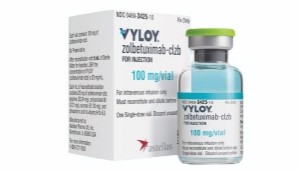
- Attention is turning to whether the gastric cancer targeted therapy Vyloy will succeed in its renewed bid and secure reimbursement after clearing the Cancer Disease Deliberation Committee review.Vyloy (zolbetuximab), developed by Astellas Korea for Claudin 18.2–positive gastric cancer, passed the Health Insurance Review and Assessment Service (HIRA) Cancer Disease Deliberation Committee in October last year and is currently undergoing procedures for submission to the Drug Reimbursement Evaluation Committee.Approved in Korea in September 2024, Vyloy failed to clear the CDDC review with its initial application in February last year but promptly submitted a reapplication, ultimately securing approval.Vyloy is the world’s first approved Claudin 18.2–targeted therapy. It is an immunoglobulin monoclonal antibody that binds to Claudin 18.2, a protein expressed and exposed in gastric cells.According to the Phase III SPOTLIGHT study, which formed the basis for Vyloy's approval, the median progression-free survival (mPFS) for Vyloy combined with mFOLFOX6 (oxaliplatin, leucovorin, fluorouracil) was 10.61 months, exceeding the placebo group’s 8.67 months. Median overall survival (mOS) was also longer at 18.23 months versus 15.54 months.In the GLOW study, the Vyloy plus CAPOX (capecitabine and oxaliplatin) combination group achieved a median progression-free survival of 8.21 months, reducing the risk of disease progression or death by approximately 31%.Professor Sun Young Rha of Yonsei Cancer Center stated, “About 90% of patients with metastatic gastric cancer are HER2-negative, underscoring the urgent need for therapies targeting new biomarkers. Given that about 40% of HER2-negative patients are reported to be Claudin 18.2-positive, the emergence of Vyloy, which selectively binds to Claudin 18.2, presents a new therapeutic option for these patients.”Meanwhile, the Korean Gastric Cancer Association revised its treatment guidelines on January 6, 2025, in the Journal of Gastric Cancer (JGC), granting Vyloy the ‘highest-level’ recommendation as first-line therapy for patients who are HER2-negative and Claudin 18.2-positive.Vyloy has also been listed as a standard treatment option in Japan’s gastric cancer guidelines and the European Society for Medical Oncology (ESMO) clinical practice guidelines. It is included as a preferred regimen in the U.S. NCCN guidelines, rapidly establishing itself as a global standard of care for gastric cancer.
- Policy
- Erleada Tab's expanded reimbursement bid falls through
- by Jung, Heung-Jun Feb 27, 2026 08:36am
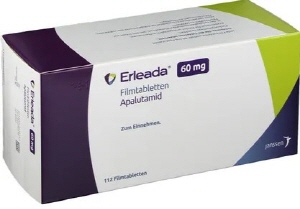
- Expanded reimbursement for Janssen Korea's Erleada (apalutamide), a treatment fors prostate cancer, fell through due to failed negotiations between the company and the National Health Insurance Service (NHIS).Erleada Tab has encountered a hurdle requiring a refund rate adjustment due to expanded reimbursement, as it is designated a Risk-Sharing Agreement (RSA) medicine. Janssen Korea plans to prepare for reapplication to expand the drug's reimbursement.According to industry sources on the 24th, Erleada Tab recently failed to clear the final hurdle in price negotiations with the National Health Insurance Service (NHIS), the last step before receiving expanded reimbursement.Erleada Tab was approved for reimbursement for treating 'metastatic hormone-sensitive prostate cancer' (mHSPC) in April 2023. It was listed at KRW 20,045 under a refund-type Risk-Sharing Agreement. Additionally, it became the first in the Androgen Receptor Targeted Agent (ARTA) to receive essential reimbursement, with a 5% patient co-payment.Then, the company applied to expand reimbursement to 'treatment of patients with high-risk non-metastatic castration-resistant prostate cancer (nm CRPC)', which was approved by the Cancer Disease Review Committee (CDRC) in March last year. In October of the same year, the Drug Benefit Evaluation Committee recognized the adequacy of this drug's expanded reimbursement.However, the issue appears to be the contract regarding the RSA refund rate associated with the expanded prescription target, and they ultimately failed to narrow the gap in their positions during negotiations.Janssen Korea stated, "Although these negotiations fell through, we plan to apply for expanded reimbursement again as soon as possible by following the procedures for re-initiating expanded reimbursement. We will continue to strive to improve treatment accessibility for patients."According to the pharmaceutical market research firm UBIST, Erleada Tab's prescription volume last year reached KRW 53.3 billion, a 71% increase from KRW 31.2 billion the previous year. Since receiving reimbursement for mHSPC in 2023, the drug has shown steep annual revenue growth.Competing products for Erleada Tab include Astellas' Xtandi (enzalutamide), indicated for high-risk nmCRPC, followed closely by Bayer's Nubeqa (darolutamide).In December last year, Nubeqa passed the first hurdle of the CDRC for establishing reimbursement criteria for ▲treatment of high-risk nmCRPC ▲combination with androgen deprivation therapy (ADT) for mHSPC patients ▲combination therapy with docetaxel and ADT for mHSPC patients.

- Policy
- Flexible pricing extended to listed drugs…boosts new drug exports
- by Jung, Heung-Jun Feb 27, 2026 08:36am
- The government’s decision to expand the dual-pricing “flexible pricing agreement scheme” to already-listed drugs is expected to support the global expansion of Korean new drugs.With the broader application of the scheme, cases like HK Inno.N’s K-CAB are likely to increase. Domestic pharmaceutical companies preparing for exports are already gearing up for the expansion.On the 25th, the MOHW decided at the Health Insurance Policy Deliberation Committee (HIPDC) to push to expand the flexible drug pricing scheme in the first half of this year to enhance the global competitiveness of new drugs.The Medical Care Benefit Rules will be revised to expand the flexible drug pricing contract system, currently applied to ‘new drugs developed by innovative pharmaceutical companies, etc.’, to cover ‘new drugs and biosimilars, etc.’.AI-generated imageAlthough the eligible products were not specified in detail, already-listed medicines are included among the targets.This means that Korean new drugs with established reimbursement ceiling prices will also qualify. Contracting a higher official listed price can work favorably when setting prices for exports.K-CAB, for example, had been subject to a price reduction under the price-volume agreement system, but maintained its listed price through negotiations with the NHIS. While not a treatment for severe diseases, the product’s expanding overseas exports meant that a price cut would have had significant repercussions.As the only Korean new drug granted dual pricing (flexible pricing), K-CAB was able to preserve competitiveness in overseas price negotiations.An industry official at the domestic pharmaceutical company A commented, “For listed medicines, the ceiling price is already visible, but if a product is being prepared for export, raising the listed price is highly beneficial. The domestic listed price serves as a reference when determining prices abroad. Companies are already expecting the inclusion of already-listed medicines and already preparing for this.”Because biosimilars are also included in the expanded scope, Korean companies such as Celltrion and Samsung Bioepis are likewise expected to benefit from expanding their global sales channels.Above all, the greatest beneficiaries are multinational pharmaceutical companies' new drugs and patients with rare and severe diseases. Maintaining a higher listed price in Korea helps avoid disrupting global drug pricing policies, thereby reducing the risk of “Korea passing” in launch strategies.The HIPDC materials also include plans to “continuously improve cost-effectiveness evaluations to better reflect the innovation and value of new drugs,” suggesting that access to new drugs from multinational pharmaceutical companies will likely improve further this year.
- Policy
- COVID-19 pill now limited to 'Paxlovid'… Lagevrio stock depleted
- by Lee, Jeong-Hwan Feb 27, 2026 08:36am
- From now on, oral COVID-19 treatments will be limited to 'Paxlovid.' This is due to the stock exhaustion of Lagevrio, another oral antiviral, which will lead to its discontinuation starting on the 17th of next month.On the 26th, the Korea Disease Control and Prevention Agency (KDCA, Commissioner Seung-Kwan Lim) announced that, since the government-supplied stock of Lagevrio has been depleted, the available oral treatments for COVID-19 will be restricted to Paxlovid only.Originally, among the three COVID-19 treatments supplied by the government (Paxlovid, Lagevrio, and Veklury), Paxlovid and Veklury received marketing authorization and have been covered by Nationa Health Insurance since October 25, 2024.Lagevrio's marketing authorization process has not been completed and has maintained only Emergency Use Authorization (EUA) to date. While it continues to be supplied on a limited basis using government inventory, its shelf life has expired, and its use will be discontinued starting from the 17th of next month.Paxlovid is used for mild-to-moderate patients among the elderly (aged 60 and over), those with underlying medical conditions, and immunocompromised individuals. Patients for whom Paxlovid administration is restricted typically use Lagevrio or Veklury.Once Lagevrio use is discontinued, patients previously eligible for Lagevrio can use Veklury. Clinics will need to refer patients restricted from Paxlovid to hospitals where Veklury can be administered.Meanwhile, the approval scope of Paxlovid was recently expanded by the Ministry of Food and Drug Safety (MFDS) to include patients with severe renal impairment, including those on dialysis (as of January 14).Patients with severe renal impairment, who were previously used to taking Lagevrio because Paxlovid was not recommended, can now be administered Paxlovid through dose adjustment. Consequently, it is expected that a significant number of patients who previously received Lagevrio due to difficulties in prescribing Paxlovid will now be able to transition to Paxlovid.The government is preparing measures to improve prescribing convenience at medical institutions to facilitate the use of Paxlovid, which will become the sole oral treatment available.Paxlovid involves some inconvenience in clinical settings because of the need to verify the patient's use of contraindicated drugs (40 types).To expand the use of Paxlovid among those taking contraindicated drugs, the KDCA plans to distribute pamphlets providing detailed guidance based on the marketing authorization (such as suspending the drug in question or prescribing alternative medications).
- Company
- Twice-yearly HIV treatment 'Sunlenca' nearing KOR mkt entry
- by Eo, Yun-Ho Feb 27, 2026 08:35am
- The domestic market entry of twice-yearly injectable 'lenacapavir', a new drug for HIV prevention, is imminent.The Ministry of Food and Drug Safety (MFDS) is currently conducting a final review for the approval of Gilead Sciences' Sunlenca (lenacapavir), an HIV treatment. It is expected to be approved as early as the first half of this year.The drug's detailed indication is 'to be used in combination with other antiretrovirals to treat patients with multidrug-resistant HIV-1 infection for whom antiretrovirals cannot be used.'This drug is the first-in-class long-acting HIV-1 capsid inhibitor that is subcutaneously administered every six months. It was approved in the United States and Europe in 2022 and is available for prescription.The current HIV treatment regimen requires daily oral administration of antiretrovirals. As long-acting agents are being developed, the treatment frequency has been extended to every 2 or 6 months.Although this indication has not been submitted for approval in Korea, lenacapavir is gaining interest because it can be used for prophylaxis, beyond HIV treatment.This drug obtained approval in the United States in June last year and in Europe in August of the same year as a 'pre-exposure prophylaxis (PrEP) to reduce the risk of sexually acquired HIV-1 infection in adults and adolescents weighing at least 35 kg who are at increased risk of HIV-1 infection.' The product name for lenacapavir used for prophylaxis is 'Yeytuo.'The efficacy of lenacapavir for PrEP was demonstrated through the Phase 3 PURPOSE 1 and PURPOSE 2 trials.The PURPOSE 2 study result has shown that lenacapavir reduced HIV infection by 96% compared to baseline HIV prevalence (HIV).In a group of 2,180 participants, only two cases occurred, showing that 99.9% of the participants in the lenacapavir treatment group did not become infected with HIV.In 2024, Gilead Sciences concluded the double-blind trial conducted in Sub-Saharan Africa early after meeting the key endpoints. This PURPOSE1 clinical trial evaluated lenacapavir as a PrEP among cisgender women.Meanwhile, lenacapavir was selected as 'Breakthrough of the Year' in Science, the academic journal and outlet for scientific news, based on these study results.
- Policy
- Novo Nordisk’s next-gen obesity drug enters Korean trials
- by Lee, Tak-Sun Feb 27, 2026 08:35am
- AI-generated imageNovo Nordisk, the developer of the obesity treatment Wegovy (semaglutide), will conduct multinational Phase III clinical trials for its next-generation obesity therapy in Korea.The candidate is amycretin, the company’s next-generation obesity treatment candidate , with the company aiming for global commercialization through multinational trials.On the 24th, the Ministry of Food and Drug Safety (MFDS) approved two Investigational New Drug (IND) applications for Novo Nordisk’s NNC0487-0111.One is a Phase IIIa trial (AMAZE 2) evaluating the efficacy and safety of once-weekly NNC0487-0111 s.c. in subjects with overweight or obesity and type 2 diabetes. The other is a Phase IIIb clinical trial (HF-POLARIS) evaluating the efficacy and safety of NNC0487-0111 versus placebo on morbidity and mortality in patients with obesity and heart failure with preserved or mildly reduced ejection fraction.NNC0487-0111 is the development code for amycretin, which is being developed by Novo Nordisk.Amycretin is a next-generation obesity treatment with a dual mechanism of action: it stimulates the GLP-1 receptor like Wegovy, while also acting on the pancreatic hormone amylin, which is involved in appetite regulation.Novo Nordisk is developing amycretin in both a once-weekly injectable formulation and a once-daily oral formulation. In earlier clinical trials, amycretin demonstrated up to 24.3% weight reduction over 36 weeks of subcutaneous administration.Based on these results, Novo Nordisk plans to conduct a multinational Phase III trial starting this year. Commercialization is expected after 2028. South Korea is included in the global, multi-national Phase III trial network.In Korea, the planned enrollment is 155 patients for HF-POLARIS (global total: 5,610) and 60 patients for AMAZE 2 (global total: 630).HF-POLARIS will be conducted at Wonju Severance Christian Hospital, Seoul National University Hospital, Chungnam National University Hospital, Gachon University Gil Medical Center, Pusan National University Yangsan Hospital, Inha University Hospital, Ajou University Hospital, Samsung Medical Center, Severance Hospital (Sinchon), Seoul National University Bundang Hospital, Keimyung University Dongsan Medical Center, Seoul St. Mary’s Hospital, Korea University Ansan Hospital, Seoul Asan Medical Center, and Hallym University Sacred Heart Hospital.AMAZE 2 will take place at Kyung Hee University Medical Center, Chonnam National University Hospital, Seoul Asan Medical Center, Seoul National University Hospital, Seoul National University Bundang Hospital, Yeouido St. Mary’s Hospital, and Severance Hospital (Sinchon).Novo Nordisk’s development of amycretin is viewed as a strategic move to maintain competitiveness in the GLP-1 obesity treatment market.In Korea, Wegovy and Eli Lilly’s Mounjaro have formed a two-horse race. Wegovy, approved by the MFDS in 2023, recorded domestic sales of KRW 467 billion last year, according to IQVIA.Mounjaro, which targets both GIP and GLP-1 receptors, was launched in Korea in the second half of last year and generated KRW 215.5 billion in sales. The two companies continue to compete globally, including through the development of oral obesity treatments.

- Company
- Wegovy and Mounjaro reshape Korea’s obesity drug market
- by Chon, Seung-Hyun Feb 26, 2026 07:48am
- Following the market impact of the obesity treatment Wegovy, Mounjaro has now begun its full-scale expansion in the domestic market. Wegovy exceeded KRW 100 billion in sales for three consecutive quarters, with annual sales nearing KRW 500 billion. Mounjaro nearly reached KRW 200 billion in sales within just 3 months, significantly disrupting the obesity drug landscape. Previously dominant treatments such as Saxenda and Qsymia have seen their market influence sharply decline.According to market research institution IQVIA, Novo Nordisk’s Wegovy recorded annual sales of KRW 467 billion last year.Wegovy, which was approved by the Ministry of Food and Drug Safety in April 2023, is a glucagon-like peptide-1 (GLP-1) receptor agonist containing semaglutide. Novo Nordisk developed Wegovy after identifying weight loss effects during clinical trials of GLP-1 diabetes candidates, ultimately advancing semaglutide into a once-weekly treatment for obesity.Wegovy gained explosive popularity immediately after its domestic launch in October 2024. It rapidly ascended to the top of the obesity drug market, generating KRW 60.3 billion in sales in Q4 2024.Wegovy surpassed KRW 100 billion in quarterly sales just 9 months after launch, reaching KRW 133.8 billion in Q2 last year. It recorded KRW 137 billion and KRW 116.7 billion in Q3 and Q4, respectively, achieving quarterly sales exceeding KRW 100 billion for 3 consecutive quarters. Novo Nordisk strengthened its commercial presence by signing a co-promotion agreement with Chong Kun Dang for Wegovy in September last year.Even before its domestic launch, Wegovy gained global notoriety through word of mouth as the weight-loss secret of overseas celebrities, such as Tesla CEO Elon Musk, leading to worldwide shortages. Despite its high price, Wegovy garnered explosive interest immediately after its domestic release, causing initial shortages.Wegovy's sales in the Q4 last year decreased by 14.9% compared to the previous quarter, analyzed to be due to the impact of price reductions and the emergence of the new product Mounjaro. Following Mounjaro’s launch in August, Novo Nordisk reduced Wegovy’s supply price by approximately 40%.Eli Lilly’s Mounjaro, which was launched domestically in August, generated KRW 215.5 billion in sales during the second half of the year alone.Mounjaro acts on both the glucagon-like peptide-1 (GLP-1) receptor and the glucagon-like peptide-1 (GLP-1) receptor, enhancing insulin secretion, improving insulin resistance, and reducing glucagon secretion. This induces reductions in both pre- and post-meal blood glucose levels. In Korea, Mounjaro was initially approved as a diabetes treatment in June 2023 and later secured an additional obesity indication in August 2024.Mounjaro generated its first sales of KRW 28.4 billion in Q3 last year and significantly outpaced Wegovy with KRW 187.1 billion in Q4. In Q4 last year, Wegovy and Mounjaro combined reached KRW 303.8 billion in sales, marking a historic milestone in Korea’s obesity treatment market.Mounjaro also surpassed Wegovy in the global market. Last year, Mounjaro sales reached USD 23.065 billion (approximately KRW 33 trillion), substantially exceeding Wegovy’s sales of DKK 79.1 billion (approximately KRW 18 trillion).Saxenda and Qsymia, which previously led the obesity drug market before Wegovy's arrival, have seen their market positions significantly eroded.Novo Nordisk's Saxenda saw its sales shrink by 84.4% in just one year, plummeting from KRW 65.6 billion in 2024 to KRW 10.2 billion last year. Saxenda had dominated the obesity treatment market since its launch in 2019, achieving sales of KRW 42.6 billion that year and maintaining its leading position for 5 consecutive years until 2023. Saxenda's sales reached KRW 66.8 billion in 2023, but dropped significantly after Wegovy's launch.Launched domestically in 2018, Saxenda was the world’s first GLP-1 analogue approved for obesity treatment. It shares the same active ingredient (liraglutide) as Victoza, differing only in dosing regimen. The arrival of Wegovy, another GLP-1 agonist like Saxenda, has further eroded Saxenda's market share.Alvogen Korea’s Qsymia recorded annual sales of KRW 35.6 billion, reflecting an 8.8% year-on-year decline. Qsymia, a combination of phentermine and topiramate, entered the Korean market in late 2019. While Qsymia experienced a smaller sales decline compared with Saxenda, its revenue remained below 10% of Wegovy’s, indicating a substantial contraction in market presence.

- Policy
- Opposition boycott puts pharmacy and drug bills on hold
- by Lee, Jeong-Hwan Feb 26, 2026 07:48am
- On the 24th, the main opposition party, the People Power Party, decided to launch a filibuster on all bills submitted for consideration, along with a full boycott of standing committee proceedings, in response to the Democratic Party’s unilateral push to proceed with a plenary session.As a result, the meetings of the 1st and 2nd Subcommittees of the Legislation and Judiciary Committee of the National Assembly’s Health and Welfare Committee, originally scheduled for the 25th and 26th this week, now face uncertainty regarding whether they will convene.Particularly for Subcommittee 1, chaired by People Power Party lawmaker Miae Kim, the atmosphere suggests it is highly unlikely to convene.While some within the ruling party have suggested holding a plenary session alone to review Subcommittee 1's bills, unilaterally reviewing and passing livelihood bills would inevitably invite criticism for bypassing established inter-party consensus procedures.If Subcommittee 1 fails to convene, bills expected to be tabled, including legislation on limited international nonproprietary name (INN) prescribing for drugs facing supply instability or designated as nationally essential medicines, as well as bills regulating the labeling, advertising, promotion, and establishment scale of warehouse-style pharmacies, would lose their opportunity for review.This would effectively delay the examination of livelihood-related legislation within the Health and Welfare Committee due to ongoing partisan conflict.Meanwhile, the 2nd Subcommittee of the Legislation and Judiciary Committee, chaired by Democratic Party lawmaker Sujin Lee, could theoretically proceed without participation from the People Power Party. Among its jurisdiction is the bill proposing the establishment of a public medical school, a key component of the Lee Jae-myung administration’s policy agenda to strengthen regional, essential, and public healthcare.However, even this remains uncertain. Holding a subcommittee meeting solely by the ruling party to review and pass bills could face opposition from the opposition party later and could escalate conflict between the ruling and opposition parties within the Welfare Committee.As a result, the schedule for the Welfare Committee's bill subcommittees has been disrupted due to clashes between the ruling and opposition parties over the third amendment to the Commercial Act, which primarily concerns mandatory retirement of treasury shares, judicial reform bills, and the Special Act on Administrative Integration.An official from the Democratic Party's Welfare Committee office said, “While the Subcommittee 2 (chaired by the Democratic Party) might be able to convene with the ruling party alone, Subcommittee 1 appears difficult to hold. There have been suggestions to conduct an article-by-article review of Subcommittee 1 bills at the plenary session level, but the political burden is considerable.”
- Policy
- DPK moves to hold Welfare Committee plenary session unilaterally
- by Lee, Jeong-Hwan Feb 26, 2026 07:47am
- The Democratic Party of Korea has decided to convene a plenary session of the National Assembly's Health and Welfare Committee on the 26th, solely with its own members, to receive a report from the Ministry of Health and Welfare on current issues, including medical school enrollment expansion and regional, essential, and public healthcare policies.This move comes in response to the main opposition party, the People Power Party, conducting a filibuster (unlimited debate) and deciding to boycott all standing committee proceedings, citing the Democratic Party's unilateral handling of the plenary session agenda.Notably, some Democratic Party members of the committee have also raised the need to review and pass bills assigned to the first Subcommittee of the Legislation and Judiciary Committee during the plenary session.However, such a move is expected to trigger significant friction with the People Power Party over future standing committee operations and bill deliberations.According to a Democratic Party official on the 25th, the Health and Welfare Committee (Chair Jumin Park) has tentatively decided to hold a plenary session on the afternoon of the 26th. During the session, the Ministry of Health and Welfare will present reports on key pending issues, including medical school quota expansion, emergency medical care, and the regional physician initiative, and adopt the plan for a public hearing on the Patient Basic Act bill.The second Subcommittee of the Legislation and Judiciary Committee will convene as scheduled at 10 a.m. on the 27th.This decision to proceed with the Welfare Committee plenary session and the second Subcommittee of the Legislation and Judiciary Committee's meeting was made solely by the Democratic Party, without involvement from the People Power Party.It is reported that the decision to hold the plenary session solely by the Democratic Party came after the first Subcommittee of the Legislation and Judiciary Committee meeting, originally scheduled for the 26th, could not be held due to a boycott by the People Power Party.A key point of attention is whether the Democratic Party will attempt to deliberate and pass bills assigned to the first Subcommittee of the Legislation and Judiciary Committee during the plenary session.This necessity arose because some ruling party welfare committee members have strongly criticized the fact that the subcommittee has not convened for several months and argued that it may now be necessary to process pending legislation at the plenary level.The problem is that if the Democratic Party reviews and votes on bills under the jurisdiction of the first subcommittee at the plenary session without the opposition parties, including the People Power Party, the Welfare Committee could face disruptions in its normal operations due to clashes between the ruling and opposition parties.A Democratic Party welfare committee official hinted, “Due to the opposition party's lack of cooperation, bill subcommittee meetings failed to take place in December and January, and there is now a risk that February will follow the same pattern. There are strong voices from some lawmakers stating the necessity to review past livelihood-related bills during the plenary session.”

- InterView
- "Precision medicines accelerate for treating atopic dermatitis"
- by Son, Hyung Min Feb 26, 2026 07:47am
- Korea's treatment landscape for atopic dermatitis is facing a clear turning point. For the past 10 years, treatment strategies have centered on moisturizers, topical therapies, and immunosuppressants, which have remained the standard of care. The rapid introduction of new drugs, such as biologics and JAK inhibitors, is fundamentally changing the management of moderate-to-severe patients.Professor Yang-Won Lee of the Department of Dermatology at Konkuk University Medical CenterProfessor Yang-Won Lee of the Department of Dermatology at Konkuk University Medical Center, recently appointed as the President of the Korean Atopic Dermatitis Association, emphasized, "We have entered an era where the paradigm of atopic treatment is shifting," adding, "Insurance, policy, and clinical applications must be adjusted by reflecting the changes in patient groups and waves of new drug introductions."The patient population for atopic dermatitis in Korea has changed significantly compared to the past. The prevalence has increased, and in particular, the proportion of adult atopic patients has expanded greatly, making a realignment of treatment strategies inevitable. Adult patients face long disease courses and a high proportion of chronic cases, creating a need for long-term treatment options that satisfy both safety and efficacy.Related to this, the successive launches of biologics have provided a new alternative. Following the introduction of 'Dupixent (dupilumab, an IL-4/IL-13 inhibitor)' as the first interleukin agent in 2018, various biologics, including LEO Pharma's 'Adtralza (tralokinumab, an IL-13 inhibitor)', have emerged, expanding treatment options incomparably compared to the past.With the addition of new drugs that are Janus kinase (JAK) inhibitors, the field of systemic treatment for moderate-to-severe patients has effectively entered a new phase.However, despite the expanded treatment options, the common consensus in the field is that patient accessibility remains limited.Professor Lee identified the 'restriction on switching therapies' as an area for improvement. While switching between biologics and JAK inhibitors has been permitted under certain conditions, switching within the same class remains prohibited, which is pointed out as narrowing the range of choices for patients.Professor Lee expressed his concerns, stating, "Given the characteristics of atopic dermatitis patients who have complex pathophysiology, there seem to be many constraints on tailored treatment. This is an area that requires improvement."Q. How do you feel about starting your term as the new President, and what is your opinion?I have been active in the Korean Atopic Dermatitis Association for a long time. In particular, I participated from the very beginning in the process of creating a diagnostic code for severe atopic dermatitis in Korea, as none had existed previously. I also remember making my best efforts to ensure that severe atopic dermatitis could be covered under the 'Special Case Medical Expense Coverage System' system.It feels like those events were just yesterday, and I am honored to be serving as President. Iplant to improve the rights and interests of patients with atopic dermatitis, the treatments they desire, and research into the disease.Q. What are the primary goals or tasks that the Association will focus on during this term?There are largely two main goals. The first is improving the rights and interests of patients with atopic dermatitis. Recently, many new atopic dermatitis drugs, such as biologics and JAK inhibitors, have been launched. However, due to high costs, many patients suffering from the disease are unable to receive treatment with these new drugs.The Association will make every effort to ensure that health insurance and the 'Special Case Medical Expense Coverage System' system are applied to new drugs as quickly as possible.The other goal is to promote research on atopic dermatitis. As the Korean Atopic Dermatitis Association is an academic organization, I intend to fulfill my responsibilities, including supporting researchers dedicated to identifying the causes of atopy and developing treatments, and conducting collaborative research.Q. How do you think the patient population and disease patterns of atopic dermatitis in Korea have changed compared to the past? How do you think these changes have influenced the treatment paradigm?The first change is that the prevalence has increased. This is partly due to more patients proactively visiting dermatology clinics as the medical environment has developed, but environmental changes driven by industrialization and other factors also play a role.Another point is the increase in the number of adult patients with atopic dermatitis. As prevalence has increased and adult patients have become more numerous, the treatment paradigm has required new drugs that can ensure efficacy and safety for long-term treatment. In this context, the recently launched new drugs are playing a significant role.Atopic dermatitis can be divided into mild, moderate, and severe stages. Mild patients are treated proactively with moisturizers and topical treatments. For moderate-to-severe cases, topical treatments and systemic treatments are used together.Recently, new drugs such as biologics and JAK inhibitors have emerged, providing significant therapeutic benefit.Q. While treating moderate-to-severe atopic dermatitis patients, what are the limitations of existing treatment strategies. What are unresolved unmet needs?The biggest concern is the safety of existing conventional treatments.In many cases, moderate-to-severe patients become chronic and require long-term treatment. However, there are safety concerns regarding the long-term use of conventional therapies such as existing immunomodulators.Most of these issues are being addressed by new drugs such as biologics and JAK inhibitors. However, while the side effects of these new drugs are not severe, it seems necessary to be well-informed about the specific side effects of each drug to select the appropriate medication.Currently, many atopic dermatitis treatments are being developed, and clinical trials are underway. The main direction is the development of targeted therapies that can secure higher safety and efficacy. In my opinion, the treatment of atopic dermatitis will evolve toward reducing side effects and increasing therapeutic effects through the development of targeted therapies that precisely target its pathophysiology.Q. How can IL-13 single-target drugs change patient management?Atopic dermatitis is a complex disease involving multiple immune pathways, but at its core, IL-13 plays a critical role in inflammation and skin barrier dysfunction.Single-target IL-13 therapy, such as Adtralza, specialized for the pathophysiology, has the advantage of precisely regulating the core inflammatory pathway while minimizing unnecessary immunosuppression. In particular, with Adtralza, the physician can adjust the administration cycle after 16 weeks of treatment, providing advantages in terms of patient convenience and economic factors.Q. Is there anything that needs to be improved in terms of treatment accessibility, insurance policy, or education?I would like to speak about the issue of switching therapies. Since December 2024, switching between biologics and JAK inhibitors has been permitted under certain conditions, expanding the range of treatment options.However, switching between a biologic and another biologic, or between JAK inhibitors, is still not allowed, and I hope this part will be improved. Regrettably, this seems to limit the tailored treatment of patients with atopic dermatitis who have complex pathophysiologies.Q. Do you have any hope or advice you would like to send to patients and families suffering from atopic dermatitis?Many patients and guardians still have much distrust, believing that atopic dermatitis treatments are toxic or that only corticosteroids are used.With the recent development and launch of new drugs such as biologics and JAK inhibitors, the paradigm of atopic dermatitis treatment has changed and advanced. That progress is continuing today.I hope that patients suffering from atopic dermatitis do not hesitate due to negative experiences from the past and instead visit a nearby dermatologist to receive proactive treatment.
