
- LOGIN
- MemberShip
- 2026-05-03 21:03:08
- Company
- AprilBio licenses out novel drug to a U.S. firm
- by Son, Hyung-Min Jun 21, 2024 05:47am
- AprilBio, a company developing biopharmaceuticals, announced on June 20th that it has licensed out 'APB-R3,' an autoimmune diseases candidate, to the U.S.-based novel drug developer Evommune. It has been contracted for up to US$475 million (approximately KRW 655 billion), including a non-refundable upfront fee of US$15 million (KRW 20.7 billion), with a separate royalty payment for sales. APB-R3 is a biological candidate targeting interleukin (IL)-18. Since there are no commercialized products with the same mechanism, APB-R3 will be the first-in-class drug when it is commercialized. AprilBio demonstrated the drug tolerance and safety of APB-R3 in recently disclosed phase 1 trial results. A clinical trial enrolling 31 healthy adults showed that all recipients treated with APB-R3 did not have severe adverse reactions. Furthermore, there were no reported deaths related to the treatment. Evommune is a biotechnology company founded in April 2020. The company is developing novel drugs for inflammatory diseases and is working on developing treatments for atopic dermatitis and psoriasis.
- Policy
- DLBCL treatment Epkinly is approved in Korea
- by Lee, Hye-Kyung Jun 21, 2024 05:47am
- The Ministry of Food and Drug Safety(Minister: Yu-Kyoung Oh) announced that it had approved the orphan drug 'Epkinly (epcoritamab)' that is being imported by Abbvie Korea on the 20th. Epkinly is a bispecific monoclonal antibody that binds to both the CD3 on the surface of T-cells and CD20 on the surface of B-cells and is indicated for the treatment of adult patients with relapsed or refractory diffuse large B-cell lymphoma (DLBCL) after 2 or more lines of systemic therapy. As one of the most common blood cancers, DLBCL is a type of non-Hodgkin's lymphoma it spreads out over a large area (diffuse) and is characterized by its rapid progression. Epcoritamab binds to CD3 to activate T cells and binds to CD20 to bring B cells to the side of activated T cells and induce T-cell–mediated killing of CD20+ malignant B cells. The MFDS said, “We expect Epkinly’s approval to prove new treatment opportunities to patients with relapsed or refractory DLBCL who have received two or more prior therapies. We will continue to build on our regulatory science expertise to ensure that new therapies are promptly supplied to expand treatment opportunities for patients with rare and intractable diseases.”
- Company
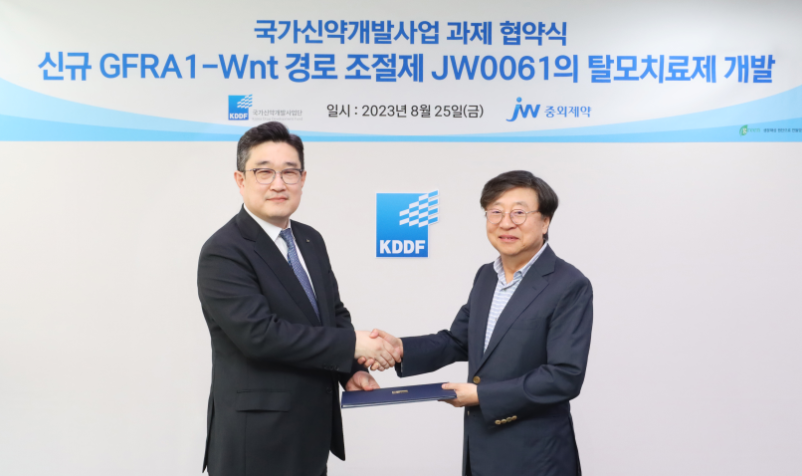
- JW Pharmaceutical’s new drugs enter clinical trials
- by Son, Hyung-Min Jun 21, 2024 05:46am
- JW Pharmaceutical is accelerating the development of innovative first-in-class drugs. Recently, the company's STAT3-targeted anticancer drug candidate entered Phase I clinical trials. In addition to targeted anticancer drugs, the company also owns first-in-class drug candidates in the fields of atopic dermatitis, hair loss, and blood cancer. JW Pharmaceutical's competitive edge in drug development is its R&D platform. JW Pharmaceutical is developing innovative new drugs by utilizing its own platforms JWELRY (JW Excellent LibraRY) and CLOVER (C&C researchLaboratoriesOmics serVER) and 3D cancer organoids secured through open innovation, and artificial intelligence (AI). 3 3 candidates enter clinical trials through the CLOVER platform...secures many first-in-class new drug candidates According to industry sources on the 21st, JW Pharmaceuticals received approval for its IND (investigational new drug application) to initiate a Phase I trial for its targeted anticancer drug candidate JW2286. The Phase I clinical trial will evaluate the safety and tolerability of JW2286 in 70 healthy Korean and Caucasian adults at Seoul National University Hospital. In the preclinical trial, JW2286 demonstrated efficacy and safety compared to standard of care in STAT3-overexpressing solid tumors. In particular, JW2286 showed an effect in hard-to-target triple-negative breast cancer. JW2286 is a first-in-class drug candidate that selectively inhibits STAT3. STAT3 is known to be one of the causes of various inflammatory diseases, autoimmune diseases, and cancer, and is highly expressed in various solid tumors, including gastric, colorectal, and triple-negative breast cancers. In the past, Japanese companies such as Sumitomo Dainippon Pharma and Otsuka Pharmaceutical have been developing STA3-targeted antitumor drugs, but have failed Phase I clinical trials due to lack of efficacy and toxicity issues. JW Pharmaceutical has secured a clear mechanism of action for targeting STAT3 through its drug discovery platform ‘CLOVER’. CLOVER can derive small molecules that inhibit or activate the STAT signaling pathway and is regarded as a platform that can perform holistic research on mechanisms and biomarkers. Through the platform, JW Pharmaceutical has been developing various new drugs through the efficacy of combining candidates with immuno-oncology drugs that utilize the characteristics of tumor immune microenvironment regulation and its biomarker development strategies. Currently, the company's new drug candidates that have entered clinical trials include JW2286, JW1601 for atopic dermatitis, and URC102 for gout. JW Pharmaceutical JW1601 has a dual mechanism of action that selectively acts on the histamine H4 receptor to block the activity and migration of immune cells that cause atopic dermatitis while inhibiting histamine signaling. Histamine is a neurotransmitter involved in allergic reactions. However, JW1601 reportedly failed to meet its primary endpoint in a global Phase II trial. As there are no atopic dermatitis drugs with this mechanism, it would have been the first new drug in its class if developed but was unable to reach the commercialization stage. JW Pharmaceutical plans to review the future development direction for JW1601 with the possibility of securing new indications in mind. URC102 is a best-in-class gout drug being developed by JW Pharmaceutical. The new drug candidate has a mechanism of action that inhibits urate transporter 1 (URAT-1), which allows uric acid to be absorbed back into the body and discharged well. It was approved for a Phase III clinical trial in Korea in 2022 and has entered clinical trials in China and Taiwan to confirm its commercialization potential. In addition to STAT3 anticancer drugs, JW Pharmaceutical is also exploring the possibility of developing a STAT3-targeted atopic dermatitis drug, STAT5/3 dual-targeted anticancer drug, and an antibody-drug conjugate (ADC) using the CLOVER platform. Makes bid into the development of first-in-class new drugs in the field of hair loss and blood cancer JW Pharmaceutical has secured the first-in-class new drug candidates 'CWP291' and 'JW0061' in the fields of hair loss and blood cancer. The two drug candidates, which target the Wnt signaling pathway, were derived from JW Pharmaceutical's ‘JWELRY’ platform. JW Pharmaceuticals has been studying the Wnt signaling pathway since the early 2000s and has accumulated data to develop the JWELRY platform. Wnt plays an essential role in cell proliferation or differentiation, and organ development and morphogenesis in animals. Wnt pathway inhibition inhibits the formation, proliferation, and metastasis of cancer cells in various tissues, inhibits cancer stem cell activity, and has an anti-fibrotic effect. On the contrary, activating the Wnt pathway is known to be involved in tissue regeneration by inducing stem cell and cell proliferation. JW Pharmaceutical is developing JW0061, a new drug candidate for hair loss, through the activation of the Wnt signaling pathway. The preclinical trial results that have been recently released show that JW0061 has demonstrated superiority in hair follicle production and hair growth compared to existing standard treatments. JW0061, a Wnt-targeted hair loss treatment, was selected as a ‘2023 1st National new drug development project In animal models with androgenetic alopecia, JW0061 was administered in four groups: low dose JW0061, high dose JW0061, standard of care (dutasteride or finasteride), and placebo. Results showed that both low and high doses of JW0061 accelerated hair growth compared to standard of care. JW Pharmaceuticals is also developing CWP291, which targets blood cancers by inhibiting the Wnt signaling pathway. CWP291 is a targeted anticancer drug that inhibits Wnt/β-catenin signaling. The potential of the drug candidate is being studied for multiple cancers, including acute myeloid leukemia, multiple myeloma, and gastric cancer. According to the Phase Ia trial results to date, one complete response (CR) and one partial response (PR) were confirmed among 54 patients with acute myeloid leukemia with CWP291.
- Opinion
- [Reporter’s View] Reliability Verification Review Committee
- by Lee, Hye-Kyung Jun 20, 2024 05:48am
- The Ministry of Food and Drug Safety has formed a Reliability Verification Review Committee. In the 'Guideline for Drug Manufacturing, Sales, and Import Marketing Authorizations and Labeling Change Authorizations,' which was revised by the MFDS on the 17th, a procedure was added for the Reliability Verification Review Committee to verify the reliability of the permit data submitted by companies during the drug approval and review process. In the past, if data with questionable reliability was submitted during the approval and review process, nothing happened if the applicant withdrew the data. Unreliable data is data that is false or falsely presented data. In other words, if false data was submitted intentionally or unintentionally and detected, it was possible for the applicant to just withdraw the application in a ‘no harm no foul’ sense. However, in the future, the data submitted to MFDS will not be nullified even if the company 'voluntarily withdraws’ or 'voluntarily cancels’ the data. The reliability of all the data submitted will be verified without exception. If the committee determines that the submitted data is not credible, it will notify the headquarters and the follow-up department to initiate pharmacovigilance. This process will be applied to all data that are currently under review, even before the committee is formed. What should not be overlooked is that a suspicion of the reliability of an item in the approval/review stage can taint the reliability of the entire drug manufacturing plant during pharmacovigilance. The MFDS said that if the reliability of a single data in the early stages of review is questioned, it is possible to suspect "falsehood" and "falsity" of the entire manufacturing process. Therefore, if data submitted during the approval/examination stage is even slightly wrong, whether intentionally or unintentionally, this one issue can lead to 'revocation of the GMP certificate’ in the pharmacovigilance process. The MFDS also said that it "cannot be said that it is irrelevant" that the "questionable data" submitted by companies that do not follow the principle of good faith may be subject to future disposals up to the revocation of their GMP certificate. Although it may seem like just the MFDS reorganizing, launching a new committee, and refining its procedures, the launch of the Reliability Verification Review Committee seems to be one of those serious regulations that can even lead to the revocation of GMP certificate.
- Company
- ‘Treatment access improved for Lysosomal Storage Diseases'
- by Son, Hyung-Min Jun 20, 2024 05:48am
- Dr. Jong-Hee Chae, professor of Clinical Genomic Medicine at Seoul National University Hospital "Lysosomal storage diseases show various symptoms throughout the body, making it difficult to diagnose the disease based on clinical manifestation alone. Therefore, it is important to diagnose it early and prevent the progression of symptoms with enzyme replacement therapy." On September 19, Sanofi held a press conference at the Lotte Hotel in Jung-gu, Seoul, to celebrate the reimbursement expansion of newborn screening tests for lysosomal storage disease, a rare inherited disorder. Experts at the conference emphasized the importance of early detection of lysosomal storage diseases. Lysosomal storage diseases (LSD) are genetically caused deficiencies in certain enzymes that lead to metabolic abnormalities. Lysosomes, which are organelles within cells, contain enzymes that break down substances that the body no longer needs. When these enzymes become abnormal or are not produced, substances that should be broken down gradually accumulate in the cell. Typical lysosomal accumulation diseases include ▲Pompe disease (motor dysfunction), ▲mucopolysaccharidosis (recurrent otitis media, hernia, or spinal deformity), ▲Gaucher disease (visceral enlargement, hematologic abnormalities), and ▲Fabry disease (peripheral pain). Dr. Jong-Hee Chae, professor of Clinical Genomic Medicine at Seoul National University Hospital, said, “Lysosomal storage diseases progress progressively from childhood and cause irreversible damage to the body. Early diagnosis and enzyme replacement therapy can prevent the development of symptoms before damage occurs." Currently, treatments for Pompe, mucopolysaccharidosis, Gaucher, and Fabry diseases are available, but accurate diagnosis remains difficult. 16.4% of patients suffer through a diagnostic odyssey, visiting four or more hospitals before receiving a final diagnosis. It took more than 10 years for 6.1% of these patients to receive the right diagnosis after recognizing their symptoms. This is why experts welcomed the reimbursement expansion that allows newborn screening tests to identify some lysosomal storage diseases starting this year. On January 1, the government included 6 enzyme assays for lysosomal storage diseases (GALC, GBA, GLA, GAA, IDUA, and ASM) to the reimbursement list. Beginning this year, newborns born within 28 days of birth can be screened to identify abnormalities in lysosomal enzymes at an early stage. This will allow newborns with lysosomal enzyme abnormalities to be screened at an early stage, allowing patients with these findings to go to a medical institution and receive accurate diagnosis and discuss treatment options. Dr. Jung Ho Lee, Professor of Pediatrics at Soonchun Hyang University Seoul Hospital, said, “Due to low awareness of the disease, patients had limitations in gathering information about lysosomal storage diseases. In line with the reimbursement expansion that covers newborn screening, we need to raise public awareness of each disease.” Dr. Lee added, “We should promptly conduct newborn screening to identify and treat patients with diseases for which treatments have been developed." Dr. Chae added, "New treatments have emerged for various lysosomal storage diseases, and advances in medical technology are increasing the number of patients who can be treated upon diagnosis. Early treatment after the detection of symptoms can help maintain normal growth and prevent symptoms from occurring, so we need to diagnose patients early and provide aggressive treatment.
- Policy
- When will 'Paxlovid' become reimbursable?
- by Lee, Tak-Sun Jun 20, 2024 05:48am
- Pfizer The review of 'Paxlovid (nirmatrelvir‧ritonavir, Pfizer),' a COVID-19 drug, for reimbursement has been prolonged. It has been over eight months since the submission of the reimbursement application last October, yet it has not been considered for the Drug Reimbursement Evaluation Committee (DREC) review. Because the Paxlovid free-of-charge program ended in May and is now available with co-payment, there are postulations that this has caused delays in the reimbursement listing. The Paxlovid item was not considered for review during the 6th meeting for 2024 of the DREC of the Health Insurance Review and Assessment Service (HIRA), held on June 13th. The drug reimbursement application for Paxlovid was submitted in early October of last year. After that, HIRA initiated the reimbursement review, including seeking academic opinions. The government and Pfizer expected a reimbursement decision to be made within the first half of the year. However, since the item was not considered for the DREC review in June, it is unlikely to become reimbursable in July. Pfizer Korea, the distributor of Paxlovid, submitted a response letter to HIRA five times. However, HIRA appears to have requested additional supplementary documents. The industry postulates that the two parties have different opinions about setting the drug pricing. The free-of-charge program has ended, and Paxlovid is now available through co-payment. Patients are required to pay KRW 50,000, which is approximately 5% of the drug price, for the drug. However, it is still provided free of charge for medical reimbursement benefit recipients and those eligible for co-payment reduction due to having the second-lowest income. Since the free-of-charge program ended, the government has been under less financial burden. Analysis suggests that this may have reduced the need for the government to quickly make Paxlovid reimbursable. Furthermore, with the co-payment for the drug, there may be a decrease in its usage. Additionally, if Pfizer continues to advocate high drug pricing, the reimbursement listing process may take much longer. However, the demand for COVID-19 treatment remains high due to its ongoing occurrence and the spread of COVID-19 variants. Experts say that Paxlovid should become reimbursable shortly to lessen patient burden and improve treatment access. Meanwhile, researchers at Stanford University disclosed that a 15-day course of Paxlovid did not provide relief for 'long COVID' symptoms. In a study conducted for 15 weeks enrolling 155 patients with long COVID who have not recovered from COVID-19 for over 16 months on average, Paxlovid treated for 15 days did not significantly improve symptoms, including fatigue, difficulty breathing, feeling sick, stomach aches, and heart symptoms, compared to placebo. However, researchers additionally demonstrated that taking Paxlovid, which is a 5-day course of treatment, for 15 days is safe.
- Company
- ‘Long-term treatment for osteoporosis is now possible'
- by Son, Hyung-Min Jun 20, 2024 05:48am
- Dr. Byung Ho Lee, professor of Orthopedic Surgery at Gangnam Severance Hospital The improved reimbursement standards for osteoporosis drugs have created a treatment environment that promotes fracture prevention. Healthcare professionals have pointed out that the treatment continuation rate of osteoporosis patients has been low stressing the importance of continuous treatment to minimize the risk of fracture. On Sept. 19, Amgen Korea held a media session at the Lotte Hotel in Jung-gu, Seoul, to introduce its treatment strategies in response to the changing osteoporosis treatment environment in Korea. The Ministry of Health and Welfare expanded the duration of reimbursement for major osteoporosis treatments last month. Previously, only patients with a T-score of -2.5 or lower using dual-energy x-ray absorptiometry (DXA) were eligible for reimbursement, but those with a T-score of -2.5 or higher and -2.0 or lower can now receive reimbursement for their treatments for up to 2 years. Experts such as the Korean Society of Osteoporosis and the Korean Society for Bone and Mineral Research have consistently raised the need to expand the reimbursement standards. The number of osteoporotic fractures in Korea is increasing every year, but only 36% of patients receive medication for their osteoporosis within a year after suffering a fracture. Patients with osteoporosis gradually lose bone mass, and experience fractures in the spine, femur, wrist, etc. at the slightest impact. However, because osteoporosis has no symptoms, it is often not actively treated. In particular, the percentage of patients who continue treatment is low due to limited reimbursement standards. Dr. Byung Ho Lee, professor of Orthopedic Surgery at Gangnam Severance Hospital, said, "Studies have shown that osteoporosis increases the risk of new fractures fivefold within 1-2 years after a fracture. The mortality rate within 1 year of hip and spine fracture is 30% and 20%, respectively. It is imperative that ultra-high-risk patients that are at high risk of fracture receive the drug treatment." The changed reimbursement standards are expected to increase the utilization of osteoporosis medications such as Prolia (denosumab), Evenity (romosozumab), and bisphosphonates. Osteoporosis drugs are divided into bone stimulators (such as Evenity), which build the bone, and bone resorption inhibitors (such as Prolia and bisphosphonates), which inhibit the differentiation and action of osteoclasts. Dr.Lee said, "Sequential treatment with a bone stimulator inhibitor followed by a bone resorption inhibitor is more effective than vice versa. Therefore, It is important to continue the use of bone resorption inhibitors after bone stimulators in high-fracture-risk patients.” Dr. Bum Joon Kim, professor of Endocrinology at Seoul Asan Medical Center, said, "The longer the treatment is administered, the better the effectiveness is for osteoporosis and the lower the risk of fracture. The treatment goal should be a T-Score of -2.0 or higher, not -2.0, which is the current reimbursement standard. For Prolia, there is no clinical limit set on the treatment duration. The extended reimbursement has fostered the environment for long-term treatment, so it is important now for us to continue administering the drug.” Dr. Bum Joon Kim, professor of Endocrinology at Seoul Asan Medical Center
- Policy
- 'Approvals-Reimbursement Reviews-Price Negotiations' pilot
- by Lee, Hye-Kyung Jun 20, 2024 05:48am
- The government is preparing to commence “The 2nd Pilot Project for Integration of Product Approvals, Reimbursement Coverage Reviews, and Drug Price Negotiations” The pilot system is intended to concurrently process applications to the Ministry of Food and Drug Safety (MFDS), reimbursement assessment, and drug price negotiations. Following the first pilot program last year, the government initiated a demand survey to commence the second pilot program in the second half of the year. According to the industry sources on June 19th, the Ministry of Health and Welfare (MOHW)’s Pharmaceutical Benefits is conducting a demand survey for drugs to participate in the second approval-assessment-negotiations pilot program. This program aims to improve patient access to treatments for severe diseases and strengthen reimbursement management. “The 2nd Pilot Project for Integration of Product Approvals, Reimbursement Coverage Reviews, and Drug Price Negotiations” in preparation. The 'approval-assessment package system' is now in effect to strengthen patient access to reimbursable treatments. This system has been designed to handle the marketing approval from the MFDS and reimbursement appropriateness assessment of HIRA at the same time. By expediting the drug price negotiations stage, the goal is to shorten the time it takes for the entire process, ensuring prompt drug reimbursement. The drug can be applied to HIRA’s insurance listing after receiving marketing approval by passing the safety and efficacy review from the MFDS. The course of the process is that once a reimbursement appropriateness decision is made and selected as a drug price negotiation or reimbursable drug, the drug can be reimbursable. The approval-assessment-negotiation packages will handle all three tracks simultaneously. Drugs that are eligible for approval-assessment-negotiation packages must meet the following conditions. For a drug to be considered for the second pilot program, ▲The drug must be eligible for approval and decision application by the end of June next year. ▲It should be a drug intended for treating life-threatening diseases (with a life expectancy of less than 1 year) or rare diseases with sufficient efficacy. ▲The drug must demonstrate clinically significant improvements in efficacy compared to existing treatments or be for conditions without current treatments. ▲It must meet the prerequisites for designation under the MFDS's Expedited Review and Approval (GIFT) program or be eligible for application. Required documents must include the planned date of application for approval, product name, ingredients, classification, indication, approval alignment (domestic/foreign), drug pricing application system, life expectancy, 5-year survival rate, clinical stage, presence of placebo, reimbursement status in South Korea for placebo, evaluation criteria, substitute drug, current treatment, degree of improvement, and number of subjects. Additionally, the document must include the estimated per capita and overall estimated financial requirements, excluded country reimbursement evaluation results, number of countries where pricing is listed, names of countries where pricing is listed, and company name. This document will be used as a reference for selecting drugs for the pilot program. The registration deadline is August 12th, and the documents can be submitted to the Korea Pharmaceutical and Bio-Pharma Manufacturers Association (KPBMA). Meanwhile, two items of treatments for pediatric rare diseases have been designated for the first pilot system and are under assessment for approval, reimbursement assessment, and drug pricing negotiations simultaneously.

- Company
- HK inno.N and others license out jointly developed candidate
- by Kim, Jin-Gu Jun 20, 2024 05:48am
- 'IMB-101(OXTIMA),' a dual-antibody candidate jointly developed by HK inno. N, IMBiologics, and Y-Biologics, was licensed out to a U.S. biotech company specializing in new drug development. The contract amounts to US$940 million (approximately KRW 1.3 trillion), including an up-front payment of US$20 million (KRW 27.6 billion). HK inno. N announced on June 17th that it has entered into a technology transfer agreement with Navigator Medicines, a U.S. new drug development company. The contract covers global countries except for Asia (Japan included). According to the contract, HK inno. N will receive a proportional share of the total contract. The company will also receive a royalty payment from sales after the launch. 'IMB-101,' under joint development of three companies, is a dual-antibody candidate that targets both OX40L antibody and TNF-α. It regulates both inflammatory cytokines and T-cells, targeting autoimmune diseases. This candidate was secured through joint research of HK inno. N and Y-Biologics commenced in 2016. Subsequently, it was transferred to IMBiologics in August 2020. IMBiologics is a company established by people who worked at HK inno.N. IMBiologics obtained the U.S. Food and Drug Administration (FDA) approval to conduct Phase 1 trials for 'IMB-101' in August of last year and accomplished license out before the completion of clinical trials. IMBiologics was responsible for heading the license out. An official from HK inno. N said, "It is meaningful that a jointly developed pipeline by three domestic pharmaceutical and biotech companies has shown potential for entry into the U.S. market by leveraging synergy in their respective areas." They added, "This achievement holds substantial significance. We will continue to strive for accelerated and visible outcomes through active open innovation across various aspects." An official from Y-Biologics said, "We commend the accomplishments of our joint development partners." They added, "We will continue to demonstrate the excellence of our antibody discovery platform and strive to become a global leader in novel antibody drug development."
- Company
- K-pharma speeds up Keytruda biosimilar development...
- by Kim, Jin-Gu Jun 19, 2024 05:46am
- Product photo of Keytruda. Biopharmaceutical companies in South Korea are fast-developing biosimilars referencing 'Keytruda (pembrolizumab),' which has ranked no.1 in global sales. Samsung Bioepis and Celltrion have initiated global phase 3 trials. Due to Keytruda’s leading position in global sales, competition is expected among the companies mentioned above, as well as U.S.-based Amgen and Swiss Sandoz, to develop biosimilars. Pharmaceutical companies in Korea and overseas are initiating global phase 3 trials for 'Keytruda biosimilar' According to industry sources on June 17th, Celltrion recently submitted an IND to the U.S. Food and Drug Administration (FDA) for its 'CT-P51,' which is being developed as a biosimilar referencing Keytruda. Celltrion will conduct a comparative effectiveness study to demonstrate equivalence between Keytruda, the original pharmaceutical, and CT-P51 in 606 patients with non-small cell lung cancer (NSCLC). Previously, Samsung Bioepis initiated a global Phase 3 trial for Keytruda biosimilar, 'SB27,' in April. Samsung Bioepis plans to conduct a phase 3 trial comparing the effectiveness and safety of SB27 to Keytruda, enrolling 616 patients with metastatic NSCLC across 14 countries. Samsung Bioepis (left), Celltrion. The analysis shows that competition to develop Keytruda biosimilars among companies, including biopharmaceutical companies in South Korea, globally is on the rise. Currently, U.S.-based Amgen and Swiss-based Sandoz have commenced phase 3 global clinical trials to develop Keytruda biosimilars. Amgen commenced a phase 3 global clinical trial for ABP234 in April of last year, and Sandoz initiated a phase 3 clinical trial for GME751 the same month. Keytruda’s substance patent expires after 2029…biosimilar companies aim for 'agreement' with the original company Global companies are expected to complete their biosimilar development between 2025 and 2026. Keytruda’s substance patent will expire in November 2029 in the United States and in January 2031 in Europe. Other patents, such as the use patent, formulation patent, therapeutic method-related patent, and process-related patent, tied to indications are still valid. Since Keytruda has over 30 approved indications, more than tens of patents are tied to these. The original company, with an 'evergreening' strategy, has secured the patent validity of Keytruda until after 2040 through numerous patents. Since there are more than tens of patents to overcome, companies developing biosimilars aim to reach an 'agreement' with the original company rather than launching products after patent challenges. Previously, in the cases of global pharmaceuticals, such as Humira and Enbrel, companies developing biosimilars launched their products through agreements with the original company, either by paying royalties or adjusting release dates. For these reasons, pharmaceutical industry experts anticipate that the timing of completing clinical trials will be a crucial variable for biosimilar developers. Completing biosimilar development quickly can provide an advantageous position over competing firms in negotiations over royalty payments to original companies or adjustments to launch dates. Top 10 pharmaceuticals in global sales prospects for 2024 (source: Evaluate) According to the pharmaceutical market research firm Evaluate, Keytruda generated US$25 billion (approximately KRW 33 trillion) in global sales last year, becoming the top-selling pharmaceutical globally. Previously, the top-selling pharmaceuticals were Humira from AbbVie from 2019 to 2020, and Pfizer's COVID-19 vaccine Comirnaty from 2021 to 2022. Keytruda is rapidly expanding sales through actively adding indications. After reaching US$10 billion (approximately KRW 13.3 trillion) in 2019, it showed steady growth topping US$20 billion (approximately KRW 26.7 trillion) in 2022. To date, Keytruda has secured more than 40 indications. In the Korean market, Keytruda is also a leading pharmaceutical with the highest sales. According to the pharmaceutical market research firm IQVIA, Keytruda generated sales of KRW 398.7 billion last year, up 66% from KRW 239.6 billion in 2022.
