
- LOGIN
- MemberShip
- 2026-05-03 18:18:43
- Company
- Eliquis generics will soon return to market
- by Kim, Jin-Gu Jul 03, 2024 05:50am
- Pic of Eliquis The patent for Eliquis (apixaban), a direct-acting oral anticoagulant (DOAC) worth KRW 80 billion a year, will expire in September. As such, generic versions of Eliquis, which were withdrawn from the market in 2021 due to the Supreme Court's reversed decision, will re-enter the market thereafter. The return of generics is expected to once again shake up the DOAC market, which includes Eliquis. In addition, the first generic exclusivity of Hanmi Pharmaceutical's Monterizine (montelukast-levocetirizine), Eisai’s Fycompa (perampanel), and Dong-A ST’s Jublia (efinaconazole) will expire in the second half of this year. This raises the possibility of further entry of generics upon the expiry of the preferential marketing period. Eliquis generics withdrawn by Supreme Court ruling will reenter after September According to the Korean Intellectual Property Office, 97 patents for 43 products will expire in the second half of this year alone. The most notable product among those is BMS’s Eliquis. Its product patent expires on September 9th. Except for the product patent, the rest of the patents have been invalidated by generic companies. The generic companies planned to relaunch the product in September to coincide with the expiry of the product patent. The companies have launched Eliquis generics since June 2019. However, the companies completely withdrew from the market nearly 2 years later in April 2021. Their products are returning to the market after more than 3 years. Their entry and withdrawal from the market was decided upon by the 1st to 3rd trial results of the patent suit. The generic companies won the first and second rounds of the product patent litigations in 2018 and 2019, based on which the companies launched their products. The generics quickly gained influence in the market, generating nearly KRW 10 billion in prescription sales in their second year. In Q1 2021, just before they were withdrawn from the market, the market share of apixaban-based DOACs reached 23%. But the tables turned in April 2021 when the Supreme Court reversed and remanded the trial court's decision. The companies pulled the infringing products from the market. Eliquis succeeded in regaining its unrivaled position in the apixaban-based DOAC market. During that period, Eliquis’s sales continued to grow steadily. Prescriptions for Eliquis jumped from KRW 52.3 billion in 2020 to KRW 63.1 billion in 2021, the year the generics were withdrawn. The prescription volume increased further to KRW 73.7 billion in 2022 and KRW 77.3 billion last year. Quarterly Prescription Sales of Eliquis and Eliquis Generics The return of generics after September is expected to significantly disrupt the overall DOAC market. In the past, Eliquis generics have quickly gained market share upon launch. In addition, they have secured plenty of new clients, selling generics of Xarelto (rivaroxaban), a drug in the same class whose patent expired before Eliquis. A total of 49 companies have authorized generics of Eliquis. 14 of them were selling the product before it was pulled from the market. The industry expectation is that around 15 of them will re-enter the market after September. In addition, patents for AstraZeneca's ovarian and breast cancer drug Lynparza (olaparib), Celgene's multiple myeloma drug Revlimid (lenalidomide), and Takeda Pharmaceuticals’ gastroesophageal reflux disease drug Dexilant DR (dexlansoprazole) will expire in the second half of the year. In the case of Revlimid, generic companies have already evaded the crystalline patent, which expires in September this year. Its product patent expired in 2017, and 4 companies had received approval for their generics then and have been selling generics. In the case of Dexilant DR, 6 companies, including Yuhan Corp, succeeded in avoiding all the remaining patents, including the formulation patent, which expires in July, and 1 generic has already been approved. In the case of Lynparza, one patent expires on the 23rd of this month. However, no company has yet challenged the development of Lynparza generics. First generic exclusivity of Monterizine-Jublia expires...opens the door for generic competition The exclusive sales period of major generics that have entered the market with a first generic exclusivity marketing authorization (first generic exclusivity) will also expire in the second half of this year. After the first generic exclusivity period expires, likely, latecomer generics will likely also enter the market. the first generic exclusivity period for Hanmi Pharmaceutical's asthma drug Monterizine expired on the first of this month. Monterizine’s patent was challenged by 20 companies, including Han Wha Pharm. The companies won the trial on 4 formulation patents last September and were granted a first 9-month generic exclusivity period. Within 9 months of launch, the companies won nearly 20% share in the montelukast+levocetirizine combination market. In Q1 this year, prescriptions for Hanmi Pharmaceutical's Monterizine amounted to KRW 4.3 billion, while the combined prescriptions for its generics amounted to KRW 1.1 billion. However, it is understood that there have been no follow-up actions made for the development of Monterizine generics thereafter. Industry analysts say this is because the market size of Monterizine is not large, around KRW 15 billion a year, and competition has been fierce, with as many as 20 companies having received the first generic exclusivity rights. On the 13th of this month, the distribution period for Eisai’s Fycompa generics for epilepsy will expire. Myung-in Pharm and Whan In Pharm successfully challenged and evaded Fycompa’s patent in 2020. Since October last year, Whan In Pharm’s Peranel Tab and Myung In Pharmaceuticals’s Pericompa Tab have been available as generic versions of Fycompa. However, the performance of the two generics during the marketing period has not been good. From the fourth quarter of last year to Q1 this year, the cumulative sales of Peranel and Pericompa were only around KRW 20 million each, compared to the KRW 2.2 billion earned by the original product during the same period. This is due to the high preference for original drugs in the CNS area. Dong-A ST’s nail fungus treatment Jublia will also expire in November. 16 companies challenged Jublia’s patent, and Daewoong Pharmaceutical and Dongwha Pharmaceutical received the first generic exclusivity rights to market its generics. Dongwha Pharmaceutical later handed over the license to Huons. So the other companies that challenged Jublia’s patent but did not receive the first generic exclusivity are expected to join in the generic competition. Given the summer peak in sales for nail fungus (onychomycosis) treatments, the companies may well join the competition next spring. Jublia’s sales last year were KRW 31.8 billion. This is up slightly from the KRW 31.4 billion in 2022.
- Company
- New drug 'Aquipta' for migraine available for prescriptions
- by Eo, Yun-Ho Jul 03, 2024 05:50am
- AbbVie Korea The new drug 'Aquipta,' an oral migraine treatment, is becoming available in general hospitals in South Korea. According to industry sources, AbbVie Korea’s Aquipta (atogepant), an oral calcitonin gene-related peptide (GRRP) receptor antagonist for migraine treatment, has passed the drug committee (DC) of the ‘Big 5’ tertiary general hospitals, including Seoul National University, Kangbuk Samsung Hospital, Hallym University Dongtan Sacred Heart Hospital, and Inha University Hospital. Since its official launch last month, it has expanded indications. Aquipta is drawing attention as the first and only oral treatment option within the same class. In 2021, the U.S. Food and Drug Administration (FDA) approved Aquipta for the prophylaxis of episodic and chronic migraine in adults. In August, it received European approval for the prophylaxis of migraine in adults who have four or more migraine days per month. The basis for the approval in South Korea was the PROGRESS, ADVANCE, and ELEVATE Phase 3 studies. In the PROGRESS study, the efficacy and safety of Aquipta in preventing chronic migraine was compared to those of placebo. In the study, 521 adult patients with a diagnosis of chronic migraine for at least a year (greater or equal to 15 headache days and at least 8 migraine days) were randomized 1:1 to the Aquipta treatment or placebo treatment. The primary endpoint was changes from baseline in monthly mean headache days across a 12-week treatment period. The results demonstrated that the Aquipta treatment group had a reduction in monthly mean headache days by 6.9 days from baseline, compared to 5.1 days for the placebo group. The ADVANCE study compared the efficacy of Aquipta in preventing episodic migraines to that of placebo. The study involved 458 patients with a history of chronic migraine 4 to 14 days per month. The results demonstrated that the Aquipta treatment group had a reduction of monthly mean migraine days from baseline by 4.2 days, compared to a reduction of 2.5 days for placebo. In the ELEVATE study, which evaluated the preventative effect of chronic migraine in patients who previously failed prophylaxis, Aquipta treatment showed more significant reduction in monthly mean migraine days compared to placebo. "CGRP treatment is significantly effective in preventing migraines. Previously released treatments of injection formulation required monthly hospital visits, whereas oral treatment provides patients with more treatment options," Byung-Kun Kim, Professor of Nowon Eulji Hospital, said.
- Company
- CSL Behring’s hemophilia B Tx Idelvion is reimbursed in KOR
- by Kang, Hye-Kyung Jul 03, 2024 05:50am
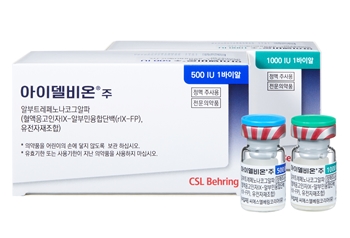
- CSL Behring Korea's hemophilia B treatment Idelvion (albutrepenonacog alfa,) will be reimbursed by Korea’s national health insurance starting in July for the treatment of adult and pediatric patients. Pic of IdelvionIdelvion is approved for the control and routine prophylaxis of bleeding in adults and pediatric patients and for perioperative management (control and prevention of bleeding during surgical procedures). According to the Ministry of Health and Welfare's 'Notification of Partial Amendment to the Details on the Application Standards and Methods of Medical Benefits (Pharmaceuticals)', its single dose is 23 IU/kg (30 IU/kg for children), and for moderate or severe bleeding, up to 39 IU/kg (up to 50 IU/kg for children) is allowed based on the medical judgment of the doctor. However, if hospitalization is required but outpatient treatment is provided, or if an increase in dose is absolutely necessary based on clinical symptoms and test results, it may be authorized with a physician's note. The standard for the number of doses is up to 2 doses at the patient's first visit every 4 weeks and 1 dose at the second visit (2 doses for severely ill patients). Patients may also be prescribed a total of 3 doses (4 doses for severely ill patients) at 1 visit every 4 weeks, at their physician’s discretion. Idelvion is a fusion protein formed by genetically fusing recombinant factor IX (rFIX) with recombinant human albumin (rFIX-FP). It is capable of maintaining high FIX trough levels and has a mean half-life of 143 hours at a 21-day dose (100 IU/kg). Professor Eun Jin Choi, Department of Pediatrics, Daegu Catholic University School of Medicine, said, "In the clinical trial, we found that more than 20% reached the lowest FIX trough level with prophylaxis at 7-day intervals in patients 12 years and older. The results were consistent in repeated PK measurements in a large number of patients, making it easy to predict its treatment effect." Professor Choi added, "Given the lifelong nature of hemophilia, which requires self-injection, we believe that the convenience of a once-every-3-weeks dosing regimen will also help patients manage their disease.” Idelvion was approved in Korea by the Ministry of Food and Drug Safety in March 2020 for the treatment of hemophilia B in children and adults based on top-line clinical results. It can be administered at intervals of up to 21 days as prophylaxis, making it the drug with the longest dosing interval among any extended half-life hemophilia B treatment approved in Korea.
- Company
- Daewoong and LG Chem launch Humira biosimilar 'Xelenka'
- by Kim, Jin-Gu Jul 03, 2024 05:50am
- Daewoong Daewoong Pharmaceutical and LG Chem said on July 1st that they have launched 'Xelenka,' a Humira (adalimumab) biosimilar. Daewoong Pharmaceutical and LG Chem signed a distributer agreement for domestic sales earlier. Under the agreement, LG Chem will supply Xelenka to Daewoong Pharmaceutical, and Daewoong will handle domestic sales and marketing. Xelenka is the third biosimilar to Humira, and it received market approval from the Ministry of Food and Drug Safety (MFDS) in December 2023. Since its release, Xelenka is priced at KRW 22,390 (40 mg) and is under insurance reimbursement. This is the most economical price among Humira biosimilars in South Korea. Both companies anticipate that Xelenka will relieve patients’ treatment burden and help reduce National Health Insurance finance. Xelenka is available in two formulations: a pre-filled syringe containing injectable drug and a pen-type autoinjector, which allows automatic injection of a drug through the device. Xelenka autoinjector is designed with LG Chem’s patient-friendly design. When using a conventional autoinjector, patients must place the device on an injection site and press a button. In contrast, Xelenka has been designed so that drug is injected automatically with a slight push at the injection site. The development, clinical trials, market approval, and production of Xelenka were carried out in South Korea. Because of the domestic production, issues arising during product manufacturing can be quickly solved. Furthermore, safety issues have been minimized by strictly regulating the distribution process, such as temperature control and storage conditions. Through joint research between South Korea and Japan, Korean physicians’ experiences in clinical settings were reflected. Comparative efficacy research demonstrated the equivalence of Xelenka to Humira. LG Chem conducted a clinical phase 3 trial, which evaluated the long-term efficacy and safety of Xelenka and Humira for 52 weeks in 383 patients with active rheumatoid arthritis in South Korea and Japan. The primary endpoint, 'DAS28-ESR score at 24 weeks compared to a reference value,' demonstrated Xelenka’s equivalence. Its safety profile was not significantly different from that of the group treated with Humira. The adverse reaction (AE) rate for the Xelenka group was 68.2%, and that for the Humira group was 71.2%. The AE rate for the entire study period (52 weeks) showed no significant difference. A patient group treated with Humira for the initial 24 weeks and then switched to Humira also showed no difference in efficacy and safety. Xelenka is indicated for the treatment, similar to Humira, of ▲Rheumatoid arthritis ▲Psoriatic arthritis ▲Ankylosing spondylitis ▲Chron’s disease in adults and children ▲Ulcerative colitis ▲Behcet disease ▲Uveitis ▲Hidradenitis suppurativa ▲Juvenile idiopathic arthritis ▲Juvenile plaque psoriasis. Daewoong Pharmaceutical will contribute to treating diseases and improving human quality of life through the continuing expansion of its biopharmaceutical pipeline, including biologics, and the development of various products. "We are delighted that the launch of Xelenka can reduce the cost burden for the nation and patients and also provide a reasonably priced treatment option in clinical settings,” Lee Chang-jae, CEO of Daewoong Pharmaceutical, said. And he added, "Daewoong Pharmaceutical will establish a foundation for growth as a global pharmaceutical company by expanding product lines in the biomedical market, including biosimilars."
- Company
- Hugel signs distribution partnership agreement with Benev
- by Nho, Byung Chul Jul 02, 2024 05:49am
- The global total medical aesthetics company Hugel(Chair: Suk-yong Cha) will officially enter the U.S. market through a strategic partnership with the U.S.-based Benev Company. The company began discussions on a partnership to sell its botulinum toxin product ‘(Letybo, Korean brand name: Botulax)’ in the U.S. in August last year, and finally decided to collaborate with Benev out of a total of 5 companies that had been competing for Hugel’s product. Established in California in 2000, Benev is an aesthetic company that researches, manufactures, and sells innovative aesthetic medical products such as exosomes, PDO threads, and radiofrequency micro-needles. It is one of the fastest-growing companies in the medical aesthetics market in the United States, with an average annual growth of more than 117% over the past 3 years. Hugel's decision to sell Letybo through its local partner, Benev, rather than directly, is said to have been made by the company’s capability to immediately launch products and scale sales in the U.S. market. However, rather than delegating all sales and distribution rights to its partner, as some of its competitors do, the two companies will work together on sales/marketing/education/research based on Benev’s strong sales network and is seeking to achieve a market share of approximately 10% in the U.S. within 3w years by leveraging Hugel's academic marketing capabilities and successful toxin business strategies in Australia and Canada. Hugel announced the launch of Letybo at the largest U.S. aesthetics show that was held in Las Vegas from June 27-30, and has completed initial production of the product for the U.S. launch. The first shipments are expected to begin in late July. Chairman Seok Yong Cha, said "We are delighted to be partnering with Benev on this transformational journey. Hugel has always been committed to the medical aesthetics philosophy of providing premium products and unparalleled academic programs. Our collaboration with Benev will forge a powerful alliance that will position Hugel as a true powerhouse in the global medical aesthetics market." Ethan Min, CEO of Benev, said, "We are proud to forge this strategic partnership with Hugel. We are confident that the combination of Hugel's unrivaled performance and Benev’s network will resonate with the market. With quality as our top priority, we look forward to expanding the scope of choice for healthcare professionals while providing a quality experience for our consumers as well."
- Company
- PNH drug Voydeya is approved…new treatment option for PNH
- by Hwang, Byung-woo Jul 02, 2024 05:49am
- A new option for adult patients with paroxysmal nocturnal hemoglobinuria (PNH) has been introduced in Korea with the approval of Voydeya (danicopan), a first-in-class oral factor D inhibitor. Logo of VoydeyaVoydeya is AstraZeneca Korea's PNH treatment that was approved by the Ministry of Food and Drug Safety (MFDS) on March 28th. Voydeya is a first-in-class oral factor D inhibitor and can be used as an add-on therapy to ravulizumab (Ultomiris) or eculizumab (Soliris) for PNH patients with symptoms or signs of extravascular haemolysis (EVH) i in patients who are already receiving a C5 inhibitor (ravulizumab or eculizumab). PNH is a rare disease caused by acquired genetic mutation that results in hemolysis and thrombosis, which can cause anemia, fatigue, hemoglobinuria, and even death. PNH Is treated with C5 inhibitors ravulizumab or eculizumab, which can reduce intravascular hemolysis and thrombosis. However, extravascular hemolysis can occur if defective red blood cells accumulate on C3 during treatment. The MFDS approval was based on the phase III ALPHA clinical trial. The study confirmed the superiority of Voydeya as add-on therapy in adult PNH patients treated with ravulizumab or eculizumab who developed significant EVH (haemoglobin ≤9.5 g/dL; absolute reticulocyte count ≥120 × 10⁹/L). Results showed that Voydeya met both the primary and secondary endpoints. The primary endpoint, change in hemoglobin concentration from baseline to week 12, was 2.94 g/dL for Voydeya versus 0-50 g/dL for placebo. The least squares mean (LSM) difference between Voydeya and placebo was 2.44 g/dL (95% CI 1.69 to 3.20; p
- Opinion
- [Reporter’s View] 'all-comers' with strict criteria
- by Eo, Yun-Ho Jul 02, 2024 05:48am
- Drugs that are intended for use regardless of any conditions are strictly regulated. In the pharmaceutical industry, 'all-comers' refers to a drug indication that can be prescribed at any treatment stage, regardless of conditions. Drugs with all-comers indications have demonstrated their efficacy regardless of receptors or genetic mutations. This is appealing and interesting. Yet, the Korean government has a firm stance towards these all-comers’ indications. It is certainly reasonable. Drugs with many uses, in other words, mean an increased volume of use, which then leads to financial consideration. However, the government’s discretion towards a drug seems to suggest another hurdle besides finance. Drugs with all-comers indication have proven records and gained the Ministry of Food and Drug Safety (MFDS) approval, yet a difference in efficacy exists. When reviewing reimbursement of all-comers that target particular genes, considering the mechanisms of drugs, but the basis of concluding effectiveness is irrelevant to those genes, the government stands by the guideline, 'limiting to originally targeted genetic mutations.' Such discretion is considered reasonable and to be considered with time. However, time hasn’t been helpful when we consider past cases. In the case of the PD-L1 inhibitor 'Optivo (nivolumab),' an immunotherapy medication for the treatment of non-small cell lung cancer (NSCLC) that was approved for all-comers indication, experts at the time agreed that 'PD-L1 expression rate' was not a marker. However, due to untimeliness of the drug’s release, Optivo was granted reimbursement in 2017 with a conditional criteria. Since then, numerous new drugs with all-comers indications have been released. Yet, these drugs are still applied with limited reimbursement criteria during the review for reimbursement listing. It suggests that the government must consider patients and propose a compromise along with carefulness. If pharmaceutical companies make unreasonable requests during the reimbursement discussion of a drug with approval, the government cannot accept them, especially since even the physicians oppose them due to financial issues. However, the government must provide reasons rather than just saying "difficult." Instead, the government must continue the discussion based on data evidence.
- Policy
- GSK will discontinue supply of Infanrix IPV
- by Lee, Tak-Sun Jul 02, 2024 05:48am
- GlaxoSmithKline has decided to discontinue supply of its ‘Infanrix IPV’ vaccine, which protects against diphtheria, tetanus, pertussis, and polio in children, in South Korea. Infanrix IPV and Sanofi Pasteur's ‘Tetraxim’ are the only DTaP-IPV vaccines used in the National Immunization Program (NIP), raising concerns about the shortage of vaccines and the shortage of vaccinations that will follow. GSK reported to the MFDS that it will discontinue the supply of Infanrix IPV Prefilled Syringe as of July 1. The reason for the suspension is low domestic demand. The company said, "It is difficult to import additional supply, and it will not be possible for the company to participate in future NIPs after the stock is exhausted. The remaining stock is expected to run out in January next year. In fact, sales of Infanrix IPV on IQVIA last year were not captured. Tetraxim, on the other hand, generated sales of $3.1 billion. The vaccine is used to prevent diphtheria, tetanus, pertussis (whooping cough), and polio in infants and children from 2 months of age. It is administered as 3 intramuscular injections of 0.5 mL at 2, 4, and 6 months of age, followed by a booster dose of 0.5 mL at 4 to 6 years of age. Infanrix IPV has experienced pediatric immunization shortages in the past. In 2016, the global DTaP vaccine shortage disrupted pediatric immunizations due to domestic supply disruptions. In 2016, a global shortage of the DTaP vaccine disrupted pediatric immunization schedules, and when the domestic supply of Infanrix IPV was temporarily suspended, Tetraxim’s stock also ran out due to high demand. In 2021, GSK’s vaccine was also suspended due to a paperwork error, and the MFDS allowed cross-immunization with an alternative vaccine. Such history suggests that the discontinuation of Infanrix IPV in the Korean market will inevitably cause disruptions on-site. A fundamental solution for this is localizing pediatric vaccines. Recently, LG Chem has begun localizing a hexavalent combination vaccine for infants and young children, but it will take time for the product to be commercialized in Korea. An industry official said, “Vaccines for nationally mandated vaccinations such as DTaP are entirely imported from foreign countries. Localization of vaccines required for nationally mandated vaccinations is urgently needed to protect people's health and improve national competitivity as seen during the COVID-19 crisis." .

- Company
- GLP-1 uses↑…targets MASH, diabetes, and obesity
- by Son, Hyung-Min Jul 01, 2024 05:48am
- New drug candidates of the GLP-1 class target metabolic dysfunction-associated steatohepatitis (MASH) in addition to diabetes and obesity. Global pharmaceutical companies, such as Novo Nordisk, Eli Lily, Boehringer Ingelheim, and Korean pharmaceutical companies, including Dong-A ST and D&D pharmatech, are developing GLP-1 agents for the treatment of MASH. GLP-1 can aid weight loss by increasing fullness and can enhance blood glucose control by increasing insulin secretion and sensitivity. Weight loss can have a positive impact on patients, as MASH occurs when fat saturates in the liver of individuals who have had low or no alcohol consumption. Nonetheless, pharmaceutical companies are working on the potential of GLP-1 for the treatment of MASH in addition to diabetes and obesity. New drug development for MASH by multinational pharmaceuticals companies. (from the top) Madrigal Pharmaceuticals’ Rezdiffra, Intercept Pharmaceuticals’ Ocaliva, Galmed Pharmaceuticals’ Aramchol, Novo Nordisk’s semaglutide, akero’s efrixiferm, Regeneron Pharmaceuticals and Alnylam Pharmaceuticals’ ALN-HSD, Viking Therapeutics’ VK2809, and others. According to industry sources on June 12th, Boehringer Ingelheim’s 'survodutide' and Lily’s 'Tirzepatide' demonstrated the effectiveness in Phase 2 clinical trials. These two new drug candidates are a type of glucagon-like peptide 1 (GLP-1). In a Phase 2 trial, survodutide, targeting both GLP-1 and glucagon, showed effects in the percentage of symptom worsening at 48 weeks compared to the placebo. This trial assessed the Survodutide’s effectiveness in 295 adults with MASH and liver fibrosis regardless of having type 2 diabetes. Based on recent clinical results, the percentange of patients who significantly improved in MASH-associated liver diseases withought worseninig of fibrosis stage was 83% in the survodutide treatment group, whereas 18.2% in the placebo group. The survodutide treatment group also had a higher percentage of patients with decreased liver fat over 30%, compared to the placebo. Eli Lily also confirmed the effectiveness of tirzepatide in a phase 2 trial for MASH. Tirzepatide is a GLP-1·GIP dual targeting agent with the same ingredient as Lily’s type 2 diabetes drug Mounjaro and obesity drug Zepbound. The SYNERGY-NASH Phase 2 trial, evaluating the effectiveness of tirzepatide, involved 190 MASH patients who have biopsy-confirmed moderate-to-severe fibrosis. At 52 weeks, established as the primary endpoint, the percentage of symptom improvement without worsening fibrosis was 43.6%, 55.5%, and 62.4% for tirzepatide 5 mg, 10 mg, and 15 mg, respectively. Korean companies show progress in MASH clinical trials New drug development for MASH by pharmaceutical companies based in South Korea. (from the top) Hanmi Pharm’s efocipegtrutide, Dong-A ST’s DA-1241 and DA-1726, HK inno. N’s FM-101, D&D pharmatech’s DD01, Yuhan’s YH25724, Ildong Pharmaceutical’s ID119031166, LG Chem’s LG303174 and LG203003. Korean companies are also focusing on the potential of GLP-1. Dong-A ST is developing DA-1241 with an underlying mechanism of GPR119, a receptor on beta cells in the pancreas, and is also considering the potential for combination therapy with a GLP-1 agent. Neurobo, Dong-A ST’s subsidiary, recently confirmed the effect of semaglutide in combination with a MASH novel drug candidate, DA-1241. Dong-A ST is exploring the potential of semaglutide, a GLP-1 agent, as a combination therapy in addition to its phase 2 trial for DA-1241 monotherapy. The trial evaluated the efficacy and safety of administering DA-1241 in combination with semaglutide in a metabolically altered MASH mouse model. The clinical results showed that mice treated with combination therapy improved NAS (liver fat activity score) by greater than a score of 1. Furthermore, the genetic analysis of liver tissue showed that the combination therapy significantly improved the expression of genes related to inflammation and fibrosis. Dong-A ST plans to make clinical entry for the combination therapy and present global phase 2 trial results on DA-1241 monotherapy. D&D pharmatech is conducting a phase 2 trial in the United States. The company recently received IND approval from the U.S. Food and Drug Administration (FDA). In preclinical trials, D&D pharmatech’s DD01, an agent targeting both GLP-1 and glucagon, has shown a significant decrease in liver fat and a weigh loss effect. In a phase 1 trial, the four-week treatment of DD01 reduced the liver fat by 50%. DD01’s phase 2 trial will be conducted across 10 institutes in the United States, enrolling 68 patients with MASH-accompanying overweight and obesity. 'Rezdiffra,' the only commercially available MASH treatment has an underlying mechanism of targeting thyroid hormone receptor The only drug commercialized for MASH treatment is Rezdiffra from the U.S.-based Madrigal Pharmaceuticals. The drug targets the thyroid hormone receptor (THR)-β. The U.S.-based Viking Therapeutics also conducted a phase 2b trial for a pharmaceutical with a similar mechanism to Rezdiffra and recently secured a positive result. In the clinical trial, Viking Therapeutics’ MASH candidate, known as VK2809, has significantly reduced liver fat. In the clinical trial VOYAGE, up to 75% of VK2809 treatment group had a MASH response, compared to 29% of the place group. The adverse reactions associated with the VK2809 treatment were mostly mild or moderate.

- Company
- Companies to focus on developing trispecific antibodies
- by Son, Hyung-Min Jul 01, 2024 05:48am
- The pharmaceutical industry in South Korea and overseas has begun developing trispecific antibodies that bind three targets. Previously, these companies focused on bispecific antibodies, which can bind simultaneously to two different antigens or two antigenic epitopes on a single antigen. Crossing the blood-brain barrier (BBB) can increase the drug permeability, especially for anticancer drugs. Multi-targeted antibodies have the advantage of crossing the BBB by target binding to receptors on the BBB surface. Recently, more companies have begun developing multi-targeted antibodies by matching antibodies that bind to both antigens regulating immune cell activity and specific antigens on tumor cells. Korean biotech companies, such as Shaperon, Celltrion, and ISU Abxis, and global pharmaceutical companies, including Gilead Sciences and Sanofi, have begun developing these. Korean biopharmas are developing trispecific antibodies According to industry sources on June 28th, Shaperon recently signed a memorandum of understanding (MOU) with Dong-A ST to develop trispecific antibodies as part of a new drug development. Through this collaboration, Shaperon will be responsible for nanobody development and Dong-A ST will use its antibody commercialization technology to focus on new global drug development. Since 2021, two companies have collaborated on developing trispecific nanobody antibodies for the treatment of cancer. This technology uses nanoantibodies to bring T cells and cancer cells closer together. Using nanobody advantages, Shaperon is developing nanobody-based various protein pharmaceuticals, including antibody-drug conjugates (ADC) and radiopharmaceuticals. Last year, Celltrion started developing trispecific antibodies in collaboration with Cyron Therapeutics, specializing in antibody development. These companies plan to develop new drugs using the CD3-targeting T-cell-engagers (TCE) platform. TCE multi-targeted antibodies are treatments that induce anticancer effects by effectively attacking cancer cells through T-cells. Recently, many global pharmaceutical companies are exploring the potential of TCE multi-targeted antibody development. However, no TCE-targeting multi-targeted antibodies have been commercialized. ISU Abxis is also developing immunotherapy for cancer using its trispecific antibody platform. For this research, ISU Abxis signed a substance transfer contract with Biocytogen, China’s global biotech company, and obtained a CD40 antibody in 2021. Biocytogen’s ‘YH003,’ a CD40 antibody new drug candidate, is under phase 2 clinical trial. ISU Abxis is preparing to develop a trispecific antibody using ‘YH003’ and its antibodies. Korean and global pharmaceutical companies that develop trispecific antibodies: (Korean companies) Shaperon recently signed a memorandum of understanding (MOU) with Dong-A ST, Celltrion started developing a T-cell-engagers (TCE) platform in collaboration with Cyron Therapeutics, and ISU Abxis acquired CD40 antibody from China’s Biocytogen. (Global companies) Sanofi acquired Amunix Pharmaceuticals and secured a T-cell-engagers (TCE) platform. Gilead Sciences discovered a TAA bispecific antibody in collaboration with a Dutch biotech company, Merus. MSD acquired the U.S.-based Harpoon Therapeutics and secured a trispecific T-cell engagers (TCE) platform. Global pharmaceutical companies are also developing…still in the early phases of clinical trials Global pharmaceutical companies are also developing trispecific antibodies, superior to bispecific antibodies. However, these companies’ R&D of multi-targeted antibodies is still in the early phases. Most new drug candidates remain in the early phases of clinical trials. Sanofi is developing a multi-targeted antibody that targets HER2. In 2021, Sanofi acquired Amunix Pharmaceuticals, a U.S.-based biotech company, for US$1 billion (approximately KRW 1.2 trillion). Amunix Pharmaceuticals is developing ‘AMX-818,’ a HER-2-targeting TEC that activates immune responses and attacks cancer cells. Gilead Sciences began developing trispecific antibody for cancer in March in collaboration with a Dutch biotech company, Merus. These companies will conduct joint research to discover novel tumor-associated antigen (TAA) bispecific antibodies. Merus owns a trispecific antibody platform called Triclonics, which is analyzed to have the potential for developing antibodies that bind three targets simultaneously. MSD is developing trispecific antibodies through the U.S.-based Harpoon Therapeutics, which MSD acquired in January. Harpoon Therapeutics owns the trispecific TCE platform, bispecific antibody, and cell therapy technology. SystImmune is conducting three cases of a phase 1 trial for a trispecific antibody in collaboration with China’s biotech company.
