
- LOGIN
- MemberShip
- 2026-05-18 18:57:15
- Company
- Drug exports in May amounted to ₩650 billion
- by Kim, Jin-Gu Jun 17, 2021 06:04am
- Korea's drug exports reached ₩650 billion in May. Exports are still export boom following last year. However, as imports increased, the trade balance posted in deficit for the second straight month from April. Monthly drug exports for the last two years (unit: $1 million, data: Korea Custom Service) By country, drug exports to Germany surpassed ₩1 trillion in five months. Pharmaceutical exports to Germany exceeded ₩2 trillion last year, reaching an all-time high, and exports are increasing more steeply this year. According to the Korea Customs Service on the 15th, Korea exported $585.07 million (about ₩650 billion) in May. Compared to $588.43 million in May last year, there is little difference. Last year's exports of medicines were the highest ever. The export boom continues until May. Monthly exports of medicines include $696.56 million in January, $714.57 million in February, $816.6 million in March, $468.19 million in April and $585.57 million in May. Drug imports include $634.76 million in January, $519.61 million in February, $727.51 million in March, 652.37 million dollars in April, and 689.42 million dollars in May. Compared to January-May of last year, it increased by 6%. Exports are similar to the previous year, and as imports increase, the drug trade balance has been in deficit since April. Korea's drug trade balance hit surplus for five consecutive months from November last year to March this year. However, it was $184.18 million in April and $14.35 million in May, respectively. By May, Germany had the largest cumulative export volume of $1210.77 million. Germany has become the largest exporter of medicines since 2019. In particular, exports increased even more this year. The figure has more than doubled from $553.39 million during the same period last year. From January to May, exports of medicines to Japan ranked second with US$197.24 million. It increased 40% from $141.04 million (₩160 billion) in exports from January to May last year. Exports to Netherlands also increased significantly. It was only $42.81 million (about ₩50 billion) until May last year, but it more than quadrupled to $189 million (about ₩210 billion) this year. Exports to the United States declined significantly. By May, exports to the U.S. amounted to $163.75 million (about ₩180 billion), down by half from $331.17 million (about ₩370 billion) during the same period last year. By 2018, Korea had been the largest exporter of medicines to the United States.
- Company
- Companies are nervous about investigating Varenicline
- by An, Kyung-Jin Jun 16, 2021 05:42am
- ChampixCompanies selling anti-smoking drugs, generic for Champix are on alert. Health authorities are investigating Nitrosamines impurities in Varenicline. It seems that sales are facing difficulties due to unfavorable factors such as COVID-19 incident and follow-up measures of impurities after passing the patent dispute in Korea. According to an industry on the 15th, pharmaceutical companies that manufacture and sell generics for Champix (Varenicline) are preparing documents related to testing impurities in Nitrosamine. This is because the MFDS identified the possibility of Nitrosamines impurities in Varenicline and ordered follow-up measures. As the possibility of detection of Nitrosamine impurities has been confirmed by Varenicline, it has taken follow-up measures of domestic products. Varenicline is the main active ingredient in Pfizer's anti-smoking drug, Champix. 34 domestic pharmaceutical companies that own generics for Champix, including Pfizer Korea, which sells original product, CTC Bio, The U, Medic Pharm, AusKorea, Hanmi, Jeil, PharmGen Science, Joonghun, Litepharm, Genuonesciences, TELCON RF, Ahn-gook, Ilhwa, Theragen Etex, Daewon, Whanin, Daewoong Bio, Crystallifescience, Alvogen Korea, JW Shinyak, Kyongbo, Kwang Dong, Vivozon, Korean Drug, Hutecs, Samjin, Mcnulty, Boryung, Yuyu, Hana, Ildong, and Pharvis are included. According to IQVIA, which is a pharmaceutical market research institute, Varenicline market formed ₩4.8 billion in first quarter of last year. Sales of Pfizer Korea's Champix are ₩4 billion, accounting for 83.9% of the total market. Only 12 generic companies, including Hanmi, Hutecs, Whanin, Alvogen Korea, Vivozon, CTC Bio, Boryung, Daewoong Bio, Mcnulty, and Jeil, generated sales in the first quarter. Sales of Hanmi's Nocotin S amounted to ₩500 million, the highest among Varenicline products. Other products were less than ₩100 million in quarterly sales. Sales of Hutecs' Nicopix are ₩76 million, while Hwanin's Nicover and Alvogen Korea's Topfix are in the top sales list with ₩50 million. Quarterly sales of Champix fell below ₩3 billion until 2014, but it surpassed ₩5 billion for the first time in the first quarter of 2015 and quarterly sales soared to ₩21.4 billion in the first quarter of 2017. As the market size decreased following the reduction in drug prices in 2018, Korean companies actively wanted to enter the Varenicline market. Some companies, including Hanmi, Chong Kun Dang, and Kyung Dong, started selling generics before the expiration of the patents, but lost the lawsuit of material patent avoidance, and were dismissed from the market. The generic market reopened in July last year with the expiration of the patent of Champix, but it has rarely recovered in the aftermath of COVID-19. Domestic pharmaceutical companies are concerned that the anti-smoking drug market will be further reduced if measures such as suspension of sales are taken due to the detection of excess impurities at a time when new cash cow excavation is urgently needed. Related companies are anxious because the MFDS' investigation of impurities has not been confirmed in detail. It is known that measures such as recovery due to the detection of impurities in Varenicline have not been taken overseas. "The Champix market is not large, but it is an area that is recently expected as a new cash cow," an official from a pharmaceutical company said. "There are many concerns that the market may be hit by unexpected detection of impurities."
- Company
- Daewoong registers patient for Phase 3 trial of Coviblock
- by Nho, Byung Chul Jun 16, 2021 05:42am
- Clinical trial approval status of Daewoong Pharmaceutical’s COVID-19 treatment Coviblock as registered on the Pharmaceutical Integrated intelligence system (image: screen capture of the Pharmaceutical Integrated intelligence system webpage) The first patient for the Phase III trial of Daewoong Pharmaceutical's COVID-19 treatment candidate 'DWJ1248 (brand name: Coviblock)’ has been registered. According to the clinical trial approval status disclosed on the Pharmaceutical Integrated intelligence system webpage, Daewoong Pharmaceuticals had registered its first patient on the 7th this month for its double-blind, randomized, controlled Phase III clinical trial for Coviblock to assess its effectiveness in preventing infections after exposure to the COVID-19 virus. The clinical trial will investigate the efficacy of Coviblock in preventing infections in people in self-isolation due to exposure to the COVID-19 virus. This is the only treatment study in Korea that investigates the preventive effect of a treatment after exposure to the COVID-19 virus. Coviblock contains the same active ingredient as Foistar, camostat mesylate. According to the eligibility criteria disclosed by the clinical trial patient recruitment company E.Jo Connections, subjects are selected among those exposed to the COVID-19 virus who are in self-isolation or have been tested negative for COVID-19 at an RT-PCR test; those that have been in contact with a COVID-19 confirmed individual within 5 days; those who do not have the 14 types of symptoms that suggest COVID-19 such as fever, cough, chills, muscle pain, etc. Camostat, the active ingredient of Coviblock, inhibits the multiplication of the COVID-19 virus by blocking the viral host cell entry and improves inflammation. Based on this mechanism of action, Coviblock is expected to prevent a person who was in close contact with the COVID-19 virus from being infected with COVID-19 by blocking the virus from entering the body's cells. On the 4th, Daewoong Pharmaceutical had completed the administration of Coviblock in a phase-2b trial that was conducted on mild COVID-19 patients. A total of 300 patients were recruited for the trial, and the company will start data analysis after observing the patients’ conditions for a certain period. If the company obtains positive results, it plans to seek conditional approval in the third quarter and consecutively conduct the phase 3 trial. An official from Daewoong Pharmaceutical said, “We will do our best to develop Coviblock as a treatment for COVID-19. We have implemented multiple approaches for the development of Coviblock to fulfill our social responsibility in overcoming COVID-19 as a pharmaceutical company." Coviblock’s main ingredient, camostat, has also been shown to be effective in various variants of the COVID-19 virus in several efficacy tests. In April, Institut Pasteur Korea (IPK) announced study results on the effects of camostat and niclosamide among others on Covid-19 virus variants in cell tests. Results showed that the drugs inhibited cell infection to a similar level in the Covid-19 virus, the U.K. variant (B.1.1.7) and the South African variant (B.1.351)." Various countries including the U.S. and Japan have been developing treatments, with some using camostat’s COVID-19 treatment effect. The Korean government is also making active efforts to overcome COVID-19 by providing support for the development of an oral treatment that is easy to administer, etc. Whether these global efforts will bring a breakthrough in the development of a treatment for COVID-19 is receiving attention.

- Company
- '100 Tylenols per pharmacy' provided to relieve shortage
- by Jun 16, 2021 05:41am
- Tylenols awaiting shipment at a pharmaceutical distribution company The shortage of Tylenol in pharmacies will be somewhat relieved with one hundred Tylenol 500mg being supplied to each pharmacy starting today. This measure to relieve the Tylenol shortage was made under the government’s request to Johnson & Johnson to release the 5 million the company stockpiled for next year, and Johnson & Johnson shipped the products to the wholesalers in charge of distributions yesterday, on the 14th. The first shipment contains 2.4 million Tylenols. The Korean Pharmaceuticals Distribution Association divided the pharmacies by region to allow ‘fair distribution to all pharmacies’ and selected 40 wholesale companies to cover the regions. The 40 wholesalers in charge of distribution started taking preorders last week. An official from one wholesale company said, “We started taking orders from last week, and as of the 14th, some wholesalers have already started receiving their supply. So companies will be able to distribute the supply from today (15th).” In the second supply, 2.6 million more Tylenols will be released. Therefore, the 23,000 pharmacies that have ordered its 100 Tylenols from the first supply will be able to order additional Tylenols on an as-needed basis. An official from the pharmaceuticals distribution industry said, “The equal supply of Tylenol to pharmacies in all regions rather than in some pharmacies will improve patient access to the drug.” On this, the Ministry of Food and Drug Safety said, “With support from relevant organizations, the ministry will work to enable smooth supply of acetaminophen to the people in need at the right time in line with the government's vaccination plan. Also, we will share the supply and demand status with relevant institutions through regular monitoring and immediately support the administrative matters necessary to suppliers to increase production of acetaminophen products.” Earlier, the Ministry of Food and Drug Safety, Korean Pharmacists’ association, Korea Pharmaceutical and Bio-Pharma Manufacturers Association, Korea Pharmaceuticals Distribution Association, and Tylenol’s manufacturer Johnson & Johnson had met to discuss measures to stabilize the supply of acetaminophen that has faced shortage following COVID-19 vaccinations. The organizations decided to designate 40 pharmaceutical distributors by region to ensure a stable supply of Tylenol in all regions.
- Company
- Jeil Pharma's new OAB treatment ‘vibegron’ nears release
- by Kim, Jin-Gu Jun 16, 2021 05:41am
- Vibegron product that is being sold by Kyorin Pharmaceutical ‘Vibegron,' a new drug indicated for the treatment of overactive bladder (OAB) that Jeil Pharmaceutical acquired a domestic license for from Kyorin Pharmaceutical, is soon to be approved in Korea. Two clinical trials related to the domestic approval and manufacturing of Vibegron have been completed or are near completion. At the earliest, it is expected that the drug may be released within this year. According to industry sources on the 14th, Jeil Pharmaceutical had recently completed its Phase I clinical trial on vibegron. The trial investigated the safety and pharmacokinetics of JLP-2002 in comparison with the original drug. The trial was conducted for the purpose of receiving approval for Jeil Pharmaceutical's direct manufacturing of Vibegron in Korea. Prior to this study, Jeil Pharmaceutical had received approval for its IND application and conducted the trial on 33 patients in Korea in January this year. In addition, the bridging study (Phase III trial) for the domestic approval of Vibegron is also in its final stages of completion. Jeil Pharmaceutical had started the bridging study for the domestic approval of Vibegron in May last year. The study was conducted on 201 patients in 20 hospitals in Korea, including the Seoul Asan Medical Center. The company enrolled its final subject mid-last month. The investigation for the last participant is expected to be completed near the end of this month. Jeil Pharmaceutical plans to proceed with the domestic production and marketing approval procedures as soon as the clinical trial results are released. This raises the possibility that the product may be released in the market within this year at the earliest. Jeil Pharmaceutical had signed an exclusive domestic licensing agreement for vibegron with Japan's Kyorin Pharmaceuticals in 2019. Vibegron, Kyorin’s new overactive bladder (OAB) treatment, was in-licensed by Kyorin from MSD, and released as ‘Beova’ in Japan in November 2018. The drug received U.S. FDA's approval last December. In the U.S., Urovant Sciences received approval for the drug under ‘Gemtesa.’ Urovant Sciences is a subsidiary of Japan’s Sumitomo Dainippon Pharma. After vibegron is released, the OAB market in Korea is expected to heat up from its full-scale competition with the existing market leader ‘mirabegron (Betmiga).’ Betmiga is the most-prescribed treatment for overactive bladder in Korea. According to the pharmaceutical market research frim UBIST, out-patient prescription sales of Betmiga recorded 65.1 billion won last year. Also, Betigma's prescriptions recorded 15.4 billion won in the first quarter of this year. Vibegron's mechanism of action is similar to mirabegron's as the two drugs are both selective β3-adrenoceptor agonists. The recommended dosage is also 50mg once daily for both. However, medication adherence is known to be higher for vibegron as it has fewer adverse events than existing treatments. Vibegron's has also shown positive sales in Japan. According to Kyorin Pharmaceutical's annual report, sales of vibegron recorded 4.3 billion yen (about 43.8 billion won) in 2019 and 7.3 billion yen (about 74.3 billion won) in 2020 in Japan.

- Company
- Investigation of Varenicline has been undertaken
- by Chon, Seung-Hyun Jun 16, 2021 05:41am
- Health authorities have launched an investigation into Nitrosamines impurities in non-smoking drugs "Champix" and generics for Champix. According to industries on the 14th, the MFDS recently ordered pharmaceutical companies to follow up on Varenicline's impurities (Nitrosamines). The MFDS said, "Recently, there is a possibility of Nitrosamines impurities among Varenicline." The MFDS requested, "To take preventive measures, we will review the manufacturing process and follow-up measures such as testing impurities in Nitrosamines." Varenicline is a major active ingredient in Pfizer's anti-smoking drug Champix. 34 domestic pharmaceutical companies have generics for Varenicline. As the possibility of detection of nitrosamines impurities was confirmed by Varenicline, follow-up measures of domestic distribution products have been taken. "We requested follow-up measures to collect information on impurities from Varenicline," said an official from the MFDS. N-nitrosodimethylamine (NDMA) and N-nitrosodiethylamine (NDEA) detected in Valsartan, Losartan, Nizatidine, Ranitidine and Metformin in Korea since 2018. Pharmaceutical companies have completed inspections of Nitrosamine impurities such as NDMA and NDEA. In November 2019, the MFDS ordered pharmaceutical companies to submit a report on the possibility of Nitrosamine-based impurities in all raw materials and finished drugs, and the data submission was completed in a year and a half. The MFDS must submit data on impurities in all medicines to allow lot release without testing for Nitrosamines impurities. It is the second time this month that the MFDS has ordered investigations into impurities. Earlier on the 4th, the MFDS asked pharmaceutical companies to submit Azido impurities evaluation and test results of three raw materials, Irbesartan, Losartan and Valsartan, by the 14th. The MFDS ordered the raw material manufacturer to submit a statement of reasons even if it is impossible to obtain related data. This is a follow-up to the recent recovery of drugs with excess Azido impurities in Canada. Health Canada took measures on the 31st of last month to recover Irbesartan, Losartan and Valsartan that exceeded Azido from nine pharmaceutical companies, including Teva and Sandoz. Azido is a type of azide carcinogen. There is no known specific risk of cancer in the human body, although it may increase the risk of cancer. Nitrosamines impurities such as NDMA have been detected in Korea since 2018, but no recovery measures have been taken due to the detection of Azide-based impurities.
- Company
- Celltrion released the results of Regkirona's clinical trial
- by An, Kyung-Jin Jun 16, 2021 05:41am
- Celltrion Kim Sung-hyun, head of the medical division, is introducing the results of clinical trial toplineCelltrion is going to launch a global targeting of Regkirona (Regdanvimab), COVID-19 antibody treatment drug developed with its own technology. The government plans to eliminate controversy over efficacy and revitalize domestic and foreign markets through large-scale clinical trials. Celltrion held an online press conference on the morning of the 14th to introduce the results of clinical trials in Regkirona. Regkirona is a COVID-19 antibody drug developed by Celltrion. Based on the results of clinical trial in February, it has been supplied to medical institutions with conditional permission from the MFDS. Among patients confirmed with COVID-19, symptoms develop within seven days and do not require oxygen treatment and are administered to patients aged 60 or older or accompanied by underlying diseases such as cardiovascular disease, chronic respiratory disease, diabetes, and high blood pressure. Celltrion announced that it has proven its efficacy and safety by releasing the results of Regkirona's global clinical trials. This is the result of administering Regkirona to 1,315 patients with COVID-19 mild to moderate symptoms in 13 countries around the world, including South Korea, the U.S., Spain and Romania, starting in January this year. In April, all subjects completed the medication and announced the results of the top line after 28 days of treatment. Based on the previously conducted clinical trial, the dosage of Regkirona was determined to be 40 mg/kg, and the administration time was reduced from 90 minutes to 60 minutes. According to the announcement, the entire group of patients who received Regkirona secured statistical significance, with a 70% decrease in severe exacerbation compared to placebo groups. It is a similar level of treatment effect to 72% of patients with high-risk groups accompanied by elderly or underlying diseases. The time it took to improve clinical symptoms was 8.4 days for the entire Regkirona' administration group, down 4.9 days from 13.3 days for the placebo group. In the case of high-risk patients, the administration of Regkirona was reduced by more than 4.7 days compared to the placebo group to 9.3 days. However, in the case of patients who received placebo among high-risk groups, the number of patients who have had clinical symptom improvement by the 14th is less than 50%, which is difficult to compare accurately. In the analysis of safety assessment results, the number of patients who experienced adverse reactions in the Regkirona administration group and placebo group was similar. One out of 652 Regkirona groups was hospitalized for skin rashes, but recovered after treatment, and most of the abnormalities were mild. Celltrion expects to calm the controversy over efficacy at the time of the announcement of the trial by securing large-scale three-phase clinical results. "Clinical Phase 2 had a limit on the number of patients by treatment group and placebo group, but sufficient cases were secured in Phase 3 clinical trials," said Kim Sung-hyun, head of Celltrion's medical division in charge of the announcement. "As a result of statistical analysis by designating four major evaluation indicators for the most important clinical outcome, the severe exacerbation rate and time to improve clinical symptoms, we proved a clear difference between treatment and placebo groups in all evaluation indicators." Celltrion plans to apply for Regkirona's item approval from the MFDS based on data from the Phase III clinical trial. According to Kim, Celltrion has completed the supply of more than 5,000 Regkirona in Korea through a supply contract with the KDCA. More than 4,500 patients were given Regkirona at 84 designated hospitals nationwide for COVID-19 treatment. Celltrion is also expected to quickly approve Regkirona from major global regulators such as the U.S. Food and Drug Administration (FDA) and the European Medicines Agency (EMA). Celltrion will introduce Regkirona-related data at the "2021 ECCMID" oral presentation session, which will be held online from July 9 to 12. It plans to announce detailed results of phase 3 clinical trials of Regkirona within the first half of the year and update group companies' response strategies for COVID-19, including variable virus response strategies. Although the number of COVID-19 vaccinations has increased worldwide, the demand for COVID-19 treatments is still sufficient. He said,"It is difficult to accurately understand global demand for supply of Regkirona." However, there is a demand for Regkirona because the number of confirmed cases of COVID-19 is still continuously occurring. He added, "We are coordinating exports of Regkirona with major foreign countries including Europe. As we have proven the efficacy and safety of Regkirona through large-scale clinical trials, it will have a positive impact on more prescribed at home and abroad."
- Policy
- Ruling/opposition parties fight over supply & COVID vaccine
- by Lee, Jeong-Hwan Jun 15, 2021 05:53am
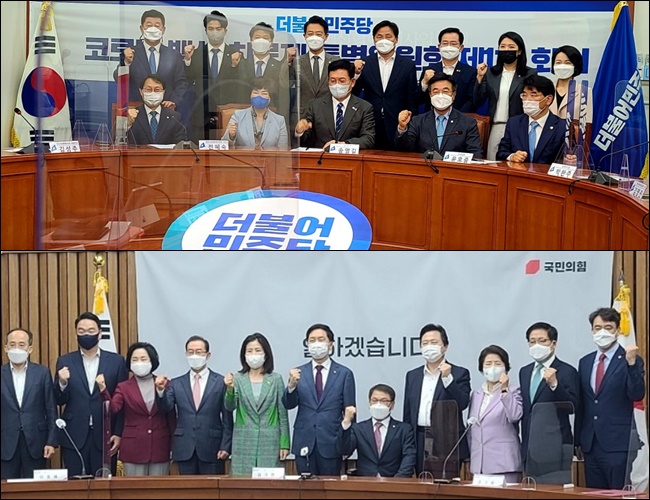
- Political circles of the ruling and opposition parties have launched a special committee on the COVID-19 vaccine and TF respectively, and are checking each other over the status of vaccine supply and vaccination performance. The ruling party has been announcing the results of COVID-19 vaccine since the Korea-U.S. summit, while the main opposition party has criticized the government for pointing out the issue of vaccine supply and demand and disruption to its goal of mass immunization in November. The ruling and opposition parties are busy with their respective activities on the COVID-19 vaccine special committee and TF, which were launched on the 14th. Currently, the Democratic Party of Korea has launched and operated the COVID-19 vaccine and treatment special committee, and the People Power Party has launched and operated the COVID-19 vaccine TF. The Democratic Party of Korea appointed Jeon Hye-sook(pharmacist), as its chairman, and Kim Sung-joo, an executive secretary of the Health and Welfare Committee, as its members, and Seo Young-seok(pharmacist). The People Power Party TF, chaired by the Health and Welfare Committee's executive secretary(Kiyoon Kang), consists of a total of 10 members, including Seo Jung-sook(pharmacist), Kim Mi-ae, Lee Jong-sung, Cho Myoung-hee, lawyer Park Joo-hyun, director Lee Sang-ho of the Korea Medical Association, and Choi Jae-wook. With the launch of the special committee, the ruling and opposition parties have begun to check the supply and demand of COVID-19 vaccine, which is the nation's biggest pending issue, and the current status and strategy of the national vaccination. Specifically, the Democratic Party of Korea held its third meeting on the 14th of this month following its first meeting on the 24th of last month to follow-up measures on COVID-19 vaccines and treatments and check major status of vaccines. In particular, the Democratic Party of Korea is determined to invite domestic pharmaceutical and bio companies and government ministries such as SK Bioscience, Huons, and Samsung Biologics to prepare effective domestic industrial support measures at the second meeting. At its first meeting on the 8th, the People Power Party TF decided to determine the exact cause of the current administration's failure to supply and demand COVID vaccines and aggressively reveal the reality that it is difficult to form a mass immunity (with a vaccination rate of more than 70%) in November. In fact, the People Power Party TF took issue with the fact that the original government budget did not reflect the purchase cost of the vaccine at all, and that the inoculation rate to the population was only 9.1% as of the 28th of last month. Furthermore, TF plans to urge the government to improve its quarantine system along with support for domestic pharmaceutical and bio industries such as securing vaccines in Korea, supporting production of consignment and self-development, and improving quarantine systems. The ruling and opposition parties are not just checking each other over COVID-19 vaccine. The ruling and opposition parties held a public hearing on the 14th to promote the formation of a special parliamentary committee to support the global vaccine hub and decided to work together to review the necessity and validity of the joint committee. It is aimed at serving as a medium for promoting cooperation between the government and businesses as South Korea's potential to leap forward as a global vaccine hub has been confirmed in the wake of the recent Korea-U.S. summit. Democratic Party of Korea Corona Vaccine Special Committee (top) & People Power Party COVID Vaccine TF The special committee aims to enhance domestic vaccine development capabilities, strengthen diplomatic capabilities to promote international vaccine cooperation, and enhance vaccine technology capabilities by establishing a global vaccine partnership between South Korea-U.S. The public hearing was co-hosted by Democratic Party of Korea Yang Ki-dae and People Power Party Choi Hyung-doo, and presented by Hanmi Pharm CEO Lim Jong-yoon and ST Pharm CEO Kim Kyung-jin. It is true that the joint public hearing has created a possibility of a joint special committee between the ruling and opposition parties for COVID-19 vaccine, but whether it will be realized depends on whether the leaders of the party will form a consensus. "Since the ruling and opposition parties have recently elected a new party leader and floor leader, it is not easy to form a consensus on the supply, vaccination and national quarantine of COVID-19 vaccines," a National Assembly official said. "The structure of forming a special committee and a TF to check will continue for the time being.However, the move to collect opinions from the pharmaceutical and bio industries through public hearings will be made together with the ruling and opposition parties and reflected in the industry promotion and vaccine hub policies," he said.
- Policy
- President Moon talks with AZ CEO at G7 Summit
- by Kim, Jung-Ju Jun 15, 2021 05:53am
- South Korean President Moon Jae-in met with Pascal Soriot, CEO of AstraZeneca, to ask for the company’s continuous support in supplying COVID-19 vaccines to Korea in the second half of this year. AstraZeneca responded positively to the request and replied that it hopes to continue a long-standing relationship with SK Bioscience as one of its top CMO partners. Also, the Korean government had announced its plan to increase contributions to the Gavi COVAX Advance Market Commitment (AMC) by 20 times to actively contribute to the inclusive recovery of the international community suffering from COVID-19. The COVID-19 Central Disaster and Safety Countermeasures Headquarters (CDSCHQ, Prime Minister Kim Boo-Kyum) today (13th) had announced the president's participation at the G7 summit that is being held in the U.K. and explained the contents of the discussions that were made with AstraZeneca regarding future cooperation plans. According to the Korea Disease Control and Prevention Agency, the G7 Summit is being held in Cornwall, U.K. on the 12th (local time). Korea was invited as a guest nation, and this is the first time in 12 years that a Korean president participated in the G7 Summit. In line with Korea's rising stature, President Moon introduced Korea’s cases in the fields of health and environment at the summit. At the summit, Korea proposed international cooperation plans to fight infectious diseases, in which Korea will act as a global vaccine production hub building on the technical capabilities of the country. Korea's plan to expand contributions to COVAX Advance Market Commitment (AMC) by 20 times, and determination to actively contribute to the inclusive recovery of the international community was also presented at the meeting. During his U.K. visit, the president had also met with Pascal Soriot, CEO of AstraZeneca, for discussions. During the talk, President Moon asked for the company’s continuous support in supplying COVID-19 vaccines to Korea in the second half of this year, and CEO Soriot replied that the company will make its best efforts in consideration of its close partnership with Korea and expressed the company's wish to maintain a long-term manufacturing partnership with SK Bioscience. The government said, “We will do our best to contribute to overcoming the global COVID-19 crisis by ensuring a stable supply of vaccines in Korea while supporting vaccine development and production.”

- Company
- The number of generics has been the lowest in 7 months
- by Chon, Seung-Hyun Jun 15, 2021 05:52am
- The number of Rx drugs' generic licences is the lowest in seven months since October last year. Recently, it was released in large numbers of generics for Atozet, but it fell back to its level shortly after the implementation of the drug price system. The proportion of consigned generics, which exceeded 80%, also fell to 50%. According to the MFDS on the 10th, the number of generics for Rx drugs was 44 last month. It is down 62% in a month from 116 in April. The figure is the lowest in seven months since 43 generics were licensed in October last year. The number of generic permits surged this year, but it plunged to the level in the second half of last year. In January, 102 generics were licensed and in February, 375 were licensed. In March and April, 177 and 116 generics were licensed, respectively. The reason for the surge in permits for generic products earlier this year is because of generics for Atozet. In February alone, 89 pharmaceutical companies were licensed a total of 256 of combinations of Atorvastatin and Ezetimibe. It is generic of Atozet sold by MSD and Chong Kun Dang. After Atozet's re-examination period expired on January 22, it applied for permission and received approval for sale at the same time. In February, 44 generics of MSD's diabetes drug Januvia were also licensed. However, as the number of Atozet's generic permits has decreased, the number of generic permits has dropped sharply. According to trends in number of licenses for generics, it has surged since early 2019 and slowed down in second half of last year. A total of 5,488 generics were licensed from January 2019 to May last year, averaging 323 per month. In 2018, a total of 1,110 generics were licensed, with an average of 93 per month. The number of permits has more than tripled in a year. The government's move to tighten generic regulations led to a surge in generic permits. The reorganized drug price system, which took effect in July last year, can maintain an upper limit of 53.55% compared to the original drug before the expiration of the patent only when generics meet both biological equivalence tests and use of registered raw materials. The system includes a stair-type drug price system in which the upper limit is lowered as the time for registration is later. If more than 20 generics are registered in Rx market, the upper limit of the newly registered items will be up to 85% of the existing lowest price. Since the implementation of the system, generic permits have been significantly reduced. The number of generic licenses, which reached 427 in May last year, fell to 73 in June. An average of 58 generics per month entered in seven months, including 74 in July, 51 in August, 45 in September, 43 in October, 58 in November and 69 in December last year. The average number of generic permits per month in the previous year and a half has been reduced to 18%. Until May last year, products that applied will be subject to previous drug price system. Generics, which has been approved since June and applied for the registration, receives low drug prices due to the new drug price system. This is why the number of new generic permits has plummeted since June. Among generics that were approved from October to December last year, 26%, 38%, and 70%, respectively. It rose to 82% in January this year, and recorded 85% in February-April, 80% and 78%. Last month it fell to 50%. It is the lowest level since November last year. The industry expects the number of generic licenses to vary depending on the opening of large new generics markets such as Atozet. In the case of Atozet, there was a large price deviation depending on the timing of the permit because it was newly formed. As drug prices fall depending on the timing of entry into the market, simultaneous competition for permits has been carried out. Competition for first generic to preoccupy drug prices is expected to be fierce because drug prices will be lower depending on the timing of entry into generic.
