
- LOGIN
- MemberShip
- 2026-05-18 18:57:16

- Product
- Sales prices have risen due to increased Tylenol demand?
- by Jung, Heung-Jun Jun 23, 2021 05:54am
- Pharmacists are upset when it is pointed out that pharmacies have raised the sales price of Tylenol due to increased demand for Tylenol. It is a misunderstanding that pharmacies are making great profits by raising prices unlike existing sales prices, which was actually a price change in some pharmacies due to differences in supply prices. Some media reported that the price of Tylenol, which was previously purchased at ₩2,000, rose due to the price adjustment due to the shortage. Recently, the price of Tylenol exceeded ₩2,000, forcing pharmacists to protest against the report. local pharmacist A also sent a protest mail to the media company, attaching a transaction statement with the unit price of supply. The unit price of pharmacies has already exceeded ₩2,000 (Pharmacist A said, "It is seriously distorted. Should consumers pay by credit card at ₩2,000, lower than the unit price supplied to pharmacies?" He said, "It further hurt pharmacists suffering from inappropriate comments on Tylenol." The supply price of 5 million tablets of Tylenol, which were recently divided into the first and second rounds, increased by about 10% compared to the supply price of individual pharmacies. Therefore, some pharmacies were adjusting their selling prices slightly. "As Tylenol is supplied equally across the country, the purchase price has risen slightly to pharmacies. Pharmacists are also unhappy about that," he said. "Some pharmacies have adjusted their sales prices and raised our pharmacies by ₩500 because they have already risen from the previous price." The first and second supplies to pharmacies nationwide will be distributed early this week. While 5 million tablets were supplied, Hangaram Pharmaceutical Co., Ltd., which is in charge of distribution, was not receiving any separate orders. With all the units supplied, Hangaram Pharmaceutical will resume its individual orders at pharmacies.
- Company
- Pneumococcal vaccination rate drops due to COVID vaccination
- by Whang, byung-woo Jun 23, 2021 05:54am
- Compared to rate of inoculation in 2020, rate of inoculation decreased significantly in first quarter of 2021. As COVID vaccinations begin in earnest, the inoculation rate of pneumococcal vaccines, which rose sharply last year, is decreasing. In particular, it is difficult for health centers to be in charge of vaccination and the situation of clinics is the same. As a result, related pharmaceutical companies also have a significant impact on sales decline due to a decrease in inoculation rates. According to the KDCA and the pharmaceutical industry on the 17th, the vaccination rate of pneumonia groups, which has steadily increased in recent years, has been falling significantly since the first quarter of this year. In fact, looking at the NIP (National Immunization Program) computer registration status announced by The KDCA over the past three years, NIP pneumococcal vaccinations for senior citizens aged 65 or older have risen every year to ▲283,687 in 2018, ▲580,793 in 2019, ▲839,461 in 2020. As of the first quarter of last year, the number of vaccinations decreased by nearly half from 145,796 in 2019 to 74,285 in 2020, but the inoculation rate also increased significantly as pneumococcal vaccinations were available at outside health centers from the second quarter. In particular, concerns about pneumonia, a major complication of COVID-19 infection, spread ahead of the flu epidemic, with a total inoculation rate of 414,596 cases in the third quarter alone, higher than the overall inoculation rate in 2018. However, this year, the rate of vaccination in the first quarter is again lower than previous years due to COVID-19 vaccination. The number of pneumococcal vaccinations in the first quarter of this year was 112,860, down from 145,796 in the first quarter of 2019, before COVID-19 outbreak. This is not NIP, but it was also confirmed by sales of 13 pneumococcal vaccines. According to the drug research firm IQVIA, Pfizer's pneumococcal vaccine Prevenar 13's sales in the first quarter of this year were ₩9.4 billion, down 46.7% from ₩17.6 billion in the first quarter of last year. Compared to the third quarter and ₩24.2 billion, which recorded the highest sales last year, sales declined by nearly 60%, and overall pneumococcal vaccinations decreased regardless of NIP. "The vaccination rate for pneumococcal vaccines has decreased a lot compared to previous years," said physician at a clinic. "We believe that the inoculation rate has decreased because the number of patients visiting the hospital is small and patients are not considered a priority." "There are also cases where patients who are vaccinated against corona do not think they need to get a pneumococcal vaccine," he said. "I'm not sure if we can increase the vaccination rate under the current situation." Prevenar 13's sales were ₩81.3 billion over the year. As it recorded 64.8% growth compared to 2019, its current low sales performance in first quarter could lead to reverse growth in 2021. "For pharmaceutical companies that have consistently emphasized the need for pneumococcal vaccinations, the decrease in inoculation rate is of course very upsetting," a pharmaceutical industry official said. "In particular, sales fell nearly half as of the same quarter last year." In this regard, experts stressed the need to share COVID-19 vaccination and pneumococcal vaccination separately from the concerns of pharmaceutical companies. "The basic principle is that vaccination of COVID-19 vaccines should not destroy the existing vaccination system. "I agree with the need for pneumococcal vaccinations, but the rate may rise as last year," said an official from the Korean association of internal medicine. "Pneumonia is one of the major causes of death, so the government needs to vaccinate and make efforts."
- Company
- Zolgensma applies for reimbursement... ignites discussion
- by Eo, Yun-Ho Jun 22, 2021 05:50am
- Another ultra-high priced ‘one-shot’ treatment has begun it process to be listed for reimbursement. Novartis, the developer of another one-shot treatment ‘Kyrmriah,' has announced its plans to list and release ‘Zolgensma’ in Korea. According to industry sources, Novartis has recently submitted an application for the reimbursement of Zolgensma (onasemnogene abeparvovec-xioi) through the approval-benefit appraisal linkage system. The company had first aimed at an earlier discussion of Zolgensma's reimbursement, but as the safety and efficacy review was completed later than expected, the listing process for the drug had started after the official approval. Zolgensma, which is a treatment for Spinal Muscular Atrophy (SMA) like ‘Spinraza (nusinersen)’ which was approved in 2017, is a gene therapy that contains genetic material that functionally replaces defective genes. The Ministry of Health and Welfare had approved Zolgensma as the second advanced biopharmaceutical after Kymriah. Advanced biopharmaceuticals are cell therapies or gene therapies that use live cells, tissues, or genetic material as ingredients. Under the ‘Safety and Support Act for Advanced Regenerative Medicine and Advanced Biopharmaceuticals,’ companies can receive differentiated safety management including long-term follow-up studies as well as support for R&D and product commercialization for their advanced biopharmaceuticals. Despite being a one-shot treatment, the price of the single shot costs 2.5 billion won in the U.S. and 1.89 billion won in Japan. Due to its high price, the listing process for Zolgensma in Korea is also expected to be unsmooth. However, the expectations regarding its efficacy are very high. Results of the Phase III SPR1NT and STR1VE-EU studies for Zolgensma that were presented recently recieved much attention. In the SPR1NT study, all pediatric SMA patients with two SMN Type 2 gene copy (Cohort 1) that were treated presymptomatically survived without requiring ventilatory or nutritional assistance, and achieved sitting independently for 30 seconds or more. Most (11/14) patients achieved age-appropriate motor milestones within the World Health Organization (WHO) window of normal development. In the STR1VE-EU study, most pediatric patients (82%) that were treated with Zolgensma, including those with severe SMA, achieved motor milestones unseen in the natural history of SMA Type 1. Zolgensma is indicated in Korea for the treatment of pediatric patients with spinal muscular atrophy (SMA) with bi-allelic mutations in the survival motor neuron 1 (SMN1) who ▲ have been clinically diagnosed with SMA Type 1; or ▲ has up to 3 copies of the SMN2 gene.
- Policy
- Janssen's Sporanox is also expected to convert to imports
- by Lee, Tak-Sun Jun 22, 2021 05:50am
- Janssen Korea, which has decided to operate its Hyangnam plant by this year, will also import the antifungal drug "Sporanox (Itraconazole)." As a result, co-marketing with Yuhan is expected to end. According to industries on the 21st, Janssen's Sporanox Cap is going to convert its imports by changing its license at the end of June. Sporanox has long led the market as an oral antifungal drug licensed in 1989. However, other ingredients such as fluconazole have advanced, and other products have recently been in the spotlight, recording ₩3.4 billion in sales based on UBIST last year. In 2008, Janssen and Yuhan signed a co-marketing contract, and Janssen decided to supply the same ingredient of "Lyposil Cap" to Yuhan. Although Sporanox Cap and Lyposil Cap were produced at the Hyangnam plant, co-marketing with Lyposil Cap is expected to end with the import of Sporanox Cap. Lyposil Cap had a small percentage of sales among Yuhan products. Based on UBIST, Rx amount was only ₩7.49 million. As Janssen decided to operate its Hyangnam plant until this year, many products, including Invega ER, Topamax Springkle Cap, Junista SR, Concerta OROSER, and Ultracet, have been converted to imports so far. Now only a few items such as Tylenol and Ultracet ER are being manufactured, but these items will also be converted to technology transfers or imports by the end of the year to change their permits. Established as a production hub plant in Asia-Pacific in 1983, Janssen's Hyangnam Plant has been supplying major products such as Tylenol. Whanin acquired Hyangnam Plant in November last year for about ₩46 billion.

- Company
- PD-1 inhibitors enhance future value of anticancer treatment
- by Jun 22, 2021 05:50am
- Professor Eui-Cheol ShinSince its first appearance in 2011, cancer immunotherapies have opened a new paradigm in the field of cancer treatment. Moving on from the era of targeted therapies that target specific gene mutation, the new era had opened where a patient’s immune system is activated to remove the malignant tumor. The immunotherapies that have been commercialized until now, such as Opdivo, Yervoy, and Keytruda, are all immune checkpoint inhibitors that target immunomodulators such as CTLA-4 or PD-(L)1. Immunologists Professor James P. Allison and Professor Tasuku Honjo were jointly awarded the Nobel Prize in Physiology or Medicine in 2018 for their discovery of this mechanism. In the wide and complex field of immunity, much is still left to be identified and remains uncharted territory. This is why cancer immunotherapies work according to theory in 30% of the patients, but not as expected in the other patients. To increase the response rate, pharmaceutical companies have been attempting to combine their immunotherapy with other immunotherapies that have different MOAs, or with existing targeted therapies or chemotherapies. Finding a good biomarker to predict the response rate also remains an important task. So how do immunologists view the present and future of cancer immunotherapies? Eui-Cheol Shin, Professor of Graduate School of Medical Science and Engineering at Korea Advanced Institute of Science and Technology (KAIST), said, “PD-1/PD-L1 inhibitors will be essential in all combination therapies that will be established for cancer treatment in the future. The PD-(L)1 and CTLA-4 immune checkpoint inhibitors can also be used in combination to complement the shortcomings of each other.” Professor Shin also added that treatment methods will be established for each cancer type and stage using viable biomarkers and that personalized cancer vaccines may become the next-generation anticancer therapy. The following is the question and answers from an interview with Professor Shin. -The paradigm that was dominated by targeted cancer therapies had shifted with the introduction of cancer immunotherapies. How is immunotherapy different from targeted anticancer drugs in terms of its mechanism of action? =The main difference between cancer immunotherapy drugs and targeted cancer therapies is in the durability of response. Strictly speaking, it is different, but a cancer immunotherapy drug is similar to a vaccine. Both use immunological memory to fight diseases. Just as people can live without concern of a certain disease after vaccination as many vaccines have a lifelong effect, treatment with immunotherapy will allow the immunologic memory to remove cancer even after it starts spreading again. The effect of the drug can last for the rest of the patient's life, even after discontinuing administration of the immunotherapy drug. -The cancer immunotherapies that have been released until now are PD-1/PD-L1 and CTLA-4 inhibitors. I know research is being conducted for new markers, how much progress has been made in this regard? =No one knows how many undiscovered mechanisms remain in the field of cancer immunotherapy. So, it is difficult to say how much progress has been made. Also, how many mechanisms were discovered is not important. Although CTLA-4 inhibitors and various PD-1/PD-L1 inhibitors have been introduced to the market, research results have reported that they work differently from the originally expected principle of action. This means that you do not need to know all the mechanisms to develop a drug. In some cases, the mechanism that you thought you knew well cannot be developed into a drug, and in other cases, you luckily find a drug another way. Research is of course conducted with sufficient theoretical grounds, but even with a solid theoretical base, clinical success cannot be guaranteed 100%. -Is there a reason why many of the developed drugs are PD-1/PD-L1 inhibitors? =In my research, I found PD-1 was the best anticancer immunotherapy target that can be modulated in the process of fighting cancer. Of course, the effect may be different for each cancer type and patient, but as PD-1 has a good effect and has the least side effects, much study has been focused on PD-1. Even in 50 years when cancer immunotherapies that target various other mechanisms are introduced in the market, I (strongly) believe PD-1 and PD-L1 inhibitors will hold their ground as a basic cancer immunotherapy drug. -Studies of combination therapies are also being conducted actively to enhance the effect of cancer immunotherapies. Some studies have been investigating the use of two immunotherapies. Mechanism-wise, is it effective to combine the use of a PD-1 inhibitor and a CTLA-4 inhibitor? =Well, the two are the only immune checkpoint inhibitors that were formally approved as of now, and using the two in combination does have a better effect. Separately, CTLA-4 inhibitors were introduced before PD-(L)1 inhibitor, but have relatively more side effects than the latter. In this sense, response in using the two drugs with the different MOAs has been unexpectedly good in general. It is rare, but using PD-(L)1 inhibitors may trigger hyperprogression of cancer in the treated patient. However, fundamental research findings have shown that hyperprogression may not show up when a CTLA-4 inhibitor is used in combination with a PD-(L)1 inhibitor. Much still needs to be verified, but I believe the immunotherapies may be able to complement each other’s shortcomings. -Patients may develop resistance to cancer immunotherapies as well. What alternatives could the patients use? =One of the reasons for ‘secondary resistance’ is mutation. The body needs to perceive the tumor as a foreign cell, however, the tumor antigen mutates and develops resistance. Cancer cells mutate just as well as viruses. Although it has not been commercialized yet, I expect ‘personalized cancer vaccines’ fit for each patient to become the next-generation anticancer therapy that would address the issue of resistance. These ‘cancer vaccines’ would be different from conventional vaccines that are administered in a healthy state, these are therapeutic vaccines that will prevent growth or recurrence of cancer in patients who have undergone surgeries for cancer removal. In other words, a vaccine that is made based on the changes identified in the mutated cancer cell of each patient to contain new antigens will allow patients to overcome resistance in the future. Of course, these cancer vaccines would also need to be used in combination with PD-1 inhibitors. As such, PD-1 is and will continue to be essential in the field of cancer immunotherapies.
- Company
- Gifticon to MDs attending online sessions might be illegal
- by Kim, Jin-Gu Jun 22, 2021 05:50am
- It has been interpreted that it is illegal to provide economic benefits, including gifticon, to doctors who participated in the online product briefing session, which has recently emerged as a major marketing tool for pharmaceutical companies. Park Sung-min, a lawyer at the HnL Legal OfficePark Sung-min, a lawyer at the HnL Law Office, made the explanation through a presentation on "legal issues on digital marketing" at the KFDC Legal Society's Spring Conference held online on the 18th. According to him, digital marketing has emerged as a major marketing tool in the pharmaceutical industry since the Corona crisis. However, almost all economic benefits related to digital marketing are highly likely to be illegal for the reasons for the lack of relevant regulations. In the case of online product briefing sessions, it is highly likely to be illegal to provide food and beverage to participating doctors. The same is true for posting comments, giving points to doctors who participated in surveys and events, and allowing them to purchase goods. Lawyer Park Sung-min said, "If the law is interpreted strictly, it is likely to be judged as a violation under the current law." In the case of exceptionally allowing economic benefits to doctors, "a salesperson may visit individual medical institutions and provide food and beverage not exceeding ₩100,000 once a day. However, economic benefits of the online product briefing session should not be provided because salespeople did not visit it in person. The same is true of doctors from various medical institutions who participated in online product briefing sessions. This is because it is difficult to apply the concept of "place" legally, although the regulation "if a salesperson visits" is not specified at this time. "This is what the KPBMA stated in the guidebook."There has been no judgment by the prosecution and the court regarding this matter. However, since the KPBMA was consulted by two law firms, there is a high possibility of illegality at the moment." However, he pointed out that the current situation is "because there are no related regulations." "The current regulations that allow doctors to provide exceptional economic benefits were made in an era when digital marketing was not active," he said. "Since Corona, digital marketing has emerged as a new means, we need to come up with relevant regulations." He cited the "detailed standards for supporting online academic conferences" temporarily prepared by the MOHW. "The MOHW's creation of the rule greatly reduced the scope of violations by pharmaceutical companies and doctors, at least in connection with online academic conferences," he said. "In addition, regulations on overall online marketing will reduce confusion in the field." "There are no rules at the moment," he said. "If the current situation continues, there is a high possibility of many violations.The government and the KPBMA should come forward to make very specific and explicit rules. Only then can we do fair marketing in a changed world."
- Policy
- Quality issues alarmed the pharmaceutical industry
- by Jun 22, 2021 05:50am
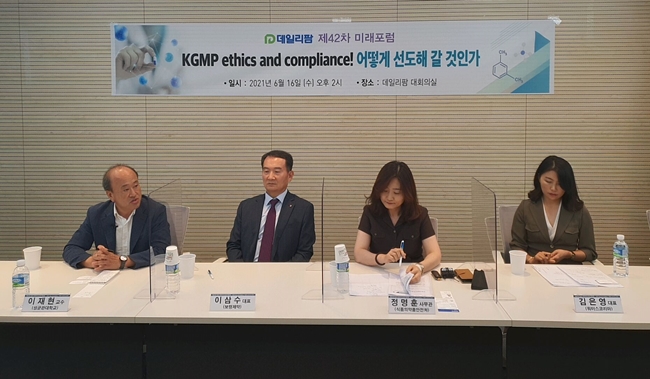
- Recent cases of GMP violations by Korean pharmaceutical companies have served as an opportunity to guard against risks throughout the industry. In addition, there are opinions that it should be improved in the wake of this incident. Until now, actual changes in standards for GMP have been sluggish according to global level. Only a few companies aiming to expand overseas have voluntarily attempted to improve. Looking at the recent cases, most small and medium-sized companies have been commissioned to produce pharmaceutical drugs to the domestic market, but even large companies, which are consignment companies, cannot avoid responsibility. The consignee lacked quality control, and the trustee had to meet the customer's needs. What efforts are being made in the industry? Dailypharm held the 42nd Future Forum under the theme of 'KGMP Ethics and Compliance! How to Lead' on the 16th and listened to industry opinions. Professor Lee Jae-hyun of Sungkyunkwan University is the head of the group, Lee Sam-soo, CEO of Boryung, Chung Myung-hoon, deputy director of the MFDS' drug quality management department, and Kim Eun-young, CEO of Waters Korea, attended the panel to express their opinions. From the left, Lee Jae-hyun, professor at SKKU, Lee Sam-soo, CEO of Boryㅕng, Chung Myung-hoon, director of the MFDS, and Kim Eun-young, CEO of Waters Korea Labor shortages, lack of technology, and lack of awareness are the causes of the situation CEO Lee Sam-soo analyzed that both environmental and technical factors played a role in the frequent occurrence of drug quality problems. According to him, there were 477 pharmaceutical manufacturers in South Korea as of 2019, and each manufacturer produced ₩49.9 billion. Among them, the average of the bottom 80% is only ₩189 billion. More than 100 finished drugs are owned per company. There was a huge shortage of manpower per plant. There are about 500 factory managers that should be mandatory, and 500 QM and manufacturing managers are also needed. The generic licensing process is also easier than that of advanced countries. CEO Lee said, "In the U.S. and Europe, generics should also have all CTD (Common Technical Document) formats, but in Korea, drugs for data-based re-evaluation are only required." There was a lack of research on quality factors or processes to be considered from the product design stage, consideration of subtle changes that occur while scaling up, and reflection of changes in pharmaceuticals, standards, and equipment. "Let's restore confidence in pharmaceuticals." No matter how important quality management is, it is useless without the will of management. Therefore, the new Drug Quality Management Innovation TF, which was established at the KPBMA, is noteworthy. The TF will be joined by Lee Sam-soo, CEO of Boryung, Kwon Ki-beom, vice-chairman of Dongkoo, Ildong's CEO Yoon Woong-seop, and Huons Global vice-chairman Yoon Sung-tae, and Hee-mok Won, chairman of the KPBMA. The team is based on owners and representative directors who can make decisions. The main role of TF is to identify each company's permission and cases of non-compliance with GMP, analyze the causes, and present solutions. It will also find matters that need to be improved. It also has a working group of TF that focuses on GMP experts from 15 businesses such as factory manager, QM manager, and research institute head. They listen to the field's opinions and share their opinions with the MFDS. Industries are actively supporting amendments to 1+3 Pharmaceutical Act by actually operating TF. The industry agreed with the MFDS that the introduction of Quality by Design (QbD) and data integrity should be emphasized to improve quality control. The purpose of the TF is to achieve various education, meetings, information sharing, and system improvement to realize these goals. CEO Lee said, "We intend to expand human resources education by opening online seminars and curricula of the association, visit each other among manufacturing plants, and share data." "We will also achieve quantitative and qualitative improvements by supplementing QA/QC personnel and supporting regular training." In order to spread the introduction of QbD, it should be accompanied by support measures. QbD, the industry believes that carrot-and-stick policies are needed to achieve a common goal of data completeness. CEO Lee said, "QbD is key to both risk assessment and statistics, and in order to become a smart factory, auxiliary tools such as PAT must be applied together." Real-time analysis does not follow simply by doing QbD. "It will cost tens of billions of won to install analysis equipment and sensors for auxiliary tools, so it will not be easy to introduce unless it is a blockbuster item." As a result, industries are strengthening regulations on quality management while also requesting support measures. It applies tax benefits for facilities/equipment necessary for QbD or data completeness, rapid review of related items, and preferential treatment of drug prices. "We will discuss with innovative TFs and actively consider operating a developmental GMP system," said Chung Myung-hoon, an official who attended as a representative of the MFDS. "We will listen to various opinions such as difficulties of small and medium-sized companies so that we can actively improve the constitution of the industry."
- Policy
- Closing the opinion gap important for the generic '1+3 bill'
- by Lee, Jeong-Hwan Jun 21, 2021 05:51am
- With the bill limiting the participating generic makers to three consignees per consignor when conducting joint biological equivalence tests or clinical tests awaiting review by the National Assembly’s Legislation and Judiciary Committee., whether the opinion gap between the large pharmaceutical companies and small- and medium-sized pharmaceutical companies can be closed is gaining attention. Despite the unanimous decision made by the Health and Welfare Committee, concerns have been rising on the influence the divided positions held by different sized pharmaceutical companies, which, if not resolved, may have on the process and result of the review conducted by the Legislation and Judiciary Committee. On the 20th, the pharmaceutical industry has been fighting a psychological battle behind the scenes on the legislation of the ‘1+3 restriction of generics’ bill The Health and Welfare Committee that passed the bill agreed that the 1+3 bill will reduce the excessive amount of generics and drugs requiring data submission and significantly improve the structure of the pharmaceutical drugs in Korea, however, the pros and cons are still fiercely being judged in the industry. While the large pharmaceutical companies that own the capability and economic scale to develop new drugs are strongly in favor of the 1+3 bill, the small- and mid-sized pharmaceutical companies that profit from generics and data submission drugs have been complaining that the bill will serve as leverage to promote the collapse and job cuts in their companies. In particular, the small- and mid-sized pharmaceutical companies have also criticized that, regardless of its purpose, legislating a bill to reduce the excessive number of items is out of order as they have been selling the data submission drugs according to the regulations set by the government. As a result, the logic that the excessive number of generic items have made it difficult for the government to respond or manage GMP violations or detection of impurities such as NDMA and that a regulation tailored for large pharmaceutical companies that does not reflect the reality of small and medium-sized companies will be clashing at the Legislation and Judiciary Committee’s review. According to the National Assembly Act, the Legislation and Judiciary Committee only owns the right to review a bill(right to review the system and order self-revision) that has been already reviewed and passed by the relevant standing committee, however, in reality, there exists cases where the bill passed by the relevant standing committee remains halted at this stage without being processed. For example, the bill to revoke the license of a doctor who was sentenced to imprisonment or higher has been on hold for more than two months after the Health and Welfare Committee’s vote due to disputes between the ruling and opposition parties during the judiciary committee's review. In other words, whether the large and small- and mid-size companies will be able to reach a consensus on the bill may act as one variable for passing the bill. The Legislation and Judiciary Committee plans to review the 1+3 bill passed by the Health and Welfare Committee in July. If the bill passes this review, the final legislative process will likely be completed at the plenary session that will be held in the same month. An official who is in charge of development at a top domestic pharmaceutical company said, “The small- and mid-sized companies are arguing that the law should allow 4 or more pharmaceutical companies to jointly develop and produce the data submission drugs as its clinical trial costs 5 to 15 billion won. However, the fact is a clinical trial that costs 10 billion won is uncommon. If the companies are really opposing due to the burden of cost, they may receive recognition as a 1+3 bill exception according to the exception clause specified in the bill. The companies need to understand how serious the excessive generic and data submission drugs issue is and work to make remedies to their system.” Another official from a small- and mid-sized pharmaceutical company said, “Regulation on generics is necessary, but I oppose to the regulations being set on data submission drugs. The small- and mid-sized companies with insufficient power to develop new drugs yet need to have some possibility of joint development to be able to maintain management and make a cash cow with incrementally modified drugs. The bill is just another order for company restructuring. The bill will directly have an impact on reducing the number of pharmaceutical companies rather than the number of generic companies. This would inevitably lead to job cuts in the companies, so I cannot agree with a bill that disregards this reality.”
- Company
- Competition between PCSK9 Inhibitors has just begun
- by Eo, Yun-Ho Jun 21, 2021 05:51am
- The competition for prescription of PCSK 9 inhibitors began more than four years after the domestic approval. Sanofi-Aventis' Allepatadine (Olopatadine) was listed on the 7th. It was approved in January 2017. This was the first time in South Korea that PCSK's 9th suppression system was introduced. Later in April of the same year, Amgen's Repatha (Evolocumab) was approved, with a stronger willingness to register benefits. Repatha was first registered as Homozygous Family Hypercholesterolmia (HOFH) in August 2018. Although there were two drugs in PCSK 9 inhibitors, Repatha was the only option. PCSK 9 inhibitors are drugs that have excellent efficacy but had price issues. There were problems not only at home but also at a global level, and Amgen lowered the price of drugs held by 60% in October 2018 and Sanofi in February 2019. Sanofi voluntarily withdrew Praluent's application for registration in October 2018, before the drug price was lowered, and it was registered about two years later. PCSK.9 inhibitors had a wide range of requirements for HOFH and in January 2020, Repatha succeeded in extending the reimbursement standard to patients with atherosclerotic cardiovascular disease (ASCVD) high risk, Heterozygous Family (HeFH), and Statinability. The two drugs are believed to compete in the ASCVD and HeFH. Praluent added HoFH in the United States in April. Praluent has tended to reduce the risk of all-cause death, and is a licensed drug with Praluent 75 mg and Praluent 150 mg, allowing patient-specific dose selection with reference to patient status and LDL-C levels. Repatha, which is first listed, is already prescribed by medical institutions. It can be prescribed at major medical institutions across the country, including the Big 5 general hospitals, including Samsung Medical Center l, Seoul St. Mary's Hospital, AMC, and Sinchon Severance Hospital.
- Policy
- Gov will proactively improve system for severe psoriasis
- by Kim, Jung-Ju Jun 21, 2021 05:50am
- With a year left before the re-registration of special exemption of insurance calculation for severe psoriasis, the government, payer, and patient group gathered to discuss improvement. The issue discussed was that despite reimbursement approved for severe psoriasis drugs, patients are not being properly covered as the eligibility standards for the special calculation system are too strict, which increases the actual cost borne by patients. The patient group appealed to the government and payers that the standards for severe psoriasis should be set at the same level as other severe incurable diseases rather than solely relying on expert opinions, and the authorities said that they will take a proactive stance in resolving the issue. The Korea Alliance of Patients' Organization and the Korea Psoriasis Association had raised the issue at its 'Patient Shouting Cafe' event held on the 18th. Immediately after the event, the Ministry of Health and Welfare and the National Health Insurance Service held the roundtable and expressed their positions on improving the special exemption of insurance calculation for severe psoriasis. A patient group has requested improvement of the registration criteria for the exempted calculation of health insurance for severe psoriasis that will be up for re-registration in one year to the government and payers. Pic. from the hosted by the Korea Alliance of Patients Organization The point raised by KAPO was clear and simple. Patients with severe psoriasis have to bear a very high cost of treatment that can only be relieved through the special exemption of insurance calculation. However the entry criteria for the special calculation, the new and re-registration standards, are too strict, and only 17,500 out of the 22,000 severe psoriasis patients are unable to receive any benefit from the system. In other words, for most patients, the benefit is just a 'pie in the sky.' As the re-registration of special exemption of insurance calculation for severe psoriasis will start next year, unless the system is improved now through discussions, the issue is doomed to reoccur. However, the biggest barrier to the improvement is that the experts' opposition to making changes in the registration criteria. In fact, at the National Assembly's Health and Welfare Committee plenary session on the 16th, Yong-ik Kim, president of NHIS had answered Rep. Chun-sook Jeong's inquiry that as the payer, the organization had to follow the experts' judgment as its experts opposed to the change of new registration standards for special exemption of insurance calculation for severe psoriasis. On this, the patient group emphasized that when setting registration standards for special exemption of insurance calculation, policy judgments should be made based on equity with other disease and social consensus rather than simply by reimbursement standards. They argued that the special exemption system is different from medical insurance benefit standards that require consideration of cost-effectiveness and efficacy and that the government is hiding behind experts' judgment. High-priced biologics for severe psoriasis are already being reimbursed. However, contrary to other severe diseases like Crohn's disease, ankylosing spondylitis, and severe atopic dermatitis that apply special calculations immediately for high-priced biologics, the special calculation does not apply to severe psoriasis despite the reimbursement approved for its treatment. The high out-of-pocket payment borne by the patients greatly affects the livelihood and life of the patients. On this, the Korea Psoriasis Association, a direct stakeholder to the system, suggested that the NHIS transparently discuss this issue at the Special Exemption of Calculation Committee meeting, a discussion body for various stakeholders rather than blindly follow the judgment (medical judgment) made by the expert advisory committee. MOHW's Insurance Benefits Division and the NHIS responded that they will address the issue of new registration standards of severe psoriasis in a proactive manner and identify and find solutions for the issue that was discussed at the meeting.
