
- LOGIN
- MemberShip
- 2026-05-18 20:13:24
- Policy
- GC Pharma is working on developing DM combination drugs
- by Lee, Tak-Sun Jun 15, 2021 05:52am
- GC Pharma is busy building a lineup of ARB-based hypertension drugs called Candesartan. If Atacand, which is Candesartan's original product, has been sold for a long time, it can be seen as a measure to actively utilize its distribution network. It is currently pushing for development of other complexes in addition to single and two complexes. The MFDS approved a Phase I clinical trial plan for the test drug "GC2121" submitted by GC Pharma on the 8th. This clinical trial will be conducted to evaluate safety, pharmacokinetic and drug interactions when administered Candesartan 32 mg/Dapagliflozin 10 mg to healthy adult volunteers. It is interpreted as an early clinical trial to verify the combined effectiveness of Candesartan and Dapagliflozin, or the effectiveness of the compound. Candesartan is an ARB hypertension drug, Atacand by AZ is the original. Dapagliflozin is an SGLT-2 inhibitory diabetes treatment, Forxiga by AstraZeneca is the original. GC Pharma is related to Atacand. This is because it was co-selling with AstraZeneca Korea from 2011 to 2019. Atacand's annual performance was about ₩20 billion. Last year, Atacand also recorded ₩26 billion in outpatient prescriptions based on UBIST. GC Pharma, which had been relatively sluggish in the oral chronic disease treatment market, was evaluated to have competitive distribution while possessing the original Atacand. Since then, GC Pharma has introduced a combination of Candesartan. Rotacand (Candesartan Cilexetil-Rosuvastatin Calcium) was licensed in 2017, and Candesartan Cilexetil-Amlodipine Besylate was licensed last year. Rotacand is a hypertension drug including Candesartan Cilexetil and a hyperlipidemia drug. It is used in patients who administer Rosuvastatin at the same time. Candedipine is also used by Candesartan Cilexetil or Amlodipine Besylate monotherapy in essential hyperthesis, where blood pressure is not properly controlled. Last year, Rotacand posted a record of ₩4.4 billion by UBIST. "Neo Cande," a single product that replaces Candedipine and Atacand, has been on sale since last year, with monthly earnings steadily increasing. Currently, GC Pharma has four single and complex products containing Candesartan. High blood pressure-diabetes complexes are likely to create a new market because they are not commercialized compared to high blood pressure-hyperlipidemia complexes that have already formed a large market. However, it is pointed out that since it is not easy to research and develop a combination of the two diseases, the commercialization process should be watched for now.
- Policy
- Hepatitis C Txs are rapidly being replaced with new drugs
- by Lee, Tak-Sun Jun 14, 2021 05:56am
- Chronic hepatitis C treatments are being withdrawn from the market as new drugs are released. Roche's Pegasys, a treatment for hepatitis B and C infection, eventually withdrew from the Korean market. Pegasys PFS products were revoked on the 8th. Pegasys, which was approved in Korea in 2004, was expected to be a hepatitis C treatment injection combined with Ribavirin, especially once a week. It was later used as a treatment for hepatitis B. Sales of Pegasys which has been a blockbuster for more than ₩10 billion, dropped due to oral chronic hepatitis treatment. Last year's IQVIA sales stood at only ₩56.14 million. DAA hepatitis C drugs released since 2015 are also losing competitiveness due to better treatments. BMS' Daklinza & Sunvepra, which opened the era of DAA in Korea, were revoked in March. Gilead's Sovaldi, which once dominated the market, almost failed to meet the criteria for reexamination of new drugs due to the sharp drop in the number of patients due to the emergence of new drugs. Gilead is looking forward to a new hepatitis C treatment, Sovaldi. Recently, the MFDS' application for permission for Epclusar was completed and the review began in earnest. Epclusar is a combination of Sovaldi (Sofosbuvir) and the NS5A inhibitor family "Velpatasvir", administered once a day. Regardless of the genotype, it is expected to be a competitive drug of AbbVie's Mavyret, which currently leads the market, with a response rate of nearly 90% with 12 weeks of treatment without interferon. As new drugs for hepatitis C are being released one after another, the replacement of new drugs is rapidly progressing.
- Product
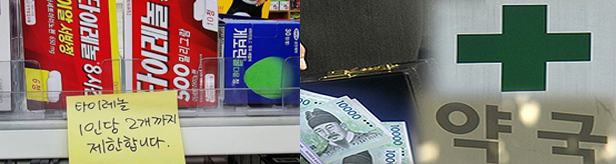
- 5 mil Tylenols will be released to market…100 per pharmacy
- by Jun 14, 2021 05:56am
- ‘Public Tylenol will be supplied,’ ‘Why is the government unnecessarily supplying Tylenol to every pharmacy?’ On the 11th, the pharmacists’ community heat up over the Tylenol supply issue. The issue was sparked with some distributors spreading the news that ‘public rationed Tylenol will be released in the market from the 14th.' The social media chat rooms of pharmacists heated up with intense debate at the news that was spread before the government’s announcement. To clarify, the to-be-supplied Tylenol is not ‘public’ Tylenol. It is a measure made by the government to solve the current Tylenol shortage, under which the government plans to release the maximum amount of antipyretic analgesics to the market. From the released products, each pharmacy may order the amount needed, therefore the measure is not public rationing in any sense. Also, pharmacies that do not need Tylenol do not need to take up the supply, so there is no need for pharmacies to complain ‘Why the government is unnecessarily supplying Tylenol to every pharmacy?’ But it is true that the Ministry of Food and Drug Safety (MFDS) has called on relevant associations including the pharmacists', pharmaceutical, and distribution associations to address the issue. The MFDS had recently called on the Korean Pharmacists’ association, Korea Pharmaceutical and Bio-Pharma Manufacturers Association, and Korean Pharmaceuticals Distribution Association to resolve the shortage caused by the surge in demand. The government’s goal is to ‘allow the public to be able to purchase acetaminophen as needed after COVID-19 vaccinations without differences by region or pharmacy by resolving the supply-demand imbalance in pharmacies.’ As a result, 5 million 500mg Tylenol will be released on the market. This is the total amount that Johnson & Johnson had been stockpiling for the next year, and this total amount will be released in two phases, 2.4 million and 2.6 million, respectively. Each company may first secure 100 each, and the supply will be avaialbe as early as from the 15th, depending on the pharmacy. 40 wholesalers will oversee the distribution. The Korean Pharmaceuticals Distribution Association divided the pharmacies by region for 40 companies to cover. For example, a pharmacy located in Yeongdeungpo district in Seoul will receive 100 Tylenols from BaekGwang Pharm, which is in charge of the Yeongdeungpo area, even if the pharmacy uses multiple distributors like BaekGwang Pharm, Geo-young, and Yujin Pharm. The order method may also differ by the wholesaler. Some distributors may call the pharmacy or make visits to each pharmacy to distribute Tylenol. “To resolve the issue of pharmacies that works with various distributors, we divided the regions between 40 wholesalers,” explained an official from the Korean Pharmaceuticals Distribution Association. “The necessary amount may differ by the size and situation of each pharmacy, so after fairly distributing 100 to each pharmacy that wants Tylenol, the rest will be left to be ordered at an as-needed basis by each pharmacy.” The MFDS also called on each association to play its part in resolving the Tylenol shortage issue. First, the Korean Pharmacists’ association will inform consumers about the correct use of antipyretic analgesics after vaccination through medication counseling, and continue to conduct a campaign informing the public that all domestically approved acetaminophen products have the same efficacy and effect as Tylenol. The Korea Pharmaceutical and Bio-Pharma Manufacturers Association and acetaminophen producers will maximize the production volume of their drugs by releasing their inventory by mid-June as well as by mobilizing all capabilities available to adjust the production schedule to expedite supply. MFDS said, “The Ministry of Food and Drug Safety and relevant organizations will do the best to supply acetaminophen to the people in need at the right time according to the government's vaccination plan. Also, we will share the supply and demand status with relevant institutions through regular monitoring and immediately provide the necessary administrative support to suppliers to increase production of acetaminophen products.”
- Company
- Second trial on patent dispute over Bonviva
- by Kim, Jin-Gu Jun 14, 2021 05:56am
- There will be a patent dispute over the osteoporosis drug Bonviva (Ibandronate) again. It is an analysis of damages worth ₩tens of billions by domestic companies that are selling generics for Bonviva. According to the pharmaceutical industry on the 10th, British pharmaceutical company Atnahs Pharma, which owns patents of Bonviva, recently filed a lawsuit with the Patent Court to cancel the verdict of The Intelligent Property Trial and Appeal Board. In the previous first trial, Atnahs Pharma was defeated. The Intelligent Property Trial and Appeal Board ruled in March that Bonviva's patent was invalid. South Korean companies launched generic for Bonviva in 2012. Sales continued for years afterwards without patent disputes. Roche, the original company, held Bonviva's patent for use, but did not file a patent suit against the launch of the generic. Patent courts and Supreme Court did not recognize patents for indications/dosage. For the original company, there was no reason to dispute the patent because it was certain to lose. The situation was reversed in 2015. The Supreme Court scrapped existing cases in patent dispute of Baraclude (Entecavir) and admitted patents on indications/dosage. This also affected the patents of Bonviva. However, Roche did not file a separate patent dispute until then. The problem arose in 2018 when Bonviva's global patent rights were transferred from Roche to Atnahs Pharma in the UK. Atnahs Pharma has filed a lawsuit against local generics for Bonviva to ban patent infringement and seek massive damages. More than 10 generics, including Theragen, Alico, PharmGen Science, ChoA, Kolmar Korea, Huvist, and Dongkwang, which sold generics for Bonviva, jointly responded. The Intelligent Property Trial and Appeal Board sided with generic companies. With the appeal of Atnahs Pharma, the case was dealt with again in the second trial. According to UBIST, a pharmaceutical market research firm, Bonviva's prescription for out-of-pocket was ₩2.9 billion last year. It is sold by Handok in Korea. Generics for Bonviva are 93 items in Korea. Their prescription amount for last year is estimated to be around ₩10.3 billion. If the second trial makes a different ruling from the first trial, generic companies will have to deliver a large portion of their sales revenue to the original company since 2012.
- Company
- What's the future of vaccines after COVID-19 crisis?
- by Kim, Jin-Gu Jun 14, 2021 05:56am
- The rate of vaccinations against COVID-19 is increasing, especially in major developed countries. Experts say we need to brace ourselves for the 'Corona 21' and 'Corona 22' pandemic. As there is a high possibility that the pandemic will continue every year even if the current pandemic situation ends, the whole world should respond jointly. At the "2021 Bio Korea" held at COEX in Seoul on the 10th, a meeting was held to discuss future development and production of corona vaccines under the theme of "development of next-generation vaccines to cope with future infectious diseases." Experts agreed that COVID will repeat its epidemic every year in the future, just like the flu. Jerome Kim, Secretary-General of IVIAccording to him, global vaccine production in the first half of this year is worth 7.2 billion doses. Production is expected to increase to 12.6 billion doses in the second half of this year. However, if limited to vaccines officially recognized by the World Health Organization (WHO), the total number of doses in the first and second half of the year will be only 8.8 billion doses. Given that most vaccines are immunized with two doses, they are not sufficient to supply the world's population. The size is expected to increase to 1.12 million doses after next year, but there is still insufficient supply to meet global demand. "The COVID-19 virus epidemic will end in about a year and a half," he said. "Currently, global production capacity does not provide enough vaccines to underdeveloped countries. The CEPI has set a goal of supplying vaccines to 30% of the world's population by the end of this year, but vaccine producers around the world need to make efforts to ensure that they can be supplied more smoothly." "GSK, Merck, Takeda, and Daiichi Sankyo have not yet produced a vaccine for COVID" he said. Their development and mass production are required. "Various mutant viruses are reported," he added. "There must be mutant viruses that have not been reported yet," he said. "We also need to develop a Trivalent and Quadrivate vaccine to respond to them." Park Man-sung, a professor at Korea University of Medicine, also said, "We should prepare for the mutant virus epidemic." "Fortunately, COVID does not mutate as often as the influenza virus," he said. "However, numerous mutations have already been reported before the vaccine came out, and as the vaccination rate increases, COVID will adapt to it and change itself." He said, "Personally, I think there is a high possibility that COVID will evolve into a seasonal virus." "We don't know how long the immunogenicity of the vaccine we're currently inoculating will be maintained," he said. "We need to develop a new vaccine considering this situation." Variation virus reported before the start of COVID-19 vaccine. Even after the inoculation began, mutated viruses have been reported in Britain, South Africa, and India. Professor Park Man-sung predicted that more mutations will occur in the future and become a seasonal virus He also introduced plans to develop vaccines to prevent COVID and influenza at the same time. Since there is a high possibility that the two viruses will be prevalent simultaneously in winter, it is expected that demand will be very high if a vaccine is developed to prevent them at once. "Our laboratory is currently developing vaccines to prevent COVID and influenza viruses at the same time," said Professor Park Man-sung. "When initial development is completed, we will share technology with vaccine producers."
- Company
- Stephen Walter, Boehringer Ingelheim's CEO, will resign
- by Eo, Yun-Ho Jun 11, 2021 05:53am
- Boehringer Ingelheim's CEO, Stephen Walter will be replaced. According to related industries, Stephen Walter, the current CEO of Boehringer Ingelheim in Korea, will resign after this month (June). The successor is now known as the head of an Austrian corporation and will be officially appointed in July. Boehringer Ingelheim Korea Corporation will receive its fourth foreign representative after Guenter Reinke in 2005, Dirk van Niekerk in 2012 and Stephen Walter in 2018. Stephen Walter joined Beringer Ingelheim in July 2014 and until recently served as the general president of Beringer Ingelheim Vietnam, Cambodia and Myanmar, and was appointed as CEO of a Korean subsidiary in June 2018. At the end of this term, he is leaving the company. The resignation of Stephen Walter will also change the board directors of the Korean Research-based Pharmaceutical Industry Association (KRPIA). The association earlier confirmed that Lee Hye-young, CEO of Viatris Korea, was the new director of BOD following the resignation of Jenny Zheng, former CEO of Janssen Korea. Despite COVID-19 crisis, Boehringer Ingelheim's business units contributed to net sales and operating profit last year. Net sales rose 3% year-on-year to €19.57 billion. Net sales rose 5.6 % year-on-year when adjusting the exchange rate effect.
- Company
- Hemlibra's reimbursement criteria to be rediscussed
- by Nho, Byung Chul Jun 11, 2021 05:53am
- Interest is rising as the Health Insurance Review and Assessment Service (HIRA) plans to call an expert advisory meeting to discuss the more effective operation of immune tolerance induction (ITI·antibody removal) therapies. At the end of this month, HIRA’s Pharmaceutical Standard Department plans to conduct deliberations to come up with reasonable improvement plans by comparing the review results regarding the revision of the reimbursement criteria for Hemlibra that was requested by academic societies and patient groups with cases overseas. The deliberation that will be held is significant in that it responds to the need for the re-establishment of the reimbursement criteria in accordance with the global trends, taking into account the hemophilia patients under the age of 12 that were unattended by existing standards and the convenience of administration. Of course, the best-case scenario would be to reflect the specific criteria for unfeasibility of ITI therapy to the notification in advance, however, the biggest victim and the ones worst affected by the criteria are the pediatric hemophilia patients who were discontinued prescription of Hemlibra since last April, pressing the need for the urgent revision of the standards. On the revision, the Korean Society on Thrombosis and Hemostasis has suggested improving the current reimbursement standards from three aspects. The first is for pediatric patients ineligible for ITI therapy. Patients who are not in year 1-5 of developing antibodies have a very low possibility of success using ITI therapies, however, under the current standards, these pediatric patients are not allowed to use the novel new drug Hemlibra injection until the age of 12 or older, and therefore has to use bypassing therapies. Other advanced countries abroad do not require compulsory use of ITI therapies through reimbursement criteria, and the domestic environment that restricts the use of new drugs needs to change. Also, the authorities do not not require prior use of ITI therapies for the use of bypassing therapies. Also, requesting objective data on why pediatric patients under the age of 5 cannot receive ITI therapy is considered to be the most difficult by HCPs in practice. In this sense, HIRA has the responsibility and duty to objectively and closely review such conditions to reflect reality. Other countries (U.K, Australia, etc.) are reviewing reimbursement for Hemlibra even in patients who are eligible for bypassing therapies. Cost-effectiveness analysis of pediatric patients showed that Hemlibra, which is used as maintenance therapy, is more cost-effective than bypassing therapies that can be used at every bleeding event. These data support the rational validity of the academic society's request to remove the priority consideration criteria of ITI therapies. Even HIRA’s Pharmaceutical Benefit Evaluation Committee had determined that the annual pharmaceutical expense of Hemlibra was cheaper than bypassing therapies in pediatric patients in October 2020. If the current reimbursement criteria reflect even a fraction of the requests and perspective of the patients and prescription circumstances, the situation would dramatically improve for the pediatric patients who were left to use only bypass treatment or bear the severe pain from bleeding. “We hope that the reimbursement criteria are revised soon in consideration of the pediatric hemophilia patients and their families," said an official from the Korean Society on Thrombosis and Hemostasis, expressing his hope.
- Policy
- 1 in 5 people received COVID-19 vaccinations in Korea
- by Kim, Jung-Ju Jun 11, 2021 05:53am
- With the number of daily COVID-19 cases constantly in the 500 range, over 10 million people in Korea have received one or more shots of COVID-19 vaccines. This is nearly 20% of the total population, in other words, 1 out of 5 people in Korea have now been vaccinated. In the midst of the increasing outdoor activities and the upcoming summer holiday season, authorities have been encouraging the public to receive COVID-19 vaccinations to achieve herd immunity. According to the COVID-19 Vaccination Response Team (Eun Kyeong Jeong), as of 12:00 a.m. today (June 10th), 585,615 people received their vaccinations yesterday. Among them, 562,087 people received their first shot, and. 23,528 people received the second shot yesterday. Cumulatively, 9,794,163 people have now received their first vaccination shots, and 2,349,485 had received their second shot and completed vaccinations. By product, the rate of those first vaccinated with the AstraZeneca vaccine was 63.6%, and those who completed vaccinations with the AZ vaccine were 6.2%. For the Pfizer vaccine, first vaccination rate was 79.5%, and the vaccination completion rate was 44.7%. When adding the subtotal of those who received one or more shots of COVID-19 vaccines as of 11 a.m. today, the total number exceeded 10 million. Vaccination of the Janssen vaccine for reservists and civil defense members aged 30 or over started today. By 11 a.m., a total of 10,060,000 people tentatively received their first shot of the COVID-19 vaccines. This accounts for around 19.6% of the country’s total population, which means around one out of every five people received one or more shots of COVID-19 vaccines. The COVID-19 Vaccination Response Team explained that this achievement was made 105 days after starting vaccinations on high-risk groups on February 26th. The team added, “We would like to express our gratitude to the people who trusted our experts and the government and actively participated in vaccinations as well as the consigned medical institutions, immunization centers, public health centers, and their HCPs and staff that safely carried out the vaccinations..”
- Policy
- Moderna vaccine, 100% effective for Asians in clinical trial
- by Lee, Tak-Sun Jun 11, 2021 05:53am
- Moderna's COVID-19 vaccine has been shown to be 100% effective in Asian clinical trials. However, there is a limit to reaching a meaningful conclusion because there are fewer test subjects. The minutes of the Central Pharmaceutical Affairs Review Committee, released by the MFDS on the 7th, contain this information. The Central Pharmaceutical Affairs Review Committee meeting took place on the 13th of last month and it was approved on the 21st of the same month. At the meeting, one participant asked, "Is it possible to submit comparative data on effects and abnormal cases between Asians and Westerners for reference to domestic inoculations, including 4.6% of Asians?" and the MFDS responded. The MFDS explained, "In the U.S. clinical trial, which included 4.6% of Asians, five out of 690 Asian test groups and 620 control groups were confirmed for COVID-19, and none of them occurred in the test group, showing 100% effect." "It's hard to make a significant conclusion through the analysis of the sub-group," he said. The MFDS also said, "We monitored all 30,000 predicted abnormal cases related to immunogenicity, but there was no data analyzed separately about Asians. There was no data that any unexpected abnormal cases occurred characteristically in Asians." Moderna vaccine had a preventive effect of 94.1% on 28,207 people aged 18 or older. Although the proportion of Asians among the test subjects is not high, Asians are more effective than the total subjects. "It is important to notify first-line medical personnel of precautions," a member of the committee said. "It is necessary to mention the high frequency of adverse reactions, such as the severe musculoskeletal response of 10 times higher than the first dose." The final permission included the drug adverse reaction item, "The frequency and severity of abnormal cases increased more in two doses than in one dose, and the frequency of reactive cases was slightly lower in older people (ages 65 and older)." Moderna vaccine is approved by GC Pharma and distributed in Korea. 5.5 million doses arrived for the first time in Korea on the 1st and are set to be inoculated.
- Policy
- OTC combination drug with APAP-IBU, not approved again
- by Lee, Tak-Sun Jun 11, 2021 05:53am
- Advil Dual Action in USOTC approval of APAP-IBU complex has failed again. Experts who participated in the review objected to the permission on the grounds that safety issues had not been resolved. According to the Central Pharmaceutical Affairs Review Committee minutes released on the 7th, seven out of 10 members opposed the OTC approval of Acetaminophen-Ibuprofen. The MFDS is also known to have opposed it, and finally, the complex failed to make its second attempt at licensing after 2017. Based on UK permit in 2017, this time it applied for permit based on US FDA. The complex requested in 2017 was a product that take one or two tablets of Acetaminophen 500mg-Ibuprofen, and it applied for permission to take two tablets of Acetaminophen 250mg-Ibuprofen 125mg. The U.S. FDA approved GSK's "Advil Dual Action" containing Acetaminophen 250 mg and Ibuprofen 125 mg as OTC. It was the first case in the United States that Acetaminophen-Ibuprofen complex was approved as OTC. At the Central Pharmaceutical Affairs Review Committee held on the 17th of last month, members of outside experts generally opposed. "There are already many single drugs, but the benefits of taking them as a complex seem to be in marketing rather than validity," a member said. "It is questionable whether consumers will keep the fact that they should take them within three days because they are feared to have side effects in the long term." Another member of the committee opposed, "We reviewed it as complex of the same ingredients in 2017, and it seems that there is no special accumulation of data on safety or efficacy of drugs. Clinically, elderly patients experience a lot of gastrointestinal bleeding after taking a lot of painkillers." Another committee member said, "I think it is important to the general consumer that the risk is greater than the benefit. Failure to comply with dosage can increase the risk of liver damage, and it is not appropriate to grant permission." A member of the Committee in favour of permitting the complex stressed that it was appropriate in terms of accessibility. "There are consumers who want to buy items that are very popular in the U.S. but are currently illegally using them in Korea. Pediatrics often use both for fever at the same time, and they already prescribe Acetaminophen as powder and Dexibuprofen as liquid." However, only three out of 10 members voted in favor of the permit, and the deliberation committee voted that the approval of OTC for Acetaminophen-Ibuprofen was not valid. Based on this, the MFDS also reportedly refused to grant permission. Kolmar's "Bufferin Lady," which was approved in 2008, also contains Acetaminophen (65 mg) and Ibuprofen (65 mg). However, it also includes Allylisopropylacetylurea and Caffeine Anhydrous.
