
- LOGIN
- MemberShip
- 2026-05-18 18:57:15
- Policy
- Yuhan's Raboni-D has been licensed
- by Lee, Tak-Sun Jun 21, 2021 05:50am
- Yuhan, which had a high dependence on sales for imported drugs, has recently been speeding up with the commercialization of new drugs such as Lazertinib and IMD. In particular, Yuhan refrains from entrusting or entrusting developing products and is building market competitiveness with its own products. The MFDS approved "Raboni-D," Yuhan's combined osteoporosis IMD, on the 17th. It is a combination drug of Raloxifene HCl, an existing osteoporosis treatment drug, and Cholecalciferol Concentrated Powder, known as a vitamin D. There are already six products, including Hanmi Pharmaceutical's "Rabone D" and Alvogen Korea's "Ebistrar Plus," that combine the two ingredients. However it is evaluated that it has secured safety by lowering the amount of Raloxifene that was developed by Yuhan. Raboni-D is Raloxifene 45mg, while conventional products are Raloxifene 60mg. Raboni-D is used for the treatment and prevention of osteoporosis in postmenopausal women, and is given oral administration one tablet a day. Pregabalin SR, a pain reliever, is also a self-developed item by Yuhan Corporation. 15 items, including Pfizer's Lyrica CR, are licensed. Yuhan was also granted Yuhan Pregabalin SR in 2019. However, safety and effectiveness of Yuhan Pregabalin SR have not been confirmed in patients with new functional disabilities and those aged 65 or older compared to Lyrica CR. Yuhan is focusing on securing competitive edge in products that are as good as original by expanding clinical trials. In this clinical trial, pharmacokinetic characteristics and safety will be evaluated for patients with new disabilities and healthy people who have not been established safety and validity in the past when administering YHD119 single oral administration. Yuhan has been steadily decreasing its sales share of new drugs due to the expansion of its own development items. As of the end of the first quarter, sales of products stood at 56.6%, down 3.9% points from 60.4% in the same period last year. Analysts say that at this rate, the proportion of new drugs introduced in a few years will fall below 50%. The new drugs vary greatly with copyright agreements with developers, so there is a risk of maintaining sales. Leclaza was approved early this year, starting with the commercialization of the first IMD Duowell in 2014. Attention is focusing on whether Yuhan, which generated ₩1 trillion in sales for the first time in the pharmaceutical industry, will also gain fame as a new drug development company.
- Product
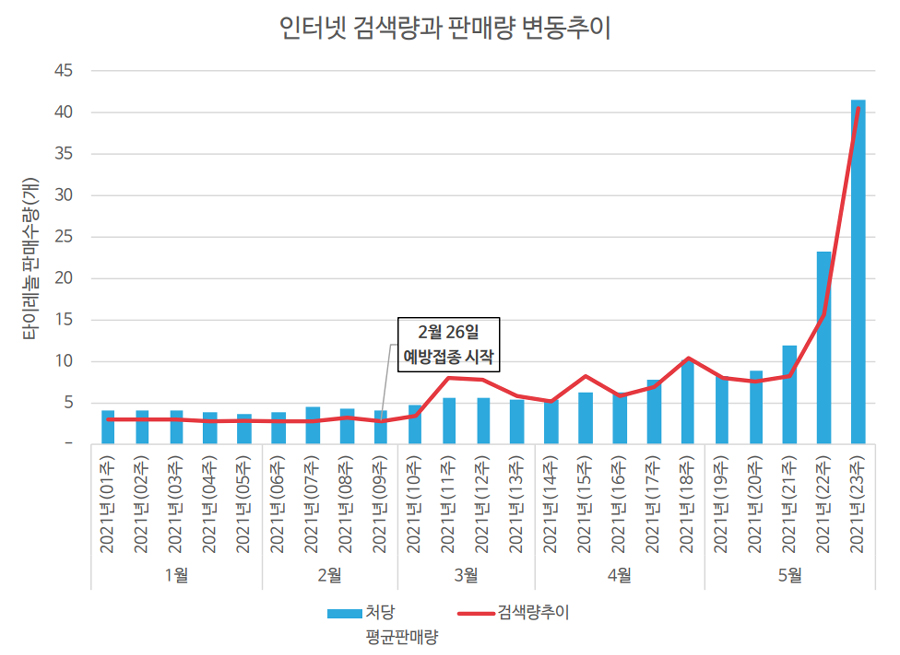
- Tylenol sales increased 10 times to peak in May
- by Jun 21, 2021 05:50am
- Pharmacies' difficulties have reached their peak due to the surging demand for Tylenol, which is said to be "more precious than COVID-19 vaccine." This is because Tylenol has become so precious that it is rarely found in pharmacies. Then how popular was Tylenol? Analysis of POS data from 185 pharmacies showed that sales of Tylenol 500 mg and Tylenol ER 8HR increased 10 times compared to the beginning of this year. According to a survey of sales at 185 pharmacies, Care Insights recorded a peak in May after steadily increasing in March and April since the COVID-19 vaccination began on February 26. In particular, demand more than quadrupled compared to the average year in May. According to this year's sales, 12,467 in January, 12,222 in February, 20,756 in March, 29,447 in April and 54,340 in May. From January to May, 129,232 units were sold. Compared to 126,590 in 2018, 138,327 in 2019, and 173,687 in 2020, the company sold a year's worth in five months. The market share of Tylenol in Pharmacies was also overwhelming with 92.4%. Other APAP formulations accounted for only 7.6%. Considering that the average Tylenol sales share was 82.6% last year, the market share itself has risen further. An official from Care Insights said, "The more Tylenol is mentioned through the media, the more Tylenol sales tend to increase." The official said, "Although 100 to 200 Tylenols are supplied per pharmacy, this is believed to be the amount that can only be sold for about 15 days," and added, "As the vaccination rate is increasing, it seems necessary to come up with measures."
- Company
- JAK inhibitor ‘Olumiant’ seeks reimb for atopic dermatitis
- by Eo, Yun-Ho Jun 18, 2021 05:54am
- The JAK inhibitor ‘Olumiant’ is seeking extended reimbursement benefit in atopic dermatitis. According to industry sources, Lilly Korea has submitted an application for the reimbursement of Olumiant (baricitinib) in ‘the treatment of adult patients with moderate to severe atopic dermatitis who are candidates for systemic therapy’. The company had rapidly carried out the listing application process after receiving approval for this additional indication last month. As a new drug for moderate to severe atopic dermatitis, Olumiant’s reimbursed price is expected to be set at a more economic price than recently listed new treatment for atopic dermatitis, ‘Dupixent (dupilumab).’ Olumiant selectively and reversibly inhibits JAK1 and JAK2 to reduce the expression of inflammatory cytokines and has an anti-inflammatory effect. Olumiant demonstrated significant treatment effect as well as safety as monotherapy and as combination therapy with a topical corticosteroid (TCS) in adult patients with moderate to severe atopic dermatitis compared to placebo in 3 clinical trials - BREEZE-AD1, BREEZE-AD2, and BREEZE-AD7. In the three studies, patients treated with Olumiant showed an improvement in their symptoms such as itching, which severely deteriorates the patients' overall health state and quality of life, as early as in the second day of treatment. Dr. Chang-Wook Park, Professor of Dermatology at the Severance Hospital said, “The rapid improvement of symptoms that were observed from the second day of Olumiant treatment in the patient-reported outcome gives hope to atopic dermatitis patients in Korea who previously had limited treatment options.” Park added, “With its strengths in rapidly improving itch symptoms, convenient oral administration that improves patient compliance, and long-term safety profile that has been confirmed as a rheumatoid arthritis treatment, I expect Olumiant will be able to address patients' unmet needs in the field of atopic dermatitis.”
- Policy
- An exception to the 1+3 Bill for IMD
- by Lee, Jeong-Hwan Jun 18, 2021 05:54am
- A letter from a pharmaceutical representative to the National Assembly affected the process of the National Assembly's Health and Welfare Committee's handling of generics, drug for data-based re-evaluation "1+3 bill." It was reflected in the revised schedule when a representative of company A sent a petition to 24 members of the National Assembly's Health and Welfare Committee that IMD, which has decided to jointly develop more than four pharmaceutical companies, could have a negative impact on development and launch. The Pharmaceutical Affairs Law, approved by the National Assembly's Health and Welfare Committee on the 16th, contains the effective date, application case, and progress measures for medicines undergoing clinical trials. The most controversial part was the transitional provision of drugs already approved, or drugs already undergoing clinical trials, regardless of the Bill. If the bill goes into effect, pharmaceutical companies that exceed the four pharmaceutical companies regulated by the bill have pointed out that it is difficult to release drugs under joint development. In line with the implementation of the 1+3 bill, the welfare committee added an additional rule to apply the previous regulations to drugs under joint development after four pharmaceutical companies were approved by the MFDS. In this case, however, data proving the decision to jointly develop must be reported to the MFDS within one month from the enforcement date of the law. The amendment also reflected claims contained in a petition letter from the representative. In a letter, he explained that IMD, an arthritis drug that the company is jointly developing with several other pharmaceutical companies, is on the verge of being suspended with the 1+3 bill. He added that IMD, which requires billions of won, is conducting Phase 3 clinical trials by investing development costs jointly with multiple domestic companies because it is difficult for small and medium-sized pharmaceutical companies to invest R&D costs alone. During the development process, the 1+3 regulation bill passed the welfare committee on April 29, and he stressed that his company was in danger of having to stop developing IMD research and development because of the bill. "We can accept the general regulations to prevent the disturbance of generic drugs," he said in a letter. "The IMD's regulations can be difficult to develop without a certain period of delay," he said. "The IMD has already received development costs from multiple domestic companies and is in the process of Phase III clinical trials." The welfare committee partially accepted his intention of IMD and established an additional clause that submits and reports evidence that he is jointly developing it to the MFDS within a month of the enforcement of the law. An official of the welfare committee said, "We collected opinions to minimize confusion among pharmaceutical companies that have been preparing for IMD development through joint development contracts regardless of the bill." "We have resolved unreasonable parts and improved the completion of the bill with the provision of transitional measures for medicines undergoing clinical trials," he explained.
- Policy
- 559 doctors warned for wrongful prescription of Zolpidem
- by Lee, Tak-Sun Jun 18, 2021 05:53am
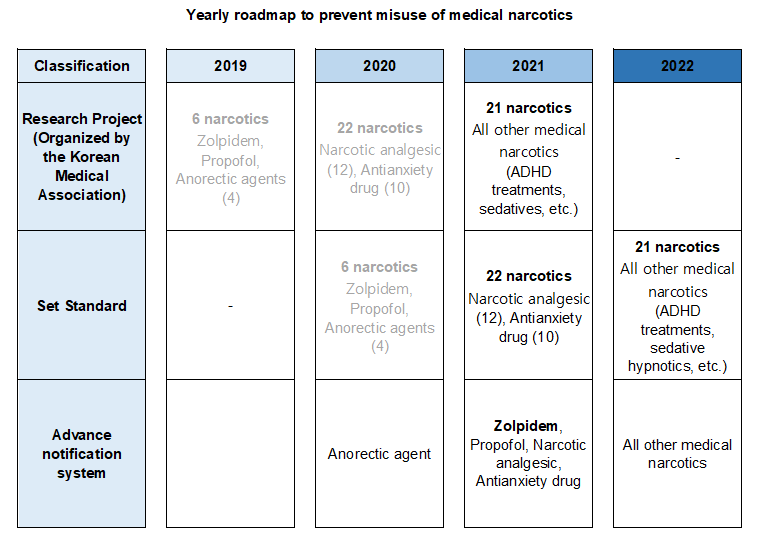
- After analyzing the prescription information on the Narcotics Information Management System (NIMS), the Ministry of Food and Drug Safety announced its decision to issue written ‘warnings’ to 559 doctors that have continuously prescribed or used Zolpidem beyond the safe use standards to prevent abuse and promote proper use of the medical narcotic, Zolpidem. This measure is the second step taken by regulators based on analysis results of the 2-month prescription and use history that was collected after notifying the 1,720 doctors who prescribed and used Zolpidem beyond the safe use standards on March 2nd, through the advance notification system as the first step. MFDS said that the doctors' compliance rate of medical narcotics safety guidelines had improved after implementing the advance notification system. The number of doctors who prescribed and used Zolpidem beyond the set safe use standards after receiving the first step warning in March decreased 68% from 1,720 to 559, and the total number of prescriptions also decreased 51% from 5,593 to 2,724. Also, the ministry added that it plans to conduct on-site inspections and take administrative actions (suspension of handling narcotics) to restrict prescriptions of doctors who do not correct their actions in prescribing medical narcotics beyond the scope set under the safe use standards even after the second written warning. An MFDS official said, “The advance notification system that has been implemented to anorectic agents in December last year will also be applied to analgesics and anti-anxiety drugs this year. By next year, we plan to expand the system to all narcotics, through which we aim to continue our efforts in preventing misuse and abuse whiling encourage safe use of medical narcotics in Korea.”
- Policy
- “The 1+3 bill” was passed by the Welfare Committee
- by Lee, Jeong-Hwan Jun 18, 2021 05:53am
- The 1+3 bill passed a plenary session of the National Assembly's Health and Welfare Committee on the morning of the 16th and will be reviewed by the legislation and judiciary committee. The resolution reflected the revision of the supplementary provision, which excludes the report from the MFDS within a month from the enforcement date of the law, a drug for data-based re-evaluation, which was approved before the enforcement of the law. The welfare committee has passed on a number of the pharmaceutical affairs law to the judiciary committee, including the bill, mandatory preparation and submission of expenditure reports on pharmaceutical CSO, designation of drug days as a legal anniversary, and mandatory safety vulnerable braille and voice codes. A total of 94 bills were handled by the welfare committee on the same day. The most interesting legislation is the 1+3 bill. The main point of the bill is to allow up to three consignees per trustee to conduct joint biological equivalence tests and clinical trials necessary for the development of drug for data-based re-evaluation with generic. Regardless of the revision of the bill, the welfare committee partially reflected the transitional measures for medicines that are already undergoing clinical trials. They say that drugs that have signed a joint development contract and received approval for a clinical trial plan from the head of the MFDS do not apply the 1+3 regulation. In this case, however, pharmaceutical companies that have been approved for clinical trials must submit data proving the joint development of drugs to the MFDS within one month from the enforcement date of the law. Like pharmaceutical companies, CSO, which is in charge of promoting drug sales, has also been designated as a drug supplier, imposing obligations to prepare and submit expenditure reports for doctors and pharmacists, and regulating those who illegally purchased Rx drugs. The welfare committee passed on amendments to the Infectious Diseases Act, the Medical Devices Act, the Infectious Disease Prevention and Control Act and the Health Insurance Act to the legislation and judiciary committee.The welfare committee introduced 114 new bills to the plenary session to continue its review at the legislation and judicial committee. They included bills that surveys and public announcements on the status of illegally licensed pharmacies, hospitals run illegally by the office manager and illegally licensed pharmacies( they will be excluded from health insurance care institutions), vaccine development status sharing, paid leave after vaccination, expanded national coverage for side effects, and prohibition of the establishment of a medical institution for child sex offenders.
- Policy
- Moderna vaccine has been approved for lot release
- by Lee, Tak-Sun Jun 18, 2021 05:53am
- The MFDS said it approved lot release of 55,000 doses of Moderna COVID-19 vaccine on the 15th. The national lot release is a system in which country evaluates the results of the verification test and the review of the manufacturer's data before the vaccine is distributed on the market and checks the quality once more. The MFDS measured efficacy based on genetic materials and the amount of lipid nanoparticles surrounding them through invitro translation of the first import of Moderna COVID-19 vaccine. The purity test and endotoxin test confirmed that the vaccine was safe because it was not contaminated. The MFDS explained that quality test data issued by the plant quality assurance director were reviewed to ensure consistency in quality. Moderna vaccine is licensed and distributed by GC Pharma. GC Pharma also applied for the national lot release. Starting this week, Moderna vaccine will be inoculated to health care workers under the age of 30, medical students, and nursing students from general hospitals. When Moderna vaccine is used on site, the total number of vaccines inoculated in Korea will be increased to four, including AstraZeneca, Pfizer and Janssen.
- Policy
- AZ vaccine's side effects are reviewed
- by Lee, Tak-Sun Jun 17, 2021 08:02pm
- The MFDS has begun a review on the addition of side effects of capillary leakage syndrome of AstraZeneca's COVID-19 vaccine recommended by the European Medicines Agency (EMA). The MFDS announced on the 14th that it will take necessary measures such as distributing Dear Healthcare Professional Letter, sharing information recommended by EMA, and adding related precautions to Insert paper. Earlier, the Pharmacovigilance Risk Assessment Committee (PRAC) of the EMA recommended that people with a history of capillary leakage syndrome should not be vaccinated against AstraZeneca's COVID-19 vaccine. The PRAC reviewed 6 cases of capillary leakage syndrome in people who received AstraZeneca's COVID-19 vaccine, with 3 having a history of capillary leakage syndrome, and one of them fatal. Capillary leakage syndrome is a very rare and serious condition that causes fluid leakage from the capillaries, resulting in edema of the arms and legs, low blood pressure, blood concentration and hypoalbuminemia. No patients have yet been reported in Korea. The MFDS shared relevant information with medical experts, saying that people who have experienced capillary leakage syndrome should not be vaccinated with the AstraZeneca's COVID-19 vaccine. It also said it will take necessary measures such as adding related precautions to the insert paper by combining the status of abnormal cases at home and abroad and safety information.
- Company
- Cancer immunotherapy combo seeks 1st-line reimbursement
- by Eo, Yun-Ho Jun 17, 2021 06:04am
- Activity to reimburse ‘Opdivo’ has begun again after a long standstill. According to industry sources, Ono and BMS recently submitted an application to extend reimbursement for the PD-1 inhibitor ‘Opdivo (nivolumab)’ in combination with the CTLA-4 inhibitor ‘Yervoy (ipilimumab)’ to first-line treatment of non-small cell lung cancer (NSCLC). This is the first time in a long while that a discussion for listing Opdivo is being resumed in the field of lung cancer since Opdivo’s reimbursement attempt to receive reimbursement ‘as monotherapy for second-and third-line treatment of lung cancer regardless of PD-L1 expression’ was turned down by the authorities in 2019. The Opdivo and Yervoy combination has initially been approved in Korea for the renal cell carcinoma indication, and its listing process is currently underway. As with MSD’s ‘Keytruda (pembrolizumab),' Ono and BMS had discontinued the reimbursement extension discussions as they were unable to accept the condition set by the government requesting the company to ‘cover the initial 3 cycles’ worth of administration cost.' Whether Opdivo will be able to be listed for reimbursement with the new ‘cancer immunotherapy combination' card is receiving attention. Also, with the PD-L1 inhibitor ‘Tecentriq (atezolizumab)’ and Keytruda’s reimbursement as first-line treatment for lung cancer expected to be discussed in July at HIRA’s Review Committee for Cancer Diseases meeting, whether Opdivo will also be put as an agenda for deliberation then remains to be seen. Opdivo in NSCLC was approved in Korea ▲ as first-line treatment of advanced or recurrent NSCLC with no EGFR or ALK genomic tumor aberrations, in combination with Yervoy and 2 cycles of platinum-based chemotherapy; and ▲as first-line treatment of metastatic or recurrent NSCLC expressing PD-L1 (≥1%) with no EGFR or ALK genomic tumor aberrations, in combination with Yervoy. Opdivo’s efficacy in lung cancer was confirmed through the two Phase III trials, CheckMate-227 and CheckMate-9LA. Dr. Dae-ho Lee, Professor of Oncology at the Asan Medical Center, said, “The newly approved combination therapies that use Opdivo have clinical significance not only because it raises the treatment response rate and improves the period of survival in NSCLC patients, but because it also provides more treatment strategy options to first-line NSCLC patients. However, one thing left to be desired is that we lack discovery of appropriate biomarkers that can guide us through the various treatment strategies." he said.
- Policy
- PBAC provides cost-effectiveness data to improve integrity
- by Lee, Hye-Kyung Jun 17, 2021 06:04am
- The Health Insurance Review and Assessment Service's Pharmaceutical Management Department was selected as 'best project' among 'self-promoted projects to improve integrity’ for its efforts in improving standard forms and expanding information disclosure systems. The department worked to improve integrity by clarifying and making transparent the application process for the decision-making of pharmaceutical benefits. Specifically, the department expanded the scope of information disclosed from the Pharmaceutical Benefit Appraisal Committee (PBAC) meeting to the cost-effectiveness data. In the past, the data shared after the meeting was focused around clinical efficacy data. The system was improved so that the PBAC evaluation results, which were provided over the phone upon the company’s request, are now provided for all pharmaceuticals that were deliberated, immediately after the meeting without requests from relevant pharmaceutical companies. In addition, the department has been commended for improving work efficiency by clarifying and standardizing the data required for submission when applying for the pharmaceutical benefit. Also, the department developed a status tracking service after applying for the extension of the benefit standard, which subdivides the review process into 7 stages - confirmation of receipt, supplementary data request, academic opinion request, practical review, committee deliberation, report to the Ministry of Health and Welfare, and process completion - to be checked by the applicant. In addition to the Pharmaceutical Management Department, the integrity promotion projects proposed by the Safety Management Department, Customer Services & Public Relations Department, Claims Review Department, and Medical Fee Schedule Department were also selected as Best Projects. HIRA has been making efforts to improve the integrity of its organization through various efforts including raising integrity awareness of its internal employees and enhancing communication with partner firms, improving employee satisfaction by achieving worker-customer balance, holding a mutual respect day, establishing and operating an anti-corruption relief program, promoting a Clean&Clear Cost (3C) system, preparing criteria for handling out-of-town business trips, etc. At the press briefing held on the 15th with the Korea Special Press Association, Shin Cho, standing auditor of HIRA said, “Analysis of the integrity score last year showed that the institution recorded high scores in illegal solicitation, bribery, and private use of budget categories, but scored relatively low in the organizational culture category. To increase the integrity of our institution, we will work to establish a healthy organizational culture and strengthen the virtuous circle for anti-corruption and integrity."
