
- LOGIN
- MemberShip
- 2026-05-05 11:26:32
- Policy
- Hanmi launches Zytiga generic combo after first generic
- by Lee, Tak-Sun Feb 16, 2024 06:00am
- Hanmi Pharmaceutical, which attracted wide attention by launching the first generic version of the prostate cancer treatment Zytiga last year, set out to target the market again by quickly developing a combination drug. On the 14th, the Ministry of Food and Drug Safety approved Hanmi Pharmaceutical's Abiteron Duo Tab 500/2.5mg. The product is a combination drug that combines abiraterone and prednisolone. The original drug is Janssen’s ‘Zytiga Tab 500mg (abiraterone acetate).’ Hanmi Pharmaceutical received approval for the first generic version of Zytiga, ‘Abiteron Tab 500mg,’ last year, and released the drug at a more economical price than the original in October of the same year. Currently, Zytiga costs KRW 11,746 per tablet, while Abiteron costs KRW 8,537. From November last year, the co-payment rate for abiraterone drugs was reduced from 30% to 5%. This is expected to reduce the financial burden on the patients and increase their usage. In this context, Hanmi Pharmaceutical introduced a new combination drug that even the original company did not have. The newly approved ‘Abiteron Duo Tab’ is used in combination with androgen deprivation therapy (ADT) for the treatment of patients newly diagnosed with high-risk metastatic hormone-sensitive prostate cancer (mHSPC). It is administered once daily, and the dosage is two tablets. Hanmi’s Zytiga generic was released last yearThe fact is that Zytiga and Abiteron are both used in combination with prednisolone, a steroidal hormone that is synthesized in the adrenal cortex. Therefore, patients taking Zytiga or Abiteron must take two 500 mg tablets per day, plus an additional 5 mg of prednisolone. This is a total of three tablets, but those who take Abiteron Duo need to only take two tablets, which shows improved convenience. Hanmi Pharmaceutical will focus on increasing its market share with both its single-agent generic Abiteron and combination generic Abiteron Duo. Zytiga is a blockbuster drug that posted KRW 18.3 billion in outpatient prescriptions last year (source: UBIST), and if Hanmi, a latecomer to the market, can secure its competitiveness by improving product quality, its generic version is also expected to post high sales.
- Company
- GI makes bid with its new anticancer drug as combo therapy
- by Son, Hyung-Min Feb 16, 2024 06:00am
- Korean pharmaceutical bio venture company GI Innovation is working to identify the commercialization potential of its immuno-oncology drug in combination with an NK cell therapy. GI Innovation, which succeeded in licensing out its allergy drug candidate last year, plans to show results in the field of anticancer drugs this year. According to the pharmaceutical and bio-industry sources on the 15th, GI Innovation recently submitted an IND to the Ministry of Food and Drug Safety for a Phase Ib/IIa clinical trial of GI-101A, an immuno-oncology drug candidate, in combination with NK cell therapy from its affiliate, GI Cell. GI-101A is the first anticancer drug candidate being developed by GI Innovation. The clinical trial will evaluate the efficacy and safety of the combination in patients with recurrent or refractory solid tumors. GI-101A has a mechanism of action that acts on CD80 and interleukin (IL)-2. IL-2 is involved in immune cell proliferation and activation, and CD80 blocks CTLA4, a receptor that inhibits immune cells that attack cancer cells. GI-101A is a new drug candidate that has improved stability and half-life by increasing the sialic acid content in the company’s existing GI-101 production process. Currently, GI Innovation is conducting Phase I/II clinical trials of GI-101A in combination with the immuno-oncology drug Keytruda in Korea and the United States. In addition to Keytruda, GI Innovation plans to increase the possibility of exporting GI-101A’s technology by demonstrating its use in combination with NK cell therapies. GI Cell’s NK cell therapy, T.O.P. NK, can be mass cultured and has maximized tumor targeting ability and cancer cell killing efficiency. T.O.P. NK has shown encouraging results in a Phase I monotherapy clinical trial in patients with relapsed/refractory solid and hematologic cancers, achieving complete response (CR). GI-101·GI-102 development status. Source: GI Innovation Larger strides made for NK cell therapies…seeks combined use with GI-102 GI Innovation plans to check the potential of combining T.O.P NK with GI-102 as well. The GI-102 pipeline was engineered to further reduce alpha receptor binding compared to GI-101A. Higher alpha receptor binding is known to increase regulatory T cells and reduce the anticancer effect. GI-102 is being developed as both intravenous (IV) and subcutaneous (SC) formulations. GI-102 has also shown promise in a monotherapy trial. Recently, the company's Phase I/IIa data showed an objective response rate (ORR) of 43% when GI-102 was administered to patients with melanoma. In addition, lymphocyte proliferation was favorably affected by GI-102 treatment, and no serious drug toxicity was observed. GII Innovation expects the drug to be more effective when combined with an NK cell therapy. In non-clinical studies, the company confirmed that GI-102’s use in combination with T.O.P. NK maintained persistence in the body for 1 month and showed increased anti-cancer efficacy compared to T.O.P. NK alone. In addition, GI Innovation is also planning to conduct a clinical trial of GI-102 in combination with CAR-T therapy in diffuse large B-cell lymphoma (DLBCL). The company aims to obtain conditional approval for GI-102 while confirming the possibility of exporting its technology. The clinical results of the combination therapy are also being closely watched as GI Innovation has set a goal to export its immuno-oncology candidate within this year.
- Policy
- MFDS will inspect growth hormones and cold chains this year
- by Lee, Hye-Kyung Feb 16, 2024 05:59am
- The Ministry of Food and Drug Safety has included 'medical institutions and pharmacies handling growth hormone drugs' and 'cold chain compliance of high-risk items such as vaccines' in this year's planned inspections. The ' Biopharmaceuticals and Herbal Medicine Bureau’s Basic Plan for Manufacturing and Distribution Management in 2024,' which was released by the MFDS on the 15th, contains this year's planned joint surveillance for biopharmaceutical manufacturers and importers, drug advertisers, and wholesalers. The planned joint surveillance program is designed to preemptively respond to hazardous factors that threaten public safety, including growth hormone drugs, which became an issue during last year's National Assembly inspections. At the NA audit, Rep. Young-Joo Kim of the Democratic Party of Korea pointed out that “Growth hormone drugs are being misused on children and adolescents who are a little shorter than their peers to grow taller, which is not the purpose of the approved indication.” And requested a follow-up report on its abuse and misuse. In Korea, growth hormone drugs are indicated for: ▲ growth failure in children due to pituitary growth hormone secretion disorder ▲ idiopathic short stature (ISS) in children ▲ growth failure in children whose bone ends are not closed and confirmed as Turner syndrome by chromosomal analysis ▲ growth disorder in short children born small for gestational age (SGA), however, most of them are used off-label on-site as 'height growth injections'. According to data from the MFDS, the National Health Insurance Service, and the Health Insurance Review and Assessment Service, of the 10.66 million growth hormone injections supplied to 5,761 medical institutions nationwide from September 2021 to September 2023, only 3%, 307,000 were prescribed to patients with reimbursement, and the other 97% were prescribed without reimbursement for height growth. As a result, the MFDS plans to include false and exaggerated advertisements of growth hormone drugs as a target for joint surveillance this year and check whether hospitals, clinics, pharmacies, etc. are directly promoting 'injections to increase height' in their advertisements. The MFDS conducts year-round monitoring of social issue items, including mass advertising of specialized drugs and illegal distribution. This year, the MFDS plans to expand the scope of online advertisements to include social media in the joint monitoring of growth hormone drugs, as well as false and exaggerated advertisements. In addition, the cold chain management status of wholesalers handling high-risk products such as vaccines and refrigerated and frozen storage products will be intensively checked. For this year's regular monitoring of biopharmaceuticals, the authorities included the decision to continuously monitor the data integrity of biopharmaceuticals. The MFDS assesses the risk of domestic manufacturing plants twice a year using independent risk assessment indicators tailored to the characteristics of biopharmaceuticals. This year, 22 sites are scheduled for regular inspections. The company is notified 7 days in advance of the surveillance in accordance with the Framework Act on Administrative Investigation, without coordinating the schedule in advance.
- Company
- Booming atopic dermatitis market, Adtralza nears reimb
- by Eo, Yun-Ho Feb 16, 2024 05:59am
- Adtralza (tralokinumab), a treatment for atopic dermatitis, is anticipated to be included in the reimbursement listing. Adtralza, a treatment for atopic dermatitis, is expected to be the listed for insurance reimbursement. According to the industry, LEO Pharma has completed the price negotiations with the National Health Insurance Service (NHIS) for Adtralza (tralokinumab), a treatment for atopic dermatitis with an underlying mechanism of neutralizing interleukin-13 (IL-13). Reimbursement for Adtralza will be available as soon as March, and the company is preparing for its official launch in May. Adtralza was approved in Korea last August and passed the Cancer Drug Review Committee of the Health Insurance Review and Assessment Service (HIRA). Adtralza is indicated for adults (18 years of age and over) and children (12-17 years of age) with moderate to severe atopic dermatitis that is not adequately managed by topical treatments or for whom topical treatments are not advised. Adtralza’s recommended initial dose is 600 mg (given as four injections of 150 mg) followed by 300 mg (given as two injections of 150 mg) every two weeks. Adtralza provides a convenient dosing option for patients with moderate to severe atopic dermatitis. At the doctor’s discretion, patients who achieve clear or almost clear skin after 16 weeks of treatment may consider dosing every fourth week. This drug is a biopharmaceutical that specifically targets IL-13. While Sanofi-aventis Korea’s Dupixent (dupilumab) targets both IL-4 and IL-13, it is difficult to compare the mechanism of actions of the two drugs directly. To what extent Adtralza's entry will impact the atopic dermatitis market competition remains to be seen. The clinical efficacy and safety profile of Adtralza were confirmed in four Phase 3 clinical trials (ECZTRA 1, ECZTRA 2, ECZTRA 3, ECZTRA 6). These trials enrolled 2265 patients with moderate to severe atopic dermatitis, including adults and children from Korea and internationally. The ECZTRA 3 clinical trial compared a patient group administered Topical Corticosteroids (TCS) in combination with Adtralza every two weeks to a placebo group. The results have shown that 38.9% of patients in the intervention group achieved an Investigator’s Global Assessment (IGA) score of 0 to 1 at week 16, which was 12.7% higher than that of a placebo group. The clinical trial demonstrated a significant improvement with Adtralza, as 56.0% of patients achieved a 75% or greater reduction in Eczema Area and Severity Index (EASI) score, compared to 35.7% of those receiving a placebo. Patients who adjusted their treatment schedule to every two weeks dosing or extended it to four weeks after showing improved conditions at week 16 also reached EASI-75 scores of 90% or greater at week 32. Son Sang Wook, a professor in the Department of Dermatology at Korea University Ansan Hospital, said, “Atopic dermatitis is a disorder that requires new treatment options to manage patients’ various conditions effectively. This new treatment option, which offers clinical benefits and dosing convenience, gives hope.”
- Policy
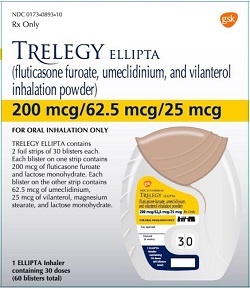
- ‘Trelegy 200 Ellipta’ concludes negotiations with the NHIS
- by Lee, Tak-Sun Feb 15, 2024 05:59am
- ‘Trelegy 200 Ellipta Inhaler,’ a COPD triple combination therapy, has completed the negotiations with the NHIS in Korea. ‘Trelegy 200 Ellipta Inhaler,’ a triple combination therapy for COPD, has completed the negotiations with the National Health Insurance Service (NHIS). The drug is expected to be listed for health insurance reimbursement soon. According to industry experts on the 13th, ‘Trelegy 200 Ellipta Inhaler,’ a COPD triple combination therapy, has completed the negotiations with the NHIS and is expected to be listed for reimbursement after the final reporting to the Health Insurance Policy Review Committee. This drug has a unique feature of doubling the dosage of GSKs first triple combination therapy Trelegy Ellipta (ICS/LABA/LAMA). ‘Trelegy 200 Ellipta’ is used as a maintenance therapy for adults with asthma when the combination of long-acting beta2-adrenergic agonist and inhaled corticosteroid therapy is not providing adequate control. It contains three ingredients: fluticasone furoate, umeclidinium, and vilanterol. A combination of three ingredients provides enhanced therapeutic effects compared to existing drugs. The inclusion of LAMA in a drug combination is anticipated to help patients with asthma that is not adequately controlled with double therapy of ICS/LABA. When Trelegy 200 Ellipta is listed for reimbursement, the market for COPD triple combination therapy will become even more competitive. In January, Kolon Pharmaceutical released Trimbow (beclomethasone dipropionate plus formoterol fumarate hydrate plus glycopyrronium bromide), a single inhaler triple combination therapy. Clinical trials have shown that Trimbow has significant treatment effects by reducing exacerbations of moderate to severe symptoms, improving respiratory function, and enhancing the quality of life. Furthermore, Trimbow has been shown to improve respiratory function and reduce exacerbations of moderate to severe symptoms in patients with asthma. These results demonstrate that Trimbow is effective in managing symptoms and has a good safety profile in patients with COPD or asthma. Trimbow is advantageous for patients with small airway problems because its extra-fine particles can penetrate small airways. Trelegy 200 Ellipta passed the Drug Reimbursement Committee of the Health Insurance Review and Assessment Service (HIRA) last November. Afterwards, it was under negotiations with the NHIS.
- Company
- ‘Concerned about Korea’s stroke treatment system’
- by Son, Hyung-Min Feb 15, 2024 05:58am
- (from the left) Dr. Jae-Kwan Cha (Director, Quality Improvement Committee, KSS), Hee-Joon Bae (President, KSS), Kyung Bok Lee (Director, Policy Making Committee, KSS), The government announced the initiation of a pilot project to lay the foundation for a stroke care system, but its lack of content is being criticized by the academic society. Academics have suggested that securing human resources, establishing a compensation system, and revising the stroke disease group classification system should be made first for the establishment of any system. The Korean Stroke Society held a press conference at the Westing Chosun Hotel in Seoul on the 14th to explain its views. At the conference, Dr. Tae-jung Kim, Director of the Public Relations Committee (Department of Neurology, Seoul National University Bundang Hospital), pointed out that the number of stroke cases will continue to increase in Korea as the nation has become a super-aged society, but the lack of personnel for its care has not been addressed still. Kim said, “There are still many weak spots in stroke care in Korea. In one area where half of all stroke patients live, final stroke treatments such as intravenous thrombolysis and intra-arterial thrombectomy are not available.” According to Statistics Korea, Korea will enter the super-aged society later this year. By 2050, the country is expected to have about 20 million people aged 65 and older. Last year, 180,000 people had strokes, and the number is expected to soar to 340,000 by 2050 with population aging. Tae-Jung Kim, (Director, Public Relations Committee) Kim explained, "Currently, there are only 209 stroke specialists available in tertiary and university hospitals. In some regional cardiocerebrovascular disease centers, one specialist treats 400 to 500 stroke patients.” The government has announced that it will promote the "Cardiocerebrovascular Disease Problem-Solving Treatment Cooperation Network Health Insurance Pilot Project," a network-building and support project to encourage active communication and decision-making among medical institutions and specialists for stroke patients, and the "Essential Medical Care Package" to solve local essential medical care issues. More specifically, the government proposed policies to improve the training environment and expand essential medical care and personnel. However, the KSS stressed that before such measures, the number of on-call doctors and policy fee categories should be increased, and regional centers be expanded. Dr. Jae-Kwan Cha, Director of the Quality Improvement Committee at KSS (Department of Neurology, Dong-a Univ. Hospital), said, “The current number of stroke specialists falls short of the minimum number of people required to operate a stable medical system. The treatment system will collapse when we enter a super-aged society with the current level of specialists." "There are about 86 specialists in 74 university hospitals, but the number of specialists needs to be increased to 160 to ensure a stable personnel pool. If the government wants to build a specialist-centered medical care system, increasing the number of neurology specialists related to essential medical care should be a priority." Dr.Kyung Bok Lee, Director of the Policy Making Committee at KSS criticized how Korea currently classifies stroke as a general medical condition category and emphasized the need to revise it and move it to a specialized medical condition category. Lee said, “It's no secret that stroke is an essential critical emergency disease. Stroke is a severe condition. Nearly 80% of patients suffer from sequelae and need to be treated promptly. Currently, only a small proportion of stroke patients who undergo surgery or procedures are categorized as specialty care patients.” "This is why we need to classify stroke as a specialty disease to ensure that it is not neglected at tertiary hospitals that treat most of the acute stroke patients are often treated."
- Company
- SK Chemical ‘will continue pharma business without selling'
- by Kim, Jin-Gu Feb 15, 2024 05:58am
- SK Chemicals made an official announcement on the 14th that it has decided not to pursue the sale of its pharmaceutical business. The company said, "Amid the various internal and external variables and a rapidly changing business environment, SK Chemicals has decided to maintain its current business portfolio and pursue stable operation of its business." Last September, SK Chemicals began negotiations with Glenwood Private Equity, a South Korean private equity firm. At the time, the company formalized the sale, saying, "We are revisiting the sale of the pharmaceutical business unit and have signed a memorandum of understanding to set out the basic details prior to the signing of this agreement." The selling price was reportedly around KRW 600 billion. In October of last year and January of this year, the company made two clarifying disclosures, stating that "the parties are in talks on the specific terms and conditions." However, just over a month after the last announcement, the company made a final decision to continue the business. Going forward, SK Chemicals plans to focus on growing its pharmaceutical business and creating a new vision under the existing business portfolio structure. SK Chemicals will continue to expand its global CDMO business as it did last year, while also pursuing strategic tasks such as further growth of existing flagship products and joint marketing with domestic and foreign partners. In the mid-to-long term, SK Chemicals plans to secure tangible results from its recent open innovation program and build a new R&D infrastructure. SK Chemicals made record high sales with its pharmaceutical business last year. Last year, sales in SK Chemicals' pharmaceuticals business increased 19.9% YoY to record KRW 376.1 billion, driven by the sales of its flagship products. Operating profit was KRW 31.5 billion, down 6.3% from the previous year. SK Chemicals launched SK Plasma in May 2015 to focus on its blood products business. SK Plasma was established as a wholly owned subsidiary of SK Chemicals through a spin-off. At the end of 2017, SK Plasma became a subsidiary of SK Discovery as part of SK Chemical's reorganization into a holding company. In July 2018, its vaccine business was spun off to form SK Bioscience. SK Bioscience was initially launched as a 100% subsidiary of SK Chemicals, but its shareholding was diluted to 68.4% when SK Chemicals sold 7.65 million shares in a public offering in March 2021.
- Company
- Statin+ezetimibe combo mkt size nears ₩1 tril in KOR
- by Chon, Seung-Hyun Feb 15, 2024 05:58am
- The statin and ezetimibe combination continues to dominate the dyslipidemia treatment market. Prescriptions have more than tripled over the past 5 years, with the market size approaching nearly KRW 1 trillion. The rosuvastatin-ezetimibe combination drove market growth, posting more than KRW 600 billion in sales, while the atorvastatin-ezetimibe combination expanded more than threefold after the arrival of its generics. Prescriptions for pitavastatin-ezetimibe combinations also surged. According to the market research institution UBIST, the outpatient prescription market for the statin-ezetimibe combinations totaled at KRW 990 billion ($90.9 million) last year. This is up 24.1% from the KRW 797.6 billion in 2022. The statin-ezetimibe combination market has more than tripled in 5 years from KRW 282.3 billion in 2018. The growth has accelerated recently, more than doubling in the last 3 years from KRW 474.6 billion in 2020. This is because statin-ezetimibe combinations are more effective in lowering low-density lipoprotein cholesterol (LDL-C) and are less expensive than taking two separate drugs. Currently, 4 statin-ezetimibe combinations are available: simvastatin, rosuvastatin, atorvastatin, and pitavastatin. The rosuvastatin-ezetimibe combination owns the largest share of the statin-ezetimibe combination market. Last year, outpatient prescriptions for rosuvastatin-ezetimibe combinations totaled at KRW 616.4 billion, up 18.7% year-on-year. This is a 33.1% rise in 2 years from the KRW 450.6 billion in 2021. Compared to the KRW 197.1 billion it had made in 2018, the market has more than tripled in size in just 5 years. The rosuvastatin-ezetimibe combination accounted for 62.3% of the statin-ezetimibe combination market last year. Hanmi Pharmaceutical was the first to enter the market with the rosuvastatin-ezetimibe combination Rosuzet in 2015. Hanmi entered the market before its competitors by securing the rights to use ezetimibe from the patent holder MSD. Currently, 50 domestic pharmaceutical companies have entered the rosuvastatin-ezetimibe combination market. Prescription sales of Rosuzet amounted to KRW 178.8 billion last year, up 19.3% from the previous year, ranking second among all drugs. This is the third consecutive year it has ranked second since 2021. Rosuzet has boasted its flagship statin-ezetimibe combination drug status, posting outpatient prescription sales in the KRW 100 billion range for 4 consecutive years, after surpassing the KRW 100 billion mark for the first time in 2020. Last year, Rosuzet accounted for 29.0% of the rosuvastatin-ezetimibe combination market. Atorvastatin-ezetimibe combinations have also seen steep growth in recent years. Last year, prescriptions for atorvastatin-ezetimibe combinations totaled at KRW 267.3 billion, up 27.7% year-on-year. Their sales soared 103.4% in 2 years, from KRW 44.2 billion in 2021 to KRW 131.4 billion. The market size has expanded rapidly in a short period of time with the introduction of Atozet generics into the market in bulk. Until 2020, only 1 atorvastatin-ezetimibe combination product – Organon Korea’s Atozet, was available in Korea. However, Since 2021, more than 100 domestic companies have entered the atorvastatin-ezetimibe market simultaneously, expanding the market size. In October 2020, Chong Kun Dang received approval for Lipilouzet, a combination drug that contains the same ingredients as Atozet, after clinical trials. By this time, 22 companies had been approved to produce Lipilouzet-authorized generics and were listed for reimbursement from April 2021. Beginning in February 2021, 88 pharmaceutical companies additionally received authorizations for Atozet generics and were listed for reimbursement in May, one month later than Lipilouzet-authorized generics. In June 2021, two more companies received approval for Atozet generics, bringing the total number of domestic companies entering the Atozet market to 113. The atorvastatin-ezetimibe combination market has expanded by 240.5% in 3 years since the introduction of the generics, up from KRW 82.8 billion in 2020 when only Atozet was available. The atorvastatin-ezetimibe combination's share of the statin-ezetimibe market rose to 43.3% last year from just 22.0% in 2018. Livalozet, the first pitavastatin-ezetimibe combination that was launched by JW Pharmaceuticals in 2021, has recently gained prominence in the statin-ezetimibe combination market. Pitavastatin is the active ingredient in JW Pharmaceutical's flagship hyperlipidemia drug Livalo. After launched in October 2021, Livalozet posted prescription sales of KRW 31.8 billion in 2022, which more than doubled to KRW 72 billion last year. Simvastatin-ezetimibe combinations have been less successful. Last year, prescription of the simvastatin-ezetimibe combinations amounted to KRW 34.3 billion, down 8.0% YoY. It was the third consecutive year of decline after reaching KRW 42.9 billion in 2020. Prescriptions for the simvastatin-ezetimibe combinations were down 20.1% last year compared to 3 years ago. The original simvastatin-ezetimibe combination product, Vytorin from Organon Korea, was the first to enter the statin-ezetimibe combination market. However, its prescription market has gradually shrunk compared to other combinations. The simvastatin-ezetimibe combination accounted for 21.4% of the statin-ezetimibe market in 2017, but its share shrank to 5.6% last year.
- Policy
- The guidelines for PVA will be revised soon
- by Lee, Tak-Sun Feb 15, 2024 05:58am
- The National Health Insurance Service (NHIS) is likely to seek opinions from the pharmaceutical industry soon to revise the operational guidelines on the price-volume agreement (PVA) program. The revised guidelines draw attention as they include an agenda for easing on products that have reduced their prices more than three times in five years, as announced last year. According to industry experts, on the 14th, the NHIS plans to revise the PVA negotiation’s operational guidelines, including an agenda announced last December regarding easing the PVA for innovative new drugs. The pharmaceutical industry expects the NHIS to conclude revising the guidelines before the type ‘Da’ monitoring starts in April. Therefore, the NHIS will likely consult with pharmaceutical organizations, including the Korea Pharmaceutical and Bio-Pharma Manufacturers Association (KPBMA), for their opinions. What is most interesting is the agenda focusing on easing regulations for products that have reduced their prices more than three times. On December 22nd, the Biohealth Innovation Committee, chaired by the Prime Minister, released a report stating that pharmaceuticals produced by companies that have received an innovative designation or meet the standards will be eligible for an adjusted rate of price reduction on the third round. For instance, drugs that have already undergone two rounds of price reduction through PVA negotiations will receive a reduced rate of price reduction this year. Products undergoing the fourth and fifth rounds of price reductions will be subject to a lower rate of reduction. Upon completion of the revision guidelines this year, many products are expected to receive benefits. The industry anticipates that the rate of price reduction will fall between 30-50%. If the set reduced price is 1,000 won, then 300 won to 500 won may be deducted. However, the final revision measures will be determined following discussions among departments including the Ministry of Health and Welfare (MOHW). According to research conducted in 2022 on the evaluation of achievements and improvement measures of the PVA program, 26 products with the same ingredient have repeatedly undergone price reductions more than three times in 10 years. Among these products, nine from Korean pharmaceutical companies and 17 from multinational pharmaceutical companies have experienced price reductions more than three times. As a result, adjustments are expected to lead to lower reduction rates for many products. The revised guidelines are expected to include differential application of reductions based on claim amounts. Higher reduction rates will likely be applied to higher claim amounts, with 30 billion won as a reference amount. Also, exclusion criteria will likely be updated to include measures that raise the claim amounts to 3 billion won, up from the current claim amount of less than 2 billion won. Furthermore, the guidelines may contain measures for products with temporary increases in volume due to infectious diseases and drug shortages, allowing for a reduction rate or refund. However, the plan to increase the maximum reduction rate from the current 10% to 15% will be reflected through future revisions.
- Policy
- Price cut hold for Forxiga, Xigduo, Atmeg Combi are extended
- by Lee, Jeong-Hwan Feb 14, 2024 05:40am
- The administrative stay of execution of the price reduction disposition for AstraZeneca's diabetes drugs Forxiga (dapagliflozin), Xigduo (dapagliflozin+metformin), and Korea United Pharm’s Atmeg Combigel (atorvastatin 10 mg + omega 3) has been extended, and the insurance ceiling price for the drugs will remain unchanged until June 30. On the 7th, the Ministry of Health and Welfare announced the extension of the stay of execution of these drugs in ‘the drug reimbursement list and reimbursement ceiling price table.’ This is the result of the Seoul Administrative Court's decision to grant AstraZeneca and United Pharmaceuticals Korea's request to suspend enforcement of drug price cuts as filed by AstraZeneca and Korea United Pharmaceuticals. AstraZeneca filed for the stay of execution, claiming that the price reduction was unfair due to the difference in indications between the original Forxiga and generic drugs. Korea United Pharm also filed for a stay of execution after its 2-year drug price premium was terminated due to the listing of other 'atorvastatin 5 mg + omega-3 combination drugs' that contain different dosages of the ingredients. The company had received the pricing premium because there had been fewer than 3 generic companies that produced the same ingredient. As a result, the price of Forxiga will remain at KRW 734, and the price of Xigduo XR Tab 10/500 mg and 10/1000 mg will remain at KRW 736. The MOHW’s reduced price is KRW 514 for Forxiga, KRW 473 for Xigduo 10/500 mg, and KRW 512 for Xigduo 10/1000 mg. The insurance ceiling price of Atmeg Combigel will remain at KRW 1,219. The MOHW’s reduced price was KRW 960.
