
- LOGIN
- MemberShip
- 2026-05-05 11:26:30

- Policy
- Korean gov. to introduce preferential drug pricing criteria
- by Lee, Jeong-Hwan Feb 08, 2024 05:49am
- Director Chang-Hyun Oh explained the pharmaceutical policy directions in the 2nd comprehensive National Health Insurance plan. By the first half of this year, the government plans to establish a detailed criteria for ‘National Economic Growth,’ including the research and development (R&D) of new drugs and incrementally modified drugs, essential drugs supply, and new job creations, which will be the basis for preferential drug pricing intended for pharmaceutical companies in Korea. The criteria will be used to implement a new policy aimed at enhancing preferential drug pricing benefits for pharmaceutical companies that have contributed to Korea’s economic growth. The government has promised to strengthen drug pricing support using the National Health Insurance finance if a pharmaceutical company shows achievements, such as enhancing R&D efforts, alleviating essential drug shortages, and increasing hires, regardless of its status as an innovative pharmaceutical company. Notably, the government has announced a plan to establish a new direction for generic drug pricing system. The current stepwise pricing system for generic drugs was analyzed in research service report, upon which this revision is based. On the 5th, Lee Joongkyu, Director of the National Health Policy at the Ministry of Health and Welfare (MOHW), held the meeting for the 2nd comprehensive National Health Insurance plan with the KSPA NEWS and announced the plan. Chang-Hyun Oh, Director of Pharmaceutical Benefits, attended the meeting and answered the questions regarding the 2nd National Health Insurance plan in detail, including the drug pricing system and issues related to drug prices. Pharmaceutical companies contributing to healthcare security and Korea economic growth will receive preferential drug pricing The 2nd NHI plan announced on the 4th by the MOHW contains policy objectives of assessing preferential drug pricing differentially based on companies’ contribution to improvement in citizens’ healthcare, considering the sustainability of NHI and national economic growth The plan outlines a vision to provide preferential drug pricing to pharmaceutical companies that advance healthcare and establish a stable supply chain. This includes investing in R&D of innovative pharmaceuticals, such as new drugs and incremental new drugs, contributing to the supply of essential drugs, and creating new jobs opportunities. Director Oh emphasized that the 2nd NHI plan is focused on contributing to economic growth and healthcare security. Particularly, the plan includes various measures within the health insurance policy to encourage pharmaceutical companies to engage in the development of new drugs, incrementally modified drugs, and generics. “The current health insurance plan includes discussions on assessing ICER value flexibility and implementing measures to reduce drug pricing if a company positively contrivutes to Korean medical healthcare through substantial investment in R&D, as well as job creation,” said Oh. “Compared to the current incentive system, the revision may yield more improvements because the development of new drugs, incrementally modified drugs, and combination drugs can help healthcare finances.” Oh also mentioned that regardless of a company’s status as an innovative pharmaceutical company, the policy of higher drug pricing will apply to pharmaceutical companies that contribute to Korean economic growth. A reference criteria for preferential drug pricing will be set in the first half of this year after working with a public-private consultative body comprised of the MOHW and pharmaceutical companies, Oh answered. Oh stated that they plan to revise the qualification criteria for innovative pharmaceutical companies to make them less stringent. “Additionally, we will consider creating an administrative system that provides drug pricing benefits to companies that do not qualify as innovative pharmaceutical companies but have made significant contributions to the healthcare industry and health insurance finances through their R&D investments,” Oh said. “We will put our efforts into formulating the criteria of preferential drug pricing by the first half of this year.” “In the 2nd NHI plan, we have suggested a course of direction. We will hear from industry experts in a public-private consultative body to discuss drug pricing index, systemization, and ratios. We have not yet decided on the execution date, but we will implement the system soon,” Oh commented. The MOHW will look into the revision of the generic drug pricing system and the post-management system of drug pricing The MOHW will assess whether the post-management drug pricing system should be revised as well, in addition to enhancing administrative measures for better patient access and considering revision to the drug pricing system of generic drugs. Since July of last year, the MOHW has initiated research with a team led by Professor Dong-Sook Kim at Kongju National University under the government contract to work on evaluating the necessity of restructuring Korea’s drug pricing of generic drugs and to devise revision. The MOHW is currently finalizing the research. Comparing Korea’s drug pricing system for generics to the overseas drug pricing system, the research aims to evaluate whether the current step-wise drug pricing system is valid. Specifically, the research team will analyze whether it is appropriate to set the number of items, differentially priced at 53.55~38.69%, that receive differential drug pricing to 20, should drug prices of generics be maintained at 53.55% of the originals before the patent expires, and whether it is necessary to differentially set the drug prices of generics to 53.55% once the patent of the originals expires. The research includes the post-management methods, including the price-volume agreement. Oh has announced that they will begin working on amending the drug pricing system and the post-management of generic drugs this year after completing the research and a comprehensive review of the post-management system,. However, the execution date will be determined later “after gathering opinions from patients, pharmaceutical companies, and experts.”
- Policy
- Production and supply of Cifex Eye Drops is discontinued
- by Lee, Hye-Kyung Feb 08, 2024 05:49am
- Samil Pharm will suspend production and supply of its 2nd generation fluoroquinolone antibiotic eye drop, Cifex Eye Drops (ciprofloxacin hydrochloride hydrate). According to the Ministry of Food and Drug Safety's status report on the discontinued or supply shortage drugs, Samil Pharm had reported the discontinuation of its Cifex Eye Drops on the 6th. Samil Pharm said, "We are suspending production and supply due to low sales and increased amount of disposed products. There is a possibility of resuming production if there is a large demand in the future." Cifex Eye Drops was approved in 1995 and have been used to treat corneal ulcers and conjunctivitis. According to the Ministry of Food and Drug Safety's production performance report, sales of the drug have steadily increased from KRW 36.75 million in 2020, KRW 36.77 million in 2021, to KRW 40.94 million in 2022, but Samil Pharm believes that inventory is increasing due to low sales. The company added, "There are many quinolones such as ‘ofloxacin,' 'levofloxacin,' and 'moxifloxacin' available to substitute Cifex Eye Drops, so we do not expect any inconvenience to occur for the patients due to the discontinuation of Cifex Eye Drops. Currently, the only remaining second-generation quinolone antibiotics that contain ciprofloxacin like Cipex Eye Drops is Daewoong Pharmaceutical's Ciplus, and other ofloxacin products available include ‘Effexin,’ ‘Ocuflox,’ ‘Ofbella,’ ‘Quinovit,’ and ‘Tarivid.’ Other alternative antibiotic eye drops available include 3rd generation quinolone antibiotics like ‘Cravit,’ ‘Levofexin,’ which contains levofloxacin, and ‘Ozex,’ which contain tosufloxacin. Among 4th generation quinolone biotics, ‘Gatiflo,’ which contains gatifloxacin, and ‘Vigamox’ and ‘Vigaflo’ that contain moxifloxacin are available in the market.
- Opinion
- [Reporter’s View] Long-awaited, but not prescribed?
- by Eo, Yun-Ho Feb 08, 2024 05:49am
- Even though the only existing treatment on the planet has finally been approved for reimbursement in Korea, prescribers are hesitant to introduce the drug to their institutions due to concerns over incurring losses if the costly drugs are not used. These are drugs that have gained much attention since approval. The drugs showed outstanding efficacy in diseases with no or limited treatment options, but are expensive. Upon their entry into Korea, patients and their families had been desperately arising for their insurance reimbursement. In every stage of the process, from when the pharmaceutical company applied for reimbursement benefits to the Health Insurance Review and Assessment Service, to every step of the listing process by the National Health Insurance Service, attention was gained and petitions were filed, prompting its listing. However, to the public’s disappointment, the approval process for new drugs that bring heavy financial burdens on national health insurance is usually not smooth and takes a long time. But often, these new drugs that passed this rough and difficult reimbursement process are not being prescribed at most hospitals. And these aren’t all gene therapies that require specific facilities for their prescription. One drug, which was listed almost half a year ago, has only landed in a handful of medical centers in the country despite being an unprecedented and reimbursable treatment. This is because hospitals are reluctant to bear the loss that may occur if the government orders insurance cuts after the drugs are prescribed at the discretion of their physicians. The same is true for the distributors. If they incur a loss in the process of distributing these drugs, they lose a lot of money. The same goes for drugs that require preapproval. The preapproval system is a system established to review whether or not to reimburse expensive rare disease drugs for each patient in advance and is designed to improve patient access to treatments while protecting health insurance finances. It has two functions: prior review, which determines the eligibility of the patients before treatment, and concurrent review, which determines whether the patient may continue treatment with reimbursement after the preapproval. In other words, because the drug is so expensive, the authorities are using prior review to determine whether or not the drug can be reimbursed, case-by-case. The drugs that require prior review can also prescribed when there is an emergency at the doctors’ discretion. The problem lies in when the drug is prescribed but the authorities decided to reject its coverage. It’s not right to ask the hospitals and distributors to just bear the losses. But we all need to remember that much yearning and hard work went into reimbursing the drugs. Hospitals and distributors need to work with the industry and authorities to fulfill the purpose of the ‘risk-sharing’ scheme. This is not the time to be reluctant, it is rather the time to take a proactive step forward. The government also needs to understand this hesitation on-site in using drugs that have entered the system. ‘Landing’ shouldn't become one more barrier that contributes to ‘drugs that exist but can't be taken or administered’ in addition to reimbursement.
- Policy
- Preferential pricing possible for non-innovative new drugs
- by Lee, Tak-Sun Feb 08, 2024 05:48am
- The government has announced a plan allowing new drugs developed by pharmaceutical companies not designated as Korea’s innovative pharmaceutical companies to be eligible for preferential drug pricing. This has turned attention to whether Jeil Pharmaceutical’s new drugs will benefit from this plan. On the 4th, the Ministry of Health and Welfare (MOHW) announced the 2nd comprehensive National Health Insurance plan (2024~2028), stating that the ministry will establish a measure to provide preferential drug pricing to pharmaceutical companies, regardless of their innovative new drugs designation status, that advance healthcare and establish a stable supply chain. The current plan offers expanded support compared to the ‘the drug pricing system to ensure fair-value compensation for innovative new drugs’ announced by the Biohealth Innovation Committee, which is chaired by the Prime Minister. In ‘the drug pricing system to ensure fair-value compensation for innovative new drugs’, domestically developed new drugs, which were produced by innovative pharmaceutical companies and underwent confirmatory clinical trials targeting Koreans and received expedited approval by the Ministry of Food and Drug Safety (MFDS), were eligible for receiving the drug pricing measures. Previously, if a drug's clinical usefulness was assessed to be the same or less than that of its substitute, it was priced lower than the weighted average price of the substitute. However, from now on, it will be allowed to be priced between the weighted average price and the maximum price of the substitute. Following the announcement, the pharmaceutical industry welcomed the news, but expressed disappointment at the limited benefits for only innovative pharmaceutical companies. During last month’s public-private consultative body meeting, the pharmaceutical industry proposed that non-innovative pharmaceutical companies should also be considered for preferential drug pricing. It seems that such measures have been incorporated into the 2nd NHI plan. Particularly this year, there is anticipation surrounding the emergence of domestically produced new drugs developed by non-innovative pharmaceutical companies, raising interest in whether they will also receive drug pricing benefits. ‘Zastaprazan,’ developed by Onconic Therapeutics, a subsidiary of Jeil Pharmaceutical, is one of those drugs. Zastaprazan has applied for product approval form the MFDS. Zastaprazan, like Kcab, is a P-CAB class treatment for gastroesophageal reflux disease. Compared to PPI-class medications, it has a rapid onset of action and can be taken regardless of meals. Onconic Therapeutics conducted a Phase 3 trial enrolling 289 patients with gastroesophageal reflux disease at 28 medical institutions, demonstrating non-inferiority compared to Esomeprazole. The product approval is expected to be confirmed this year, followed by the reimbursement listing process. Based on current criteria, since it is considered a non-innovative new drug, it is expected to receive a price below the average weighted price of substitute drugs. Although the government announced ‘the drug pricing system to ensure fair-value compensation for innovative new drugs’ measure end of last year, Jeil Pharmaceutical and Onconic Therapeutics have been excluded from potential beneficiary because they are not designated as innovative pharmaceutical companies. With the 2nd NHI plan, these new drugs can receive higher prices if subjected to preferential drug pricing. DA-8010, which is a new drug being developed by Dong-A ST for treating overactive bladder (OAB), has been identified as a potential beneficiary. If the phase 3 trials of this drug are completed within the first half of this year, there is a high possibility that the company will apply for product approval by the end of the year. Previously, Dong-A ST has been excluded from drug pricing incentives as it is not designated as an innovative pharmaceutical company, despite the new drug development. The industry expects the government to formulate preferential drug pricing criteria for non-innovative new drugs in the first half of the year. During a meeting with the KSPA NEWS On the 5th, Chang-Hyun Oh, Director of Pharmaceutical Benefits, stated that “We will consider creating an administrative system that provides drug pricing benefits to companies that do not qualify as innovative pharmaceutical companies but have made significant contributions to the healthcare industry and health insurance finances through their R&D investments.” Oh explained, “We will put our efforts into formulating the criteria of preferential drug pricing by the first half of this year.” After the New Year holiday, the government is expected to begin discussing measures of preferential drug pricing with the pharmaceutical industry through a public-private consultative body.
- Company
- Yuhan Chemical completes FDA and ANVISA inspections
- by Nho, Byung Chul Feb 07, 2024 05:59am
- Yuhan Chemical’s manufacturing plant in Hwaseong. Yuhan Chemical (CEO & President: Sang-Hun Seo) has confirmed its global-scale capacity for manufacturing and quality management systems. Yuhan Chemical announced on the 5th that the company has successfully completed the inspections of the United States Food and Drug Associations (FDA) and the Brazilian Health Surveillance Agency (ANVISA). As a result, the current inspection likely verified that Yuhan Chemical has the global-scale capacity for manufacturing and quality management systems, firmly establishing its position as Korea’s top active pharmaceutical ingredient (API) manufacturing company. The current FDA inspection lasted five days, serving as a Pre-Approval Inspection and a routine inspection for APIs intended for U.S. exports. The FDA assessed the company’s compliance with stringent good manufacturing practice (cGMP) standards, and the inspection successfully concluded with only minor notifications issued. Yuhan Chemical also cleared Pre-Approval Inspection of Brazil’s ANVISA, known to be as stringent as the FDA approval, with no observations. Regarding the current inspections, Yuhan Chemical stated, “This round of inspections reaffirmed that Yuhan Chemical holds a strong position as an API company. We have demonstrated our superior manufacturing facility, quality system, and commitment to Data Integrity, utilizing an IT-based quality system while upholding the company’s values of honesty and integrity.” Yuhan Chemical, a subsidiary of Yuhan Corporation, is an API development and manufacturing company. Founded in July 1980, the company has been pursuing global quality standards. Yuhan Chemical received FDA approval for its Ansan manufacturing plant in 2002 and is certified to comply with the advanced GMP quality standards of regulatory agencies in various countries, including European EDQM, Japanese PMDA, Brazil ANVISA, and Australia TGA. In January 2016, the company established its second plant in Hwaseong, Gyeonggi Province. To expand its manufacturing capacity to achieve further growth, Yuhan Chemical completed the construction of a new facility, HB Dong, in November 2023. The facility has the capacity to produce 144,000 liters annually. With these developments, Yuhan Chemical has a total production capacity of 843,000 liters annually. The company expects to secure new contracts with potential clients with its expanded manufacturing capacity. With scheduled inspections by regulatory agencies and client companies, Yuhan Chemical aims to achieve high-quality growth and further development. “Yuhan Chemical is strengthening its competitive position in producing top-quality APIs. Our company is actively working to implement a Continuous Manufacturing system, which will become a new industry standard worldwide,” Yuhan Chemical stated. “Yuhan Chemical aims to overcome the difficulties posed by the diminishing domestic API manufacturing landscape due to low price competitiveness. The company will strive to become a global API CDMO leader.”
- Company
- Bayer partners with Chong Kun Dang to sell Kerendia
- by Nho, Byung Chul Feb 07, 2024 05:59am
- An upturn is expected in the KRW 20 billion markets for chronic kidney disease treatments, with Bayer and Chong Kun Dang joining forces to establish a joint sales front for its chronic kidney disease treatment, Kerendia Tab, According to industry sources, Bayer and Chong Kun Dang signed a joint sales agreement for Kerendia Tab today (February 6) and will challenge the market as a ‘first-line treatment’ for chronic kidney disease. Bayer's innovative new drug Kerendia Tab. 10-20mg (finerenone) was approved by the Ministry of Food and Drug Safety in April 2022 for indications including as chronic kidney disease and was listed for reimbursement on the 1st of this month. The drug price is KRW 1,670 for both the 10m and 20 mg doses. Although there had been some hypertension drugs, the CKD treatment market had been virtually dominated by HK Inno.N’s Kremezin and Daewon’s Renamezin. Although Kerendia (finerenone) and Kremezin (spherical sorbent) or Renamezin (spherical sorbent) do not contain the same active ingredient, in terms of their 'broad indications,’ Kerendia is likely to pull the brakes on the growth of existing products. Although the field of kidney disease treatment is not divided into first-line and second-line like diabetes or hypertension drugs, it is likely that Kerendia will be prescribed first due to its initial treatment efficacy. Kerendia is a treatment for adult patients with chronic kidney disease (CKD) and type 2 diabetes (T2D)that reduces the risk of end-stage kidney disease (ESKD) and a sustained decrease in estimated glomerular filtration rate (eGFR), and cardiovascular death, nonfatal myocardial infarction, and hospitalization for heart failure. Kremezin and Renamezin, on the other hand, has indications for improving uremia and delaying dialysis, which occurs in in later stage chronic kidney disease. However, the launch of Bayer's new treatment option Kerendia, which adds on to the previous options of Kremezin and Renamezin, is welcome news for the patients, given that the drug is intended to prevent hemodialysis, a major costly treatment that can cost up to KRW 30 million per year. In addition, the introduction of Daewon Pharmaceutical's new formulation, Renamezin Cap., is expected to quickly penetrate the existing market that consists of fine-grained and fast-acting tablets, building on its strength of improved dosing convenience. This, coupled with Chong Kun Dang’s strong sales and marketing capabilities, is expected to raise Kerendia into a dark horse in the market.
- Company
- KRW 40 bil JAKi market is in a fierce three-way race
- by Kim, Jin-Gu Feb 07, 2024 05:59am
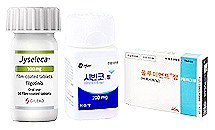
- (Clockwise) Jyseleca, Civinqo, Rinvoq, Olumiant, Xeljanz 제품사진. The competition is intensifying leadership in the Janus kinase (JAK) inhibitor market, an oral autoimmune disease treatment, in Korea. Lilly's Olumiant (baricitinib) became the market leader in Q2 last year, as sales of the longtime leader Pfizer's Xeljanz (tofacitinib) faltered. Then, in just 2 quarters, AbbVie's Rinvoq (upadacitinib) took over the lead. In addition, new drugs such as Pfizer's Civinqo (abrocitinib) and Eisai’s Jyseleca (filgotinib) have also been introduced to the market. This is why the pharmaceutical industry is competing to further intensify in the JAK inhibitor market. JAK inhibitor market amounts to KRW 40 bil last year…Rinvoq’s sales soar 61% YoY According to the market research institution UBIST on the 6th, the outpatient JAK inhibitor prescription market sold KRw 40 billion last year. This is a 19% increase from KRW 33.5 billion in 2022. JAK inhibitors are used for autoimmune diseases such as rheumatoid arthritis and atopic dermatitis. They block inflammation, pain, and cell activation by inhibiting inflammatory cytokines. Since the launch of Xeljanz in 2015, Olumiant and Rinvoq joined in the race in 2019 and 2021, respectively. Yearly prescriptions of major JAK inhibitors (Unit: KRW 100 million, Data: UBIST). By product, Olumiant, Xeljanz, and Rinvoq are in a three-way race. Last year, Olumiant’s prescriptions reached KRW 13.7 billion, Xeljanz KRW 13.3 billion, and Rinvoq KRW 12.4 billion. In particular, Rinvoq's rise in prescription sales stands out. Its sales rose 61% in 1 year, compared with the KW 7.7 billion it had posted in 2022. In the same period, Olumiant’s sales increased by 19% from KRW 11.5 billion and Xeljanz’s sales decreased by 8% from KRW 14.4 billion. Back and forth battle for the lead...Rinvoq tops the market in Q4 last year The quarterly battle for leadership in this market had been even more intense. Olumiant surpassed Xeljanz’s sales and rose to lead the market in Q2 this year with KRW 3.3 billion in prescription sales. It maintained its lead in Q3 with KRW 3.7 billion. However, in Q4, the lead changed hands. While Olumiant fared well in Q4 as well, posting prescription sales of KRW 3.7 billion, Rinvoq took the lead with KRW 4.1 billion. Rinvoq, which was released later than its competitors, Xeljanz and Olumiant, has been the most aggressive in expanding its indications and has grown rapidly. Changes in quarterly prescriptions of major JAK inhibitors (Unit: KRW 100 million, Data: UBIST). Rinvoq is indicated for the treatment of ▲rheumatoid arthritis, ▲psoriatic arthritis, ▲ankylosing spondylitis, ▲atopic dermatitis, ▲ulcerative colitis, and ▲Crohn's disease. Olumiant is indicated for ▲rheumatoid arthritis, ▲atopic dermatitis, and ▲alopecia areata, and Xeljanz is indicated for ▲rheumatoid arthritis, ▲psoriatic arthritis, and ▲ankylosing spondylitis. Among these, the atopic dermatitis indication is known to have led to the rise in the prescription performance of Rinvoq and Olumiant. However, the two products have different indications. Rinvoq is indicated for moderate-to-severe atopic dermatitis in adults and adolescents 12 years of age and older, while Olumiant is indicated for moderate-to-severe atopic dermatitis in adult patients. 4th and 5th JAKis – ‘Civinqo’ and ‘Jyseleca’ released to market…further heating competition in the market The pharmaceutical industry is expected to see fiercer competition in the market this year with the entry of 2 new drugs that joined the market last year. Last year, Pfizer launched Civinqo as a follow-up to its Xeljanz. Its prescriptions for the 6 months from July through the end of the year totaled at. KRW 700 million. Civinqo is approved for atopic dermatitis, an indication that has been driving prescription growth for Rinvoq and Olumiant. Civinqo’s sales are expected to grow rapidly as it is approved for moderate-to-severe atopic dermatitis in adults and adolescents aged 12 years and older, like Rinvoq. Last November, the 5th JAK inhibitor, Jyseleca, was released in Korea. Jyseleca is indicated for rheumatoid arthritis and ulcerative colitis. Prescription sales of the drug the 2 two months after its release amounted to KRW 20 million.
- Company
- Colorectal cancer drug Fruzaqla gets Orphan Drug Designation
- by Eo, Yun-Ho Feb 07, 2024 05:59am
- Fruzaqla (fruquintinib). The new colorectal drug ‘Fruzaqla’ received the Orphan Drug Designation in Korea. On the 1st, the Ministry of Food and Drug Safety (MFDS) announced this decision through the Orphan Drug Designation posting. Fruzaqla is indicated for the treatment of adult patients with metastatic colorectal cancer (mCRC) who have been previously treated with flouropyrimidine-, oxaliplatin-, and irinotecan-based chemotherapy, an anti-VEGF treatment, and if RAS wild-type, an anti-EFGR treatment (RAS); and at least one of trifluridine plus tipiracil or regorafenib treatment. Fruzaqla (fruquintinib) is a VEGFR-1, -2, -3 receptors inhibitor that Takeda Pharmaceutical acquired the rights to the drug from Hong Kong Hutchmed. The FDA designated Fruzaqla for priority review in May last year and approved the drug in November of the same year. The efficacy of Fruzaqla was evaluated based on the FRESCO clinical trial conducted in China and published in JAMA and the global FRESCO-2 clinical trial published in LANSET. These clinical trialss compared the combination therapy of Fruzaqla plus best supportive care (BSC) with placebo combination therapy in patients with previously treated metastatic CRC (mCRC). The FRESCO and FRESCO-2 clinical trials acheived primary endpoints and crucial secondary endpoints, demonstrating consistent effectiveness in 734 patients who received Fruzaqla treatment. In FRESCRO-2 clinical trial, the fruquintinib-treatment group yielded a median overall survival (OS) of 7.4 months, versus 4.8 months for the placebo group. In FRESCO clinical trial, the fruquintinib-treatment group yielded a median OS of 9.3 months, versus 6.6 months in the placebo group. In January last year, Takeda entered into an exclusive licensing agreement with Hutchmed, obtaining the rights for the further development and commercialization of Fruzaqla in territories outside of China. At that time, Takeda agreed to an upfront payment of $400 million (526.9 billion won) and $730 million (961.6 billion won) in additional payments related to milestones.
- Policy
- HIRA 'Ease entry of new drugs and strengthen post-evals'
- by Lee, Tak-Sun Feb 07, 2024 05:59am
- HIRA President Jung-Gu Kang is answering questions from the press corp on June 6 Jung-Gu Kang, President of the Health Insurance Review and Assessment Service, said that he will lower the barriers to entry for new drugs while strengthening post-listing evaluations. For this, Kang explained that HIRA had established the ‘Pharmaceutical Performance Assessment Department’ to improve the management system of high-priced drugs. Regarding the external reference pricing reevaluations, Kang said that the reevaluations will be conducted this year, but that the specific date of its implementation is unclear. He added that it will take time for their review. President Kang said so at a meeting with its press corp at HIRA headquarters in Wonju on June 6. Kang said, “Drugs that have waived pharmacoeconomic evaluations, immunotherapy drugs that have been studied for a short period of time, or drugs for rare and incurable diseases should be evaluated after being listed. We need to conduct long-term follow-up on the effect of these drugs to continue reimbursing effective drugs and removing or switching ineffective drugs.” Regarding the external reference pricing reevaluations that will be conducted using foreign drug prices,Gook-Hee Kim, Director of the Pharmaceutical Benefits Department at HIRA, said, "We are in discussions with the industry to come up with a reasonable and transparent plan. We plan to conduct the reevaluations within the year, but may only be able to release the specific implementation plan at a later time.” The following is a full transcript of Dailypharm’s interview with President Kang. Q. You have been working on a number of projects since your first year in office. What significant achievements and regrets have you had since your appointment? I would like to start by saying that my focus in my first year in office was on the ‘people.’ We sought to help more people benefit through adequate compensation for essential healthcare, which was also a key national agenda. In the lowest low fertility rate crisis, we focused on providing compensation for critically ill and emergency pediatric patients and strengthening the pediatric care system and delivery infrastructure while expanding reimbursement to the public by listing serious diseases such as cancer and brain diseases. While expediting the reimbursement listing of ultra-high-priced drugs, we also contributed to protecting health insurance finances through patient-level performance management. Q. Your organization had completed reorganization in the past year and began full-scale implementation on January 1 of this year. What was the main point and direction of this reorganization? HIRA’s new mission is to ‘Contribute to the Health and well-being of the people by establishing safe and advanced medical environments.’ The reorganization was conducted as a key part of our efforts to achieve this mission. To this end, we have established the Health Insurance Innovation Center, a dedicated organization to review and carry out national tasks such as preventing gaps in essential healthcare and improving the irrationalities in the medical service fee system. We will improve the existing insurance system by remedying the imbalances in the fee-for-service fees and developing various payment systems to create a sustainable compensation system. Also, to improve the management of high-priced drugs that weigh heavily on health insurance finances, we established the Pharmaceutical Performance Assessment Department. We defined high-priced drugs and prepared a performance management system for those drugs to ensure that the system stays effective in protecting public health as well as in managing health insurance expenditures. The 2nd Comprehensive National Health Insurance Plan contains a plan to re-evaluate drug prices by comparing them to overseas prices. I understand that the HIRA prepared its proposal at the end of last year and is in discussions with the pharmaceutical industry. Could you brief us on the time of its implementation, approximate method of reevaluation, and target drugs? (Gook-Hee Kim, Director of the Pharmaceutical Benefits Department) Regarding the external reference pricing reevaluations, we are holding discussions with the industry to come up with a reasonable and transparent method. I believe it will be carried out within the year, but will be able to share the specific timeframe later. When looking at the drug pre-approval review system, quite a few drugs with a very low number of new approvals stand out. I think it can be quite frustrating on the patients’ part to be rejected in the pre-approval process. There needs to be a way to fundamentally remedy this, and I would like to ask for your opinion. Also, could you tell us when the fair compensation on the value of new drugs that were also mentioned in the 2nd Comprehensive National Health Insurance Plan will be implemented? Pre-approval is possible only for the right indications. Therefore, the doctors would first need to accurately file for the right indication. There are also discontinuation criteria, so we need consent on that. Regarding the recent issues in drug reimbursement review, I would like to mention that the pharmaceutical companies first need to submit the required data accurately. A part of the misunderstanding comes from that. The pharmaceutical companies also need to cooperate. We have been working to shorten the review process to within 150 days. So what we want to do is lower the barriers to entry and strengthen the post-approval evaluation process for high-priced intractable diseases and anticancer drugs. The drugs that have waived pharmacoeconomic evaluations should be followed up to see how these drugs are working and if they are effective. Immunotherapies, targeted therapies, and treatment for rare intractable diseases have not been studied on a large scale, so we need to collect a lot of data and evaluate them after the drugs are on the market. Due to opinions on facilitating smoother entry of drugs that have verified their effect through post-evaluations, we are conducting research on that. Through long-term follow-up of listed drugs, we need to continue reimbursing effective drugs and removing or switching ineffective drugs.
- Company
- Oral ulcerative colitis drug Zeposia is actively prescribed
- by Eo, Yun-Ho Feb 06, 2024 06:10am
- Prescription of new oral ulcerative colitis drug Zeposia is being actively promoted in general hospitals in Korea. According to industry sources, BMS Korea’s ‘Zeposia Cap (ozanimod)’ has passed drug committee (DC) reviews of major tertiary hospitals in Korea including Samsung Medical Center, Seoul National University Hospital, Seoul Asan Medical Center, as well as medical institutions including Yeungnam University Hospital, Wonkwang University Hospital, Wonju Severance Hospital, Chonnam National University Hospital, Chosun University Hospital, and Hanyang University Guri Hospital. The drug has been expanding its prescription area after receiving insurance reimbursement in January this year. Zeposia, which is taken once daily orally, was approved in February last year to treat moderate-to-severe active ulcerative colitis in patients who respond adequately to existing treatment or biological agents including corticosteroids, immunosuppressants, etc., or have no response, or have resistance The company applied for reimbursement after approval and passed the Drug Reimbursement Evaluation Committee in August of the same year and was listed for reimbursement this year. Zeposia is a sphingosine 1-phosphate (S1P) receptor modulator used to suppress inflammation by preventing self-reactive lymphocytes from moving to the stomach in ulcerative colitis where immunomodulatory abnormalities are observed. It confirmed the effect of its new mechanism of action in the True North study, which was conducted on adult patients with moderate-to-severe ulcerative colitis. In the study, when evaluating the efficacy of once-daily Zeposia 0.92mg for 10 weeks as induction therapy, 18.4% of ulcerative colitis patients that received Zeposia reached clinical remission at the 10-week mark, which was significantly higher than the 6.8% of patients on placebo. 47.8% of the patients in the Zeposia arm achieved clinical response, which was significantly higher than that of the placebo arm (25.9%). When observing patients who achieved clinical response on Zeposia induction therapy through week 52, at week 52, 37% of patients maintained remission at the 52-week mark of treatment, which was significantly higher compared with 18.5% of those who received placebo. Clinical response was also higher in the Zeposia group than in the placebo group. Tae Il Kim, President of the Korean Association for the Study of Intestinal Diseases (Department of Internal Medicine and Institute of Gastroenterology, Severance Hospital), said, “As ulcerative colitis is a disease that fluctuates between remission and exacerbation and requires long-term treatment, the more treatment options available, the easier it is to tailor a treatment strategy for each patient,” Kim added, "The addition of Zeposia, a novel mechanism of action, is significant because it gives patients another good treatment option to choose from. The advantages of a once-daily oral drug can be very beneficial for patients who are often burdened by the time, cost, and spatial requirements of injectable therapies due to the long-term nature of the disease."
