
- LOGIN
- MemberShip
- 2026-05-20 07:31:00
- InterView
- Why is Metformin’s investigation expanded?
- by Lee, Tak-Sun Jun 12, 2020 06:11am
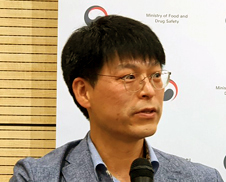
- Namsu Kim, the chief explains the progress of NDMA in Metformin investigation in a briefing with reporters held at the MFDS in Osong on the 9thThe "detection of NDMA in metformin preparations" published by the MFDS is different from the previous cases. In particular, the difference is that NDMA was not detected in the raw materials. ertain raw materials were a problem in the case of Valsartan or Nizatidine. And, NDMA was also detected in raw materials in the case of Ranitidine. However, in the case of Metformin, Nothing was found among 970 commercially available raw materials. Nevertheless, the MFDS prohibits the manufacture and sale of 31 drug products that have been detected in excess of NDMA by investigating the drugs. In response, a briefing with reporters held at the Osong headquarters on the 9th, Nam-soo Kim, the chief of the Food and Drug Administration, said, "We inevitably tested imported products that had no raw materials in the country and expanded our investigation to domestic finished products due to cases of substandard NDMA detection." He said, "In fact, in the case of finished drugs, it was difficult to investigate all because the number of lots reached almost 15,000," he added, "Once we screened (exactly inspected) about 970 raw materials on the market, there were no major problems with the raw materials." However, there were no raw materials for imported pharmaceuticals in Korea. Moreover, it was difficult to import raw materials from overseas. For this reason, it was inevitable to conduct a test inspection on imported finished products, not raw materials. "NDMA in imported finished products is within the standard, but it has been partially detected, and accordingly, domestic pharmaceutical products have been investigated," said Kim. "Singapore authorities and the United States FDA also investigated both raw materials and finished products." He said that the investigation had to be expanded. If the investigation was stopped on raw materials, NDMA would not have been detected in the finished drugs. However, this decision confirmed the detection in the finished product, which made it possible to estimate that Metformin was incorporated into NDMA in the manufacturing process of finished drugs. However, it was not a complete investigation of the entire lots of the drug product. According to Kim, the total number of finished pharmaceutical products in circulation was 15,000. The MFDS collected three lots of 228 items on the market and conducted an investigation. Some critics pointed out that the accuracy of the survey results is not as good as some. In response, Kim explained, "If three items of finished products were collected and investigated, NDMA was detected uniformly by lot for the same item. "There was a so-called border line, and I think it would be better if it was managed more." However, Metformin's NDMA detection is only an estimate that it will be incorporated in the drug product manufacturing process. No specific cause has been identified. "If you submit data about the parts that companies think would be the cause of their own, we will discuss with external experts and consider improving the process for reshipment," said Kim. "In the case of metformin preparation, we had to do a lot of screening, so the inspection agency had a lot of trouble testing it for 5 months," said Kim. "FDA also screened all distribution items as quickly as the results detected in the finished product, not raw materials."

- Company
- Prompt review is urgent for COVID-19 treatment
- by Nho, Byung Chul Jun 12, 2020 06:11am
- It is noteworthy that industry consensus is demanding a fast track clinical trial approval process for autoimmune therapies that have been proven to be safe, as countries around the world are eager to develop vaccines and treatments related to the COVID-19 infection pandemic. The MFDS is also actively sympathizing with this situation, and is conducting consultations with individual pharmaceutical companies, but it is showing a difference of position in approving the clinical trial of the effect of COVID-19 on autoimmune treatment. Recently, autoimmune preparations, such as Sod. Cridanimod, have products that are effective in HIV, hepatitis B/C, viral encephalitis, and encephalomyelitis and are sold globally in Korea and abroad. This product has already entered clinical trial procedures related to the effect of COVID-19 in some countries, including Russia, but the MFDS is delaying the review on this grounds for 'no protocol and guidelines'. In response, the MFDS is requesting in vitro results on the growth and reproduction inhibition of COVID-19. The difference between the opinions of the health authorities and the industry is interpreted as a difference in understanding and perspective on the mechanism. In the case of other drugs, the focus of treatment and development is based on the mechanism of suppressing the growth and reproduction of viruses, but in the case of autoimmune drugs, it has the advantage of enhancing the safety while minimizing side effects by increasing the resistance to viruses through white blood cells in the human body. For example, Sod. Cridanimod, one of autoimmune therapy, has a clinical design that kills the virus by increasing leukocytes following stimulation of interferon alpha/beta. Despite the absence of COVID-19 clinical trial protocols and guidelines for autoimmune preparations, the basis for the need for a fast track is that there are two-sided results of 'positive and negative' of malaria, HIV, and Ebola virus treatments such as Hydroxychloroquine, Kaletra, and Remdesivir. Although Hydroxychloroquine had a prophylactic administration effect and reduced virus amount and extinction effect, it had a similar prognosis similar to the standard treatment group, and had side effects such as increased mortality and induction of neuralgia, mental illness, and hypoglycemia. Kaletra showed a decrease in the amount of detection of virus and improved symptoms of pneumonia, but did not express specific treatment efficacy, and had side effects such as hepatotoxicity, diabetes, and kidney disease. Remdesivir also gained indicators of increased production and improved mortality in North America, Europe, and Japan, but failed to obtain meaningful data, and caused side effects such as kidney damage, hypotension, and stomach paralysis. An industry official said, "Autoimmune preparations are a mechanism for activating a universal and innate endogenous interferon system. It is time to find various methods for the development of therapeutics in which no drug has proved the efficacy associated with COVID-19."
- Policy
- 13 COVID-19 global clinical trials were approved
- by Kim, Jung-Ju Jun 11, 2020 06:53am
- Global clinical trials for the development of COVID-19 vaccines and treatments have increased 15 fold more than in three months. There are 858 cases worldwide and 13 cases approved in Korea, and clinical trials are actively underway. The KONECT (Chairman Byung-Joon Bae) announced on the 9th that it updated the domestic and foreign clinical trial trend information for the development of COVID-19 vaccines and treatments. As of the 8th, there were 858 drug interventional clinical trials that were newly registered in the National Institutes of Health (NIH) ClinicalTrials.gov. The total number of clinical trials increased by 15.3 times from 56 cases to 858 cases as of March 11th. In particular, the number of sponsor-investigator trials increased by 17.7 times from 32 to 565, and it was analyzed that the clinical trials of researchers aimed at the public interest in responding to the national public health crisis are driving clinical research. Of the 858 clinical trials, 825 clinical trials related to treatment and 33 clinical trials related to vaccines. Among clinical trials related to treatment, 546 clinical trials by researchers, 264 clinical trials by pharmaceutical companies, NIH and U.S. Fed-sponsored clinical trials were 15 cases, and the proportion of researchers' clinical studies was 66.2%. Among clinical trials related to treatment, 546 clinical trials by researchers, 264 clinical trials by pharmaceutical companies, NIH and U.S. Fed-sponsored clinical trials were 15 cases, and the proportion of researchers' clinical studies was 66.2%. Korea has 13 clinical trial plans related to COVID-19 approved by the MFDS as of 8th. Of these, 12 clinical trials related to treatment and 1 clinical trial related to vaccines were conducted, and 7 sponsor-investigator trials (53.8%) were reported to be in progress. Meanwhile, information on the current status of clinical trials related to COVID-19 can be viewed and downloaded from the Korean Clinical Trial Portal (K-CLIC).
- Company
- Online seminar for Physicians & pharmacists is approaching
- by Eo, Yun-Ho Jun 11, 2020 06:23am
- Example of simultaneous connection of 3 participants and Japanese speakerThe trend of physicians-pharmacists online seminar (webinar), which is attracting attention due to the spread of COVID-19, is rapidly changing from 2D to 3D, and from one person to multiple. Online seminars are regarded as the advantages of non-face-to-face, COVID-19 accessibility and re-viewing regardless of location/time, and have established themselves as a new tool in pharmaceutical marketing. The Dailypharm's Webinar 2.0' system has recently attracted attention as it successfully connected to 2,500 doctors and successfully completed a real-time connection and lecture transmission with Japanese society speaker. It was difficult to emphasize the branding of the company name, product name, and symposium in the existing 2D-style online seminar with a fragmented composition centered on lecture materials. In addition, it was difficult to emphasize the branding of the symposium, and the visual of the lecturer was not emphasized, and to switch screens for each situation leading to opening and lecture, Q&A, and discussion. On the other hand, this system, which stands for 'Webinar 2.0', ▲ is a two-way live broadcast that connects overseas and domestic (local) in real time. ▲It can be used for both live and recorded transmission.▲ It is evaluated as overcoming the existing system because it can be viewed on any device with a url address sent via text and e-mail without installing a separate access program. Example of screen composition for each situation such as opening, lecture, Q&A, discussionWebinar 2.0 makes it possible to effectively insert a company, product, and symposium by constructing a virtual stage using 3D Max. In addition, screens for each situation are organized according to opening, lecture, Q&A, discussion, etc., so that the satisfaction of speakers and viewers is high, and the concentration of lectures is increased. The limitations of the existing webinar method, in which only one person appeared due to technical limitations, were solved. Webinar 2.0 provides free discussion and case sharing by assigning individual responsibilities sessions as small group meetings depending on the number of participants. Dailypharm's Webinar 2.0 is based on its own system and is conducted by its own manpower, and it is possible to configure various screens with up to 5 people instead of 1, based on a 3D virtual studio. An official from the Daily Farm webinar team said, “This year, more than 2,500 people attended and conducted a two-way live broadcast linking foreign F companies and Japan-domestic regions, and confirmed the system safety and technology. We are providing various types of solutions to pharmaceutical companies at home and abroad at this time when non face-to-face marketing is required." He added, "It is possible to emphasize both lecture materials and lecturer's visuals as if it were offline, and the picture quality of HD cameras is excellent. The web conversion of various seminars will be accelerated." 3D Studio
- Opinion
- [Editor’s View] Adjustment on choline alfoscerate coverage
- by Nho, Byung Chul Jun 11, 2020 06:23am
- Korea’s National Institute of Dementia (NID) found that 43 percent of senior citizens aged 60 to 69 fear dementia the most as far as disease goes. The number of patients with dementia in Korea has rapidly surged to date, and it is projected to exceed one million by 2024 and two million by 2039. And the cost of state-led dementia management is projected to see 15-fold jump from 8.7 trillion won in 2010 to 134.6 trillion in 2050. Due to the surge in dementia patient population and raised awareness of the disease, many of middle-aged people started demanding prescription by healthcare providers to prevent developing dementia. Accordingly, the prescription volume of cognitive function improving choline alfoscerate, used on patients with mild cognitive impairment (MCI), soared exponentially and claimed reimbursement of 325.5 billion won in 2019, making it a major prescription drug market. Noticing the sharp increase in choline alfoscerate reimbursement claim, however, Ministry of Health and Welfare (MOHW) has started reevaluating the adequacy of National Health Insurance (NHI) reimbursement on the medicine, while Health Insurance Review and Assessment Service (HIRA) is to convene Drug Reimbursement Evaluation Committee (DREC) to discuss the issue. The pharmaceutical industry sources report the government bodies are leaning towards designating the use of choline alfoscerate in a person with MCI as selective reimbursement with higher copayment rate. The groups opposing on providing reimbursement on choline alfoscerate claim the substance’ clinical efficacy is insufficient and excessive prescription is damaging the NHI finance. Nevertheless, the clinical experts say otherwise. Currently, a treatment for dementia does not exist; pharmaceutical giants like Pfizer, MSD and Lilly have invested on the pipeline immensely, but they gave up on it in the end. Although many hopeful studies spoke of seemingly ending the fight against dementia, not one dementia drug has received the U.S. Food and Drug Administration’s (FDA) novel drug approval since 2003. Considering the situation, the best means of treatment is to protect the cognitive function as much as possible from the MCI stage, right before developing dementia, and to constantly observe the progress of dementia. Finding the sign of dementia at early stage and treating it can significantly reduce the pain and burden of the patient’s family, in which the social cost can be lessened as well. And healthcare provider’s frustration surfaces from here. The prescribers are running out of options in cognitive function related drugs as donepezil’s indication to treat vascular dementia is removed, acetyl-L-carnitine’s indications were narrowed and now choline alfoscerate reimbursement would be adjusted. These changes are contradicting the Korean government’s emphasized goal to expand state-led dementia management. When an alternative option is unavailable for the mild cognitive impairment—a crucial stage to treat dementia early, increasing the patients’ copayment rate may immediately bring down the cost. But patients would miss the window to comprehensively control dementia development due to frequent visit to hospital, which eventually would result in treating even more dementia patients. And applying differentiated copayment rate by disease type would technically cut down reimbursement more and distort the clinical scene by inputting different disease code. Choline alfoscerate may have been criticized to have insufficient clinical evidence, but it has the highest number of evidences among cognitive function enhancing drugs. And in Russia, where the drug is designated as prescription use, had positive findings in 50 patients with amnestic mild cognitive impairment. Regarding the study, the researcher states choline alfoscerate has outstanding tolerability and confirmed safety, and recommends using the drug in people with high-risk of developing Alzheimer’s disease, such as people with mild cognitive impairment, as a preventive measure. Moreover, brain disease treatments struggle to find participants for large-scale clinical trial, so evaluating the drug’s benefit tends to be extremely difficult. A high number of reimbursement claims well depicts high social demand and the reality with no other option. The health authority should be advised that adjusting reimbursement on the drug and impeding prescription due to high cost could have the patients and their families to resort to untested folk remedy with growing anxiety and ultimately spend more money in the process.
- Company
- A contract for all items with Leo/Baekje has been signed
- by Jun 11, 2020 06:22am
- A contract for exclusive sales of all items with a global pharmaceutical company and a domestic drug distributor has been concluded. On the 8th, Leo-Pharma (CEO Jung-beom Shin) and Baekje (CEO Dong Gu Kim) announced on the 9th that they have signed a distributor service contract for Leo-Pharma’s dermatology products at the headquarters of Baekje Pharmaceutical. Under this agreement, Baekje will be in charge of domestic distribution of all items for the treatment of skin diseases possessed by Leo Pharma, such as Enstilum Foam, Daivobet, Xamiol, and Protopic(0.1%, 0.03%) for three years from July. Through the signing of this contract, the two companies will announce the excellence of the product power of Leo-Pharma, a special company in skin disease treatment, and will lead the domestic drug market by enhancing competitiveness based on Baekje’s excellent local distribution network, product sales force, and real-time data management system. In particular, this agreement is noted in that it is the first distributor agreement for all products between a domestic pharmaceutical distributor and a global pharmaceutical company. Baekje expects that the domestic distribution industry will be able to grow significantly through partnerships with global companies. Currently, Baekje has an expedited delivery system that can be procured within 24 hours nationwide with an extensive distribution network consisting of 9 distribution centers and 20 branches nationwide, multiple pharmacy counterparts, and partner distributors. CEO Jung-beom Shin said, "Partnership with Baekje with excellent distribution network in Korea, rapid delivery, and real-time data management system is the best choice for both companies. We will lead the further development of treatment for domestic skin diseases such as psoriasis and atopic dermatitis through the partnership with Baekje with a deep understanding of the domestic pharmaceutical market." Dong Gu Kim, CEO of Baekje said “During the past 70 years, we have been striving to provide better medicines and services under the mission of 'Providing the medicines we need immediately'.” Also he added, "Baekje has sufficient capacity for a distributor service as well as a third-party logistics service, and it will have a greater synergistic effect in terms of cost reduction and efficiency in the future with Leo-pharma if it is provided together."
- Company
- Surveillance or global standard? Dispute over SAP by MSD
- by Jun 11, 2020 06:22am
- The employees of MSD Korea are strongly opposing against the management planning to implement tightened self-assurance program (SAP) guideline. The company’s sales department is infuriated with the Korean management adhering to the global standard, regardless of the employees constantly demanding for flexible amendment. According to the pharmaceutical industry sources on June 8, MSD Korea has recently introduced the new SAP to its employees. Two key changes have been made; first, the subject for SAP would be expanded from ‘a product presentation of five or more persons’ to ‘two or more persons.’ As a result, all product presentation, except for one-on-one, would be subject for SAP. And the three-hour pre-notification of accompanying SAP agent issued to the monitored sales person would be removed. However, to minimize the disturbance, the monitored sales person would be notified via a phone call 45 minutes prior to the scheduled meeting. The new SAP guideline would come in effect from June 30. New SAP guideline announced by MSD Korea If a healthcare provider cancels meeting right before the time, despite the pre-notified SAP, prospective product presentations for the healthcare provider may get limited. The company’s sales employees are resisting the changes. Although the employees urged for more adaptable and localized guidelines, the SAP was rather strengthened and started restricting the sales activity. In other words, when a scheduled event is canceled, the damage would directly penalize the responsible sales employee. SAP is a compliance program (CP) MSD Korea enforces. Since the financial profit expenditure report system was mandated, the company implemented the CP to monitor employees complying with the business ethics code. With an external agent (‘coordinator’) accompanying to an event for healthcare provider account, the company monitors the sales employee providing appropriate venue, food and beverage and sharing appropriate conversations during product presentation. The program started off with a good objective, but it sparked a dispute between the management and employees last year. The employees reproached as the program invasively watched over employees and a third party listening to the conversation between the healthcare provider and employee during the product presentation raised an issue of invasion of privacy. Some employees received a note of warning from the management, because of what a healthcare provider said during the presentation. Regardless, the company management claims the changes in SAP is unavoidable due to the global standards. MSD Korea official explained, “SAP is applied to every small-scale meeting, consisting of two to 25 persons, convened by all global branches of MSD,” and “from the beginning, the SAP was applied to all events with two or more persons and no pre-notification. But it only got be expanded throughout APAC region from May 1.” The official added, “Monitoring a canceled event is not to penalize the employee, but to analyze the cause from different angles and to proactively seek improvements.” Summing up the management’s stance, the new changes are their effort to actually match the exceptional standard the SAP had in Korea so far to the global level of standard. The company elaborated the details internally, but the employees refuted that it was “an unacceptable explanation.” Apparently, some employees have started questioning the management’s leadership. A sales person at MSD Korea pointed out, “The company lays down unfavorable global guideline to the employees, and applies localized standard in areas the employees want the global standard to be applied.” Another sales person criticized, “The management of MSD Korea disregards the domestic situation but rather blindly accepts the order to follow the global standard. Flexibly and reasonably improving irrational guidelines is also a key role the management has to play.” The industry also shakes its head on MSD Korea’s SAP. Most of multinational pharmaceutical companies skip on SAP but reinforces CP training instead. An industry insider noted, “Even if the company follows the global guideline, flexible standard fitting to Korean environment should be used,” and “the company should also try to fathom the difficulties the employees feel on job and reflect needed changes accordingly.”
- Policy
- About 70% of new anticancer drugs are listed
- by Lee, Hye-Kyung Jun 11, 2020 06:22am
- The average listed rate for new drugs approved in Korea was 67.2%. Looking at the rate of chemotherapy drug listed alone, it was 70.2%, which is higher than all new drugs. Korea Institute for Health and Social Affairs This data was shown on the 8th through the 'Health and Welfare ISSUE&FOCUS (Silvia Park, Korea Institute for Pharmaceutical Policy Affairs, Solyip Ha, Social Budget Research Group)' published by the Korea Institute for Health and Social Affairs. As a result of analyzing 570 new drugs approved in Korea from 2007 to 2018 by the Korea Institute for Health and Social Affairs, Trends in new drug properties seen in the global market have recently been observed, such as increased treatment for severe diseases, higher costs, and uncertainty in the basis for decision making. As a result of analyzing the database of the MFDS, the annual average of 47.5 new drugs has been approved over the past 12 years. Of these, 141 new anticancer drugs accounted for 24.7% of all new drugs, and since 2007, the proportion has increased gradually, accounting for about 39% in 2016 and 2017. As a result of comparing the health insurance drug price file and claim data based on the MFDS, as of May 2019, 383 items, 67.2% of the 570 new drugs approved, were listed on the reimbursement list. Anti-cancer drugs, 99 items (70.2%) out of the total 141 items were listed, showing a higher listing rate than all new drugs. Anticancer drugs that were approved in 2013~2015 have a very high guarantee rate of about 90%, and the incidence rate of approved anticancer drugs after 2016 is likely to increase further. Among the new drugs for anticancer drugs, 45.5% of them were listed as risk-sharing agents (RSA). In particular, the ratio of RSA to reimbursement was more than 90% in the case of licensed anticancer drugs from 2016 to 2017, after the policy to strengthen the guarantee in 2014. In the United States or the European Union, the percentage of drugs approved for sale under conditional approval was the highest in RSA-listed new drugs at 66.7%, with 46.8% for anticancer drugs and 15.4% for all new drugs. The expenditure on health insurance drug for new drugs increased from ₩392.5 billion in 2012 to ₩1.89 trillion in 2017, while the expenditure of new drugs for anticancer drugs increased from ₩20 billion in 2012 to ₩209.6 billion in 2017, and the share of new drug costs increased by about four times from 5.1% in 2012 to 19.2% in 2017. Among the new drugs in 2014, the RSA drug cost was ₩20.9 billion, accounting for 2.9% of the total new drug cost, while in 2017, the value rose to ₩76.8 billion and 7.1%, respectively. The cost of RSA in anti-cancer drugs increased rapidly from 3.3% of total anti-cancer drug drugs to ₩2.7 billion in 2014, to ₩75.6 billion in 2017 and 36.1%, respectively. If the new drug listed in 2012 took 97 days to be used for the first time in advanced general hospitals, it was shortened to 28 days in 2017. The percentage of total drug expenditures for new drugs that are less than 6 years old are listed as 3.48% in 2013 from 4.68% in 2017. %. As a new drug for anticancer drugs, the proportion of total drug expenditures for products with less than 6 years of entry into the drug increased from 0.35% in 2013 to 0.91% in 2017, and also increased annually. "The proportion of anticancer drugs in the number of new drugs and the expenditure of new drugs is increasing, and new drugs registered as RSA are increasing," said the Korea Institute for Health and Social Affairs. The institute said, "We need a policy to secure financial continuity by strengthening the clinical efficacy evaluation structure of new drugs in our decision to manage uncertainty in new drugs and secure access to innovative new drugs."

- Company
- HPV vaccine Gardasil9 eligible age to extend up to 45
- by Eo, Yun-Ho Jun 10, 2020 06:12am
- The vaccination eligible age for the human papillomavirus (HPV) vaccine Gardasil9 would be extended in Korea as well. Pharmaceutical industry sources reported, MSD has submitted an indication extension application to Ministry of Food and Drug Safety (MFDS) to vaccinate both female and male in age 27 to 45. The approval may be cleared in this year at earliest. Gardasil9 covers the most number of HPV types, in which it added five more types of HPV (Type 31, 33, 45, 52, 58) from the original Gardasil (Type 6, 11, 16, 18). In Korea, the vaccine is used in female and male aged from nine to 26 to prevent HPV-related cervical cancer, vulva cancer, vaginal cancer and anal cancer. The indication to vaccinate people aged from 27 to 45 was approved in the U.S. two years ago. In a clinical study on 3,200 women aged from 27 to 45, Gardasil9 demonstrated 88 percent prevention effect in HPV-induced cervical cancer. The study also confirmed the vaccine’s effect on male user as well. Meanwhile, the number of patients with cervical cancer is surging in Korea. Health Insurance Review and Assessment Service (HIRA) explained, the number of patients with cervical cancer in 2015 was at 54,603. But the figure soared by 15% in 2019 with 63,051 patients. In the same span of time, the number of patients in 20s and 30s skyrocketed by 47%. The cervical cancer patient size in the age group of 40s and 50s was also increased by 7 percent.
- Company
- Medtronic Korea joined the KDPU
- by An, Kyung-Jin Jun 10, 2020 06:09am
- A union was established in Medtronic Korea, an Irish medical device company. According to the industry on the 9th, Medtronic Korea recently launched an in-house union and joined the new branch of the Korea democratic Pharmaceutical Unions. The union was founded on May 28th. The union sent official letters to the company to formalize the establishment of the union, and began to work in earnest. Medtronic Korea is a 100% subsidiary of Medtronic International Technologies, a global healthcare company headquartered in Ireland. It has entered more than 150 countries around the world and earns more than $30 billion in annual sales. The Korean corporation was established in June 2000 for the purpose of importing and selling medical products such as medical devices, trade, and brokerage. Recently, it has focused on four business areas: Cardiac and Vascular Group, Diabetes Group, Minimally Invasive Therapies Group, and Restorative Therapies Group. The reason for the sudden establishment of a union in Medtronic Korea, which had not even had a labor-management council for 20 years in Korea, is the spread of employment anxiety. Medtronic Korea was rumored to be restructuring at a Japanese corporation last year, and the sudden change of CEO Heo Joon, who had worked at a Korean corporation for about six years, began to create anxiety about the reduction of manpower among employees. After February, Global performance has deteriorated due to the worldwide spread of COVID-19, and it is confirmed that the internal agitation increased due to the freezing of wages and the guidelines for holding the promotion at the head office. As of the 9th, Medtronic Korea union secured 55 members. A little over 10% of the total number of employees. As of the 9th, Medtronic Korea union secured 55 members. A little over 10% of the total number of employees. The union executive has the aspiration to increase the number of union members and represent the opinions of employees by actively proposing the need for unions. Chief of Korea democratic Pharmaceutical Unions of Medtronic Korea, Kwang-sun Bae, said that due to changes in the company's management policy, the work load of employees is increasing and Work and Life Balance is gradually deteriorating. Also, he added that it was time for the union to come and speak for the opinions of the employees, and we want to change the negative perception of unions and establish an in-house atmosphere that guarantees employment security. The KDPU is a union of pharmaceutical companies that was launched in 2012 under the Federation of Korean Chemical Workers’ Union. At that time, 8 companies including ▲Novartis Korea ▲Takeda Pharmaceuticals ▲Sanofi-Pasteur ▲AstraZeneca Korea ▲Pfizer Korea ▲Zuellig Pharma ▲BMS Korea ▲Janssen Korea participated as founding members. Afterwards, ▲Baxter Korea ▲Merck Korea ▲Ferring ▲Allergan Korea ▲Fresenius Kabi Korea ▲Novonordisk Pharmaceuticals ▲Fresenius Medical Care ▲Abbvie Korea ▲Kolon Pharmaceutical ▲Astellas Korea ▲MSD Korea ▲Mundipharma ▲Galderma ▲Zuelligpharma Solutions Service ▲Korea Lundbeck ▲Zanovex Korea joined and increased to 25 branches, ▲Pfizer Korea ▲Janssen Korea ▲Novonordisk ▲AstraZeneca ▲Merck Korea ▲Novartis Korea, including Sanofi-Pasteur, have withdrawn. With the joining of Medtronic Korea, the number of branches increased to 18.
