
- LOGIN
- MemberShip
- 2026-05-20 07:30:57
- Policy
- Tagrisso, approved phase III clinical trial
- by Lee, Tak-Sun Jun 18, 2020 06:28am
- Tagrisso, the third-generation medicine for metastatic non-small cell lung cancer with certain types of abnormal EGFR genes is gradually expanding its treatment area. Recently, the results of Phase III clinical trial that proved the effectiveness of Tagrisso as an adjuvant therapy after surgery were released at the American Society of Clinical Oncology (ASCO 2020). The effectiveness of the patient's preoperative adjuvant therapy is also verified at this time. The MFDS approved the clinical trial for 'NeoADAURA' in Tagrisso on the 15th. It is a multinational clinical trial, with 351 patients participating. Of these, 22 are domestic patients. It is also a long-term test scheduled to start in July this year and continue through January 2029. In this study, patients with resectable non-small cell lung cancer, which are positive for epidermal growth factor receptor (EGFR) mutation, are administered as a prior adjuvant therapy alone or in combination with chemical therapy to compare Tagrisso and standard chemotherapy. AstraZeneca has named the test the 'NeoADAURA' test. Earlier, in ASCO 2020 held in May, ADAURA Phase III intermediate results to prove Tagrisso's 'post-surgery adjuvant therapy' were released and made headline. In a study of 682 patients with stage I~III non-small cell lung cancer who had resected the tumor site, Tagrisso was found to reduce the risk of recurrence or death by 83% in patients with stage 2~3A, the primary endpoint. In addition, the risk of death was reduced by 79% in the secondary endpoint including stage Ib patients. If ADAURA is a verification of adjuvant therapy after surgery, NeoADURA, which is being performed at this time, can be said to be a verification of preoperative adjuvant therapy before surgery. A third-generation anti-cancer agent, Tagrisso is indicated ▲ for the first-line treatment of patients with metastatic non-small cell lung cancer (NSCLC) whose tumors have epidermal growth factor receptor (EGFR) exon 19 deletions or exon 21 L858R mutations, as detected by an FDA-approved test and ▲ for the treatment of patients with metastatic EGFR T790M mutation-positive NSCLC, as detected by an FDA-approved test, whose disease has progressed on or after EGFR tyrosine kinase inhibitor (TKI) therapy . However, insurance benefits have not yet been applied as a primary treatment. Nevertheless,domestic sales amounted to ₩79.2 billion, ranking sixth among all drugs based on IQVIA.
- Policy
- What criteria did it decide whether to introduce Kaletra?
- by Kim, Jung-Ju Jun 18, 2020 06:28am
- What criteria did the government decide whether to introduce Remdesivir and Kaletra, which are used internationally as a treatment for 'COVID-19'? The government explained that the US FDA recently canceled the Hydroxychloroquine's emergency use of 'COVID-19' and that Korea is also considering whether to introduce it in consideration of the global clinical situation. Central Disease Control Headquarters the director of the headquarters deputy director of the Korea Centers for Disease Control and Prevention Jun-Wook Kwon, Vice Head of the Central Disease Control Headquarters, replied to this through a questionnaire at the regular briefing of the Central Disease Control Headquarters today (16th). Currently, the United States has canceled the emergency use of Hydroxychloroquine, and the Korean government has also reviewed this as an important matter and has virtually stopped clinical trials. In our case, the number of patients is rapidly declining, and in the United States, several clinical studies have reported the effects of side effects or insignificant effects, so it is not actually implemented. Vice Head Kwon said, "Currently, our quarantine authorities are applying or recommending that the treatment guidelines recognized or accepted by experts through the Infectious Diseases Association be applied in first-line clinical trials, and the urgent decision of Remdesivir, which was conducted by the US National Institutes of Health, was also made through various reviews by experts such as the Infectious Diseases Association and the Central Clinical Committee." Kaletra is similar to Remdesivir. The reason why experts in the United States are not recommending the use of treatment guidelines is another reason why our authorities are not introducing Kaletra. Vice Head Kwon said, "We will also consider this if the effectiveness of treatment is negative through foreign situations or several papers for effective treatment. However, clinical trials are being conducted in Korea if the test results have not yet been shown."

- Policy
- MFDS, published COVID-19 vaccine clinical trial guidelines
- by Lee, Tak-Sun Jun 18, 2020 06:28am
- The MFDS announced on the 16th that it has published guidelines to help early entry into the clinical trial of COVID-19 vaccine and support its commercialization. The main contents are: ▲requirements for quality data of clinical trial drugs ▲considerations for non-clinical studies such as toxicity tests cConsiderations for the first clinical trial ▲considerations for setting safety, efficacy, and immunogenicity evaluation items ▲The World Health Organization (WHO)’s COVID-19 vaccine Guidelines (Appendix). Development status of COVID-19 vaccines Meanwhile, the MFDS provides customized consultations to 11 companies developing COVID-19 vaccines through the 'Rapid Examination Promotion Group for K-Vaccine' and supports them to quickly enter the clinical trial stage. The Group consists of the 'Exclusive Examination Team' that oversees vaccine screening, the 'Situation Support Team' dedicated to internal and external business cooperation, and 'external expert advisory groups' such as academics and hospitals. Currently, 11 cases including 2 cases of clinical approval and 9 cases of non-clinical development are supported. An official from the MFDS, "We plan to actively support vaccine developers by providing new scientific information and clinical trial information at home and abroad so that the COVID-19 vaccine can be developed in Korea soon."
- Product
- Why Tylenol short in pharmacy, but still plenty in GS25?
- by Jung, Heung-Jun Jun 18, 2020 06:27am
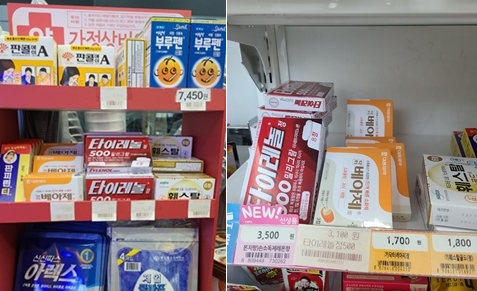
- As of June 15, Tylenol is sold out in online pharmacy Pharmacies in Korea are experiencing a long-term shortage of Tylenol 500 mg and Tylenol ER 600 mg, but apparently convenient stores have no issue stocking up Tylenol 500 mg. As of June 15, Tylenol in 500 mg and ER 650 mg tablets were indicated to be sold out on an online pharmaceutical wholesale website used by pharmacists. Since the incident of the World Health Organization (WHO) initially recommending the use of acetaminophen in suspicious symptoms of the novel coronavirus in last March, pharmacies in Korea have been struggling to get their hands on Tylenols. However, major convenient store brands like GS25, Emart24 and CU had no problem with Tylenol 500 mg stock. Seeing the contrasting situations, pharmacists have started wondering if the pharmaceutical company is differentiating the stock control in convenient stores and pharmacies. Tylenol still sold at convenient stores like CU and GS25 A pharmacist from Gangwon who requested to be anonymous commented, “Following the 500 mg dose, our pharmacy is short on the ER 650 mg dose as well. The wholesale distributors also seem to be short on the stock according to their online websites,” and “Even if the bulk package in bottle for prescription dispensing is available, OTC stocks are sold out. Three regular vendors and an online shop are all having the same issue.” The pharmacist also noted, “Currently, the drug is strangely not available in pharmacy, but accessible in convenient store. Although pharmacists have requested the OTC first-aid kits to be sold in pharmacists as well, the request was rejected.” “The shortage should be resolved as soon as possible as many of customers specifically ask for Tylenol and they tend to be faithful to the brand,” added the pharmacist. Regarding the issue, Johnson & Johnson Korea stated the company is doing the best to streamline the supply to meet the rapidly changing demand, and the supplies to both pharmacies and convenient stores are delivered normally at the moment. And the company noted the supply amounts to both outlets are not differentiated. Johnson & Johnson official said, “The company has been normally supplying stocks of Tylenol to pharmacies and convenient stores. As Tylenol has been mentioned more usual and consumer demand has surged amid COVID-19, the company is committed to supply stocks smoothly.” On the shortage apparent in online shopping sites, the official explained, “When supplied to the distributor, some [of wholesale distributors] seem to be pacing the stock release.” Regardless, the distributors claim they are not the one controlling the supply, but actually they do not get access to the stock. A distributor insider said, “The drug stock has not been supplied to our company. Including Tylenol, some of items are having similar issues and we suspect it is the active pharmaceutical ingredient supply issue.” According to Daily Pharm’s analysis on top 100 drugs sold in 300 pharmacies around Korea with POS machine installed, Tylenol was highly demanded as it was on top third, fifth and ninth place in March, April and May, respectively.

- Policy
- MFDS talks of choline alfoscerate efficacy reevaluation
- by Lee, Tak-Sun Jun 17, 2020 06:22am
- Director Kim Young-ok of Pharmaceutical Safety Bureau at MFDS Director Kim Young-ok of Pharmaceutical Safety Bureau at Ministry of Food and Drug Safety (MFDS) explained that the efficacy reevaluation on cognitive enhancer choline alfoscerate is in progress according to the principle, and the Central Pharmaceutical Affairs Deliberation Committee would assess the need for the clinical efficacy reevaluation. The director’s statement ultimately refuted the criticism the clinical efficacy reevaluation was announced too late, as the Health Insurance Review and Assessment Service (HIRA) has decided to reevaluate the drug’s reimbursement. On June 16, Director Kim met with correspondents at MFDS headquarters in Osong, and said the announcement of clinical efficacy reevaluation was belated and stressed “Decision-making procedure of the choline alfoscerate efficacy reevaluation is taking proper steps by the book,” while “The Ministry of Health and Welfare’s (MOHW) reimbursement reevaluation scheduled in June also seems to be on its track.” MFDS plans to convene the Central Pharmaceutical Affairs Deliberation Committee on June 19 to discuss conducting a clinical efficacy reevaluation on choline alfoscerate as skepticism on the drug’s cognitive enhancing benefit has been questioned. However, the ministry’s plan was disclosed only after HIRA officially stated Drug Reimbursement Evaluation Committee (DREC) on June 11 has called for the reimbursement standard adjustment on choline alfoscerate. And the public reacted with reproach on MFDS’ belated reevaluation plan. HIRA apparently has decided to raise the copayment rate to 80 percent for prescribing choline alfoscerate in other use besides dementia treatment. The public’s criticism is mainly on the sluggish planning of MFDS as the ministry has already collected all evidences regarding the drug’s efficacy from the manufacturers and suppliers in last November. Commenting on the criticism, Director Kim elaborated, “The initial evidence submitted were limited and the ministry has been reviewing all materials to see additionally required evidences,” also “the ministry consulted with experts and internally reviewed with National Institute of Food and Drug Safety Evaluation (NIFDS) on efficacy and benefits.” The ministry claims it is taking the next step of consulting with Central Pharmaceutical Affairs Deliberation Committee of running a Special Reevaluation (clinical efficacy reevaluation) on choline alfoscerate. Although the procedure was delayed amid COVID-19, the director argues the ministry was not deliberately slowing down the procedure. Director Kim noted, “The Central Committee would decide whether or not to conduct the reevaluation, and if so then the most adequate method of reevaluation would be discussed,” and “the ministry would officially disclose the result of the Central Committee decision and related procedure.” However, the director emphasized MFDS would make the final decision as the Central Committee is actually not a deliberation committee but a consultative committee. On the question raised about the low success rate in clinical trials with dementia patients and adequacy reviewing of them, Director Kim also answered the committee would cover the design of clinical trial, taking account of various circumstances.

- Company
- It will be Fulcare & Dermatix to communicate more
- by Eo, Yun-Ho Jun 17, 2020 06:21am
- Managing Director, Jaeyoung Lee 'Consumer Healthcare' now represents the OTC business. In the pharmacy market, the management relying on the profits of pharmaceuticals is limiting, and the interest in improving profits through OTC sales is increasing. In this situation, multinational pharmaceutical companies are attracting attention as long as they are promoting the strategy of catching both pharmacists and consumers. A treatment for nail athlete’s foot, Fulcare launched by Menarini in 2013, quickly became the top 10 OTC product in Korea. This year, Menarini is strengthening pharmacy communication through signing exclusive sales contracts with Kwangdong, while reaching out to consumers with TV advertisements for Fulcare and Dermatix Ultra The reporter of Dailypharm met with Jae-Young Lee (45), head of the consumer health care division of Menarini Korea, and heard about the company's strategy and direction. -You have a lot of experience in the consumer goods business. Briefly introduce yourself I started as a salesperson in Yuhan Kimberly. Since then, through various job experiences such as marketing and global marketing at Kimberly-Clark Headquarters, I have been able to experience sales and marketing in general for about 16 years. In the meantime, I thought to expand my capabilities for a healthy life for consumers, and started a new challenge at the Menarini Korea Consumer Business Division from December 2019. At that time, the company's consumer health division was making changes as various talents such as consumer goods channel experts, OTC channel experts, and digital e-commerce experts joined. Synergy effects are expected in the future. -The generic drug and consumer goods business are clearly different. Was there anything difficult? My previous career helped me a lot in common terms. On other aspects such as pharmacy communication and institutional restrictions, I am learning with the help of my colleagues. -The recently launched Fulcare & Dermatix TV advertisments have the strategy and will of the reorganized Menarini Consumer Healthcare. First, let's hear about Fulcare. Basically, both products aim to become a friendly brand that can communicate more closely with consumers and empathize with them. Among them, Fulcare chose an approach to understand the way and style of consumers' lives and focus on providing solutions that products can support in support, and to reach more meaningful brands. In the advertisement, full nail care restores the health of the nails and expresses our appearance of enjoying our own 'clear again' with confidence, and wanted to draw consumers' sympathy not only through clear product information but also emotionally. The message of 'clear again' can be said to contain the wishes of all of us in the COVID-19 outbreak. The goal is to get true empathy through the connection with the current era, beyond the framework of the existing generic drug advertisements, where certain models come out and describe the features of the product. TV advertisements for the newly launched Fulcare & Dermatix Ultra-What about Dermatix Ultra? Dermatix also focused on forming a consensus that brands could share in everyday life of consumers beyond simply delivering information on products. Since it is a medical device specialized in scar management, it focused on the differentiation points from other products for correct scar management, and expressed Jang Yoon-jung and Do Yeon-woo as models to express the hearts of families who care about each other. Dermatix Ultra Kids for children was also released last year. I think the safety of Dermatix, which can be used from 3 months of age and has clinical data supporting it, is a clear advantage. In order to highlight the friendly image of 'Kids' products, it is approached by using various contents such as digital marketing and consumer events using dinosaur characters. In fact, it is a pity that Menarini does not have any other products besides the two representative items. I agree. The first thing I did as soon as I joined Menarini was to set a vision for the next five years, one of which was strengthening the portfolio. What I felt in the COVID_29 was that national issues could occur anytime in the future. It's important how prepared we are for what happens. I think strengthening the portfolio is also essential in this dimension. This issue is currently being considered at the regional headquarters level as well as at Menarini Korea Corporation. Currently, two products that are recognized for brand power are being prepared to be introduced in various ways to create synergies when the next product is added. In particular, consumer health is now considering the concept of 'prevention'. This is in line with the release of 'Flucare plus cream'. We are constantly conducting studies on new products other than derivative products. -Then let's talk about pharmacy communication this time. There was a big change in Menarini, which was an item wholesale system From January of this year, through the new Co-Promotion partnership with Guangdong Pharmaceutical, we expect the results of mutual win-win by adding the product power of Menarini Korea and the sales force of Kwangdong As mentioned earlier, I had a lot of experience in the consumer goods business, so there are still some unfamiliar parts of the OTC industry and pharmacy channels. Through partnerships with Kwangdong, we continue to increase our competitiveness in the pharmacy channel, continue to provide a portfolio of products that can secure competitiveness in various channels, as well as communication to draw closer to consumers experienced in the consumer goods industry. Also, we paid much attention to the production of brochures for pharmacies. We provide brochures with rich clinical and academic data and details of the product. We plan to continue communication through media channels such as online symposiums and dailypharm.
- Company
- Roche’s Tecentriq is preparing to enter the Korean market
- by Eo, Yun-Ho Jun 17, 2020 06:21am
- Immune anticancer drugs are expected in the first line of hepatocellular carcinoma in Korea. According to the related industry, Roche Korea has recently expanded its indications for the combination therapy of Tecentriq (Atezolizumab) in combination with Avastin (Bevacizumab) for the treatment of patients with unresectable or metastatic hepatocellular carcinoma (HCC) who have not received prior systemic therapy. Considering that it was approved by the US FDA on the 29th of last month, it is preparing to enter the Korean market quickly. If combination therapy with Tecentriq and Avastin is approved, it will be the third option as a first-line drug and the first as an anti-cancer drug. The combination therapy of the two drugs was confirmed by the IMbrave150 study released in last December. Tecentriq in combination with Avastin reduced the risk of death (OS) by 42% and reduced the risk of disease worsening or death (PFS) by 41%, compared with Nexavar (Sorafenib). With median follow-up of 8.6 months, median OS with Atezolizumab combination was not estimable (NE) compared to 13.2 months with Sorafenib. Median PFS with the combination was 6.8 months versus 4.5 with Sorafenib. The ORR with the respective treatments was 27% versus 12% with Sorafenib. Do-young Kim, Professor of Severance Hospital Said, "With the exception of OS verification, improvement in response rate and PFS is encouraging. Immune anticancer drug options has been added to the treatment of liver cancer that had no treatment other than Nexavar, and utilization is expected to increase in the future."
- Company
- Hanmi Science commenced development of oral COVID-19 vaccine
- by Jun 17, 2020 06:21am
- Hanmi Science, a holding company of Hanmi Pharm Group, is developing 'COVID-19 vaccine for oral use'. In addition, a research center of ₩300 billion is established in Pohang, and an unprecedented personnel system, such as a 100% increase in salary for outstanding talent, is introduced. Hanmi Science unveiled 'The Six Visions for the Post COVID-19 Era' on the 15th According to the company, the six visions imply 'education','digital','oral','city','green', and 'ocean'. Each item contains ▲Cyber Education ▲Green Bio ▲Oral Bio ▲City Bio ▲Green Bio ▲Marine Bio. It was named 'Cydio Cigma' after the two letters in front of the English letter. The conditions were unprecedented for executives who presented concrete results for the six visions. CEO Jong-Yoon Lim emphasized, "It will destroy the HR system of the existing salary system by raising 100% of annual salary and giving the rank to talented people who perform well in the six vision projects." Specifically, the group plans to establish K-Bio and K-Med Graduate Schools for the 'Cyber Education' project and attract over 5,000 foreign experts. Hanmi Science decided to cooperate with Gyeongsangbuk-do, Pohang-si and Postech to develop new drugs and foster experts in the biotechnology field, human exchange, joint research and technical information exchange, and joint use of research facilities. For the'City Bio' project, a memorandum of understanding was signed on the 15th to build a smart healthcare infrastructure by spending ₩300 billion in Pohang, Gyeongbuk. By 2030, it plans to build a smart healthcare clinical center, a bio open innovation research and development center, and a prototype production facility in 51,846㎡ of the Pohang Free Economic Zone. The'Oral Bio' project is a new oral coronavirus infection (corona19) vaccine research. Applying Hanmi’s Orascovery technology, the company will develop a non-injection vaccine 'Covid MDT'. It is currently preclinical. In addition, Hanmi Science decided to start marine microbiology research (Marine Bio) using Pohang's original 4th generation accelerator. The goal is to uncover the underlying biological mechanisms, such as genomic studies before and after evolution, understanding of inter-microbial ecosystems including viruses, and the origin of human cell function through marine bioresearch. Plant biotechnology will also be applied to expand external appearance. Hanmi Science has promised global joint development and marketing of bio-based venture companies and plant-based bio products called 'green vaccines'. The two companies have decided to establish a joint venture for overseas sales of the world's first plant-based swine fever marker vaccine product commercialized by BioApp. In the near future, a joint venture will be established and product registration will begin in China. In particular, the two companies plan to jointly develop green vaccines against various diseases including COVID-19. Recently, Hanmi signed a technology transfer contract with a professor of Chinese Academy of Agricultural Sciences for a new drug candidate related to metabolic disease, and started developing a new green drug.
- Policy
- DAA Daklinza and Sunvepra to be pulled out from Korea
- by Lee, Tak-Sun Jun 17, 2020 06:21am
- ‘Daklinza plus Sunvepra,’ the first direct acting antivirals (DAA) in Korea praised to have opened the era of ‘curable hepatitis C,’ would be withdrawn from the Korean market after five years since the launch. Bristol Myers Squibb (BMS) Korea, a supplier of the drug in Korea, has recently reported Ministry of Food and Drug Safety (MFDS) that the supply of Daklinza (daclatasvir) and Sunvepra (asunaprevir) would be halted due to the expanded treatment options of hepatitis C decreasing the demand on the drugs. Apparently, BMS Korea has already ceased supplying Sunvepra. The company projects Daklinza would be supplied until around March next year, considering the 243 cartons of stock confirmed as of Jan. 30, 2020. Daklinza plus Sunvepra, or the ‘DakSun combination therapy,’ was approved by the Korean health authority as a first DAA drug in April 2015. Previously, interferon injection or ribavirin were used to treat patients with hepatitis C, but the cure rate was low without directly acting on the virus. Since the release of DAA drug, the hepatitis C treatment has been showing over 90 percent cure rate. Other treatment options with improved administration regimen were released as well. Currently, the combination therapy has been pushed down from the first-line treatment option. Zepatier, Harvoni, Viekira/ Norvir plus Exviera, Daklinza plus Sovaldi and Mavyret are available as the first-line DAA treatment options at the moment. With the change in first-line treatment options, the DakSun combination therapy’s sales in Korea have dropped significantly. As of 2016, UBIST data showed Daklinza generated 36.8 billion won and Sunvepra made 9.3 billion won for outpatient prescription, but their sales plummeted to 300 million won and 100 million won, respectively. With the high cure rate, the overall number of patients fell sharply and halved the DAA market size. The 100 billion-won market in 2016 has shrunk down to 50 billion won last year. Now, the top selling DAA drug in Korea is AbbVie’s Mavyret making 40.3 billion won last year. The drug is leading the Korean market with the advantage of curing the virus within eight weeks. Other DAA options are generating less than 5 billion won a year. The pharmaceutical industry sees that such shift in the market has made withdrawal of Daklinza and Sunvepra in Korea inevitable.
- Company
- Takeda's partners relieved their worries
- by An, Kyung-Jin Jun 17, 2020 06:20am
- Domestic partner companies are nervous as Takeda officially sells its business units. As Celltrion decided to maintain a co-sales contract for 18 items that take over copyrights, immediate changes were avoided, but it may be difficult to maintain copyrights after changing partners. According to the industry on the 15th, Celltrion is expected to maintain joint sales cooperation with domestic partners for the time being even after Takeda's acquisition of the Primary Care Division (PC BU) in Asia Pacific. Celltrion has agreed to take over all rights, including patents, trademarks, licenses, and sales rights from 18 brands, including Rx drugs and over-the-counter drugs, from Takeda, and to take over the rights to co-promotion (co-sales). The 18 types that Celltrion will take over are 12 Rx items including 'Nesina', ‘Actos', ' Edarbi', ' Madipine', 'Basen', 'Ubretid', 'Condilin', 'Gutron', 'Zafatek’, ‘Blopress’, ‘Rozerem’, and ‘ Doribax’ and 6 OTC such as ‘Whituben’, ‘Whituben Nasal spray’, ‘Albothyl’, ‘Majesto’, ‘Nebramine’, and ‘Calcichew’ In Korean subsidiaries, five specialized medicines such as 'Nesina', 'Actos', 'Bason', 'Edarbi', and 'Madipine' in distribution in Korea and OTC items such as ‘Whituben’, ‘Whituben Nasal spray’, ‘Albothyl’, are included in the scope of this contract. All are products that are entangled in a co-promotional relationship with other domestic companies such as Jeil Pharm, Dong-A ST, Green Cross, andHK Inno.N in the domestic distribution and sales process. (Clockwise from top left) Actos, Nesina, Edarbi, Whituben & Madipine Jeil Pharm is in charge of sales for 'Nesina', the diabetes treatment drug with the largest sales. The two companies have maintained a cooperative relationship for 7 years since they were renewed once after the first contract in 2013. 'Nesina' product line, such as 'Nesina', a single drug of the DPP-4 inhibitor, 'Nesina act', and 'Nesinamet', is a large-scale product that combines outpatient prescriptions of ₩35.1 billion based on UBIST last year. Dong-A ST has been jointly selling ARB-based hypertension treatment 'Edarbi' and 'Edarbyclor' as a combination drug since August 2017. Outpatient prescriptions amount for 'Idalbi' and 'Idalbiclo' last year were ₩8.8 billion. Green Cross is in charge of domestic sales and distribution of 'Whituben', a cold medicine, which is highly recognized among consumers, and 'Albothyl', a canker sore treatment. In the case of 'Bason' for diabetes treatment and 'Madipine' for hypertension treatment, the outpatient prescription amount was ₩4 billion and ₩2 billion, respectively, as of last year. It is somewhat complicated. For these partners, they have no choice but to pay attention to the news of the drug sale. In fact, since the sale of the Takeda Pharmaceuticals PC division in Korea in the second half of last year, the inquiries from partners to confirm its authenticity have been reported. After Celltrion's merger and acquisition (M&A) contract, the partners were tense, saying that Takeda retained the existing contract relationship. The immediate change to the copyright agreement was avoided. However, it may be difficult to re-contract after the contract expires. In the pharmaceutical industry, there are also cases where the co-promotional contract relationship, which usually takes place every 5 years, ends prematurely. An official from Celltrion said, “For 18 items, Takeda will also take over all the rights related to co-promotion. After the contract expires, they will decide whether to re-contract by reviewing the use of marketing organization.” An official from a partner company in Korea said, "We received a notice that even a co-promotional contract is included in the M&A terms, and since the terms and conditions of the contract are all the same, there will be no immediate impact, but we believe that the long-term changes will have to be watched." Another domestic partner said, "It is difficult to judge the specific impact right away because the specific conditions between the contracting parties are unknown. The situation is carefully monitored until the acquisition procedure is completed."
