
- LOGIN
- MemberShip
- 2026-05-04 00:25:51
- Policy
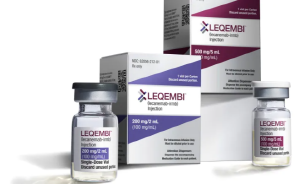
- New dementia drug Leqembi receives approval
- by Lee, Hye-Kyung May 27, 2024 05:48am
- The new drug ‘Leqembi (lecanemab-irmb),’ which reduces the rate of disease progression and slows cognitive decline from Alzheimer's disease, has received marketing authorization in Korea. The Ministry of Food and Drug Safety (MFDS) announced on Thursday that it has approved Eisai Korea’s Leqembi, a new drug for Alzheimer's disease. Leqembi was approved as a treatment to slow the progression of mild cognitive impairment (MCI) and mild dementia due to Alzheimer's disease.’ The drug has been proven to reduce the rate of disease progression and slow cognitive decline by selectively binding to amyloid beta (Aβ) aggregates, which are a known cause of Alzheimer's disease. However, its efficacy and safety in patients whose condition has progressed to moderate or severe Alzheimer's disease have not been confirmed. The MFDS shared the results of the safety and efficacy review with the Health Insurance Review and Assessment Service prior to Leqembi’s approval to help shorten the reimbursement review period to enable quicker access to the Alzheimer's disease treatment. Under the approval and reimbursement linkage system, Leqembi’s reimbursement review is expected to start upon its approval. Following the U.S. (July 2023), Japan (September 2023), and China (January 2024), Korea will become the fourth country to approve Leqembi’s use in the world. However, the problem is the price of the drug. In the U.S., Leqembi costs about KRW 35 million per year; in Japan, it costs KRW 27 million. As this means that it would cost tens of millions of won to slow down the progression of mild dementia, patients in Korea are left with no option but to wait for its reimbursement.
- Policy
- Tepmetko reapplies for reimb in Korea for the third time
- by Lee, Tak-Sun May 27, 2024 05:48am
- Tepmetko Tab (tepotinib, Merck) is applying for reimbursement in Korea for the third time after failing to set a reimbursement standard at the Cancer Disease Deliberation Committee (CDDC) stage in March. With no other treatment available for patients with MET-mutation positive metastatic non-small-cell lung cancer (NSCLC), the industry’s focus is on whether Tepmetko will succeed in receiving reimbursement approval this time. According to industry sources on the 26th, MSD recently applied for reimbursement of Tepmetko to the Health Insurance Review and Assessment Service. This is the third reimbursement application the company has filed for the drug. Tepmetko, which was approved in Korea in November 2021, started its reimbursement journey in earnest in 2022. In its first attempt, the company sought to receive reimbursement for Tepmetko as a treatment for locally advanced or metastatic non-small cell lung cancer with a confirmed MET exon 14 skipping mutation but failed at the HIRA’s CDDC stage in February last year. After the first failure, the company reorganized its data and made its second attempt last October. However, the company’s second attempt was also unsuccessful. In March, the CDDC again failed to set reimbursement standards. The company voluntarily withdrew their application in April thereafter. After taking a break, the company is now seeking reimbursement for the third time. No other drug for MET-mutation-positive NSCLC has successfully received reimbursement in Korea. Another same-class drug Tabrecta (capmatinib, Novartis) also failed to receive reimbursement after its 2021 approval and is now reportedly focusing on nonreimbursed sales. Although patients with MET mutations account for a small percentage (3-4%) of patients with metastatic NSCLC, the patients are in desperate need of a targeted therapy option due to their poor prognosis. In February, the company received traditional approval from the US FDA based on additional data. The company is known to be seeking reimbursement in Korea with the efficacy data that continues to accumulate. It has already passed the drug committees (DCs) of 13 major medical institutions in Korea and is being prescribed on a non-reimbursement basis through patient assistance programs. Therefore, the industry’s attention is on whether Tepmetko can pass the difficult Korean health insurance market barriers and receive reimbursement in its 3rd attempt.

- Company
- Leclaza demonstrates efficacy as combo therapy in NSCLC
- by Son, Hyung-Min May 27, 2024 05:48am
- Clinical data demonstrating the efficacy of the Leclaza and Rybrevant combination in lung cancer will be presented at the upcoming American Society of Clinical Oncology (ASCO) Annual Meeting. An abstract published for the ASCO 2024 Annual Meeting (ASCO 2024), a five-day conference that is set to start on the 31st, confirmed the additional efficacy of the combination therapy. In addition to the primary endpoint results for the combination announced last year, the abstract confirmed the drug’s efficacy in rare types of mutations, giving the combination a green light for its entry into the global new drug market. Johnson & Johnson (J&J), which holds the global rights to both treatments, filed for the combination’s approval as a first-line treatment for EGFR-positive NSCLC to the U.S. Food and Drug Administration (FDA) last December. According to industry sources on the 25th, abstracts of the results of the Phase III MARIPOSA follow-up study of Leclaza and Rybrevant were released on the 25th. Leclaza is Yuhan Corp’s treatment for non-small cell lung cancer that targets the epidermal growth factor receptor (EGFR) mutations exon 19 deletion and exon 21 (L858R). The company has been testing the drug’s potential in combination with Rybrevant, Janssen's EGFR exon 20 mutation-targeting NSCLC drug, in NSCLC. The MARIPOSA trial evaluated Leclaza and Rybrevant’s efficacy in patients with EGFR-positive locally advanced or metastatic NSCLC. Results that were presented last year showed that the combination improved overall survival (OS) and reduced the risk of disease progression and death by 30% compared with Tagrisso. At the upcoming ASCO meeting, the results of a subgroup analysis that evaluated the combination’s efficacy in high-risk groups, including patients with TP53 mutation, circulating tumor DNA (ctDNA), and brain or liver metastases, will be presented. TP53 mutations are present in various cancers, including lung and liver cancers, and the inactivation of TP53 is known to be associated with malignant lung cancer. 636 patients with treatment-naïve EGFR-positive exon 19 del or exon 21 mutated NSCLC enrolled in the study. Based on an analysis of 636 evaluable patients, patients treated with Leclaza+Rybrevant achieved a median progression-free survival (PFS) of 18.2 months in patients with TP53-mutated NSCLC, which was longer than the 12.9 months achieved with Tagrisso monotherapy. In patients with detectable ctDNA at baseline, PFS was 20.3 months in the Leclaza+Rybrevant group, compared with 14.8 months in the Tagrisso monotherapy group. In patients with liver metastases, PFS was 18.2 months with the Leclaza+Rybrevant group versus 11.0 months with the Tagrisso monotherapy group. The researchers said, “Given that this high-risk biomarker population accounts for up to 85% of all EGFR-positive NSCLC patients, we believe that the Leclaza+Rybrevant combination may play an important role as a standard of care in first-line NSCLC.” Leclaza+Rybrevant demonstrates efficacy in rare-mutated types of lung cancer as well Yuhan Corp’s Leclaza and Janssen’s RybrevantThe Leclaza and Rybrevant combination also demonstrated efficacy in NSCLC harboring atypical mutations in the CHRYSALIS-2 study. The CHRYSALIS-2 study was initiated to identify biomarkers that are associated with higher response rates to the Leclaza+Rybrevant combination therapy. The Cohort C study that was presented this time evaluated the potential of the Leclaza+Rybrevant combination in treating NSCLC harboring atypical EGFR-positive mutations, excluding exon 20 insertion mutations (S768I, L861Q, and G719X). Cohort C of the CHRYSALIS-2 study enrolled patients with atypical EGFR mutations, excluding exon 20 insertion mutations, who were treatment-naïve or had two or fewer prior lines of therapy, which may have included a 1st/2nd-generation EGFR TKI. The median age was 64 years, and 68% of the patients were Asian. The most common mutations were G719X (54%), L861Q (24%), and S768I (22%). As of December 14, 2023, at a median 13.8 months of follow-up, the ORR was 51% in the treatment-naïve subset. The ORR for patients harboring solitary mutations at G719 (n = 13), L861 (n = 8), and S768 (n = 2) was 54%, 63%, and 100%, respectively. Among patients treated with prior Giotrif, the ORR was 45%. Up to now, the only drugs that have shown an effect in EGFR-positive variants, including G719X, L861Q, and S768I, have been Boehringer Ingelheim's Giotrif and AstraZeneca's Tagrisso. In this area that lacked treatment options, the combination of Leclaza and Rybrevant showed efficacy against rare EGFR-positive mutations, paving the way for the combination to become the standard of care for NSCLC. The details of the clinical results from the CHRYSALIS-2 cohort will be presented at the ASCO Abstract Session by Dr. Byoung Cheol Cho, Director of the Lung Cancer Center at Yonsei University Cancer Hospital.
- Company
- Bukwang subsidiary’s IPO in Korea will be postponed
- by Kim, Jin-Gu May 24, 2024 05:49am
- Bukwang Pharmaceutical announced that the IPO schedule for its subsidiary Contera Pharma would inevitably need to be postponed. Initially, Contera Pharma planned to gain momentum for its IPO listing in Korea and abroad based on the Phase II results of its new drug candidate for Parkinson's disease, JM-010, but the schedule was postponed as the drug failed to demonstrate statistical significance. However, the company had affirmed that it had not given up its plan to list Contera Pharma. Woo-hyun Lee, the Chairman of its parent company, OCI Holdings, is planning to visit Contera Pharma in Denmark this month to see firsthand the development progress of JM-010 and other portfolios. Je-Young Lee, CEO of Bukwang Pharmaceutical, held an online emergency briefing session on the morning of the 23rd to explain Contera Pharma's JM-010 clinical results and plans. Bukwang Pharmaceutical announced on May 22 that it did not meet the primary endpoint target in the European Phase II clinical trial of Contera Pharma's Parkinson's disease candidate JM-010. The primary endpoint was the reduction in dyskinesia as assessed by the Unified Dyskinesia Rating Scale (UDysRS) at Week 12. On this, CEO Lee said, "Although we confirmed the drug’s pharmacological effect, we were unable to confirm a statistically significant difference between JM-010 and the placebo, which was our primary endpoint. We are conducting additional subanalysis on our findings and have identified some significant results. We plan to announce the specifics at upcoming international academic conferences." However, regardless of the sub-analysis results, the company decided to discontinue the US trial. Lee explained, "Our initial strategy was to shorten the duration of the ongoing US Phase II trial and enter Phase III early based on the European Phase II trial results, but we had to give up this strategy due to failure to achieve statistical significance in the US trial. Further delays and additional investments are too burdensome. As painful as it is, we have decided to discontinue the US trial." As for Contera Pharma's IPO, the company said it will have to delay its timeline. CEO Lee said, “Our original plan for a quick IPO has become a little difficult, and we would inevitably have to postpone the listing.” “However, given Contera Pharma’s capabilities and other pipelines, it would be disappointing to give up on the listing itself.” Lee emphasized, “We are not suspending or abandoning the company’s IPO itself.” He also dismissed speculations and questions about whether the clinical trial failure would lead to a breakup of OCI Holdings and Bukwang Pharmaceutical, or Bukwang Pharmaceutical and Contera Pharma. CEO Lee said that he and OCI Holdings Chairman Woo-hyun Lee will visit Contera Pharma in Denmark this month to look at the company's pipeline. "Of course, it is true that JM-010 is a significant part of Contera Pharma, but OCI is constantly attempting to make its way into the pharmaceutical industry, and this result is unlikely to change OCI's policy on Bukwang Pharmaceutical." “Contera Pharma owns a number of other pipelines in addition to JM-010. We plan to visit Contera Pharma in Denmark with Chairman Lee at the end of May and plan to review the company's portfolio development situation there.”
- Policy
- Companies can apply for multiple clinical protocols at once
- by Lee, Hye-Kyung May 24, 2024 05:48am
- Pharmaceutical companies can now apply for multiple clinical trial at the same time for a single investigational drug that is being approved for the first time. The measure is presumed to have been implemented to accelerate global entry of domestic pharmaceutical companies. The Ministry of Food and Drug Safety has upgraded its computer system that manages same-ingredient investigational drugs to allow companies to apply for multiple clinical trial protocols at the same time. According to the pharmaceutical industry on the 23rd, the MFDS has prepared a follow-up measure to the 16th Task of the 'Food and Drug Regulatory Innovation 3.0' plan it had announced on May 2nd. Until now, every investigational new drugs was managed under one approval number for systematic management and to facilitate batch changes of quality data, so companies had to receive approval for one initial clinical trial protocol, then additionally apply for changes to add protocols. However, there has been industry opinion that it is difficult to conduct clinical trials swiftly in Korea during multinational clinical trials, as the company is required to add a protocol again if it seeks to target a different disease after receiving approval for the first protocol. Regarding this, MFDS Director Kyung-Seung Shin, Director of the Clinical Trials Policy Division at MFDS said, "In the case of clinical trials, multiple protocols are submitted for a single drug candidate to test it on multiple diseases, and the successful outcome of some of the trials lead to the drug’s final approval.” Shin explained, "It has been pointed out that the formulation, content, and route of administration cannot be clearly specified because the MFDS manages each drug candidate under one approval number. From now on, it will be possible to apply for a single clinical trial that contains various trial protocols at once for a same-ingredient drug” The MFDS expects the simultaneous application for clinical trials for a same-ingredient drug to accelerate the domestic industry's initiation of global clinical trials. However, even though companies can apply for multiple protocols of a first-approved investigational new drug at the same time, companies would need to submit the data and fees for each protocol approval application separately. However, for quality changes, the company would need to separately apply for approval of the change in each protocol. This means that quality changes cannot be applied unilaterally to all trial protocols. Also, companies can apply for additional protocols (modifications) after receiving initial protocol approval as in the past.
- Company
- HLB·Jiangsu "FDA, facility issues not related to efficacy"
- by Son, Hyung-Min May 24, 2024 05:48am
- (from the left) Chief Technology Officer (CTO) Han Yong-hae of HLB Group, Vice President Frank Jiang of Jiangsu Hengrui Pharmaceuticals, CEO Jung Se-ho of Elevar Therapeutics, and Vice President Jang Sung-hoon of Elevar Therapeutics. "It appears that there are no issues related to the efficacy of Rivoceranib plus camrelizumab therapy. However, we were pointed out of the manufacturing facility during the monitoring of Jiangsu Hengrui Pharmaceuticals. We do not need an additional clinical trial. By closely cooperating with the U.S. FDA, we will introduce a novel drug to patients with liver cancer." HLB group and Jiangsu Hengrui Pharmaceuticals hosted a press conference on May 23rd at Sofitel Ambassador Seoul Hotel and stated this regarding the FDA’s rejection of approval for their novel candidate drug, Rivoceranib plus camrelizumab, for the treatment of liver cancer. The press conference was attended by Chief Technology Officer (CTO) Han Yong-hae of HLB Group, Vice President Frank Jiang of Jiangsu Hengrui Pharmaceuticals, CEO Jung Se-ho of Elevar Therapeutics, and Vice President Jang Sung-hoon of Elevar Therapeutics. HLB announced on the 17th that they received a complete response letter (CRL) request from the U.S. FDA regarding the application for Rivoceranib plus camrelizumab combination therapy as the first-line treatment for liver cancer. The main reason for receiving the CRL was reported to be issues raised during the Bioresearch Monitoring (BIMO) inspection, which aimed to verify the manufacturing facility and key clinical sites for camrelizumab initially. Jiangsu Hengrui Pharmaceuticals explained that it was due to facility issues. “This case of FDA’s rejection of approval was due to the facility issue,” Vice President Frank Jiang of Jiangsu Hengrui Pharmaceuticals said. “We expect to confirm the details at a future meeting. We will closely cooperate with the FDA and HLB.“ CTO Han Yong-hae of HLB Group said, “During the FDA inspection, some issues were raised regarding the manufacturing facility of camrelizumab, but Jiangsu Hengrui Pharmaceuticals diligently addressed the supplementation." He further mentioned, "Disparities between the examiner and examinee may exist. The FDA made no comments regarding efficacy and safety, and no additional clinical trials are needed.“ HLB and Jiangsu Hengrui Pharmaceuticals have been developing Rivoceranib plus camrelizumab combination therapy as a treatment for liver cancer and gastric cancer. Rivoceranib is an oral anticancer drug that selectively inhibits vascular endothelial growth factor receptor-2 (VEGFR2), which is involved in angiogenesis. Jiangsu Hengrui Pharmaceuticals’ camrelizumab inhibits PD-1 protein expressed on the surface of immune cells (T cells), preventing the binding to PD-L1 receptors on cancer cell surfaces, thereby activating immune cells. The CARES-310 Phase 3 clinical trials showed improved efficacy of Rivoceranib plus camrelizumab combination therapy compared to Bayer’s Nexabar, which is used as a standard therapy for liver cancer. In clinical trials, Rivoceranib plus camrelizumab recorded a median overall survival (OS) of 22.1 months, demonstrating an improvement compared to Nexabar’s 15.4 months. This result was more extended than the OS of 19.2 months recorded by Roche’s combination therapy of Tecentriq, an immunotherapy for cancer, plus Avastin, a targeted anticancer agent, for the first-line therapy of liver cancer. Furthermore, it is also extended than the OS of 16.4 months of AstraZeneca’s Imfinzi plus Imjudo combination therapy. These drugs were compared with Nexabar alone. However, the talks caution against comparing research results on the same basis. In the CARES-310 study, 83% of the patients were Asians, whereas in the IMbrave150 study of Tecentriq plus Avastin combination therapy, the proportion of Asians was 40%. The FDA has requested additional data for novel drug clinical trials focusing on specific races or countries. CTO Han Yong-hae of HLB Group said, "While there may be differences in efficacy between races in other cancer types, race is not a significant factor in first-line treatment for liver cancer," and added, "Updated results will be available at the American Society of Clinical Oncology (ASCO) meeting starting on the 31st of this month. I believe that with additional data, the combination therapy of Rivoceranib plus camrelizumab will receive more positive evaluation."
- Company
- Keytruda posts KRW 100 bil in quarterly sales
- by Chon, Seung-Hyun May 24, 2024 05:48am
- The immuno-oncology drug Keytruda has strengthened its dominance in the domestic drug market, maintaining quarterly sales in the KRW 100 billion range. After being granted reimbursement expansion as a first-line treatment, Keytruda’s sales surged even greater, tripling the sales gap with the runner-up in the market. Also, other new anticancer drugs from multinational pharmaceutical companies like Tagrisso and Imfinzi showed strong growth. According to the market research institution IQVIA on the 24th, sales of MSD Korea’s Keytruda led the market with sales of KRW 116.8 billion in Q1, up 33.1% YoY. This marks the 17th consecutive quarter that Keytruda has held the top spot in the domestic drug market since taking the top spot in Q1 2020. Keytruda, which was introduced to Korea in 2015, is an immune checkpoint inhibitor that inhibits PD-1 (programmed death 1) proteins expressed at the surface of activated T cells, thereby inhibiting its binding to PD-L1 and activates the immune system to treat cancer. The drug is currently approved for 16 cancers: ▲Lung cancer, ▲head and neck cancer, ▲ Hodgkin’s lymphoma, ▲urothelial carcinoma (bladder cancer), ▲esophageal cancer, ▲ melanoma, ▲renal cell cancer (kidney cancer), ▲endometrial cancer, ▲stomach cancer, ▲small intestine cancer, ▲ovarian cancer, ▲pancreatic cancer, ▲biliary tract cancer, ▲colorectal cancer ▲triple negative breast cancer, and ▲cervical cancer. It is indicated for the largest number of cancer types among cancer immunotherapies approved in Korea. It is reimbursed for 7 indications in 4 types of cancer – non-small-cell lung cancer, melanoma, urothelial carcinoma, and Hodgkin’s lymphoma. It is also reimbursed as a first-line treatment for melanoma and non-small-cell lung cancer. It has shown accelerated performance since its reimbursement was extended to the first line in 2022. In March 2022, Keytruda’s reimbursement was extended to cover first-line treatment for non-small cell lung cancer. Keytruda’s sales jumped 117.1% in one year, from KRW 40.4 billion in Q1 2022 to KRW 87.8 billion in Q1 last year. Its Q1 sales this year tripled compared to 2 years ago. Since exceeding sales of KRW 100 billion in Q3 last year, the drug has posted sales of over KRW 100 billion for 3 consecutive quarters. This is the first time a drug’s quarterly sales have surpassed KRW 100 billion in the domestic pharmaceutical market. Keytruda’s sales are nearly three times higher than the second place, Prolia. Keytruda's insurance ceiling price was lowered by 25.6% with the reimbursement expansion. Considering how sales had increased by twofold in Q1 compared to Q4 2021, before the reimbursement expansion, it is calculated that Keytruda’s prescriptions increased by over threefold during the period. Also, AstraZeneca’s anticancer drug Tagrisso has benefited from the reimbursement expansions this year. Q1 sales of Tagrisso were KRW 39.9 billion, up 46.0% YoY. Tagrisso is an epidermal growth factor receptor (EGFR) tyrosine kinase inhibitor (TKI). EGFR-TKIs are targeted anticancer drugs prescribed to patients with metastatic non-small cell lung cancer (NSCLC) with EGFR mutations. Tagrisso’s quarterly sales surpassed KRW 20 billion in Q1 2020 and remained in the KRW 20 billion range until Q4 last year. Beginning this year, Tagrisso, along with Yuhan Corp’s Leclaza, were granted reimbursement expansions as were covered as a first-line treatment for locally advanced or metastatic NSCLC with certain genetic mutations.’ Tagrisso reported sales of KRW 26.9 billion in Q4 last year, and sales jumped 47.9% in a single quarter after the reimbursement expansion. Health authorities estimate that Tagrisso's coverage as a first-line treatment will cost an additional KRW 92 billion, according to the Ministry of Health and Welfare. Yuhan Corp’s Leclaza’s sales more than tripled to KRW 18.9 billion in Q1 from KRW 6.2 billion in sales in Q4 last year. The MOHW analyzed that the reimbursement coverage of Leclaza as a first-line treatment will cost the nation an additional KRW 88.1 billion. New products recently launched by multinational pharmaceutical companies have also risen to prominence at the top of the domestic drug market. Amgen's Prolia ranked second overall with Q1 sales of KRW 41.2 billion, up 16.2% from the previous year. This is a 64.7% increase in 2 years from KRW 25 billion in Q1 2022. Launched in Korea in November 2016, Prolia is a biological osteoporosis treatment that targets the RANKL protein essential for the formation, activation, and survival of osteoclasts that destroy the bone. Its sales started to rise after it was applied reimbursement as a second-line treatment in 2017. After additionally being approved for reimbursement in the first line from April 2019, Prolia’s sales rose explosively. Prolia is copromoted by Chong Kun Dang in Korea. Sales of Sanofi’s atopic dermatitis treatment Dupixent rose 30.9% YoY to record KRW 40.5 billion in Q1. Dupixent is the first targeted biologic for the treatment of moderate-to-severe atopic dermatitis that is not well controlled with topical therapies or who cannot use topical therapies. Sales of Dupixent, which was approved in March 2018, increased rapidly after it was approved for reimbursement for severe atopic dermatitis in January 2020. Sales of the immuno-oncology drug Imfinzi increased 107.1% YoY to reach KRW 31.5 billion in Q1 this year. Imfinzi is a PD-1-targeted immuno-oncology drug developed by AstraZeneca. Imfinzi was the first immuno-oncology drug to demonstrate efficacy in biliary tract cancer. In 2022, AstraZeneca received approval for the combination of Imfinzi+gemcitabine+cisplatin in South Korea. The combination became the new standard of care for biliary tract cancer in 12 years. AstraZeneca is currently in the process of expanding reimbursement to the biliary tract cancer indication. Among domestically developed new drugs, HK Inno.N’s gastroesophageal reflux disease treatment K-CAB’s sales had risen 21.6% YoY in 1H to record KRW 32.2 billion, and rose to 6th place. K-CAB, was released in March 2019. It has a new mechanism of action that inhibits gastric acid secretion by competitively binding to the proton pump and potassium ion located in the final stage of acid secretion. Hanmi Pharmaceutical's hyperlipidemia combination drug Rosuzet ranked 10th overall with sales of KRW 29.3 billion in Q1. Rosuzet is a combination drug that contains rosuvastatin and ezetimibe.

- Company
- Pharmas face a heavy burden from high-interest loans
- by Kim, Jin-Gu May 24, 2024 05:48am
- Pharmaceutical and biotech companies’ bank loan interest rates have been set high for over two years. A high-interest rate, up to 8%, has been maintained, and key companies face a heavy burden from this. The pharmaceutical industry raises concerns that an extended financial burden due to high interest rates may decrease investment. Most big pharmaceutical companies with high loan ratios are currently focused on repaying loans while reducing thier investment sizes. Samsung Biologics’ Q1 interest expenses amount to KRW 16.1 billion…4-5% interest rate has been maintained for over 2 years According to the Financial Supervisory Service on May 23rd, Samsung Biologics’ loan amount by the end of Q1 amounts to KRW 16.1 billion. This amount decreased compared to KRW 21.7 billion in Q1 last year, but the company may be facing a heavy burden. Samsung Biologics borrowed KRW 572 billion in 1-year short-term loan from six banks, including Kookmin Bank. The interest rate is around 4.66-5.38%. The company also borrowed a long-term loan of KRW 425.4 billion, with KRW 350.4 billion due within a year. The interest rate for long-term loans is 1.55-5.74%. Furthermore, the amount of money that Samsung Biologics must repay KRW 1.3024 trillion within a year, including private loans. It appears that the company spent KRW 1.61 billion just on interest in Q1. The loan burden due to the high interest rate has continued for two consecutive years. Last year, Samsung Biologics spent KRW 81.6 billion on interest, and in 2022, the company had to pay KRW 64.1 billion in interest. These amounts are strikingly different from the previous years. In 2020 and 2021, the company paid KRW 16.1 billion and KRW 14.7 billion in interest, respectively. The recent increase in interest amount may be due to expanding the loan size for building of the new 4·5 manufacturing plant, but the analysis suggests that a higher interest rate may have played a part. In fact, the short-term and long-term loan interest rates were 1.50-2.70% until 2021. However, the interest rate significantly increased in 2022, up to 5%. After that, the high-interest rate has been maintained for over two years. Major pharmaceutical companies’ interest rates are up to 7%...due to the expanded interest amount burden, concerns arise about investment decline Other pharmaceutical and biotech companies are currently facing similar challenges. The companies are struggling to procure funds and investments due to accumulating burden of a high-interest rate, which can reach a maximum 7%. As of the end of Q1 last year, Yuhan’s short-term loan interest rate was 3.93-5.67%, and long-term loan interest rate was 3.00-6.30%. Last year’s short-term and long-term loan interest rates were around 2.20-7.70%. However, Yuhan’s loan interest rate was around 1.30-3.40% until 2021. GC Pharma had a short-term loan of KRW 248.3 billion with an interest rate of 4.47-6.46% as of the end of Q1 last year. This rate is similar to the 4.54%-6.45% of 2022. In 2021, GC Pharma’s loan interest rate was merely 1.60-3.80%. In Q1 this year, GC Pharma spent KRW 7.1 billion on interest. Its interest amount was KRW 10.6 billion in 2021 but significantly increased to KRW 15.6 billion and KRW 23.9 billion in 2022 and 2023, respectively. Hanmi Pharm’s short-term loan interest rate was 1.70-2.80% in 2021 but has increased to 2.70-6.3% in 2022. Its interest rate for last year and Q1 this year was 4.20-5.40%. Hanmi Pharm’s expense for interest amount has significantly increased from KRW 16.8 billion in 2021, KRW 28.5 billion in 2022, and KRW 22.6 billion in 2023. In Q1 this year, Hanmi Pharm spent KRW 7.3 billion just for the interest amount. Furthermore, other companies, including Daewoong Pharmaceutical, HK inno.N, Boryung, Dongkook, Ildong Pharmaceutical, Dong-A ST, and JW Pharmaceutical, have been burdened by a high-interest rate of 5-8% for more than two years. Ildong Pharmaceutical has up to 8% of short-term loan interest rate. Changes in loan interest rates of major pharmaceutical companies. Yuhan, GC Pharma, Hanmi, Daewoong Pharmaceutical, HK inno.N, Boryung, Jeil Pharm, JW Pharmaceutical, Ildong Pharmaceutical, and Dong-A ST (source: Financial Supervisory Service). The pharmaceutical companies say that more than two years of accumulating interest burden may lead to a decline in investment. For instance, Samsung Biologics has focused on repaying loans while cutting back on investment. The analysis suggests that this may be due to the company’s larger loan size, but the accumulated burden from the high interest rate may have played a role in part. The company's cash flow statement shows that the cash flow from investment activities decreased in size, from KRW 3.1065 trillion spent in 2022 to KRW 1.5663 trillion spent last year. This indicates that the investment spending decreased by almost half. On the other hand, the cash flow from financing activities amounted to an inflow of KRW 3 trillion in 2022, but it showed an outflow of KRW 635 billion last year. It indicates that while the company borrowed KRW 3 trillion from banks in 2022, it focused on repaying loans last year, resulting in an expenditure of KRW 635 billion. Other pharmaceutical and biotech companies have also been cautious about expanding investments recently. The industry anticipates this trend to persist for some time, partly due to the low probability of interest rate cuts by the Bank of Korea. As a result, the burden on pharmaceutical and biotech companies from high interest rates is expected to be extended.
- Company
- Enhertu gets expanded indications for NSCLC·breast cancer
- by Son, Hyung-Min May 23, 2024 05:49am
- Enhertu (trastuzumab deruxtecan) Daiichi-Sankyo Korea and AstraZeneca Korea announced that Enhertu (trastuzumab deruxtecan) received expanded indication for HER2-low metastatic breat cancer and metastatic non-small cell lung cancer (NSCLC) on May 20. Enhertu is now approved for treating ▲patients with unresectable or metastatic HER2-low (IHC 1+ or IHC 2+/ISH-) breast cancer who have previously undergone systemic therapy in the metastatic setting or relapsed within 6 months of completing adjuvant chemotherapy and hormone receptor-positive (HR+) patients who have received or are unsuitable for endocrine therapy ▲patients with unresectable or metastatic NSCLC with activated HER2 (ERBB2) mutations who have previously received systemic therapy, including platinum-based chemotherapy. The basis for this Enhertu’s expanded indication is DESTINY-Breast04 and DESTINY-Lung02 clinical trials DESTINY-Breast04 clinical trial compared the efficacy and safety of Enhertu and chemotherapy (capecitabine, Gemcitabine Paclitaxel, Nab-paclitaxel) chosen by physicians in 557 patients with unresectable or metastatic HER2-low breast cancer who had previously undergone 1-2 chemotherapy sessions. The trial also demonstarted that the Enhertu treatment group of HR+ cohort had a significant improvement in median progression-free survival (mPFS), with 10.1 months compared to 5.4 months in the control group. Enhertu also reduced the mortality risk by 50% in all patient cohort, including HR+ and HR- patients, compared to the control group. Furthermore, Enhertu demonstrated an anti-tumor response for the second-line treatment of HER2-mutant metastatic NSCLC through the DESTINY-Lung02 study. This study evaluated the efficacy and safety in patients with advanced, unresectable, or metastatic NSCLC who have previously been treated with systemic therapy, including platinum-based chemotherapy, more than once. The clinical results demonstrated that Enhertu had Blinded Independent Central Review (BICR)-assessed confirmed ORR of 49%, complete response (CR) of 1%, and partial response (PR) of 48%. "Enhertu’s expanded indication will provide an opportunity for patients with HER2-mutant lung cancer who had limited treatments options. It also provides HER2-targeting treatment options for over 60% of all breast cancer patients. Enhertu will be a meaningful treatment option for many patients from now," Daiichi Sankyo Korea’s Oncology Business Franchise Head Lee Hyun-ju said. "We are pleased to provide the new treatment option, Enhertu, to patients with HER-2 low metastatic breast cancer and HER2-mutant metastatic NSCLC. We will continue our efforts to improve cancer treatment settings based on our various oncology portfolio," AstraZeneca Korea’s Oncology Business Unit Director Yang Mi-sun said.
- Policy
- New drug Tibsovo is approved in Korea
- by Lee, Hye-Kyung May 23, 2024 05:49am
- The Ministry of Food and Drug Safety (MFDS) announced that it has approved the orphan drug Tibsovo Tab (ivosidenib)' that is being imported by Servier Korea on the 22nd. The drug is indicated for use in combination with azacitidine for newly-diagnosed acute myeloid leukemia (AML) with a susceptible isocitrate dehydrogenase-1 (IDH1) mutation in adults aged ≥75 years, or who have comorbidities that preclude the use of intensive induction chemotherapy, or as monotherapy for locally advanced or metastatic cholangiocarcinoma in previously treated adults with IDH1 mutation. IDH1(Isocitrate Dehydrogenase1) mutation produces an abnormally high amount of a metabolite (R)-2-hydroxyglutarate (2HG) that promotes the growth and survival of cancer cells. By inhibiting the mutated IDH1 enzyme and reducing the production of the 2-HG, Tibsovo Tab inhibits the proliferation of tumor cells and prompts apoptosis. The MFDS said it expects the drug to provide new treatment opportunities for patients with acute myeloid leukemia or cholangiocarcinoma who are positive for IDH1 mutations. The MFDS said that it will continue being committed to the rapid provision of safe and effective treatment for the Korean people based on its expertise in regulatory science, thereby expanding treatment opportunities for patients with rare and intractable diseases.
