
- LOGIN
- MemberShip
- 2026-05-02 14:55:44

- Policy
- Yoon Kim ‘40% of the generic drug price is a bubble’
- by Lee, Jeong-Hwan Oct 10, 2024 05:50am
- Kyoo-hong Cho, the Minister of Health and Welfare, positively responded to Democratic Party of Korea Representative Yoon Kim's request to lower the price of generic versions of patent-expired drugs within the year. This refers to a separate generic drug price cut rather than the foreign drug price referencing reevaluations, which the pharmaceutical industry and the MOHW are currently discussing the timing and method of implementation, and has increased the tension amongst domestic pharmaceutical companies on another imminent generic drug price cut. At the National Assembly's MOHW audit on the 8th, Representative Yoon Kim pointed out that there is too much bubble in Korea’s generic price. “There is a significant bubble in the price of generic drugs in Korea,” said Kim, adding, “In a study commissioned by the Welfare Ministry, if you look at how high the price of generic drugs are in Korea is compared to developed countries such as the United States, the United Kingdom, Germany, and France, about 40% is a bubble.” “In monetary terms, about KRW 4 trillion more is being spent by Korea every year on generic drugs compared to developed countries,” he said, asking, “Does the ministry have any plans to adjust generic drug prices?” “A few months ago, I received a report from the Ministry of Health and Welfare’s Division of Health Insurance Benefits that they were planning to implement price cuts this year. When I asked them again recently, I was told that nothing was in progress,” said Kim. “Please reduce the price of generic drugs.” Minister Kyoo-hong Cho responded to Kim's request that the ministry has the intention to reduce the price of generic drugs. ‘We are considering adjusting generic drug prices. The agenda is being reviewed together in linkage with the sustainability of Korea’s national health insurance finances" When asked by Kim to push for a reduction in generic drug prices, Cho briefly replied, “Yes.”

- Company
- Wegovy's release on the 15th…competitor Mounjaro
- by Whang, byung-woo Oct 08, 2024 05:49am
- With the release of Wegovy, the next-generation obesity drug, set for the middle of this month (October), the release of its competitor Mounjaro is also gaining attention. Although Lilly has not yet announced a specific launch date for its Mounjaro, the company has opted to add another indication to its drug rather than apply for new drug approval, which is raising expectations on the company’s early launch scenario. Pic of Mounjaro Novo Nordisk recently announced that it will launch Wegovy (semaglutide) in the Korean market from the 15th of this month. This will be the 9th global launch in a year and a half since the drug was approved by the Ministry of Food and Drug Safety in April last year. With the launch of Wegovy, a representative next-generation obesity treatment, near, attention is also being drawn to the release of Mounjaro (tirzepatide), which was approved by the MFDS in August. As there is a time gap between the global approvals of Wegovy and Mounjaro, the timing of the domestic launch of the two is also set to differ. Even so, the industry is awaiting the release of Mounjaro due to the company’s method of approval. Lilly received approval for its Mounjaro as an adjunct to chronic weight management in June last year, about a year after receiving approval for the type 2 diabetes indication. In the U.S., Lilly received approval for the obesity treatment separately under the brand name Zepbound, just as a separate brand called Ozempic is approved for the diabetes indication of Wegovy. In Europe, as in Korea, Lilly received approval for both the diabetes and obesity indications with one product, Mounjaro. The industry interpreted Lilly's approach as a choice made to accelerate the approval timeline, although it may not necessarily mean an early launch. ‘It's much easier to get multiple indications approved for one product if you don't have to brand the product separately,’ said a pharma industry insider. “Given that the drug showed significant weight loss in the diabetes clinical data already showed, and that the product is already approved in the US and Europe, adding an indication to an existing product is faster.” He added, “Adding an indication only requires safety and efficacy review, but new approvals are allocated a longer time allocated for review, including GMP site assessment, which makes a difference in the speed of (approvals). In general, it is rare for an existing product to receive approval for a new indication as a separate product in Korea.” In other words, it's Lilly's choice whether to add indications to a product and seek new approvals, but in terms of speed of approvals, adding indications is much easier. The company is also expected to have considered the fact that MFDS’s inspection timeline for overseas manufacturing sites is scheduled to be after 2027. In conclusion, there is no doubt that Lilly's decision to add an indication for Mounjaro gave the company an option to ‘choose’ the timing of its launch rather than wait for approval. The industry is now speculating on Mounjaro’s launch in the first half of next year, with a shortlist of potential domestic distributors. The idea is that the company will seek to enter the market before Wegovy has a chance to reap the benefits of first-mover advantage. However, the industry believes that the distributors that are being discussed based on their relationship with Lilly or their experience in distributing obesity drugs need to be watched further. In addition, even if Mounjaro is launched immediately, it is a different matter whether sufficient quantities can be supplied to Korea, which also requires review from various aspects. Lilly Korea is of the view that the launch date should be determined before discussing whether to select a distribution partner. “Both Wegovy and Mounjaro are expected to compete with a greater focus on obesity treatment,’ said another pharmaceutical industry insider. “However, as they have different indications for type 2 diabetes and cardiovascular disease, their impact is likely to vary depending on the patient condition.”
- Company
- Ilaris can be prescribed at general hospitals in KOR
- by Eo, Yun-Ho Oct 08, 2024 05:49am
- Ilaris, which was listed for reimbursement 9 years after receiving marketing authorization in Korea, can now be prescribed at general hospitals in Korea. According to industry sources, Novartis Korea's hereditary recurrent fever syndrome drug Ilaris (canakinumab) has passed the drug committees (DCs) of Seoul National University Hospital, Seoul St Mary's Hospital, and Sinchon Severance Hospital. Ilaris, which was approved in Korea in 2015, has been on the reimbursement list since August. The company quickly accepted the conditional reimbursement decision made by the MFDS’s Drug Reimbursement Evaluation Committee in April and then promptly concluded the difficult drug pricing negotiation process. ILARIS is an interleukin-1 (IL-1) inhibitor recommended for the treatment of CAPS in the 2021 international guidelines from the European College of Rheumatology and the American College of Rheumatology. In a Phase III study, the drug demonstrated significant clinical benefit in remission after a single dose and remission rate at 6 months and can be administered every 8 weeks in patients with CAPS, improving the quality of life for patients and their caregivers. In the CLUSTER study, which included 46 patients with TRAPS and 63 patients with colchicine-resistant FMF, 45% (n=10/22) of TRAPS patients treated with Ilaris 150 mg and 61% (n=19/31) of colchicine-resistant FMF patients achieved a complete response at week 16. "All three of these indications reimbursed for Ilaris are extremely rare diseases, and many patients suffer through a diagnostic odyssey that prevents them from receiving an accurate diagnosis," said Dae-Chul Jeong, professor of Pediatrics at Seoul St. Mary's Hospital, "and even after diagnosis, their treatment options were very limited, which was frustrating for them and us as medical professionals. Patients and us healthcare providers alike have been waiting for the reimbursement coverage of Ilaris for a long time, so the reimbursement approval came as encouraging news.” Ilrais is indicated for the following diseases in Korea: ▲Periodic fever syndromes (PFS), cryopyrin-associated periodic syndromes (CAPS), tumor necrosis factor receptor-associated periodic syndrome (TRAPS), hyperimmunoglobulin D syndrome (HIDS)/mevalonate kinase deficiency (MKD), and familial mediterranean fever (FMF) ▲Active systemic juvenile idiopathic arthritis (Systemic JIA). For CAPS, the indication can be further categorized into the following symptoms: ▲Familial cold autoinflammatory syndrome (FCAS)/ familial cold urticaria (FCU) ▲Muckle-Wells syndrome (MWS) ▲Neonatal onset multisystem inflammatory disease (NOMID)/chronic infantile neurological, cutaneous and articular syndrome (CINCA). With such a small patient population and complex indications, making progress in the reimbursement discussions for the drug had not been easy. The number of patients eligible for the various indications of ILARIS is extremely small. Some indications for ILARIS do not even have disease codes or have only recently been registered.
- Policy
- Daewoong wins nod for first generic version of Ibrance tab
- by Lee, Tak-Sun Oct 08, 2024 05:49am
- Daewoong's first generic for Pfizer's breast cancer treatment, 'Ibrance Tab,' has been approved. Due to the successful patent nullification, the company received priority marketing authorization. The first generic can be launched in March 23rd, 2027, when the product patent expires. The Ministry of Food and Drug Safety (MFDS) has granted approval of Daewoong's "Ranclib tab" 75 mg, 100 mg, and 125 mg. This drug can be used to treat hormone receptor (HR)-positive or HER2-negative metastatic or advanced breast cancer. It is used in combination with aromatase inhibitor as first-line endocrine therapy in women or in combination with fulvestrant after endocrine therapy in women with advanced diseases. PfizerPfizer's Ibrance containing palbociclib is the original medicine. Ibrance was the first CDK4/6 inhibitor to be developed. It was launched with reimbursement coverage in November 2017 through the risk-sharing agreement (RSA). Unlike capsules, tablets can be taken regardless of food. The film-coating of the tablet allows for co-administration with proton pump inhibitors (PPI) or antacids, which are used to manage gastrointestinal disorders or diarrhea that commonly occur in breast cancer patients. Overall, tablets provide easier administration convenience than capsules. Ibrance's 2023 sales were KRW 50.5 billion, according to IQVIA. Due to the drug's high marketability, Korean pharmaceutical companies are attempting at early market entries through patent challenges. In addition to Daewoong, Kwang Dong Pharmaceutical, Boryung, and Samyang have entered patent challenges. After winning the nullification trial for the ingredient patent in March, Daewoong has established a ground to launch generic once the substance patent expires. In addition to successfully winning the patent challenge, Daewoong also acquired priority marketing authorization with approval as it met the requirement for the first generic. The prior marketing authorization period is from March 23rd, 2027, the day after Ibrance Tab's substance patent expires, to December 22nd, 2027. Last year, Kwang Dong Pharmaceutical acquired the priority marketing authorization of 'Alency Cap' for the same period as Daewoong's product. However, Kwang Dong Pharmaceutical won the priority marketing authorization against Ibrance Cap rather than Ibrance Tab. Additional approvals are expected soon as other companies that have challenged the patent have won. At the launch, Ibrance had no competitors in the market for breast cancer. However, the sales are slightly decreasing as similar CDK4/6 inhibitors Kisqali (Novartis, ribociclib) and Verzenio (Lily, abemaciclib) have launched. The analysis suggests that the market size may be downsized upon generic launch. "Although Ibrance generates the highest sales in the CDK4/6 inhibitors market, the sales have been gradually decreasing," pharmaceutical industry personnel said. "Sales could drop even more when generics launch following the substance patent expiration. Korean pharmaceutical companies could have launched generics earlier."
- Company
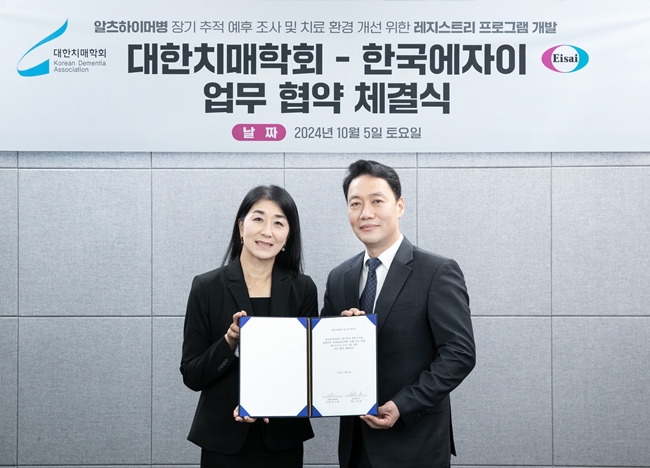
- Eisai Korea signs Alzheimer's MOU with the Korean Dementia
- by Whang, byung-woo Oct 08, 2024 05:49am
- (From left) the Korean Dementia Association President Seong Hye Choi, Eisai Korea CEO Ko Hong-Byung Eisai Korea announced on October 7th that it has signed a memorandum of understanding (MOU) with the Korean Dementia Association to utilize and manage 'JOY-ALZ,' a registry program for long-term follow-up survey platform of Alzheimer's disease prognosis. The MOU aims to advance Alzheimer's disease treatment and to establish safe Alzheimer's disease treatment settings in South Korea. According to the MOU, both companies will collaborate on establishing and running JOY-ALZ, thereby securing high-quality data on Alzheimer's disease patients. Based on this platform, they will establish and provide safe and optimized treatment settings for Alzheimer's disease patients in South Korea. JOY-ALZ is a long-term follow-up registry program that collects and registers real-world data (RWD) on the efficacy and safety of new drugs for Alzheimer's disease in South Korea. In the United States, a registry program called 'ALZ-NET' is used to follow, manage, and evaluate the efficacy and safety of RWD on new drugs for Alzheimer's disease. Collected data are utilized to report the latest diagnosis, categorization, and treatment options for Alzheimer's disease. JOY-ALZ will enable the collection of RWD information on the efficacy and safety of drugs by collaborating with overseas global platforms, such as ALZ-NET. This platform is expected to aid in systematic treatment and management. Moreover, its data gathering of Korean patients is expected to help establish treatment backgrounds considering Korean-optimized genetic and environmental factors. Based on RWD collected through JOY-ALZ, Eisai Korea plans to execute post-sales drug monitoring duty on its Leqembi, a new drug used to treat Alzheimer's disease. By submitting the long-term safety and efficacy results of Leqembi to the Ministry of Food and Drug Safety (MFDS). Eisai Korea plans to contribute to the safe use of medicines. "In collaboration with the Korean Dementia Association, we are pleased to fulfill the duty of monitoring Leqembi following the Pharmaceutical Affairs Act, as well as contribute to the advancement of treatments for Alzheimer's disease in South Korea," Eisai Korea CEO Ko Hong-Byung said. "Eisai Korea will strengthen treatment monitoring of Alzheimer's disease patients and adverse cases related to medicines. We will strive to provide safe and effective treatment options." "After years of efforts, a drug has been developed to delay the progression of Alzheimer's disease. An overseas registry has been established and is in operation to evaluate the efficacy and safety of new drug," the Korean Dementia Association President Seong Hye Choi, "If JOY-ALZ in South Korea allows for active research, new drug development, and RWD-based treatments for dementia, a global-level treatment environment for treating dementia can be established."
- Company
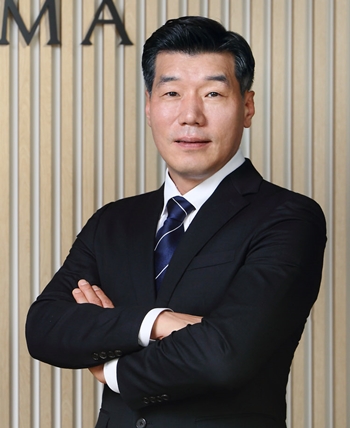
- Galderma Korea appoints Jai Hyuk Lee as new GM
- by Whang, byung-woo Oct 08, 2024 05:48am
- Jake (Jai Hyuck) Lee, new General Manager of Galderma Korea, Galderma Korea announced on the 7th that it has appointed Jake (Jai Hyuck) Lee, former head of the Aesthetics Business Unit, as its new General Manager, effective as of October 1. The new GM is a seasoned sales and marketing expert with more than 25 years of experience in the global pharmaceutical and aesthetics industries. Lee will succeed Younhee Kim, who led Galderma Korea for 4 years from 2020. Lee started his pharmaceutical career at GSK Korea. He has since held positions at MSD Korea, Sanofi-Aventis Korea, Novartis Korea, and Merz Aesthetics Korea before joining Galderma Korea in 2019. Over the past 5 years, Lee has successfully led the launch of new Restylane brands such as Restylane Kysse and Restylane Eyelight, as well as the renewal of the Sculptra and Dysport brands, strengthening the product portfolio and driving rapid business growth. He has also served as the interim head of the pharmaceuticals BU and the derma-cosmetics BU, accumulating a wealth of hands-on experience and expertise in non-esthetic skin diseases and skincare across all divisions of Galderma Korea. “I am very pleased to be able to represent Galderma Korea, which has grown into a leading company in the skin field under the slogan of advancing dermatology for every skin story,” said the new GM. ’Going forward, I will do my best to support the company’s growth both internally and externally by advancing the company’s organizational capabilities and expertise, while presenting innovative solutions to solve skin problems that are becoming more diverse and fragmented based on the dermatological know-how that Galderma Korea has already accumulated.’
- Policy
- Drugs for NSCLC harboring MET alterations pass CDRC review
- by Lee, Tak-Sun Oct 07, 2024 05:48am
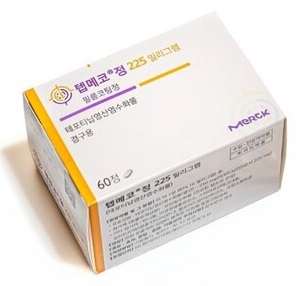
- Product photo of TepmetkoA treatment for non-small cell lung cancer (NSCLC) harboring MET alterations has passed the first stage for reimbursement coverage by national health insurance. Merk's Tepmetko is the drug that passed. On October 2nd, the Cancer Disease Review Committee (CDRC) of the Health Insurance Review and Assessment Service (HIRA) commenced the 7th meeting and set reimbursement standards for anticancer agents, including 'Tepmetko (tepotinib),' a treatment for patients with NSCLC harboring MET alterations. After receiving approval in November 2021, Tepmetko passed the CDRC review on the third attempt. It is the first treatment for NSCLC harboring MET alterations to pass the review in South Korea. The rate of patients with MET alterations in metastatic NSCLC is low, approximately 3-4%. However, due to poor prognosis, anticancer agents targeting such alterations are of paramount importance. In a clinical study, data showed that Tepmetko-treated stage IV patients with MET alterations had a median overall survival of 19.6 months, which was higher than the 13.4 months of immune checkpoint inhibitors. It became the new hope for patients. However, it repeatedly failed to set the reimbursement standards due to insufficiency in data utility. Other anticancer agents targeting MET alterations, such as Tabrecta, had similar results. Tepmetko successfully set the reimbursement standards in its fourth attempt, passing the first stages for receiving reimbursement. When it passes the Drug Reimbursement Evaluation Committee (DREC) of the HIRA, drug pricing negotiations with the National Health Insurance Service (NHIS), Tepmetko would be on the national health insurance reimbursement list. Review results for new drugs (applied for reimbursement decisions) and expanded reimbursement standards. Tepmetko (tepotinib, Merk) and Tibsovo Tab (ivosidenib, Servier Korea) successfully set reimbursement standards. Drugs that successfully expanded reimbursement standards include Jemperli (dostarlimab, GSK) and Neulasta Pre-filled Syringe (pegfilgrastim, Kyowa Kirin Korea). Along with Tepmetko, Tibsovo Tab (ivosidenib, Servier) successfully set reimbursement standards. The reimbursement standards for Tibsovo are set for use in combination with azacytidine in adult patients over 75 years with newly diagnosed locally advanced or metastatic acute myeloid leukemia (AML) who test positive for isocitrate dehydrogenase-1 (IDH1) mutation or those with accompanying disease who cannot receive chemotherapy. Additionally, Jemperli (dostarlimab, GSK) and Neulasta Pre-filled Syringe (pegfilgrastim), which have applied for expanded reimbursement, were successful in expanding the standards. Jemperli now has established reimbursement standards for use in combination with platinum-based chemotherapy in adult patients with newly diagnosed advanced or relapsed mismatch repair deficient (dMMR)/microsatellite instability-high (MSI-H) endometrial cancer. Neulasta successfully set reimbursement standard for patients receiving cytotoxic chemotherapy for malignant tumors to reduce the occurrence and duration of neutropenia. In contrast, Verzenio failed to establish expanded reimbursement for adjuvant therapy in combination with endocrine therapy for adult patients with early-stage breast cancer who are hormone receptor (HR)-positive or human epidermal growth factor receptor 2 (HER2)-negative or who are likely to have relapses of lymph nodes. The CDRC has established a policy for reviewing the reimbursement coverage of an existing drug when newly added high-price drugs are to be used in combination with a drug that is already covered by reimbursement. Medical organizations, including doctors' associations and hospital associations, requested such improvement last year.

- Company
- Yuhan·Dongwha as potential distributor for Bayer's OTC drug
- by Nho, Byung Chul Oct 07, 2024 05:48am
- Yuhan Corp and Dongwha Pharm are potential candidate distributors for Bayer Bayer seeks a new distributor·seller for its leading over-the-counter (OTC) medications, including 'Canesten·Bepanthen.' According to industry sources, Bayer is searching for a new distributor to distribute its OTC medications, Canesten and Bepanthen, ahead of the termination of its OTC co-promotion agreement with Il Dong Pharmaceutical. The removal of Canesten and Bepanthen from the product list at the Il Dong Mall, Il Dong's online pharmacy store, indicates the possibility of terminating the co-promotion agreement with Bayer, based on pharmacy sources. The industry has been discussing pharmaceutical companies with strength in selling OTC drugs, such as Daewoong Pharmaceutical·Dong-A Pharm·Chong Kun Dang·Dongkook Pharmaceutical·Yuhan Corp·Dongwha Pharm·GC Biopharma, for Bayer's new partner for co-promotion. Among these companies, Yuhan Corp and Dongwha Pharm are considered strong candidates. Yuhan Corp has demonstrated outstanding capacity for expanding mutual external growth, having signed ETC·OTC co-promotion agreements with various companies in South Korea and overseas. As a result, it is being considered as a new candidate partner for Bayer's 'Canesten·Bepanthen.' Yuhan Corp secured exclusive distribution rights of the energy restorative product Lalaola Sol in May 2023. The company has been putting considerable effort into securing the OTC pipeline, selecting TV show host Shin Dong-yup as its exclusive model, and aggressively marketing, including TV-CF. Additionally, Yuhan Corp launched liquid soft capsule-type pain killers, Yuhan "v-phen" and Yuhan Acetaminophen Soft Cap, last year and has been expanding sales to secure bridgehead of the OTC painkiller market, which is worth KRW 150 billion. Yuhan Corp has increased performances by continuously strengthening its multivitamins line-up, Beecom·Megatrue, and it has over 15,000 direct contracting pharmacies. Dongwha Pharm, a company with '100 years of tradition' specializing in OTC medications, has the long-running blockbuster OTC medications, Gas Whal Myung Su, Fucidin, and EACH paste. The analysis suggests Dongwha Pharm as a potential co-promotion partnering company with an outstanding pharmacy network. Notably, in January, Dongwha Pharm acquired four OTC medications, including the cold medicine Whituben and the stomatitis drug Albothyl, from Celltrion. Thus, it has significantly expanded its OTC medication portfolio and has an aggressive growth strategy. Sales report of Bepanthen and Canesten. Meanwhile, in 2013, Bayer signed a co-promotion agreement for five OTC medicines, including ▲Canesten Cream (antifungal cream)·Vaginal tab (vaginal infections)·Dusting Powder (antifungal treatment for children) ▲Elevit Pronatal Tab (multivitamin for women who are pregnant) ▲Bepanthen Cream (diaper rash) ▲Saridon-A Tab (pain and fever) ▲Talcid Complex Tab (heartburn). Based on a pharmaceutical distribution performance report, Canesten (plus) products generated KRW 7.1 billion and KRW 6.9 billion in sales in 2011 and 2012, respectively. Canesten sales for 2020·2021·2022·2023·first half of 2024 were KRW 4.2 billion·KRW 3.5 billion·KRW 4 billion·KRW 3.7 billion·KRW 1.6 billion. Bepanthen sales for 2020·2021·2022·2023·first half of 2024 were KRW 6.3 billion·KRW 6.3 billion·KRW 7.4 billion·KRW 8.9 billion·KRW 5 billion.
- Policy
- 'Qarziba' to be reconsidered for the DREC review in KOR
- by Lee, Tak-Sun Oct 07, 2024 05:48am
- Product photo of Qarziba (dinutuximab, Recordati Korea).Qarziba (dinutuximab, Recordati Korea), which was designated as the 1st drug for a "Pilot Project for Integration of Product Approvals, Reimbursement Coverage Reviews, and Drug Price Negotiations" will be reconsidered for the Drug Reimbursement Evaluation Committee (DREC) review. Qarziba was considered for the DREC review in August but received a non-reimbursement decision. Then, the company applied for re-evaluation. According to industry sources on October 4th, Qarziba has been selected as the agenda item for the 10th DREC meeting, which will be held on October 10th. Qarziba has drawn industry attention as the 1st drug for a "Pilot Project for Integration of Product Approvals, Reimbursement Coverage Reviews, and Drug Price Negotiations." The project conducts the Ministry of Food and Drug Safety (MFDS) approval, drug evaluation, and drug pricing simultaneously, expediting the insurance listing process, including approval, drug evaluation, and the Ministry of Health and Welfare (MOHW) reporting. The drug successfully set reimbursement standards before receiving marketing authorization through this designation. On May 29th, the 4th CDRC meeting set the reimbursement standard for this drug for young children over 12 months with ▲A high-risk neuroblastoma who had received bone marrow removal therapy and a stem cell transplantation therapy after showing partial adverse reactions following chemotherapy ▲Recurrent and refractory neuroblastoma. Then, on June 19th, it received the official marketing authorization from the MFDS. The approval review period was shortened from 115 days to 90 days after it was granted a designation as the Global Innovative products on Fast Track (GIFT). Despite the expectation for a speedy reimbursement approval, Qarziba was halted at the DREC review, which decides reimbursement appropriateness. On the 8th DREC review, held on August 8th, Qarziba received a non-reimbursement decision for treating neuroblastoma in children. After receiving the DREC's non-reimbursement decision, the company applied for re-evaluation from the Health Insurance Review and Assessment Service (HIRA). The policy states that a company can apply for re-evaluation within 30 days of receiving a DREC review report. The HIRA re-evaluated based on the application, and Qarziba is set to receive a DREC review again. If Qarziba were to receive a non-reimbursement decision, the purpose of the "Pilot Project for Integration of Product Approvals, Reimbursement Coverage Reviews, and Drug Price Negotiations" to support expediting reimbursement listing would not be met. If Qarziba receives a reimbursement appropriateness decision this time, it would have taken a year and a half since the approval application. Typically, the process from approval application to reimbursement coverage takes at least three years, but Qarziba would have cut that time in half. Qarziba was designated as the 1st drug for a "Pilot Project for Integration of Product Approvals, Reimbursement Coverage Reviews, and Drug Price Negotiations" in June, and it has been on a track for registration in South Korea. "Qarziba will likely be re-evaluated for this DREC review," sources said, adding, "If it receives reimbursement appropriateness decision, it will also be on an expedited track for the negotiation with the National Health Insurance Service (NHIS) due to the pilot project. It may be considered for the Health Insurance Policy Review Committee within this year."
- Opinion
- [Reporter’s View]Contradictions in the CSO reporting system
- by Kim, Jin-Gu Oct 07, 2024 05:48am
- The implementation of the CSO reporting system is now just 2 weeks away. It means that after the 19th of this month, no one will be able to engage in sales and promotion activities in the pharmaceutical industry without a CSO report certificate. Although there are only 2 weeks left until the law takes effect, there is still confusion among CSOs and pharmaceutical companies that entrust the CSOs with promotion and sales tasks. This is because the specific implementation rules for the system are yet to be set. This lack of preparation was highlighted during a Briefing Session on the CSO Enforcement Rules that was held on the 2nd of this month. The Ministry of Health and Welfare held the briefing session jointly with the Korea Pharmaceutical and Bio-Pharma Manufacturers Association. The briefing was livestreamed on KPBMA’s YouTube channel. The session attracted much attention, with more than 2,000 online viewers. However, in the YouTube comment section, most people expressed frustration. It was hard to find viewers who found the MOHW’s explanation helpful. In particular, many people were frustrated with the process of filing the CSO report. The MOHW’s explanation of the process was contradictory. According to the MOHW, it is illegal for CSOs who have not completed their registration before the 19th to conduct promotional activities. The problem is that the report certificate cannot be issued before the 19th. Without the certificate, the activities are illegal, but the certificate cannot be issued on the date, which causes a contradiction. On this, the MOHW explained that since the law comes into effect on the 19th, local governments cannot issue certificates before the date. The MOHW’s workaround to the dilemma was issuing a ‘receipt.’ Companies that need the certificate before the 19th can submit the necessary documents then to their respective local public health centers, receive a receipt certificate, and use it until the report certificate is issued. For pharmaceutical companies and CSOs, this means that they will have to sign double consignment contracts. Moreover, even this is not possible in the immediate future. In order for the MOHW to ask local governments to issue a receipt certificate instead of a report certificate, an enforcement rule must be promulgated, but the MOHW is still in discussions with the Ministry of Government Legislation on how to prepare detailed enforcement rules. This grows doubt on whether the government really did prepare for the system for over 3 years. The MOHW promoted the enactment of the CSO reporting system in September 2021 through a lawmaker's proposal. In April last year, the CSO reporting system was introduced with the amendment of the Pharmaceutical Affairs Act. In other words, there was at least a year to at most 3 years for the government to prepare for the system. Nevertheless, there are now 2 weeks to go before the system’s implementation, and detailed rules for implementing the law are still not in place. In addition to the certificate issue, there are still no detailed regulations on who needs to report, the scope of economic benefits that may be provided, and training obligations. The MOHW has said it expects to issue the implementation rules within the next week. Even if the rules are promulgated a lot of confusion will remain in the field. The scheme, which aims to stamp out illegal rebate practices, has been bogged down since its inception. Can the system really be implemented in two weeks?
