
- LOGIN
- MemberShip
- 2026-05-02 21:37:54
- Company
- Will blockbuster contraception Mercilon find a new provider?
- by Nho, Byung Chul Oct 18, 2024 05:49am
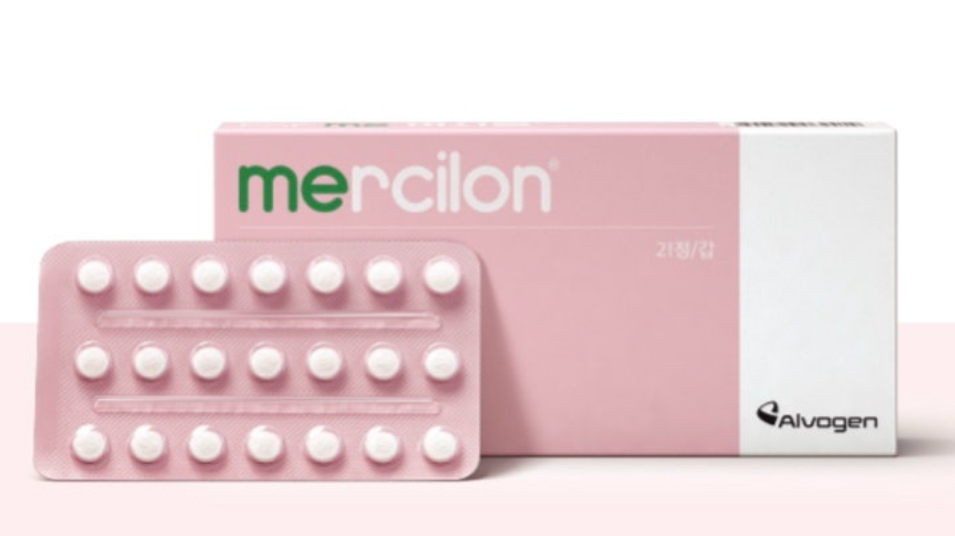
- Product photo of Mercilon As Alvogen Korea and Chong Kun Dang's co-promotion contracts for oral birth control pills are set to expire, many pharmaceutical·distributors are sending love calls. Sources said that distributors, including pharmaceutical companies with strength in over-the-counter drug sales, have visited Alvogen Korea and Chong Kun Dang to weigh considerations. Alvogen and Chong Kun Dang signed a domestic distribution agreement for Mercilon in 2019. Alvogen has been responsible for the approval·imports·marketing of the drug, and Chong Kun Dang has been responsible for pharmacy sales. At the time, Alvogen chose Chong Kun Dang as the Korean partnership company for Mercilon because it had a variety of line-ups for female diseases and a nationwide pharmacy sales network. Chong Kung Dang has a variety of OTC products for women, including the painkiller PENZAL, Prefemin for premenstrual symptoms, the anemia treatment Bolgre, and the prenatal nutritional supplement Gowoonzymemom. As it is relates to the sales agreement, Alvogen and Chong Kun Dang are remaining silent about 'The termination due to contract maintenance·expiration.' There are opinions that, considering continued generation of sales, Chong Kun Dang may retain the sales rights. Based on pharmaceutical sales performance, Mercilon generated KRW 2.97 billion until the first half of the year, ranking no.1 in the product line containing desogestrel·ethinyl estradiol. Mercilon's exterior growth for 2020·2021·2022·2023 were KRW 7.6 billion·KRW6.9 billion·KRW6.9 billion·KRW7.2 billion. However, if a company proposes conditions like dramatic sales growth, considerable commission reduction, or even taking over all the remaining stock (estimated at KRW 6 billion), another company may acquire the sales rights because Alvogen has nothing to lose. Meanwhile, companies that are likely to get sales growth upon acquiring Mercilon sales right include Dongkook Pharmaceutical, Kwangdong Pharmaceutical, and ZP Therapeutics. Dongkook Pharmaceutical launched the third-generation birth control pill in 2020, but it has not caused a significant shift in the market. Kwangdong Pharmaceutical has Sunhana·Senselibe. However, they have generated KRW 28 million and KRW 1.1 billion, respectively. ZP Therapeutics acquired approval rights for Actinum in 2022, and the company has been actively pursuing sales and marketing. Considering this situation, these pharmaceutical companies are guaranteed annual sales of about KRW 10 billion when they acquire the sales rights of Mercilon, which is close to blockbuster. However, considering the co-promotion fee is 8-15%, the net gain may be lower than their in-house OTC sales. Meanwhile, Mercilon has ranked No.1 in OTC oral birth control pills. It shows contraceptive effects by combining the actions of ethinyl estradiol, estrogen, and desogestrel, progesterone. The clinical trials for Mercilon have been completed in 12 European countries. Mercilon is a global brand sold in 42 companies worldwide.
- Policy
- Gov't opposes to suspending reimb·ingredient prescribing
- by Lee, Jeong-Hwan Oct 17, 2024 05:52am
- The government has opposed the proposed measure, which aims to minimize the chaos in prescription·dispensing by suspending insurance reimbursement or blocking prescription code of drugs when substitute drugs are available. Suspending reimbursement of drugs covered by insurance is a temporary measure implemented in the case of administrative meaures from the Ministry of Food and Drug Safety (MFDS), such as canceling marketing authorization. The government rationale is that suspending reimbursement due to drug shortages would only confuse patients and pharmacies. At the time of the separation of prescribing and dispensing of drugs, the government also opposed to the measure to allow active ingredient prescribing of drugs in shortages. The rationale for the opposition was that it violated the agreement between the government and the medical community. On October 15th, the Ministry of Health and Welfare (MOHW) announced this in response to written parliamentary questions submitted by Rep Seo Youngseok and Rep. Nam In-soon of the Democratic Party of Korea. Rep. Seo asked MOHW's opinion about suspending insurance reimbursement or blocking the prescription code of drugs when substitute drugs are available. To resolve the issue of drug shortages, Rep. Nam proposed the need to legalize the DUR notification, limit the number of days of prescription, temporarily suspend issuing reimbursement, and implement active ingredient prescription. The MOHW explained that they are reviewing drug pricing adjustments after receiving applications from pharmaceutical companies when the drug shortages consultative body requests that it is necessary to increase the supply by adjusting the ceiling price. The MOHW also answered that suspending reimbursement of drugs in shortages and implementing active ingredient prescription requires careful consideration. "Suspension of reimbursement is a limited measure when the MFDS' approval of the product is revoked," the MOHW stated. "Suspension of reimbursement for drugs in shortages may cause confusion in the field, such as patients and pharmacies, so careful consideration is required." "Currently, the drugs that have been reported to be out of supply are being directed to DUR. In addition, the DUR notification on additional drugs in shortages should be prioritized by establishing standards for drugs in shortages," the MOHW stated, adding, "We believe that limiting the number of prescription days for drugs in shortage is necessary in exceptional cases where it is difficult to increase production, such as a shortage of raw materials. It is necessary to prepare a relevant legal basis." Regarding the active ingredient prescribing for drugs that are in shortage, the MOHW stated, "It is necessary to be cautious by changing the agreement at the time of the separation." Regarding the MOHW's measures against the shortage of Imotun supply at clinical sites such as pharmacies, the MOHW staged that they would consider utilizing substitute drugs. In response to Rep. Suh's point that special measures such as restricting Imotun's salary are necessary, the MOHW expressed their position on careful consideration. The MOHW explained, "Imotun Cap is produced by receiving the supply of Avocado-Soya Unsaponifiables raw materials from France," adding, "As it is a herbal ingredient, the production of raw materials is constant. Therefore, there will be a small increase in supply in 2023 compared to 2022, but there will be a limit to sufficient supply." "The drug in question was discussed at a meeting between the public-private consultative body for drug shortages and the medical community," the MOHW added. "It was discussed as an adjunctive treatment for osteoarthritis, and it was discussed as a drug that is difficult to respond to first considering the possibility of using other drugs with similar effects. We will consider the use of alternative drugs in the future." "Imotun Cap was recognized for its clinical usefulness in the 2022 re-evaluation after the conditional reimbursement was maintained in the 2021 reimbursement appropriateness re-evaluation," the MOHW added. "The reimbursement restriction should be reviewed carefully considering the overall social needs. The supply of the drug has been maintained by 160,000 capsules annually, and it does not fall under the reason for the reimbursement restriction due to the recognition of usefulness."
- Policy
- HIRA President, "Copayment ratio needs to be adjusted
- by Lee, Tak-Sun Oct 17, 2024 05:51am
- HIRA President Jung-Gu Kang HIRA President Jung-Gu Kang said that the copayment ratio should be adjusted for anticancer drugs that lack verification of effectiveness. Kang said during the parliamentary audit by the Health and Welfare Committee, "We must lower the patient access hurdle and increase monitoring." Adding, "Especially because we evaluate high-cost drugs that have not completed phase 3 studies, copayment ratio needs to be adjusted to lower patient access hurdle for drugs that lack verification of effectiveness." It means that the current 5% ratio needs to be increased for anticancer drugs lacking verification of effectiveness. Rep. Juyoung Lee of the National Reform Party said, "I agree with differential ratio," adding, "But, the rationale to supply cheap does not meet the global standard." Rep. Lee has requested expanding reimbursement through fast track, investing in clinical trials, and specifying a monitoring plan for the alternative measure to the Korean passing of anticancer drugs.
- Policy
- Alvogen receives approval for its Humira biosimilar in KOR
- by Lee, Hye-Kyung Oct 17, 2024 05:51am
- AbbVie A fifth Humira biosimilar has been approved in Korea. On the 15th, the Ministry of Food and Drug Safety approved Alvogen Korea's Simlandi pen40mg/0.4mL (adalimumab, recombinant), Simandi Prefilled Syringe Inj 40mg/0.4mL and 80mg/0.8mL.. Simlandi is imported and manufactured on consignment by Alvotech, a subsidiary of Alvogen Korea. It is the fourth biosimilar to be approved in Korea after Samsung Bioepis, Celltrion, and LG Chem, with more than 10 biosimilars approved globally following the patent expiry of the original, AbbVie's Humira. Simlandi is indicated for rheumatoid arthritis, psoriatic arthritis, ankylosing spondyloarthritis, adult Crohn's disease, psoriasis, ulcerative colitis, Behçet's enteritis, hidradenitis suppurativa, and uveitis in adults. In pediatrics, it is also approved for the treatment of Crohn's disease in children (6 to 17 years of age). In February, Simlandi was approved by the U.S. FDA as the 10th Humira biosimilar. At the time of FDA approval, it was recognized for its high-concentration, citrate-free biosimilar formulation and for being the first biosimilar that pharmacies can substitute for the original drug without consulting a physician (prescriber) in the U.S. In the case of Humira, 88% of the prescriptions in the US are for high-concentration formulations. High-concentration products have the advantage of requiring fewer injections and less frequent dosing. They are usually subcutaneous (SC) rather than intravenous (IV), allowing for self-injection at lower doses. In the U.S., Humira biosimilars include Amgen's ‘Amgevita,’ Boehringer Ingelheim's ‘Cyltezo,’ Sandoz's ‘Hyrimoz,’ Samsung and Organon's ‘Hadlima,’ Pfizer's ‘Abrilada,’ Biocon’s ‘Hulio,’ Coherus‘ ‘Yusimry,’ Fresenius Kabi’s ‘Idacio,’ and Celltrion's ‘Yuflyma.’ Humira is a blockbuster drug that posted global sales of approximately USD 21.27 billion (approximately KRW 27.926 trillion) in 2022, with the adalimumab market valued at approximately KRW 100 billion.
- Opinion
- [Reporter’s View] Deadlines are set for a reason
- by Eo, Yun-Ho Oct 17, 2024 05:51am
- The definition of ‘deadline’ is a time limit set in advance. So what is the right thing to do if the deadline has ended without a conclusion being made? Providing a justifiable explanation is very important in administrative affairs. Explanations are necessary not only in the course of introducing or abolishing a system, but also when exceptions occur in the process of applying regulations. However, no explanation has been given when the drug price negotiation term between the NHIS and pharmaceutical companies have been extended beyond the deadline. The parties involved point to the ‘confidentiality clause’ as the reason for the lack of explanation. They do not disclose whether the negotiations will be extended or terminated. This is despite the fact that more and more drugs are entering into extended negotiations beyond the deadline. In the era of the so-called “high-priced” drugs, so many good but high-priced drugs are being released, therefore, it may be difficult for the government and pharmaceutical companies to reach an agreement within the 60-day deadline. But a deadline is a promise. Moreover, the deadline was offered as a ‘benefit’ by the government, as it has announced a plan to shorten the review deadline for homegrown new drugs. The reduced deadline was a device that limits the final negotiation period and speeds up the approval process while providing a sense of timing for the companies. However, the responsibility lies with both sides. At some point, the prolongation in negotiations becomes pervasive, and the sense that an expensive and difficult medicine can't be finished in a single term, as well as the lack of a mindset of delivering results on time, has been leading to the repetition of exceptional cases. If discussions have become difficult, the conditions for initiating the negotiations should be strengthened. The NHIS should receive strong pressure to discuss in advance the necessary documents for pharmaceutical companies to prepare at the Health Insurance Review & Assessment Service stage before the start of negotiations and to complete them within the deadline. In the end, the patient is left to wait. Patients who hear that drug price negotiations are left to just wait without promise. After 3-4 months of await, no news is heard of the drug’s reimbursement. Even when the patient calls the government and pharmaceutical companies, the only response he or she can get is that “They cannot comment on the matter.” It is understandable that the HIRA stage, which evaluates the adequacy of a drug’s reimbursement based on clinical efficacy and cost-effectiveness, and the drug price negotiation stage, which is directly related to the “financial condition” of the parties involved, can be more sensitive phases for governments and pharmaceutical companies. But one has to wonder how long the ‘confidential’ clause can be seen as a just reason. Times have changed. Patients and their families will no longer stand on the sidelines.
- Product
- Wegovy's price varies by pharmacy in Korea
- by Jung, Heung-Jun Oct 17, 2024 05:51am
- The price of Wegovy, which has been attracting much attention since its launch in Korea, has been found to vary greatly, ranging from KRW 420,000 to KRW 800,000. Some pharmacists who have not yet decided on the selling price are referring to the prices of in-house prescriptions at hospitals and local pharmacies. The prices of Wegovy at pharmacies listed on some non-face-to-face treatment platforms this morning (16th) varied widely. The platforms disclose the prices of non-reimbursed drugs set by pharmacies, such as those for diet and hair loss, so viewers can check the prices of not only Wegovy but also Saxenda. Even pharmacies in the same district had large price differences, as identified through non-face-to-face treatment platforms While the price of Saxenda is somewhat established, varying by 5-10% among pharmacies, the price range of Wegovy, which is in its early stages of release, varies by over twofold among pharmacies. The selling price set by pharmacies varies from 420,000 won to 800,000 won. Most pharmacies in the Seoul metropolitan area set the selling price at over KRW 500,000. However, there are cases where the price varies by KRW 200,000 even in the same district, so the price is expected to be adjusted gradually after distribution begins in earnest. Saxenda, which was launched in Korea in 2018, was also initially priced differently by clinics and pharmacies but gradually stabilized to form a price range. A pharmacist in Seoul said, “There is a lot of talk in the pharmacist community about how much to charge. Hospitals are also sharing their selling price. We had to set the price, but it became difficult when the supply price was released in advance in the media. Large pharmacies or hard-to-reach areas may sell Wegovy at that level.” As hospitals showed much interest in the drug, receiving preorders for Wegovy before the launch, they are expected to market the drug in earnest after its supply. While there are expectations that the Saxenda craze may shift to Wegovy, its relatively high cost is also expected to raise some price resistance. It is expected that many people will call hospitals and pharmacies to check the selling price. Pharmacist B in Seoul said, “The price difference is inevitable because it is non-reimbursed and everyone is watching each other closely. I think it will take some time for the price to stabilize. Also, since consumers are aware of the supply price, many people will call hospitals and pharmacies to check their price.”
- Policy
- ‘Will raise ICER threshold for innovative new drugs’
- by Lee, Jeong-Hwan Oct 16, 2024 05:50am
- The government has reaffirmed its policy to flexibly evaluate the ICER (incremental cost-effectiveness ratio) threshold for drugs that demonstrate innovativeness in order to strengthen patient access to new drugs. The intent is to increase the ICER threshold of new drugs based on previously announced criteria such as substitutability, prolonged survival outcomes, and whether the drug is a fast-track drug. The government maintained its position that it should be cautious about the need to extend the pharmacoeconomic exemption system to pediatric rare disease drugs and anti-cancer drugs. The Ministry of Health and Welfare's Pharmaceutical Benefits Division explained so in response to a written inquiry made during the NA Audit by Representative Myung-ok Seo of the People Power Party. Rep Seo pointed out the limitations and problems with the economic and non-economic indicators used to evaluate life. Rep. Seo asked whether the MOHW plans to raise the ICER threshold to improve access to new drugs based on analyses of recently listed drugs that have undergone pharmacoeconomic evaluations in comparison to those set in major overseas countries. The MOHW judges the cost-effectiveness of a new drug by comparing its clinical utility, such as the length of patient survival, to the additional cost. The MOHW replied that it revised the relevant regulations in August this year by specifying the ‘innovativeness’ condition among the ICER threshold evaluation factors based on the ‘Measure to Improve the Drug Pricing System Reflecting Innovation Value of New Drugs’ announced in December last year. Based on this, new drugs that satisfy the conditions of innovativeness will have their ICER value adjusted upward. The conditions for innovativeness are: ▲ there is no equivalent product or treatment that is substitutable or therapeutically equivalent; ▲ is recognized for a significant clinical improvement in the final outcome indicator, such as prolongation of survival; or ▲ the drug is a new drug approved under Article 35(4)(2) of the Pharmaceutical Affairs Act as a GIFT or equivalent. The MOHW said, “New drugs that meet the conditions of innovativeness will be flexibly evaluated with ICER thresholds that reflect their fair value. The government will strive to improve public health and ease economic burdens by strengthening patient access to new drugs for serious diseases such as cancer and rare diseases." In addition, the MOHW also plans to support the improvement of patient access to rare disease drugs through policy operations. Specifically, the ministry explained that it has reviewed measures to improve insurance listing of rare disease drugs in accordance with the ‘Specific tasks for improving access to rare disease drug reimbursement benefits’ in the Comprehensive Plan for Rare Diseases to support the prompt registration of treatments. It added that it secured flexibility in the ICER value, a criterion for pharmacoeconomic evaluation by adding 'innovation' to the evaluation factor, and has been implementing a parallel negotiation-evaluation system since January last year and a pilot project for the approval-evaluation-negotiation system since the second half of last year. The MOHW also pointed out that overseas cases such as Canada and the United Kingdom are applying measures such as flexible application of ICER values and expansion of the risk-sharing agreement systems to strengthen access to rare disease treatments, and the MOHW is also promoting policies modeled after them. To expedite the reimbursement of rare disease drugs, the MOHW replied that it will operate a pharmacoeconomic evaluation exemption system and a risk-sharing agreement system, and actively identify improvements to the system by collecting opinions on-site. However, the ministry expressed caution about expanding the pharmacoeconomic evaluation exemption criteria to include rare disease drugs and anti-cancer drugs for children. “In January last year, the MOHW revised the relevant regulations to add new drugs that treat non-life-threatening pediatric diseases but have a small number of patients and are clinically proven to improve quality of life,’ the MOHW said, explaining that “Crysvita Inj, a new drug for treating X-linked hypophosphatemia, which was approved in May last year, is a typical example.” “The pharmacoeconomic evaluation exemption system is operated as an exception that substitutes the cost-effectiveness evaluation by referencing a drug’s listed price in other countries,” the MFDS said, adding, “The proposal to expand the pharmacoeconomic evaluation exemptions to adult patients needs to be carefully promoted through public discussion.”
- Opinion
- [Reporter's view] Expanding NIP to include 9-vHPV
- by Whang, byung-woo Oct 16, 2024 05:50am
- Several treatment-related agenda items were discussed during this year's parliamentary audit of the Ministry of Health and Welfare (MOHW). Various current measures, including improvements to the drug pricing system and blood cancers, have been discussed. One is the necessity of including human immunodeficiency virus (hereafter referred to as, HPV) in the National Immunization Program (NIP). Several argued that Gardasil 9, an HPV9 included in the government's plan, should be included in the NIP. Since 2016, the nationwide HPV vaccination has been provided to girls aged at least 12. Then, since 2022, it has been expanded to include female·juveniles of 12-17 years of age, and low-income females aged at least 18-26. 2-valent‧4-valent vaccines have been included in the program, whereas 9-valent vaccine is not supported. The current issue is whether to expand the vaccination program to male juveniles. During last year's parliamentary audit, Rep. Nam In-soon of the Democratic Party of Korea requested an expanded scope of the NIP for HPV vaccines based on 'The current record of patients undergoing treatments for head and neck cancer or oropharyngeal cancer.' Rep. Suh Myung-ok, a member of the People Power Party, has presented a 'Legislative bill for partial revision of the prevention and management of infectious diseases.' The question of whether the shingles vaccine Shingrix would be included in the NIP program has drawn attention again. The remaining issue is the cost. On average, the cost of a 1-dose vaccination for Gardasil 9 and Shingrix is about KRW 200,000, thereby referred to as 'Premium vaccines.' The majority of opinions is that the problems of cost-effectiveness, regardless of the benefits brought by vaccines, hinder the government's plan to pursue this policy. However, other opinions suggest a different view towards including premium vaccines in the NIP may be necessary. This means that, beyond the cost issue, people need to consider the effects comprehensively since the preventative effects of these vaccines are proven. An effective distribution of funds may be considered because vaccinations for Shingrix have already been supported by local governments, irrespective of the current discussions within the Korea Disease Control and Prevention Agency (KDCA). Kim Yea-ji, a member of the Health and Welfare Committee (People Power Party), and Rep. Nam have emphasized that the inclusion of vaccines, such as Gardasil 9, in the program could reduce people's medical costs in the long term. However, cost-related issues remain a burden on the government, as the Korea Disease Control and Prevention Agency (KDCA)'s budget for the NIP program next year has been markedly reduced. Pharmaceutical companies may need to voice their opinions during discussions about future implementation. Considering the nature of NIP vaccines, a 'good value' approach is inevitable. Vaccines are continuously being developed, and their preventative effects are increasing. Although premium vaccines present a dilemma for NIP inclusion, changes to repeating discussions are demanding. We anticipate the government's varied approaches and discussions.
- Policy
- Govt ‘is considering measures to overcome Korea Passing’
- by Lee, Jeong-Hwan Oct 16, 2024 05:50am
- The government has responded that it will come up with measures to ensure a stable supply of new drugs, including a dual pricing system, to overcome the so-called ‘Korea passing’ phenomenon, in which domestic and foreign pharmaceutical companies avoid launching their drugs in the domestic market and target overseas markets first, citing excessively low drug prices set by the government. The government also said it would consider measures that could boost the development of new drugs targeting chronic diseases. On the 14th, the MOHW responded so to a written inquiry submitted during the NA Audit by Representative Myung-ok Seo of the People Power Party. The lawmaker asked for the MOHW’s opinion on the introduction of a dual pricing system, pointing out that Korean patients' access to new drugs is deteriorating due to the Korea Passing phenomenon. The MOHW said it would take reasonable measures to stabilize the supply of new drugs, including dual pricing, to overcome Korea Passing. The MOHW said it negotiates drug prices in consideration of the impact on insurance finances, but acknowledged that there are cases of pharmaceutical companies abandoning domestic insurance reimbursement listing as it may hinder overseas drug price negotiations when the prices are set low in Korea. “For this reason, we will take reasonable support measures, such as a dual pricing system, to ensure that domestic patients‘ access to new drugs is not compromised,” said the MOHW. The ministry also promised to support policies to encourage the development of new drugs for chronic diseases. First, the MOHW explained that previously, the risk-sharing agreement system was applied to serious diseases that threaten survival with anti-cancer drugs and rare disease treatments that have no substitutes, but from August this year, the system was improved to apply RSA to new drugs for chronic severe diseases that have no substitutes and irreversibly worsen the quality of life and have a large disease burden. This means that severe asthma and atopic dermatitis drugs are also eligible for RSA. The MOHW agreed on the need to develop support measures for the development of new drugs for chronic diseases but said that national health insurance finances should be considered. “Chronic diseases have a large number of patients and varying degrees of severity, so it is necessary to review rational support measures that take into account health insurance finances,” said the MOHW. “We will review the targets of support in consideration of chronic diseases with a large disease burden and come up with rational support measures for the development of new drugs for chronic diseases.”
- Policy
- Stopping illegal online sales·advertisements of 'Wegovy'
- by Lee, Hye-Kyung Oct 16, 2024 05:50am
- Product photo of Wegovy. As 'Wegovy,' a dream treatment for obesity, is set to launch in South Korea, the health authority plans to focus on monitoring online illegal sales and fraudulent advertising. It will also implement post-marketing safety management related to side effects and drug abuse. The Ministry of Food and Drug Safety (Minister Oh Yu-kyoung, MFDS) announced on October 15th of plans to implement intense monitoring of cases of sales·advertising online and SNS for a month aligninig with the launching of the obesity drug, a type of glucagon-like peptide-1 (GLP-1) agonist. A GLP-1 type obesity drug is effective in increasing glucose-dependent insulin secretion, inhibiting glucagon secretion, and delaying hunger and weight loss. The drug is Novo Nordisk Korea's Wegovy. Wegovy is a non-reimbursable drug that is not covered by the health insurance, and the domestic supply price is KRW 372,025 (4-week dose). However, as it is non-reimbursable, the sales price, including prescription fee and distribution, is expected to be about KRW 800,000 to KRW 1 million. Wegovy can be used in obese patients who have a Body Mass Index (BMI) of 30kg/m2 or higher or those who are overweight with early BMI of 27kg/m2 or higher and below 30kg/m2 and have one or more weight-related accompanying diseases, with doctor's prescription and pharmacist's filling·medication counseling. "It is illegal for people who do not have pharmacy license to sell the obesity drug," MFDS stated. "To prevent the potential risk of consumers buying obesity drugs through online·SNS, the MFDS will implement an intense monitoring of individuals selling or advertising the obesity drug online·SNS for a month aligning to the launching date." The MFDS, in collaboration with the Korea Institute of Drug Safety & Risk Management, will also monitor cases of side effects·adverse reactions related to the use of the obesity drugs and organize a monitoring task force to implement necessary safety measures. The MFDS will collaborate with the Health Insurance Review and Assessment Service (HIRA) and review· analyze the supply volume and increasing·decreasing trends in each clinic. It will also conduct on-site monitoring for fraudulent advertisements. "We will ensure people use medicines safely by monitoring domestic and overseas safety information and adverse reaction cases for obesity drugs, and we will also check online sales advertisements and conduct on-site monitoring," the MFDS stated.
