
- LOGIN
- MemberShip
- 2026-05-02 00:26:19
- Company
- Yuhan Corp will distribute Canesten·Bepanthen
- by Nho, Byung Chul Dec 30, 2024 05:57am
- Yuhan Corp has been selected as the new distribution partner for Bayer’s Canesten and Bepanthen. According to industry sources, Bayer Korea recently terminated its 10-year co-promotion agreement with Ildong Pharmaceutical and signed a new distribution agreement with Yuhan Corp. Under the new agreement, Yuhan Corp will take over the domestic distribution of Bayer's flagship products ▲ Canesten Cream (antifungal), Vaginal Tablets (vaginitis treatment), Powder (infant antifungal), and Bepanthen Ointment (diaper rash treatment). Based on drug distribution performance, Bepanthen and Canesten recorded sales of KRW 8.9 billion and KRW 3.7 billion, respectively, last year. This is a simple wholesale distribution standard data, and the actual company-based performance is expected to be higher than this, so Yuhan Corp’s OTC drug performance is expected to further increase with the addition of this new lineup. The Canesten lineup consists of Canesten 1 vaginal tablet, Canesten cream, and Canesten powder, which are used to treat vaginal candida infections, athlete's foot, and ringworm. The dexpanthenol-based Bepanthen cream is effective for burns, bedsores, dermatitis, eczema, diaper rash, and sunburn, and its competitors include Hanpoong’s Jaungo. Yuhan Corp is a traditional OTC pharmaceutical powerhouse alongside DongKook Pharmaceutical, Donghwa Pharmaceutical, Ildong Pharmaceutical, Daewoong Pharmaceutical, and GC Biopharma, and has recently pursued a sustained and aggressive consumer product marketing strategy. In particular, Yuhan Corp secured the exclusive rights to fatigue recovery drug Lalaola from Vivozon Pharmaceutical in May 2023, and is making considerable efforts to secure a pipeline of OTC drugs, and has been conducting aggressive marketing such as TV-CFs and the appointment of broadcaster Dong-Yup Shin as its exclusive model. In addition, to secure a foothold in the OTC painkiller market that is worth KRW 150 billion, the company launched liquid soft capsule painkillers Yuhan Vfend and Yuhan Acetaminophen soft capsules last year to expand sales. It is also noteworthy that the company has secured more than 15,000 direct-dealer pharmacies for its multinutrient Beecom-Megatrue, which has improved performance through continuous lineup-strengthening activities.
- Company
- Companies show mixed responses to patent term limitation law
- by Kim, Jin-Gu Dec 30, 2024 05:57am
- A bill to amend the Patent Act to limit the patent period for new drugs has passed the plenary session of the National Assembly. The amendment will limit the upper limit of the remaining patent term to a maximum of 14 years from the time a new drug is approved and allow only one of several patents registered for a single drug to be extended. The pharmaceutical industry has expressed both excitement and concern. Multinational pharmaceutical companies that own a large number of original drugs are worried that their patent life will be shortened. Domestic pharmaceutical companies, on the other hand, are generally excited about the prospect of being able to launch generics sooner. The amendment to the Patent Act raises concerns among multinational pharmaceutical companies...“will rather reduce access to drugs” According to industry sources on the 30th, the National Assembly held a plenary session on the 27th and passed the bill to amend the Patent Law. The amendments to the Patent Law are implemented through the government's promulgation process. Its effective date will be 6 months from the date of promulgation. The amendments will apply to patent applications registered after the amendment is enacted. Assuming that the revised law is promulgated early next year, this means that the new patent term system will be implemented as early as the second half of next year. The revision is expected to result in a shorter patent term for original drugs in Korea. Conversely, this means that generics will be available in Korea sooner. The advantages and disadvantages that the amendment will bring to original and generic companies will be sharply divided. Multinational pharmaceutical companies with a large number of original drugs are expected to be disadvantaged by the revised law. The shorter patent period will allow generics to be launched sooner, which will result in lower drug prices. It is also expected to partially neutralize the original companies’ strategy of delaying generic entry by extending multiple drug patents. When the actual amendment was being discussed by the National Assembly, the multinational pharmaceutical companies submitted a statement opposing the amendment. Korean Research-based Pharmaceutical Industry Association (KRPIA) criticized the amendments, saying, “Adopting foreign practices for only some elements, rather than revising the entire regulation on patent term extension, undermines the public's access to medicines and undermines international harmonization.” A representative of a multinational pharmaceutical company said, “Patent challenges by generic companies have been frequent in Korea due to the first generic prior authorization (first generic) system, and the probability of winning patent lawsuits has been higher for the generic companies than in the US and Europe.” “Under these circumstances, shortening the effective patent term will just further damage the companies that own the original drugs.” Expenctations rise among domestic companies on “launching generics faster”…some play ‘caution’ On the other hand, domestic pharmaceutical companies generally welcome the passage of the Patent Act amendment bill during the National Assembly’s plenary session. As the patent term of original drugs will be shortened, the domestic pharmaceutical companies expect this will accelerate the early release of generics, which already own a fair share of the market. “Compared to advanced countries such as the U.S. and Europe, Korea has been overprotective of the patent term of original drugs,” said an official from a Korean pharmaceutical company. ”I think it's good that the law has been revised so that we can keep pace with the global pharma and biotech industry.” “The extended patent life was virtually impossible to overcome,” the official said, adding, ”The revised law is expected to play a positive role in the national health insurance finances by accelerating the time to market generics.” However, some domestic pharmaceutical companies that own original products were not so quick to welcome the change. “Compared to the past, more domestic pharmaceutical companies have succeeded in developing original drugs. In the future, there will be more companies that own originals,” he said, adding, ”In such a situation, competition with other domestic pharmaceutical companies will inevitably intensify if the patent term is shortened.” 14-year upper limit wet on patent term after marketing authorization...will shorten the total patent term The Patent Act passed by the National Assembly has two main objectives. One is to place a cap of 14 years on the remaining term from the date of drug approval. Previously, the limit for extending the patent term was stipulated to 5 years, but there was no provision for a cap on the total term, including post-authorization patent extensions. On the other hand, the United States and China limit the effective patent term to 14 years and Europe to 15 years. The Korea Intellectual Property Office promoted the introduction of a cap on the effective patent term for equity and international harmonization with other countries. Even if a particular pharmaceutical company is granted a patent term of 20+5 years (normal patent term + extension period), the cap is set at 'up to 14 years from the time of marketing authorization, thus shortening the overall patent term. For example, Pfizer's ALK-targeted anti-cancer drug Xalkori (crizotinib) has a 14-year patent term in the U.S. after FDA approval. Due to this cap, Xalkori was only granted a patent extension of 1 year and 6 months (547 days) in the US. In Korea, however, there is no such cap, so Pfizer was granted a full patent extension. The patent extension period for Xalkori in Korea is 2 years and 10 months (1,034 days), which is about 1 year and 4 months (16 months) longer than in the US. 1One patent extension granted per item...favorable for generic companies The law was also amended to allow generic companies to choose only one patent to extend out of the many patents registered for a single drug. Generally, the original company registers as many patents as possible when developing a drug. A single drug may have more than 10 patents, including product patents, use patents, dosage forms patents, method and dosage patents, formulation patents, and crystalline form patents. The more patents a company has, the better it is to defend its product against generic challenges. This is why only one of the patents registered for a drug can be extended in the U.S. and Europe. For example, for the rheumatoid arthritis drug Xeljanz (tofacitinib), Pfizer applied for a patent extension in the U.S. for its product patent from among several patents. As a result, the patent term for Xeljanz became 20+5 years. In Korea, on the other hand, if multiple patents are registered for a drug, each patent can be extended. In fact, Pfizer applied for an extension (up to five years) for 2 product patents and 1 formulation patent in Korea. An overlap occurred when all 3 patent extensions were granted simultaneously. As a result, the patent term for Xeljanz in Korea is approximately 2 years (732 days) longer than in the US and Europe. The benefits to Pfizer of having 2 more years of Xeljanz patent term in South Korea are significant. For one thing, the company can avoid the price reductions that would come with the introduction of a generic version of Xeljanz. The price of the original drug was reduced by 70% in the first year and 53.55% in the second year upon the release of the generic, but Pfizer delayed this price cut by 2 years. By delaying the launch of the generic, the company can maintain its market monopoly for 2 more years. Considering how the annual sales of Xeljanz are around KRW 15 billion, Pfizer avoided a loss of KRW 12.8 billion + α for 2 years.
- Company
- Generic drugs mkt heat up as GLP-1 obesity meds demand soar
- by Son, Hyung Min Dec 30, 2024 05:57am
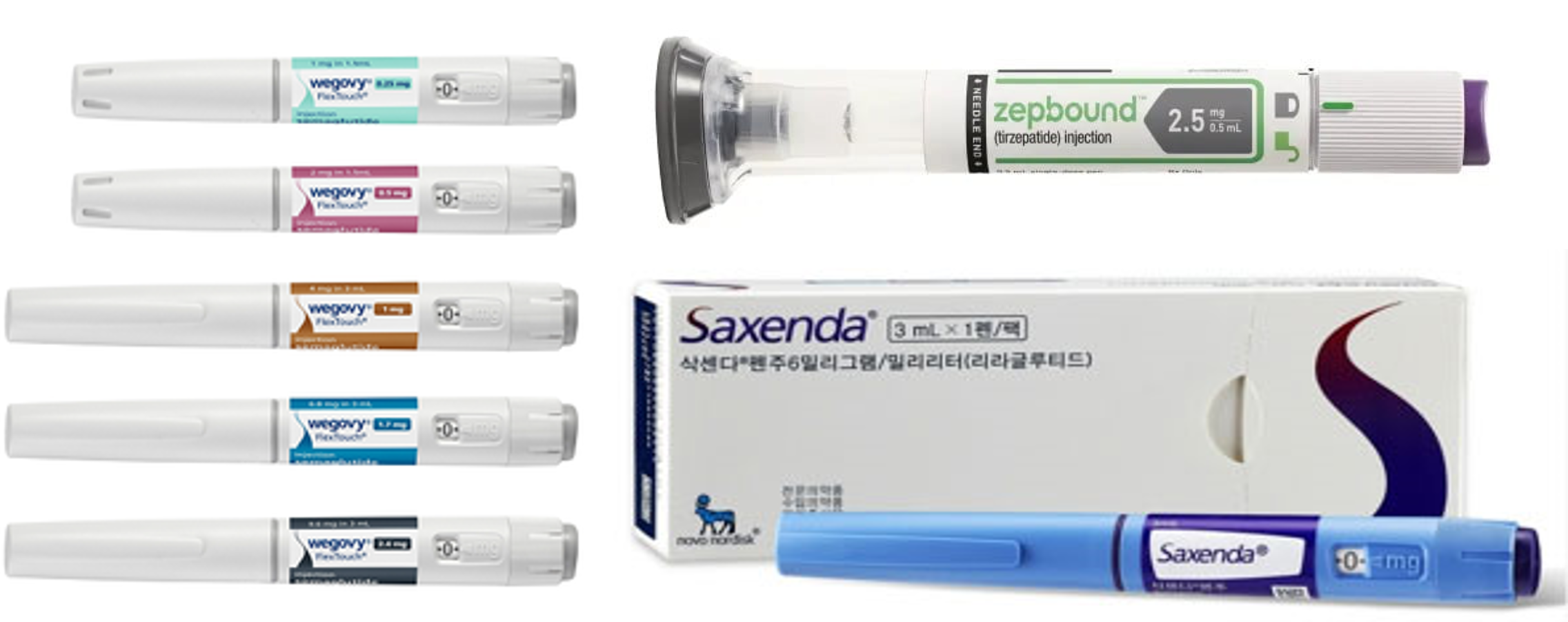
- It has been reported that not only new drugs but also generics have joined the competition in the market for glucagon-like peptide-1 (GLP-1)- containing treatment for diabetes and obesity. In the United States, generic versions of liraglutide, which is an active ingredient of the diabetes obesity·treatments Victoza·Saxenda that are GLP-1 receptor agonists. In addition to the development of generic versions of liraglutide, generics of dulaglutide, an active ingredient of Trulicity, are under development. Due to the benefits of effective weight loss with GLP-1 agonists, obesity treatment usage is significantly increasing. Several GLP-1 agonists for treating obesity, including semaglutide and liraglutide, are in shortage worldwide. The shortage in supply is due to a surge in demand for the drug. Consequently, regulatory authorities expect that generic versions of diabetes·obesity drugs that are GLP-1 agonists will likely to resolve drug shortages. The second diabetes drug containing liraglutide has been approved in the United States Novo NordiskAccording to industry sources on December 30, the U.S. Food and Drug Administration (FDA) has granted approval to a Victoza generic developed by a British pharmaceutical company, Hikma Pharmaceuticals. This approval is the second for a generic GLP-1 agonist following Teva's generic for Victoza. Teva Pharmaceuticals launched an authorized generic of Victoza after signing an agreement with Novo Nordisk. Victoza is a GLP-1 agonist for diabetes treatment developed by Novo Nordisk. It was first introduced to the market after obtaining approval in the United States in 2010. After discovering the drug's weight loss effect during a clinical trial, Novo Nordisk introduced obesity drug containing the same active ingredient to the market in 2014. Currently, GLP-1 agonist drugs, including liraglutide and semaglutide, are in global shortage. Regulatory authorities, such as the FDA, have announced that they will prioritize the review of approval applications for generic versions of originals, which will resolve the issue of limited patient access. The latecomers to the market anticipate gaining a market presence due to a surge in GLP-agonist demands. These developers plan to challenge the market by introducing the drugs at lower prices than the originals. Pre-launched Teva's Victoza generic is sold at a 15% lower price than the original drug. Analysis suggests that not only latecomer new drugs but generics will continue to compete fiercely in the market, as GLP-1 agonists are demonstrating effectiveness in treating metabolism dysfunction-related MASH and brain diseases, in addition to diabetes and obesity. Currently, GLP-1 agonist drugs are leading the market for diabetes and obesity treatments. Lily's Mounjaro, a GLP-1 agonist for diabetes, recorded sales of KRW 6.8482 last year, up 971.2% from 2022. The sales of Mounjaro, which was launched in May 2022 and generated the sales of KRW 640 billion in the same year, soared last year. Novo Nordisk's GLP-1 agonist drugs for diabetes also showed growth last year. Ozempic recorded sales of KRW 5.048 trillion last year, up 52% from the previous year. The sales of Rybelsus, containing the same active ingredient, amounted to KRW 1.44 trillion, up 140% from 2022. Saxenda generated sales of KRW 1.2252 trillion last year, up 9.8% from the previous year. Despite the shortage, Wegovy exceeded KRW 300 billion in sales last year. Pharmaceutical companies are closely watching the market for generic versions of GLP-1 agonists Korean companies are also closely watching the market for GLP-1 agonist generics. Handok has successfully launched a generic version of Saxenda, developed by the Indian biotech company Biocon, in South Korea. Both company signed an exclusive domestic sales·distribution agreements for Saxen generic in May. Biocon obtained approval for its first generic of Saxenda in the UK in March and launched the drug this month. Along with Biocon, the Indian companies Dr. Reddy's and Cipla and the Swiss company Sandoz are developing a generic version of liraglutide for diabetes and obesity treatments. Korean and overseas pharmaceutical companies are also focusing on semaglutide and dulaglutide, in addition to liraglutide. Semaglutide is an active ingredient of Novo Nordisk's diabetes treatment, Ozempic, and obesity treatment Saxena. Dulaglutide is an active ingredient of Lily's diabetes treatment Trulicity. Wegovy·Zepbound·Saxenda, GLP-1 agonists for obesity In June, the Chinese company Boan Biotech applied to the Chinese regulatory authority for approval of its generic version of Trulicity. This represents the first approval application for a generic version of Trulicity. Currently, generic versions of GLP-1 agonists for diabetes and obesity are continuing to be developed. Last year, a Chinese company successfully received approval for its Saxenda generic. Sam Chun Dang Pharm is targeting semaglutide generic. In June, the company signed an exclusive sales agreement with a Japanese pharmaceutical company for an oral generic version of semaglutide. The deal entails sales condition after the substance patent of semaglutide expires. In Japan, semaglutide's substance patent expires in 2031. Since 2018, Sam Chun Dang Pharm has been developing a generic version of liraglutide using its formulation-changing technology, called 'S-PASS.' Sam Chun Dang Pharm states that the company can avoid the formulation patent because it has been developing biosimilars and generics that avoid the patents of original formulations. The company recently confirmed the drug equivalence through a pharmaceutical equivalence test.
- Policy
- Movizolo Tab subject to drug shortage prevention program
- by Lee, Tak-Sun Dec 27, 2024 05:56am
- Pharmbio Korea’s Movizolo Tab, a prucalopride succinate-based drug used to treat chronic constipation, will be designated as a drug shortage prevention drug, resulting in an increase in drug price. Until now, prucalopride-based drugs have faced supply challenges due to low drug prices. According to industry sources on January 26, Pharmbio Korea’s Movizolo Tab will be designated as a drug shortage prevention drug as of January next year. The first formulation among the same ingredient drugs to be commercialized was YooYoung Pharm’s Rucalo Tab. The original drug is Korea Janssen's Resolor Tab, however, the drug has been supplied without reimbursement as of now. YooYoung became the first to become reimbursed amount a prucalopride succinate-based drugs in 2020. The problem arose afterward. The price of the drug was directly reduced ex officio by 53.55% of the original price when a generic drug was approved. YooYoung has been challenging the enforcement of the price cut through lawsuits, but the reduction in the reimbursement price was unavoidable. Since then, the company has repeatedly stopped supplying Rucalo Tab due to rising costs. The same goes for generic drugs that are covered under Korea’s reimbursement system. Generic drugs have also struggled to keep up with the rising costs. From 6 reimbursed drugs available for the ingredient, only YooYoung Rucalo Tab and Pharmbio Korea’s Movizolo remain. Most of the licensed drugs are currently distributed without reimbursement. In this situation, Pharmbio has applied for designation as a drug shortage prevention drug for its Movizolo Tab. If accepted, the company will be able to preserve Movizolo Tab’s manufacturing costs. However, it is reported that YooYoung Pharmaceutical, the manufacturer of Rucalo Tab, did not apply separately for its designation as a drug shortage prevention drug. As a result, the price of Pharmbio’s Movizolo Tab 1mg will increase from KRW 70 to KRW 114 and 2 mg will increase from KRW 102 to KRW 202 starting in January. It will be interesting to see if this will address the chronic shortage of reimbursed prucalopride succinate drugs.
- Product
- Price of Pulmican, Pulmicort, Tantum Sol to be raised in Jan
- by Kang Hye-Kyung Dec 27, 2024 05:56am
- As of January 1 next year, items including Pulmican, Pulmicort, and Tantum Sol which are set to receive price hikes, will demand the pharmacists' attention. According to a notice from the Ministry of Health and Welfare on the 24th, the price of ▲ Whanin Imipramine HCl Tab 25mg ▲ Lithan Tab ▲ Myungin Lithium Carbonate Tab ▲ Myungin Lithium Carbonate Tab 150mg ▲ Whanin Trazodone HCl Cap ▲Spiracton Tab 50mg ▲ Pulmican Suspension for Nebulizer ▲ Pulmicort Respule 0.5mg/2mL ▲ Sama Tantum Sol. (100mL) ▲ Movizolo Tab 1mg ▲ Movizolo Tab 2mg ▲ Lavopa Inj ▲ Pine Inj 1000IU/mL ▲ Greencross Heparin Sodium Inj ▲Pine Inj 5000IU/mL ▲ Alkeran Tab will be increased. The price of Pulmican Suspension for Nebulizer will be increased by KRW 126 from 1,121 won to 'KRW 1,247,’ and Pulmicort Respule Nebulized Suspension will be increased by KRW 255 to 'KRW 1,380.’ Sama Tantum Sol's price will increase by KRW 311 from KRW 1,000 to 1,311. There are also items whose drug prices will be reduced. ▲ Epyztek PFS, ▲ Epyztek IV Inj. ▲ Olumiant Tab 2mg, ▲ Olumiant Tab 4mg, ▲ Tremfya Prefilled Syringe Inj, ▲ Tremfya One Press Auto-Injector Inj, ▲ Rinvoq ER Tab 15mg, ▲ Rinvoq ER Tab 30mg, ▲ Entresto Film Coated Tab 100mg, ▲ Entresto Film Coated Tab 200mg, ▲ Entresto Film Coated Tab 50mg, ▲ Alprolix Injection, ▲ Sugar Tree XR Tab, ▲ Vegzelma In, ▲ Pomalyst Cap 1mg, ▲ Pomalyst Cap 1mg 2mg, ▲ Pomalyst Cap 3mg, ▲ Pomalyst Cap 4mg, etc. are included for price cuts. Meanwhile, the prices of Pulmicort Respule Nebulized Suspension and Pulmican will be raised in just one year, as the public-private council has recently requested a preemptive drug price increase to secure domestic imports as Pulmicort supply and demand in global markets such as Japan and Canada.
- Company
- First RSV vaccine Arexvy Inj lands in Korea
- by Whang, byung-woo Dec 27, 2024 05:56am
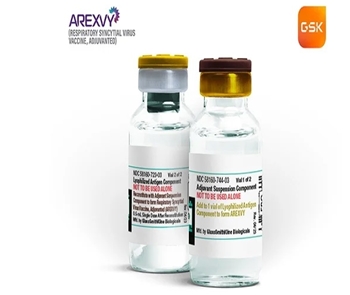
- Arexvy, GSK's global sales driver as a No. 1 adult RSV vaccine, is set to launch in Korea. Pic of Arexvy GSK Korea's Respiratory Syncytial Virus (RSV) vaccine Arexvy was recently approved by the Ministry of Food and Drug Safety (MFDS) for the prevention of lower respiratory tract disease (LRTD) caused by RSV in adults aged 60 years and older. After setting the milestone as the first RSV-LRTD vaccine, the vaccine was approved by the U.S. Food and Drug Administration (FDA) in May last year and then extended to those 50-59 years of age in June. The approval was based on results from two Phase III studies, RSV OA=ADJ-006 and RSV OA=ADJ-004, in adults aged 60 years and older. Study results showed, Arexvy significantly reduced the risk of RSV-LRTD by 82.6% and the risk of severe RSV-LRTD by 94.1% compared to placebo in subjects 60 years of age and older. In addition, vaccine efficacy for RSV-A-associated LRTD events and RSV-B-associated LRTD events was 84.6% and 80.9%, respectively. In addition, in 2 RSV seasons (from 15 days after the first dose in the Northern Hemisphere to the end of the second season), the mean follow-up period was 17.8 months, with 67.2% efficacy for RSV-LRTD and 78.8% efficacy for severe RSV-LRTD in patients aged 60 years and older. “RSV infections can be severe and even fatal in high-risk groups, such as the elderly, and bring a major social burden,” said Dr. Won Seok Choi, professor of infectious diseases at Korea University Ansan Hospital. ”Global health authorities in the U.S., U.K., and elsewhere are continuing efforts to prevent simultaneous outbreaks of RSV, influenza, and COVID-19.” “Older adults are at greater risk of infection due to age-related immune decline and a greater likelihood of complications,” said Professor Choi. ”Cross-infection can occur between young children and elderly grandparents, so practicing good personal hygiene and getting vaccinated early can help keep you, your family, and society safe.” Arexvy generated KRW 2 trillion in global sales last year...Records No. 1 in global share Currently, Arexvy’s global sales are on an upward trajectory, driven by its title as the first RSV vaccine. According to GSK's earnings release, Arexvy’s global sales in the second quarter were GBP 62 million (KRW 108 billion). Given that the RSV season is in the third and fourth quarters, sales are expected to become greater. Last year, the company's total revenue was GBP1.15205 billion (approximately KRW 2 trillion) GSK has raised its revenue forecast for 2024 based on the growth of its RSV vaccine and expects revenue to increase by 7-9% over last year. In particular, the company’s share is expected to grow despite the arrival of competing vaccines from Pfizer and Moderna. In the short term, the company plans to increase its global presence outside of the U.S. and European markets, including Japan. This includes South Korea, where it recently received approval from the Ministry of Food and Drug Safety. Arexvy is available in a vial containing the antigen (powder) in pre-fusion form of the RSV F-protein and a vial containing the immunostimulant (AS01E, suspension), where 0.5 mL of the reconstituted vaccine is administered intramuscularly using a needle. It can be administered in combination with the non-immune-boosting inactivated seasonal influenza vaccine, and the CDC recommends RSV vaccination for adults aged 75 and older or high-risk groups between 60 to 74 years of age. “RSV infections are a significant physical and economic burden for high-risk groups, including the elderly, and GSK is committed to the successful launch of Arexvy to not only prevent infection in adults but also to reduce the burden of disease for patients in Korea,” said Hyunji Kwon, Head of the Vaccines Business Unit at GSK Korea.
- Policy
- "Viread generic have saved KRW 400B in drug cost over 9 yrs"
- by Lee, Hye-Kyung Dec 27, 2024 05:56am
- It has been reported that market entries of 84 generics, which obtained priority marketing authorization, for 12 pharmaceuticals listed between 2015 and 2023 have saved medication costs of KRW 804.2 billion. Specifically, it lowered the listed pharmaceutical costs by KRW 536.3 billion and saved through drug substitution by KRW 267.9 billion, totaling KRW 804.2 billion worth of medication cost cuts. Sales from fourteen generics totaled KRW 397.3 billion, accounting for 49.4% of the total reduction in medication cost. Among these generics was 'Tefovir Tab,' a Viread generic with priority marketing authorization and showed the highest price impact over the past nine years. Generics that were introduced between 2015 and 2023 have resulted in savings of KRW 804.2 billion in medication cost These figures were included in the '2024 Pharmaceutical Drug Approval-Patent Linkage System Impact Assessment (organized by Lee Myung-hee, Researcher at Korea Institute of Intellectual Property),' presented by the Ministry of Food and Drug Safety (MFDS). As Pharmaceutical Drug Approval-Patent Linkage System Impact Assessment is conducted every year, the long-term impact assessment was conducted for the first time this year to overcome the limitations of the previous impact assessment. The previous impact assessment evaluated the priority sales period spanning nine months. The research team suggests that such evaluation results in a loss of information because pharmaceuticals falling into the criteria typically enter the market 1-2 months after the priority sales period. The long-term impact assessment involves sales-banned items and priority marketing authorization items. However, sales-banned items have been excluded from the long-term impact assessment to enhance the protection of pharmaceutical patents and to solve patent disputes between patent holders and pharmaceutical companies with generics before the launch of generics. The assessment involved pharmaceuticals subjected to impact assessment from 2016 to 2021. Two generic groups (12 listed pharmaceuticals and 84 generics) that generated the highest sales each year, totaling 58 generics with statements of financial position by NICE Information Service. Yearly medication cost savings from Gilead Science Korea's 'Viread,' a listed pharmaceutical that entered the market with priority marketing authorization. Its price decreased from KRW 4,850 to KRW 4,727 in April 2018, then to KRW 4,677 in September 2018, KRW 3,275 in December 2018, KRW 2,505 in November 2019, and finally KRW 2,403 in January 2022. Viread generics' market share significantly rose during the priority sales period. Their market share was 55.6% in October 2021, recording KRW 466.1 billion in medication cost savings from reducing Viread tab price (KRW 397.2 billion) and drug substitution with generics (KRW 68.9 billion). It was reported that Chong Kun Dang's 'Diquabel Eye Drops,' a generic version of 'Diquas Eye Drops 3%,' showed the most substitution impact. Diquabel Eye Drops' market share began to rise during the priority sales period, reaching 90.8% by December 2022, ultimately substituting the listed pharmaceutical Diquas Eye Drops. Yearly medication cost savings from Diquas Eye Drops 3% and Pazeo 0.7% Eye Drops (unit: KRW 1 million) Over the six years, it saved a medication cost of KRW 100.2 billion from the price cut of Diquas Eye Drops 3% (KRW 3.7 billion) and generics substitution (KRW 96.2 billion). This outcome resulted from the patent victory of six pharmaceutical companies, including Chong Kun Dang, producing The research team determined that "Such an outcome indicates that medication cost savings during the priority sales period may be significant factors for market share in the long-term." Yearly long-term impact assessment included 'Amosartan' in 2015, 'Stalevo Film Coated Tab' in 2016, 'Iressa Tab' and 'Pletal SR Cap' in 2017, 'Viread' and 'Layla Tab' in 2018, 'Diquas Eye Drops 3%' and 'Pazeo 0.7% Eye Drops' in 2019, and finally 'Alitoc Soft Cap' in 2020.
- Policy
- Generic verision of Citus Tab will be reimb-listed next mo.
- by Lee, Tak-Sun Dec 27, 2024 05:55am
- SAMA Pharm The generic version of 'Citus Tab,' SAMA Pharm's treatment for respiratory asthma and allergic rhinitis, will be reimbursement listed in January 2025 for the first time. Four pharmaceutical companies, including Dasan Pharmaceutical, are set to enter the market early through patent avoidance. According to industry sources on December 26, four products by four pharmaceutical companies, including Dasan Pharmaceutical's 'Prituss Tab. 50mg,' will be listed for reimbursement on January 1. Among these four products are DongKook Pharmaceutical's 'Pranpid Tab' 50mg, Green Cross' 'Neopran Tab. 50mg,' and Daewoong Bio's 'Cituone Tab. 50mg.' These products were approved in November and also approved for priority marketing authorization. The priority marketing authorization is valid until August 5, 2025. The companies successfully avoided Citus' ingredient patent (expires on June 1, 2035) and obtained priority marketing authorization. In October, Korea's Intellectual Property Trial and Appeal Board ruled in favor of generic companies in the passive trials to confirm the scope of a right. Citus is SAMA pharms' key item that generates sales of approximately KRW 50 billion annually. Based on last year's UBIST, its outpatient prescription sales amounted to KRW 42.6 billion. SAMA Pharmaceutical has begun to hold the market share with various product lineup, including CITUS Chewable Tab. Citus lineups includes Citus tab, Citus Disperable Tab, CITUS Chewable Tab, and Citus Dry Syrup. Dasan Pharmaceutical will be responsible for providing consignment production services for products that are set to be reimbursement-listed. Dasan Pharmaceutical has met all required criteria, and its generics will be listed at KRW 344 per tablet with an advantage. The other three companies only met one of the required criteria, so their generics will be listed at KRW 263 per tablet. Considering that SAMA Pharm's Citus Tab's ceiling price is KRW 526, the price has been reduced by half. Consequently, attention has been drawn to whether half-priced generic will shift the market share. "Citus tab is a pharmaceutical that showed skyrocketing sales during the surge of respiratory diseases," A pharmaceutical industry worker remarked. "The generic companies are likely to fiercely promote their products to take the share of KRW 50 billion worth market."
- Company
- SK Bioscience and Sanofi sign contract to co-develop
- by Cha, Jihyun Dec 26, 2024 05:51am
- SK Bioscience has extended the scope of vaccine development in collaboration with the global pharmaceutical company Sanofi. The company aims to advance the pneumococcal conjugate vaccine currently being developed to the next-generation vaccine. SK Bioscience and Sanofi announced on December 23 that they have signed an agreement to co-develop the next-generation pneumococcal conjugate vaccine for infants and young children. The new vaccine will provide a broad preventive effect compared to the currently commercialized products. This contract extends the scope of collaboration that both companies have previously signed for the development and commercialization of 'GBP410,' a 21-valent pneumococcal conjugate vaccine. Previously, SK Bioscience signed a co-development and sales agreement with Sanofi in 2014 for the next-generation pneumococcal conjugate vaccine. Based on the extended agreement, both companies plan to develop an innovative next-generation pneumococcal conjugate vaccine that is more advanced than 21-valent vaccines. Given new projects, SK Bioscience will receive a 50 million euros (about KRW 75.5 billion) upfront payment from Sanofi. The company will receive additional milestones per stage until the development is completed. Both companies will be equally responsible for development costs. Sanofi will be responsible for commercialization costs. Once commercialized, SK Bioscience will sell the vaccine in South Korea, and Sanofi will be responsible for global sales. Both companies will equally share revenues generated from sales at a predetermined rate. A conjugate form of pneumococcal vaccine is known to offer superior preventive effects among the developed pneumococcal vaccines. As of 2023, it takes 94% of the sales of the pneumococcal vaccine market worldwide. According to the global pharmaceutical statistics agency Evaluate Pharma, the pneumococcal vaccine market has achieved a compound annual growth rate (CAGR) of 4.7%. The market is projected to grow from KRW 11.9 trillion in 2024 to KRW 14.2 trillion by 2028. SK Bioscience plans to target the global pneumococcal vaccine market with advanced technology, aiming to secure a new growth engine for the future and establish itself as a leading global vaccine and biotech company. Photo of SK Bioscience In addition to developing next-generation vaccines, the clinical trial of GBP410 conducted by both companies is progressing smoothly. Last week, GBP410 entered a multinational Phase 3 clinical trial, with the first participant dosed. The Phase 3 trial involves over 7,700 infants, children, and adolescents aged six weeks to 17 years, comparing the immunogenicity·safety of up to four doses of GBP410 against an already approved pneumococcal vaccine. SK Bioscience and Sanofi confirmed the efficacy and safety of GBP410 in a Phase 2 clinical trial conducted last June. The comparative study involved 140 children aged 12 to 15 months and 712 infants aged 42 to 89 days, evaluating GBP410 against a control vaccine (Prevenar 13) for primary and booster vaccinations. The results demonstrated that the immunogenicity of GBP410 was comparable to that of the control vaccine. Regarding safety, no vaccine-related serious adverse events were reported in the GBP410 group. Even when co-administered with other recommended vaccines for infants and children, such as vaccines for tetanus, diphtheria, pertussis, polio, and Haemophilus influenza type B, GBP410 exhibited equivalent immunogenicity and safety to the control vaccine. GBP410 was the first to include a serotype over a 20-valent among the vaccine candidates that entered a phase 3 trial targeting infants. SK Bioscience anticipates that GBP410 will reduce invasive pneumococcal disease (IPD) in infants and young children. "The contract extension between SK Bioscience and Sanofi was based on trust between two companies, given the potential of a 21-valent vaccine and positive market outlook," Jaeyong Ahn, CEO of SK Bioscience. "As Korea's key company in the vaccine and biotech industry, SK Bioscience will secure vaccine market share and strive to launch a blockbuster vaccine successfully."
- Company
- Daiichi Sankyo to build manufacturing facilities in China
- by Kim, Jin-Gu Dec 26, 2024 05:50am
- Daiichi Sankyo will build a manufacturing facility in China for its ADC (antibody-drug conjugate) anticancer drug Enhertu. The plant, which will be built in Shanghai, is scheduled to be completed in 2030, and its products will be supplied to China. According to KoreaBIO, Daiichi Sankyo recently announced plans to build a manufacturing facility for Enhertu in Shanghai, China. A total of USD 152 million (approximately KRW 220 billion) will be invested in the construction of the facility. Completion is expected in 2030. Daiichi Sankyo explained that the products produced here will be supplied in China. The new construction plan is attributed to the fact that Enhertu was listed for health insurance reimbursement. China's National Healthcare Security Administration (NHSA) recently released the National Reimbursement Drug List for Basic Medical Insurance, Work-Related Injury Insurance and Maternity Insurance (NRDL). The list includes 91 new drugs, including Enhertu, that are covered by health insurance. The list includes 26 anti-cancer drugs, 15 drugs for chronic diseases such as diabetes, 13 drugs for rare diseases, 7 anti-infectives, 4 drugs for mental illness, 11 herbal medicines, and 21 other drugs. Their health insurance coverage will take effect next January. Pharmaceutical companies have been negotiating their drugs’ prices to be included in China's health insurance program. Of the 91 items to be reimbursed next year, 89 have undergone such price negotiations. The average reduction in drug prices is 63%. China's health authorities estimate that CNY 50 billion (about USD 10 trillion) in patient cost savings will be realized next year through reimbursement alone. However, the exact percentage reduction for Enhertu has not been disclosed. Enhertu was initially approved in China in 2023 for HER2-positive breast cancer. It has since been expanded to include HER2 low-expressing breast cancer, HER2-positive gastric or gastroesophageal junction cancer, and HER2-mutant NSCLC. “The ADC manufacturing facility for Enhertu is expected to be operational in 2030,” said Daiichi Sankyo. ”This investment marks the first instance of establishing an ADC manufacturing facility in China, and the products produced here will be supplied to China.”
