
- LOGIN
- MemberShip
- 2026-05-01 13:45:27
- Policy
- Daewoong’s P-CAB Fexuclue completes first PVA
- by Lee, Tak-Sun Feb 17, 2025 05:53am
- Daewoong Pharmaceutical's new drug for gastroesophageal reflux disease, ‘Fexuclue,' has agreed to complete negotiations through the price-volume agreement system with the National Health Insurance Service for the first time since its reimbursement listing. Before negotiations, Daewoong Pharmaceutical was known to have wanted to apply the reimbursement system rather than a price cut, so the outcome of the negotiations is drawing attention. According to industry sources on the 16th, Daewoong Pharmaceutical's ‘Fexuclue Tab 10, 40mg’ and Daewoong Bio's ‘We Cab Tab 10, 40 mg.’ which contain identical ingredients, have completed price-volume agreement negotiations. The PVA system allows the NHIS and pharmaceutical companies to negotiate and reduce the maximum insurance price of drugs with increased usage by up to 12.5% this year. The aim is to save Korea’s national health insurance finances. The type of negotiation applied to Fexuclue this time is Type A, which is carried out when the amount of claims in the same product group with the expected claims amount agreed with the NHIS increases by 30% of the expected claims amount. Fexuclue, which was listed for reimbursement in July 2022, recorded a prescription volume of KRW 12.9 billion in the first year of its release based on UBIST and then grew exponentially to record a prescription volume of KRW 78.8 billion last year (2024). In particular, the analysis shows that the product’s growth accelerated after signing a copromotion agreement with Chong Kun Dang in April last year In response, the NHIS selected Fexuclue as a drug subject to PVA monitoring in the fourth quarter of last year, and negotiations began in early December of that year upon the Ministry of Health and Welfare’s order. Before negotiations, it was reported that Daewoong Pharmaceutical wanted to apply the refund-type agreement like its competitor ‘K-CAB (HK Inno.N).’ The refund-type agreement is a system that maintains the maximum insurance price of a drug while returning the difference to the National Health Insurance Service. When exporting the drug overseas, this can be advantageous as the drug’s listed price is higher than the actual price. Currently, K-CAB is the only product that has signed a refund-type PVA system. In 2015, Boryung’s hypertension drug Kanarb entered into a refund-type agreement, but in 2018, it chose to lower the maximum insurance price instead of extending the contract. On the other hand, K-CAB entered into a refund-type agreement in 2021 and extended the agreement at the end of last year. As a result, its ceiling price of KRW 1,300 per tablet was maintained when it was first listed in 2019. Fexuclue is listed at KRW 939, which is 70% of the price of K-CAB. If the ceiling price is lowered through the PVA, the gap between K-CAB and Fexuclue will widen further. However, the relatively low price of the drug may be advantageous in sales competition between products, so it is interesting to see what kind of agreement Daewoong and the NHIS have reached. P-CAB (potassium-competitive acid blocker) class drugs like Fexuclue are characterized by a longer duration of efficacy due to their longer half-life than PPIs, making them effective for controlling nighttime acid secretion. It is easy to take because it only needs to be taken once a day, regardless of meal intake, and its market size has been rapidly increasing. Currently, in addition to K-CAB and Fexuclue, ‘Ja Q Bo (Onconic Therapeutics, a subsidiary of Jeil Pharmaceutical),’ a new domestic drug with the same mechanism of action (P-CAB), has also been listed for reimbursement, making it a three-way competition.

- Company
- COVID-19 vaccination and corporate productivity
- by Whang, byung-woo Feb 17, 2025 05:53am
- A study has been published showing that although the COVID-19 pandemic has transitioned into the post-COVID-19 era, there is a significant difference in productivity loss depending on whether or not one has been vaccinated. Analysis showed that the productivity loss caused by not receiving COVID-19 vaccination amounts to about KRW 5.6 trillion, which is more than 3 times the medical expense. Hankil Lee, Professor of College of Pharmacy at Ajou University On the 14th, Hankil Lee, a professor at the College of Pharmacy at Ajou University Hospital, who presented on the topic of “The Losses Caused by COVID-19 and the Socio-Economic Impact of Vaccination,” said that COVID-19 infections are still causing serious socioeconomic losses. Five years after the World Health Organization (WHO) declared COVID-19 a pandemic, various assessments are being made on the economic impact of COVID-19. The research presented on this day was conducted by the College of Pharmacy at Ajou University and analyzed the socioeconomic effects of COVID-19 vaccinations. First, a domestic study (based on the National Health Insurance Service's big data) that estimated productivity losses and medical expenses for the employed population found that the social loss caused by COVID-19 in 2023 amounted to about KRW 7 trillion. Specifically, of the 25.16 million employed people aged 18-64, about 9.8 million received outpatient care, about 140,000 received inpatient care, and 1,539 died. Based on this, the estimated direct medical expenses were about KRW 1.4 trillion, of which outpatient care costs were KRW 540 billion, inpatient care costs were KRW 220 billion, and sequelae treatment costs were KRW 450 billion. The key to the study is how much COVID-19 vaccinations can reduce such socio-economic losses. A research team at Ajou University analyzed the effects of COVID-19 vaccination on 10,000 employees of a large Korean company (Samsung Electronics) and found that the vaccination could reduce medical expenses and productivity losses. The research results showed that the COVID-19 vaccine Spikevax JN.1 from Moderna reduced medical expenses and productivity losses by KRW 1.1 billion per 10,000 employees. When this is converted to the total 120,000 employees of the company, it is estimated that the cost savings can amount to KRW 13 billion. In addition, assuming that the cost of employing one employee was KRW 120 million, the loss of productivity for the company when an employee did not get vaccinated was KRW 340 million, but when the vaccination rate reached 70%, the loss decreased to KRW 240 million, resulting in an economic gain of KRW 160 million. “This is the first study to estimate the socioeconomic costs of COVID-19 infections from a national perspective using the latest data sources in Korea,” said Professor Lee. ”Looking at the trend in COVID-19 infection rates in 2024, the scale of productivity losses is expected to increase further.” Lee added, “COVID-19 infection is still causing serious socioeconomic burdens, and vaccination of employees may be an effective strategy to reduce corporate losses and cut costs.”
- Company
- Vyloy with CDx issue resolved will launch in March
- by Whang, byung-woo Feb 17, 2025 05:52am
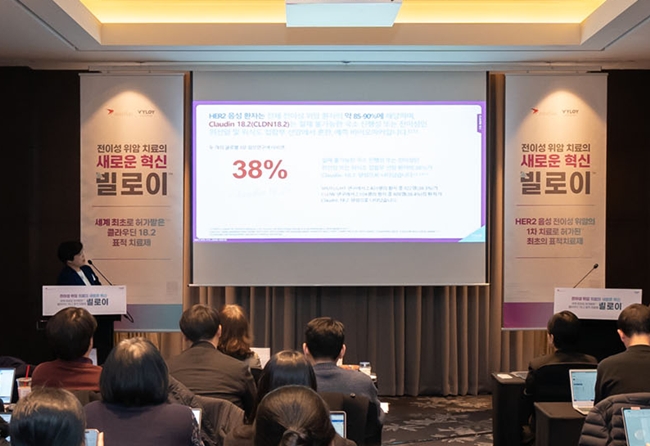
- The gastric cancer treatment Vyloy (zolbetuximab), which overcame the issue of companion diagnostics, will soon challenge the market. Reimbursement coverage with the National Health Insurance remains to be solved, but it has already received favorable assessments in the clinical practices. Despite launching as a non-reimbursed drug, it is likely to be prescribed more frequently. On February 14, Astellas Pharma Korea hosted a press conference to announce the launch of its claudin-18.2-targeting gastric cancer therapy, Vyloy. Dr. Sun Young Rha, Professor in the Department of Oncology at Younsei Cancer Center.Vyloy is a first-in-class treatment for patients with HER2-negative gastric cancer as a first-line treatment. It is the world's first anticancer agent to target claudin-18.2. In South Korea, Vyloy was approved by the Ministry of Food and Drug Safety (MFDS) as a 'First-line treatment in combination with fluoropyrimidine- and platinum-containing chemotherapy for patients with claudin-18.2-positive, HER2-negative unresectable, locally advanced, or metastatic gastric adenocarcinoma or esophageal cancer.' Dr. Sun Young Rha, Professor in the Department of Oncology at Younsei Cancer Center, Vyloy, who was the presenter for the event, said, "About 90% of the patients with metastatic gastric cancer are found to be HER2-negative. Therefore, patients were desperate for a medicine that targets a new biomarker." Dr. Rha explained, "About 40% of the HER2-negative patients are reported to be claudin-18.2-positive. Vyloy, which selectively targets claudin-18.2, introduced a new treatment option." The basis of Vyloy approval, the Phase 3 SPOTLIGHT trial showed that the median progression-free survival (mPFS) of a combination therapy containing mFOLFOX6 (oxaliplatin, leucovorin, 5-Fluorouracil, leucovorin) was 10.61 months, which was higher than 8.67 months of the placebo group. The medial overall survival (OS) was 18.23 months, higher than 15.54 months of the placebo group. In the GLOW study, the patient group treated with Vyloy in combination with CAPOX (oxaliplatin and capecitabine) recorded a mPFS of 8.21 months, which lowered the disease progression or death risk by approximately 31%. Despite these results, Vyloy's launch in South Korea had been postponed due to the issue of companion diagnostics last year. At that time, claudin-18.2-positive patients needed to be identified for the use of Vyloy. CDx used to diagnose Claudin-18.2 has been considered for evaluation as a new healthcare technology. After that, it was reviewed by the expert committee twice, and CDx was determined to be an existing technology. Consequently, Vyloy has been scheduled to launch on March 3. Dr. Hye Seung Lee, Professor in the Department of Pathology at Seoul National University Hospital, said, "Claudin-18.2 protein targeted by Vyloy is specifically expressed in certain cancer types, such as gastric cancer. It provides high specificity towards abnormal cells." Lee added, "Consistent results can be obtained, and fast analysis can be achieved with claudin-18.2, so we can quickly identify the patient group with expected treatment effects." The remaining issue is the reimbursement. Astellas Pharma Korea plans to secure reimbursement soon. However, at its first meeting for 2025 on February 12, the Cancer Disease Review Committee (CDRC) decided that 'reimbursement criteria are not set' for Vyloy. Dr. Rha said, "Obtaining reimbursement will not be easy, but there are only a few treatments with such benefits for gastric cancer. We are considering ways to build data to identify the drug's effectiveness in Korean patients." Regarding this, before the approval of Vyloy, Astellas Pharma Korea has been openly providing the EAP program openly so that patients who need the treatment can use the drug promptly. Currently, 51 patients have been registered in 10 medical centers. Astellas Pharma Korea representative said, "The clinical usefulness of Vyloy is non-debatable, and the company is preparing with utmost efforts for the cost aspect." Adding, "How the drug is used in clinical practices is also important; thus, by collaborating with institutes participating in the EAP program, we will strive to build data so that patients can benefit clearly."

- Company
- Columvi can be prescribed at Big 5 hospitals in KOR
- by Eo, Yun-Ho Feb 17, 2025 05:52am
- ‘Columvi,' the first bispecific antibody treatment option for lymphoma, may be prescribed at general hospitals in Korea. According to industry sources, Roche Korea's CD20-CD3 bispecific antibody for diffuse large B-cell lymphoma (DLBCL) Columvi (glofitamab) has passed the drug committees (DCs) of the Big 5 general hospitals in Korea, including Samsung Medical Center, Seoul National University Hospital, Asan Medical Center, Seoul St. Mary's Hospital, and Sinchon Severance Hospital. However, Columvi is currently a non-reimbursed drug. Its reimbursement application was reviewed by the Health Insurance Review and Assessment Service’s Cancer Disease Deliberation Committee in July and December but was unable to set reimbursement standards at the time. Since prescription codes have been generated for the drug in many medical institutions, it will be interesting to see if Columvi can complete the reimbursement process within the year. Columvi was approved in Korea in December 2023 for the treatment of adult patients with relapsed or refractory diffuse large B cell lymphoma (DLBCL), after two or more lines of systemic therapy. The drug is a third-line treatment option for DLBCL, like Novartis’s chimeric antigen receptor (CAR)-T-cell therapy Kymriah (tisagenlecleucel). The two drugs have different benefits; therefore the choice will likely be based on each patient's condition and circumstance. Columvi demonstrated efficacy in Phase I/II NP30179 trial in 155 patients with relapsed or refractory DLBCL after two or more prior systemic therapies. Results showed that Columvi achieved a complete response (CR) of 40% and an overall response rate(ORR) of 52%. The efficacy was also consistent across all subgroups. The most common adverse event was cytokine release syndrome (CRS). At the 2024 Congress of the European Hematology Association (EHA 2024), the company unveiled the results of the Phase III STARGLO study, which demonstrated an improvement in overall survival (OS) with Columvi. The STARGLO study enrolled patients with relapsed or refractory (R/R) diffuse DLBCL who were not eligible to receive an autologous stem cell transplant after one or more prior systemic therapies, or who had received two or more prior systemic therapies. In the primary analysis (median follow-up 11.3 months), Columvi and gemcitabine+oxaliplatin (GemOx) combination significantly improved the primary endpoint of OS with a 41% lower risk of death compared to rituximab+GemOx. Seok Jin Kim, Professor of Hematology and Oncology at Samsung Medical Center, said, "There had been much unmet need in DLBCL for more effective third-line treatment options for patients who fail first-line or experience repeated relapses. We expect the introduction of Columvi to significantly improve the outcomes for patients with relapsed or refractory lymphoma in Korea."
- Company
- Expanded indication sought for Novartis 'Kisqali' in KOR
- by Eo, Yun-Ho Feb 14, 2025 05:58am
- Product photo of Kisqali Early breast cancer indication of a CDK4/6 inhibitor 'Kisqali' is expected to be introduced in South Korea. According to industry sources, Novartis has recently submitted an application to the Ministry of Food and Drug Safety (MFDS) for Kisqali (ribociclib)'s expanded indication to treat early breast cancer. It is currently being reviewed for approval. Early breast cancer indication for Kisqali was approved in the United States and Europe in September and November last year, respectively. Once it's approved in South Korea, the competition against Lilly Korea's Verzenio (abemaciclib) is expected to expand. Verzenio is currently seeking reimbursement for early breast cancer. Kisqali was demonstrated to improve survival in hormone-positive/HER2-negative (HR+/HER2-) early breast cancer. The 4-year follow-up NATALEE study of Kisqali was presented during the recent European Society for Medical Oncology Congress 2024 (ESMO Congress 2024), showing its benefits. The 4-year landmark analysis results from the NATALEE study showed that during the median value of 44.2 months, the Kisqali combination therapy group had invasive Disease Free Survival (iDFS) of 88.5%, which was 4.9% higher than 83.6% of the group treated with endocrine therapy alone. Previously, in the 3-year analysis result, the Kisqali combination therapy group and endocrine therapy alone group had 90.8% and 88.1%, respectively. Considering that the two groups showed a difference of 2.7%, Kisqali's effect on reducing the risk of relapse has increased. However, it would require more time to accumulate further evidence on overall survival (OS). During the follow-up period of a median value of 44.2 months, mortality events showed no statistical difference due to few instances. However, the Kisqali group showed a slightly more positive trend. Meanwhile, regarding early breast cancer indication, Verzenio's first attempt to be considered for the Cancer Disease Review Committee (CDRC) of the Health Insurance Review and Assessment Service (HIRA) has been uneasy. After 6 months of waiting after submitting a reimbursement document, Verzenio was reviewed in May 2023, but the result was 'reimbursement criteria not set.' Five months later, Lilly reapplied for reimbursement to the HIRA in October. The drug was considered for the CDRC review in March 2024, but the result was the same. After that, Lilly again applied for the reimbursement and is awaiting the CDRC review date.
- Policy
- Vivozon’s VVZ-2471 patent registered in China
- by Lee, Jeong-Hwan Feb 14, 2025 05:58am
- On the 23rd, Vivozon (CEO: Doo-hyun Lee), a company specializing in the development of innovative new drugs, announced that it completed registering the product patent for its oral non-narcotic analgesic VVZ-2471, which is being developed as a treatment for pain and addiction, and its derivatives in China. This is the company’s third patent registration abroad, following the United States and South Africa. Vivozon is also undergoing the patent registration process in other major countries. This patent contains content that ensures VVZ-2471’s exclusive rights in China and the protection of related compounds based on its superior analgesic effect and differentiated effect compared to existing compounds. VVZ-2471 is a new drug candidate discovered by the company’s proprietary multi-target drug discovery technology. It has been confirmed to have an analgesic effect as well as an effect on treating drug addiction. Vivozon is conducting clinical trials to develop it as a treatment for neuropathic pain in Korea and as a treatment for drug addiction in the United States. In particular, Vivozon received IND approval for a Phase II clinical trial for VVZ-2471 in June last year for patients with post-herpes zoster neuralgia in Korea. The company plans to widely use the 38th homegrown new drug Unafra Inj. (Opiranserin hydorochloride), which was granted marketing authorization from the Ministry of Food and Drug Safety last year, along with its oral analgesic candidate VVA-2471. “We expect the results of VVZ-2471’s Phase III clinical trial in Korea to be available within this year,” said a Vivozon representative. ”The patent registration in China recognizes the analgesic effect of VVZ-2471 in the market, where there is no non-narcotic analgesic with efficacy comparable to that of narcotic analgesics.” He also said, “Our goal is to develop VVZ-2471 as a non-narcotic oral analgesic for acute and chronic pain and lead the global analgesic market along with Unafra Inj.” Meanwhile, Vivozon is conducting a Phase II clinical trial to develop VVZ-2471 as a drug addiction treatment to address the serious social issue of addiction and abuse of narcotic analgesics (opioids) such as fentanyl in the United States. To this end, Vivozon is applying for research funds from the National Institute on Drug Abuse (NIDA) under the National Institutes of Health (NIH) and is cooperating with local drug addiction treatment experts.
- Policy
- Six of Keytruda's indications fail reimbursement
- by Lee, Tak-Sun Feb 14, 2025 05:58am
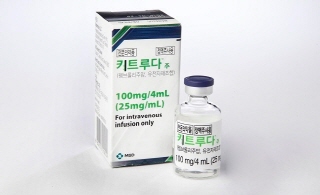
- After 5 failed attempts, MSD succeeded in receiving reimbursement standards for 11 additional indications of its immuno-oncology drug Keytruda in its 6th attempt. However, the company unfortunately has been denied reimbursement 6 indications. The six indications that have been denied reimbursement this time can only be reviewed if the company reapplies for reimbursement. On the 12th, the Health Insurance Review and Assessment Service's Cancer Disease Deliberation Committee set reimbursement standards for 11 additional indications of MSD's immuno-oncology drug Keytruda. As indications for which reimbursement standards have been set must undergo a drug price negotiation with the National Health Insurance Service after the Drug Reimbursement Evaluation Committee reviews the adequacy of their reimbursement, there are still many hurdles to overcome. Even so, the fact that the reimbursement standards for a single drug with a large number of indications were set and passed CDDC review is interpreted as a significant step in its reimbursement progress. Expanding the scope of reimbursement to 11 indications is expected to require a huge amount of health insurance finances. The 11 indications for which the salary criteria have been set this time are: ▲PD-L1 positive advanced or metastatic HER2-positive gastric cancer; ▲ advanced or metastatic HER2-negative gastric cancer; ▲ PD-L1 positive advanced or metastatic esophageal cancer ▲ MSI-H or dMMR advanced endometrial cancer; ▲ MSI-H or dMMR metastatic colorectal cancer; ▲ advanced or recurrent head and neck cancer with MSI-H or dMMR; ▲ metastatic or recurrent squamous cell carcinoma; ▲PD-L1-positive persistent, recurrent, or metastatic cervical cancer; ▲PD-L1-positive recurrent or metastatic triple-negative breast cancer ▲ MSI-H or dMMR Metastatic endometrial cancer; ▲ MSI-H or dMMR metastatic small intestine cancer; ▲ MSI-H or dMMR metstatic biliary tract cancer. MSD applied for reimbursement expansion for 13 indications in 2023 and added 4 indications last year. While the company succeeded in establishing reimbursement standards for 11 indications this time, it failed to do so for the remaining 6 indications. An official from HIRA explained, “The 11 indications for which the reimbursement criteria have been set this time have been pending for the past 2 years. The review of the financial sharing plan submitted by the pharmaceutical company has been completed, based on which the reimbursement criteria have been set during CDDC review.” “On the other hand, the results of the review showed that the 6 indications were not adequate for reimbursement without undergoing CDDC deliberations,” the official added. ”If the company applies for reimbursement again for the indications, it will be able to receive review.” The 6 indications for which the reimbursement standards have not been set are: ▲early triple-negative breast cancer, ▲adjuvant therapy after surgery for renal cell carcinoma, ▲non-invasive bladder cancer, ▲MSI-H or dMMR metastatic ovarian cancer, ▲MSI-H or dMMR metastatic pancreatic cancer, and ▲MSI-H gastric cancer. Currently, Keytruda is reimbursed for 7 indications in 4 cancer types, including as a first-line treatment for non-small cell lung cancer, melanoma, urothelial cancer, and Hodgkin's lymphoma, with annual claims amount reaching KRW 400 billion. Meanwhile, CDDC plans to reach a consensus on the need for a principle for the reimbursement of high-priced anticancer drugs and to establish detailed standards in the future, taking the review of this Keytruda as an opportunity. An official from the Health Insurance Review and Assessment Service said, “During CDDC review, there was a consensus on the need to establish a principle for the reimbursement of high-priced anticancer drugs and to review them as in some countries, such as the United States. We plan to discuss this in detail at the next CDDC meeting.”

- Product
- Distributors of Neurontin, Lyrica, and Celebrex to change
- by Kim JiEun Feb 14, 2025 05:58am
- With the transfer of sales rights between domestic pharmaceutical companies for major original products expected, the change is expected to affect not only the pharmaceutical and distribution industries but also front-line pharmacies. According to the pharmaceutical wholesale industry sources on the 13th, the transfer of rights to domestic pharmaceutical companies for some of Viatris and Takeda Pharmaceutical’s products is being confirmed or under discussion in the first quarter of this year. The products for which the recent transfer of rights has been confirmed and related notices are being issued to the pharmaceutical wholesale industry one after another are: Viatris' Neurontin Tab, Neurontin Cap, Lyrica Cap, Lyrica CR Tab, and Celebrex Cap. Their supplier will change from Jeil Pharmaceutical, the current supplier of these products, to a domestic pharmaceutical company on the 4th of next month. With less than a month left for the change of suppliers, some of these products are already in short supply. In the case of Neurontin, no new stock has been supplied to the distribution industry since last month, and the industry believes that the pharmaceutical company has adjusted its supply in anticipation of the change in sales channels. In the pharmaceutical and distribution industries, the change in the supplier of some of Takeda Pharmaceutical’s products is also rising as an issue. According to industry sources, information about the transfer of sales rights of Dexilant DR Cap and Lanston LFDT Tab, which have been supplied by Jeil Pharmaceutical, has spread throughout the industry, with the timing of the change expected around April 1. It is also reported that Dexilant's stock has been rapidly depleted recently. Jeil Pharmaceutical, which is at the center of the issue of changing suppliers, responded, “We are aware that relevant information is circulating in the industry, but it is difficult to confirm the details as it is a sensitive part of our contract.” The pharmaceutical and distribution industries believe that the market will be affected to some extent, as the products for which the change of suppliers is expected are major items. There may be some instability in the supply and demand of related items in the process of transferring sales rights, therefore, pharmacies that handle related items may need to manage their inventory. “Pharmaceutical companies and the distribution industry are keeping a close eye on the situation because the items under discussion are large,” said an official from the wholesale industry. “As the quantity of goods shipped may be adjusted during the process of changing suppliers, there may be temporary instability in the supply and demand of related items.”

- Policy
- MOHW "Why is HIRA concerned about substitute prescriptions?"
- by Lee, Tak-Sun Feb 14, 2025 05:58am
- The Ministry of Health and Welfare (MOHW) announced adding 'HIRA's Business Portal System' as part of the post-notification procedures for substitute prescriptions. However, an issue has been raised regarding differing opinions between the MOHW, which is responsible for the policy implementation, and the Health Insurance Review and Assessment Service (HIRA). On February 12, the MOHW team expressed discomfort regarding HIRA President Jung-Gu Kang's announcement of concerns to the press. The announcement highlighted that neither party had sufficiently discussed the agreement details during the revision of the Pharmaceutical Affairs Act guidelines and policies. The pharmacy industry deeply concerned about whether the revision can be effectively implemented given this ongoing dispute. HIRA, "We disagree with the inclusion of post-notification procedure…MOHW decided the portal service" According to industry sources, the MOHW was solely responsible deciding to include 'HIRA's Business Portal System' in the revised details of the Pharmaceutical Affairs Act guidelines and policies regarding post-notification procedures for substitute prescriptions. The HIRA did not mutually agree. It has been reported that HIRA expressed negative opinions towards utilizing either the DUR or the business portal system for post-notification procedures for substitute prescriptions. Before the notification of the implementation of the revision, the administrative team expressed concern about invading the system's intended role and potential incidents related to pharmaceuticals due to doctors not being aware of the updates. However, during the exchange of opinions, it has been reported that the party suggested the time it takes to develop a new system. After the MOHW announced the implementation of the revision to the Pharmaceutical Affairs Act on January 21, HIRA has not provided further opinion to the MOHW. The current post-notification procedure for substitute prescriptions is limited to 'telephone, fax, or computer network.' The MOHW announced the implementation of revision to the Pharmaceutical Affairs Act guidelines and policies on January 21 with details of including the 'HIRA's Business Portal System' as part of the notification method. Amid this situation, the HIRA president, who will be responsible for running the portal for substitute prescriptions, expressed concerns to the press. During the press conference the other day, Kang said, "Substitute prescriptions with the same active ingredient will not present significant issues for pharmaceuticals. However, we must be cautious because patients may have varying sensitivity for certain medicines." Kang added, "If the HIRA's portal is used, doctors must individually access the system and check the change. Thus they may be aware of the substitute prescription later or not at all in some cases." Kang also added, "We need to review ways to inform doctors about substitute prescription incidence immediately." MOHW, "Difficult to understand Kang's concerns…an agreement from doctors on the post-notification procedure is not necessary" Regarding this matter, the MOHW responds that it is difficult to understand why Kang announced a negative opinion towards the inclusion of the business portal for the post-notification procedure as part of the revision. Since the revision entails simply adding the business portal to existing methods, including phones, fax, and computer networks, the MOHW reportedly to disagree with Kang's argument that doctors' awareness and confirmation of substitute prescriptions will be delayed. During the meeting with the Korea Special Press Conference, a MOHW Bureau of Policy Planning representative said, "We did not revise the details to the guidelines to rely on the business portal system solely. We intended to add more notification channels." He added, "The intention is to add the business portal system to the existing methods, such as phones and fax, so it is difficult to understand why Kang expresses concerns." The representative added, "(If HIRA's system is used) Doctors checking the change could be delayed, but this is not intended to ask permission, but it is a notification. Adding another notification channel won't delay the check." He explained, "Technically, MOHW's adding a post-notification system to HIRA's portal is intended to support doctors and pharmacists' mutual access, and the HIRA's involvement is none." "If it (post-notification service for substitute prescriptions on the business portal) were HIRA's responsibility, Kang's concern would be important, but the HIRA does not play any role in this procedure. HIRA may be running the business portal system. However, MOHW is simply establishing the channel, and the HIRA is not responsible for mutual communication between doctors and pharmacists," the representative emphasized. "Because (HIRA) is a third party allowing the space, and does not play a specific role in the portal system, we are unclear about why (Kang) expresses opinions or whether it's his responsibility," the representative added.
- Company
- Reimb status of Keytruda for breast cancer treatment
- by Moon, sung-ho Feb 13, 2025 05:59am
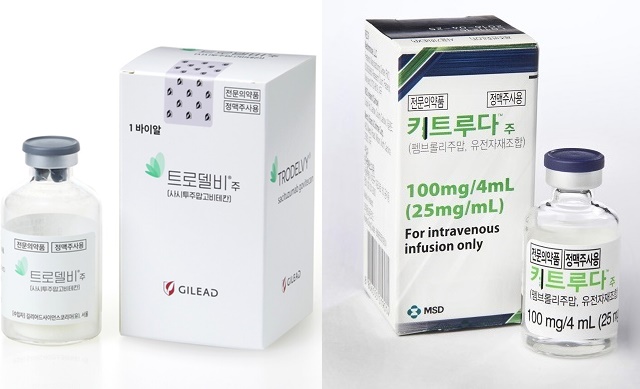
- As Keytruda passed the Drug Reimbursement Evaluation Committee (DREC) review after another attempt, it is expected to be reimbursed within the first half of the year. According to the pharmaceutical industry on February 10, the Health Insurance Review and Assessment Service (HIRA) held the 2nd DREC for 2025 and approved reimbursement appropriateness for Gilead Sciences Korea's Trodelvy (sacituzumab govitecan). Product photos of Trodelvy and KeytrudaTrodelvy is an antibody-drug conjugate (ADC) that binds to Trop-2 protein, highly expressed in various cancer types, including breast cancer, and releases medication inside the tumor cells. It minimally affects healthy cells, and it can destroy not only tumor cells but also the tumor microenvironment (TME). Consequently, clinical practices in South Korea can now use the drug as a non-reimbursed treatment for triple-negative breast cancer (TNBC). However, using the drug without reimbursement costs over KRW 10 million per cycle (three weeks). Due to this cost burden, reimbursement is needed to improve patient access and more uses in clinical practices. Furthermore, Trodelvy is the only treatment approved by the MFDS as a second-line treatment for patients with metastatic TNBC, regardless of existing genetic mutation or biomarkers. Patients have high hopes for reimbursement of this medication. In response, the HIRA recognized the necessity of Trodelvy, which was reviewed for reimbursement appropriateness. HIRA stated that Trodelvy is the first case of a new drug being recognized for innovativeness. Last year, HIRA revised the details of the criteria for drugs submitted for negotiations and determined to offer new drugs a benefit from the government based on their ICER value. Innovative drugs are to meet the criteria of ▲If no products or therapy that can be replaced or have therapeutic equivalence ▲Final result index, such as overall survival extension, indicates significant clinical improvements ▲New drugs granted expedited review according to Article 35-4 Clause 2 of the Pharmaceutical Affairs Act or medicine determined to have equivalent value as determined by the committee. HIRA stated, "Trodelvy is the first case for which a revised system aimed at improving patient access to new drugs with innovativeness." Following this decision, Trodelvy is now closer to being reimbursed as the second new ADC drug, following Enhertu. If the company agrees to the drug price negotiations with the National Health Insurance Service (NHIS) without further issue, reimbursement can be applied within the first half of the year. Obtaining reimbursement will positively impact Gilead Sciences, which launched its oncology business division when launching Trodelvy in South Korea, to expand its presence in clinical practices. However, the status of Keytruda (pembrolizumab), used as a first-line treatment in combination with chemotherapy, is concerning as it remains non-reimbursed. Since Trodelvy is used as a second-line treatment, reimbursement approval of Keytruda is essential for use in clinical practices. MSD Korea has also applied for setting reimbursement criteria for Keytruda for up to 17 indications to treat cancers, including TNBC. Now, for metastatic TNBC treatments in clinical practices, chemotherapy, Keytruda or Tecentriq (atezolizumab) is used as first-line treatments, the PARP inhibitor Lynparza (olaparib) is used as a second-line treatment, and Trodevly is used after the second-line treatment. Professor Joohyuk Sohn at Yonsei Cancer Hospital (Department of Oncology) said, "Keytruda is not actually competing against Trodelvy. We hope reimbursement will be provided for drugs benefiting all patients." Sohn added, "Trodelvy extended the progression-free survival (PFS) by five months compared to chemotherapy. Five months is a significant time for patients. And, data indicate that patients who respond well to the treatment can extend up to 10-15 months, so the drug is clinically significant." Meanwhile, HIRA's DREC determined reimbursement appropriateness for Adempas (riociguat, Bayer Korea), a treatment for arterial pulmonary hypertension, in addition to Trodelvy during the second meeting. The committee determined that the plaque psoriasis treatment Bimzelx Autoinjector (bimekizumab, UCB Korea) and Ebglyss Autoinjector inj (lebrikizumab, Lily Korea) would be appropriate for expanded reimbursement scope if the companies accepted the drug price below the evaluated amount. Additionally, the committee determined that Cabometyx tab (cabozantinib, Ipsen Korea), a treatment for renal cell carcinoma (RCC), would be appropriate for expanded reimbursement scope if the company accepted the drug price below the evaluated amount.
