
- LOGIN
- MemberShip
- 2026-05-01 13:45:26
- Company
- Celltrion’s Prolia and Xgeva biosimilars approved in Europe
- by Chon, Seung-Hyun Feb 19, 2025 05:56am
- On the 18th, Celltrion announced that it had received marketing authorization from the European Commission for Stobocolo and Osenvelt, which are biosimilar versions of Prolia and Xgeva, respectively. The final approval was granted 2 months after the Committee for Medicinal Products for Human Use (CHMP) of the European Medicines Agency (EMA) recommended the products’ approval in December last year. Prolia and Xgeva are biopharmaceuticals developed by Amgen, and they were developed by varying the dose and dosing cycle of the main ingredient, denosumab. Prolia is used as a treatment for osteoporosis, and Xgeva has been approved for the prevention of bone complications in patients with bone metastases and the treatment of osteosarcoma. Based on the results of the global phase III clinical trial, Celltrion applied for approval of the 2 products, Stobocolo and Osenvelt, as biosimilars of the mentioned products in March last year. Stobocolo was approved for the treatment of osteoporosis and bone loss in postmenopausal women, while Osenvelt was approved for the prevention of bone metastasis complications in cancer patients and for treating giant cell tumors of bone. Celltrion received initial approval for the two products in Korea in November last year. It recently completed the application for the drug’s marketing authorization in the US as well. Major product groups that Celltrion is currently selling or has been approved for include: ▲Autoimmune disease treatment (Remsima, Remsima SC, Zymfentra, Yuflyma, Steqeyma, Aptozma), ▲anticancer drugs (Herceptin, Truxima, and Vegzelma), ▲ allergy treatment drugs (Omlyclo), ▲eye disease treatment drugs (Eydenzelt), and ▲bone disease treatment drugs (Stobocolo, Osenvelt). The market size of the 11 products totals approximately KRW 150 trillion. “With our existing products maintaining a strong market share in the European market, the approval of the additional follow-up products will further contribute to boosting Celltrion’s overall competitiveness.” said a Celltrion official.
- Company
- Osteonoic secures rights to J&J’s bone graft material
- by Lee, Seok-Jun Feb 19, 2025 05:56am
- Osteonic, a company specializing in implants for orthopedic surgery, announced on the 17th that it has secured the domestic rights to DBX Putty, a bone graft material, from Johnson & Johnson Medtech Korea. DBX Putty was developed by MTF Biologics Inc., a US bone graft manufacturer. Johnson & Johnson MedTech holds the global rights to the product, and Osteonic has secured the domestic rights through this agreement. DBX Putty is a DBM (Demineralized Bone Material) based bone graft. It is made by removing minerals from human bones and is used to reconstruct bone formation by implanting it into damaged bone parts or during spinal surgery. In particular, it has both osteoconductive and osteogenic functions because it is a mixture of mineral-removed cortical bone powder and highly biocompatible hyaluronic acid. This allows it to maintain the proper viscosity depending on the surgical situation and is highly regarded for its excellent osteogenesis and formability. Its quality has also been verified as a product that has been used in leading university hospitals and hospitals specializing in spinal joints in Korea for nearly 20 years. According to Fortune Business Insights, a global market research firm, the global market size of bone substitutes and bone grafts is estimated to be USD 5.7 billion (about KRW 7 trillion) in 2029, and about KRW 100 billion in Korea. Osteonic continues to grow by leveraging its full line-up of orthopedic implants that make up the human body, including Sports Medicine (soft tissue reconstruction), CMF (craniomaxillofacial), Trauma (upper and lower limb fractures), and Spine. Dong-won Lee, CEO of Osteonic, said, “Along with our existing business of treating fractures and spinal fixation implants, we plan to expand our business into the field of bone grafting materials through this licensing agreement and provide a wide range of musculoskeletal medical solutions.”
- Policy
- Dilemmas for fostering pharma and lowering drug prices
- by Lee, Tak-Sun Feb 19, 2025 05:56am
- What would be a reasonable drug pricing policy to foster new drug development? The government is focusing on the sustainability of the National Health Insurance, while the industry expresses concerns about decreasing new drug development due to reduced drug prices. These conflicting perspectives are raising about the future direction of drug pricing policy. On February 14, a 'Policy debate to foster pharmaceutical and biotechnology industry' was held at the National Assembly Building. The debate was hosted by the Democratic Party of Korea's Future Economic Growth Strategy Committee (Lee Eun-Joo, Committee Leader and sponsored by the National Assembly's Public Healthcare Committee Rep. Seo Young-Seok and the Korea Pharmaceutical and Bio-Pharma Manufacturers Association (KPBMA). Photo opportunity with the debate participants. (from upper left) Kim Gook-hee, Head of the Pharmaceutical Benefits Department at HIRA, Rep. Lee Byeong-jin, Member of the Democratic Party of Korea, Noh Yunhong, President of KPBMA, Rep. Seo Young-seok, Member of the Democratic Party of Korea, and Cho Ha-Jin, Director of the Bureau of Health Insurance Policy division at the MOHW, (from lower left) Kang Hyun-Sik, Chairperson of the Drug Pricing System Specialist Committee of the KBPMA, Choi Yun Jeong, Professor of the Department of Economics at Yonsei University, Lee Eui-Kyung, a professor at the School of Pharmacy at Sungkyunkwan University, and Kim Dong-Sook, Professor of the Department of Health and Public Administration at Kongju National University. The event's speakers mentioned that a large-scale reduction in drug pricing is not effective and that the post-management system needs reform. Choi Yun Jeong, Professor of the Department of Economics at Yonsei University, said, "After the nationwide drug pricing reduction in 2012, companies directions have changed." Choi presented the research results, "The production of non-reimbursed prescription drugs increased, production of items without price reduction increased, and co-promotion of imported drugs also increased." "Changes in production types, such as an increase in production of non-reimbursed prescription drugs, have led to higher consumer drug costs, which have diminished the efforts to improve National Health Insurance improvement," Choi explained. Choi pointed, "Changes to company's production type, which was not intended by policy, may result in side effects in the long term in the pharmaceutical industry." Choi added, "The government has aimed to reduce National Health Insurance expenditure by lowering drug prices. However, this policy has not effectively improved pharmaceutical choices and volume management." Consequently, speakers stressed that before reducing drug pricing in large-scale, improvements must made to original and high-priced pharmaceutical preferences, pharmaceutical overspending, overprescription, and practices. Yu Seung-Rae, Professor of School of Pharmacy at Dongduk Women's University, stressed that regular and repetitive drug pricing reduction policy must be improved, and a comprehensive pharmaceuticals post-management system is needed. Also, the seller-distributor participation method should be established, and improvements to reimbursement monitoring, which is directly related to product quality, are required. To achieve this, Yu explained that the current policy of individually lowering the unit price of each drug should be changed to goal-oriented and comprehensive management methods. In particular, a 'refund system' can be utilized. "Seven years ago, a similar topic was discussed. If the government had initiated a mid-to-long-term project then, the current challenges would likely have been resolved," Yu said. "Other OECD countries have simplified their post-management systems and implemented policies to provide refunds based on the potential value of new drugs." As the current policy is aimed at reducing individual drug prices, all participants agreed on the need for revision. Dong-Sook Kim, Professor of the Department of Health and Public Administration at Kongju National University, remarked, "Both the universal drug price reduction and various post-management mechanisms create anxiety for pharmaceutical companies," Kim stressed, "To resolve this, we need a comprehensive approach to drug pricing management." Kim added, "Various post-management systems are available, but they are not being effectively implemented." Kim stressed that "Ongoing studies of comprehensive post-management systems show that the number of drug pricing reductions is typically only two for 20,000 items listed between 2007 and 2022. The drug price remains about 87% of the initially listed price. Therefore, we must establish a post-management system to ensure that new drug values are accurately evaluated and effectively managed." Cho Wonjun, a Project Specialist at the Public Health Division of the Democratic Party of Korea, said, "The drug pricing system has operated independently from the prescription department, making it difficult to achieve specific goals and often resulting in balloon effects." Cho added, "We need to consider whether the aim of controlling prices contradicts the initiative to reduce volume. For instance, we should evaluate whether lowering drug prices as an administrative measure in response to previous illegal rebate practices is appropriate." Cho suggested, "The system should be structured so that the goals are reflected and contribute to improving practices." During the event, it has been suggested that an assessment reflecting domestic practices is needed as domestically produced, natural new drugs are included in the reevaluation of reimbursement appropriateness for this year. Kang Hyun-Sik, Chairperson of the Drug Pricing System Specialist Committee of the KBPMA, said, "Domestically developed natural new drugs face more challenges in the process of approvall-reimbursement-listing compared to new drugs originating from foreign countries." Kang emphasized the need to consider special circumstances surrounding domestically developed new drugs, stating, "Evaluating these drugs similarly as those from foreign countries would be discriminatory against Korean companies." "A drug that has been used for many years and its claim amount is high indicates that its utility in clinical practices as well as societal demands are high," Kang said. "Domestically developed new drugs need a different evaluation standard for reevaluation." Panels representing the government emphasized that the department has been putting efforts to find a balance between industry development policy, such as reflecting new drug values, and sustaining the National Health Insurance. The department promised to bring improvements to effective post-mangagment system. Kim Gook-hee, Head of the Pharmaceutical Benefits Department at HIRA, said, "The pharmaceutical industry is a national-level industry that holds greater importance than the semiconductor business." Kim stressed that, "A predictable system for the pharmaceutical industry is important but the government must prepare additional plans." "We should consistently implement policy, focusing on reimbursed pharmaceuticals, comprehensively managing goals from a macroscopic perspective, industry reform and R&D promotion, a direction to transform generic industry capacity to exports," Kim said. "In the past, we have failed to pursue a policy consistently. Therefore, we are currently assessing whether our support for the pharmaceutical industry has been effective." Kim added, "The government is working to simplify the repetitive and excessive post-management system. The department has initiated measures to improve problems, such as promoting national essential drugs made with domestically produced ingredients and considering the value assessment of new drugs and public health and security aspects." Cho Ha-Jin, Director of the Bureau of Health Insurance Policy division at the Ministry of Health and Welfare (MOHW), said, "The policy direction of the government is changing towards balanced goals, such as supporting the pharmaceutical industry, rather than saving expenses." Cho said, "In the past, the government focused on saving expenses, but now, it is thoroughly considering ways to support industries, including new drug development and drug cost coverage for drug shortages." However, Cho explained that a significant drug pricing reduction is unlikely to lead to an increase in non-reimbursed drugs, as suggested by Professor Choi. Therefore, the government must consider clinical utility and cost-effectiveness when reevaluating the reimbursement appropriateness. Generally, supporting domestically produced new drugs requires careful consideration. Choi reassured the debate participants, "Please note that the department has appointed a research team to restructure the drug pricing post-management system to formulate a comprehensive post-management method." The debate was led by Lee Eui-Kyung, a professor at the School of Pharmacy at Sungkyunkwan University who served previously as the 5th Minister to the Ministry of Food and Drug Safety (MFDS).
- Company
- Next reimb effort for 'Padcev combination therapy'
- by Moon, sung-ho Feb 19, 2025 05:56am
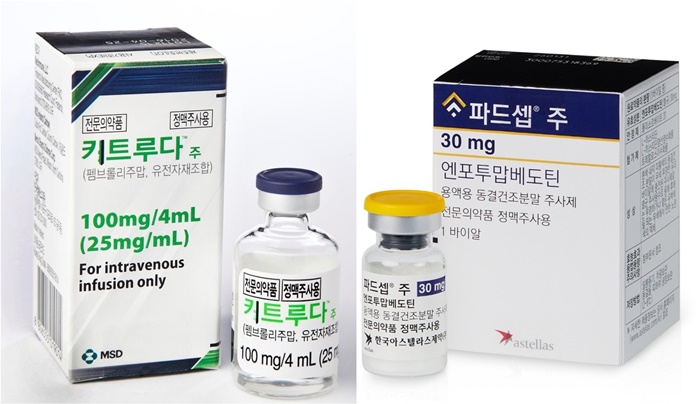
- 'Padcev Combination therapy' has been reported to have changed the urothelial cancer treatment paradigm after 30 years. After its launch in clinical practices in South Korea in the second half of last year, the government has initiated discussion for reimbursement of the therapy. Product photo of Keytruda and Padcev.According to the pharmaceutical industry on February 17, the Health Insurance Review and Assessment Service (HIRA) recently held the first Cancer Disease Review Committee (CDRC) for this year and discussed setting the reimbursement standards for the combination therapy containing Padcev (enfortumab, Astellas Pharma Korea) and Keytruda (pembrolizumab, MSD Korea). Padev was launched and became available for prescription in South Korea last year. It is an ADC anticancer agent for treating patients with metastatic urothelial carcinoma who failed previous treatments. In July 2024, indications were expanded as a first-line treatment in combination with Keytruda. Thus, Padcev is now an ADC anticancer agent approved for use in first-line to third-line treatments for metastatic urothelial carcinoma. Domestic approval was based on the EV-302 clinical study presented during the 2023 Congress of the European Society for Medical Oncology (ESMO Congress 2023). EV-302 is a randomized Phase 3 clinical study evaluating the effectiveness of Padcev+Keytruda combination therapy compared to platinum-based chemotherapy in 886 patients in 25 countries. Based on the study, at the median follow-up of 17.2 months, patients treated with Padcev combination therapy had a median overall survival (OS) of 31.5 months, extending the OS by approximately twofold compared to the platinum-based chemotherapy group and reducing death risk by 53%. The median progression-free survival (mPFS) of the combination therapy group was 12.5 months, and the mPFS of the platinum-based chemotherapy group was 6.3 months. The Padcev combination therapy extended the mPFS by approximately twofold. Based on this result, Astellas Pharma applied for reimbursement to the HIRA at the end of last year, and it has been considered for the first CDRC review for this year. However, the drug failed to pass the CDRC review after receiving the decision of 'reimbursement standards non-established.' Interestingly, Astellas Pharma had applied for reimbursement alone and its application was considered for the CDRC review. In the past, the review would have required applying for reimbursement with the Keytruda owner MSD. The policy has changed based on the global pharmaceutical companies' headquarters policy and the domestic‧foreign Fair Trade Act, and discussion with another pharmaceutical company can be considered 'price fixing.' As for Keytruda, which is used along with Padcev, MSD has not applied for reimbursement. It has been reported that MSD has applied for 17 indications, so the company may have been reluctant to file an additional one. However, the pharmaceutical industry believes that HIRA's approach toward combination therapies may have changed after the decision on the Padcev combination therapy. At the end of last year, HIRA announced the establishment of a review policy for reimbursement decisions on combination therapies. A pharmaceutical industry employee said who asked for anonymity said, "Last year, the CDRC review established a review policy for deciding on the reimbursement of combination therapies. However, the policy was limited to cases where a new drug is added to a previously reimbursed drug." He added, "The review of Padcev combination therapy indicates that an approach towards new drugs can be changed."
- Policy
- Boehringer Ingelheim, HIRA enter drug price negotiations
- by Lee, Tak-Sun Feb 19, 2025 05:56am
- Product photo of Ofev As for reimbursement listing of 'Ofev (nintedanib),' a treatment for idiopathic pulmonary fibrosis (IPF), domestic distributor Boehringer Ingelheim and the Health Insurance Review and Assessment Service (HIRA) have entered drug price negotiations. Since the substance patent of Ofev expired last month, generic companies have already obtained approvals. Generic companies closely watch the results of negotiations because they plan to apply for reimbursement once the drug price of Ofev becomes listed. According to industry sources on February 18, drug price negotiations have been initiated for Ofev, which passed the HIRA's Drug Reimbursement Evaluation Committee (DREC) review in January. After the review, the DREC determined Ofev has reimbursement appropriateness for indications to treat ▲Systemic sclerosis-associated interstitial lung disease (ILD) ▲Advanced pulmonary fibrosis. However, Ofev's 1st indication IPF has been excluded from the reimbursement appropriateness scope. It has been reported that Boehringer Ingelheim accepted this result. After the decision, the Ministry of Health and Welfare (MOHW) ordered drug price negotiations. Besides the distributor Boehringer Ingelheim, other pharmaceutical companies also closely watch Ofev's drug price negotiations. Those include generic companies such as Yungjin Pharm and Daewoong Pharmaceutical. Yungjin Pharm received approval for its generic version of Ofev as 'Nintebro' in December 2024. Daewoong Pharmaceutical finished registering domestic approval for 'Ofevia Tab.' These companies successfully avoided the substance patent, which was unregistered, allowing them to launch in the market without any hurdles. Ofev's substance patent was expired on January 25. However, if there are no products containing nintedanib on the reimbursement list, it will be disadvantageous for market launch. Without an existing product to serve as a development benchmark, generic companies must apply for reimbursement assessment of their generics as new drugs. This process can be time-consuming and requires effort. In contrast, once the original drug Ofev becomes added to the reimbursement list, drug prices of generic drugs are estimated based on the product set as a development goal. Thus, these generic drugs can be added to the reimbursement list within three months of application. Generic companies will likely apply for reimbursement once Ofev becomes reimbursement listed. If the drug price negotiations for Ofev proceeds without any issues, it is likely to be added to the reimbursement list in April. Since the original drug has only three to four months of exclusive availability, the industry is closely monitoring how the market competition structure will be develop.
- Company
- Will Tevimbra become the 1st reimbursed immunooncology drug?
- by Eo, Yun-Ho Feb 19, 2025 05:56am
- Will the first immuno-oncology treatment option in the field of esophageal cancer finally be born in Korea? BeiGene Korea's immuno-oncology drug Tevimbra (tiselizumab), which passed the Health Insurance Review and Assessment Service’s Drug Reimbursement Evaluation Committee review last month, has entered into drug price negotiations with the National Health Insurance Service for insurance reimbursement. This comes about half a year after the drug passed the Cancer Disease Deliberation Committee review in August 2024 after a reattempt. Tevimbra is a PD-1 inhibitory immuno-oncology drug that has demonstrated clinical utility in second-line esophageal squamous cell carcinoma and was approved in Korea in November last year. Currently, there are seven immuno-oncology drugs approved and marketed in Korea: ▲Keytruda, ▲ Opdivo, ▲Tecentriq, ▲Imfinzi, ▲Bavencio, ▲Jemperli, and ▲Tevimbra, which have 64 indications. However, only 21 therapies (about 33%) are currently listed for reimbursement. None of these drugs are yet on the reimbursement list for esophageal cancer. Currently, only platinum-based chemotherapy is reimbursed in Korea as both first-line and second-line treatment options for esophageal squamous cell carcinoma. Reimbursement rates for immuno-oncology drugs by indication, including esophageal cancer, are low due to drug prices and national health insurance finances. Since the drugs were reimbursed for some cancers, such as lung cancer, the overall claims of immuno-oncology drugs and their share in health insurance finance expenditures have increased significantly, raising Korea’s financial burden. As of 2023, the total claims for anti-cancer drugs reached KRW 2.4 trillion, while claims for immuno-oncology drugs were KRW 500 billion, accounting for 20% of the total claims for anti-cancer drugs. This is why the industry is welcoming the news of BeiGene's initiation of drug price negotiations for Tevimbra, as the company has announced its intention to supply the drug at a relatively low price. BeiGene’s philosophy of providing “innovative new medicines at affordable prices” and eliminating underserved patients has already been demonstrated through the reimbursement process for its blood cancer drug Brukinsa (zanubrutinib). The company has also made Tevimbra available at no cost to select esophageal cancer patients through its compassionate use program (EAP, Expanded Access Program). It remains to be seen if Tevimbra will make it onto the reimbursement list after completing discussions with the Pharmacoeceonic Evaluation Subcommittee, Risk Sharing Subcommittee, and Drug Reimbursement Evaluation Committee. Tevimbra extended the median overall survival (OS) by 2.3 months compared to chemotherapy (8.6 months vs. 6.3 months) in the global Phase III RATIONALE-302 trial, statistically significantly reducing the risk of death by 30%. In the trial, Tevimbra demonstrated more than a twofold increase in the proportion of patients who responded to treatment compared to chemotherapy (20% vs. 10%), and the median duration of response was extended by about 3 months from 4.0 months to 7.1 months, showing a sustained response. Based on such results, the U.S. National Comprehensive Cancer Network (NCCN) recommended Tevimbra as a preferred option for the second-line treatment of esophageal squamous cell carcinoma at a high level (Category 1) in its revised treatment guidelines.

- Company
- Opdivo prolongs survival in urothelial carcinoma
- by Whang, byung-woo Feb 18, 2025 05:53am
- The emergence of new drugs such as immuno-oncology drugs in the first-line treatment of urothelial carcinoma, have refined treatment strategies in the area. With the number of options available in the clinical setting increasing, there is also growing concern over when and which treatment to select for the patients. However, experts believe that the choice of treatment that can maximize the effectiveness of the treatment is important, as the prognosis of urothelial carcinoma is still worse than that of other urologic cancers. Jong Jin Oh, Professor of Urology, Seoul National University Bundang Hospital Professor Jong Jin Oh, Professor of Urology at Seoul National University Bundang Hospital, who has the latest knowledge in the field, emphasized the need for institutional support for the emergence of new drugs that prolong the overall survival of patients with urothelial carcinoma. Urothelial carcinoma is a cancer that starts in the urothelial cells that line the inside of the bladder, and 90% of tumors that occur in the urinary tract are urothelial carcinoma. It is the most common type of bladder cancer, accounting for about 90% of all bladder cancer diagnoses. Even if patients undergo surgery, their life expectancy is not long, and the average overall survival period is just over one year, especially for patients with metastases. “In the first diagnosis, about 10% of patients with metastatic urothelial carcinoma are confirmed to have metastatic disease, and if adding patients whose cancer progressed or metastasized, 20-30% of all patients are confirmed to have metastatic disease,” said Professor Oh. “There may be microscopic metastases that are not detected by imaging tests, so the actual proportion of metastatic urothelial carcinoma may be higher than the confirmed proportion.” The chemotherapy combination of cisplatin and gemcitabine (GemCis) had been the representative treatment option. However, Professor Oh explained that the combination had clear limitations, such as response rate and toxicity. “The percentage of patients responding to gemcitabine is not high, and the duration of response is very short, less than a year, and the toxicity is strong, so patients cannot continue treatment for a long time,” said Professor Oh. ”Since urothelial carcinoma is a tumor that occurs in the urinary tract, many patients have reduced renal function, such as by having their kidneys or bladder removed.” The emergence of immune checkpoint inhibitors for urothelial carcinoma is expected to extend survival In this situation, the emergence of new drugs, including immune checkpoint inhibitors, is expected to extend patient survival. One of the recent changes is the approval of Opdivo (nivolumab) in combination with cisplatin and gemcitabine as a first-line treatment for unresectable or metastatic urothelial carcinoma in July. Looking at the Phase III CheckMate-901 trial, which was the basis for the approval of Opdivo, at a median follow-up period of 33.6 months, the median overall survival (mOS), the primary endpoint, was 21.7 months with the combination of Opdivo and chemotherapy, which was significantly longer than the 18.9 months with the combination of cisplatin and gemcitabine, and reduced the risk of death by 22%. “Opdivo is the first immuno-oncology drug approved for the first-line treatment of metastatic urothelial carcinoma. The combination of Opdivo and gemcitabine has extended the overall survival by about 3 months compared to the existing gemcitabine monotherapy,” said Professor Oh. ”This means that we have an opportunity to extend the expected life expectancy that has been around one year with the existing treatment to about one and a half years.” So, how has the actual prescription experience been for domestic patients? Professor Oh expected that Opdivo would play a role in the situation where most patients with metastatic urothelial carcinoma first experience lymph node metastasis. He said, “In the subgroup with lymph node-only metastases, the rate of complete remission of metastatic lesions was much higher with Opdivo than with gemcitabine therapy, and the duration was also much longer. As the study confirmed very good effects, I think it is an effective treatment that can be considered as a first-line treatment for patients with lymph node metastases. In fact, in the CheckMate-901 subgroup analysis, patients with lymph node-only metastases were compared between the combination of Opdivo and gemcitabine and Gemcitabine alone, and the median overall survival was 46.3 months for the combination of Opdivo and gemcitabine and 24.9 months for gemcitabine alone. In response, Professor Oh said, “Lymph nodes are where the immune response is most active in our bodies, so it is thought that their response rate to immuno-oncology drugs such as Opdivo will be high. Patients with cancer that has spread to other organs have a much lower level of activity, but patients with lymph node-only metastasis have a relatively good overall condition, which may have a positive impact on treatment outcomes as they can receive treatment as planned. In conclusion, in the first-line treatment of metastatic urothelial carcinoma, if the patient has a low tumor burden or lymph node metastasis alone, Professor Oh believes the relatively less toxic Opdivo-Gemcitabine regimen may be a useful option among the first-line treatment options. "Will increase Opdivo’s use in lymph node metastasis alone and as adjuvant therapy" In particular, Professor Oh focused on Opdivo’s use as adjuvant therapy based on the CheckMate-274 study. “Currently, the standard adjuvant therapy for urothelial carcinoma is GemCis, but there are cases where patients undergo surgery after chemotherapy and the results of the biopsy are not good. In this case, the effectiveness of adjuvant gemcitabine therapy is low, and the disease usually recurs within 6 months,” explained Professor Oh. “Since other therapies that can be tried outside of standard treatment for GemCis have not yet been established, this is a very unfavorable case, and we expect that the post-operative adjuvant therapy of Opdivo will be used most actively in such patients.” However, Opdivo as adjuvant therapy for urothelial carcinoma is not reimbursed by Korea’s health insurance. Professor Oh stressed the need for reimbursement of new drugs that can benefit patients with urothelial carcinoma, who have a short overall survival period and therefore are in urgent need of treatment. He said, “For patients with poor post-operative biopsy results, we are trying to use Opdivo as adjuvant therapy if conditions permit. Since there is no alternative to adjuvant Opdivo therapy, patients are very desperate so healthcare professionals believe the drug is absolutely necessary.” Finally, Professor Oh said, “The complete remission rate is about 40-50% with standard chemotherapy, but it can be improved to 60-70% with new drugs. I see the significance of its use as adjuvant therapy, and I hope that many patients will be able to use the drug without burden through prompt reimbursement.”
- Policy
- Lorviqua, Tevimbra, Pemazyre enter NHIS negotiations
- by Lee, Tak-Sun Feb 18, 2025 05:53am
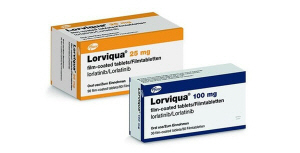
- Pfizer Three items, including Lorviqua (lorlatinib, Pfizer Korea), Tevimbra Inj 100 mg (tislelizumab, BeiGene Korea), and Pemazyre (pemigatinib, Handok), are currently under negotiations with the National Health Insurance Service. These drugs were deliberated by the Health Insurance Review and Assessment Service Drug Reimbursement Evaluation Committee (DREC) on January 9 and were deemed adequate for reimbursement. According to industry sources on the 17th, the National Health Insurance Service updated the website with information on drug price negotiations for 3 items. The National Health Insurance Service discloses information on the progress of negotiations for new drugs, drugs exempt from drug price negotiations, and drugs with expanded indications on its website. Upon the Ministry of Health and Welfare's negotiation order, the NHIS begins drug price negotiations with individual pharmaceutical companies. However, drugs for which the company has accepted the assessed amount to receive drug price negotiation exemptions will only be subject to negotiations on the expected claim amount. Among the 3 items currently under negotiations, Tevimbra and Pemazyre are expected to have entered into negotiations with the NHIS as expected, as they were recognized by the DREC as adequate for reimbursement without conditions. However, Lorviqua Tab, which is applying for the reimbursement extension as a first-line treatment for anaplastic lymphoma kinase (ALK)-positive metastatic non-small cell lung cancer, was judged by DREC to be “appropriate for reimbursement extensions if the company accepts a price less than the evaluated amount,” so NHIS negotiations for the drug was only possible after the pharmaceutical company accepted the condition. Pfizer is expected to accept the 'below the evaluation price' proposed by DREC and will again try to win the bid through negotiations with the National Health Insurance Service, as it did last year. Last year, the drug price negotiations broke down due to disagreements over the adjustment of the expenditure cap under the Expenditure Cap type of Risk Sharing Agreement (RSA). The Expenditure Cap type is a system in which the pharmaceutical company refunds the excess amount of the claim to the National Health Insurance Service if it exceeds the set total amount (cap). For this reason, in the case of Lorviqua, the profit earned by the pharmaceutical company also changes depending on how the total amount is set when expanding reimbursement. Pfizer has applied to terminate the RSA contract with NHIS and wants to expand the reimbursement without an expenditure cap. Therefore, it is expected that the termination of the RSA contract and the financial sharing plan will be the key to reaching an agreement during negotiations. Meanwhile, Tevimbra is a treatment for esophageal squamous cell carcinoma from the Chinese pharmaceutical company BeiGene Korea, and Pemazyre, which is imported by Handok, is a treatment for FGFR2 fusion or rearrangement cholangiocarcinoma. If these products reach an agreement with the NHIS, they will be added to the drug reimbursement list after reporting to the Ministry of Health and Welfare's Health Insurance Policy Review Committee.
- Company
- Samsung Bioepis’s Prolia and Xgeva biosimilars approved
- by Chon, Seung-Hyun Feb 18, 2025 05:53am
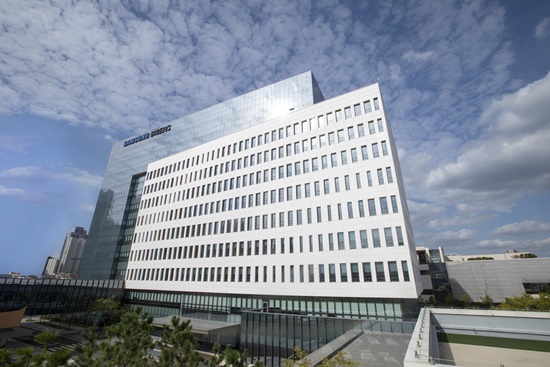
- Pic of Samsung Bioepis Headquarters Samsung Bioepis' two bone disease treatment biosimilars have passed the US and European hurdles. Samsung Bioepis announced on the 16th that it has obtained marketing authorizations for its two biosimilar versions of Prolia and Xgeva, which are bone disease treatments, from the US Food and Drug Administration (FDA) and the European Commission (EC). Prolia and Xgiva are biopharmaceuticals developed by Amgen, and the two were developed by varying the dose and dosage cycle of the main ingredient, denosumab. Prolia is used as a treatment for osteoporosis, and Xgeva is approved for the prevention of skeletal system symptoms in patients with bone metastases and the treatment of giant cell tumors of bone. Last year, global sales of Prolia and Xgeva reached a total of USD 6.599 billion (KRW 9.7 trillion). Samsung Bioepis obtained separate marketing authorizations for each indication, just like the original drug. The Prolia biosimilar was licensed under the brand name Ospomyv in the US and Obodence in Europe. The Xgeva biosimilar was licensed under the name Xbryk in both the US and Europe. Samsung Bioepis has successfully commercialized 10 biosimilar products in the United States and 11 in Europe. A Samsung Bioepis official said, “We will continue to work to meet the unmet medical needs of patients around the world through the development of biosimilars in various disease areas.”
- Company
- Celltrion gains EU approval for Eylea biosimilar Eyedenzelt
- by Chon, Seung-Hyun Feb 17, 2025 05:53am
- On February 14, Celltrion announced that it had secured the marketing authorization for the Eylea biosimilar Eyedenzelt from the European Commission. Two months after receiving the recommendation for marketing authorization from the European Medicines Agency (EMA)'s Committee for Medicinal Products for Human Use (CHMP) in December, the drug was granted the final approval. Eyedenzelt is approved for the original drug's major indications to treat wet (neovascular) age-related macular degeneration (wAMD), retinal vein occlusion, diabetic macular edema (DME), and myopic choroidal neovascularization. In 2023, Eylea recorded sales of approximately KRW 13 trillion globally. Celltrion confirmed the equivalence of Eyedenzelt compared to the original drug based on the global phase 3 trials involving 348 patients with DME. Celltrion obtained approval from the Ministry of Food and Drug Safety (MFDS) in May and is currently working on the sales. In December, Celltrion received a recommendation from the EMA's CHMP for European marketing authorization of biosimilars, including Eyedenzelt, Actemra, Prolia, and Xgeva. Celltrion plans to expand its biosimilar portfolio to bone diseases and eye diseases, in addition to previously established autoimmune diseases and anticancer agents, through the approval of biosimilars, including Eyedenzelt. "Given the marketing authorization of Eyedenzelt, we can now expand product portfolio areas in the European market and speed up the launch in the global market," a Celltrion representative said. "As we expect to secure more approvals through the marketing authorization recommendation for biosimilars, Celltrion will strive to quickly launch the products and strengthen strategies to gain market dominance."
