
- LOGIN
- MemberShip
- 2026-05-21 02:27:34
- Policy
- “Less on chronic drug, but more on innovative drug”
- by Lee, Jeong-Hwan Nov 10, 2019 09:59pm
- Principal Boo Ji-hong Claims have been made that the government drug expenditure model should be fundamentally reformed, instead of adopting new drug-centered drug pricing policy, to simultaneously better Korean patient's access to new and breakthrough treatments, and to secure financial health of National Health Insurance (NHI). The criticism is that the government should face the reality of excessive use of digestive medicine, antacid, and antibiotics and other chronic drug, and rather limit the frequent use of those mild condition and chronic disease drug to redirect the saved expense on enhancing access to new drug and healthcare coverage. On Nov. 7, a principal of IQVIA Korea, Boo Ji-hong spoke at a policy seminar regarding the social value of new drug and NHI financial management. Principal Boo gave a presentation on sustainability of NHI and advancement of pharmaceutical expenditure model. The principal explained Korean government’s pharmaceutical coverage enhancement plan for unmet needs of severe and rare disease treatment is established based on moderately controlled drug expenditure. Boo also reproached, although the government’s NHI coverage enhancement initiative has improved access to innovative drug and rare disease treatments than before, coverage on specialty drug, such as anticancer and AIDS-like infectious condition treatment, is still fairly low. Specifically, Principal Boo sees that need for innovative drug access is clearly unmet, when comparing Korea and developed countries’ pharmaceutical expenditure models and the ratio of new drug expenditure. He also explained comparatively low medical expenditure in Korea has affected the country’s perception that local drug expenditure is higher than that of other developed countries. As a result, Principal Boo argued, the government can catch two birds, new drug access enhancement and NHI financial health, when it drastically reforms and advances pharmaceutical expenditure structure. He advised the government’s unconditional reduction of drug pricing would basically threaten patient’s access to treatment. Instead, it should lessen excessive use of chronic and mild condition treatments, and reuse it as resource to cover severe disease treatment and orphan drugs. Moreover, the principal stated NHI expenditure would be raised only by 0.6 percent at highest with financial impact of healthcare coverage expansion on new drug, including coverage on non-reimbursed drug, and approving and listing not-yet launched drug in Korea and investigational drug. “Volume of digestive medicine, antacid and antibiotics frequently used in Korea doubles the volume in other advanced countries, which is why the government should consider limiting the volume. Also, efficiency of insurance income allocation could be improved by studying overseas cases of innovative payment system, drug usage volume control, and public-private collaborated management of chronic disease patient”, said Principal Boo. He also stressed, “To enhance NHI coverage on patient-centered breakthrough innovative drug, expenditure structure should get further upgraded and incentive should be granted for the recognized value of an innovation. The effect of price-centered new drug expenditure management policy would be mediocre. But so the government should consider moderately controlling drug usage volume and amending expenditure structure”.

- Company
- Generic to pay for original’s lowered pricing loss?
- by Kim, Jin-Gu Nov 08, 2019 08:55am
- To this date, a boundary of patent infringement damage against generic was up to ‘sales profit of generic’. But now a lawsuit claims the damages should include ‘loss made from original’s price reduction’ due to generics’ launch. Related court case is currently waiting for the Supreme Court’s final decision. Lilly Korea and two Korean companies, Hanmi Pharmaceutical (“Hanmi”) and Myung In Pharm (“Myung In”), are tangled in a decade-long fierce dispute over patent covering Xyprexa (olazapine). Initially, Xyprexa’s patent was supposed to expire on Apr. 24 of 2011, but Hanmi and Myung In challenged the patent. Both ‘Intellectual Property Trial and Appeal Board’ and Patent Court ruled in favor of the Korean companies stating that the original’s patented invention lacks creativity. Based on the ruling, Hanmi and Myung In launched their generics in early 2011, a few months earlier than the challenged patent’s expiration date. At the same time, Xyprexa’s price was lowered by the government. Patent case gets a twist, litigation for damages immediately followed But, things got complicated as the Supreme Court overruled the previous decision stating the patent is still valid. The patentee, Eli Lilly, filed litigation for damages against the two Korean companies’ patent infringement. As a result, Hanmi and Myung In paid Lilly all sales profit made from the generic as damages. Typically, a patent infringement case concludes there. But Lilly did not stop and filed another case claiming the two companies should also pay for Lilly’s loss caused by the original’s price reduction. Lilly insisted Hanmi and Myung In’s early generic release had the original’s price to drop and hence, the loss from the price reduction should be compensated. Contrasting second trial, Supreme Court to make final decision in December at earliest The court gave a nod to some of Lilly’s claim at the first trial against each of the two Korean companies. But the second trial was ruled quite the opposite. The Seoul High Court dismissed Lilly’s claim on the case against Hanmi. Infringement of patent was recognized, but the court rejected damage claim on loss by drug price reduction. On the other hand, the Patent Court agreed with Lilly’s case against Myung In. The decision ordered Myung In to pay damages even for Lilly Korea’s loss generated by the original’s price drop. The court stated “The generic’s drug price listing application has directly affected government’s decision. And it brought Xyprexa’s price down to 80% of the original price”. The two contrasting decisions have been sent to the Supreme Court. Experts predict the court would make a decision by the end of the year. “The Supreme Court is reviewing legal principle and the issue comprehensively. The court decision would be out before next year,” a legal expert commented. More burden on early generic release if Lilly wins Actually, the damage amount alone for the two Korean companies was not that much. For instance, Myung In was ordered to pay damage of KRW 98.07 million from the first and second trials. The total sales were low to begin with, as the launch was only a few months ahead of the patent expiration. However, pharmaceutical industry’s patent experts view the decision on the litigation would significantly affect the industry. The court ruling in favor of Lilly would heavily influence early release of generics in the future. If patent infringement damages are to consist of generic sales profit and loss by the original’s price reduction, the damage amount could sum up astronomically and detrimentally depending on the generics’ release date. The Supreme Court’s final decision is soon to be made. As a matter of fact, Korean judiciary has never made a precedent ordering a generic manufacturer to pay for the original’s loss by price reduction. Now the public waits to see whether or not an exceptional decision would be made.
- Opinion
- [Eyes of a Reporter] Are you a ‘good company?’
- by An, Kyung-Jin Nov 08, 2019 08:45am
- Every year around this time, one book hikes up the best seller ranking at book stores. The book, ‘Trend Korea Series’ by Professor Kim Nando of Seoul National University, summarizes next year’s trend in Korea with a list of keywords. ‘Trend Korea 2020’ had a top ten consumer trend keyword list including ‘fair play’. The book explains how the notion of ‘good company’ has gotten popular among consumers over the years, therefore, ‘fair competitiveness’ would become a more vital factor affecting consumer’s choice. At a recent special lecture session, Professor Kim claimed “Growing up in a society where individuality is prevalent, Millennials wants to change their society with a small effort. Even when buying a product, they put value not only in the product itself, but also in the brand’s good influence towards the society”. With his theory, he further explained the lately popular boycott movement against problematic brand is not just a simple aggression, but an expression of desire to be fair and correct. During the lecture, I suddenly thought of a question. Which pharmaceutical company is actually a ‘good company?’ In Korean society, pharmaceutical companies have a relatively positive public image. The society appreciates how the companies provide needed drugs to patients and contribute in saving lives. How wonderful is it that their income made from drug sales is reinvested toward new drug R&D, and also on corporate social responsibility (CSR) activities. However, some companies have disappointed Koreans and crippled their trust in the industry in recent years. Last year March, a French pharmaceutical company announced it would suspend supplying a contrast agent used for liver cancer treatment due to low pricing in Korea. As a response, the Korean society got infuriated. A British multinational healthcare company has been the infamous company for a while as the one responsible for making humidifier disinfectant with severe health hazard. After developing an anticancer treatment significantly extending patient’s overall survival period, a large-scale pharmaceutical company experienced painful clash and dispute with patient groups as the company insisted on drug pricing at around few million won per month. Global companies are not alone on this topic. Prosecutors are still investigating a Korean bio company accused of manipulating ingredient report on its osteoarthritis gene therapy. An allegation of another Korean company, despite its title of ‘good company’ earned from the society, providing illegal rebate to healthcare provider for prescribing their products turned out to be true and the their executives were sentenced with jail term. Also there are many companies regularly making negative postings at vulnerable time for investors fearing it would affect stock price. In this capitalistic society, reproaching pharmaceutical companies for their profit-making decisions could be too harsh. Supplying needed drug or CSR activities can only be possible, when a company is sustainable. But, shouldn’t the executives of pharmaceutical companies feel more responsible about the society’s higher expectation of business ethics on health related companies? We can only hope that those pharmaceutical companies would repent their wrong choices and stand tall again as a ‘good company’, keeping their initial objective of ‘contributing to public health’ in mind.

- Company
- Carcinogen impact halves Zantac global sales
- by An, Kyung-Jin Nov 07, 2019 08:55am
- Suspected sales damage due to impurity found ranitidine came true for global pharmaceutical company Sanofi-Aventis’ Zantac. On Oct. 31, Sanofi reported global net sales of the company’s third-quarter 2019 rose by 1.1 percent over a year to EUR 9.5 billion (about 12.4 trillion won). Mainly driven by new atopic dermatitis treatment Dupixent, Sanofy Genzyme’s sales were up by 19.5 percent than last year same quarter, but Consumer Healthcare (CHC) sales contrasted drastically as it only grew about 0.4 percent. The company reported CHC global sales in the third quarter marked 1,136 million euro (about 147 billion won). Zantac is an original ranitidine medicine developed by GSK and is sold by Sanofi in the U.S. Canada and some other countries. Sanofi used to make Zantac sales of about 130 million euro sales annually. In each quarter the OTC drug used to make over 30 million euro, but this third quarter it only made about 14 million euro (about 18.1 billion won) with 58 percent drop from a year ago. The figure reflects Sanofi’s decision to voluntarily recall the products in the U.S. and Canada from last month. Sanofi Consumer Healthcare and Zantac’s global sales trend (Unit: € 1 million) Source: Sanofi On October 18, Sanofi officially made a statement about voluntary recall on Zantac OTC in the U.S. and Canada. The decision was made 37 days after the U.S. Food and Drug Administration (FDA) disclosed possibility of ranitidine medicine contaminated with N-nitrosodimethylamine (NDMA) carcinogen. Reportedly, Sanofi’s decision was mainly affected by ‘inconsistencies’ in preliminary test results of the API used in the U.S. and Canada products. However, the recall is limited to the two countries only as the API supplier varies in different regions. At the moment, recall on ranitidine medicine prescribed to Zollinger-Ellison syndrome patients in Columbia, Honduras, Guatemala, Ecuador and other Latin American countries is ongoing. Sanofi Chief Executive Officer, Paul Hudson, joining the conference call commented “As FDA raised concern over the safety of ranitidine medicine, Sanofi has decided to conduct precautionary voluntary recall on Zantac in the U.S. and Canada. Despite the negative issue in last quarter, CHC has maintained relatively stable sales”.

- Policy
- Law firms shakes hands with 8 government officials this year
- by Lee, Hye-Kyung Nov 07, 2019 08:55am
- Large-scale law firms in Korea are adding more and more former government officials affiliated with National Health Insurance (NHI) to their roster. A former Executive Director of Planning at Health Insurance Review and Assessment Service (HIRA), Hwang Eui-dong, 61, was recently welcomed by law firm ‘LK Partners’ as an advisor. Lately, LK Partners formed a pharmaceutical affairs team to handle diverse law suit related to pharmaceutical rebate case and medical, pharmaceutical and medical device industries. Attorney Kim Hyeong Seok, formerly a director of Food and Drug Inspection Division at Supreme Prosecutors’ Office, was added to the pharmaceutical affairs team at LK Partners, where Hwang was also agreed to join as an advisor. The team also shook hands with Attorney Jung Dawoon, a former director of Administrative Law Division at HIRA. Advisor Hwang majored in law at Sungkyungkwan University, and joined National Medical Insurance Corporation, now National Health Insurance Service (NHIS), in 1986. He served as chief of ICT Division, director of Daegu District Office, director of Automobile Insurance Review Center, director of Medical Information Analysis Division and retired after serving as executive director of planning. After his retirement at HRIA, Advisor Hwang was appointed as a chief of Policy Development Division at Korea Institute for Healthcare Accreditation (KOIHA), but decided to join LK Partners recently. Law firms’ demand and interest on medical, medical device and pharmaceutical and bio industries have been constantly expressed. And it finally exploded as major law firms ‘Kim & Chang’ and ‘Lee & Ko’ started revving up the NHI-associated government official recruitment market from last year. Just in this year alone, eight former government officials have been scouted by law firms, including former chief at HIRA Kang Kyung-soo; former vice-minister of Health and Welfare Choi Won-young; former Regional Office Director at National Health Insurance Service Cho Yoo-hyun; former executive director at HIRA Hwang Eui-dong; former director at HIRA Jung Dawoon; and former director at Ministry of Health and Welfare Ryu Yang-Ji. Large-scale law firms are appointing government officials for titles like advisor, senior consultant and consultants, which previously were taken by industry and drug pricing experts. Other law firms are also quick to follow and open healthcare or medical and pharmaceutical specific teams. At first, Kim & Chang welcomed Lee Byung-il, a former chief of Pharmaceutical Management Department at HIRA, as an advisor in May, 2018, and continued on to scout Ko Su Kyoung, formerly associated with HIRA, NHIS and multinational pharmaceutical company, as an expert consultant. Kim & Chang’s rivaling law firm, Lee & Ko organized Healthcare team consisting of former Minister of Health and Welfare Rim Chemin, former vice-minister of Health and Welfare Sohn Gunn Yik, and former director general at Ministry of Food and Drug Safety Han Young Sup. Their last addition was Kang Kyung Su, a former chief at HIRA, in last February. The firm is also strengthening their healthcare expertise with senior consultant Byun Youngshik, a former senior director at AstraZeneca Korea, and Advisor Kim Sungju, a former executive director at Novartis Korea. Law firms like ‘HMP Law’, ‘Yulchon’ and LK Partners have been busy this year lining up pharmaceutical expert teams with health sector experts. In last March, HMP Law organized Healthcare team for the first time since the firm was founded. The team invited former vice-minister of Health and Welfare Choi Won-young as an advisor and former chief of Legal Affairs Support Team at HIRA Byen Chang-suk as a chief of the team. Moreover, Park Young Hwa, formerly a medical case judge at Incheon Regional District Court, joined HMP Law as a Managing Partner, whereas Cho Woo-hyun, a former director of NHIS Seoul and Incheon District Office, and Lee Chung-gu, a former director of Administration Department at Hallym University Hospital, joined the firm as advisors. Yulchon has had a full-fledged Healthcare and Pharmaceuticals team with Choi Hee Joo, a former chief at MOHW, Kim Sung Jin, a former director at MFDS, and Choi Cheol Su, and a former chief at HIRA. But its roster recently made an addition, a former director at MOHW now a senior advisor Ryu Yang Ji, to boost the firm’s strength. These law firms assertively seeking out for healthcare related government officials could mean that the need for legal consulting and lawsuit is growing fast in related industries, specifically regarding pharmaceutical and medical device insurance reimbursement listing and application, various administrative penalty, medical dispute and government policy.
- Company
- Scouting fresh face for CEO at merged BMS and Celgene
- by Eo, Yun-Ho Nov 07, 2019 08:54am
- Merged Korean branch of Korea Bristol-Myers Squibb (BMS) and Celgene has now high probability of bringing in a new chief executive officer from outside of the company. According to pharmaceutical industry, BMS and Celgene headquarters have agreed on scouting a CEO openly for the merged Korean office scheduled to open before next year. Reportedly, many of current and former pharmaceutical company CEOs in Korea have applied for the job, including the current 47-year-old Celgene Korea CEO Ham Taejin. The company associates views that the headquarters’ decision to make it a public recruitment could mean they are contemplating on hiring personnel currently unassociated with the company. Including the headquarter office, BMS and Celgene are in process of appointing CEOs for major regional offshoots. And merged regional corporations with new CEO are undergoing overall reorganizations. The Korean branch has appointed a new head for Regulatory Affair department, and other departments including Market Access, Government Affair and Public Relation are also expect some changes. More than anything, the company insiders confirmed the two companies have reached a fair agreement to reorganize the corporation regardless of who is acquiring whom. In last January, BMS announced acquisition of Celgene with a value of about USD 74 billion (about 86.4 trillion won). BMS was said to acquire Celgene in cash and stock equity, and pending merger is still ongoing after closing the agreement. Sources confirm, BMS and Celgene have mutually agreed to hire a new CEO for the merged corporation. Besides the CEO scouting, the two companies are working on reorganization of the merged company.

- Policy
- MFDS nizatidine investigation expands to drug products
- by Lee, Tak-Sun Nov 07, 2019 08:54am
- Signs of Ministry of Food and Drug Safety (MFDS) expanding investigation on nizatidine medicine have been spotted. Sources have reported the ministry is now collecting complete drug product samples for further investigation after collecting active pharmaceutical ingredient (API). Pharmaceutical industry is concerned over the ministry’s deepening investigation as it could mean the regulator’s administrative action is imminent. According the industry on Nov. 5, MFDS collected nizatidine products stocked at pharmaceutical companies on Nov. 4. After collecting API samples last week, the ministry is pushing boundary of investigation to confirm possible carcinogen contamination of complete product. API samples, manufactured from five years ago to date, were taken, and now drug products manufactured since 2018 were also sent to MFDS. The industry says API impurity analysis would take about two to three days, and product analysis would take about three to four days. Accordingly, MFDS would take some time to decide on next move based on the test result. But the industry believes MFDS has probably already found NDMA in a sample of nizatidine API at an exceeding level. “Standard level of NDMA in nizatidine is 0.32ppm. Highly likely that MFDS decided to collect more samples because it found a sample surpassing the standard level. As the ministry even collected API manufactured five years ago, it could be contemplating on the possibility of contamination in storage,” an industry associate commented. Apparently, many of manufacturing plants have already suspended production of nizatidine, while companies stopped marketing for the drug as well. Some reported a company dropped its drug approval application. In such turmoil, the industry predicts MFDS to take an action on nizatidine medicine next week at latest.
- Company
- Kisqali gets a nod from MFDS joining Ibrance and Verzenio
- by Eo, Yun-Ho Nov 06, 2019 09:00am
- Following the footsteps of Ibrance and Verzenio, a third CDK4/6 inhibitor announced its launch in Korean market. On Oct. 30, Novartis officially released news that Kisqali (ribociclib) has been approved by Ministry of Food and Drug Safety (MFDS) as a treatment of postmenopausal women with hormone-receptor positive, human epidermal growth factor receptor-2 negative (HR+/HER2-) locally advanced or metastatic breast cancer. Ongoing competition between Ibrance and Verzenio, currently in insurance reimbursement review process as a combination therapy with Faslodex (fulvestrant), is to intensified even more. Kisqali was approved by the regulator as it demonstrated a meaningful improvement of prolonging progression free survival (PFS) from its clinical trial. Phase 3 MONALEESA-7 clinical trial evaluated Kisqali combined with endocrine therapy (either an aromatase inhibitor or ovarian function suppression) as first-line treatment for pre and perimenopausal women with HR+/HER2- advanced or metastatic breast cancer and proved the drug’s effect on significantly extending patient’s overall survival (OS). Professor Im Seock-Ah of Hemato Oncology Department at Seoul National University Hospital explained, “MONALEESA-7 study was mainly proposed and led by an Asian researcher, and had 30 percent of Asian patients as registered sample. This finding reflects how Asian region has a great need for a new treatment on premenopausal women with breast cancer”. In the Phase 3 MONALEESA-3, Kisqali proved to extend OS and demonstrated improved treatment efficacy when used as initial endocrine-based therapy in combination with fulvestrant for postmenopausal women with HR+/HER2- locally advanced or metastatic breast cancer in combination than using the existing endocrine-based therapy alone. The recommended dose of Kisqali is taking 600mg (three 200mg tablets) orally, once daily for 21 consecutive days followed by seven days off treatment. The treatment could be taken with or without food but at set time of the day. Meanwhile, Ibrance and Verzenio are waiting for deliberation by Drug Reimbursement Evaluation Committee (DREC) after Cancer Disease Deliberation Committee of Health Insurance Review and Assessment Service (HIRA) has passed both. Reimbursement review process of the both treatments started from same point of origin, cyclin-dependent kinase (CDK) 4 and 6. But their regulator review approaches are different. In November of 2017, Ibrance has already been listed as a first-line therapy (combination with Letrozole) via refund type risk sharing agreement (RSA). And now it is in process of expanding the reimbursed indication. Verzenio, on the other hand, is applying for reimbursement listing for the first time. The treatment has simultaneously applied for reimbursement not only as a second-line therapy, but also as a first-line therapy in combination with aromatase inhibitor. But under its current circumstances, Verzenio’s only option is RSA. Unfortunately, a follow-on drug is not yet eligible for RSA, so Lilly would likely to push on with the second-line therapy indication without any other drug available. Kisqali would also likely to take the same track.
- Company
- Korean companies competing for GSK’s OTC Drugs
- by Jung, Hye-Jin Nov 06, 2019 09:00am
- A pharmaceutical industry insider reported on Nov. 1 that three Korean pharmaceutical companies are competing against each other to acquire sales rights of ten popular over-the-counter (OTC) drugs manufactured by GlaxoSmithKline (GSK). The multinational drug manufacturer said it would soon decide on a partner company. In 2017, GSK signed a supply contract with Dong-wha Pharm for co-promotion and sales rights on ten OTC drugs including Lamisil, Otrivin, Voltaren, Nicotinell, Theraflu, Sensodyne, Breathe Right, Zantac, Polident and Driclor. The two companies’ contract was supposed to last until 2020, but as GSK and Pfizer Consumer Healthcare merged and established a new joint venture, the old contract is said to be terminated. Dong-wha Pharm recently announced that its OTC supply contract with GSK would be terminated on coming Dec. 31. As a result, GSK has been contacting several Korean pharmaceutical companies for a new partnership. Reportedly, GSK is in talks with three companies, including a well-known pharmaceutical company with strong pharmacy sales power along with a famous OTC drug. The pharmaceutical companies are proposing differentiated service fee rates based on sales performance and return policy to win the hearts of GSK for the sales right deal. As the multinational company’s OTC drugs are making about 60 billion won annually, a Korean company winning the deal would secure a stable cash cow. Sources report GSK is closely reviewing respective companies’ sales network, specifically their pharmacy sales power. Sales for OTC drugs are highly dependent on pharmacy sales power due to its nature. Some had predicted Dong-wha Pharm would terminate the contract by the end of the year and renew the contract from next year. But apparently the company is not included among the three candidate companies. However, some experts evaluate the ten popular OTC drugs would generate notable amount of sales, but it could be an unappealing deal to a distributor because of their low marketing margin. At the moment, Dong-wha Pharm is recalling Zantac with ranitidine and other nine items. A GSK official explained “For a new partner company to initiate distribution from January next year, the contract has to be signed before the end of the year. Insiders say the talks are wrapping up. The decision would be made very soon”.
- InterView
- 50-year-old Pfizer Korea “For both patients and innovation"
- by Eo, Yun-Ho Nov 06, 2019 08:59am
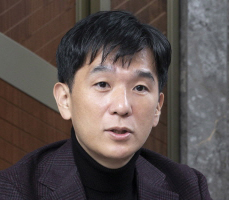
- CEO Oh Dong-wook Half a century in Korean pharmaceutical industry, Pfizer Korea seems to have mastered ‘how to win’ in the Korean market. Pfizer took its first step into the Korean market as a joint corporation with Joongang Pharmaceutical in 1962 and founded Pfizer Korea in 1969. Except for a couple of times, Pfizer Korea’s sales have been the top among global pharmaceutical companies in Korea. Last year, the company had the highest sales so far of 734.4 billion won, a level no global company has ever reached. The key to its driving force is in ‘evolution’. The company has sought after ‘cash cow drugs’ by acquiring numerous companies like Warner-Lambert Company, Wyeth, Pharmacia, and Hospira, and also undergone various organizational reform like the recent split-up with Upjohn. Through series of changes, Pfizer and Pfizer Korea have achieved successful ‘survival’ and ‘development’ every single time. But, not all good drugs can make a success. If it were not for Pfizer’s solid foundation, its profitable drugs would not have made it. Celebrating the 50th anniversary of Pfizer Korea, CEO Oh Dong-wook (50) of Pfizer Korea spoke of the company’s history and the future. - Half a century in Korea, what have been the most important milestones for Pfizer Korea? I can say about three major achievements to note. First, Pfizer contribution on making patients live happier lives by providing outstanding new drugs. Second, Pfizer’s continuous effort to become a responsible corporate citizen of the community and to conduct long-running corporate social responsibility (CSR) activities. Many of CSR activities Pfizer Korea provide are over a decade old. Last but not least, the fact that Pfizer Korea has consistently contributed in creating a healthy pharmaceutical and bio environment along with various stakeholders to advance new drug development, health and society in Korea. Numerous clinical trials have been conducted in Korea so far, which we expect the gained experience and tips on developing innovative new drug with global company would come through eventually and immensely contribute to the future of new drug in Korea. -‘Drug’ has a unique quality as a commodity, which is why the sense of ethics is always under the limelight. But as a business, profit would have to be the main objective. What is Pfizer doing to balance out two polarizing values? Pfizer seeks for an ‘innovation that changes patient’s quality of life’. Not only Pfizer, but many of pharmaceutical companies used to maximize profit centering customer (healthcare provider) in the past. However, this day and age requires immensely high level and standard of ethics. And it makes a sense for stakeholders to have higher level of expectation on the industry than any other industry. In such strict environment, Pfizer would never seize to make every decision prioritizing and centering patients. -Reflecting patients’ voice is not that easy. A pharmaceutical company directly engaging with patients has its limitation, and a lot of times patients cannot have their way regardless. Despite availability of a great new drug, limited access (health insurance coverage) puts a gap between patient and the treatment. That is why patient advocacy groups usually voice out on drug approval review and National Health Insurance (NHI) listing policy-making processes. Medical industry has a quite unusual ecosystem, where a patient is an ultimate consumer, but an experienced and knowledgeable healthcare provider is making decisions on prescription. While a company supplies drug, consumer and National Health Insurance Service (NHIS) are paying for the drug. Even the ultimate consumer raises an issue, changes can only be made when experts’ judgment and reasonable decision making coincide. The decision making process has improved significantly compared to the past, but it still has a room to grow. As a leading company in pharmaceutical and bio sector, Pfizer plans to engage in various activities with various stakeholders in community, such as industry organization, healthcare providers’ group and patient advocacy group, to reflect patients’ voices on government policies. -As you mentioned, patients’ voices in Korean society is skewed on ‘NHI reimbursement’ and now their interest is growing on drug pricing for the same reason. The administration plans to reduce their expense on drug with expired patent and reuse the saved finance on introducing new drug to Korean market. After separating the organization into two and ‘Pfizer Upjohn’ solely dealing with expired patent, the said government’s plan could be a bad news. As a whole company, what do you think of the direction government policy is taking? Pfizer Korea has a say in making the best choice for patients, regarding what Pfizer Upjohn Korea and Pfizer Biopharmaceuticals Korea do in respective treatment sectors. My role is to represent general operation of the company when discussing with government body and other stakeholders, and respective branches are to make a reasonable decision for their own businesses. -Going back to Pfizer’s principle of ‘centering patient’, would it be safe to say Pfizer Upjohn would not oppose against Korean government when it reduces pricing of drug with expired patent? That is correct. As I said before, Pfizer’s aim is to supply as many new drugs as possible to patients and to bring changes to their lives. Regardless of patent expiration, we believe changing the lives of patients has enough meaningful merit. -But as the age of high-cost drug approaches, the gap between the government and pharmaceutical industry’s views on drug pricing is getting wider. I assume Pfizer Korea would experience discrepancies when negotiating with Korean government and persuading the headquarter office. Some are concerned about global pharmaceutical companies giving up on Korean market as more countries are referencing drug prices in Korea. Many have contributed for patients to benefit from Pfizer’s innovative new drug, but our companies’ staffs had poured in vast amount of work into it as well. We do our best to promptly introduce new drug to Korean market. And in the process, the company tries to find the middle ground between negotiating with Korean government and convincing headquarter as soon as feasible. One could simply think, lowering drug price would be the answer for putting patients first. Or in an extreme sense, providing drugs for free would be the answer if we were to truly think of patients. But, in the end, we are a company, and a company has to be sustainable. We are always faced with discrepancy between insured drug pricing and headquarter-approved drug pricing. Obviously, we are working hard to make Korean patients to receive benefit as soon as possible, and that is that is the direction we taking. While Chinese market is growing rapidly, many markets around the globe, including Taiwan, Thailand, Saudi Arabia and China have started to reference drug price in Korea. The U.S. also announced it would reference price in Korea as well. As for the headquarter office, making deficit after investing astronomical amount in R&D for new drug and receiving inadequately low pricing would be a devastating result. It would ultimately hinder any company from investing in future pipeline. This is why we need an appropriate pricing. -Let us now focus more on Pfizer. Upjohn was split from the recent reorganization. What is it like to manage the company in the new state? To enhance efficiency of Global Pfizer’s organizational structure, Pfizer Korea separated itself into two; Pfizer Biopharmaceuticals Korea focusing on new drug development and innovative drug, and Pfizer Upjohn Korea providing drug with expired patent and generic. We expect the two corporate bodies to mutually strengthen potential growth in respective fields. Based on a variety of drug pipelines and treatments each business sector owns, Pfizer aims to improve patient’s quality of life by providing treatment timely to many more patients. The approaches we would take are still in talks, but staffs’ role and responsibilities would be unchanged. -When a drug owned by Pfizer Biopharmaceuticals has its patent expired, then is it transferred to Pfizer Upjohn? No, it wouldn’t be. Drugs are categorized by disease group. -It feels like in the future, Pfizer Biopharmaceuticals and Pfizer Upjohn would be completely split up and would become completely different two entities. For now, management direction or timing has not been specifically discussed, yet. Until everything is set, both bodies would be managed under the name of Pfizer Korea. -How is the current status of the consumer healthcare (OTC) sector joint venture with GSK? As far as Global Pfizer goes, it officially announced closing of joint venture with GSK, as of Aug. 1. And accordingly, Pfizer’s consumer health sector was transferred to the new joint venture. However, each region would have different timing as to when the joint venture would take over the management. In case of Korea, the closing is delayed as the company has to complete the necessary approval process and end some ongoing operations. When the deal is finally closed, Pfizer’s staffs would undergo some organizational changes and those would be notified after everything is set in stone. -How would you define the last 50 years and the next 50 years of Pfizer Korea? Looking back at past 50 years, the company went through absence of well-established healthcare and corporate environment when it was first founded in 1969. Back then, Separation of Prescription and Dispensing (SPD), or proper medical and pharmaceutical regulations were not stipulated. But now, we feel quite proud of how Pfizer Korea contributed in building the current healthcare environment alongside many stakeholders by placing a brick at a time. In the end, we think Pfizer contributed in bringing meaningful changes to local communities and patients suffering from disease. But it also means Pfizer Korea still has a long way to go, although it made proud achievements under the corporate objective and goal. As a responsible corporate citizen and leading pharmaceutical company, Pfizer Korea would continue to keep its leadership among patients and in local community.
