
- LOGIN
- MemberShip
- 2026-05-11 17:34:32
- Company
- GM Lee Seung-woo to leave Gilead Sciences Korea
- by Eo, Yun-Ho Jan 16, 2023 06:02am
- General Manager Paul Seung-woo Lee Paul Seung-woo Lee (65), who has served as the General Manager of Gilead Sciences Korea and led the company since its establishment, will be leaving the company. According to industry sources, Lee has recently expressed his intent to resign upon the expiry of his term to the company. Accordingly, Gilead is currently in the process of hiring Lee’s successor. Lee is known to have decided to retire with his resignation. Lee is regarded as a symbolic figure as CEO of multinational pharmaceutical companies in Korea’s pharmaceutical industry. After graduating from the University of Alberta and receiving an MBA from Columbia Business School, Lee worked at Johnson & Johnson and Korea Research-based Pharma Industry Association. In 1996, after being appointed as Managing Director of MSD Korea, Lee served as CEO of Korean subsidiaries of various multinational companies including AstraZeneca and Wyeth (currently Pfizer). In 2011, Lee was appointed the founding head of Gilead’s Korean subsidiary and has held the position ever since. In other words, Lee has served as CEO of multinational companies for over 25 years. Considerable changes are expected in the organization as other founding members of the company including Senior Director Yeonsim Jeong are expected to retire soon in addition to GM Lee. Also, a fierce competition is expected in the hiring of CEO Lee’s replacement as a large number of applicants applied for the position. Also, the company is also currently in the process of hiring other executive-level personnel for MA, marketing, etc.
- Company
- Bosulif approved in Korea 11 years after US approval
- by Jan 16, 2023 06:02am
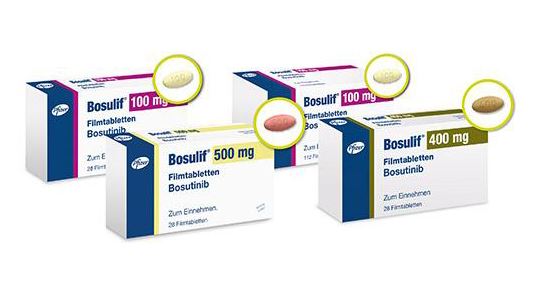
- Bosulif(bosutinib.(Pic=Pfizer)The Ministry of Food and Drug Safety approved the new drug for chronic phase Philadelphia chromosome-positive chronic myelogenous leukemia (Ph+ CML), ‘Bosulif (bosutinib)’ in Korea. The drug was first approved in the US in 2012. With the approval, the treatment options for Ph+CML increased to 6, excluding the first-generation drug. According to industry sources on the 14th, the MFDS approved 3 dosages (100·400·500mg) of Pfizer Korea’s new drug for Ph+ CML Bosulif on the 12th. The drug is now indicated for the treatment of newly diagnosed chronic Ph+ CML or chronic, accelerated, or blast-phase Ph+ CML with resistance or intolerance to prior therapy. Bosulif is a second-generation treatment that is taken orally once daily. Bosulif was first approved by the US Food and Drug Administration (FDA) in 2012 for the treatment of Ph+ CML with resistance to prior therapy. Its indication as a first-line treatment for newly diagnosed Ph+ CML has been additionally approved in the US in 2017, and in 2018 in Europe. The drug was finally approved in Korea 11 years after it was first approved by the FDA. A Pfizer Korea official said, “We received approval for Bosulif in Korea this year based upon our strategic judgment of the domestic CML treatment market.” Chronic myeloid leukemia including PH+ CML is a malignant hematologic disease that occurs when the bone marrow produces white blood cells. CML is a very slow, chronically progressing blood cancer, and over 90% of patients with CML are found with a characteristic gene abnormality in the Philadelphia (Ph) chromosome, which causes an increase in white blood cells and platelets. The Ph chromosome forms when chromosome 9 and chromosome 22 break and exchange portions, and the byproduct that appears in the process can grow cancer cells. Bosulif’s safety and efficacy were verified through a Phase III trial (NCT02130557) on the drug’s use as a first-line therapy that was conducted on patients with newly-diagnosed Ph+ CML. The major efficacy outcome measure was major molecular response (MMR) at 12 months. Results showed that MMR at 12 months was 47% in the Bosulif arm and 36% in the Glivec (imatinib) arm. MMR at 60 months was 74% in the Bosulif arm and 66% in the Glivec arm. The median time to MMR in respondents after 60 weeks of follow-up was 9.0 months in the Bosulif arm and 11.9 months in the Glivec arm. The indication for chronic, accelerated, or blast phase Ph+ CML with resistance or intolerance to prior therapy was obtained based on Phase I/II trial (NCT00261846), which evaluated the efficacy and safety of the once-daily administration of the 500mg dose of Bosulif. Its major efficacy endpoints included the rate of attaining major cytogenetic response (MCyR) by Week 24 and the duration of MCyR. 40% of patients that had previously received Glivec monotherapy reached MCyR by Week 24. The most common adverse reactions in the 814 patients that participated in the two trials were diarrhea (80%), rash (44%), nausea (44%), abdominal pain (43%), vomiting (33%), fatigue (33%), hepatic dysfunction (33%), respiratory tract infection (25%), pyrexia (24%), and headache (21%). 22% of the 268 patients that were newly diagnosed with Ph+ CML showed serious adverse reactions. Serious adverse reactions reported in >2% of patients included hepatic dysfunction (4%), pneumonia (3%), coronary artery disease (3%), and gastroenteritis (2%). In Korea, first to fourth-generation drugs are available for the treatment of Ph+ CML. Bosulif is a second-generation drug. The first-generation treatment is Novartis Korea’s Glivec, and generic versions of the drug have been released upon its patent expiry. The second-generation treatments include Novartis Korea’s ‘Tasigna (nilotinib),’ BMS Korea’s ‘Sprycel (dasatinib),’ Il-Yang Pharmaceutical’s ‘Supect Capsule (radotinib),’ etc. Otsuka Pharmaceutical Korea’s Iclusig (ponatinib)’ is a third generation treatment. As a fourth-generation treatment, there is Novartis Korea’s Scemblix (asciminib). Scemblix was approved in June last year as a treatment for adult patients with Ph+ CML in the chronic phase previously treated with two or more tyrosine kinase inhibitors (TKIs), However, the drug has not yet been applied for reimbursement in Korea.
- Company
- RET-targeted Retevmo lands in general hospitals in KOR
- by Eo, Yun-Ho Jan 13, 2023 06:02am
- The RET-targeted anticancer therapy ‘Retevmo’ may now be prescribed at general hospitals in Korea. According to industry sources, Lilly Korea’s, Lilly Korea’s Retevmo (selpercatinib) passed the drug committees of tertiary hospitals in Korea including the Samsung Medical Center, Seoul National University Hospital, and Seoul St. Mary’s Hospital. Some hospitals were found to have set local drug codes after holding emergency Drug Committee meetings. Therefore, if Retevmo is listed for reimbursement, the listing is expected to quickly lead to actual prescriptions. Retevmo, which received marketing authorization in March last year, was unable to pass CDDC review for reimbursement in May, but then passed review in November and is awaiting deliberation by the Drug Reimbursement Evaluation Committee. Retevmo is indicated for: ▲adult patients with metastatic RET fusion-positive non-small cell lung cancer (NSCLC); ▲adults and pediatric patients 12 years of age or older with advanced or metastatic RET-mutated medullary thyroid cancer who require systemic therapy; and ▲ adult patients who are refractory to radioactive iodine therapy and who have prior sorafenib and/or lenvatinib treatment, with advanced or metastatic RET-fusion benign thyroid cancer who require systemic therapy. The drug demonstrated its efficacy through the LIBRETTO-001 trial that was conducted on 702 patients with advanced or metastatic solid cancer with RET mutations. Patients with RET fusion-positive NSCLC, RET-mutated medullary thyroid cancer, and RET fusion-positive thyroid cancer patients with or without prior treatment experience were enrolled in the LIBRETTO-001 trial. The primary endpoints of the trial were the objective response rate (ORR) and duration of response (DOR) as assessed by the independent review committee. In patients with RET fusion-positive NSCLC without platinum-based treatment experience, the ORR in the Retevmo-treated group was 85%. Although the median DoR was not yet reached, 79% of the patients showed a durated response during the follow-up period (median 7.4 months). In patients with platinum-based treatment experience, the ORR was 64%, and the median DoR was 17.5 months. Professor Min-Hee Hong of Oncology at Yonsei Cancer Center said, “Lung cancer patients with RET mutations are twice more likely to experience CNS metastasis, but had to be treated with chemotherapy due to the lack of options until now, which is less effective and more prone to toxicity.” Hong added, “Retevmo demonstrated a significant response in the LIBRETTO-001 trial, as well as an 82% ORR in patients with CNS metastasis. 23% of these patients achieved complete response.”
- Policy
- Dupxient deemed adequate for reimb in children with AD
- by Lee, Tak-Sun Jan 13, 2023 06:01am
- The atopic dermatitis treatment ‘Dupixent’ was deemed adequate for reimbursement in children and adolescents. Therefore, attention is now focused on whether Dupixent will become the first biological agent to be reimbursed for atopic dermatitis in children and adolescents. The Health Insurance Review and Assessment Service announced that it had passed the agenda at the first 2023 Drug Reimbursement Evaluation Committee (DREC) meeting that had been held on the 12th. At the meeting, DREC concluded that Sanofi-Aventis Korea’s ‘Dupixent Prefilled Inj. 200, 300mg (dupilumab, genetical recombination)’ was appropriate for reimbursement in treating 'atopic dermatitis in children and adolescents.' With the drug passing HIRA's stage, pediatric and adolescent atopic dermatitis patients will be able to receive reimbursement after the company completes drug pricing negotiations with the National Health Insurance Service. In Korea, Dupixent is reimbursed for adult patients with atopic dermatitis since January 2020.
- Opinion
- [Reporter's view] The Pharmaceutical Bio-Innovation Committe
- by Kim, Jin-Gu Jan 13, 2023 06:01am
- President Yoon Suk Yeol is in his second year in office. President Yoon made various pledges to foster the pharmaceutical bio-industry when he was a candidate. The first of them was to set up a pharmaceutical bio-innovation committee. The pharmaceutical bio-industry was excited by his pledge. Expectations were high for the organization in charge of fostering and supporting the fragmented pharmaceutical bio industry. Preparing a control tower to lead the industry was one of the long-cherished hopes of the pharmaceutical bio industry. However, now in its second year in office, the Pharmaceutical Bio-Innovation Committee was still a pledge. Expectations in the pharmaceutical bio industry for the installation of the control tower are gradually turning into skepticism. It is not a pledge that the interests of the ruling and opposition parties are sharply divided. During last year's parliamentary audit, Rep. Chung Chun-sook of the main opposition Minjoo Party of Korea called for the early establishment of the committee. Rep. Seo Jung-sook of the People's Power proposed a revision to the Special Act on the Promotion and Support of the Pharmaceutical Industry, which calls for the upgrade of the Pharmaceutical Bio Innovation Committee. However, as the National Assembly vacates, President Yoon's first pledge to foster the pharmaceutical bio-industry is also in vain. Minister of Health and Welfare Cho Kyu-hong said he would make efforts to quickly establish the Pharmaceutical Bio Innovation Committee, but the Ministry of Health and Welfare alone is not enough. It is expected that the pharmaceutical bio-industry development project, which has been fragmented into the Ministry of Health and Welfare, the Ministry of Trade, Industry and Energy, and the Ministry of Science and ICT, will be carried out this year. Other pledges are also disappointing. A typical example is the creation of a megafund. In August last year, President Yoon directly announced that he would create a mega fund worth 500 billion won to develop new drugs and vaccines in Korea. The plan calls for securing 300 billion won in private investment at home and abroad. On top of that, the company plans to create a mega fund worth a total of 1 trillion won by adding 500 billion won by the end of this year.
- Policy
- Lee Jong-sung, who pointed out Moon Care
- by Lee, Jeong-Hwan Jan 13, 2023 06:01am
- Lee Jong-sung, a member of the National Assembly's Health and Welfare Committee, pointed out that Moon Jae In Care's health insurance coverage rate has fallen and said he will take the lead in making policies for normalization. Rep. Lee Jong-sung posted this message on his social media on the 11th. Representative Lee criticized the failure of Moon Care conducted by the Democratic Party of Korea based on the results of the 2021 survey on health insurance patient medical expenses. Lawmaker Lee pointed out that the guaranteed rate fell last year compared to the previous year, and that it did not show a significant increase compared to before the implementation of Moon Care. In particular, Rep. Lee pointed out that Moon Care has increased the coverage rate of general hospitals or higher and the coverage rate of primary medical institutions at the clinic level has fallen by 4.1%p, confirming the concentration of higher hospitals. Rep. Lee said he would make efforts to normalize health insurance as a health and welfare committee member to solve the problem. Hee said, "The guaranteed rate in 2021 was 64.5%, down 0.8 percentage point from the previous year, and it rose only 1.8 percentage points compared to 2017," adding, "It is a natural lesson that even if you use your finances, you should not spend them wisely where you need them." Hee said, "I have continuously raised Moon Care issues such as the collapse of the medical delivery system, non-reimbursed balloon effect, and financial waste, including the concentration of upper-level hospitals," adding, "However, the Moon administration and the Democratic Party have been busy promoting a performance by hiding the health insurance budget deficit." In particular, the health insurance coverage rate for the disabled also decreased compared to last year. It must be improved, he said. "In the place where 20 trillion won in taxpayers' money was invested, only a poor report card remains." The Welfare Committee will also make efforts to establish a health insurance system for the weak in line with the Yoon Suk Yeoln government's stance on normalizing health insurance, he added.
- Company
- GC Pharma exclusively distributes and sells Baraclude
- by Kim, Jin-Gu Jan 13, 2023 06:01am
- GC Pharma announced on the 11th that it will extend the contract to sell Baraclude, a hepatitis B treatment by BMS Korea, and expand its partnership to exclusive distribution and sales. The two companies have continued their partnership related to Baraclude since September 2015. Through this contract, GC Pharma strengthened its influence through exclusive distribution and sales in the form of Co-promotion. In addition, the sales area will be expanded from the hospital and clinic level to all hospitals, including general hospitals. Baraclude is a hepatitis B treatment. With its strong virus inhibition effect and low resistance expression rate, it has topped the list of prescriptions for years since its launch in Korea in 2007.
- Company
- Baxter's core business unit spun off
- by jung, sae-im Jan 12, 2023 04:32am
- Baxter will spin off its key business unit. The industry expects the division to become independent and sell it to private equity funds. In the aftermath, the Korean branch is reducing its workforce. According to the pharmaceutical industry on the 12th, Baxter Korea recently conducted voluntary retirement (ERP) for its employees. Those who have worked for more than 10 years or were born in 1977 are eligible. The compensation condition is known as '2n+2'. This means that retirement benefits will be paid twice the number of years of service plus two months. The reduction of Baxter Korea's workforce is related to the global headquarters' decision to spin off its business units. Recently, Baxter announced that it will spin off its core business unit. The plan is to spin off 'Renal Care and Acute Therapies Global Business Units (GBUs)' and list it newly. The Xinjiang division accounts for about half of Baxter's total sales. It also includes peritoneal dialysis machines, which have the highest sales, and hemodialysis products, which are major products. The independent corporation also includes a portfolio of new products to be released in the future. The industry expects Baxter to spin off its key department into an independent corporation and then go through the sale process. It is predicted that the amount sold will be used to pay off the debt of the acquisition fund. In 2021, Baxter acquired Hilom, a digital medical device company, for $10.5 billion (about 12 trillion won) in cash. 분사되는 신장 사업부(좌)와 기존 박스터 매출(자료: 박스터) Baxter has a precedent of selling its hemophilia treatment division in 2015. The division, which includes items related to hemophilia treatments such as "Adbate," was established as an independent corporation called "Box Alta" and sold to Shire for about 32 billion dollars (about 38 trillion won) the following year. It was the largest M&A transaction in the pharmaceutical industry at the time. As the Xinjiang division is also making solid sales as a key division of Baxter, it is predicted that a "big deal" will occur. However, the decision to spin off is expected to lead to confusion in the Korean branch. An industry official said, "Baxter has built a solid position by operating the Xinjiang division for more than 60 years. However, he/she seems to have decided to spin off because he/she believes that there is not much room to expand the market, such as losing market share to competitors recently, he/she said. "The company is in a chaotic atmosphere due to issues such as manpower reduction, spin-off, and sale."
- Company
- Celltrion launches Stella PO development with U.S. Rani
- by Jan 12, 2023 04:30am
- Celltrion Research Institute is conducting research and development on pharmaceuticals.Celltrion announced on the 9th that it has signed a contract with Rani Theraputics, a bio company in San Jose, USA, to develop Stella PO. Celltrion exclusively supplies Rani Theraputics with the Stella biosimilar CT-P43, which is needed for Stella PO (RT-111) non-clinical and phase 1 clinical trials. In the future, it will have priority negotiation rights on global development and sales rights. Rani Theraputics has developed a platform technology that can use intravenous and subcutaneous injection-type protein and antibody drugs for oral use through its own oral capsule platform RaniPill capsule. Oral capsules made with RaniPill technology break down capsules in the small intestine. The drug is delivered to the small intestine through a soluble microneedle in the capsule and then transferred to the blood vessels. Although it is an oral drug, it is a platform technology designed to deliver drugs similar to injections through microneedles mounted on capsules. CT-P43's original drug, interleukin (IL)-12, 23 inhibitor Stella, is intended for two types of intravenous and subcutaneous injections. It is used for indications such as flake psoriasis, Crohn's disease, ulcerative colitis, and psoriatic arthritis. According to Johnson & Johnson's management performance, Stella is a blockbuster biopharmaceutical that recorded 9.134 billion dollars in sales in 2021. Starting with oral Stella development collaboration, Celltrion plans to expand collaboration in applying innovative drug delivery platforms not only through CT-P43 but also throughout its product pipeline. Through this, it is expected that the products currently being developed will also have differentiated competitiveness.

- Company
- 80 companies participated in the K-Cab patent dispute
- by Kim, Jin-Gu Jan 12, 2023 04:30am
- The patent dispute over HK Innoen's gastroesophageal reflux disease treatment K-Cab has expanded to the largest scale ever. A total of 80 companies challenged HK inno.N. According to the pharmaceutical industry on the 10th, a total of 80 companies have challenged K-Cab crystalline patents by the 9th. On December 24 last year, SCD filed a passive judgment on the scope of rights in the K-Cab crystalline patent for the first time. By the 9th, 80 companies challenged the same patent. These 80 companies qualified for the "first trial request," one of the generic for exclusivity requirements, by filing the same trial within 14 days of the SCD's filing of the trial. It is the largest ever based on a single item. Previously, there were large-scale patent challenges in the pharmaceutical industry, but there were 40 to 50 participating companies. However, Chong Kun-dang and Daewoong Pharmaceutical, which were active in challenging pharmaceutical bio patents, did not enter the dispute. This is because Chong Kun Dang jointly sells HK inno.N and K-Cab. Analysts say that Daewoong Pharmaceutical is selling Fexuclu, a competitive drug of K-Cab. During this period, 247 documents were filed with the Patent Tribunal. The figure adds to all the cases in which a generic company filed a judgment for the purpose of more than two claims. K-Cab is protected by a total of two patents. It is a substance patent that expires in August 2031, and a crystalline patent that expires in March 2036. Among them, the patents requested by generic companies are crystalline patents. If generic companies succeed in avoiding crystalline patents, they will be eligible to release late-stage drugs after the expiration of the substance patent in 2031. Although there is a long time left until the expiration of material patents, the reason why generic companies are interested in patent challenges is that K-Cab is performing very high in the prescription market. According to UBIST, a pharmaceutical market research firm, K-Cab surpassed 100 billion won in prescriptions in 2021, the third year of its launch. Last year, it booked a total of 92.2 billion won in the third quarter, surpassing 100 billion won for the second consecutive year. K-Cab is the flagship product of HK inno.N. It is a P-CAB-based gastroesophageal reflux disease treatment, and continues to grow with advantages such as that it is more effective than existing PPI-based products and can be taken regardless of before and after meals.
