
- LOGIN
- MemberShip
- 2026-05-07 15:19:37
- Company
- Vabysmo pays attention to entry into reimbursement
- by Eo, Yun-Ho Aug 18, 2023 05:20am
- Vabysmo, a treatment for macular degeneration, stood in front of the final gateway to being listed as an insurance benefit. According to industry sources, Roche Korea's first bispecific antibody treatment Vabysmo for the ophthalmic disease is in negotiations with NHIS. Last month (July), this drug accepted the conditions below the evaluation amount proposed by the Pharmaceutical Reimbursement Evaluation Committee and received the final reimbursement adequacy decision. Vabysmo, licensed as a treatment for neovascular or wet age-related macular degeneration and vision loss caused by diabetic macular edema, is a significant disease pathogenesis pathway, vascular endothelial growth factor-A (VEGF-A) and angiopoietin-2 (Ang-2) ), it is a new drug with a differentiated mechanism that targets all. It is the first intraocular injection that enables administration at 4-month (16-week) intervals through licensed clinical research based on a new mechanism, and it can reduce the patient's treatment burden with fewer injections. Vabysmo is administered by intravitreal injection once monthly (4 weeks) at the recommended dose of 6 mg (0.05 ml) for the first 4 doses. After that, nAMD patients without disease activity are administered once every 4 months (16 weeks). In patients with DME, the administration interval can be increased by 4 weeks and extended up to 4 months (16 weeks) according to the judgment of the medical staff. Meanwhile, Vabysmo proved its effectiveness through four phase 3 studies, including clinical studies related to nAMD treatment, TENAYA and LUCERNE, and clinical studies related to DME treatment, YOSEMITE, and RHINE studies. The double TENAYA and LUCERNE studies were non-inferiority trials comparing Vabysmo and Eylea in nAMD treatment. As a result of the study, in the first year of treatment, Vabysmo treatment at intervals of up to 4 months (16 weeks) showed a non-inferior level of visual acuity improvement to Eylea treatment at intervals of 2 months (8 weeks). In particular, in the first year of treatment, about 80% of the Vabysmo-administered group maintained a dosing interval of 3 months (12 weeks) or more. In the recently announced results of the second year of treatment, it was found that more than 60% of patients maintained a 4-month (16-week) dosing interval, raising expectations that continuous clinical benefits will be provided to patients.
- Company
- Bavencio’s reimb may change the Rx paradigm in KOR
- by Hwang, byoung-woo Aug 17, 2023 05:29am
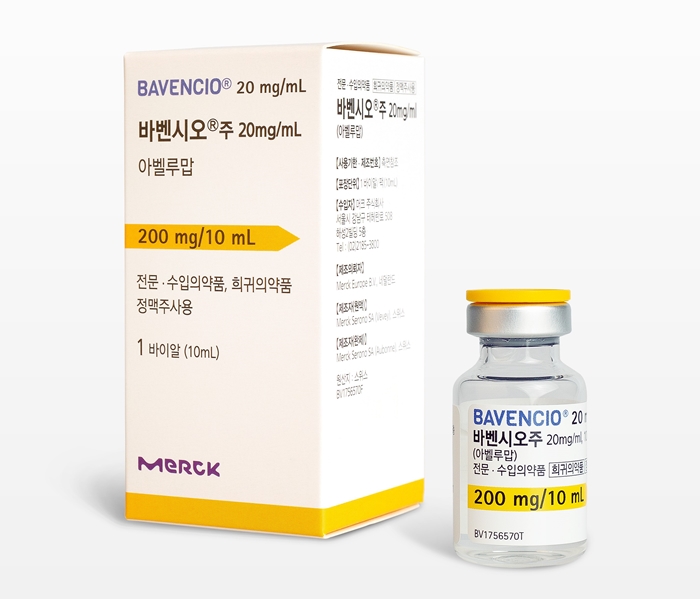
- Changes are arising in the prescription pattern for metastatic urothelial cancer due to the emergence of new treatment options. The reimbursement of Bavencio (avelumab) as a first-line maintenance therapy, increased treatment options for the patients. The drug was first granted reimbursement only as a second-line treatment. As demand for maintenance therapy has been high in the field, experts believe the prescription pattern will also change rapidly with Bavencio's reimbursement. Pic of Bavencio# Urothelial carcinoma begins in the urothelial cells and is the most common type that accounts for 90% of all bladder cancer diagnoses. Platinum-based chemotherapy, which has been the standard of care in the field for the past 30 years, showed a response in 3 out of 4 patients, but overall survival and progression-free survival were only around 12-15 months and 6-8 months, respectively. Also, the rate (25%) of patients using second-line chemotherapy was low, indicating the high unmet need for a viable treatment option after first-line chemotherapy. This is why the reimbursement of Bavencio (avelumab) from August as first-line maintenance therapy for adult patients with locally advanced or metastatic urothelial carcinoma is being received such high expectations. Bavencio was found to delay disease progression in the randomized, multicenter, open-label JAVELIN Bladder 100 study that studied 700 patients with locally advanced or metastatic urothelial cell carcinoma from 29 countries including Korea for over 38 months. Study results showed that the median overall survival (OS) of patients who received Bavencio was 29.7 months (25.2-34.0), a 9-month extension compared to patients who received best supportive care (BSC) care alone (20.5 months, 19.0-23.5), and patients showed over an 8-month improvement compared with the control group regardless of the first-line chemotherapy option. Professor A from the Department of Oncology at one tertiary hospital, said, “30-40% of patients progress after receiving first-line treatment. This means that out of 10 patients, around 7 patients will be eligible to use Bavencio as maintenance therapy.” “In the past, if 3 out of 10 patients experienced disease progression and moved on to second-line treatment, the 6 to 7 who did not progress just stayed without treatment. If the patient’s condition worsened after 3 to 4 months of non-treatment, the only positive aspect was that they were able to move on and receive later-line treatments.” However, considering the characteristics of locally advanced or metastatic urothelial cell carcinoma, experts believe that attention should be paid to later-line treatment options to treat the progression of the disease. The use of Bavencio may offset part of Keytruda’s use as a second-line treatment to some extent, but as the disease progresses, concern about what to use next becomes inevitable. Professor Miso Kim of the Department of Hemato-Oncology at the Seoul National University Hospital, said, “It is difficult to say which is more important - maintenance therapy and later-line treatment, but we are concerned about patients who cannot receive maintenance therapy, on how to treat these patients.” As the demand for later-line treatment is still high due to the nature of the disease, doctors have been stressing the need for reimbursement of such treatments. Treatments such as Padcev (ingredient: enfortumab vedotin-ejfv) that have been introduced have been raising interest in reimbursed options to use after second-line treatment. At a meeting last July, Astellas emphasized the justification for reimbursement of treatments such as Padcev as third-line or later-line treatments, apart from reimbursement of treatments like Bavencio. During the meeting, Kyung-Ah Park, Director of Medical Affairs at Astellas Korea, said, “We are offering drugs that can be used in a field where no 3rd-line or later-line option has been available until now. Padcev is strongly recommended by NCCN or European guidelines. We are working to benefit more patients by receiving reimbursement for this drug as soon as possible.” A urologist at a tertiary hospital, said, "In Korea, patients whose disease progresses after second-line rechallenge their tumor with previously treated treatments or use chemotherapy with paclitaxel. Although there are limitations due to its non-reimbursed status, there is a demand for a valid later-line treatment option, apart from Bavencio's reimbursement.”
- Policy
- Will Opdivo soon be reimb as first-line gastric cancer Tx?
- by Lee, Tak-Sun Aug 17, 2023 05:29am
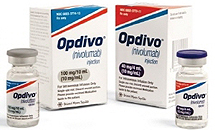
- Whether Ono Pharmaceutical Korea’s ‘Opdivo Inj’ will receive reimbursement as the first first-line immunotherapy option for gastric cancer is gaining attention. If the drug is reimbursed as a first-line treatment for gastric cancer, Opdivo Inj may closely chase the sales of Keytruda, which had expanded coverage as a first-line treatment for non-small cell lung cancer in the immuno-oncology drug market. Three doses of Opdivo Inj were included in the updated list of drugs for which drug price negotiations were recently completed by the National Health Insurance Service. The list contains all the drugs that have completed pricing negotiations by the 10th of this month. After being recognized for the adequacy of reimbursement as a first-line treatment for gastric cancer by the Health Insurance Review and Assessment Service in May, the company has been negotiating the insurance drug price with the NHIS. Its reimbursement standards had been established in June last year by HIRA’s Cancer Disease Deliberation Committee (CDDC). The CDDC set the drug eligible for reimbursement as first-line treatment in combination with fluoropyrimidine- and platinum-containing chemotherapy for advanced or metastatic gastric cancer, gastroesophageal junction cancer, and esophageal adenocarcinoma. The analysis is that if the negotiations are complete, Opdivo will likely be listed for reimbursement soon after reporting to the Health Insurance Policy Deliberative Committee. In particular, HER2-negative gastric cancer, which Opdivo targets, accounts for nearly 90% of all patients. Therefore, the reimbursement expansion is expected to increase its sales greatly. Currently, Opdivo is reimbursed as monotherapy for 4 indications: as first-line and later lines of monotherapy for melanoma, as second-line and later lines of monotherapy for non-small cell lung cancer, as third-line or later lines of monotherapy for Hodgkin lymphoma, and as second-line or later lines of monotherapy for head and neck squamous cell carcinoma. Also, the drug is reimbursed in combination with Yervoy as a first-line treatment for renal cell carcinoma. Last year, Opdivo’s sales based on IQVIA sales was KRW 109.9 billion. Among immuno-oncology drugs, Opdivo recorded the second-highest performance after Keytruda (KRW 239.5 billion). Keytruda's sales have improved significantly compared to other immuno-oncology drugs after being granted reimbursement extensions as a first-line treatment for non-small cell lung cancer in March last year. If Opdivo also is granted a reimbursement extension as a first-line treatment for gastric cancer, it may also enjoy as explosive sales growth comparable to Keytruda.
- Opinion
- [Reporter's view] There should be no recurrence of the Champ
- by Lee, Hye-Kyung Aug 17, 2023 05:29am
- On the 10th, the Ministry of Food and Drug Safety lifted the suspension of manufacturing and sales of Dong-A Pharmaceutical's Champ Syrup and Daewon Pharmaceutical's Coldaewon Kidsfen Syrup. Champ Syrup, which represents children's antipyretics containing acetaminophen, was produced and distributed again in 128 days, and Coldaewon Kidsfen Syrup in 85 days. Dong-A issued a recall order four times on April 25th, April 28th, and May 31st, starting with the recall of commercially distributed products due to 'concern about unsuitable quality (characteristics, microbial limit) on April 4th. On the other hand, Daewon Pharmaceutical recalled business operators for commercially available products as a precautionary measure following the phase separation phenomenon (concern) on May 18. Although the reasons for the recall of the two items are different, it is unknown when and how the order to recall and destroy the drug will occur. First, Champ Syrup, which had been recalled, went through the return and refund process through pharmacies and online. In addition, when a customer brings a product to a pharmacy, even in the case of products purchased at other pharmacies, normal product exchange or return and refund measures are to be carried out first. Suffering from the Champ Syrup recall process became the pharmacy distributing the product. Perhaps for this reason, Daewon Pharmaceutical, which was advised to recall the business operator, went through the process of returning and refunding the drug directly to the pharmaceutical company without going through the pharmacy. Of course, there was also Coldaewon Kidsfen Syrup, which was confused with Champ Syrup and brought to pharmacies, but pharmacies did not have to accept the product. Champ Syrup and Coldaewon Kidsfen Syrup, which had been discontinued for nearly three months, were canceled at the same time, and it was the pharmacy that was confused again. This is because it was not easy to order antipyretics for children whose production was resumed due to sales at specific hours and restrictions on the number of purchases per pharmacy. As Champ Syrup and Coldaewon Kidsfen Syrup went through a series of incidents such as manufacturing, suspension, and cancellation, pharmaceutical companies were insufficiently prepared to resume distribution due to inconsistent recall procedures and the Ministry of Food and Drug Safety's unilateral cancellation of manufacturing/suspension. Looking at this process, there is a need for support measures such as preparing a consistent procedure for recalls of business operators rather than compulsory recalls in the future and providing time to prepare for preparations such as pre-announcement by pharmaceutical companies in case of the lifting of manufacturing or suspension of drugs with issues such as supply and demand instability. seems to be
- Company
- Retevmo fails reimb at the last stage in KOR
- by Eo, Yun-Ho Aug 17, 2023 05:29am
- The RET-targeted anticancer therapy ‘Retevmo’ failed to pass the last gateway to reimbursement listing in Korea. According to industry sources, the drug pricing negotiations between the National Health Insurance Service and Lilly Korea for the reimbursement of the RET inhibitor Retevmo (selpercatinib) broke down recently. Retevmo, which received marketing authorization in March last year, was unable to pass CDDC review for reimbursement in May of the same year but then passed review in November and finally passed deliberation by the Drug Reimbursement Evaluation Committee in May this year. Although expectations on its reimbursement listing had risen with the company starting drug pricing negotiations with the NHIS in June, in the end, an agreement had not been reached. With the breakdown, whether NHI’s coverage will be extended to cover anticancer drugs that target RET mutations has become unclear. The only other approved RET-targeted anticancer drug in Korea is Roche Korea’s ‘Gavreto (pralsetinib),’ but reimbursement discussions for the drug have virtually been discontinued. Until now, lung cancer patients with RET mutations had no choice but to undergo chemotherapy like general cancer patients due to lack of other anticancer options. The introduction of a RET-targeted anticancer drug had been received with high expectations as virtually the only option for the patients. Retevmo is indicated for the treatment of: ▲adult patients with metastatic RET fusion-positive non-small cell lung cancer (NSCLC); ▲adults and pediatric patients 12 years of age or older with advanced or metastatic RET-mutated medullary thyroid cancer who require systemic therapy; and ▲ adult patients who are refractory to radioactive iodine therapy and who have prior sorafenib and/or lenvatinib treatment, with advanced or metastatic RET-fusion benign thyroid cancer who require systemic therapy. The company had attempted to receive reimbursement for the thyroid cancer and NSCLC indications.
- Opinion
- [Reporter's view] Fight between AZ/Janssen
- by Jung, Sae-Im Aug 17, 2023 05:29am
- Since the discovery of EGFR gene mutation in non-small cell lung cancer patients in 2004, EGFR-targeted anti-cancer drugs have made remarkable progress over the past 20 years. Tyrosine kinase inhibitors (TKIs) targeting this genetic mutation have been established as standard therapy through the first generation (Iressa), second generation (Giotrif ·Vizimpro), and third generation (Tagrisso). Among them, Tagrisso is currently the only third-generation EGFR-TKI in the global market and has maintained its top position for more than five years without any competing drugs. The strength of Tagrisso is that it shows better effects than the first and second generations, especially in brain metastasis, which lung cancer patients often experience. Lung cancer is one of the most diagnosed cancers in the world, and EGFR is a major mutation in lung cancer, so global pharmaceutical companies are interested in it. For this reason, pharmaceutical companies have measured the effect of EGFR mutations with various new drugs, and immuno-anticancer drugs are representative. Immunotherapy has changed the paradigm of lung cancer treatment and brought about groundbreaking results. However, even this was not as effective as expected in patients with EGFR mutations. Only the recognition that EGFR-mutated lung cancer should be treated with targeted anticancer drugs has become more solid. Since then, the attention of pharmaceutical companies has been focused on 'Next Tagrisso'. AstraZeneca is betting on combination therapy using Tagrisso to protect its status, while competitors are betting on a combination therapy that has developed a new drug with a new mechanism. In the second half of this year, a true swordsman battle will unfold between those who want to protect and those who challenge. AstraZeneca plans to present the results of the FLAURA2 study, a phase 3 clinical trial comparing Tagrisso with chemotherapy alone, at the World Lung Cancer Society in September. In October, Janssen will present at the European Society of Oncology (ESMO) the results of a phase 3 clinical MARIPOSA study comparing Rybrevant, an anti-cancer drug targeting EGFR exon 20 insertion mutation, and Leclaza, an EGFR-targeting anti-cancer drug introduced from Yuhan Corporation, compared to Tagrisso. Currently, the two clinical trials that are directly compared with Tagrisso, the global first-line standard therapy, are both trying to change the standard treatment. Of course, it was Janssen who had a greater ripple effect in case of success. This is because it combines a TKI with a new mechanism called Rybrevant and a TKI similar to Tagrisso. Global market research firm 'Evaluate Vantage' explained the market value of the two studies earlier this year, "The MARIPOSA study has two chances to beat Tagrisso by comparing Rybrevant + Leclaza combination therapy and Leclaza monotherapy, respectively, with Tagrisso." did. The market research firm also commented, "Given the advantages MARIPOSA holds, the results of the FLAURA2 study may reduce the threat of Leclaza, but may not completely eliminate it." While AstraZeneca has already announced that it has demonstrated improvement in the primary endpoint in the FLAURA2 study, the market is paying keen attention to how much improvement Tagrisso + chemotherapy would have shown, and how the results of the MARIPOSA study, which are still veiled, will come out. It is very likely that standard treatment options will increase in EGFR-mutated lung cancer. This means that the patient's prognosis will be further improved. In addition, within EGFR, customized treatment may be possible depending on the subtype and health condition. This is good news for Korea, which has a high proportion of EGFR mutations. So, the results of the second half are expected.
- Policy
- ₩176.5 bil was spent on atopic dermatitis every year
- by Kim, Jung-Ju Aug 16, 2023 05:37am
- The National Health Insurance medical expenditures spent by patients with atopic dermatitis have risen every year to record KRW 176.5 billion last year. This is a 114.4% rise in 5 years. By age group, patients in their 20s accounted for 34.1% of the total expenditures, followed by those in their 30s (18.9%), then those in their 40s (11.8%). The National Health Insurance Service analyzed the NHI treatment data for atopic dermatitis from 2018 to 2022 using NHI data. The number of patients who received treatment for atopic dermatitis had increased from 92,0487 to 971,116 (5.5%↑), at an average annual increase rate of 1.3%. The number of male patients increased by 0.5% (1982↑) from 438,756 in 2018 to 440,738 in 2022, and female patients increased by 10.1% (48,647↑) from 481,731 in 2018 to 530,378 in 2022. Atopic dermatitis patients by gender (2018-2022) Looking at the composition of the number of patients treated for atopic dermatitis by age group, the most number of patients treated were 9 years old or younger, accounting for 28% (271,613) of all those treated in 2022 (971,116). Those in their 20s accounted for 16.7% (161,711), followed by teenagers accounting for 15.5% (150,837 people). Among male patients, those under the age of 9 accounted for the highest proportion (32.3%), followed by those in their teens (17.3%), then those in their 20s (16.4%). Among female patients, those under the age of 9 accounted for the highest proportion (24.4%), followed by those in their 20s (16.8%), then those in their teens (14.0%). When looking at the number of patients with atopic dermatitis per 100,000 population by year, the number rose from 1,802 in 2018 to 1,889 in 2022 (4.8%). Health insurance treatment costs for patients with atopic dermatitis increased by 114.4% (94.2 billion won) from 82.3 billion won in 2018 to 176.5 billion won in 2022, with an average annual increase of 21%. NHI expenditures spent to treat atopic dermatitis increased by 114.4% (KRW 94.2 billion) from KRW 82.3 billion in 2018 to KRW 176.5 billion in 2022, at an average annual increase of 21%. As of 2022, when looking at the proportion of NHI medical expenditures spent on patients with atopic dermatitis by age, those in their 20s accounted for the most at 34.1% (KRW 60.2 billion), followed by those in their 30s with 18.9% (KRW 33.3 billion) and those in their 40s with 11.8% (KRW 20.8 billion). By gender, both males and females in their 20s accounted for the most, accounting for 37.2% (KRW 40.3 billion) and 29.1% (KRW 19.9 billion), respectively.
- Policy
- Will it be possible to cover 'obesity drugs'?
- by Lee, Jeong-Hwan Aug 16, 2023 05:37am
- Attention is focusing on whether health insurance coverage standards for obesity treatment drugs, which are classified as non-reimbursed drugs that are not covered by health insurance, can be established. The Ministry of Health and Welfare announced that it had started discussions with the Korean Society of Obesity to discuss the necessity of reimbursement for obesity treatment and treatment and a reimbursement model to solve the problem of the domestic obesity rate. However, specific details, such as when and which obesity treatment and treatment will be applied, have yet to be confirmed. On the 14th, the Ministry of Health and Welfare submitted such a plan to the National Assembly regarding the reimbursement of medical treatment and treatment to solve the domestic obesity rate. The Health and Welfare Committee of the National Assembly requested the Ministry of Health and Welfare to unify the BMI (Body Mass Index) standard, which is the criterion for determining obesity and urged policies related to the introduction of drug treatment and reimbursement of obesity prevention medical services for severely obese people with a BMI of 30 kg/㎡ or more. Currently, the Ministry of Food and Drug Safety has changed the approval requirements and safe use standards for narcotic appetite suppressants to a BMI of 30 kg/㎡ or higher, but the Ministry of Health and Welfare has yet to establish a unified standard for obesity. The Ministry of Health and Welfare explained that in order to solve this problem, a meeting was held to discuss the need for unification of obesity BMI standards and the direction of adjustment. However, it was added that the need for further discussion was confirmed due to differences in opinions on key considerations such as the appropriate BMI standard for obesity, risk of death, risk of disease, life expectancy, and healthy life span. The Ministry of Health and Welfare plans to continue conducting additional reviews on the necessity and direction of the unification of obesity standards in the future. The Ministry of Health and Welfare announced that it would seek solutions together with academic societies regarding the payment of obesity treatment and treatment drugs. The Society for Obesity pointed out that there are frequent cases in which obese patients stop prescribing drugs due to economic burden through a 'survey on awareness and status of obesity treatment' last year, and emphasized reimbursement. Drugs used to treat obesity have obtained market approval from psychotropic narcotic drugs to GLP-1 analogs modified for diabetes treatment. Currently, in the case of obesity treatment, all treatments and medications except for surgical treatment for extremely overweight and extremely obese patients are not covered. The Ministry of Health and Welfare said, "We are discussing the necessity of reimbursement for obesity treatment and the reimbursement model with the obesity society."

- Company
- Companies seek to invalidate Jardiance’s unlisted patents
- by Kim, Jin-Gu Aug 16, 2023 05:37am
- Generic companies have begun challenging the unlisted patent of Jardiance (empagliflozin), an SGLT-2 inhibitor-class diabetes treatment. From the generic companies’ perspective, they must overcome Jardiance’s unlisted patents to release their generics early, just after Jardiance’s substance patent expires in 2025. According to industry sources on the 14th, Chong Kun Dang and Genu Pharma recently filed an invalidation trial against Boehringer Ingelheim on Jardiance’s use patent (10-1463724). The patent is not listed on the Ministry of Food and Drug Safety’s Green List. The patent, which is set to expire in November 2027, covers not only the treatment of diabetes but also the use of Jardiance for the treatment of obesity and metabolic syndrome. Currently, only 2 Jardiance patents are listed on the Ministry of Food and Drug Safety’s Green List: a substance patent (10-1249711) that expires in October 2025 and a crystalline patent (10-1174726) that expires in December 2026. Previously, generic companies have succeeded in avoiding Jardiance’s crystalline patent. In 2018, 52 companies, including Chong Kun Dang, filed a trial to confirm the passive scope of rights of the Jardiance’s crystalline patent against Boehringer Ingelheim in 2018 and won in May of the following year. In the case of the substance patent, Dong-A ST failed to invalidate the patent. Based on the results, generic companies planned to release Jardiance generics upon the expiry of the drug’s substance patent in March 2025. However, Jardiance’s unlisted patents are holding the companies back. Even if they do not overcome unregistered patents, there is no problem for patent challengers receiving approval for their generics. However, if they really release their drugs onto the market, they are at a high risk of patent infringement. If a product is released without overcoming an unlisted patent, there is a high possibility that the original company will file a patent infringement lawsuit and an application for a provisional injunction to prohibit the sales of the product. In addition, if a company loses the patent infringement lawsuit, a claim for damages is inevitable. The problem is that it is difficult to know exactly how many unlisted patents exist for Jardiance. First of all, it is speculated that there will be 1 or 2 more unlisted patents based on NHIS analysis. From the perspective of the generic companies, they are faced with the task of overcoming unlisted patents without knowing how many really exist, to release their latecomer drugs.
- Company
- [Reporter’s View] Trending CSO sales and their treatment
- by Lee, Seok-Jun Aug 16, 2023 05:37am
- Contract sales organizations (CSOs) are trending in the pharmaceutical industry. The Ministry of Food and Drug Safety announced that 45% of the 195 companies it had surveyed use CSO companies. When limiting the subjects to small-to-mid-size companies, the industry expects the rate to far exceed 70%. The Top 10 pharmaceutical companies in Korea are also preparing to use SCO sales for their products. Kyung Dong Pharma also chose to outsource sales to CSOs at the beginning of the year. The company laid off 180 of the 250 sales representatives. As a result, the number of employees (excluding fixed-term workers) decreased from 569 at the end of last year to 397 by the end of Q1 this year. Company K also announced plans to start using CSO for sales from 2H this year. The company will use CSOs instead of its local workforce. The change in the company’s number of employees is expected to be reflected in the company’s Q3 report. However, two major challenges must be addressed for the trending CSO sales to go mainstream in Korea. The first is in preserving the sustainability of each company’s management. Pharmaceutical companies that introduce the CSO system undergo major changes. Their number of employees plummet and commissions paid out to the CSOs soar. Performance fluctuates in this process. Since the companies have never used such methods before, if they fail to implement the CSO system well in the beginning, it can lead to poor performance. Therefore, the company should share its revamping process and share their future management policies. Kyung Dong Pharma’s case is worth referring to. After switching to a CSO system earlier this year, the company distributed press releases even though it marked a deficit for 2 consecutive quarters. This was unusual considering how performance reports are mainly released by companies that show an improvement in their performance, such as record-high sales. However, the press release showed the reason why. Through the release, the company explained the reason for the deficit and the company’s future management direction. “The decline in profits in 1H is within the expected range due to the company’s introduction of a marketing agency system. We will do our best to turn a profit in the 2H this year by launching combination drugs and new products, increasing defense of drugs subject to price cuts, and strengthening sales competitiveness.” Although the message was simple, from an investor's point of view, the press release provided ‘thankful information’ on when to expect a surplus and how the company is planning to overcome its deficit. The second task that remains for the CSO sales culture to settle in Korea is managing the point organizations exposed to rebates. This is an issue we are all already aware of, and it is now the time to act on it. Companies that are using CSOs are on the up and rise. The ‘Increase in commissions=increase in sales” settled as a formula. Some companies are investing more than half of their sales revenue as commissions to drive sales through CSOs. However, the management of the CSOs that are made up of point organizations, remains a challenge. Some say it is virtually out of control. Some describe them as rebate windows due to overheated commission competitions. This is why the CSO reporting system should be legislated with a soft landing. Although CSO legislation is an option, in the end, it all depends on the will of the pharmaceutical company owners. The CSO reporting system only suppresses rebates but is not a fundamental measure. If CSO is the trend, it is necessary to devise a way to use CSOs without triggering a dumping war based on the owner's determination to fight cleanly. This is also connected to ESG management. The patent for the blockbuster antidiabetic ‘Januvia (sitagliptin),’ worth KRW 110 billion a year, is set to expire in a month. It is expected that sales competition will intensify around CSOs for the sales of generic products. Rebate concerns are rising. For CSOs, which is settling as a method of pharmaceutical sales, to make a soft landing in Korea, the owner's will for the clean competition will be ever the more important. The company should also share its prediction of its business sustainability to its shareholders consistently. These two will be essential for companies that seek to use CSO sales.
