
- LOGIN
- MemberShip
- 2026-05-06 09:54:43
- Company
- Tarlatamab designated as an orphan drug for SCLC
- by Eo, Yun-Ho Jan 15, 2024 05:36am
- Amgen’s drug candidate ‘Tarlatamab,’ intended for treating small cell lung cancer (SCLC), has received orphan drug designation in Korea. The Ministry of Food and Drug Safety (MFDS) announced this decision through its first orphan drug designation posting of the New Year. The approved indication is for treating adult patients with progressive SCLC whose cancer had progressed after previous second-line treatments. The research team led by Professor Ahn Myung Ju, from the Division of Hematology-oncology in the Department of Medicine at Samsung Medical Center, has confirmed Tarlatamab as a potential treatment for second-line treatment in SCLC. Their research article was published in the New England Journal of Medicine (NEJM). The research team demonstrated the treatment potential of bispecific T-cell engagers like Tarlatamab. Tarlatamab is a novel bispecific T-cell engager drug that recognizes antigens present on both cancer cells and immune cells. Even when cancer cells manage to evade immune cells, Tarlatamab can engage immune T-cells, directing them to closely target cancer cells and initiate an attack. Professor Ahn’s research team conducted this research with the goal of identifying a novel therapeutic strategy that could maximize the effects of Tarlatamab while ensuring the safety of patients. They conducted a study enrolling 220 patients who had not responded to the first-line treatment for SCLC, from 56 institutions across 17 countries and randomly assigned to clinical groups for evaluation. According to the U.S. Food and Drug Administration (FDA), the research team administered two different doses of Tarlatamab, 10mg and 100mg, to patients and assessed various prognosis such as treatment reactions and drug-related side effects. As a result, the optimal dosage for the drug was determined to be 10mg of Tarlatamab administered every 2 weeks, which led to clinical improvements in prognosis and a reduction in side effects. According to the research group, patients who received 10 mg showed an objective response rate of 40%, which was higher than the 32% response rate observed in those who received a 100 mg dose. The median progression-free survival in the 10-mg group was 4.9 months, higher than the 3.9 months in the 100-mg group. The overall survival, measured at nine months following the treatments, was 68% for the 10-mg group and 66% for the 100-mg group. The 10-mg dose demonstrated a higher treatment effect with fewer side effects. Since Tarlatamab is a T-cell activating therapy, the most common side effect is ‘cytokine release syndrome.’ In the 10-mg group, 51% of the patients experienced cytokine release syndrome, whereas, in the 100-mg group, 61% did. “SCLC, classified into limited and extended stages, is characterized by its rapid progression without clear incremental stages. For most patients, metastasis to other lungs or organs presents treatment challenges. Currently, treatment options remain limited. Consequently, I hope that ongoing research will contribute to alleviating the suffering of patients,” Professor Ahn said.
- Opinion
- [Reporter’s View] HIRA's role in managing high-priced drugs
- by Kim, Jin-Gu Jan 15, 2024 05:36am
- In 2012, Soliris, a treatment for paroxysmal nocturnal hemoglobinuria (PNH), was listed for reimbursement in Korea. The drug, which cost more than KRW 5 million per vial and up to KRW 500 million for a year's supply, sparked controversy over "ultra-high-priced drugs” at the time. Since then, drugs more expensive than Soliris were introduced and reimbursed one after another. Novartis' Kymriah and Zolgensma were two representative examples. Zolgensma is listed at KRW 1.982 billion per kit, and Kymriah at KRW 360 million per treatment. Although the number of doses required per drug varies, as of the end of last year, a total of 26 drugs cost more per unit than Soliris. Among them, Biogen's ‘Spinraza,’ Novartis' ‘Lutathera,’ AstraZeneca's ‘Ultomiris,’ BMS' ‘Yervoy,’ Anterogen’s 'Cupistem,’ JW Pharmaceutical's ‘Hemlibra,’ Pfizer's ‘Besponsa,’ Anterogen’s ‘Remodulin,’ and Sanofi-Aventis' ‘Lemtrada’ cost more than KRW 10 million per unit. Truly, the era of ultra-high-priced drugs has arrived. Moreover, drugs that far exceed the price of Zolgensma are awaiting entry in Korea. Lyfgenia, a treatment for sickle cell anemia that was approved by the U.S. Food and Drug Administration (FDA) in December last year, has a price tag of USD 3.1 million (KRW 4.1 billion). ‘Casgevy’ and ‘Exa-cel,’ which were approved around the same time, cost $USD 2.2 million (around KRW 2.9 billion) each. And many other drugs that cost more than USD 1 million are yet to be introduced to Korea. The hemophilia B treatment ‘Hemgenix’ costs USD 3.5 million, the cerebral adrenoleukodystropha treatment ‘Skysona’ costs USD 3 million, the beta-thalassemia treatment ‘Zynteglo’ costs USD 2.8 million, the leptin deficiency treatment ‘Myalept’ costs USD 1.26 million, and Hutchinson-Gilford progeria syndrome treatment Zokinvy costs USD 1.07 million. Most of these are 'one-shot drugs' that treat diseases caused by genetic abnormalities. Given the development speed and recent advances in gene editing technology, industry experts say it is only a matter of time before more expensive drugs appear. The annual cost of KRW 500 million, which was astronomical at the time of Soliris’s introduction, now falls in the ‘modest’ range among ultra-high-priced drugs. The government is also expressing significant concerns over the issue. Earlier this year, the Health Insurance Review and Assessment Service set up a ‘Pharmaceutical Performance Evaluation Department’ dedicated to the post-listing management of high-priced drugs. It took over the duties of the New Drug Performance Management Division, which was established as a temporary organization under the Office of Benefits Management in September 2022. For now, the office is in charge of evaluating the performance of high-priced drugs such as Kymriah and Zolgensma but will expand its responsibilities to include post-listing management of drugs that are exempt from submitting pharmacoeconomic evaluation data. This seems to be a timely move in the era of ultra-high-priced drugs. It's time to prepare for the next step. Given that drugs even more expensive than Zolgensma are expected to be introduced into Korea in the future, one single department, however, dedicated, may not be enough to take on the responsibility of managing all of the listed high-priced drugs. The changes to come call for a more fundamental reorganization of the system. The number of drugs listed through tracks that do not require pharmacoeconomic evaluation, which is the basis of Korea’s health insurance reimbursement system, is increasing every year. However, due to limited health insurance finances, it is impossible to blindly allow the listing of all ultra-high-priced drugs. We need to prepare for the entry of another wave of ultra-high-priced drugs, including the establishment of a separate fund, which is just beginning to be discussed. Korea eagerly awaits the establishment of a new system that can receive public consensus.
- Product
- Shortage no more for Saxenda?...'will increase supply'
- by Kang, Hye-Kyung Jan 15, 2024 05:36am
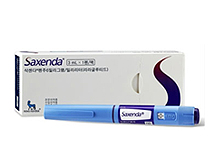
- The supply of Saxenda, which had been showing stock shortages in pharmacies nationwide, is expected to soon increase in Korea. Novo Nordisk announced on the 10th that it has been gradually increasing the supply of Saxenda from this month. The increased supply is expected to reduce the hassle of pharmacies that have been sending patients away due to stock shortages and resolve the inconvenience of patients having to visit many pharmacies looking for any that have Saxenda in stock. In response to Dailpharm’s report on “Saxenda’s shortage prolonged…raises inconveniences,” Novo Nordisk said, "We are aware of the recent stock shortages of Saxedna at pharmacies that resulted from the increased demand for Saxenda due to due to increased interest in weight loss in the end-of-year and the beginning-of-year seasons. However, we have been continuously producing and distributing the drug to Korea. The company added that it has been gradually increasing the supply since January. Novo Nordisk said, "We are currently experiencing high global demand for all of our products, which is causing supply and capacity constraints across our product portfolio. Over the past 6 months, we have invested around KRW 11 trillion in our production facilities alone to ensure a stable supply of our products.” However, the company explained that is not easy to predict the exact timing of when the shortage will end, as it will take time for the increased supply to enter the market to ensure safety and quality. "We deeply understand the importance and need to ensure the continuity of treatment for our patients and are making the most efforts to stabilize the supply of our drugs for patients in Korea.” Meanwhile, there are still posts and inquiries being uploaded to local community cafes and beauty cafes asking for pharmacies or clinics that have Saxenda in stock. There are also posts uploaded to pharmacist communities asking about Saxenda supply plans or requesting exchanges.
- Company
- Boryung partners with Baxter for 2 anesthesia drugs in Korea
- by Kim, Jin-Gu Jan 12, 2024 07:06am
- Boryung announced on the 10th that it signed a sales agreement with Baxter Korea to sell inhalation anesthesia ‘Suprane Solution (desflurane)’ and blood substitute ‘Plasma Lyte 148 Inj’ in the domestic market. Suprane, developed by Baxter, is a premier inhalation anesthesia for inducing or maintaining anesthesia during surgery. It offers rapid and accurate control of the depth of anesthesia and has the lowest solubility among inhaled anesthetic, enabling fast and predictable patient recovery after anesthesia. Plasma Lyte 148 Inj is an original fluid solution developed by Baxter. It is a physiologically balanced blood substitute with sodium, magnesium, and potassium levels similar to human plasma. Plasma Lyte 148 Inj is used to replenish and adjust extracellular fluid in cases of decreased circulating blood volume and interstitial fluid and to adjust metabolic acidosis. Plasma Lyte 148 Inj, a fluid therapy that can improve therapeutic outcomes for critically ill patients, has demonstrated its effectiveness in decreasing the mortality rate in patients with SIRS when compared to the Normal Saline group. It has also been shown to reduce risk factors associated with post-operative complications in open surgeries. An additional advantage is that Plasma Lyte 148 Inj is calcium-free, allowing its administration before and after a blood transfusion, as well as during a transfusion. Inhalation anesthesia Suprane (left) and blood substitute Plasma Lyte 148 Inj 1000 mL(right). The recent contract will broaden Boryung’s portfolio of anesthesia-related drugs and enhance its business capabilities. Boryung has been actively involved in sales marketing efforts for its anti-vomiting drug ‘Naseron (ramosetron)’ and drug designed to reverse neuromuscular blockade, ‘Breathon (sugammadex).’ Naseron ranks the first in the market among ramosetron-based products, while Breathon is the second-leading product in the sugammadex-based market. With its anesthesia task force and academic sales marketing expertise, Boryung will concentrate its efforts on expanding the market share of these two products. "Suprane and Plasma Lyte 148 Inj are important drugs for ensuring the safety and quality management of surgical patients undergoing anesthesia," Jung Woong-je, RX Division Leader at Boryung, commented. "Based on these two products, our focus will center around strengthening our market presence within the field of anesthesiology."
- Policy
- AHA drug Obizur to soon receive reimb in Korea
- by Lee, Tak-Sun Jan 12, 2024 07:06am
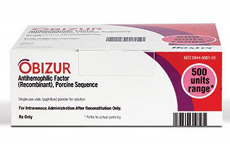
- Takeda Pharmaceuticals Korea’s hemophilia drug Obizur is expected to soon be reimbursed in Korea. The company was found to have completed pricing negotiations with the National Health Insurance Service recently. The drug received conditional approval from the Health Insurance Review and Assessment Service's Drug Reimbursement Evaluation Committee in October last year. According to industry sources on the 11th, Takeda Pharmaceuticals Korea recently completed negotiations with the NHIS on Obizur’s reimbursement and is set to be reported to the Health Insurance Policy Deliberation Committee of the Ministry of Health and Welfare soon. Obizur can be reimbursed in Korea in the month following the HIPDC report. Obizur is used to treat bleeding in adult patients with acquired hemophilia A. At the DREC meeting that was held in October, the committee determined Obizur’s reimbursement was adequate at a price below the appraised value. The importer, Pharmaceuticals Korea, is understood to have accepted this condition. The company also accepted a price less than 100% of the weighted average price of its substitute, thus omitting negotiations on its insurance ceiling price. Therefore, the company only needed to negotiate the estimated claims amount with the NHIS. If reimbursed, Obizur’s reimbursement process will be complete in one year since its marketing authorization in March last year, serving as a good example of expedited reimbursement. Unlike existing bypassing agents, Obizur replaces blood coagulation Factor VIII with AHA indications. Its unique mechanism of action allows Obizur to become the only AHA drug that can stably monitor patients’ blood factor VIII levels using standard assays, enabling individually tailored dosing. In a prospective, non-randomized, open-label Phase II/III study of 28 patients with AHA that evaluated the safety and efficacy of Obizur, all patients that were treated with Obizur had a positive response to treatment at 24 hours after initial dosing. A positive response was one where bleeding had stopped or was reduced, with clinical improvement or with factor VIII activity above a pre-specified target. Takeda Pharmaceuticals Korea said, “Obizur is a gene recombinant therapy that was produced by deleting the B-domain from a porcine factor VIII that is comparable to human Factor VIII. Therefore, the inhibitory antibodies in the human body do not readily recognize the treatment, allowing Obizur to replace the inactivated human coagulation factor VIII to help blood clotting and control bleeding.
- Company
- Generic companies partially win Trajenta patent challenges
- by Kim, Jin-Gu Jan 12, 2024 07:06am
- Generic companies have won the dispute over unregistered use patents of Trajenta (linagliptin). Although the unregistered formulation patent remains, this patent is reportedly relatively easy to avoid or invalidate. As such, the industry expects there is a higher possibility that generic versions of Trajenta will be released earlier after the drug’s substance patent expires in June. According to the pharmaceutical industry on the 11th, the Intellectual Property Trial and Appeal Board ruled that the validity of claims in the invalidation trials against the three Trajenta use patents by Genuone Science and others against Boehringer Ingelheim were established. Genuone Sciences had filed trials against Boehringer Ingelheim to invalidate 3 Trajenta’s use patents (10-1558938, 10-1655754, 10-1806786) in October 2020. Kukje Pharm, GC Biopharma, Mother’s Pharmaceutical, and Boryung had also joined in the trial with Genuone Sciences at the time. After about a year and three months, the first instance court, the Intellectual Property Trial and Appeal Board ruled in favor of the generic companies. All three patents expire in May 2027. If the patent challengers had lost in the first instance court, the release of a generic version of Trajenta would have been pushed back to after 2027. However, with the win, Trajenta generics will likely be available sooner, after the expiry of Trajenta’s substance patent in June this year. The first substance patent for Trajenta expired in August last year, and the second substance patent will expire in June this year. In July last year, Genuone Science and the other companies also succeeded in avoiding the unlisted formulation patent through a trial to confirm the passive scope of patent rights. It is estimated that 7 unlisted formulation patents and 1 unlisted use patent remain for Trajenta. However, industry insiders believe that the remaining patents are generally easy to avoid or invalidate or were registered later and do not have a significant impact on the early launch of Trajenta generics. Moreover, in the case of the 3 use patents, which are key to the launch of generic versions of Trajenta, the IPTAB clearly stated the grounds for their invalidation, such as lack of description and inventiveness, the generic company has a high chance of winning later trials even if the original company appeals. On the reason for invalidating Trajenta’s use patents, IPTAB pointed to “The experimental data related to linagliptin dosage is not disclosed in the patent specification, and linagliptin dosage or combination therapy with other diabetes drugs can be easily be invented from prior art." In other words, the trial court invalidated Trajenta’s patents on two grounds: lack of description and inventiveness. In effect, all 3 use patents directly related to Trajenta’s indication were invalidated, increasing the likelihood of early generic launch after the expiration of Trajenta's substance patent. Jong Hyuk Park, a patent attorney who participated in the patent trial, said, "This decision is significant in that it the court judge on the patentability of additional unlisted use patents that were later registered through divisional patent applications when the indications are already preannounced. Since it was determined that the patents were invalid in terms of both lack of description and inventiveness, it is unlikely that the decision will be reversed on appeal."
- Company
- New colorectal cancer drug Braftovi will receive reimb
- by Jan 12, 2024 07:05am
- Ono Pharmaceutical Korea held a press conference celebrating reimbursement listing of Braftovi (ingredient: encorafenib), a targeted drug for the treatment of metastatic colorectal cancer (mCRC) harboring a BRAF V600E mutation. All eyes are on Braftovi, a new targeted drug for metastatic colorectal cancer emerging after a 15-year gap, for its potential to address unmet demands for treatment options. Experts have assessed that, based on proven efficacy, Braftovi is likely to be highly utilized. On the 11th, Ono Pharmaceutical Korea held a press conference celebrating the reimbursement listing of Braftovi (ingredient: encorafenib), a targeted drug for the treatment of metastatic colorectal cancer (mCRC) harboring a BRAF V600E mutation. Braftovi is a targeted drug, emerged 15 years after Merck’s Erbitux (cetuximab), for the treatment of colorectal cancer. In Phase 3 BEACON CRC studies, Braftovi has demonstrated efficacy and a safety profile in patients with BRAF V600E mutation who have developed tolerance to previous therapies. Based on clinical results, patients who received the combination therapy of Braftovi and cetuximab demonstrated a median overall survival (OS) of 9.3 months, a significant extension compared to the 5.9 months observed in those treated with the combination therapy of irinotecan and cetuximab. The mortality risk decreased by 39%. The therapy’s benefits were consistently observed, regardless of the patient’s systemic therapy outcomes, the number of previous therapies, tumor metastasis range and location. The group that received the combination therapy of Braftovi and cetuximab has shown 10 times higher overall response rate (ORR) compared to the comparative thearpy group (19.5% in Braftovi combination therapy group vs. 1.8% in comparative therapy group). With a three-fold increase in Progression free survival (PFS), the risk of disease progression and death was reduced by 56%. Moreover, the group that received the combination therapy of Braftovi and cetuximab has shown an overall satisfactory safety profile, with a lower rate of severe adverse drug reactions compared to the comparative therapy group. "In the treatment of metastatic colorectal cancer, conventional therapies such as FOLFIRI and FOLFOX, in addition to Erbitux, have been used. However, there were concerns about drug toxicity and side effects. The combination therapy of Braftovi and Erbitux has shown longer treatment duration and a lower treatment discontinuation rate," Cha Yongjun, Professor in the Hematology-Oncology Department at the National Cancer Center, stated. Braftovi may have a role in treating BRAF V600E, which is associated with poor prognosis The BRAF V600E mutation occurs in approximately 4.7% of patients with metastatic colorectal cancer in Korea. Patients carrying this mutation tend to have worse prognosis, such as larger tumor size and peritoneal metastasis, compared to those who do not have the BRAF V600E mutation. In metastatic colorectal cancer patients with BRAF V600E mutation, the OS was 11.4 months, which was less than half of the 43 months for BRAF V600E-negative. The guidelines of the European Society for Medical Oncology (ESMO) and the National Comprehensive Cancer Network (NCCN) have identified the BRAF V600E mutation as a factor associated with poor prognosis in metastatic colorectal cancer, and they recommend BRAF mutation testing for all diagnosed patients. In clinical practices, it is recommended for all metastatic colorectal cancer patients to undergo RAS mutation testing and BRAF mutation testing. As a result, the analysis suggests that Braftovi may have broad clinical utility. “Currently, the available treatment options for colorectal cancer are limited. The therapeutic outcomes for second-line treatments following unsuccessful first-line treatment have been minimal. Nine out of ten patients have failed to proceed to third-line treatments. There is a critical need for new therapeutic options,” Kim Seung Tae, Professor of the Division of Hematology-Oncology at the Samsung Medical Center, commented. Professor Kim analyzed that “BRAF V600E mutated metastatic colorectal cancer is associated with poor prognosis and a significantly high rate of peritoneal metastasis. While the first-line standard treatment typically includes anti-EGFR therapy such as Erbitux, it has been reported that BRAF V600E mutation is less responsive to chemotherapy. Therefore, Braftovi could potentially become a first-line treatment option.”
- Company
- Nexviazyme prescriptions are available at general hospitals
- by Eo, Yun-Ho Jan 12, 2024 07:05am
- Sanofi-Aventis Korea’s Nexviazyme (Avalglucosidase Alfa) Prescriptions for Pompe disease treatment ‘Nexviazyme’ will be available at general hospitals. According to the industry, Sanofi-Aventis Korea’s Nexviazyme (Avalglucosidase Alfa) has recently passed the Drug Committee (DC) of tertiary general hospitals, including Samsung Seoul Hospital, Seoul National University Hospital, Seoul Asan Hospital, Seoul St. Mary's Hospital, and Sinchon Severance Hospital, and other hospitals where Pompe disease treatment is possible. Nexviazyme, developed based on Sanofi’s enzyme replacement therapy ‘Myozyme (avalglucosidase alfa)’ with improvements in usage and dosage, has become the first biobetter to receive preferential drug pricing by the government. In 2016, the government made an announcement regarding preferential drug pricing system, including both biosimilars that demonstrated healthcare enhancements in Korea and biobetters that demonstrated improvements from previously approved biomedicines. According to the announcement, recognizing the challenges in developing biobetters compared to incrementally modified drugs (IMD, synthetic drugs), the pricing of biobetters was set at 100-120% of the pricing of their drug targets (original biological drugs). Utilizing glycoengineering techniques, Nexviazyme has increased the amount of M6P, an important factor in the drug's intracellular uptake, by approximately 15-fold compared to Myozyme. The higher amount of M6P leads to increased drug uptake and improved GAA activity, effectively reducing damage to muscle cells through efficient glycogen breakdown. Moreover, the increased surface M6P enhances immunogenicity, providing safety benefits Pompe disease is a hereditary neuromuscular disorder caused by a deficiency in the enzyme acid alpha-glucosidase (GAA), which is responsible for breaking down glycogen in the muscles. The condition is progressive and can affect individuals of all ages. Left untreated, it can lead to irreversible muscle damage, respiratory and motor function impairment, and even premature death. In the COMET and MINI-COMET studies, enrolling Pompe disease patients, treatment with Nexviazyme demonstrated a 2.43% improvement in forced vital capacity (FVC) compared to Myozyme, with the benefit persisting consistently for up to 97 weeks. In 6 minute-walk test, compared to Myozome, participants administered with Nexviazyme showed a mean distance increase of 30m (4.71%) and demonstrated improvements in the trial’s secondary objectives, including gross motor function, health-related quality of life, and others.
- Policy
- Enhertu’s reimb to be redeliberated at next DREC meeting
- by Lee, Tak-Sun Jan 12, 2024 07:05am
- Reimbursement for the new breast cancer drug ‘Enhertu Inj,’ which was first deliberated by the Drug Reimbursement Evaluation Committee, will be redeliberated at next month's DREC meeting. At the same meeting, JW Pharmaceutical’s iron deficiency treatment ‘Ferinject Inj (ferric hydroxide carboxymaltose complex) was deemed adequate for reimbursement and moved on to conduct pricing negotiations with the National Health Insurance Service. The Health Insurance Review and Assessment Service said on the 11th that it deliberated as above at its 1st Drug Reimbursement Evaluation Committee meeting in 2024 (DREC). At the meeting, DREC deliberated on the reimbursement adequacy of ‘Ferinject Inj’ and ‘Enhertu Inj 100mg.’ Deliberation results of 1st DREC meeting in 2024 The reimbursement adequacy of Enhertu Inj 100mg (trastuzumab deruxtecan, Daiichi Sankyo Korea), which attracted attention as a drug that was having difficulty passing deliberations due to its high cost despite its high effect, was not concluded at this meeting and will be redeliberated at the February meeting after the company submits an improved financial sharing plan. The drug is indicated for ▲HER2-positive breast cancer and ▲HER2-positive gastric or gastroesophageal junction (GEJ) adenocarcinoma. On the other hand, Ferinject Inj, which is used to treat iron deficiency, was deemed adequate for reimbursement. Meanwhile, ‘Lorviqua Tab 25, 100mg (lorlatinib, Pfizer Korea),’ which applied for expanded scope of use as a Risk-Sharing Agreement drug, was deemed to be eligible for the expanded reimbursement for anaplastic lymphoma kinase (ALK)-positive metastatic non-small cell lung cancer if the company accepts a price below the evaluated value.
- Company
- FDA approves BLA for Dong-A ST’s Stelara biosimilar
- by Chon, Seung-Hyun Jan 11, 2024 05:45am
- Dong-A ST announced on the 5th that Accord Biopharma, a subsidiary of Intas Pharmaceuticals, has completed Biologics License Application (BLA) for Stelara biosimilar ‘DMB-3115’ to the U.S. Food and Drug Administration (FDA). The BLA, originally submitted in October 2023, has now been approved by the FDA. FDA accepts BLA for DMB-3115 of Dong-A ST. Dong-A ST and Meiji Seika Pharma will be responsible for R&D of DMB-3115 and exclusively distribute the product to Instas, Accord Biopharma, and Accord Healthcare. The BLA submission was based on the results from quality equivalence testing between Stelara and DMB-3115 conducted in both the United States and Europe. The global Phase 3 clinical trials enrolled patients with moderate to severe chronic plaque psoriasis, and the result demonstrated therapeutic equivalence between DMB-3115 and Stelara. There were no clinically significant differences in safety. Stelara, developed by Janssen, is a treatment for various inflammatory diseases, including plaque psoriasis, ulcerative colitis, Crohn’s disease, and ulcerative colitis. Stelara is a blockbuster biomedicine and has recorded global sales of $17.77 billion (approx. 22 trillion won). DMB-3115 has been under joint development by Dong-A Socio Holdings and Meiji Seika Pharma since 2013. In July 2020, to facilitate more efficient global progress, the development and commercialization rights for DMB-3115 were transferred to Dong-A ST. In July 2021, Dong-A ST finalized a technology transfer agreement with the multinational pharmaceutical company, Instas Pharmaceuticals. Instas acquired exclusive rights for the approval and sales of DMB-3115 in global markets, except for several Asian countries such as Korea and Japan. Instas plans to commercialize DMB-3115 globally via its subsidiaries, Accord Biopharma in the United States and Accord Healthcare in Europe, the United Kingdom, and Canada. Meanwhile, Dong-A ST and Meiji Seika Pharma will be responsible for R&D of DMB-3115 and exclusively distribute the product to Instas, Accord Biopharma, and Accord Healthcare. In July 2023, Accord Healthcare, a subsidiary of Instas, completed submission of BLA for DMB-3115 to the European Medicine Agency. “Based on the proven therapeutic equivalence and safety between DMB-3115 and Stelara, we have successfully submitted the BLA in the United States following our success in Europe,” explained Park Jaehong, R&D President at Dong-A ST. “To fast-track the entry of DMB-115 into global markets, including Europe and the United States, we are fully committed to efficiently completing the remaining procedure in close collaboration with Instas.”
