
- LOGIN
- MemberShip
- 2026-05-03 06:51:05

- Company
- Revisions to the guidelines for atopic dermatitis treatment
- by Hwang, Byung-woo Aug 08, 2024 09:25am
- As the market for atopic dermatitis rapidly shifts due to the introduction of new drugs, domestic guidelines are being revised in nine years, and therapeutic guidelines are also changing. The guidelines now suggest a higher recommendation grade for treatments, including biological agents and JAK inhibitors, for use in patients with moderate-to-severe symptoms. They also include detailed recommendations to solve the issue of replacement therapy, which experts focus on. (Clockwise from upper left) Product photos of Dupixent, Rinvoq, Olumiant, Adtralza, and Cibinqo. The Korea Atopic Dermatitis Association (KADA) announced on July 31st the '2024 Guidelines for the Treatment of Atopic Dermatitis in Korea.' This guidelines have been revised after nine years, since 2015. Biological agents (injectable medicines), such as Dupixent (dupilumab, approved Oct. 2018), and JAK inhibitors, such as Olumiant (baricitinib, approved May 2021), have completely changed the paradigm of the treatment for atopic dermatitis. Changes in therapeutic strategy have been reflected in the guidelines following the introduction of new medicines, which can now be prescribed with less economic burden due to reimbursement coverage. The degree of recommendation for biological agents depends on domestic approval. Dupixent and Adtralza (tralokinumab, approved August 2023) were rated as Grade A, the highest recommendation, for treating patients with moderate or severe symptoms that cannot be treated with topical therapy. The basis for a high recommendation grade for these two medicines was based on having real-world studies aligning with clinically shown effects. Considering this factor, medicines that have yet to receive domestic approval, such as lebrikizumab and nemolizumab, were rated as Grade B. Additionally, JAK inhibitors that received domestic approval for treating atopic dermatitis, including Olumiant, Rinvoq (upadacitinib, approved Oct. 2021), and Cibinqo (abrocitinib, approved Nov. 2021), were all rated as Grade A. However, the recommendation was based on the premise that Olumiant and Rinvoq, which also have indications to treat inflammatory diseases, may be more effective than Cibinqo, which is indicated only to treat atopic dermatitis. Furthermore, unlike biological agents, JAK inhibitors were granted a Grade A recommendation based on conducting early diagnostic monitoring testing. The KADA emphasized that patients be tested for hemocyte count and kidney and liver function four weeks after the treatment for monitoring, and re-assessment every three months during the treatment. The KADA emphasizes replacement therapy…"should be allowed to be used when there are insufficient medicines" Despite the growing number of atopic dermatitis treatment options, clinical practices advocate lifting restrictions on replacement therapy. The issue arises because replacement therapy is authorized for psoriasis within the same dermatology practice. Therefore, itt has been included in the revised guidelines. The main point of the argument is that patients with atopic dermatitis may have different responses. Although biological agents may be effective in treating moderate-to-severe atopic dermatitis, some patients may not respond well to the treatment. Insufficient response, as defined by the KADA, is 'Meeting one or more criteria of having not reached 50% in Eczema Area and Severity Index (EASI) score, suffering from daytime or nighttime pruritus with NRS score ≥4, or having Dermatology Life Quality Index (DLQI) ≥6. The KADA explained, "There are no useful biomarkers to predict the treatment outcomes of biological agents or JAK inhibitors for atopic dermatitis treatment." They added, "Currently, when patients with moderate atopic dermatitis do not respond well or have adverse reactions to the treatment with biological agents or JAK inhibitors, they cannot switch to other medicines for effective treatment." However, the revised guidelines have not specified which biological agents and JAK inhibitors can be used for replacement therapy. Some studies suggest concrete clinical evidence for replacement therapy, but studies with low-grade evidence exist. The KADA stresses that it will not set a hurdle for replacement therapy between biological agents and JAK inhibitors when patients do not respond well to initial treatments. During a press conference, Professor Ahn Ji Young at the National Medical Center, stated, "The sequence for replacement therapy has not been determined as we have not yet concluded the appropriate medicines for this purpose. The KADA hopes that replacement therapy will be possible regardless of types of medicines used." According to the pharmaceutical industry, unlike the initial request for authorization of replacement therapy, the government may be more willing to bring changes now. For instance, the Health Insurance Review and Assessment Service (HIRA) has recently requested supplementary documents. Therefore, replacement therapy may be considered based on KADA's suggestion for patients with insufficient response. An industry official said, "The revised guidelines in South Korea and other countries, such as the United States and Europe, now include various recommendations and evidence for replacement therapy when a patient fails initial treatment." He added, "We cannot predict an accurate date for change, but we hope that accumulating evidence will be used toward opening positive discussion."

- Policy
- 4th PVA negotiations complete for Prolia
- by Lee, Tak-Sun Aug 08, 2024 09:25am
- The government completed price-volume agreement (PVA) negotiations for Prolia Prefilled Syringe (denosumab), the leading product in the domestic osteoporosis treatment market, with Amgen Korea. Whether the drug’s price will be adjusted for the 4th time under the PVA is gaining attention. According to industry sources on the 4th, Amgen Korea and the National Health Insurance Service recently agreed on PVA negotiation terms for Prolia. The current upper insurance price for Prolia is KRW 156,100. Prolia is a biological drug that targets the RANKL protein, which forms osteoclasts that destroy the bone. The drug is co-marketed by Amgen Korea and Chong Kun Dang in Korea. Ever since the drug was granted reimbursement in October 2017, the drug immediately dominated the domestic osteoporosis drug market. In April 2019, the drug was granted extended reimbursement, covering its use as a first-line therapy, which rapidly increased its use. According to IQVIA, Prolia’s domestic sales in Q1 amounted to KRW 41.2 billion, ranking second among all drugs. With sales rising steadily, the company inevitably had to negotiate Prolia’s price under the price-volume agreement system. Prolia's price has already been adjusted 3 times through negotiations. The first was a "Type A" negotiation in December 2020, which resulted in a 6.5% reduction. Type A negotiations are applied when the drug’s expected use amount increases by over 30%. The second was a "Type B" negotiation that was applied in August 2022. Type B negotiations are applied when the expected use amount increased by 60% or more compared to the previous year or increased by 10% or more but the total amount exceeds KRW 5 billion. The third was also a ‘Type B’ negotiation, which resulted in a 3.7% price cut in Prolia’s insurance price ceiling in August last year. If the drug price is adjusted this time, it will be the 4th PVA price reduction. In May, Prolia's insurance price ceiling was lowered from KRW 162,600 to KRW 156,100 due to the reimbursement extension. Prior to the reimbursement extension, patients with a bone mineral density measurement of -2.5 (T-score) or less were eligible for 1 year of benefits, but after the reimbursement extension, patients with a T-score of -2.0 or less and to -.2.5 are eligible for up to 2 years of reimbursement.

- Policy
- Topiramate XR generics may be released soon
- by Lee, Tak-Sun Aug 08, 2024 09:24am
- 국내 유일 토피라메이트 서방캡슐 Generic companies have applied for approval of new follow-on drugs of 'Qudexy XR Cap,’ an extended-release topiramate formulation used for epilepsy, to the Ministry of Food and Drug Safety. The follow-on drugs that applied for approval this time are film-coated tablet formulations rather than capsule formulations, and whether the generic companies will be able to avoid Qudexy’s patent with the changed formulation is gaining attention. According to industry sources on the 5th, 2 products with the same ingredient (topiramate) as 'Qudexy XR Cap have recently applied for approval to the MFDS. The MFDS notified the original company upon the generic companies’ application because the original company has a patent (extended-release topiramate capsules) registered on the list in accordance with the approval-patent linkage system. Generic companies have also applied for approval of their Qudexy XR Cap generics in December last year and in May this year. The industry is looking at Introbiopharma as the likely developer of a follow-on Qudexy XR Cap. This is because Introbiopharma conducted a bioequivalence test for its Topimed XR tablet (tentative name) with Qudexy XR Cap as a control drug. Qudexy XR Cap, which is supplied by SK Chemicals in Korea, is the first extended-release topiramate formulation in Korea. While the existing immediate-release topiramate formulation is taken twice a day, the extended-release formulation is absorbed slowly into the body and can be taken once a day, improving the patients’ convenience in administration. The drug was developed by the U.S. pharmaceutical company Upsher-Smith Laboratories and approved by the FDA in 2014. In Korea, it was approved by the Ministry of Food and Drug Safety in August 2017. Qudexy XR Cap is indicated to treat epilepsy ▲as monotherapy for the treatment of partial-onset seizures with or without secondary generalized seizures in children and adults 6 years of age and older; ▲partial-onset seizures, primary generalized tonic-clonic/convulsive seizures, and seizures associated with Lennox-Gastaut Syndrome with or without secondary generalized seizures in children and adults 2 years of age and older that are not adequately controlled by existing first-line antiepileptic drugs. The drug had been granted reimbursement since February 2018. Last year, outpatient prescriptions amounted to KRW 3.5 billion based on UBIST. As a single item, its sales are not very high. However, topiramate-based formulations account for KRW 30 billion of the KRW 80 billion antiepileptic drug market and are the most prescribed ingredient. This is why analysts saw high potential for the XR formulation. This explains the rapid move among generic companies to develop extended-release formulations. The patent for Qudexy XR Cap, which is registered on the MFDS Green List, is expected to last until January 2034. The patent covers the extended-release topiramate capsule. As the generic companies applied for film-coated topiramate tablet formulations, it is analyzed that the generics will likely be released to the market apart from the registered patent. "The patent currently registered for Qudexy XR Cap protects the capsule form, but the follow-on extended-release formulations the generic companies applied for are film-coated tablet formulations, so companies will likely be able to avoid the patent," said a pharmaceutical industry insider. "It seems that the generic companies have adopted a patent avoidance strategy to quickly develop their respective products.”
- Company
- RSV vaccine market for children is expected to be big
- by Hwang, Byung-woo Aug 08, 2024 09:24am
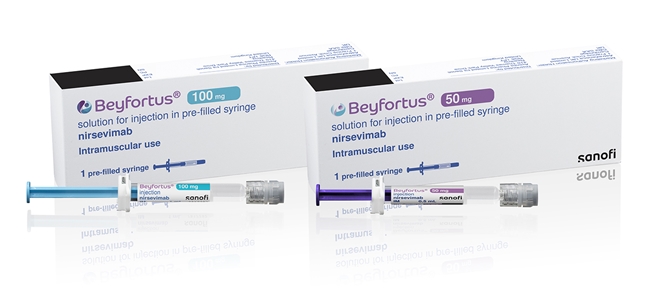
- As Sanofi is set to launch its injectable antibody drug to prevent respiratory syncytial virus (RSV) lower respiratory tract disease for the first time in South Korea, the company begins marketing. The company aims to raise awareness of RSV disease to promote vaccination. Sanofi has strategized a top-down approach, starting with labor and delivery hospitals, and expanding to private practices. As clinical practices have high demand for the vaccine, it is likely to enter the market quickly. Product photo of Beyfortus According to industry sources on August 6th, Sanofi is set to launch Beyfortus, an injectable antibody for RSV prevention, ahead of the upcoming 2024-2025 vaccination season. Beyfortus received approval from the Ministry of Food and Drug Safety (MFDS) in May. It is an injectable antibody to prevent lower respiratory tract diseases, including pediatric pneumonia and bronchiolitis. Previously, RSV immunization product for infants and children in South Korea was only available for high-risk infants and children who are expected to have a high risk of contracting severe RSV disease, including preterm infants. However, Beyfortus can be treated in all infants and children. The RSV vaccination season in South Korea typically lasts from October to March, when RSV spreads. In other words, Sanofi must devise a market entry strategy since it must launch soon. Fortunately, the market is receptive. RSV in children is typically regarded equivalent to influenza in children contracted globally during a particular season. An executive from the Korean Society of Pediatric Infectious Diseases explained, "RSV infection rate is extremely high with 50-60% of children are infected by RSV within the first 1-3 years of life, and 100% of children get RSV by their third birthday." He added, "Once infected, the symptoms are unlike the common cold. Therefore, the expenses and caregivers support are burdensome." After the launch, Beyfortus vaccination will be non-reimbursed. However, the early vaccination rate is expected to be high, considering that the market for infants and children is based on demand for vaccination rather than cost. 사노피는 지난 달 말부터 RSV 캠페인을 진행중이다 Ahead of the upcoming launch, Sanofi puts efforts into raising awareness of RSV disease. For example, Sanofi has started an 'It turned out to be RSV, story contest,' aiming to gather patient stories related to the disease and share them. Park Hee-kyung, President of Vaccine Division at Sanofi-Aventis Korea, explained, "Because RSV virus is a major cause of infant and children hospitalization, it is crucial for parents to catch early symptoms and respond to them. I hope the contest will provide an opportunity to raise awareness of RSV infection-related symptoms and lower respiratory tract disease." The vaccine has been already introduced to national immunization programs in other countries, including the United States, and real-world effects have been reported. Consequently, Sanofi aims to provide vaccine-related information to parents by working together with clinical institutes. Then, how will the Beyfortus immunization provided? Although the type of drug differs, the vaccination is expected to begin in big hospitals and expand to private clinical practices, similar to the case of GSK's shingles vaccine Shingrix. For Shingrix, the vaccination was first provided in university hospitals and general hospitals to immune-compromised individuals who previously could not get shingles vaccination. Sanofi official said, "Beyfortus is recommended to be administered to infants at birth for those born during the RSV season, or before they are discharged." One added, "Children born before the beginning of the RSV season are recommend to be administered before the start of the season during their visit to the pediatrics hospital for regular immunization." Typically, when a vaccine is not part of the essential immunization program, individuals are likely to consider vaccination during their hospital visits. Beyfortus, which is not a vaccine but provides similar benefits, immunization is likely to begin in labor and delivery hospitals, where individuals are provided information on diseases and products. Division of Infectious Diseases professor at a university hospital in Seoul said, "Because newborns, infants, and children are most vulnerable to RSV, it is a good option for providing preventative effects." Professor added, "Immunization is expected to increase gradually rather than robustly, considering the disease awareness."
- Company
- Celltrion presents clinical results of Prolia biosimilar
- by Hwang, Byung-woo Aug 08, 2024 09:24am
- Celltrion announced on August 6th that it has published the global Phase 3 clinical trial results evaluating the efficacy and safety of CT-P41, a biosimilar referencing the osteoporosis drug Prolia (ingredient: denosumab). The Phase 3 study compared the safety profile, including the efficacy, pharmacodynamics, pharmacokinetics, and immunogenicity, of CT-P41 to the original drug, in 479 female patients with osteoporosis after menopause. The study was conducted in four European countries. The results showed that at a 78-week evaluation, the primary endpoints of the efficacy and pharmacodynamics between CT-P41 and the original drug met the equivalence criteria. Additionally, the efficacy and safety of CT-P41 have been demonstrated in patients who received the drug 52 weeks after the initial treatment with the original drug. As the primary endpoint, lumbar spine bone density changes from baseline to 52 weeks in both the CT-P41 and the original drug treatment groups were assessed. The results showed that the differences between the two groups met predefined equivalence criteria. The study also demonstrated equivalence through the area under the curve (AUC) for the primary pharmacodynamic endpoint, the bone metabolism marker 'bone resorption marker (s-CTX),' over the first six months. Prolia is an osteoporosis treatment, and the same active ingredient received approval under the product name of 'Xgeva,' a drug used to prevent bone metastasis complications in cancer patients. The drug's global sales amounted to approximately US$6.16 billion (about KRW 8 trillion). Celltrion official said, "As we have confirmed the efficacy and safety of CT-P41 compared to the original drug, we will strive to proceed with ongoing approval applications in major global countries." He added, "We plan to expand our treatment portfolio quickly in various fields, including bone disease, eye disease, and allergy disease, to enhance the company's growth." The study results have been published in the 'Osteoporosis International,' the official journal of the International Osteoporosis Foundation (IOF) and the Bone Health & Osteoporosis Foundation (BHOF).
- Company
- Qalsody receives orphan drug designation in Korea
- by Eo, Yun-Ho Aug 08, 2024 09:24am
- ‘Qalsody (tofersen),’ a new drug for Lou Gehrig's disease, was designated as an orphan drug in Korea. The Ministry of Food and Drug Safety (MFDS) recently announced the designation through an orphan drug designation notice. More specifically, the drug is indicated for amyotrophic lateral sclerosis (Lou Gehrig's disease) associated with a mutation in the SOD1 (Superoxide Dismutase 1) gene. Qalsody, which was developed by Biogen, is an antisense oligonucleotide (ASO) drug that blocks the messenger ribonucleic acid (mRNA) associated with the SOD1 gene mutation to prevent its expression. The drug was approved by the U.S. FDA in June last year, followed by the European EMA in May. The efficacy data for Qalsody is not exactly glowing. However, this is likely a reflection of the scarcity of treatment options for the disease. In the Phase III VALOR trial, Qalsody failed to meet its primary endpoint, ‘Amyotrophic Lateral Sclerosis Functional Rating Scale (ALSFRS).’ However, it did reduce the secondary endpoints of ‘increased SOD1 protein levels in the cerebrospinal fluid’ and ‘neurofilament light chain (Nfl) concentrations’ by 26-38% and 48-67%, respectively. The most common adverse events reported in the trial were pain (back, arms, legs), fatigue, muscle and joint pain, fever, and increased protein and white blood cell counts in the cerebrospinal fluid. ALS is a rare neurological disease that affects nerve cells in the brain and spinal cord responsible for muscle movement and can lead to progressive paralysis and death. Although a considerable number of clinical trials are being conducted relative to the incidence rate, most medications only provide symptom relief.
- Opinion
- [Reporter's View] govt's foreign drug price comparisons
- by Kim, Jin-Gu Aug 08, 2024 09:24am
- The pharmaceutical industry's concerns grow over the government's plan to reevaluate foreign drug price comparisons. The government has established a policy to reduce domestic drug prices by comparing them to those in 'A8 countries (United States·Japan·Germany·France·Italy·Switzerland·Canada).' As the policy is set to be effective, the industry is busy estimating the scale of damage. Companies are estimated to experience a 5-20% reduction in annual sales. Therefore, the pharmaceutical industry voices concern that a sales reduction and an operational profit reduction will result in bigger damage. There are concerns that the scale of damage this time will be more substantial than the recent reintroduction of a stepped pricing system and reimbursement appropriateness reassessment. After considering the pharmaceutical industry's concern, the companies are not opposing to the reassessment soley due to the estimated damage. The industry has criticized that the criteria for comparing South Korean prices to those of foreign countries as unfair. For example, the industry considers referencing drug prices of Germany and Canada unfair. The government announced that when referencing drug prices in Germany and Canada, their public reimbursement prices, excluding outpatient payment, will be used. However, Korean drug prices include outpatient payments. In other words, the drug prices of countries for comparison will be lower, resulting in a greater degree of drug price reduction. For the past ten meetings since the end of last year, the pharmaceutical industry has strongly criticized the discrepancy in reassessing foreign drug price comparisons, including the issue mentioned earlier. However, sources said the government hesitated to take the pharmaceutical industry's opinion. Ten meetings between the government and the industry have concluded, and an agreement has yet to be reached. After the tenth meeting officially concluded, the Ministry of Health and Welfare (MOHW)'s Director of Pharmaceutical Benefits, who is in charge of the agenda, was replaced. In the second half of July, the MOHW held a regular personnel appointment and appointed a new Director of Pharmaceutical Benefits. Consequently, the person in charge of the final implementation of reassessing foreign drug price comparison has changed. The pharmaceutical industry has high hopes for these changes. They hope that the new Director will consider the industry's submitted opinions. At the last meeting, the industry had suggested several alternative measures. Opinions included improving how the government references drug prices in Germany and Canada, reducing drug price reductions amount by 50%, and putting a ceiling cap on the percentage of drug price reduction. It remains to be seen whether the new Director will consider these opinions. The prevalent opinion in the industry is that the government must completely reconsider the plan for reassessing foreign drug price comparisons. However, some are likely to follow the plan when unfairness is addressed. Now, the government is left to decide. The industry waits for appointment of the new Director.

- Policy
- Price-Volume Agreement negotiations to be finalized soon
- by Lee, Tak-Sun Aug 08, 2024 09:24am
- The ‘Type C’ price-volume agreement (PVA) negotiations are expected to be completed next week. When the negotiations are complete, the insurance price ceiling of the subject items is expected to be adjusted from September after passing the Health Insurance Policy Review Committee review this month. According to the industry sources on the 6th, negotiations for the PVA ‘Type C’ items started in July and are expected to be finalized next week. The negotiations involved 60 product groups that contain identical ingredients. The Type C negotiation is conducted for drugs that do not fall under 'Type A' or 'Type B', which are negotiated upon listing, and whose claims for the same product group from the 4th year of listing have increased by more than 60% from the claims of the previous year, or by more than 10% but exceeds KRW 50 billion. Most Type C drugs are generic drugs that have received a set price upon listing. The National Health Insurance Service conducts Type C negotiations every year with the goal of adjusting the insurance price ceiling of subject drugs by September of the same year. During this year's negotiations, in particular, the pharmaceutical companies enjoyed increased options due to the amendment made to the details of the operating standards. For example, drugs whose usage has temporarily increased due to inevitable reasons such as the COVID-19 pandemic can choose to refund part of their claims instead of lowering the price. In the first round of negotiations that were given the option, several companies reportedly opted for the refund option. In addition, innovative pharmaceutical companies or companies with an R&D ratio of 10% or more, which have been subject to PVA negotiations 3 times within 5 years, will be eligible for a 30% less price reduction than the amount calculated via the reference formula rate in its third time. Although small, there are reportedly a small number of companies that have agreed to negotiate their price using this option. The pharmaceutical industry had previously expressed concerns to the government on how drugs that have completed bioequivalence tests for the price ceiling reevaluations may be subject to larger price cuts during PVA negotiations. The logic is that the price difference between a drug that has maintained its price through bioequivalence testing and the weighted average price of the same-ingredient drug becomes larger than the weighted average price of drugs with the same ingredient, resulting in a larger price reduction during PVA negotiations. In response, the pharmaceutical industry requested price adjustments for drugs that underwent bioequivalence tests for a prior reevaluation, considering how the companies have followed government policy. In response, the NHIS is said to have partially accepted the industry's opinion and reflected it qualitatively during negotiations. As a result, it is observed that all the negotiations will be completed within the deadline this year. "We understand that the negotiations will be completed by next week," said an industry official, "and the results will be announced after being reported to the HIPDC this month."
- Company
- Vaxneuvance increases presence in NIP mkt
- by Hwang, Byung-woo Aug 08, 2024 09:24am
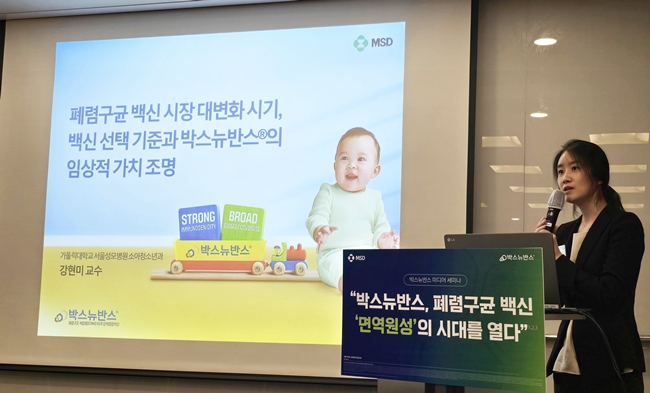
- MSD Korea is accelerating its efforts to capture the national immunization program (NIP) market by touting the high immunogenicity of Vaxneuvance. The vaccine has already been rapidly introduced to general hospitals and clinics upon its launch, and the company is highlighting the vaccine’s clinical benefits to gain a competitive advantage. Dr. Hyun-mi Kang, Professor of Pediatrics, St. Mary Vaxneuvance, which was approved late last year, is the first new pneumococcal vaccine introduced to Korea in 13 years. It is a 15-valent vaccine that added 2 serotypes -22F and 33F – to the existing 13-valent vaccine. In particular, the vaccine made the pediatric NIP list at an unprecedented speed, just one month after its approval. Since its launch in April, Vaxneuvance has been available for NIP vaccination in children aged 2 months to 5 years. Previously, Pfizer's Prevenar 13 was the only available NIP vaccine for pediatric pneumococcal disease. Now, MSD is expanding Vaxneuvance’s presence in the market by emphasizing that children who have received one or more doses of Prevenar 13 can also cross-vaccinate the remaining doses with Vaxneuvance. At the Vaxneuvance media seminar that was held on June 6, experts said that the introduction of Vaxneuvance has changed clinical practice. "We don't know the overall vaccination rate because we don't have specific data, in my hospital, Vaxneuvance is being administered first due to its broader coverage since April," said Hyun-mi Kang, professor of Pediatrics at St. Mary's Hospital in Seoul. Jaeyong Cho, Executive Director of MSD Korea's Vaccine Business Unit, added, "Although the data is unofficial, there has been an increase in Vaxneuvance’s use as third and fourth doses along with the initial dose since its launch. Overall, the rate of those receiving an initial dose of Vaxneuvance is higher, but the proportion of cross-vaccinations is also continuing to grow." Vaxneuvance’s strength is in the high immunogenicity of all serotypes Immunogenicity was also highlighted as the competitive advantage of Vaxneuvance during the media seminar. This means that there is a need to choose a highly immunogenic option to prevent invasive pneumococcal disease (IPD), which is highly fatal in children. The WHO's definition of immunogenicity is "the ability of a vaccine to induce a measurable immune response. The specific serotype-specific immunogenicity criteria are 'IgG concentration of 0.35 μg/mL or higher'. "In a Phase III study in healthy Korean infants and young children, Vaxneuvance demonstrated a primary immunogenicity endpoint of IgG of 0.35 μg/mL or higher across 15 serotypes after the 3rd dose in more than 95% of subjects," said Professor Kang. While Vaxneuvance is rapidly penetrating the market based on its clinical performance, there is hesitation in the field as Prevenar 20, which contains more serotypes, will be launched in the second half of the year. In this regard, Professor Kang emphasized that it is also important to consider the prevention effect of each serogroup in addition to the broader spectrum of protection. "We have been saying that preventing more is important for invasive pneumococcal disease due to its many serotypes, but the more number of serotypes does not necessarily mean that (the vaccine) is good. I think we need to consider the safety of the vaccine along with the immunogenicity for each serotype."
- Company
- Electronic drugs show potential to conquering Alzheimer's
- by Son, Hyung-Min Aug 08, 2024 09:24am
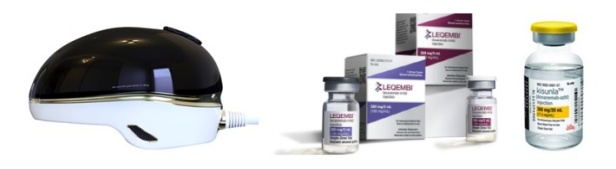
- The Korean pharmaceutical bio industry is making a bid into the electronic drug market for Alzheimer's disease. Recently, Remed unveiled the results of its transcranial magnetic stimulation (TMS) therapy that demonstrated an effect in treating Alzheimer's disease. AriBio, which is developing a new drug for Alzheimer's disease, is developing an electronic drug that uses vibroacoustic stimulation On July 7, Remed disclosed clinical results showing that an electronic drug being developed by Remed was effective in patients with Alzheimer's disease. Remed is a Korean biotech company that has been identifying the potential of electronic drugs in various areas including depression, attention deficit hyperactivity disorder (ADHD), and dementia. The electronic drug being developed by Remed for Alzheimer's disease uses transcranial magnetic stimulation. Transcranial magnetic stimulation is a brain stimulation procedure that uses magnetic fields to stabilize or activate brain nerve cells in a specific area at the base of the skull. It has been used to treat various brain disorders such as depression, intractable obsessive-compulsive disorder (OCD), and chronic pain. Remed’s subsidiary NextCure’s helmet-type wearable electronic therapyRemed has confirmed a change in the Alzheimer's Disease Assessment Scale-Cognitive Subscale (ADAS-Cog), an important indicator in the diagnosis of dementia, with its electronic drug in clinical development. The clinical trial was conducted from May 2020 to April 2022 to evaluate the efficacy and safety of the electronic drug in 30 patients with Alzheimer's disease. Trial results showed that the ADAS-Cog value of patients treated with the electronic drug improved significantly compared to those who did not receive treatment. More specifically, the change in ADAS-Cog values was above the ADAS-Cog MCID threshold of 4.0, which is regarded as a clinically significant change in dementia medications, and showed no serious adverse events. "These results suggest that transcranial magnetic stimulation may be effective in Alzheimer's patients in addition to depression, intractable OCD, chronic pain, and stroke," said the researchers involved in the trial. Remed plans to complete the exploratory trial and submit a confirmatory IND to the Ministry of Food and Drug Safety. AT&C is developing a treatment system that combines an electronic drug that uses transcranial magnetic stimulation and digital therapeutics (DTx) for the treatment of mild Alzheimer's disease. The company is currently conducting a confirmatory clinical trial with 158 patients at Korea University Anam Hospital, Dong-A University Hospital, Chonnam National University Hospital, Jeonbuk National University Hospital, Chung-Ang University Gwangmyeong Hospital, Chungnam National University Hospital, and Hanyang University Hospital. According to the company, the combination of transcranial magnetic stimulation and digital therapeutics showed better and longer treatment effects than conventional medication and cognitive training, which showed low treatment effects and short treatment duration. In addition to Remed and AT&C, another company, AriBio, is developing electronic drugs for Alzheimer's disease. In May, Aribio received approval from the Ministry of Food and Drug Safety to conduct a clinical trial for an electronic drug that uses vibroacoustic stimulation on Alzheimer's disease patients. The company’s brain vibroacoustic stimulation electronic drug offers a new approach to treating Alzheimer's disease. The company explained how their trial is the first clinical trial of an electroacoustic brain stimulation device that uses vibroacoustic stimulation, although there have been devices that use electric, electromagnetic field, and ultrasonic methods in the past. The clinical trial will be conducted by Professor Sang-Yoon Kim’s team from the Seoul National University Bundang Hospital, to confirm the efficacy and safety of brain vibroacoustic stimulation. The efficacy of the electronic drug will be evaluated in a double-blind, 6-month trial in 30 patients with early-stage Alzheimer's disease, including those with mild cognitive impairment. If the exploratory clinical trial confirms the efficacy of the electronic drug, AriBio aims to launch the electronic drug for dementia by 2026 after conducting a confirmatory clinical trial. In addition to the electronic drug, AbiBio is also conducting a Phase III clinical trial on AR1001, a novel drug candidate for Alzheimer's disease. AR1001 targets multiple causes of Alzheimer's disease, including the PDE5 protein. Recently, studies have shown that phosphodiesterase 5 (PDE5) inhibitors, such as Viagra and Cialis, are effective in preventing Alzheimer's disease, raising interest in AR1001's commercialization potential. The introduction of electronic drugs in the field...will Alzheimer's disease finally be conquered? Eisai and Biogen’s Alzheimer’s treatmentAlzheimer's disease has been a challenging area for drug development. After the hypothesis that Alzheimer's disease is caused by amyloid beta emerged, targeted drugs were developed, and then were found ineffective. One such drug was Eisai’s Aduhelm (aducanumab). The amyloid beta hypothesis was highly suspect, so there was not much confidence in the drug, but the drug worked. However, Aduhelm was withdrawn from the market due to its high price and concerns about side effects. Then came Leqembi (lecanemab), developed by Eisai and Biogen. Leqembi showed efficacy in early-stage Alzheimer's disease in clinical trials and has cleared regulatory hurdles in South Korea, the U.S., Japan, and China. Lilly’s Alzheimer’s treatmentMore recently, Lilly's Kisunla (donanemab) has also been approved by regulatory authorities. Kisunla was shown to delay cognitive deterioration in patients with early Alzheimer's disease in the Phase III TRAILBLAZER-ALZ2 study. In the study, donanemab delayed cognitive deterioration regardless of disease progression or pathologic stage. However, there is currently no cure for Alzheimer's disease. Although Leqembi and Kisunla have emerged, experts believe that they are only effective in patients with early-stage Alzheimer's disease. This is why the pharmaceutical industry continues to tackle Alzheimer's disease with a variety of possibilities, including not only new drugs but also electronic drugs and digital therapeutics. To date, clinical trials using electronic drugs have been limited to exploratory trials, but if they show effectiveness in confirmatory trials, they may also show synergy with the new drugs on the market.
