
- LOGIN
- MemberShip
- 2026-05-03 06:51:06
- Company
- Will Handok’s Empaveli be reimbursed in 1H in KOR?
- by Eo, Yun-Ho Aug 19, 2024 05:47am
- Empaveli, a treatment for paroxysmal nocturnal hemoglobinuria imported by Handok Pharmaceuticals, has entered the final gateway to insurance reimbursement in Korea. According to industry sources, Handok will enter into drug price negotiations with the National Health Insurance Service for its new drug Empaveli (pegcetacoplan). Empaveli is a treatment for paroxysmal nocturnal hemoglobinuria (PNH) developed by the U.S. company Sobi. It is the first C3 protein-targeted therapy for the treatment of adult patients with PNH. Gaining attention as the first PNH drug that can prevent intravascular and extravascular hemolysis, Empaveli is approved for use in many countries, including the United States, Europe, Australia, and Japan. The drug was approved by the U.S. Food and Drug Administration (FDA) in May 2021 and the European Medicines Agency (EMA) in December 2021, and has completed two Phase III trials. According to the results of the Phase III PEGASUS trial that was published in the NEJM, Empaveli demonstrated superiority to eculizumab in changing hemoglobin concentration over 16 weeks. In an extension study, LDH levels, a marker of intravascular hemolysis, remained below 1.5 times the upper normal limit for 48 weeks in the Empaveli treatment arm. The percentage of patients who remained transfusion-free for 16 weeks was also higher in the Empaveli arm, at 85%, compared to 15% in the eculizumab arm. Empaveli also showed a 9.2-point improvement in the FACIT-fatigue score, a quality-of-life measure. A2-point or over change from the baseline of the FACIT-fatigue score is considered clinically significant. The efficacy of Empaveli was also confirmed in the PRINCE trial in complement inhibitor-naïve PNH patients. After 26 weeks of follow-up, 85.7% of patients in the Empaveli arm showed stabilized hemoglobin levels, and LDH levels were well controlled to below normal levels in the Empaveli arm. Meanwhile, Handok has entered into a strategic partnership with Sobi to introduce the rare disease drugs Empaveli and Doptelet (avatrombopag) to Korea. In April, the company officially launched its joint venture, Sobi-Handok, to strengthen its rare disease pipeline.
- Company
- Will Astellas’ gastric cancer drug Vyloy be approved in 2H?
- by Eo, Yun-Ho Aug 19, 2024 05:47am
- Zolbetuximab, a new targeted cancer therapy with a new mechanism of action for gastric cancer, may be commercialized in Korea in the second half of the year. According to industry sources, the Ministry of Food and Drug Safety (MFDS) is currently reviewing Vyloy (zolbetuximab), a treatment for patients with CLDN18.2 positive, unresectable, advanced, or recurrent gastric cancer. The drug was approved in Japan in March. Vyloy is an immunoglobulin (IgG)1 monoclonal antibody that targets Claudin 18.2, a cell surface protein expressed by gastric cancer cells. It binds to the claudin 18.2 protein expressed on the surface of cancer cells in gastric epithelial cells. However, unfavorable conditions to its approval also do exist. In January, Vyloy was denied approval by the U.S. FDA. The rejection was not based on any efficacy issues, including the drug's clinical data, but rather because of questions raised during the manufacturer's review. Astellas resubmitted its application to the FDA in June and the application is on track for Vyloy’s approval. Meanwhile, Vyloy has demonstrated efficacy in the Phase III SPOTLIGHT and GLOW studies. The POTLIGHT study evaluated the efficacy and safety of zolbetuximab+FOLFOX (fluorouracil, leucovorin, oxaliplatin) versus placebo+FOLFOX in 557 adult patients with CLDN18.2-positive, HER2-negative, locally advanced unresectable or metastatic gastric or gastroesophageal junction (GEJ) adenocarcinoma. In the trial, the zolbetuximab arm achieved a primary endpoint, progression-free survival (PFS), of 10.6 months, compared with the 8.7 months in the control arm. Additional study results showed that the zolbetuximab combination arm achieved an overall survival (OS) of 18.2 months, a 2.7-month improvement over the control arm. The zolbetuximab combination arm also showed an improvement in PFS and OS in the GLOW study. The study compared zolbetuximab+CAPOX therapy (capecitabine, oxaliplatin) with placebo+CAPOX therapy. Study results showed that the zolbetuximab arm had a PFS of 8.2 months, 1.4 months longer than that of the control arm. OS was 14.4 months in the zolbetuximab combination arm and 12.2 months in the control arm. In terms of safety, the most commonly reported adverse events were nausea and vomiting.
- Company
- Entresto faces competition in the heart failure market
- by Moon, sung-ho Aug 19, 2024 05:47am
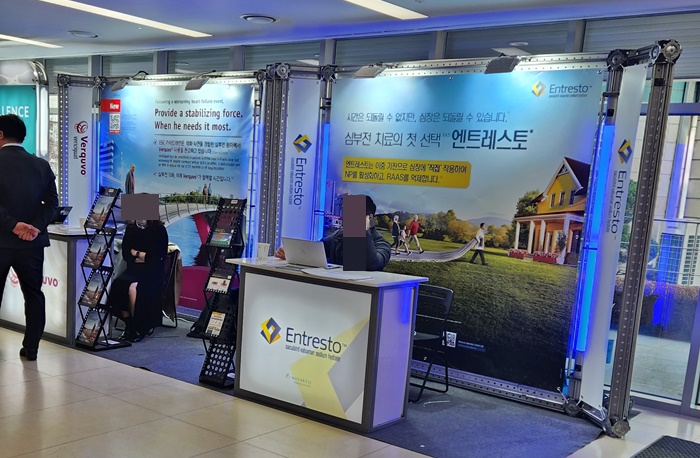
- As the volume of treatment for patients with heart failure increases due to the aging population, the competition is accelerating in the market for the treatment. This is because there are more treatment options in clinical practices and higher chances of generics entry into the market. Growing competition in the market for heart failure, previously dominated by Entresto.According to the medical and pharmaceutical industry on August 13th, the medicine market saw significant growth following major academic associations' revision to the guidelines for treating heart failure and the release of major new drugs. In the current clinical practices, there are '4 pillars' strategy of standard therapy for treating heart failure consisting of 'ARNI/Angiotensin-Converting Enzyme Inhibitor (ACEI),' 'Beta-Blocker (BB),' 'Mineralocorticoid Receptor Antagonist (MRA),' and SGLT-2 inhibitors, which is now expanded its use in addition to diabetes. Novartis' chronic heart failure treatment 'Entresto (sacubitril/valsartan)' has shown significant growth among these treatments. Entresto is the first-in-class dual blocker ARNI combining valsartan, an angiotensin II receptor blocker (ARB) inhibitor, and sacubitril, a neprilysin inhibitor. The turning point for this drug was being approved as a first-line treatment for patients who had not been administered ACEI or ARB since March 2022. In the same year, it became available for prescription to hospitalized patients and outpatients. When the Korean Society of Heart Failure (KSHF) revised 'A Complete Revision of the Heart Failure Guidelines,' it advanced Entresto as the first-line standard therapy for treating heart failure with reduced ejection fraction (HFrEF). According to the pharmaceutical market research firm UBIST, Entresto generated KRW 57.5 billion in the clinical field last year and recorded KRW 32.9 billion in this year's first half. It has become true that the sales have surpassed those of the previous year. Another medicine that is receiving attention is 'Verquvo (Vericiguat, Bayer).' Verquvo, available with reimbursement coverage, can be administered to patients with chronic heart failure (NYHA class Ⅱ-Ⅳ) with an impaired left ventricular contractility and left ventricular ejection fraction (LVEF) of less than 45%. It is a second-line treatment that can be used for patients who have worsened disease despite undergoing standard therapy for over four weeks. However, it has not yet demonstrated sales growth in clinical practices. A year after obtaining reimbursement in the second half of the previous year, Verquvo only generated sales of approximately KRW 400 million in the first half this year, based on UBIST. One reason for this might be the wide variety of treatment options due to the expanded reimbursement range of the original SGLT-2 inhibitor diabetes drugs, including Jardiance (empagliflozin), for chronic heart failures. Furthermore, while Forxiga (dapagliflozin, AstraZeneca) withdrew from the domestic market, AstraZeneca Korea granted clinical documents to HK inno.N's generic Dapa N, thus Dapa N succeeding Forxiga's heart failure and kidney disease indications. Consequently, Dapa N is the only generic product with the original indication. The analysis shows that Verquvo is considered a last resort treatment option for treating heart failure in clinical practices. Currently, clinicians have more treatment options they can use. A cardiology professor from a university hospital in Seoul, who requested to remain anonymous, stated, "Verquvo is used as a second-line treatment following four types of first-line treatment options, so it is not in competition with the first-line treatments." He explained, "SGLT-2 inhibitors were already being prescribed in private practices for diabetes, which reduced the psychological burden and made it easier to prescribe for heart failure. Verquvo is initially prescribed in tertiary hospitals and used as patients move to secondary and primary care hospitals." "It would have been a different scenario for SGLT-2 inhibitors if it had been initially released as heart failure treatment," he added. "After being used primarily as a diabetes drug, it has gained attention for its effectiveness in treating heart failure. The situation might be different if it were the other way around."

- Policy
- Will Paxlovid soon be reimbursed in Korea?
- by Lee, Tak-Sun Aug 19, 2024 05:47am
- The government has announced that it will expedite the insurance listing process for COVID-19 drugs due to COVID-19 resurgence in Korea. As a result, attention is focused on whether the government will speed up the reimbursement coverage of the COVID-19 drug Paxlovid, which has remained under review by Korea’s Health Insurance Review and Assessment Service ever since Pfizer applied for reimbursement in October last year. On the afternoon of the 14th, the government held a meeting to urgently review the 'COVID-19 epidemic trend and response plan’ with officials from the Ministry of Health and Welfare, Korea Disease Control and Prevention Agency, Office of the Government Policy Coordination, Ministry of Education, Ministry of Interior and Safety, Ministry of Food and Drug Safety, and the National Fire Agency. At the meeting, the MOHW announced that it will promptly review COVID-19 treatments that apply for reimbursement upon approval by the Ministry of Food and Drug Safety by hastening the reimbursement adequacy evaluation, NHIS negotiations, and Health Insurance Policy Review Committee deliberations. The two COVID-19 drugs currently under reimbursement review are Pfizer's Paxlovid (nirmatrelvir/ritonavir) and Gilead's Veklury (remdesivir). The companies had submitted applications for their respective treatments to HIRA in early October of last year. However, none had yet passed the internal review stage. Drugs under review are subject to a final review of their reimbursement adequacy by HIRA’s Drug Reimbursement Evaluation Committee (DREC) before moving on to the negotiation stage with the NHIS, but the 2 drugs have not yet been placed on an agenda for deliberation by DREC. In particular, HIRA has reportedly instructed the company to submit supplementary data for Paxlovid 8 times. However, the government is believed to have changed its policy to expedite review after it was pointed out that the resurgence of COVID-19 is hampering the supply of drugs and that the government needs to hasten its approval to stabilize the supply for severe COVID-19 patients. After the joint ministry meeting, MOHW Minister Kyoo-hong Cho, said, “We will expedite the procurement and reimbursement listing of COVID-19 drugs so that high-risk patients can stably receive supply.” It is reported that HIRA, which is conducting the reimbursement review, and the NHIS, which will negotiate the insurance drug prices in the future, held a business meeting to discuss measures. The NHIS is expected to first conduct preliminary negotiations with pharmaceutical companies for COVID-19 treatments to shorten the time to their reimbursement listing. Preliminary negotiations are conducted for severe disease treatments that do not require pharmacoeconomic evaluation, but the negotiations are likely to be applied this time just like how they were conducted to raise the price of respiratory drugs that had difficulty being supplied due to COVID-19 The 60-day negotiation period can be shortened to 30 days or less if preliminary negotiations with the MFDS are conducted from the drug review stage. Accordingly, if Paxlovid is reviewed by DREC in September, pricing negotiation can be completed within the month, be deliberated by HIPDC, and be reimbursed in October at the earliest. The problem is the price of the drug. Paxlovid’s insured price is likely to be higher than the KRW 50,000 that patients currently pay out of pocket with state support. The non-reimbursed price of Paxlovid is reportedly around KRW 700,000, and if the out-of-pocket cost paid by the patients becomes much higher than it is now, the insurance authorities may face another round of criticism.
- Policy
- KDCA operates Public-Private Council for COVID-19 response
- by Kang, Hye-Kyung Aug 16, 2024 05:56am
- The Korea Disease Control and Prevention Agency (KDCA) announced that it will do its utmost to respond to COVID-19 by reorganizing its COVID-19 task force and forming a public-private council with experts. The agency expects the outbreak to continue until the end of August. On the 13th, the KCDA said, “The number of hospitalized COVID-19 patients began to increase from the end of June in the COVID-19 sampling surveillance. 861 were reported in the first week of August, approaching the peak of 875 hospitalized patients that was recorded in February this year. Considering the epidemic trend over the past 2 years, the number of COVID-19 patients is expected to increase until the end of August,” it said. The KCDA plans to expand its COVID-19 Task Force currently in operation. The response system, which was initially operated as 2 teams under 1 Task Force, will be expanded to 12 teams under five Units, with the head of the KCDA serving as the lead, to respond more quickly and thoroughly to epidemic investigation and analysis, overseas surveillance, and treatment supply and demand management. In addition, the KDCA explained that it had organized a public-private council with experts from the medical and academic fields related to COVID-19 to collect expert opinions, share the status of the COVID-19 outbreak with the medical community, and discuss countermeasures, and will hold regular meetings starting on the 14th. “This number of COVID-19-related hospitalizations has been increasing this summer, and it is likely to reach the scale of last year's summer epidemic, with 65% of confirmed cases occurring among the elderly aged 65 and older,” explained KDCA Commissioner Young-mee Jee. However, Commissioner Jee added, “Based on the analysis of domestic and international organizations on the KP.3 variant, which is currently the most common variant, the severity and fatality rates are not assessed to be significantly different from the previous Omicron variant, and the COVID-19 fatality rate in Korea in 2022-2023, which was after the Omicron outbreak, was less than 0.1%, especially for those under 50 years old. There is no need to be overly anxious.” “The most important thing to do for a healthy and safe summer is to take precautions to prevent infectious diseases, such as ventilating your home, washing your hands, and wearing a mask.”
- Company
- Twice-yearly Uplizna enters last stage to reimb in KOR
- by Eo, Yun-Ho Aug 16, 2024 05:56am
- Uplizna, a new drug for neuromyelitis optica spectrum disorder (NMOSD) that is administered twice a year, has entered the final gateway for insurance reimbursement in Korea. According to industry sources, Mitsubishi Tanabe Pharma Korea entered pricing negotiations with the National Health Insurance Service (NHIS) for Uplizna (inebilizumab), a treatment used to treat adult patients with neuromyelitis optica spectrum disorder (NMOSD) who are positive for anti-Aquaporin-4 (AQP4) antibodies. The company accepted the ‘below the evaluated amount’ condition set by the Health Insurance Review and Assessment Service's Drug Reimbursement Evaluation Committee for the reimbursement of Uplizna (inebilizumab) last month. The drug is administered at an initial 300 mg dose, followed by an additional 300 mg dose 2 weeks later, and then every 6 months thereafter from the date of the initial dose. NMOSD occurs when AQP4 autoantibodies, a disease-specific biomarker produced by B cells, bind to AQP4, a target antigen present on glial cells in the central nervous system, and activate the immune responses, causing nerve damage. Uplizna is an anti-CD19 human monoclonal antibody that selectively binds to CD19, a B cell-specific surface antigen, depleting B cells that produce AQP4 antibodies, thereby preventing disease relapse. The safety and efficacy of Uplizna were demonstrated in the N-MOmentum study, which evaluated the use of Uplizna monotherapy in 230 patients without the use of concomitant immunosuppressive agents. Study results showed that 89% of patients treated with Uplizna did not experience a relapse during 197 days of follow-up, resulting in a 77.3% reduction in the risk of relapse compared to placebo. Safety evaluations Uplizna also showed comparable rates of adverse events to the placebo group. Also, in an extension study, Uplizna continued to reduce the risk of relapse for at least 4 years, with an 87.7% relapse-free rate. In terms of long-term safety profile, Uplizna was generally well tolerated, with no increase in infection rates due to B-cell depletion. NMOSD is a serious autoimmune disease in which most patients experience persistent relapses and incomplete recovery, resulting in accumulated nerve damage that can cause vision loss, gait disturbances, and even death from respiratory failure.
- Company
- OraTicx signs a distribution deal with U.S.-based Stratum
- by Son, Hyung-Min Aug 16, 2024 05:56am
- OraTicx, a company specializing in developing oral probiotics, announced that it has signed an exclusive distribution agreement for the North American region with Stratum Nutrion (hereafter referred to as Stratum), a U.S.-based dietary supplement ingredient supplier. Through this agreement, OraTicx will exclusively distribute its proprietary oral probiotics 'oraCMU,' 'oraCMS1,' and 'oraCMU' in the North American market. Stratum, a company under ESM Technologies in the United States, provides natural ingredients based on scientific research. Through this partnership, OraTicx is expected to utilize Stratum's broad distribution network to accelerate the entry of its products into the North American market. OraTicx has 10 patents in South Korea and the United States. It has expertise in researching oral probiotics, completing 10 cases of human studies, and publishing 36 research articles. Notably, its oral probiotics strain, oraCMU, was developed in an OraTicx-affiliated research center. Through joint research with a research team at Seoul National University School of Dentistry, oraCMU's human study results demonstrating an improvement in halitosis were published in the SCIE international journal, 'Frontiers in Microbiology.' oraCMU demonstrated the quality and safety of the ingredient through FDA GRAS (Generally Recognized As Safe) registration. oraCMS1 has been confirmed to prevent plaque formation and exhibit antibacterial efficacy against respiratory pathogens. Recently, OraTicx has obtained a patent for its composition aimed at preventing and treating respiratory diseases. OraTicx has launched oral probiotics products using proprietary research. It is expanding its product line-up focused on oral probiotics, including Green Breath, Dentee, kids' dental probiotics, Implantics with twice the units, and Pet Biome for pets. OraTicX President Yoon Eun-seop said, "The current exclusive distribution agreement with Stratum is an important opportunity to introduce our innovative oral probiotics to North American customers." He added, "We aim to establish a new value in the North American dietary supplement market and become a leading global company contributing to people living heathy lives until the age of 100." Stratum President Micah Osborne said, "OraTicx's advanced oral probiotics will strengthen our portfolio even more." He added, "Through this partnership, we are delighted to provide various and effective healthcare solutions to North American customers."
- Policy
- KDCA 'COVID-19 drug supply will be stabilized within August'
- by Lee, Hye-Kyung Aug 16, 2024 05:55am
- The government has explained that pharmacies nationwide will have enough COVID-19 drugs by the last week of August. In the case of self-test kits, the government added that it plans to produce and supply more than 5 million kits within August to ensure no shortage. The Ministry of Health and Welfare (Minister Kyoo-hong Cho) held a joint meeting with the Korea Disease Control and Prevention Agency (KDCA) (Commissioner Young-mee Jee), the Office of the Government Policy Coordination (Minister Ki-sun Bang), the Ministry of Education (Minister Ju-ho Lee), the Ministry of Interior and Safety (Minister Sang-min Lee), Ministry of Food and Drug Safety (Director Yu-Kyoung Oh), and the National Fire Agency (Commissioner Seok-gon Heo) met together on the 14th at 4:30 p.m. to review Korea’s ‘COVID-19 epidemic trend and countermeasures’ in light of the recent increase in COVID-19 infections. The weekly usage of COVID-19 treatments as disclosed by the KDCA increased to exceed 42,000 doses in the 5th week of July, compared to the 1,272 doses used in the 4th week of July, exceeding the amount used during the summer season last year. To address the increased usage, the KDCA plans to supply additional drugs sequentially from this week, so that there will be enough drugs in all pharmacies that supply COVID-19 treatments from the last week of August (8.25~8.31). “We will endeavor to ensure smooth access to the treatment everywhere in the country by the last week of August,” the KDCA said. The Ministry of Health and Welfare plans to promptly review COVID-19 treatments that apply for reimbursement upon approval by the Ministry of Food and Drug Safety by hastening the reimbursement adequacy evaluation, NHIS negotiations, and Health Insurance Policy Review Committee deliberations. The MFDS is closely monitoring the supply of COVID-19 self-test kits and the entire production and distribution process. Domestic manufacturers have been scaling back production of self-test kits since COVID-19 turned endemic, but have recently expanded their production and supply to meet the rise in demand for COVID-19 test kits since late July. Korea’s COVID-19 self-test kit manufacturers own sufficient facilities, technology, and capacity to meet domestic demand, and are expected to produce and supply more than 5 million self-test kits within August. The MFDS added, “Korea’s COVID-19 self-test kit manufacturers have produced 40 million self-test kits per week in the past.” Meanwhile, the number of hospitalized COVID-19 patients has been increasing again since the end of June, and the number of hospitalized patients reached its peak this year (1,357, provisional) in the second week of August. While respiratory viruses are primarily prevalent during the winter season, COVID-19 has also been prevalent during the summer season (July-August) in 2022 and 2023, and given this trend, the number of COVID-19 patients is expected to continue to increase in the near future. According to the Ministry of Health and Welfare, the number of emergency room visits due to COVID-19 jumped from 2,240 in June to 11,627 in July. The MOHW said, “We plan to establish a cooperative system for hospitalization of COVID-19 patients by securing free beds, mainly in public hospitals that had been previously operated as dedicated COVID-19 hub hospitals. In order to ensure prompt treatment of COVID-19 patients in their local areas according to the pandemic situation, we plan to secure a list of COVID-19 treatment hospitals by local governments in cooperation with the Ministry of the Interior and Safety and local governments, and publish it through the Emergency Medical Services System.” The 2024-2025 COVID-19 vaccination plan will utilize a new vaccine (against the JN.1 strain) that is more effective against strains currently circulating in Korea and around the world. The government is currently in the process of licensing and approving the new vaccine so that it can be administered simultaneously with the flu vaccine in October, and details of the plan will be announced in September. “To respond to the COVID-19 pandemic, we will work with relevant ministries and organizations to secure beds so that COVID-19 patients can be treated promptly, and expedite the procurement of COVId-19 treatments and their reimbursement listing so that high-risk patients can stably receive treatment,” said MOHW Minister Kyoo-hong Cho. “The fatality rate of COVID-19 in Korea in 2023 (January-August), after the Omicron variant outbreak, was in the 0.05% range, and less than 0.01% for those under 50 years old, so there is no need to be overly anxious about the outbreak this summer,” said KDCA Commissioner Young-mee Jee. ”We will do our best to ensure that the additional supplies of COVID-19 drugs we secure from next week be supplied smoothly to patients for their convenient use.”
- Company
- K-Pharma speeds up marketing new drugs for bile duct cancer
- by Son, Hyung-Min Aug 16, 2024 05:55am
- Korean pharmaceutical companies are speeding up the development of new drugs for cholangiocarcinoma (also known as bile duct cancer). Handok's partnering company in the United States, Compass Therapeutics, has recently completed registering patients for the Phase 2/3 trials. Once the efficacy of the novel drug is confirmed, Handok plans to apply for approval in South Korea. According to pharmaceutical industry sources on August 16th, Compass Therapeutics has recently completed registering patients for the Phase 2/3 trials in the United States. The trials will evaluate the efficacy of HDB001A(CTX-009) for metastatic or recurrent cholangiocarcinoma and compare the efficacy of HDB001A in combination with paclitaxel to the paclitaxel monotherapy. HDB001A is a novel drug candidate developed by the Korean company ABL Bio. Handok has the domestic distribution rights, and Compass Therapeutics has the global distribution rights. This novel drug candidate is a bispecific antibody targeting Delta-like ligand 4 (Dll4) and vascular endothelial growth factor (VEGF), and it is known to form new blood vessels in the tumor microenvironment. Handok has confirmed the efficacy and safety of HDB001A in the Phase 2 trial conducted in South Korea. The clinical trials evaluated and compared HDB001A in combination with paclitaxel to paclitaxel monotherapy in 24 adult patients with advanced, metastatic, or recurrent cholangiocarcinoma who have received prior treatments. After a median follow-up of 12 months, patients treated with the combination therapy had an objective response rate (ORR) 37.5%, measuring the reduction in tumor sizes. The median overall survival (OS) was 12.5 months. The median duration of response (DOR) was 9.4 months, and the median progress-free period (PFS), duration without progression, was 9.4 months. However, the adverse events of HDB001A plus paclitaxel occurred at the highest rate. Treatment-related adverse events (TRAE) of all Grades, from 1 to 5, were reported in HDB001A plus paclitaxel combination therapy. 75% of patients had adverse reactions of over Grade 3. The most common adverse reactions over Grade 3 were neutropenia (50%), hypertension (16.7%), anemia (12.5%), and thrombocytopenia (8.3%). One case of Grade 5 pneumonia was reported. 25% of patients had confusion state, pulmonary embolism, and an increase in blood creatinine level. Once Handok confirms the efficacy and stable safety data from the U.S. clinical trial, it will apply for approval in South Korea. Confirming the potential of Keytruda combination therapy…enters the clinical trial Besides Handok, Genome & Company, GI Innovation, and SMT bio are developing novel drugs for cholangiocarcinoma. These companies are conducting clinical trials for Keytruda combination therapies. Korean pharmaceutical companies are conducting clinical trials for their candidate drugs in combination with various immune checkpoint inhibitors, including Keytruda.Keytruda was approved in April as a first-line treatment of cholangiocarcinoma in South Korea. Genome & Company, GI Innovation, and SMT bio plan to increase the possibility of commercializing their candidate products in combination with an efficacy-confirmed drug. Genome & Company is developing a new candidate product, microbiome-based immune checkpoint GEN-001, in combination with Keytruda for cholangiocarcinoma. Genome & Company aims to improve the efficacy of existing immune checkpoint inhibitors through combination therapy of 'GEN-001' and Keytruda. The company also plans to develop 'GENA-104,' an immune checkpoint inhibitor 'GENA-104' that suppresses novel target CNTN4, for patients who had not benefited from Keytruda targeting PD-L1/PD-1. The Phase 2 trial of GEN-001 for cholangiocarcinoma was approved for changes to the Investigational New Drug (IND) application in June. Genome & Company plans to evaluate the efficacy and safety of three-drug combination therapy, adding FOLFOX (fluorouracil, leucovorin, and oxaliplatin) to the existing GEN001 plus Keytruda combination therapy. Genome & Company confirmed the tolerability and safety of GEN-001 in the Phase 1 trial and determined the recommended dosage for the Phase 2 trial. The trial recently finalized patient treatments. SMT bio is conducting Phase 2b trials for allogenic Natural Killer cells (SMT-NK cells) in combination with Keytruda. The company is evaluating the efficacy of the combination therapy compared to the Keytruda monotherapy. Based on clinical results until now, the combination therapy had a PFS of 4.1 months, which is higher than 1.5 months of the Keytruda monotherapy. It showed improved ORR compared to monotherapy. Last year, the Ministry of Food and Drug Safety (MFDS) acknowledged the effectiveness of SMT-NK cells and approved the therapeutic use of under-trial pharmaceutical for treating patients with cholangiocarcinoma. GI Innovation is conducting a Phase 1 trial in the United States to evaluate the effectiveness of GI-101 in combination with Keytruda. The company aims to secure an indication for treating solid cancers, including cholangiocarcinoma. GI Innovation is also evaluating the marketing possibility of its candidate product in combination with a wide variety of immune checkpoint inhibitors, such as Imfinzi, in addition to Keytruda.
- Will Keytruda be reimb for its 17 indications in 2H?
- by Eo, Yun-Ho Aug 14, 2024 05:51am
- Whether any progress will be made in the immuno-oncology drug Keytruda’s reimbursement journey in the second half of the year is gaining attention. The application, which was first filed for 13 indications, has now grown to request coverage for 17 indications. In June last year, MSD Korea applied to extend the reimbursement coverage of its PD-1 inhibitor Keytruda (pembrolizumab) to 13 indications The 13 indications were: ▲ early-stage triple-negative breast cancer; ▲locally recurrent or metastatic triple-negative breast cancer, ▲metastatic or with unresectable, recurrent head and neck squamous cell carcinoma, ▲ locally advanced or metastatic esophageal or gastroesophageal junction (GEJ) carcinoma, ▲ adjuvant treatment of patients with renal cell carcinoma, ▲ non-muscle invasive bladder cancer, ▲ persistent, recurrent, or metastatic cervical cancer, ▲ advanced endometrial carcinoma, ▲ advanced endometrial carcinoma that is microsatellite instability-high (MSI-H) or mismatch repair deficient (dMMR) ▲ unresectable or metastatic MSI-H or dMMR colorectal cancer ▲ metastatic MSI-H or dMMR small bowel cancer, ▲ metastatic MSI-H or dMMR ovarian cancer, and ▲ metastatic MSI-H or dMMR pancreatic cancer In December of the same year, the company submitted an application to include additional indications for MSI-H gastric cancer and MSI-H biliary tract cancer, and in April of the next year, 15 indications were submitted to the Health Insurance Reimbursement and Assessment Service’s Cancer Disease Review Committee for deliberation. At the time, the result was 'no reimbursement standard set', but the company also received a condition was the CDDC will rediscuss Keytruda’s reimbursement status if the company additionally submits a financial sharing plan. In other words, its review of the drug’s medical feasibility and medical necessity has been completed for 15 indications. In the first half of the year, the company also submitted applications to expand Keytruda’s reimbursement standards to HER2-positive (KN-811) and negative (KN-859) gastric cancer indications, which were approved in Korea in December last year and March this year, respectively. As a result, the company will be applying for the reimbursement of a total of 17 indications for Keytruda. As Keytruda is a Risk Sharing Agreement (RSA) drug, the company is required to go through a new drug-like evaluation process for each indication to receive reimbursement expansions. Indications approved through Phase III clinical trials must go through a pharmacoeconomic evaluation process to demonstrate cost-effectiveness, while indications approved based on Phase II trials must negotiate to receive an exemption from conducting the pharmacoeconomic evaluation. Therefore, it will be interesting to see if Keytruda, which is undergoing an unprecedented reimbursement expansion process, will be able to deliver results in the second half of the year. Meanwhile, the Padcev (enfortumab vedotin) + Keytruda combination was recently approved in Korea, heralding a paradigm shift in bladder cancer treatment. The combination of the two drugs in bladder cancer gained significant attention after the results of the Phase III EV-302/KEYNOTE-A39 study were presented at the European Society for Medical Oncology Annual Congress (ESMO Congress 2023) in October last year.
