
- LOGIN
- MemberShip
- 2026-04-30 23:55:08

- Policy
- Keytruda will be considered for DREC next time
- by Lee, Tak-Sun Mar 11, 2025 05:54am
- Product photo of Keytruda The expanded use of scope application of the immune cancer drug Keytruda, which passed the Cancer Disease Review Committee, is expected to be considered for the Drug Reimbursement Evaluation Committee (DREC) review as soon as April. Previously, the 2nd DREC review for 2025, held on March 6, did not include Keytruda. As Keytruda's DREC review is imminent, the National Health Insurance Service (NHIS) has started to prepare for the next stage. According to industry sources on March 10, the NHIS has initiated a preliminary financial analysis of Keytruda, which is expected to undergo negotiations for an expanded reimbursement scope. Because the approval of the expanded scope of use for Keytruda is expected to cost substantial expenditure, the NHIS may aim to take the lead in negotiations through the preliminary financial analysis. It has been reported that the NHIS will conduct a financial analysis of Keytruda's expanded scope of use through internal meetings. After failing five times, the application of Keytruda for the expanded scope of use passed the Health Insurance Review and Assessment Service (HIRA)'s CDRC on the sixth attempt on the 12th of last month. Of the 17 applications considered for the review, 11 received reimbursement standards. The reimbursement will determined for these 11 indications with reimbursement standards once they pass the DREC and complete negotiations with the NHIS. Keytruda is reimbursed for seven indications in four cancer types, including non-small cell lung cancer, Hodgkin lymphoma, melanoma, and urothelial cancer. Keytruda's yearly claim amount exceeds KRW 400 billion. Therefore, if 11 indications are additionally reimbursed, it will substantially cost the National Health Insurance finance. Because of this, the key to the expanded scope of use negotiations will be the extent to which the pharmaceutical company will take a share of the finance. Consequently, the NHIS reportedly initiated preliminary analysis before negotiating even though the drug had not passed the DREC. The completion of the DREC review is expected in early April. Industry personnel said, "Although the drug was not considered for the DREC in March, it passed the CDRC in February, so there is a chance that it will be considered for the DREC soon," adding, "Because the CDRC carefully considered this item up to six times, the drug will likely to pass the DREC quickly." A drug under the Risk Sharing Agreement (RSA) with a claim amount over KRW 1.5 billion has to pass the DREC review to receive an expanded scope of use. The review outcome will be announced on that day.
- Company
- AbbVie’s Rinvoq to benefit most from changes in KOR
- by Whang, byung-woo Mar 10, 2025 06:05am
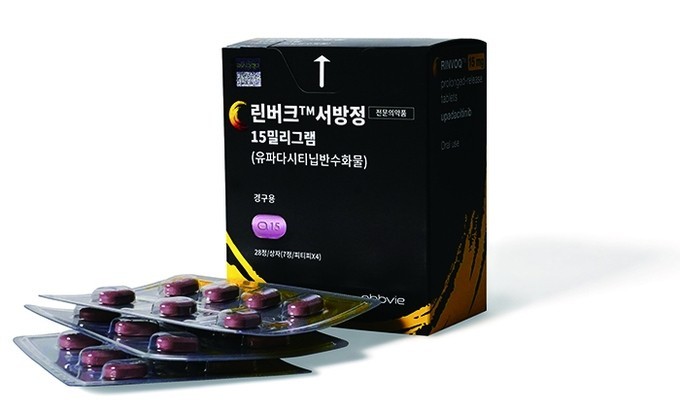
- Expansion has been growing on the expansion of related prescription markets with the government approving reimbursement for switching between atopic dermatitis treatments, which has been in high demand in the field. The industry expects an increased number of treatment options and an expanded scope of reimbursement to enable more effective treatment for patients. In particular, the presence of Rinvoq (upadacitinib) has been growing with its indication expansion to moderate to severe atopic dermatitis in adolescents aged 12 and older, and the grant for switching between JAK inhibitors. On the 7th, AbbVie Korea held a press conference on the latest clinical research of Rinvoq and changes in the treatment environment due to changes in the atopic dermatitis reimbursement coverage standards. Tae Young Han, Professor of Dermatology, Nowon Eulji Medical Center According to the Korean Atopic Dermatitis Association guidelines, patients with moderate-to-severe atopic dermatitis are highly recommended to consider switching to another biological agent or oral JAK inhibitor if they do not respond sufficiently to the biological agent or oral JAK inhibitor or if they cannot use them due to side effects. Until now, there have been limitations to treatment due to the fact that reimbursement coverage was not applied when the patient wanted to switch from biological agents to JAK inhibitors. However, from the 1st of this month, ▲if a patient is not responding to a biological agent or a JAK inhibitor, or ▲if the patient cannot continue taking the medication due to side effects (recommended to continue taking the replaced medication for at least 6 months), the patient will be eligible for reimbursement even if the patient has switched to a JAK inhibitor or biological agent. However, switching between the same class of drugs is not allowed. Professor Tae Young Han of the Department of Dermatology at Nowon Eulji Medical Center who made a presentation on this day, said, “Atopic dermatitis is a disease that has symptoms and manifestations depending on the characteristics of the patient, and a personalized treatment strategy is needed for each patient to receive appropriate treatment. The recognition of reimbursement coverage for switching has opened up new treatment opportunities for patients who have not seen sufficient treatment effects so far.” Han added, “Patients who have had side effects or showed an inadequate response to biological agents can be switched to a JAK inhibitor such as Rinvoq to achieve an appropriate treatment response. In addition, with the availability of reimbursement coverage, it is now possible to prioritize the use of treatments that are expected to be highly effective for each patient, from his or her initial treatment.” The reason why the expansion of Rinvoq’s influence is drawing attention is because of the Heads Up trial, which is a head-to-head trial between Dupixent (dupilumab), the biological agent with the most prescriptions, and Rinvoq. The results showed that 90% of patients who switched to Rinvoq (30 mg) after 24 weeks of dupilumab (300 mg) achieved EASI 90 (an almost clear skin condition) at Week 16 of Rinvoq treatment (40 weeks in total), and 56.1% achieved WP-NRS 0/1 (no or almost no itching). Yong Hyun Jang, Professor of Dermatology at Kyungpook National University said, “For moderate or more severe atopic dermatitis, the use of drugs that have quick and high efficacy in the early stages needs to be prioritized to quickly suppress severe itching. With switching between different classes of drugs granted reimbursement in Korea, the burden of choosing Rinvoq as the initial treatment option will be reduced as its long-term safety has been confirmed in clinical trials.” According to the results of the approximately 4-year follow-up of the extension study of Phase III clinical study on Rinvoq (Measure Up 1, Measure Up 2), among patients who received 15 mg and 30 mg Rinvoq, 69.8% and 72.9% of patients maintained EASI 90 and 44.9% and 47.2% of the patients maintained WP-NRS 0/1, respectively. Yong Hyun Jang, Professor of Dermatology at Kyungpook National University The indication expansion to adolescents aged 12 and older and the reimbursement expansion for Rinvoq also received positive evaluations. Professor Jang said, “Adolescents require sufficient sleep for growth and development, and lesions on visible areas such as the face and neck are especially stressful at that age. This is a very important period to prevent exacerbation of atopic dermatitis in adulthood, so the importance of early treatment is even greater. I expect the changes in the approval environment in Korea will help establish a flexible treatment strategy.” Jiho Kang, Country Medical Director of AbbVie Korea, added, “With the approval of switching and the approval for adolescents and the expanded insurance reimbursement coverage, we hope that the flexible dose strategy of Rinvoq will help improve the quality of life and enable patients to enjoy daily life that is no different from that of the general public through Rinvoq’s fast and strong treatment effect.” Meanwhile, due to the approval of switching, Rinvoq’s insurance price has been cut due to expected additional claims, based on the calculation formula. Due to this expansion of the scope of use, the insurance price ceiling of Rinvoq will be reduced from the previous KRW 18,740 to KRW 18,328 for the 15 mg product and from the previous KRW 29,850 to KRW 29,193 for the 30 mg product starting next month.
- Company
- Greenlight for reimbursement of ' Tepmetko'
- by Eo, Yun-Ho Mar 10, 2025 05:51am
- Product photo of Tepmetko The MET-targeted anticancer drug 'Tepmetko' has gained the greenlight to the insurance reimbursement coverage. According to industry sources, Merck Korea has agreed to the drug pricing negotiations with the National Health Insurance Service (NHIS) for its Tepmetko (tepotinib), a treatment for patients with topically advanced or metastatic non-small cell lung cancer (NSCLC) harboring mesenchymal-epithelial transition factor gene exon 14 (METex14) skipping mutations. The company achieved this three after obtaining domestic approval. In December 2024, Tepmetko passed the Drug Reimbursement Evaluation Committee (DREC) review of the Health Insurance Review and Assessment Service (HIRA) and has undergone drug pricing negotiations since January. Tepmetko received domestic approval in 2021 at the same time as 'Tabrecta (capmatinib),' a drug with the same mechanism of action as Tepmetko, and proceeded with the reimbursement process. Until now, no MET anticancer drugs have been listed for reimbursement in South Korea. If Tepmetko receives the final approval for reimbursement, it will be the first treatment option. The reimbursement listing process of Tepmetko has not been easy. This drug failed to set the insurance reimbursement criteria twice, including the Cancer Disease Review Committee review of the HIRA in March. Afterward, the company voluntarily withdrew from the reimbursement process and reapplied for reimbursement in July. Finally, the company gained a result this time. NSCLC accounts for 80% of all lung cancer diagnosis. METex14 skipping occurs in 3-4% of patients with NSCLC. Based on the diagnosis of 1020 patients with NSCLC in South Korea, 1.9% of patients were confirmed to have METex14 skipping. The efficacy of Tepmetko was evaluated through the VISION study, which enrolled the largest number of participants than any other clinical trials that enrolled patients with NSCLC harboring METex14 skipping mutations. The clinical results showed that patients treated with the drug had a median progression-free survival (PFS) of 15.3 months and an objective response rate (ORR) of 56.8%, demonstrating significant life extension effects. The median duration of response (DOR) was 46.4 months, and overall survival was 25.9 months, demonstrating long-term and continued anti-tumor activity. During the 2023 international conference of the Korean Association for Lung Cancer (KALC), Professor Han Ji-Youn, affiliated with the Division of Hemato-Oncology of the Center for Lung Cancer at the National Cancer Center, presented analysis outcomes of 79 Asian patients enrolled in the clinical trial for Tepmetko. Based on the results, the ORR was substantially high, with 66.7%. The second round of patients treated with the drug showed a 48.1% ORR. Meanwhile, in the Phase 3 VISION follow-up study, Tepmetko also showed significant results in analyzing Asian patients. The analysis showed that Tepmetko-treated patients had an ORR of 56.6%, a median DOR of 18.5 months, a PFS of 13.8 months, and a median OS of 25.5 months. Notably, Asian patients with no prior therapy experience had an ORR of 64.0%, reconfirming the previous study results that the drug is effective in the first round of treatment. 39.6% of patients experienced adverse reactions over Grade 3, indicating that the safety-related issue has not been found. Furthermore, Tepmetko passed the drug committees (DC) of 'Big 5' tertiary general hospitals, including Samsung Medical Center, Seoul University Hospital, Seoul St. Mary's Hospital, Asan Medical Center in Seoul, Sinchon Severance Hospital, and 30 medical centers nationwide.
- Opinion
- [Reporter's View] K-Bio's global entry and transparency
- by Whang, byung-woo Mar 10, 2025 05:51am
- The active overseas expansion of domestic bio companies is considered to be one of the essential strategies for continuous growth. News is coming in on domestic companies participating in overseas academic societies and conferences. This has become an important strategy for strengthening competitiveness and building trust in the global market, beyond simply expanding the scope of a company's international activities. However, efforts are also being emphasized to ensure that their activities on the international stage do not simply end at 'participation' and lead to 'substantial results'. First, the transparent disclosure of the participation results is necessary. Many companies participate in academic conferences and conferences held abroad, but information about what they have achieved or what challenges they have faced is often not disclosed. This lack of information can affect not only internal development but also the long-term building of trust with investors and partners. From the company’s perspective, it may not share subsequent information due to a lack of performance or substantial results. However, transparently disclosing the results of participation, regardless of the achieved results, can send a positive signal to stakeholders and contribute to increasing the credibility of the company. Many domestic companies are entering the global arena, so no one expects much with a single participation. It is more reasonable to look at the lessons and experiences gained in this process as the drive to move on to the next step. That is why experts emphasize transparency and continuity as a way to ensure the success of companies. One-time participation may generate short-term interest, but continuous participation is believed to help companies build in-depth networking and long-term partnerships in the global market. In fact, many biotech company representatives say that when they participate in events like BIO USA, discussions develop further and progress in the following years with continuous participation rather than in the first year. Until now, the word “continuum” has been used much when mentioning government support for the development of the domestic pharmaceutical and bio industry. As a later entrant to the global market, continuous government support is an indispensable element for the development of the domestic pharmaceutical and bio industry. However, fundamentally, individual companies must lay the groundwork for the domestic pharmaceutical and bio-industry to become competitive on the global stage. Many companies have been seeking to enter overseas markets from the beginning of the year. Participation in overseas academic societies and conferences is an important opportunity for domestic bio companies to achieve sustainable growth in the global market. To this end, companies need to make efforts to strengthen the transparency of the companies' attempts to enter overseas markets and their continuous participation.
- Company
- The cardiomyopathy drug 'Vyndamax' is reimbursed
- by Whang, byung-woo Mar 10, 2025 05:50am
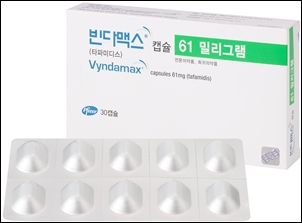
- 'Vyndamax,' a new drug for the treatment of transthyretin amyloid cardiomyopathy, has recently been added to the insurance reimbursement list after five attempts. Three years have passed since the company initially applied for the listing. Product photo of VyndamaxConsequently, the prescription of Pfizer Korea's Vyndamax (tafamidis 61 mg) is now covered with reimbursement for the treatment of ATTR amyloidosis with cardiomyopathy (ATTR-CM). Vyndamax was approved in August 2020 in South Korea. It has finally been added to the reimbursement listing after multiple rounds of challenges. At its first attempt at reimbursement in early 2021, Vyndamax failed to receive designation as an essential medicine. After that, the economic evaluation was conducted in the first half of the same year, and a second attempt was made through the Risk Sharing Agreement (RSA) program. However, it received the same result. In April 2022, the drug had not passed the reimbursement criteria committee of the Health Insurance Review and Assessment Service (HIRA). It passed the committee review in July of the same year. However, after 9 months, it received a non-reimbursement decision from the Drug Reimbursement Evaluation Committee (DREC) review. An agreement had not been reached between the government and the pharmaceutical company regarding the RSA. After that, Pfizer re-applied for the reimbursement process in June 2024. It passed the DREC review in October of the same year and reached an agreement with the National Health Insurance Service (NHIS) last month. Vyndamax's ceiling price has been set as KRW 100,000. Vyndamax is a product that received approval after adjusting a dosage of tafamidis, the same active ingredient in Vyndaqel, a treatment of Transthyretin Familial Amyloid Polyneuropathy (TTR-FAP). Some view that the company strategized this to aim at differential drug pricing. Reimbursement news is regarded as favorable since the company finally gained listing after five attempts over 4 years. Patients now only have to pay 10% of the drug price with the special exemption coverage. Meanwhile, the efficacy of Vyndamax was demonstrated through the Phase ATTR-ACT study, which showed Vyndamax reduced the occurrence of cardiovascular-related events and improved 6 minutes walking test in CM patients. In the ATTR-ACT study, 441 patients were randomly assigned at a 2:1:2 ratio to the tafamidis 80 mg treatment group, the tafamidis 20 mg treatment group, and the placebo group. The primary endpoint was hierarchical evaluation of all-cause mortality and cardiovascular-related hospitalizations. The study's secondary endpoints were changes in the 6 minute walk test and the 'Kansas City Cardiomyopathy Questionnaire-Overall Summary (KCCQ-OS)' score, which indicates better health conditions with a higher score from the baseline up to 30 months after treatment. The study results showed that the tafamidis treatment groups had statistically lower all-cause mortality or cardiovascular-related hospitalizations compared to the placebo group.
- Policy
- 734 SGLT2is add precautions for ketoacidosis
- by Lee, Hye-Kyung Mar 10, 2025 05:50am
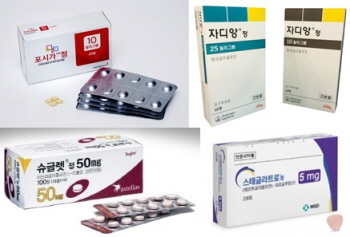
- SGLT-2 inhibitors approved in Korea Precautions for antidiabetic SGLT2 inhibitors will be strengthened in the near future. 734 ertugliflozin, empagliflozin, and dapagliflozin drugs that have been approved in Korea are expected to be subject to the changed regulations. The Ministry of Food and Drug Safety will prepare an ‘Order for labeling changes (draft)’ based on the safety information of SGLT2 inhibitors by the 20th of this month and conduct an opinion inquiry thereafter. This draft order for changes was made based on the 'Results of the review of safety information on SGLT2 inhibitor-related drugs' by Health Canada (HC) and the US Food and Drug Administration (FDA). Representative products include AstraZeneca Korea's ‘Sidapvia Tab (dapagliflozin, sitagliptin)', HK Inno. N’s ‘DapaN Tab (dapagliflozin propanediol hydrate)', Boehringer Ingelheim Korea’s ‘Jardiance Tab (empagliflozin)', and MSD Korea’s ' Steglatro Tab (ertugliflozin L-pyroglutamic acid).’ The labeling changes for the SGLT2 inhibitor class will be made in the 'General Precautions' section. In all products that have been announced, the 'ketogenic diet' will be added as a factor that is likely to cause ketoacidosis. In addition, pancreatic disorders that cause insulin deficiency will include not only type 1 but also type 2 diabetes. Previously, risk factors for ketoacidosis included reduced insulin doses, acute febrile illness, calorie intake restriction due to illness or surgery, and alcohol abuse. The precautions for combination drugs such as dapagliflozin-sitagliptin, dapagliflozin-metformin, dapagliflozin-metformin-sitagliptin, dapagliflozin-glimepiride, dapagliflozin-pioglitazone, dapagliflozin-linagliptin, dapagliflozin-saxagliptin, dapagliflozin-evogliptin, dapagliflozin-evogliptin-metformin, and dapagliflozin-gemigliptin will become slightly stricter. The changes include the addition of a precaution about ketoacidosis: “Diabetes and ketoacidosis may persist longer than the expected duration and urine glucose excretion may persist for 3 days after discontinuation of administration. However, there have been post-marketing reports of diabetes and ketoacidosis persisting beyond 6 days and up to 2 weeks after discontinuation of SGLT2 inhibitor administration.” The Ministry of Food and Drug Safety has asked associations to notify their members of the changes so that review opinions can be submitted.
- Company
- Reimb approval JAKi switching can change RA treatment in KOR
- by Son, Hyung Min Mar 07, 2025 05:56am
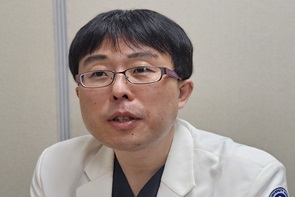
- Yun Sung Kim, Professor of Rheumatology at Chosun University Hospital “The realistic goal for treating rheumatoid arthritis is remission, not cure. With various treatment options introduced for the disease, patients can expect good results if they start treatment by administering the right treatment for them. In particular, since switching is now allowed for oral treatment options like JAK inhibitors, this may be of great help in improving the treatment environment for rheumatoid arthritis.” Yun Sung Kim, Professor of Rheumatology at Chosun University Hospital, explained so on the changes in the treatment environment for rheumatoid arthritis at a recent meeting with Dailypharm. Rheumatoid arthritis is one autoimmune disease that occurs when immune cells invade the joints that are part of our body. In the early stages, inflammation occurs in the synovial membrane surrounding the joints, causing pain, swelling, and deformation of the surrounding cartilage and bone. Inflammation mainly affects small joints such as the fingers, wrists, toes, and ankles, and can also occur in large joints such as the knees. It is a chronic disease that lasts for several months to several years, and the continuous inflammatory reaction of the synovial membrane can damage the cartilage of the joint, eventually leading to joint destruction, deformation, and dysfunction. It is also accompanied by symptoms of fatigue, low-grade fever, and generalized musculoskeletal pain. Professor Kim said, “Rheumatoid arthritis is a disease that requires continuous control, just like diabetes or hypertension. This is why we use the word remission rather than cure. The goal is to control the disease activity through medication.” In the early stages of rheumatoid arthritis, non-steroidal anti-inflammatory drugs (NSAIDs) are used to reduce inflammation and relieve pain, and steroids can be used temporarily if the inflammation is not controlled. However, such treatment can alleviate symptoms but not reduce disease activity, so treatment with disease-modifying antirheumatic drugs (DMARDs) such as methotrexate (MTX) may be needed depending on the severity of the symptoms. Kim explained, “Early diagnosis and treatment of all diseases is important, but in the case of rheumatoid arthritis, because it invades the joints, without an early diagnosis, not only inflammation but joint deformation can also occur, causing not just symptoms but also impairment in the joint function itself.” He went on to say, “If you have symptoms of rheumatoid arthritis such as numbness in your hands and leave them untreated, the risk of cardiovascular disease also increases, and if it invades the lungs, it can also cause interstitial lung disease. This is why early diagnosis and treatment are important.” Various treatment options have emerged in the field Rheumatoid arthritis treatment is one of the areas that has seen the most progress in the last 20 years. Treatment options have expanded with the introduction of steroids, anti-rheumatic drugs, biological agents, and Janus kinase (JAK) inhibitors. Kim said, “The 2022 European Congress of Rheumatology guidelines recommend reducing the dose or increasing the interval of anti-rheumatic drug administration, but the American College of Rheumatology recommends continuing the use of anti-rheumatic drugs.” In particular, with the recent inclusion of several JAK inhibitors, such as Jyseleca, Rinvoq, and Xeljanz in the National Health Insurance (NHI) reimbursement list, patients can now use oral drugs that are less burdensome to administer than injectable biologics. Until now, switching between JAK inhibitors was not allowed, so if a patient switched from a biologic to a JAK inhibitor and found no effect, there was no alternative but to switch back to other biologic drugs. In response to the demand for the allowance of switching between JAK inhibitors from patients and medical staff, the government has approved insurance reimbursement for switching between JAK inhibitors since December, reducing the patients’ burden of switching from biological agents to JAK inhibitors. Kim said, “JAK inhibitors are being used as a second-line treatment, but I think they may be used in the first-line in the future. Rather than preferring a particular treatment among JAK inhibitors, I think their usage in general will expand.” He went on to say, “Patients’ satisfaction level is higher with oral treatments. Since anti-rheumatic drugs must be taken when administering biological agents, the medication compliance for oral agents is high. Data shows that oral agents are a little safer, which may further increase their preference with the improvement in the reimbursement environment.” Although the reimbursement environment has improved, blind spots remain Kim stressed that patients with seronegative rheumatoid arthritis antibodies are facing difficulties because they cannot receive institutional benefits. About 80% of rheumatoid arthritis patients are diagnosed as seropositive, but the remaining 20% are seronegative. These seronegative patients are not eligible for the special calculation benefit. Therefore, there are many difficulties in treating seronegative rheumatoid arthritis patients due to restrictions on their use of JAK inhibitors and biological agents. Currently, patients may receive reimbursement for their treatment if their treatment with biological agents or JAK inhibitors is insufficient even after more than 6 months of treatment. Professor Kim said, “Although switching JAK is not yet covered by insurance for various inflammatory diseases, it is very encouraging that it is covered for rheumatoid arthritis. If there is one more thing I would like to see, I would like the reimbursement standards to be eased to cover patients with seronegative rheumatoid arthritis.”
- Policy
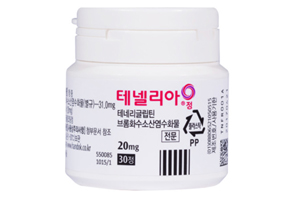
- Handok expands its Tenelia combo lineup
- by Lee, Hye-Kyung Mar 07, 2025 05:56am
- Handok is speeding up the development of a combination drug that combines DPP-4 inhibitor diabetes treatment Tenelia (teneligliptin hydrobromide hydrate)' with SGLT-2 inhibitor 'Jadiance (Empagliflozin). On the 4th, the Ministry of Food and Drug Safety approved an open-label, randomized, empty stomach, single orally administered, two-arm, crossover, Phase I clinical trial to compare and evaluate the safety and pharmacokinetic characteristics of HD-P023 and Tenelia 20 mg and Jardiance 25 mg combination in healthy adults. In 2020, Handok conducted a clinical trial on a triple combination therapy of metformin and empagliflozin and Tenelia, and since last year, it has expanded its development scope to investigate a two-drug combination drug that contains Tenelia and empagliflozin. This is the third time that HD-P023 was approved for a Phase I trial, following approvals in January and June last year. Handok is working on the development of a combination drug for Tenelia, using different doses in each clinical trial. Handok is believed to be making such efforts due to the fact that a large number of generics have been approved upon Tenelia’s patent expiry in October 2022. Domestic companies successfully avoided patent infringement through salt modifications before the expiration of Tenelia’s patent, and forewarned of their entry into the generic market. Currently, 44 items have been approved as generic versions of Tenelia. The patent for the combination drug ‘Tenelia M,' which is a combination of Tenelia and metformin, expired at the same time as that of Tenelia, and the number of approved generic drugs for Tenelia M exceeds 74. As market competition became inevitable with the approval of generics for both the single drug Tenelia and the combination drug Tenelia M, it appears that the company has embarked on the development of a combination drug that can be used with reimbursement with SGLT-2 inhibitors. In particular, since the reimbursement standards for SGLT-2 inhibitor class drugs improved in April 2023, allowing reimbursement of triple-drug therapies such as 'metformin + SGLT-2 + DPP-4' and 'metformin + SGLT-2 + TZD,’ there has been a continuous push for the reimbursement of for two-drug combination therapies as well. According to data Rep Mi-hwa Seo, a member of the Democratic Party of Korea, received from the Ministry of Health and Welfare in January this year, the Ministry of Health and Welfare said it would prepare a plan to improve the reimbursement standards for the two-drug therapy that combine SGLT-2 inhibitor diabetes drugs and DPP-4 inhibitor diabetes drugs. The Ministry of Health and Welfare has finished the Ministry of Food and Drug Safety’s inquiry regarding the request from the Korean Diabetes Association, collected expert opinions from related societies and others, and has stated that it is in discussions with the KDA to prepare additional supplementary data to improve the reimbursement standard. The Ministry of Health and Welfare =, “We will also review whether it is possible to reimburse the combination of SGLT-2 inhibitors and diabetes drugs as one of the two-drug therapies, taking into account the Ministry of Food and Drug Safety’s approval status and the opinions of experts. However, as reimbursement expansion of the diabetes drugs has a significant impact on the finances of the National Health Insurance, it will have to be implemented step by step after ample discussion.” Meanwhile, according to the pharmaceutical market research institution UBIST, the amount of outpatient prescriptions for Tenelia last year was KRW 24.46541 billion and KRW 27.21524 billion for Tenelia M.
- Opinion
- [Reporter's View] Concerns about new drugs for rare diseases
- by Son, Hyung Min Mar 07, 2025 05:56am
- Duchenne muscular dystrophy is a rare muscular disorder caused by the lack of dystrophin, primarily affecting boys. The symptoms typically begin before the age of 3 and rapidly deteriorate, eventually leading to the loss of ability to walk before the age of 10 and above. To date, various genetic targeted therapies for Duchenne muscular dystrophy won FDA approval, including U.S.-based Sarepta Therapeutics' 'Amondys 45,' 'Exondys 51,' 'Vyondys 53,' and 'Elevidys,' the American subsidiary of Japan's Nippon Shinyaku NS Pharma's 'Viltepso,' and Italfarmaco's 'Duvyzat.' Since these new drugs have not been introduced to South Korea, so patients with Duchenne muscular dystrophy are relying on steroids. The Korea National Enterprise for Clinical Trials (KoNECT) ranked 'Amondys 45' as the No.1 new drug for domestic entry candidates through the '2021 Report priority ranking international new drugs not yet introduced in South Korea.' However, it has not been introduced to South Korea to date. New drugs have been introduced to various rare diseases, not only Duchenne muscular dystrophy but also metachromatic leukodystrophy and hemophilia, but patient access to these drugs is still limited. Rare diseases have limited treatment options and often patients have limited treatment opportunities. Fortunately, innovative new drugs for rare diseases have emerged in recent years. Introducing new drugs for rare diseases provides not just simply new drugs but opportunities for patients to improve their quality of life substantially. Notably, new drugs such as genetic therapy offer the possibility of fundamental treatment. Patients who have already received treatments give favorable reviews that their quality of life has significantly improved. However, the discussion on whether new drugs can be provided to Korean patients remains a crucial issue. Many pharmaceutical companies face challenges to commercialize new drugs for rare disease due to the lack of treatment infrastructure and limited treatment targets. Eventually, to promote domestic entry of new drugs for diseases with high unmet needs and limited treatments, supportive policies are essential, including government funding and insurance reimbursement. Until now, most evaluations indicate that the existing supports and policies toward patient access to new drugs for rare diseases have been inadequate. Clinical trial opportunities for Korean patients with rare disease must be discussed in depth. If the Korean market is not considered, there is no need for pharmaceutical companies to conduct new drug clinical trials subjecting Korean patients. If clinical trial opportunities involving potential new drug candidates are unavailable to patients without further treatment option, patients have no other resorts. It is of utmost importance to broaden patient access so that pharmaceutical companies would consider the Korean market. It is also essential for Korean pharmaceutical companies to pursue new drug introductions and make R&D investments. Importantly, pharmaceutical companies and the government must collaborate to establish ways to introduce effective new drugs. Fortunately, Korean pharmaceutical companies strive to introduce new drugs for rare diseases. Pharmaceutical companies like Dong-A ST and Boryung are pursuing new drugs in collaboration with KoNECT. Also, many Korean pharmaceutical companies like Handok have been distributing new drugs for rare diseases. No disease is unimportant, from rare diseases, cancer, brain tumors, severe diseases, and chronic diseases. However, patients should not have to travel abroad for domestically unavailable treatments.
- Company
- Roche adds expertise through leadership appointments
- by Whang, byung-woo Mar 07, 2025 05:56am
- (from the left) Jinyoung Jeong, Lead of Oncology·Hematology Cluster, and Hyunmi Kim, Lead of Specialty Medicines Cluster Roche Korea is strengthening its leadership by appointing new leads to its Oncology and Hematology cluster and Specialty Medicines cluster. The company announced on the 5th that it has appointed Jinyoung Jeong as the new head of the Oncology·Hematology Cluster and Hyun-mi Kim as the new head of the Specialty Medicines Cluster. By appointing two new leaders with extensive industry experience and expertise, Roche Korea plans to strengthen its portfolio across various therapeutic areas, including solid and hematological tumors, ophthalmic diseases, and neurological diseases, and solidify its innovative medicine leadership. Jinyoung Jeong graduated from the College of Pharmacy at Seoul National University and has accumulated experience in pharmaceutical marketing at Mundipharma Korea and Pfizer Korea since 2009. Prior to her new role, she was the Lead of the Lung Cancer Diseases Area in Roche APAC, where Jeong played a leading role in designing organizational operations and portfolio strategies and maximizing synergies by strengthening cross-country collaboration. Hyun-mi Kim first entered the pharmaceutical industry in 2004 when she joined Janssen Korea after graduating from the College of Pharmacy at Seoul National University and earning a master's degree from the same university. Since then, Kim has led business growth in a wide range of fields, including blood cancer, solid cancer, immunology, and neuroscience, and has demonstrated her ability to plan business strategies and develop new businesses in global markets, including Korea, the United States, China, and the Asia-Pacific (APAC) region. Jinyoung Jeong, Lead of Oncology·Hematology Cluster at Roche Korea, said, “Based on the experience and expertise I have accumulated in Oncology at Roche Korea, I will take the lead to promptly provide innovative treatment solutions to Korean patients suffering from cancer. We will continue to prioritize the extension of patients’ lives and improvement of their quality of life, and focus on expanding treatment access.” Hyun-mi Kim, Lead of the Specialty Medicines Cluster at Roche Korea, said “I am pleased to join Roche Korea, which has been driving innovation in the industry as a a global pharmaceutical industry leader. In the Specialty Medicines area, which includes ophthalmic and neurological diseases, it is very important to address unmet patient needs and reduce the burden of disease through innovation. I will make every effort to help more patients lead healthy and happy lives.”
