
- LOGIN
- MemberShip
- 2026-04-26 18:32:24
- Company
- DLBCL drug Monjuvi may be prescribed at Big 5 Hospitals
- by Eo, Yun-Ho Oct 17, 2025 06:11am
- Handok's newly introduced drug ‘Monjuvi’ may now be prescribed at tertiary hospitals in Korea. According to industry sources, Monjuvi (tafasitamab), a treatment for diffuse large B-cell lymphoma (DLBCL) introduced by Handok from Incyte, has passed the Drug Committee (DC) reviews at the Big 5 medical institutions in Korea - Samsung Medical Center, Seoul National University Hospital, Seoul St. Mary's Hospital, Asan Medical Center, and Severance Hospital. Approved in Korea in June 2023, Monjuvi is indicated for adult patients with relapsed or refractory DLBCL who are not eligible for autologous stem cell transplantation and have failed at least one prior therapy, first in combination with Revlimid (lenalidomide), and then on its own as monotherapy. Monjuvi is a humanized IgG monoclonal antibody that targets CD19, a cell surface antigen protein expressed on B lymphocytes. However, Monjuvi is currently a non-reimbursed drug. It was submitted to the Health Insurance Review and Assessment Service's Cancer Disease Review Committee last April, but failed to establish reimbursement criteria. Therefore, it remains to be seen whether Monjuvi will succeed in securing reimbursement and be prescribed in practice.. The efficacy of Monjuvi was demonstrated in the L-MIND study, which reported an objective response rate (ORR) of 58%, including a 40% complete response rate and an 18% partial response rate. The treatment also demonstrated a favorable safety profile, enabling patients to receive therapy in an outpatient setting without requiring hospitalization. Meanwhile, diffuse large B-cell lymphoma (DLBCL) is one of the most common subtypes of lymphoma. It is a rapidly progressive cancer with a poor prognosis, known to recur in 20-25% of patients following standard combination chemotherapy.
- Company
- "Switzerland and Korea partner up for bio-ecosystem"
- by Son, Hyung Min Oct 17, 2025 06:11am
- Conradin Cramer, Mayor of Basel, Switzerland As the global pharmaceutical industry is restructuring around collaboration, Switzerland and South Korea are strengthening their partnership to build an innovation ecosystem. The vision is to establish a model of joint innovation, based on efficient resource and mutual trust, rather than a simple technology exchange. On October 16, Roche Korea hosted a media day at its headquarters in Gangnam-gu, Seoul, with Switzerland's City of Basel and the Embassy of Switzerland in Korea, to share global partnering strategies and success stories for building a bio-ecosystem. Switzerland, despite its small territory —about 40% the size of South Korea — and a population of around 9 million, has produced numerous leading global pharmaceutical companies. In particular, the City of Basel is home to over 800 life science companies, including Roche, Novartis, and Ferring Pharmaceuticals. Basel is also home to 'BaseLaunch,' a venture builder that supports bio-ventures and represents Europe. So far, 11 companies in the BaseLaunch portfolio have attracted over $800 million (approximately KRW 1 trillion) in investment from European and U.S. venture funds. Switzerland has also been recognized as the world's most innovative country for 15 consecutive years in the World Intellectual Property Organization (WIPO)'s Global Innovation Index. Conradin Cramer, Mayor of Basel, stated, "City of Basel's strength is not just its world-class research, but also its accessibility. Universities, hospitals, and public institutions are all within walking distance. This proximity facilitates rapid decision-making and network formation." He emphasized, "Innovation does not remain confined to one country's economy. Competence and mutual respect are essential factors for achieving goals. We look forward to collaboration between Switzerland and Korea, and partnership collaboration between Roche and Korean partner companies." "Korean Companies Show Global Competitiveness in ADC and Alzheimer’s New Drugs" (from left) Ezat Azem, General Manager of Roche Korea; Harm-Jan Borgeld, Head of Asia Partnering Group; Andrea Clementi, Head Swiss Business Hub Korea; Christof Kloepper, Basel Area Business & Innovation Roche, founded in 1892, is one of the major global pharmaceutical companies, with innovative achievements across chronic diseases, oncology, rare diseases, immunological diseases, and ophthalmology. Last year, the company's revenue recorded 60.495 billion Swiss Francs (approximately KRW 96 trillion). Roche is also focusing on bolstering its next-generation pipeline across various markets. Harm-Jan Borgeld, Head of Roche's Asia Partnering Group, who oversees the Asian markets including Korea, Japan, and China, explained that Korean companies are effectively developing both Best-in-Class and First-in-Class new drug candidates. He particularly assessed that Korea holds strengths in Antibody-Drug Conjugates (ADCs) and early-stage Alzheimer's disease. Harm-Jan Borgeld stated, "We have confirmed the competitiveness of Korean companies in ADCs. We see strong interest in promising new drug candidates, especially those pursuing bispecific antibody-ADCs that can target multiple solid tumors rather than a single indication. The market competitiveness of Korean companies is also evident in the components of ADCs: the payload, the linker, and the platform technology. Furthermore, Korea holds promising candidates for Alzheimer's disease treatments." He added, "For Korean companies to build contact points with global companies, they must understand the interests of partnering companies. In particular, the pitching points of each new drug candidate are particularly important. Most projects are in the Phase 1 to Phase 2 stage, and companies that pitch well accurately present their most advanced compounds. Most importantly, successful progress in preclinical animal models is essential." Borgeld stressed that companies developing a Best-in-Class drug must be able to clearly explain the potential of their acquired data, along with an analysis of competing drugs. Borgeld said, "Late entrants must identify which data has potential compared to competitors. They must also pay attention to the progress of competitors," and added, "Preparation related to manufacturing and production must also be strong. Companies should be able to explain their manufacturing plan for the antibody compound." Ezat Azem emphasized, "For Korean companies to enter the global market, it is essential to meet various international standards first. By narrowing the gap with international standards, the possibility of collaboration with global companies will increase. Like in Switzerland, cooperation among industry, academia, and government is needed."
- Company
- Expanded reimb prospect for 5 indications of 'Tevimbra'
- by Eo, Yun-Ho Oct 16, 2025 06:21am
- Product photo of Tevimbra The cancer immunotherapy 'Tevimbra' is gathering attention over whether it will receive expanded reimbursement following its previous success in the esophageal cancer indication. According to industry sources, five indications for BeOneMedicines Korea's PD-1 inhibitor immunotherapy Tevimbra (tislelizumab) are expected to be considered by the upcoming Cancer Disease Review Committee (CDRC) of the Health Insurance Review and Assessment Service (HIRA). In April, Tevimbra became the first immunotherapy to receive reimbursement for esophageal cancer. Following this, it has added five new indications for solid tumors, including esophageal cancer, gastric cancer, and non-small cell lung cancer. BeOneMedicines has submitted a reimbursement application concurrently with its application for Tevimbra's expanded indication. The indications are ▲first-line combination therapy for unresectable, locally advanced, or metastatic esophageal cancer ▲first-line combination therapy for unresectable or metastatic, HER2-negative gastric or gastroesophageal junction adenocarcinoma ▲two types of first-line combination therapy, and second-line monotherapy for non-small cell lung cancer. Since BeOne Medicines is quickly proceeding with reimbursement procedures for additional indications, Tevimbra's role is expected to expand across various cancer types in Korea. Expectations are particularly high due to BeOne Medicines' previous track record of successfully concluding negotiations with the government by advocating for 'fair drug pricing' since its initial listing. It remains to be seen whether BeOne Medicines can uphold its company philosophy of 'providing innovative new drugs at a reasonable price and leaving no patient behind.' Meanwhile, the efficacy and safety of Tevimbra were proven in various indications through the RATIONALE clinical trial series (RATIONALE-303, 304, 305, 306, 307). Notably, in studies of esophageal squamous cell carcinoma and gastric or gastroesophageal junction adenocarcinoma, Tevimbra demonstrated clinical benefits in the overall patient population. The trials showed consistent results in pre-specified subgroups based on PD-L1 expression.

- Company
- ‘Leclaza combo extends survival without chemotherapy’
- by Son, Hyung Min Oct 15, 2025 11:37am
- Professors Sun Min Lim and Byoung Chul Cho of Yonsei Cancer Center’s Department of Medical Oncology “The MARIPOSA study is the first clinical trial to significantly extend overall survival using two targeted therapies without chemotherapy. Discussions on EGFR-mutated lung cancer treatment will now shift to focus on overall survival.” During a recent interview with Dailypharm, Professors Byoung Chul Cho and Sun Min Lim of Yonsei Cancer Center’s Department of Medical Oncology expressed so regarding the results of the MARIPOSA trial that evaluated the combined use of Leclaza (Lazertinib) and Rybrevant (amivantamab)’, agreeing it will trigger a paradigm shift in treatment. Leclaza (lazertinib), developed by Yuhan Corporation, is a third-generation EGFR tyrosine kinase inhibitor (TKI) that targets exon 19 deletions and exon 21 L858R mutations in EGFR-positive non-small cell lung cancer (NSCLC). Johnson & Johnson secured global rights to Leclaza and has conducted clinical studies evaluating the efficacy of Leclaza in combination with Rybrevant, a targeted therapy option targeting exon 20 and MET mutations. In the trial, the Leclaza + Rybrevant group demonstrated a statistically significant improvement in survival duration compared to the Tagrisso (osimertinib) group (p-value less than 0.005). Specifically, the median overall survival (OS) for the Leclaza + Rybrevant group was not reached (42.9-NE). In contrast, the Tagrisso group showed an OS of 36.7 months. Considering the survival rate distribution between the two groups, the Leclaza + Rybrevant group is expected to extend OS by at least 12 months compared to the Tagrisso group. These study results were recently published in the New England Journal of Medicine (NEJM), drawing significant attention from the academic community. Professor Cho explained, “The MARIPOSA study is the first clinical trial to significantly extend survival using only two targeted therapies without chemotherapy. While discussions on EGFR-mutated lung cancer have previously focused on progression-free survival (PFS), the focus will now shift to OS.” Professor Lim also stated, “In actual clinical settings, the third-generation TKI combo regimen showed rapid response and early symptom relief. If initial side effects are appropriately managed and prevented, treatment can be sufficiently continued on an outpatient basis. Ultimately, helping patients survive long-term with effective drugs is the top priority of treatment.” The professors saw that the most significant distinguishing feature of this study was the confirmation of a ‘qualitative change in the mechanism of resistance.’ Professor Byoung Chul Cho of Yonsei Cancer Center’s Department of Medical Oncology Professor Cho emphasized, “Not only did the frequency of resistance occurrence change, but the genetic and biological characteristics of the tumor itself changed. This suggests that the treatment fundamentally altered tumor biology, contributing to improved OS beyond merely extending the duration of treatment.” He further explained, “The MARIPOSA study demonstrated consistent OS improvement in both Asian and non-Asian patient populations. In contrast, the FLAURA2 study, which evaluated the efficacy of Tagrisso plus chemotherapy, showed a limited OS improvement in the Asian patient cohort.” He projected, “Combining chemotherapy has limitations in that it cannot fundamentally alter the biological characteristics of the tumor. Therefore, the detailed Asian data from MARIPOSA to be presented at ESMO Asia is expected to show different results compared to FLAURA2.” Professor Lim said, “In the detailed analysis of FLAURA2, no OS improvement was observed in the Asian cohort, excluding Chinese patients. Considering that the previous FLAURA study on Tagrisso monotherapy also failed to confirm OS improvement in Asian patients, racial differences may remain a persistent point of debate. Differences in drug response between races will become an important discussion point going forward.” Side effect management and formulation improvements increase potential for sustained treatment... “Combination therapy will ultimately become the standard” Researchers also note that recent studies have demonstrated manageability for skin-related adverse reactions, a common side effect of combination therapy. For Leclaza + Rybrevant, skin rash and paronychia are identified as major adverse reactions. Professor Cho stated, “According to the recently published COCOON study, preventive use of antibiotics, scalp lotions, and moisturizers reduced moderate to severe skin rashes by nearly half. If managed well during the initial 12 weeks, patients' quality of life also improves significantly.” Professor Lim emphasized, “We provide a management manual to patients and caregivers from the initial stages of treatment,” stressing that “prevention-focused management is key to ensuring treatment adherence.” Also, Professor Lim believed that the convenience of administration would significantly improve with the introduction of the subcutaneous injection formulation of Rybrevant. A drawback highlighted in the combination therapy of Leclaza + Rybrevant is that the injectable form of Rybrevant may reduce administration convenience. EGFR-targeted therapies, including Leclaza, Tagrisso, Boehringer Ingelheim's Giotrif (Afatinib), Pfizer's Vizimpro (dacomitinib), Roche's Tarceva (Erlotinib), and AstraZeneca's Iressa (gefitinib), are all oral medications. Rybrevant, however, is an intravenous (IV) formulation requiring a hospital visit once every three weeks for administration that lasts over an hour. This has raised concerns that it may hinder treatment convenience for non-small cell lung cancer patients. Janssen plans to maximize the synergy of combination therapy through the introduction of Rybrevant’s subcutaneous (SC) injection formulation. Professor Sun Min Lim of Yonsei Cancer Center’s Department of Medical Oncology Professor Lim stated, “In the PALOMA-2 study evaluating the potential of Rybrevant SC, the SC formulation showed infusion-related reactions reduced to one-seventh compared to IV, while demonstrating equivalent efficacy. Approval has already been granted in Europe, and U.S. approval is imminent. If introduced in Korea as well, the new formulation will significantly reduce the burden on patients.” She continued, “Beyond simply reducing administration time and increasing convenience, the SC formulation has the potential to alter the patient's immune environment itself. Our research team is currently preparing a study directly comparing the immunological differences between Rybrevant SC and IV administration.” She also noted, "The most important factor for patients is the survival period. As long as the data supports this, change in the field is only a matter of time. Delays in approval and reimbursement preventing patients from immediately benefiting from the latest treatments represent an institutional challenge that needs resolution.“ Professor Cho explained, ”While some hesitate to use combination therapy, citing concerns about Leclaza’s adverse reactions or reduced administration convenience, most issues can be resolved through dose adjustment and proactive management. The results of the PALOMA-2 and COCOON studies support this." He added, “The average age of EGFR-mutated lung cancer patients is mid-60s, about 10 years younger than the general lung cancer patient population. While caution is needed for combination therapy in those over 80, factors like treatment willingness, self-management capability, underlying conditions, and metastasis patterns are more critical criteria than age itself.” He stated, “If a patient has brain metastases but demonstrates strong treatment intent and good self-management capability, combination therapy should be prioritized. When Tagrisso first improved OS by six months eight years ago, some initially urged caution, but it eventually became the global standard. While some clinicians still prefer monotherapy, considering patient demand and the proliferation of data, combination therapy will likely establish itself as the new standard of care.”
- Company
- Will the MM drug Elrexfio be reimbursed this time?
- by Eo, Yun-Ho Oct 15, 2025 06:12am
- Whether progress will be made for the new multiple myeloma drug Elrexfio (elranatamab) in its second attempt to secure reimbursement in Korea is gathering attention. According to industry sources, Pfizer Korea's bispecific antibody therapy Elrexfio (elranatamab) is expected to be submitted for reimbursement review to the Health Insurance Review and Assessment Service's next Cancer Disease Review Committee. It remains to be seen whether Pfizer, which submitted a reapplication for Elrexfio’s reimbursement after its rejection by the HIRA Cancer Disease Review Committee last February, can achieve results within the year. Elerexfio previously received approval through a Global Innovative products on Fast Track (GIFT) designation by the Ministry of Food and Drug Safety.. Elrexfio is a fourth-line immunotherapy composed of two monoclonal antibodies - one targeting the antigen specific to multiple myeloma and the other engaging T cells. Bispecific antibody therapies are a form of immunotherapy composed of two monoclonal antibodies—one that recognizes a target antigen of multiple myeloma and another that binds to T cells. Typically, they are structured as bispecific IgG2 kappa antibodies that recognize BCMA (B-cell maturation antigen), the primary target antigen in multiple myeloma, and CD3. These therapies represent a novel approach that directly targets cytotoxic T cells to multiple myeloma cells expressing BCMA. Multiple myeloma, a cancer of plasma cells in the bone marrow, is a type of hematologic malignancy that primarily affects older adults. It is a disease where prolonged treatment can bring extended survival. Although various new therapies are being developed for the disease, monoclonal antibodies and bispecific antibody therapies are currently typically used in practice. In particular, the bispecific antibody mechanism is regarded as a safe and effective treatment for relapsed and refractory multiple myeloma, in which resistance increases with each treatment cycle, shortening the remission period and reducing the available treatment options. Since multiple myeloma is a disease where extended survival is achievable through continuous treatment, it is essential to have various therapeutic options available at each stage of treatment. This is why extending reimbursement coverage to fourth-line and later therapies remains an urgent priority. Currently, bispecific antibody therapies such as Elrexfio, Tecvayli (teclistamab), and Talvey (talquetamab) are approved in Korea, but none are granted reimbursement. Amid the failed discussions over coverage of a series of bispecific antibody drugs in the early stages, whether any drug will be granted reimbursement and improve patient access is gaining attention. Meanwhile, Elrexfio was designated by the Ministry of Food and Drug Safety as a GIFT item and was approved as a monotherapy for adult patients who have received more than three lines of treatment, including proteasome inhibitors, immunomodulators, and anti-CD38 monoclonal antibodies, in May last year. The US FDA has also designated it as a breakthrough therapy and granted accelerated approval for the drug. Elrexfio’s efficacy was demonstrated through the Phase II MagnetisMM-3 trial, an open-label, multicenter, non-randomized study that was conducted on 123 patients who had not received prior BCMA-directed therapy (i.e., BCMA-naïve patients). Results of Cohort A showed that the drug recorded an objective response rate (ORR) of 61.0% and a complete response (CR) of 37.4%. The progression-free survival (PFS) period was 17.2 months, and the overall survival (OS) period was 24.6 months, demonstrating an unprecedented long-term treatment effect. The data demonstrated that Elrexfio provided long-term survival benefits and slowed down disease progression to improve the quality of life of patients who had no other treatment options.
- Company
- GSK’s myelofibrosis drug Omjjara faces reimb hurdles
- by Eo, Yun-Ho Oct 14, 2025 06:41am
- The reimbursment of GSK’s new myelofibrosis drug Omjjara has become uncertain in Korea. According to Dailypharm coverage, the reimbursement application for GSK Korea's myelofibrosis treatment Omjjara (momelotinib), which had passed the Cancer Disease Deliberation Committee of the Health Insurance Review and Assessment Service (HIRA) in March, was not placed on the agenda of the Drug Reimbursement Evaluation Committee. It appears that differences arose between GSK and HIRA over the selection of a comparator drug used for pricing, effectively halting Omjjara’s first reimbursement attempt. As a result, it remains to be seen whether GSK will resubmit a reimbursement application and proceed with the listing process. Omjjara has a triple mechanism of action that inhibits JAK1 and JAK2 as well as ACVR1 (activin A receptor type 1). In myelofibrosis treatment, JAK1 and JAK2 inhibition helps relieve systemic symptoms and reduce splenomegaly, while ACVR1 inhibition decreases hepcidin expression and thereby alleviates anemia. Anemia management remains one of the major unmet needs in treating myelofibrosis. Transfusion-dependent anemia brings more than just the commonly perceived issue of dizziness - depending on its severity, it can be life-threatening. Phase III trials SIMPLIFY-1 and MOMENTUM demonstrated that Omjjara significantly improved key symptoms such as splenomegaly and reduced transfusion dependence in anemic myelofibrosis patients regardless of prior JAK-inhibitor exposure. In SIMPLIFY-1, which compared Omjjara to ruxolitinib (Jakavi) in JAK-inhibitor-naïve myelofibrosis patients, Omjjara demonstrated non-inferiority to ruxolitinib in the primary endpoint of spleen volume response at week 24. The proportion of transfusion-independent patients was 66.5 % in the Omjjara group versus 49.3 % in the ruxolitinib group, showing a statistically significant reduction in transfusion dependence in the Omjjara arm. Professor Seo-yeon Ahn of Chonnam National University Hwasun Hospital’s Department of Hematology stated, “Existing JAK inhibitors relieve splenomegaly and systemic symptoms but often worsen anemia or increase transfusion needs, leaving an unmet clinical need. Omjjara demonstrated significant clinical value in improving anemia, which is closely tied to prognosis in myelofibrosis patients.”
- Company
- Hugel appoints Carrie Strom as global CEO
- by Chon, Seung-Hyun Oct 14, 2025 06:41am
- Hugel announced on October 13 that it has appointed Carrie Strom, a medical aesthetics leader and a former Senior Vice President at AbbVie, as its new Global CEO. Carrie Strom, HugelCarrie Strom will lead Hugel's global business operations. She is highly regarded as an expert in the aesthetics field, having served for five years, from May 2020 to February this year, as the Senior Vice President at the global pharmaceutical company AbbVie and the President of Allergan Aesthetics Global. Strom initially joined Allergan (now AbbVie) in 2011 and has since led the aesthetics portfolio, which includes the botulinum toxin product 'Botox' and the HA filler 'Juvéderm,' across more than 50 countries. Previously, she served as Senior Vice President of Allergan's U.S. Medical Aesthetics division and spent 11 years as a sales and marketing expert at Pfizer. Following the recent appointment of Jang Doo-hyun as the Chief Executive Officer for the Korean operations, Hugel plans to accelerate its growth, particularly in the Americas, with the addition of the new Global CEO. Carrie Strom stated, "I am excited to work with Hugel's talented and dedicated employees and Board of Directors," and added, "My top priority will be to build upon Hugel's leadership in Korea to become a global leader in the aesthetics market, raising the standards of service we provide to customers and patients worldwide." Suk-yong Cha, Chairman of Hugel's Board of Directors, stated, "CEO Carrie Strom is an expert who has gained extensive experience and driven change in the global medical aesthetics industry. We expect her to maximize Hugel's future value during this critical transition to a global enterprise, particularly in the Americas."
- Company
- Entresto patent dispute near its end, yet 0 generic approval
- by Kim, Jin-Gu Oct 14, 2025 06:40am
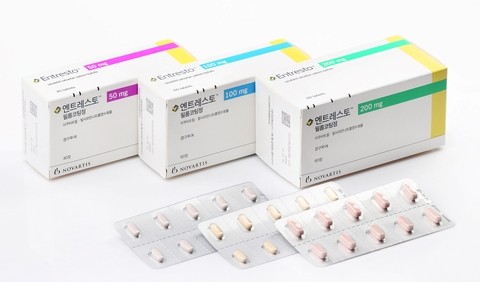
- Product photo of EntrestoThe patent dispute of Novartis' heart failure treatment, 'Entresto,' is nearing its final judgment. Still, generic companies may be unable to launch their products early, regardless of the ruling. To launch a generic early, companies need not only to win the patent dispute but also to secure product approval from the Ministry of Food and Drug Safety (MFDS). The MFDS is reportedly demanding supplementary data from the relevant generic companies. In other words, generic manufacturers, after fighting patent battles for five years, risk winning the legal fight only to be unable to launch their product. Not a simple combination drug but a 'cocrystal complex'...may be delaying generic approval According to the MFDS on October 13, there are currently zero product approvals for Entresto generics. This is considered unusual given that generic product approvals are typically processed within a year and a half of application. Approximately 10 generic companies involved in the Entresto patent dispute applied for generic product approval sequentially from April 2022 to July of the following year. They filed these applications based on their first-instance victory in the patent dispute. However, there has been no news of Entresto's generic product approval for almost 3 years. It is reported that the MFDS is requesting supplementary approval documentation. The pharmaceutical industry is paying attention to the MFDS's request for supplementation regarding Entresto's unique crystal structure. Entresto is a heart failure treatment in which the active ingredients, sacubitril and valsartan, act on cardiac neurohormones through separate pathways. The unique feature is that the two ingredients form a single crystalline structure, a cocrystal complex. Medicines combining two or more ingredients typically involve a simple mixture of the crystalline forms of each component. In contrast, a cocrystal involves two or more components bound together at the molecular level like a single compound. They exhibit single-compound properties until just before absorption into the body. For this reason, the industry refers to Entresto not merely as a 'combination drug' but as a 'complex' with a singular characteristic. The problem is the scarcity of approved generics for this cocrystal formulation. Entresto is reportedly the only drug approved as an API-API cocrystal complex, not only in Korea but also in the U.S. and Europe. Furthermore, there is no precedent anywhere in the world for the approval of a generic for a cocrystal complex drug. The MFDS is contemplating this issue. The Ministry is struggling to find an appropriate analytical method for generic approval. Critics suggest that because the cocrystal structure differs from traditional combination products in its physicochemical properties, applying the same analytical methods may not be suitable for generic approval. A pharmaceutical industry official said, "If it were a typical combination product's crystal form, there would have been no issue with approval, but I understand the MFDS is deeply concerned about whether it is appropriate to use existing methods to analyze this special cocrystal structure and grant generic approval." Winning in the Supreme Court, yet generic companies may face a failed launch Given the circumstances, companies preparing Entresto generics are now in a position where they may be unable to launch their products even if they win the final patent dispute. Generic companies initiated a declaratory judgment action against Novartis's Entresto crystal form patent in January 2021. This was followed by the filing of invalidation and circumvention trials against the use patent, salt/hydrate patent, and formulation patent. Generic companies won successive victories in the first and second instances. Disagreeing with these rulings, Novartis appealed the cases to the Supreme Court. Of the two cases appealed to the Supreme Court, the ruling in the use patent case was finalized in April of last year, with Novartis losing. The remaining pending case is the dispute over the crystal form patent. The full merits review is currently underway, following the dismissal without deliberation deadline in April of this year. Separately, the salt/hydrate patent dispute is awaiting a ruling from the Patent Court. The pharmaceutical industry reportedly anticipates that the final ruling regarding the crystal form patent could be issued as early as this year. If the Supreme Court sides with the generic companies, as in the first and second instances, the generic companies' patent risk would be effectively eliminated. However, regardless of the Supreme Court's decision, if MFDS approval continues to be delayed, generic companies will face a dual burden: winning a five-year-long dispute only to be unable to launch the product.
- Company
- Only Ozempic undergoes DREC review for reimb, not Mounjaro
- by Eo, Yun-Ho Oct 13, 2025 06:03am
- The reimbursement journey for the two diabetes drugs that have recently gained attention as obesity treatments is taking different paths, drawing industry interest. On October 2, the Health Insurance Review and Assessment Service (HIRA)’s Drug Reimbursement Evaluation Committee reviewed Novo Nordisk Korea’s Ozempic (semaglutide) but did not review Eli Lilly Korea’s Mounjaro (tirzepatide)—which had been widely expected to be reviewed simultaneously. Ozempic received a positive evaluation for reimbursement adequacy and passed the committee. The product had already accepted the “setting a price below the assessed value” condition when it first submitted the application in 2023, but the company had withdrawn the application due to supply issues during price negotiations with the National Health Insurance Service. Given that, many predicted its second review would pass smoothly under the same terms. The interesting part is the non-review of Mounjaro. Typically, when multiple drugs of similar classes apply for reimbursement listing for the same indication, the government conducts reimbursement evaluations for the drugs simultaneously to gain leverage in negotiations. This raises questions about the background and implications of this outcome. Since receiving domestic approval in 2023, Lilly has been under negotiations with the Health Insurance Review and Assessment Service (HIRA) for Mounjaro for a considerable period since early 2024. Throughout this process, Lilly has demonstrated confidence that it can prove the cost-effectiveness of Mounjaro by conducting a pharmacoeconomic evaluation based on the efficacy confirmed in the type 2 diabetes field, which was not conducted for Ozempic. Normally, new drugs establish cost-effectiveness through PE analysis and then negotiate prices based on the results. However, in markets like diabetes, where existing drugs have a solid presence and market entry speed is critical, pharmaceutical companies sometimes choose to accept the weighted average price of substitute drugs to hasten the process. But Lilly chose a different path. In the pivotal SURPASS clinical trial, which became the basis for approval, Mounjaro demonstrated statistically superior reductions in HbA1c and body weight compared to all control arms, including semaglutide (1 mg, brand name Ozempic), insulin degludec, and insulin glargine—showing potential for diabetes remission and underlining Lilly’s confidence. Furthermore, at the European Association for the Study of Diabetes (EASD) conference held last September, Lilly presented results from the SURPASS-CVOT Phase III clinical trial, which directly compared its GLP-1 receptor agonist Trulicity. This reinforced the data on cardiovascular prevention effects and overall survival improvement. Based on such circumstances, the Health Insurance Review and Assessment Service's (HIRA) decision to submit only Ozempic to the October Drug Reimbursement Evaluation Committee, rather than both drugs simultaneously, may not necessarily be a negative signal for Mounjaro. For Mounjaro, which has already undergone pharmacoeconomic evaluation, being assessed under different criteria than Ozempic could be advantageous. However, Mounjaro's future is not entirely bright. Korea’s reimbursement framework rarely applies a flexible ICER (Incremental Cost-Effectiveness Ratio) threshold for chronic disease indications, making it difficult for even innovative drugs to gain higher valuation. When Minister Eun Kyeong Jeong, who was appointed as the new Minister of Health and Welfare in the Lee Jae-myung administration last July, agreed to her National Assembly confirmation hearing on the need for policy changes to recognize the innovation of new drugs. She specifically mentioned Trodelvy as the first case of flexibly applying the ICER threshold. It remains to be seen whether the government's policy direction for innovative new drugs and the treatment of new drugs for chronic diseases, such as Mounjaro, will change. A Lilly representative stated, “Mounjaro offers differentiated clinical value compared to existing oral agents, insulins, and GLP-1 receptor agonists. We will continue to collaborate closely with health authorities and stakeholders to ensure that Mounjaro’s innovation can promptly benefit more Korean patients with diabetes.”

- Company
- Will gastric cancer-targeted therapy Vyloy pass CDDC review?
- by Eo, Yun-Ho Oct 10, 2025 06:06am
- Attention is focused on the second attempt for insurance reimbursement of the gastric cancer-targeted anticancer drug Vyloy. According to industry sources, Astellas Korea’s Vyloy (zolbetuximab), a Claudin 18.2-positive gastric cancer-targeted therapy, is currently coordinating its schedule for review by the Health Insurance Review and Assessment Service’s Cancer Disease Deliberation Committee. The application is expected to be listed on the agenda this month. Vyloy failed to pass CDDC review last February. Astellas resubmitted its reimbursement application in June. Approved in Korea in September last year, Vyloy is the first globally approved Claudin 18.2-targeted treatment, an immunoglobulin monoclonal antibody that binds to Claudin 18.2, a protein expressed and exposed in the stomach. According to the Phase III SPOTLIGHT study that became the basis of Vyloy’s approval, the median progression-free survival (mPFS) of the combination of Vyloy and mFOLFOX6 (oxaliplatin, leucovorin, fluorouracil) was 10.61 months, compared to 8.67 months for the placebo group. The median overall survival (mOS) was also longer—18.23 months versus 15.54 months in the placebo group. In the GLOW study as well, the combination of Vyloy and CAPOX (capecitabine plus oxaliplatin) achieved an mPFS of 8.21 months, reducing the risk of disease progression or death by approximately 31%. However, Vyloy remains non-reimbursed in Korea. It was listed for discussion at the CDDC in February, but failed to establish reimbursement standards. Additionally, a companion diagnostic issue delayed its launch in Korea until March this year. To use Vyloy, patients must be identified as Claudin 18.2-positive, but the companion diagnostic device (CDx) used for this test was under consideration for new medical technology evaluation. To address this, Astellas began an Early Access Program (EAP) even before approval so that patients in need could use the drug in advance. Currently, 51 patients across 10 institutions are enrolled. Professor Sun-Young Rha, Department of Medical Oncology at Yonsei Cancer Center, commented, “About 90% of metastatic gastric cancer patients are HER2-negative, and there has been a pressing need for new biomarker-targeted therapies. About 40% of HER2-negative patients are reported to be Claudin 18.2-positive, so the emergence of Vyloy, which selectively binds to Claudin 18.2, offers a new therapeutic possibility.”
