
- LOGIN
- MemberShip
- 2026-05-07 04:28:38
- Company
- Union Korea Pharm agrees to export 8 drugs to Jurabek
- by Lee, Seok-Jun Aug 08, 2023 05:30am
- Union Korea Pharm signed an agreement to export 8 types of drugs with its Uzbekistan partner, Jurabek Laboratories. According to the company on the 7th, the 8 export items include the company’s representative antibiotics and injections such as Atrasen Tab, Serokfen Tab, Uni-Minoxidil Tab, Atorvan Tab, Kefodon Inj, and Amikacin Inj. The local pharmaceutical company, Jurabek Laboratories, will bear the product registration and marketing costs in Uzbekistan. Jurabek plans to expand sales to neighboring countries in Central Asia (Kazakhstan, Tajikistan, Turkmenistan, etc.). in the future. Union Korea Pharm established a joint venture with Jurabek in May last year. Due to the time required to establish the plant and manufacturing facilities, the companies decided to cooperate by exporting drugs produced in Korea first. The 8 items exported this time are a part of the agreement. Byung Ha Back, President and CEO of Union Korea Pharm, said, “We will increase our presence in the global market based on the excellent quality of our products that are recognized around the world.” Union Korea Pharm achieved a surplus for the first time in three years last year, powered by increased sales of its antibiotics and cold medicines and improved profits and losses structure due to the normalization of utilization rates of its new plant. The company’s total sales exceeded KRW 60 billion for the first time. Analysts predict that the new plant (Munmak Plant 2) that the company invested KRW 30 billion on will drive the company’s performance in the future. The Munmak Plant 2 has secured 2.5 times the production capacity of Plant 1 and owns two lines for injection manufacturing (30 million ampules/year) and one line for solid drugs (500 million tablets/year). After receiving GMP certification in 2H 2021, the company has been increasing the plant’s utilization rate since 2022. More than KRW 100 billion in new sales could be generated when the second plant is fully operated. As of the end of last year, the plant's utilization rate was 80%. At the end of Q1 this year, the rate rose to 85%, and the rate is expected to rise to 90% by the end of this year.
- Company
- Immuno-anticancer drugs have brought us closer
- by Jung, Sae-Im Aug 08, 2023 05:30am
- Product photos of Opdivo (left) and Keytruda Immuno-anticancer agents are active in early lung cancer. Following 'Opdivo (Nivolumab),' which obtained the indication for adjuvant therapy before surgery for the first time, 'Keytruda (Pembrolizumab)' is also seeking to expand its scope as adjuvant therapy before and after surgery. The data shown by immuno-anticancer drugs in early lung cancer were surprising. When chemotherapy and CCRT were used, 'pCR', which was seen in 1 or 2 out of 100 patients, increased more than 10 times. In the case of Opdivo, a pCR of 24% was recorded in CheckMate-816 phase 3, significantly improving the 2.2% of the chemotherapy alone group. At 3 years, EFS was 57%, exceeding the control group's 43%. Keytruda also had an event-free survival rate of 62.4% at 2 years, which was significantly higher than that of the control group, 40.6%. The mPR and pCR ratios were 30.2% and 18.1%, respectively, demonstrating a greater improvement than the control group of 11% and 4%. Lee Se-hoon, a professor of hemato-oncology at Samsung Seoul Hospital, said in a recent interview with Daily Pharm, "If Opdivo caused a 'frenzy' as an adjuvant therapy before surgery, Keytruda gave the answer that it is helpful for patients to use immuno-oncology for a certain period after surgery." “We are now able to take a step closer to the goal of complete cure with immuno-oncology,” he said. Lee Se-hoon, professor at Samsung Seoul Hospital The effects of immuno-anticancer drugs shown in clinical trials are being reproduced in the actual field. Professor Lee explained, "When Gefitinib, the first EGFR-targeted anti-cancer drug, came out as a fellow in the past, I was very surprised that the prognosis of patients improved significantly. I am feeling the emotions I felt then once again as I look at adjuvant therapy before and after immuno-anticancer drug surgery." He said, "The professors of the Department of Pathology were also surprised to see that there were so many 'cancer-free' cases when they did a PET scan after immuno-anticancer treatment. Not only did the pathological CR increase, but I felt that the overall response improved." If Opdivo showed significant improvement in adjuvant therapy before surgery for the first time, Keytruda could improve the prognosis even for patients who have not reached complete pathological remission if they use immuno-anticancer drugs for one more year as adjuvant therapy after surgery. Proven. While the Opdivo study used only adjuvant therapy before surgery and there was no follow-up treatment after surgery, Keytruda's KEYNOTE-671 study used up to 4 cycles of Keytruda + chemotherapy on patients before surgery and performed Keytruda alone after surgery. The design was designed to use up to 13 cycles of therapy. Opdivo EFS and pathological pCR data (source BMS) As a result of analyzing EFS, the primary endpoint, according to pathological complete remission status, EFS improved regardless of whether or not complete remission was achieved. Patients who did not achieve pCR by administering immuno-anticancer drugs before surgery and administered Keytruda after surgery reduced the risk of disease recurrence, progression, or death by 31% compared to the control group. Professor Lee said, "I knew that immunotherapy before surgery would be of great help from the Opdivo study, but there was no answer for postoperative treatment. Because the clinical design was designed to use Opdivo only as an adjuvant therapy before surgery, Treatment was a situation where clinicians had to take care of themselves, so everyone was interested in how to treat patients who did not achieve complete remission.” The Keytruda study provided answers to questions raised in the clinical field. Professor Lee said, “I was convinced through the KEYNOTE-671 study that the use of immuno-anticancer drugs after surgery is helpful even in the group that did not show pCR,” and “If you look at the EFS graph, the group that did not achieve pCR used Keytruda. You can see that the graph is clearly wider than the group that did nothing." EFS trend following pathological complete remission with Keytruda (data ASCO) There are many aspects to be discussed about adjuvant therapy before and after surgery of immuno-anticancer drugs that have just begun to be used in the field. Representative examples include use in patients with major mutations such as EGFR and ALK, and screening of patients who may experience difficulty in surgery with little improvement when using immuno-anticancer drugs before surgery. However, he said, it is self-evident that immuno-anticancer drugs are being used for early lung cancer and are getting closer to the goal of a complete cure. Professor Lee said, "The title of the 'ASCO' session, which included the KEYNOTE-671 research presentation, was 'The Promise of Neoadjuvant Immunotherapy Across Solid Tumors'. As in the usual case, this study was not included in the lung cancer session. Here, preoperative adjuvant immunotherapy for lung cancer You can notice the meaning of therapy. It means that immuno-anticancer drugs have begun to actively intervene in the goal of complete recovery with adjuvant therapy before surgery. I am happy to think that it has shown a major change in the cancer treatment paradigm."
- Company
- ‘Competitors eye Eylea due to its many benefits’
- by Jung, Sae-Im Aug 08, 2023 05:30am
- The fact that many companies are concentrating on the development of Eylea biosimilars is proof of the many advantages owned by Eylea. We plan to continue to make known the strengths of Eylea while developing new products to continue to deliver on our patient and HCP-centric treatment strategy.” Sangok Suh, Head of the Specialty Medicine business unit at Bayer Korea said so regarding Eylea’s off-patent strategy during an interview with DailyPharm. Sangok Suh, Specialty Medicine BU Head, Bayer Korea The anti-VEGF inhibitor Eylea is regarded as the long-standing powerhouse in the field of macular degeneration. The drug has been solidifying its lead in the market ever since it was approved in Korea in 2013. According to the market research institution IQVIA, Eylea’s annual sales reached KRW 80.4 billion last year. This is a 14% increase over the previous year. Even in the 10th year of approval, the drug has been showing off its unwavering potential, recording double-digit growth. However, like all other new drugs, Eylea is also facing challenges from competitors. This year, the first new bispecific antibody drug for macular degeneration, ‘Vabysmo’, was introduced to Korea, and the domestic patent for Eylea is set to expire in January 2024. Although no direct competition has been made between the two, changes are expected to arise at the end of the year. Vabysmo received conditional approval from the Health Insurance Review and Assessment Service’s Drug Reimbursement Evaluation Committee in July. The committee deemed the drug’s reimbursement adequate if the company accepted a price lower than the evaluated price. Therefore, if the drug pricing negotiations progress without issues, the drug is expected to be listed in 2H this year. In addition, domestic pharmaceutical and bio companies have been applying for the approval of their biosimilars that target Eylea’s patent expiry. Celltrion, Samsung Bioepis, Sam Chun Dang Pharm, and Alteogen are nearly at the end of developing their Eylea biosimilars. The imminent challenges are set to inevitably complicate the marketing strategy for Eylea. In this changing environment, Suh expressed her determination to stick to the basics. Suh plans to further appeal to the strengths of Eylea, the drug that had established the T&E(Treat&Extend) treatment regimen as a standard treatment in the field of macular degeneration. Eylea was the first drug that allowed patients to adjust their treatment interval according to the patient's condition using the T&E regimen. Suh said, “Eylea has been at the forefront of change in macular degeneration treatment trends over the past 10 years. It has contributed to establishing anti-VEGF treatment as the standard of care and established a personalized treatment environment for patients by demonstrating the efficacy of flexible injection intervals. We wanted to raise awareness of the disease itself break the ‘'macular degeneration leads to blindness’ formula, and create an environment where patients receive early treatment for the disease.” As the representative macular degeneration treatment, Eylea has shown steady growth in Korea. Recently, the prefilled syringe formulation has been newly introduced, reducing the preparation time for drug administration, and enabling a more efficient and convenient treatment experience for the patients. The prefilled syringe formulation can be used with reimbursement for all indications approved for the existing Eylea 2mg formulation. Regarding the challenges being made by biosimilar companies, Suh said, “That in itself is proof of the many advantages owned by Eylea. Although we won’t be able to prevent the price cuts made on our drug due to the introduction of its biosimilars, we are confident that competitivity-wise, the market is still in favor of the original. Biosimilars usually make a bid at the market with their lower price. However, in the case of Eylia, we have a program in place that reimburses a certain level of expenses for diabetic macular degeneration, which takes care of about half of the patient's burden. Therefore, patients can enjoy the ‘cheap price’ benefit offered by the biosimilars while using the original drug. The clinical data and trust that Eylea has built over the past 10 years is a barrier that biosimilars cannot easily break down. Based on this, Suh emphasized that the company’s best defense strategy will be to focus on the unmet needs of patients and HCPs. Suh said, “The Eylea team needs to contemplate how to address the unmet needs of patients and HCPs to ultimately create a better treatment environment for the patients. That is the best defense strategy. We will work to make Eylea more widely available for various retinal diseases, including diabetic retinopathy, retinal vein occlusion, etc.
- Company
- Sales of the flu tx market increased due to the endemic
- by Chon, Seung-Hyun Aug 07, 2023 05:23am
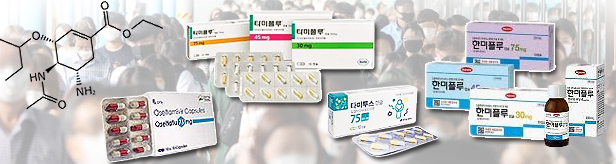
- In the first half of the year, the outpatient prescription market for flu treatment exceeded 10 billion won in four years. As the number of flu patients surged after the end of the Corona 19 pandemic, the flu treatment market, which had disappeared over the past three years, expanded significantly. According to UBIST, a drug research institute on the 5th, the outpatient prescription amount for influenza (flu) treatment in the first half of last year was recorded at 11.5 billion won. It fell short of 100 million won in the first half of last year but soared more than 200 times in one year. Quarterly outpatient Rx amount of flu treatment (unit: 100 million won, source: UBIST) In the first and second quarters of last year, the flu treatment market size was only 40 million won and 4 million won, respectively. It rose sharply to 5.1 billion won in the first and second quarters of this year. It is the first time in four years since 2019 that the prescription of flu treatment in the first half of the year exceeded 10 billion won. After recording 8.2 billion won in prescriptions in the first quarter of 2020, the flu treatment market virtually disappeared by the third quarter of last year. After the spread of COVID-19 in earnest, the outbreak of infectious diseases has significantly decreased due to strengthened personal hygiene management such as washing hands and wearing masks. According to the KDCA, the number of suspected flu patients per 1,000 outpatients recorded at 6.3 in the 9th week, the first week of March 2020, and has never exceeded 5 until August of last year. This means that there has not been a single outbreak of the flu in 2 years and 6 months. Influenza tx recorded 8.2 billion won in prescriptions in the first quarter of 2020 and virtually disappeared by the third quarter of last year, but started to rebound with 10.4 billion won in the fourth quarter of last year. From the beginning of this year to last June, the number of flu patients exceeded the epidemic standard. The number of suspected influenza patients per 1,000 outpatients dropped from 52.5 in the first week to 11.7 in March. However, since April, the number of suspected flu cases has risen again. For six consecutive weeks from the 17th week of the fourth week of April to the 22nd week of the last week of May, the number of suspected influenza patients per 1,000 outpatients was more than 20. It is a level that significantly exceeds the flu prevalence standard of 4.9 set by the KDCA. In the first half of last year, the prescription market for oseltamivir ingredients was limited to 40 million won, but in the first half of this year, it expanded 191 times to 7.9 billion won. Oseltamivir is the main active ingredient in Tamiflu. The size of the prescription market for Oseltamivir never exceeded 100 million won until the third quarter of last year after recording 6.6 billion won in the first quarter of 2020. However, it succeeded in rebounding to 8.5 billion won in the fourth quarter of last year and continued its growth this year. In the first half of last year, prescriptions for Tamiflu were only 30 million won, but this increased to 5.7 billion won in one year.

- Company
- Prescription of HA eye drops record KRW 166 bil in 1H
- by Kim, Jin-Gu Aug 07, 2023 05:23am
- The prescription market for hyaluronic acid eye drops grew to record the largest scale ever ahead of the reimbursement reevaluations set for the end of this year. In 1H alone, the market grew exceeded KRW 160 billion in prescriptions this year. The number of companies with half-year prescriptions that exceed KRW 10 billion increased from 5 in 1H last year to 7. The pharmaceutical companies that will inevitably suffer huge losses due to the expected reimbursement re-evaluations are preparing to jointly respond to the government's measures. Prescription of HA eye drops exceed KRW 160 bil in 1H, 7 companies exceed KRW 10 bil According to the market research institution UBIST, outpatient prescription of HA eye drops in 1H this year was KRW 16.6 billion. This is a 16% increase from 1H last year. This market shrunk somewhat in 2020 due to the spread of COVID-19 but has been rapidly expanding since then. Quarterly HA eye drop prescriptions(Unit: KRW 100 mil, Data: UBIST) By quarterly prescriptions, HA eye drops exceeded KRW 70 billion in Q2 last year and KRW 80 billion in Q1 this year. At this rate, the total market size may increase to exceed KRW 300 billion this year for the first time this year. The prescription performance of major companies in the market has also increased significantly. The prescription performance of Optus Pharm, which owns the Tearin series, increased by 26% from KRW 14 billion in 1H last year to KRW 17.7 billion in 1H this year. In the case of Taejoon Pharm, which owns New Hyalyuni, Hyalyuni, and New Hyaldrops, its sales increased by 21% from KRW 12.6 billion to KRW 15.3 billion. Sales at Daewoo Pharm, which owns Hyalsan, rose 36% from KRW 10.6 billion to KRW 14.4 billion. As a single product, Hyalsan recorded the highest prescription performance in 1H this year. The number of companies whos half year sales exceeded KRW 10 billion increased from 5 in 1H last year to 7 in 1H this year. As of 1H this year, Optus Pharm, Taejoon Pharm, Daewoo Pharm and SamChunDang Pharm, Huons Meditech, Hanmi Pharm, Kukje Pharm recorded prescriptions of more than KRW 10 billion. Changes in HA eye drop prescriptions in H1 (Unit: KRW 100 mil, Data: UBIST) ‘Protect the KRW 300 bil annual market’...Pharma companies jointly prepare to respond to gov't reimbursement reevaluations However, whether the companies may continue their growth next year remains unknown, because the government included HA eye drops as a subject for reimbursement reevaluations. The government has selected 8 ingredients, including HA eye drops, as targets for reimbursement revelations this year. These include rebamipide, limaprost oxiracetam, acetyl Locartinie hydrochloride, loxoprofen sodium, levosulpiride, epinastine hydrochloride, and HA eye drops Among them, oxiracetam and acetyl L-carnitine hydrochloride are expected to fail to pass the reimbursement revelations as they failed to pass the clinical reevaluations conducted by the Ministry of Food and Drug Safety. Among the 8 ingredients, HA eye drops have the largest scale in terms of number of items and market size. 46 pharmaceutical companies have been selling 77 HA eye drop products in 1H this year. The government has already received related data from each pharmaceutical company and started the practical review. The outline of HA eye drops’ adequacy of reimbursement will be revealed next month at the earliest. After holding an objection period for the pharmaceutical industry, the final result of the reimbursement reevaluation will be determined by the end of this year. From the industry’s perspective, the companies will inevitably experience serious aftermath if the government concludes that the drug lacks grounds to be determined adequate for reimbursement. This is why the companies have been jointly preparing a response to the reevaluation results. About 10 companies, centered around Optus Pharm, have been concentrating on developing a countermeasure with large law firms in Korea. As in the case of choline alfoscerate, there is a possibility that the companies will file a class action lawsuit against the government. If they do file a class action lawsuit, the suit will likely be subject to the drug expenditure refund and redemption law that passed the National Assembly this year. The law, which will be enforced on November 20th, allows for the recovery or refund of drug costs that were already paid according to the outcome of the lawsuit if a pharmaceutical company delays government actions such as drug price cuts by applying for a suspension of execution along with an administrative lawsuit. Some companies have also started to develop alternatives in preparation for the market withdrawal of HA acid eye drops. In June of last year, Samil Pharmaceutical and Kukje Pharm received permission for Reba-K eye drops and Reba-i eye drops that contain rebamipide to treat dry eye syndrome. Daewoo Pharm is also known to be developing an eye drop product with the same ingredient.

- Company
- Prescriptions of pseudoephedrine rise 35% in 1H
- by Chon, Seung-Hyun Aug 04, 2023 05:38am
- The prescription market for ‘pseudoephedrine,’ which continues to show an unstable supply and demand in the market, has expanded significantly. Despite the end of the pandemic, demand for the drug has increased significantly due to the increase in flu and cold patients. Accordingly, the need to raise the insurance price ceiling for the low-priced drug is being raised to increase production. According to the market research institution UBIST, outpatient prescriptions of the single-agent pseudoephedrine had been KRW 3.3 billion, up 35.3% YoY. Prescriptions of pseudoephedrine had increased 20.5% YoY to reach KRW 1.6 billion in Q1, and then 53.1% YoY to record KRW 1.7 billion in Q2 this year. Pseudoephedrine is used for common colds, paranasal sinusitis, upper respiratory allergies, etc. It is a prescription drug that is widely prescribed to cold patients. Quarterly outpatient prescriptions of single-agent pseudoephedrine (Unit: KRW 0.1 billion, Data:UBIST) Although the market size for pseudoephedrine had not been large, its demand has surged recently. Quarterly prescriptions of single-agent pseudoephedrine had been below KRW 1 billion from Q2 2020 to Q3 2021. However, after 7 quarters in Q4 2021, prescriptions exceeded KRW 1 billion and then rose to KRW 1.7 billion in Q4 last year. By Q2 this year, pseudoephedrine prescriptions had increased 149.9% from Q2 2020. In 2020 and 2021 the pseudoephedrine market was directly affected by COVID-19 and caused the market contraction. The number of patients with infectious diseases such as flu and colds had decreased sharply after the spread of COVID-19 due to strengthened personal hygiene management such as washing hands and wearing masks, and shrinking related treatment markets. However, the demand for pseudoephedrine increased significantly with as many as hundreds of thousands of confirmed COVID-19 cases pouring out every day from the end of 2021. The recent increase in pseudoephedrine prescriptions seems to be not only due to confirmed COVID-19 patients but also due to the increase in cold and flu patients. This year, the number of flu patients had continued to exceed the epidemic standard until June. According to the Korea Disease Control and Prevention Agency, the number of suspected influenza patients per 1,000 outpatients dropped from 52.5 in the first week of 2023 to 11.7 in March. However, the number of suspected flu cases rose again from April. For 6 consecutive weeks from the 17th week (fourth week of April) to the 22nd week last week of May), the number of suspected influenza patients per 1,000 outpatients continued to be over 20. This greatly exceeds the flu epidemic standard of 4.9 set by the KDCA. The supply shortage of pseudoephedrine is being prolonged. Its demand has soared in a short period, but due to limited production, supply is not keeping up with the demand. The Korean Pharmaceutical Association is working with the Korea Pharmaceutical Distribution Association and related pharmaceutical companies to ensure an even supply of single-agent pseudoephedrine. The KPA has been receiving online orders from pharmacies for Samil Pharma’s ‘Sudafed Tab’ or Kolon Pharmaceutical’s ‘Cosue.’ Pharmacies can order one of the two, and the KPA has been supplying one or two packer vials (500 tablets/vial) of the drug to each pharmacy. The low price of pseudoephedrine is another reason why companies cannot easily increase production of pseudoephedrine. According to the Health Insurance Review and Assessment Service, seven single-agent pseudoephedrine 60mg are listed for reimbursement in Korea, and their insurance price ceiling is a mere KRW 23. Of the 7, 6 products were listed at KRW 23 and 1 at KRW 20. If the supply shortage continues, the industry suggested that there may be a need to raise its drug price like acetaminophen. The Ministry of Health and Welfare raised the insurance price ceiling of 18 acetaminophen 650mg items by up to 76.5% in December last year. The insurance price limit for 650mg acetaminophen, which was only KRW 43 to 51 before then, was raised to KRW 90. The government made an unprecedented decision to raise the price of all acetaminophen products unilateraly when pharmaceutical companies expressed reluctance to increase production due to the drug’s poor cost structure. However, it is a temporary increase that will be adjusted to KRW 70 from December this year. Pharmaceutical companies had promised to increase production of acetaminophen in line with the price hike.

- Company
- Antibiotic resistance is serious
- by Jung, Sae-Im Aug 04, 2023 05:37am
- Antibiotic resistance has been a global issue for several years. In 2016, the British government predicted that 700,000 people worldwide would die from antibiotic-resistant bacteria every year and that the death toll would reach 10 million by 2050 if no special measures were taken. In 2015, the World Health Organization (WHO) presented a 'global action plan' to prevent the occurrence and spread of resistant bacteria transcending borders and urged countries to prepare countermeasures and international cooperation. Carbapenem-type antibiotics, which have the most extensive antibacterial activity, are called the 'last choice', and the number of infections with strains resistant to these antibiotics is rapidly increasing. According to the Korea Centers for Disease Control and Prevention, the number of cases of carbapenem-resistant Enterobacteriaceae (CRE), which was classified as a second-grade infectious disease last year, increased by 31% from the previous year to 30,548. Compared to 2017, when there were 5717, this is a more than five-fold increase in five years. Activities of the Korean Society for Antimicrobial Therapy also focus on antibiotic management to reduce resistance. It is the institutionalization of so-called 'antibiotic stewardship' that uses antibiotics appropriately. As of 2020, antibiotic use in Korea was the 4th highest among 29 OECD countries. As a result of investigating the adequacy of antibiotic prescriptions in 75 domestic hospitals, more than 25% were evaluated as inappropriate. Kim Shin-woo, chairman of the Korean Society for Antimicrobial Therapy Kim Shin-woo, chairman of the Korean Society for Antimicrobial Therapy (Department of Infectious Diseases, Kyungpook National University Hospital), said in a recent interview with Dailypharm, “Antibiotic resistance has become a situation that cannot be resolved through infection control anymore.” There is a need for systematic institutionalization of education,” he stressed. He then asked for appropriate support to quickly introduce new drugs that have emerged as carbapenem alternatives such as Zerbaxa at an appropriate price and to develop domestically produced new drugs that can be supplied in Korea. - Cases of infection with carbapenem-resistant Enterobacteriaceae are rapidly increasing. How much do you feel on-site? = The level of feeling on the spot is serious. The problems typically pointed out in Gram-negative bacteria resistance are resistance in Pseudomonas aeruginosa, Acinetobacter resistance, and Carbapenem resistance. Among them, Pseudomonas aeruginosa and Acinetobacter mainly cause problems in hospital environments, but carbapenem resistance has a greater ripple effect on the community than these and is more serious because resistance is developed in intestinal bacteria. CRE is a case where doctors do not respond even if they use carbapenem antibiotics, which are called 'last bastions', and colonization can lead to a real infection. If the CRE ratio in a person's bacteria increases, it causes various infections such as sepsis, which cannot be treated even with carbapenem. However, there is no monitoring, tracking, or reporting on this, so there is nothing that can be done even if the number of deaths increases. - Antibiotic resistance is a problem that has been pointed out for a long time. Why was the response delayed? = I think the biggest cause is not knowing the seriousness of antibiotic resistance. About 35,000 patients have died from COVID-19 in Korea, but it is not well-known that many people die every day from antibiotic resistance. There is also a famous prediction that by 2050, we will be in a post-antibiotic era, an era in which antibiotics are ineffective, with more deaths from antibiotic resistance than from cancer. Awareness of the term antibiotic stewardship is also very low. Medical institutions should be moved through continuous publicity and awareness improvement. -The Korean Society of Antimicrobial Therapy is citing institutionalization of the Antimicrobial Stewardship Program (ASP) as its top priority goal in the mid-to-long term. Why is Antibiotic Stewardship Institutionalization Necessary? =Antibiotic stewardship is to reduce the misuse and abuse of antibiotics and lower the rate of resistant bacteria. When antibiotic resistance develops, infection control and antibiotic stewardship to prevent the spread of resistant bacteria and the spread of legally infectious diseases must go hand in hand. As in Korea, there is no need to reduce the use of antibiotics in a situation where fee-for-service, high access to medical care, and an increase in the number of elderly people exist. It is easy to use antibiotics even for colds and to use for 3 days for 1 or 2 weeks. Therefore, an organization that monitors antibiotic use and gives feedback is essential. - Specifically, how to operate ASP =The Korean government is making phase 1 and phase 2 measures (national antibiotic resistance management measures) for antibiotic resistance. Institutionalization of antibiotic stewardship is needed in earnest. If there is no system, execution will not follow. A system must be in place so that medical staff can accept feedback on why antibiotics must be managed and used sparingly, and why antibiotics are used a lot. In general, an ASP team consists of a multidisciplinary team led by an infectious disease physician, a pediatric infection specialist, and a pharmacist specializing in infection, together with other departments (information computing team, clinical microbiology, medical quality control, infection control room, etc.). In developed countries where the system is being operated first, nurses are often included in the number of dedicated personnel. In overseas cases, large hospitals use a system that monitors antibiotics prescribed by doctors and supports prescriptions, checks the contents of prescriptions electronically, controls them when necessary, and gives feedback. -Zerbaxa is a new drug that can reduce the use of carbapenem antibiotics. It seems important to use new antibiotics well. = Recently developed antibiotics are trying to prove their therapeutic effect on pneumonia such as complicated urinary tract infection, complicated intra-abdominal infection, ventilator pneumonia, and hospital-acquired pneumonia. Zerbaxa has won these indications. If Zerbaxa can be used regardless of whether or not ESBL is produced, the use of carbapenems can be reduced. However, if the cost of using a new drug is high, carbapenem, which costs relatively less, will be used. Of course, if the use of Dr. Jeo increases, there are concerns about tolerance. Because Dr. Jeo has not yet been widely used, information on tolerance is lacking.
- Company
- Variable for contract renewal for joint sales
- by Kim, Jin-Gu Aug 03, 2023 05:35am
- HK inno.N r, up 17% in about a year after the launch. HK inno.N sold alone, no commission share, profitability improved as more sold Expiration of the joint sales contract with Chong Kun Dang at the end of the year, will it affect renewal negotiations? HK inno.N K-Cab OD tablets accounted for 17.0% of the total prescription performance of this product. HK inno.N's K-Cab joint sales contract with Chong Kun Dang is about to expire at the end of this year. The increase in the proportion of prescriptions for OD tab, sold exclusively by HK inno.N, is expected to act as a variable in determining conditions such as the sales commission rate in the process of contract renewal negotiations between the two companies. According to HK inno.N on the 2nd, the outpatient prescription amount of K-Cab in the second quarter was 38.4 billion won, up 20.0% from 32 billion in the same period last year. Kcab is currently sold in the form of film-coated tablets and OD tabs. Oral disintegrating tablets accounted for 16.3% of total prescription sales in the second quarter. This means that Kc-ab OD tab's prescription sales in 2Q reached 6.3 billion. HK inno. N released the OD tab in May last year. In 2Q09, the prescription portion of OD tabs was 4.2%. Since then, it has rapidly expanded its share to 7.8% in the third quarter, 10.2% in the fourth quarter, 12.9% in the first quarter of this year, and 16.3% in the second quarter. The proportion of prescriptions increased to 17.0% in June. The prescription portion of OD tabs, which stood at 11.8% in January, increased by more than 5.0%p in half a year. If this trend continues, it is expected to expand to more than 20% within the year. OD tab is also contributing greatly to expanding the prescription record of all K-Cabs. Since the second quarter of last year, prescriptions for film-coated tablets have been somewhat stagnant at 0.7 billion, 30.6 billion won, 32.2 billion won, 31.1 billion won, and 32.1 billion won. Compared to the second quarter of last year, it increased only by 1.5 billion won (4.8%) in one year. OD tab's sales increased significantly with 1.3 billion won, 2.6 billion won,3.7 billion won, 4.6 billion, and KRW6.3 billion. Compared to the second quarter of last year, it increased by 4.9 billion won (366%) in one year. It is an analysis that the OD tab is driving the overall growth of K-Cab prescriptions. An increase in the prescription portion of the OD tab is directly linked to improving the OD tab's profitability. In the case of existing film-coated tablets, they were jointly sold with Chong Kun Dang upon release. In the pharmaceutical industry, it is known that HK in no.N pays Chong Kun Dang a sales commission in the upper 20% range. On the other hand, OD tab is sold by OD tab alone. As sales commissions are not paid separately, the profitability of HK inno.N improves as the number of prescriptions increases. HK inno.N signed a joint sales contract with Chong Kun Dang in 2019. The contract expires at the end of this year. It is known that the two companies are currently discussing whether to renew the contract. In the pharmaceutical and investment industries, it is highly likely that the two companies will sign an extension contract at the level of readjusting sales commission rates and incentives. In this situation, the expansion of the prescription portion of the OD tab, sold exclusively by HK inno.N, is expected to have a significant impact on determining specific negotiation conditions. As OD tab prescription performance expands, HK inno.N's bargaining power is expected to increase. Unlike at the time of release, HK inno.N's sales network has been significantly expanded, and K-Cab awareness in front-line hospitals and clinics has also greatly improved. In addition, it is an analysis that HK Innoen is proving its own sales power by producing good results in the single sale of OD tab.
- Company
- Rise of 4-drug combos in hypertension/hyperlipidemia Tx mkt
- by Kim, Jin-Gu Aug 03, 2023 05:35am
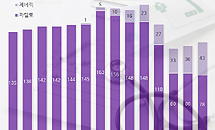
- The growth of 3-drug combinations has slowed down in the hypertension/hyperlipidemia combination drug market. After recording double-digit YoY growth every quarter until the first half of last year, the spurt has slowed sharply since the end of last year. On the other hand, the 4-drug combinations that newly entered the market are rapidly expanding their influence. Prescription sales of Hanmi Pharm’s Amosartan XQ, which is leading the growth of 4-drug combinations, are expected to exceed KRW 10 billion in annual prescriptions. Brakes pulled on the growth of 3-drug combos…rate of growth reduced According to the market research institution UBIST, the outpatient prescription market size for 3-drug combo treatments that contain ARB+CCB+statin had reached KRW 15.3 billion in Q2. This is a 5% increase from the KRW 14.5 billion in Q2 last year. Although the market size expanded compared to the same period last year, the growth rate has slowed significantly recently. Sales of the 3-drug combination that contains ARB+CCB+statin for hypertension and hyperlipidemia have been marking double-digit growth until the first half of last year. Especially in 2020, the market has expanded rapidly. Prescriptions more than doubled every quarter, compared to the same period last year. In 2021, the market continued to grow, expanding by more than 30% every quarter. However, the growth slowed significantly since the second half of last year. In Q3 last year, the market size increased by only 8% YoY. From the Q4 of last year to Q2 of this year, the quarterly growth rate of prescriptions fell to 5%. Prescription performance of combo therapies for hypertension and hyperlipidemia It took just one year from Q4 2019 to Q4 2020 for the prescription scale of the 3-drug combination of ARB+CCB+statin for hypertension and hyperlipidemia to expand from KRW 5 billion to over KRW 10 billion. On the other hand, it took two and a half years to increase the size from KRW 10 billion to KRW 15 billion. The prescription size of the market, which had been around KRW 10.8 billion in Q4 2020 expanded to more than KRW 15 billion only in Q2 this year. Sales of most of the major products also showed a slowdown. Boryung Dukaro (fimasartan + amlodipine + rosuvastatin) posted KRW 4 billion in prescriptions in Q2. This is virtually no change from what it had made in Q2 last year. Hanmi Pharmaceutical’s Amosartan Q (losartan + amlodipine + rosuvastatin) and Daewoong Pharmaceutical’s Olomax (olmesartan + amlodipine + rosuvastatin) even showed a decline in prescription performance. For example, prescriptions of Amosartan Q which had been KRW 2.9 billion in Q2 last year, slightly fell to KRW 2.8 billion in one year. Sales of Olomax had also fallen from KRW 2.3 billion to KRW 2.2 billion. Prescription performance of major three-drug combo treatments for hypertension and hyperlipidemia Will sales of the 4-drug combos surge like the 3-drug combos...Sales of Amosartan XQ rise 75% in one-year Unlike the 3-drug combos, the 4-drug combos that were newly introduced to hypertension/hyperlipidemia combination drug market are rapidly expanding prescriptions. In Q2 last year, the 4-drug combination of ARB + CCB + statin + ezetimibe posted a sales performance of KRW 3.2 billion in the outpatient prescription market. Compared to the KRW 1.5 billion it had posted in Q2 last year, this is a more than twofold increase. This is similar to when the 3-drug combination was first introduced to the market. Hanmi Pharmaceutical was the first to release Amosartan XQ (losartan + amlodipine + rosuvastatin + ezetimibe) and form the market. Then, at the end of last year, GC Biopharma and Jeil Pharmaceuticals released Rozetelpine and Telmican-Q, respectively, both of which are combinations of telmisartan, amlodipine, rosuvastatin, and ezetimibe. In January this year, Chong Kun Dang released Nuvorozet. Nuvorozet contains the same combination as Rozetelpine and Telmican-Q with only amlodipine replaced with amlodipine. The market is currently being led by Amosartan XQ. The drug had recorded prescriptions of KRW 2.7 billion in Q2 this year. This is a 75% increase from the KRW 1.5 billion in Q2 last year. Amosartan XQ recorded a combined prescription performance of KRW 5 billion in the first half of the year, and at this rate, the drug is expected to record more than KRW 10 billion in annual sales this year. Meanwhile, the two-drug combinations of ARB + statin are showing a gradual decline in prescriptions. In Q2 last year, the two-drug combination drugs recorded a combined prescription performance of KRW 20.9 billion. This is a 6% YoY decline. The combination sold the most in Q3 2021, accounting for KRW 23.3 billion, but has been downhill ever since with the introduction of the 3-drug combinations.
- Company
- Rx of Generics for Xarelto doubled in 1 yr
- by Kim, Jin-Gu Aug 02, 2023 05:25am
- Generics for Xarelto (Rivaroxaban) are rapidly increasing their prescription performance. In the first half of last year, prescription sales of 8 billion won were recorded, more than doubling in one year. On the other hand, the original product's prescription performance decreased by half during the same period. Generics for Xarelto, 3.9 billion → 8 billion won growth in one year, original cut in half According to UBIST, a pharmaceutical market research institute on the 1st, the number of outpatient prescriptions for rivaroxaban in Korea in the first half of last year was 23.8 billion won, down 29% from 33.5 billion won in the same period last year. During this period, Xarelto, the original product, decreased by 46% from 29.6 billion won to 15.9 billion won. Xarelto's quarterly prescriptions peaked at 16.3 billion won in the third quarter of 2021, then steadily declined. In particular, the drop has increased since the third quarter of 2022. Prescription sales, which were 14.8 billion won in the second quarter of last year, plummeted to 11.8 billion won in the third quarter. Analysts say that the drug price cut, which was delayed due to Bayer's administrative lawsuit and application for suspension of execution, took place at this time, leading to a sharp drop in prescriptions. Since then, Xarelto's prescriptions have steadily declined. In the fourth quarter of last year, prescription sales of 8 billion won fell below 10 billion won, and in the first and second quarters of this year, prescription sales were only 8 billion won and 7.8 billion won, respectively. Xarelto generics are expanding. In the first half of last year, Xarelto generics recorded a combined prescription of 8 billion won. Compared to 3.9 billion won in the same period last year, it more than doubled in one year. Generics for Xarelto first appeared in the second quarter of 2021. Then, they exceeded 1 billion won in the first quarter of 2022 and 2 billion won in the second quarter, respectively. In the fourth quarter of that year, it further increased to more than 3 billion won, and in the second quarter of this year, it recorded more than 4 billion won. In the process, the share of generics also steadily increased. In the second quarter of this year, generics accounted for 36% of the rivaroxaban ingredient market. Compared to 13% in the second quarter of last year, it has nearly tripled in one year. Analysts say that generics are succeeding in targeting the original. Among generic products, Chong Kun Dang's Riroxia, Hanmi Pharm's Riroxban, and Samjin Pharm's Riroxaban posted sales of over W1bn in 1H. Prescriptions for each product in 1H were 2.2 billion won for Riroxia, 1.5 billion won for Riroxban, and 1.3 billion won for Riroxaban. Lixiana announces 100 billion won per year, Pradaxa's sluggishness continues Among the NOAC products other than Xarelto, Daiichi Sankyo's Lixiana produced the highest prescription performance. Lixiana's prescription amount in the first half was 51.4 billion won, up 10% from 46.5 billion won in the first half of last year. If this trend continues, Lixiana is expected to generate more than 100 billion won in prescriptions by the end of this year. BMS Eliquis recorded prescription sales of KRW 38.3 billion in the first half. Compared to 35.8 billion won in the first half of last year, it increased by 7% in one year. Boehringer Ingelheim Pradaxa's slump is prolonged. Pradaxa's prescriptions in the first half of this year were 5.9 billion won. It decreased by 11% from 6.6 billion won in the first half of last year. Pradaxa's quarterly prescriptions fell below 4 billion won in the third quarter of 2020 and further decreased to less than 3 billion won in the second quarter of this year.
