- LOGIN
- MemberShip
- 2026-09-16 14:28:32
- Ivonescimab outperforms Keytruda with OS improvement…in first-line lung cancer
- by Son, Hyung Min | translator Hong, Ji Yeon | 2026-09-16 09:54:41
The bispecific antibody 'ivonescimab' significantly improved overall survival compared to 'Keytruda' in the first-line treatment of PD-L1-positive advanced non-small cell lung cancer (NSCLC).
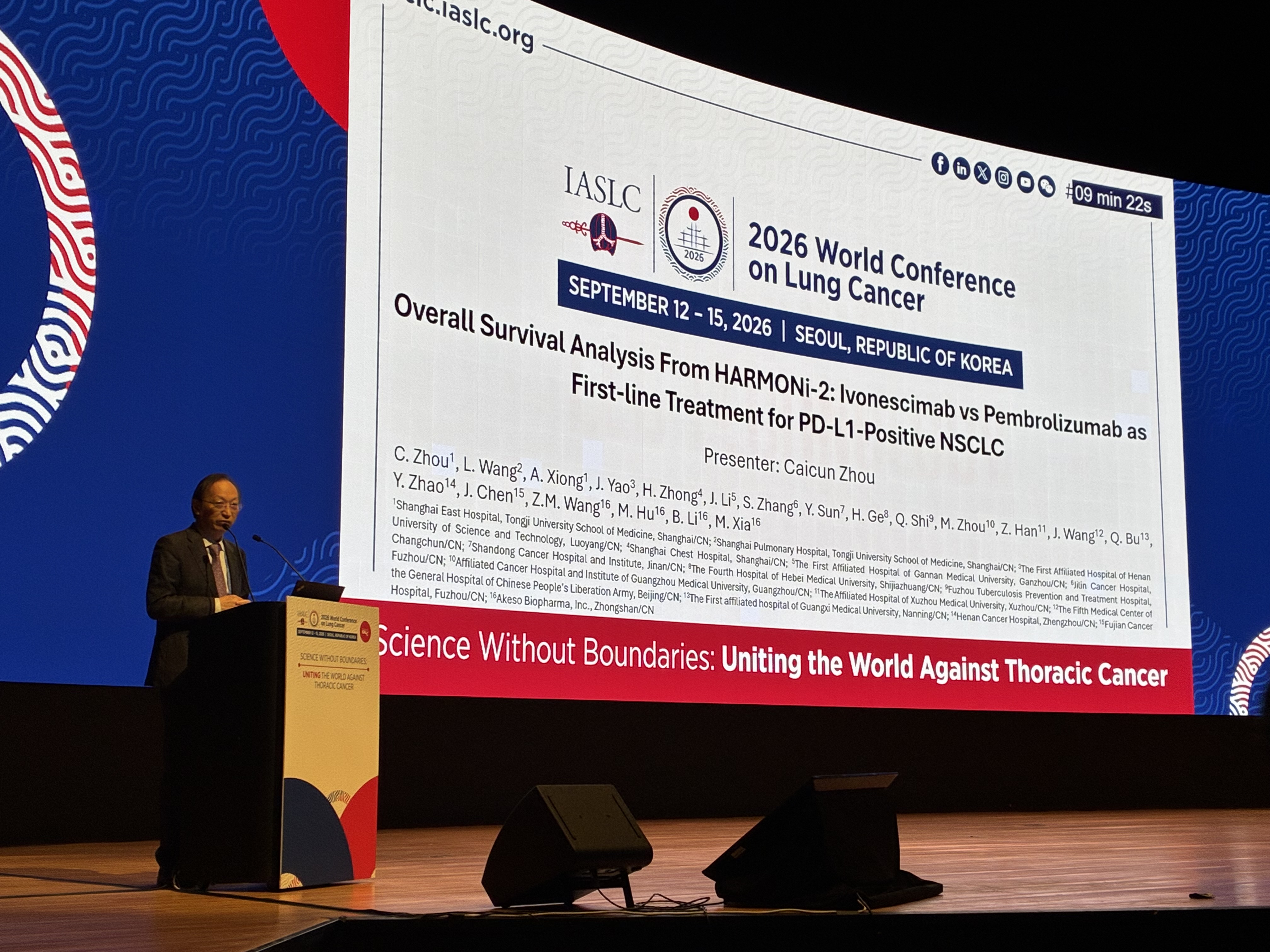
On the 15th, at the World Conference on Lung Cancer (WCLC 2026), the results of the phase 3 HARMONi-2 study, which directly compared ivonescimab and Keytruda (pembrolizumab) in patients with PD-L1-positive advanced NSCLC, were unveiled.
Ivonescimab is a PD-1/VEGF bispecific antibody developed by China's Akeso. Akeso is currently leading its development in China. In major regions outside of China, US-based Summit Therapeutics has secured development and commercialization rights and is conducting global clinical trials.
The HARMONi-2 trial is a randomized, double-blind, phase 3 study conducted in China. It enrolled 398 patients with locally advanced or metastatic NSCLC who had no prior systemic treatment and a PD-L1 tumor proportion score (TPS) of 1% or higher.
Patients received either ivonescimab 20 mg/kg or Keytruda 200 mg every 3 weeks. Patients with EGFR or ALK mutations were excluded. The primary endpoint was progression-free survival (PFS), assessed by an independent radiologic review committee, and the secondary endpoint was overall survival (OS).
Median OS of 30.8 months...Difference in 3-year survival rate
With a median follow-up of 36 months, ivonescimab significantly improved OS compared to Keytruda.
The median OS was 30.8 months in the ivonescimab group and 22.6 months in the Keytruda group. Ivonescimab reduced the risk of death by 27% compared to Keytruda.
The survival difference persisted over time. At 2 years, OS was 57.9% in the ivonescimab group and 48.0% in the Keytruda group. At 3 years, it was 45.0% and 33.1%, respectively.
At the time of this analysis, there were 104 deaths in the ivonescimab group and 130 deaths in the Keytruda group.
In the previously announced PFS analysis, ivonescimab also outperformed Keytruda. The median PFS was 11.1 months and 5.8 months, respectively, reducing the risk of disease progression or death by 49%.
The objective response rate (ORR) was also higher in the Ivonescimab group (50.0%) than in the Keytruda group (38.5%).
Significant OS difference in PD-L1 50% or higher
In the subgroup analysis by PD-L1 expression level, the survival extension benefit of ivonescimab was prominent in patients with high expression.
In patients with a PD-L1 TPS of 50% or higher, the ivonescimab group had not reached the median OS by the time of analysis, whereas the Keytruda group's median OS was 23.2 months. The risk of death was 42% lower in the Ivonescimab group.
At 2 years, OS was 63.2% in the ivonescimab group and 49.7% in the Keytruda group. At 3 years, OS was 53.4% and 31.3%, respectively.
In contrast, in patients with a PD-L1 TPS of 1-49%, the median OS was 28.5 months and 22.1 months, respectively.
The researchers explained that a favorable trend for ivonescimab was generally observed not only across PD-L1 expression levels but also in multiple prespecified subgroups, such as histology and age.
In squamous NSCLC, the median OS was 30.5 months for the ivonescimab group and 19.3 months for the Keytruda group, with a hazard ratio (HR) of 0.65. In non-squamous histology, they were 33.6 months and 25.6 months, respectively, with an HR of 0.79.
However, these subgroup analyses were descriptive and were not designed to secure statistical power.
The proportion of patients receiving subsequent anti-cancer treatment after disease progression was relatively higher in the Keytruda group.
Patients received chemotherapy in 36.4% of the ivonescimab group and 46.0% of the Keytruda group, and subsequent immunotherapy rates were 27.8% and 38.0%, respectively. Targeted therapy was reported in 19.2% and 27.5% of patients. Patients received ADC treatments in 15.7% of the ivonescimab group and 17.5% of the Keytruda group.
This analysis also showed an OS advantage in the ivonescimab group, despite the generally higher rate of subsequent systemic treatments in the Keytruda group.
Increase in VEGF-related proteinuria and hypertension... no new safety signals
In terms of safety, adverse events related to ivonescimab's VEGF inhibition mechanism were relatively more frequent.
Any-grade treatment-related adverse events (TRAEs) occurred in 93.4% of the ivonescimab group and 84.9% of the Keytruda group. Grade 3 or higher TRAEs occurred in 41.6% and 21.6% of the ivonescimab and Keytruda groups, respectively.
Serious TRAEs were reported in 29.9% of the ivonescimab group and 21.6% of the Keytruda group, and treatment discontinuations due to adverse events were 4.1% and 5.0%, respectively. Treatment-related deaths were 0.5% and 1.5%, respectively.
In the ivonescimab group, proteinuria and hypertension were reported in 48.2% and 20.3% of patients, higher than 13.1% and 3.0% in the Keytruda group. Grade 3 or higher proteinuria and hypertension were 8.1% and 7.1%, respectively.
The researchers said they identified no new safety signals during long-term follow-up and observed no distinct increase in bleeding risk.
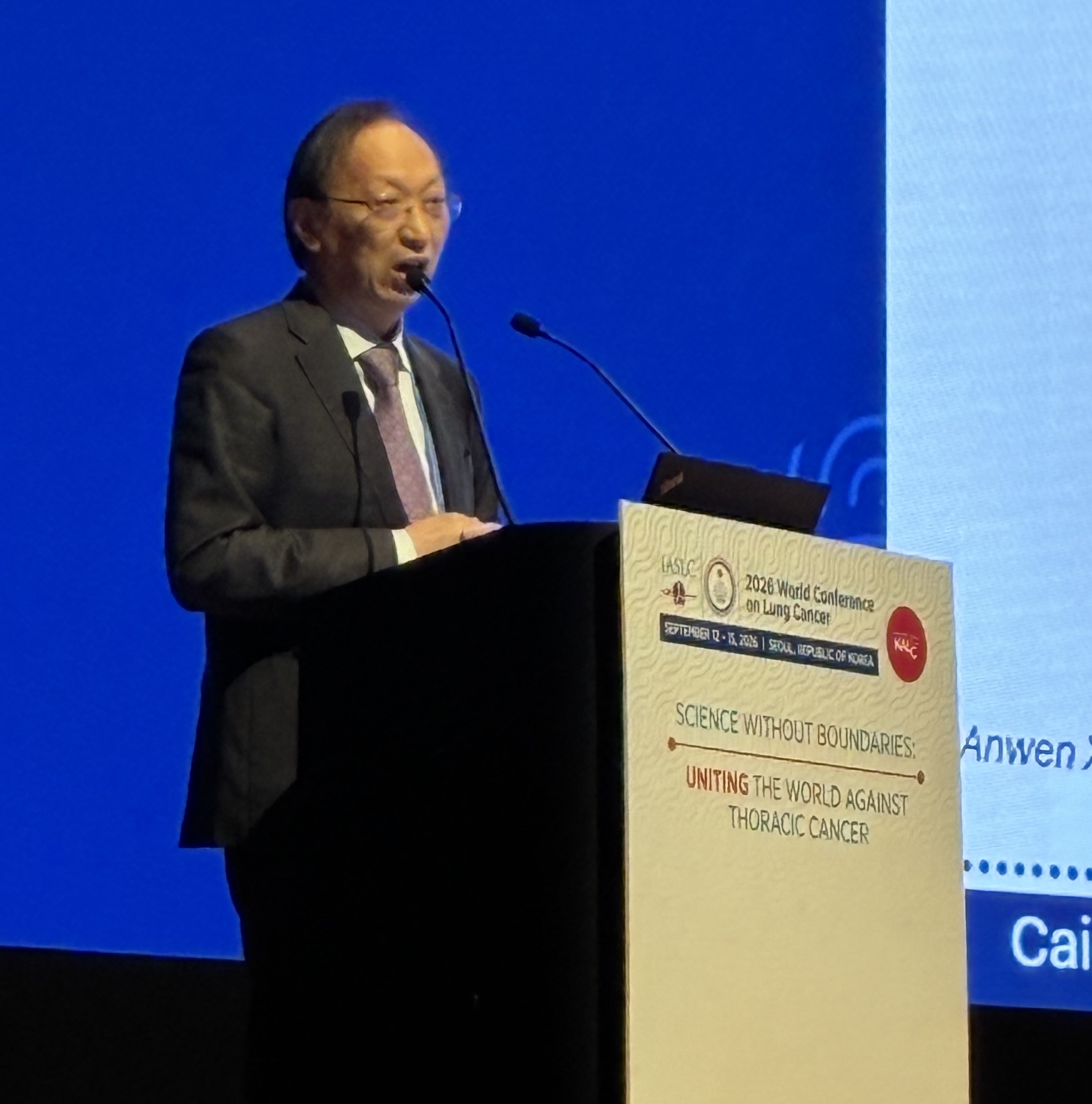
Professor Caicun Zhou of Shanghai Pulmonary Hospital in China, who presented the findings, evaluated, 'ivonescimab improved OS, PFS, and response rates in PD-L1-positive advanced NSCLC.'
Professor Zhou explained, 'A manageable safety profile was maintained even in long-term follow-up. These results confirm ivonescimab as a standard first-line treatment option for PD-L1-positive non-small cell lung cancer in China.'
However, the HARMONi-2 trial was conducted exclusively in Chinese patients.
Currently, the global phase 3 study HARMONi-7, which directly compares ivonescimab and Keytruda in patients with PD-L1 high-expressing metastatic NSCLC, is underway. Whether the survival benefit shown in HARMONi-2 trial will be reproduced in the global patient population is expected to be a key factor in determining the future therapeutic scope of ivonescimab.
-

- 0
댓글 운영방식은
댓글은 실명게재와 익명게재 방식이 있으며, 실명은 이름과 아이디가 노출됩니다. 익명은 필명으로 등록 가능하며, 대댓글은 익명으로 등록 가능합니다.
댓글 노출방식은
댓글 명예자문위원(팜-코니언-필기모양 아이콘)으로 위촉된 데일리팜 회원의 댓글은 ‘게시판형 보기’와 ’펼쳐보기형’ 리스트에서 항상 최상단에 노출됩니다. 새로운 댓글을 올리는 일반회원은 ‘게시판형’과 ‘펼쳐보기형’ 모두 팜코니언 회원이 쓴 댓글의 하단에 실시간 노출됩니다.
댓글의 삭제 기준은
다음의 경우 사전 통보없이 삭제하고 아이디 이용정지 또는 영구 가입제한이 될 수도 있습니다.
-
저작권·인격권 등 타인의 권리를 침해하는 경우
상용 프로그램의 등록과 게재, 배포를 안내하는 게시물
타인 또는 제3자의 저작권 및 기타 권리를 침해한 내용을 담은 게시물
-
근거 없는 비방·명예를 훼손하는 게시물
특정 이용자 및 개인에 대한 인신 공격적인 내용의 글 및 직접적인 욕설이 사용된 경우
특정 지역 및 종교간의 감정대립을 조장하는 내용
사실 확인이 안된 소문을 유포 시키는 경우
욕설과 비어, 속어를 담은 내용
정당법 및 공직선거법, 관계 법령에 저촉되는 경우(선관위 요청 시 즉시 삭제)
특정 지역이나 단체를 비하하는 경우
특정인의 명예를 훼손하여 해당인이 삭제를 요청하는 경우
특정인의 개인정보(주민등록번호, 전화, 상세주소 등)를 무단으로 게시하는 경우
타인의 ID 혹은 닉네임을 도용하는 경우
-
게시판 특성상 제한되는 내용
서비스 주제와 맞지 않는 내용의 글을 게재한 경우
동일 내용의 연속 게재 및 여러 기사에 중복 게재한 경우
부분적으로 변경하여 반복 게재하는 경우도 포함
제목과 관련 없는 내용의 게시물, 제목과 본문이 무관한 경우
돈벌기 및 직·간접 상업적 목적의 내용이 포함된 게시물
게시물 읽기 유도 등을 위해 내용과 무관한 제목을 사용한 경우
-
수사기관 등의 공식적인 요청이 있는 경우
-
기타사항
각 서비스의 필요성에 따라 미리 공지한 경우
기타 법률에 저촉되는 정보 게재를 목적으로 할 경우
기타 원만한 운영을 위해 운영자가 필요하다고 판단되는 내용
-
사실 관계 확인 후 삭제
저작권자로부터 허락받지 않은 내용을 무단 게재, 복제, 배포하는 경우
타인의 초상권을 침해하거나 개인정보를 유출하는 경우
당사에 제공한 이용자의 정보가 허위인 경우 (타인의 ID, 비밀번호 도용 등)
※이상의 내용중 일부 사항에 적용될 경우 이용약관 및 관련 법률에 의해 제재를 받으실 수도 있으며, 민·형사상 처벌을 받을 수도 있습니다.
※위에 명시되지 않은 내용이더라도 불법적인 내용으로 판단되거나 데일리팜 서비스에 바람직하지 않다고 판단되는 경우는 선 조치 이후 본 관리 기준을 수정 공시하겠습니다.
※기타 문의 사항은 데일리팜 운영자에게 연락주십시오. 메일 주소는 dailypharm@dailypharm.com입니다.