- LOGIN
- MemberShip
- 2026-08-04 14:15:01
- Gov-Industry dispute over non-covered care intensifies
- by Lee, Jeong-Hwan | translator Alice Kang | 2026-08-04 10:50:43
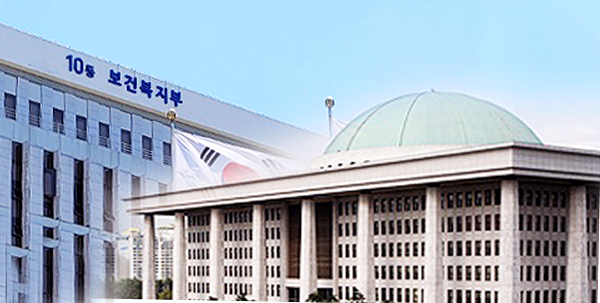
Tensions between the government and the medical community are escalating over tightened regulation of non-covered medical services, including the introduction of the managed reimbursement system.
Although disputes over physicians' autonomy in providing non-covered services have persisted for years, the latest flashpoint is the government's decision to bring manual therapy under the managed reimbursement framework.
The medical community plans to challenge the system's constitutionality, arguing that it unlawfully infringes on physicians' professional autonomy and patients' rights. The government, meanwhile, maintains that stronger oversight is necessary to curb unnecessary and excessive medical care while reinforcing regional, essential, and public healthcare services, suggesting that the conflict is likely to deepen.
In particular, as the ruling Democratic Party of Korea is emphasizing the need to manage medical institutions that focus solely on non-covered treatments rather than essential or covered medical services, attention is turning to the legislative direction of the government and the National Assembly.
On Aug. 3, the Seoul Medical Association plans to file a constitutional petition with the Constitutional Court challenging the managed reimbursement system.
According to the medical community, reclassifying manual therapy under managed reimbursement effectively allows the government to regulate both the price of non-covered services and the number of treatments patients may receive, thereby infringing upon physicians' clinical autonomy as well as patients' right to receive appropriate medical care.
The medical community argues that the policy creates an environment in which physicians cannot provide, and patients cannot receive, what they consider the most appropriate treatment.
The competent ministry, the Ministry of Health and Welfare, however, contends that managed reimbursement is intended to reduce unnecessary use of non-covered services and excessive price variations, thereby easing patients' financial burden while improving the sustainability of the National Health Insurance system.
The latest escalation in tensions was fueled by media reports indicating that, alongside the introduction of managed reimbursement, the government is considering targeted regulation of medical institutions that provide only non-covered services, such as cosmetic and dermatology clinics.
The report, which suggested that the ministry was considering measures including special legislation on the management of non-covered care to regulate healthcare providers that generate revenue exclusively from non-covered services without providing any reimbursed care, elicited robust opposition from medical professionals asserting that state intervention in clinical practice constituted an overreach.
The ministry later issued a statement rejecting those reports, saying it had never considered making reimbursed services legally mandatory or imposing penalties on medical institutions that provide only non-covered care.
Rather, it reaffirmed that previously announced policies, including the managed reimbursement system, will be implemented as planned to strengthen oversight of unnecessary non-covered services.
What is noteworthy is that some lawmakers from the Democratic Party of Korea have also expressed concern over the growing concentration of medical institutions on non-covered care.
Rep. Jin-sook Jeon and Rep. Young-seok Seo, both members of the National Assembly's Health and Welfare Committee, cited data showing medical institutions that do not submit any National Health Insurance claims and emphasized the need for legislative and policy measures to address the worsening outflow of healthcare professionals from essential care and the increasing concentration of providers in non-covered fields such as dermatology and cosmetic medicine.
As a result, industry observers believe the National Assembly could eventually pursue special legislation aimed at regulating excessive reliance on non-covered medical services among frontline healthcare providers.
Rep. Jeon said, "Although a significant amount of newly established clinics operated by general practitioners are registered as dermatology clinics, many have no National Health Insurance claims related to the treatment of skin diseases. The government must go beyond simply increasing the number of physicians and instead address the concentration of healthcare professionals in specific practice areas. It should establish reimbursement systems and institutional incentives that encourage physicians to choose public, regional, and essential healthcare.
Rep. Seo said, "There are inherent limitations in understanding clinical practice at medical institutions that do not file National Health Insurance claims. Given concerns that the number of cosmetic medical clinics operated by general practitioners and focused primarily on non-covered services continues to increase, there is a need to assess the current situation and consider appropriate management measures."
An official from the Health and Welfare Committee commented, "Debate over physicians' autonomy in providing non-covered medical services has long been a controversial issue. Differences exist not only between the ruling and opposition parties but also among individual lawmakers. Since strengthening essential healthcare remains a key policy priority of the current administration, opinions within the committee also differ considerably regarding the direction of future policy and legislation. It will therefore be important to watch whether related bills are introduced and how they proceed through the legislative process."
-

- 0
댓글 운영방식은
댓글은 실명게재와 익명게재 방식이 있으며, 실명은 이름과 아이디가 노출됩니다. 익명은 필명으로 등록 가능하며, 대댓글은 익명으로 등록 가능합니다.
댓글 노출방식은
댓글 명예자문위원(팜-코니언-필기모양 아이콘)으로 위촉된 데일리팜 회원의 댓글은 ‘게시판형 보기’와 ’펼쳐보기형’ 리스트에서 항상 최상단에 노출됩니다. 새로운 댓글을 올리는 일반회원은 ‘게시판형’과 ‘펼쳐보기형’ 모두 팜코니언 회원이 쓴 댓글의 하단에 실시간 노출됩니다.
댓글의 삭제 기준은
다음의 경우 사전 통보없이 삭제하고 아이디 이용정지 또는 영구 가입제한이 될 수도 있습니다.
-
저작권·인격권 등 타인의 권리를 침해하는 경우
상용 프로그램의 등록과 게재, 배포를 안내하는 게시물
타인 또는 제3자의 저작권 및 기타 권리를 침해한 내용을 담은 게시물
-
근거 없는 비방·명예를 훼손하는 게시물
특정 이용자 및 개인에 대한 인신 공격적인 내용의 글 및 직접적인 욕설이 사용된 경우
특정 지역 및 종교간의 감정대립을 조장하는 내용
사실 확인이 안된 소문을 유포 시키는 경우
욕설과 비어, 속어를 담은 내용
정당법 및 공직선거법, 관계 법령에 저촉되는 경우(선관위 요청 시 즉시 삭제)
특정 지역이나 단체를 비하하는 경우
특정인의 명예를 훼손하여 해당인이 삭제를 요청하는 경우
특정인의 개인정보(주민등록번호, 전화, 상세주소 등)를 무단으로 게시하는 경우
타인의 ID 혹은 닉네임을 도용하는 경우
-
게시판 특성상 제한되는 내용
서비스 주제와 맞지 않는 내용의 글을 게재한 경우
동일 내용의 연속 게재 및 여러 기사에 중복 게재한 경우
부분적으로 변경하여 반복 게재하는 경우도 포함
제목과 관련 없는 내용의 게시물, 제목과 본문이 무관한 경우
돈벌기 및 직·간접 상업적 목적의 내용이 포함된 게시물
게시물 읽기 유도 등을 위해 내용과 무관한 제목을 사용한 경우
-
수사기관 등의 공식적인 요청이 있는 경우
-
기타사항
각 서비스의 필요성에 따라 미리 공지한 경우
기타 법률에 저촉되는 정보 게재를 목적으로 할 경우
기타 원만한 운영을 위해 운영자가 필요하다고 판단되는 내용
-
사실 관계 확인 후 삭제
저작권자로부터 허락받지 않은 내용을 무단 게재, 복제, 배포하는 경우
타인의 초상권을 침해하거나 개인정보를 유출하는 경우
당사에 제공한 이용자의 정보가 허위인 경우 (타인의 ID, 비밀번호 도용 등)
※이상의 내용중 일부 사항에 적용될 경우 이용약관 및 관련 법률에 의해 제재를 받으실 수도 있으며, 민·형사상 처벌을 받을 수도 있습니다.
※위에 명시되지 않은 내용이더라도 불법적인 내용으로 판단되거나 데일리팜 서비스에 바람직하지 않다고 판단되는 경우는 선 조치 이후 본 관리 기준을 수정 공시하겠습니다.
※기타 문의 사항은 데일리팜 운영자에게 연락주십시오. 메일 주소는 dailypharm@dailypharm.com입니다.
- “Drug pricing intervention contributes to the crisis in essential healthcare and shortage of drugs”
- Reporter's view | Lee, Jeong-Hwan