- LOGIN
- MemberShip
- 2026-08-03 19:44:17
- Next-gen therapies expand options in multiple myeloma
- by Son, Hyung Min | translator Alice Kang | 2026-08-03 17:19:08
The treatment landscape for multiple myeloma is evolving rapidly.
With the introduction of therapies based on novel mechanisms of action, including antibody-drug conjugates (ADCs), bispecific antibodies and chimeric antigen receptor T-cell (CAR-T) therapies, treatment options have expanded significantly in Korea.
As competition shifts from regulatory approvals to National Health Insurance reimbursement, patient access to these next-generation therapies is emerging as a key factor shaping the future treatment landscape for multiple myeloma.
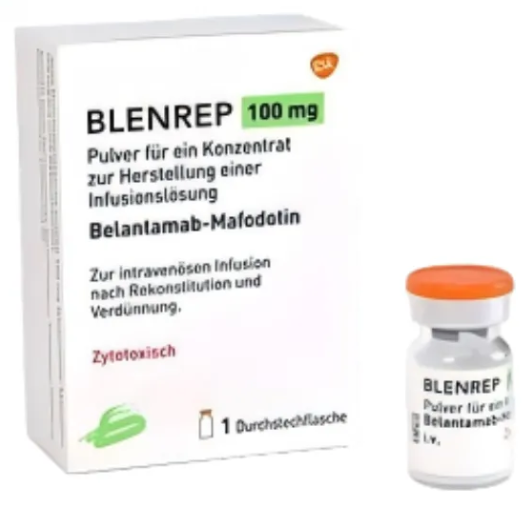
According to industry sources, GSK Korea is currently pursuing reimbursement for its BCMA-targeting ADC Blenrep (belantamab mafodotin).
In December last year, Blenrep was approved in Korea for use in combination with bortezomib and dexamethasone (BVd) in patients with relapsed or refractory multiple myeloma who had received at least one prior therapy.
It is also approved in combination with pomalidomide and dexamethasone (BPd) for patients who received at least one prior therapy including lenalidomide.
Under the Korean label, both combination regimens are indicated for patients who have received one or more prior therapies, and can be used beginning in the second-line setting. Accordingly, a key issue in reimbursement discussions is whether coverage will likewise begin from second-line treatment.
The approved indication differs from that in the United States. In October last year, the US Food and Drug Administration approved Blenrep in combination with BVd for patients with relapsed or refractory multiple myeloma who had previously received at least two therapies including a proteasome inhibitor and an immunomodulatory agent.
While the US indication effectively targets third-line or later treatment, as in Europe, Korea permits use beginning in the second line. Depending on the extent to which domestic reimbursement criteria are set, the actual therapeutic position of Blenrep may also vary.
Initial treatment strategies for multiple myeloma vary depending on whether a patient is eligible for hematopoietic stem cell transplantation.
Transplant-eligible patients typically receive induction therapy to reduce tumor burden, followed by autologous stem cell transplantation and maintenance therapy. Patients who are ineligible for transplantation, or who are not scheduled for transplant during initial treatment, generally continue drug therapy in consideration of each individual’s age, overall health, and comorbidities.
More recently, first-line treatment has increasingly incorporated combination regimens containing anti-CD38 monoclonal antibodies regardless of transplant status, reflecting a strategy aimed at achieving deeper responses from the outset.
In April, Johnson & Johnson's subcutaneous Darzalex (daratumumab) received an expanded indication allowing its use in the four-drug DVRd regimen (daratumumab, bortezomib, lenalidomide and dexamethasone) in both transplant-eligible and transplant-ineligible patients.
Lenalidomide remains a cornerstone therapy in both frontline combination regimens and maintenance treatment. Consequently, many patients have already become refractory to lenalidomide by the time they require second-line therapy following disease relapse.
Multiple myeloma is characterized by repeated cycles of relapse and treatment, and the duration of disease control generally becomes shorter with each successive line of therapy, increasing the need for therapies with novel mechanisms early in the relapsed setting.
This is one reason Blenrep is seeking reimbursement as a second-line treatment. In particular, the BPd regimen is indicated for patients previously treated with lenalidomide, closely reflecting current real-world treatment patterns in multiple myeloma.
Treatment sequence more important than mechanism…Reimbursement will reshape the market
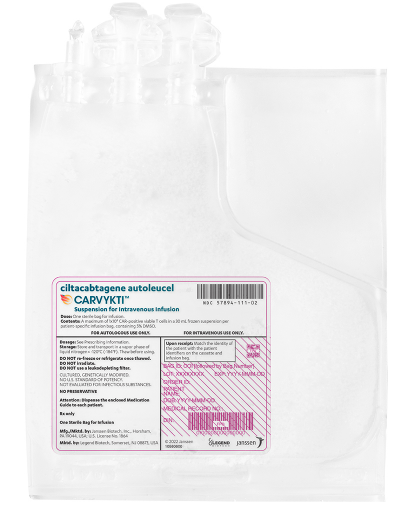
Johnson & Johnson's CAR-T therapy Carvykti (ciltacabtagene autoleucel) is also reshaping treatment strategies by expanding into earlier stages of relapsed disease.
Carvykti is a personalized cell therapy in which a patient's own T cells are collected, genetically modified to recognize myeloma cells, and then reinfused. It is currently the first and only CAR-T therapy approved in Korea for multiple myeloma.
It is indicated for patients with relapsed or refractory multiple myeloma who are refractory to lenalidomide after receiving at least one prior regimen that included both a proteasome inhibitor and an immunomodulatory agent.
In the CARTITUDE-4 study, Carvykti reduced the risk of disease progression or death by 71% compared with standard therapy. At a median follow-up of 33.6 months, the median progression-free survival had not yet been reached in the Carvykti group, compared with 11.8 months in the standard-of-care group.
Carvykti also reduced the risk of death by 45% in the overall survival analysis. The overall response rate was 85% in the Carvykti arm versus 67% with standard therapy, while complete response or stringent complete response rates were 77% and 24%, respectively.
Experts believe CAR-T therapy is likely to become one of the major treatment pillars for relapsed or refractory multiple myeloma.
Because patients with multiple myeloma typically undergo long-term sequential treatment, repeated drug administration imposes not only a physical burden but also increasing demands associated with hospital visits and treatment costs.
CAR-T therapy has limitations in that it requires time for cell collection and manufacturing before treatment can begin. However, because durable responses may be achieved following a single administration, it has the potential to reduce the burden associated with prolonged, repeated treatment.
Although no specific reimbursement timetable has yet been confirmed for Carvykti, the need for discussions on reimbursement is being raised, given its high treatment cost and the limited number of centers capable of administering the therapy.
Meanwhile, bispecific antibodies are moving through the reimbursement process for patients in a more advanced setting.
Johnson & Johnson's Tecvayli (teclistamab) and Pfizer's Elrexfio (elranatamab) had reimbursement criteria established by the Health Insurance Review and Assessment Service's Cancer Disease Deliberation Committee in November last year.
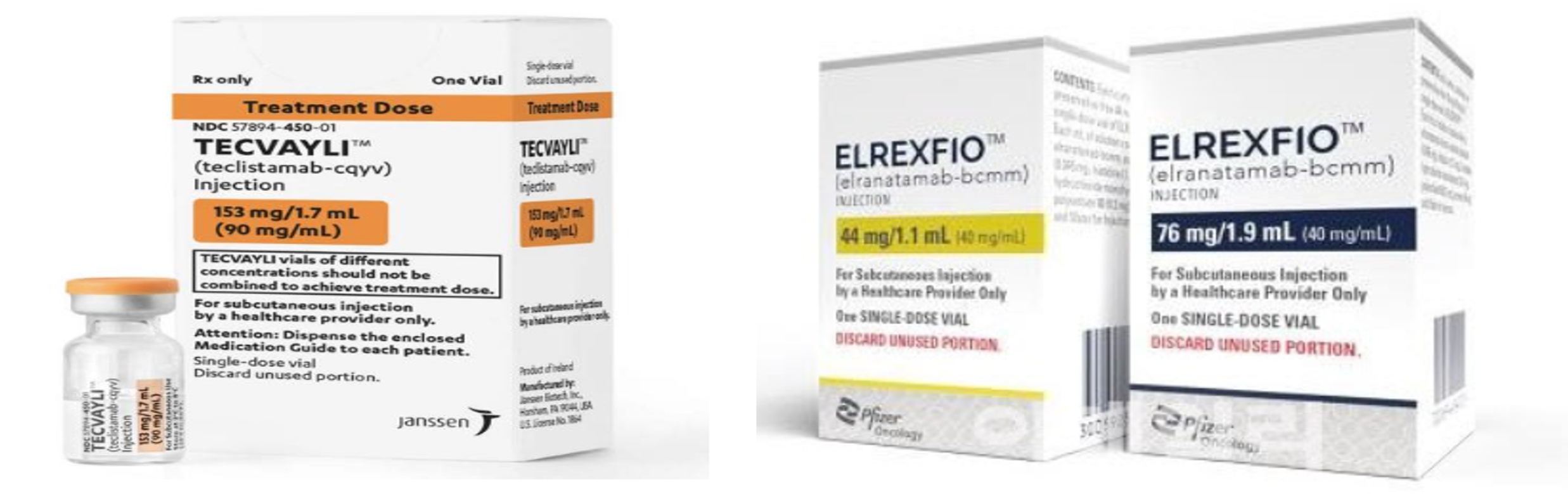
Both therapies simultaneously bind to BCMA expressed on myeloma cells and CD3 on T cells, directing the patient's immune system to attack cancer cells.
However, their approved populations are limited primarily to heavily pretreated patients with relapsed or refractory disease. Elrexfio is indicated for patients who have received at least three prior lines of therapy, including a proteasome inhibitor, an immunomodulatory agent and an anti-CD38 monoclonal antibody. Tecvayli is similarly intended for later-line patients previously treated with a proteasome inhibitor, an immunomodulatory agent, and an anti-CD38 antibody.
A key advantage of bispecific antibodies is that they are off-the-shelf therapies that can be administered immediately without the need to collect and manufacture a patient's own cells.
This enables rapid treatment for patients with rapidly progressing disease or those unable to wait for CAR-T cell manufacturing. Unlike CAR-T therapy, however, bispecific antibodies require repeated administration over time rather than relying on a single treatment.
-

- 0
댓글 운영방식은
댓글은 실명게재와 익명게재 방식이 있으며, 실명은 이름과 아이디가 노출됩니다. 익명은 필명으로 등록 가능하며, 대댓글은 익명으로 등록 가능합니다.
댓글 노출방식은
댓글 명예자문위원(팜-코니언-필기모양 아이콘)으로 위촉된 데일리팜 회원의 댓글은 ‘게시판형 보기’와 ’펼쳐보기형’ 리스트에서 항상 최상단에 노출됩니다. 새로운 댓글을 올리는 일반회원은 ‘게시판형’과 ‘펼쳐보기형’ 모두 팜코니언 회원이 쓴 댓글의 하단에 실시간 노출됩니다.
댓글의 삭제 기준은
다음의 경우 사전 통보없이 삭제하고 아이디 이용정지 또는 영구 가입제한이 될 수도 있습니다.
-
저작권·인격권 등 타인의 권리를 침해하는 경우
상용 프로그램의 등록과 게재, 배포를 안내하는 게시물
타인 또는 제3자의 저작권 및 기타 권리를 침해한 내용을 담은 게시물
-
근거 없는 비방·명예를 훼손하는 게시물
특정 이용자 및 개인에 대한 인신 공격적인 내용의 글 및 직접적인 욕설이 사용된 경우
특정 지역 및 종교간의 감정대립을 조장하는 내용
사실 확인이 안된 소문을 유포 시키는 경우
욕설과 비어, 속어를 담은 내용
정당법 및 공직선거법, 관계 법령에 저촉되는 경우(선관위 요청 시 즉시 삭제)
특정 지역이나 단체를 비하하는 경우
특정인의 명예를 훼손하여 해당인이 삭제를 요청하는 경우
특정인의 개인정보(주민등록번호, 전화, 상세주소 등)를 무단으로 게시하는 경우
타인의 ID 혹은 닉네임을 도용하는 경우
-
게시판 특성상 제한되는 내용
서비스 주제와 맞지 않는 내용의 글을 게재한 경우
동일 내용의 연속 게재 및 여러 기사에 중복 게재한 경우
부분적으로 변경하여 반복 게재하는 경우도 포함
제목과 관련 없는 내용의 게시물, 제목과 본문이 무관한 경우
돈벌기 및 직·간접 상업적 목적의 내용이 포함된 게시물
게시물 읽기 유도 등을 위해 내용과 무관한 제목을 사용한 경우
-
수사기관 등의 공식적인 요청이 있는 경우
-
기타사항
각 서비스의 필요성에 따라 미리 공지한 경우
기타 법률에 저촉되는 정보 게재를 목적으로 할 경우
기타 원만한 운영을 위해 운영자가 필요하다고 판단되는 내용
-
사실 관계 확인 후 삭제
저작권자로부터 허락받지 않은 내용을 무단 게재, 복제, 배포하는 경우
타인의 초상권을 침해하거나 개인정보를 유출하는 경우
당사에 제공한 이용자의 정보가 허위인 경우 (타인의 ID, 비밀번호 도용 등)
※이상의 내용중 일부 사항에 적용될 경우 이용약관 및 관련 법률에 의해 제재를 받으실 수도 있으며, 민·형사상 처벌을 받을 수도 있습니다.
※위에 명시되지 않은 내용이더라도 불법적인 내용으로 판단되거나 데일리팜 서비스에 바람직하지 않다고 판단되는 경우는 선 조치 이후 본 관리 기준을 수정 공시하겠습니다.
※기타 문의 사항은 데일리팜 운영자에게 연락주십시오. 메일 주소는 dailypharm@dailypharm.com입니다.
- “Drug pricing intervention contributes to the crisis in essential healthcare and shortage of drugs”
- Reporter's view | Lee, Jeong-Hwan