- LOGIN
- MemberShip
- 2026-09-15 18:37:56
- Calls for reform in NHI access for third-line mCRC treatment
- by Son, Hyung Min | translator Hong, Ji Yeon | 2026-07-27 08:43:18
There is a growing demand in South Korea to improve access to third-line treatments under the National Health Insurance (NHI) for metastatic colorectal cancer (mCRC) to enhance patient survival.
While health insurance coverage is relatively comprehensive for first- and second-line treatments in South Korea, global standard-of-care agents used in subsequent lines remain non-reimbursed. In response, health authorities have acknowledged the high unmet medical need in third-line treatment, stating that they are evaluating measures to improve patient access.
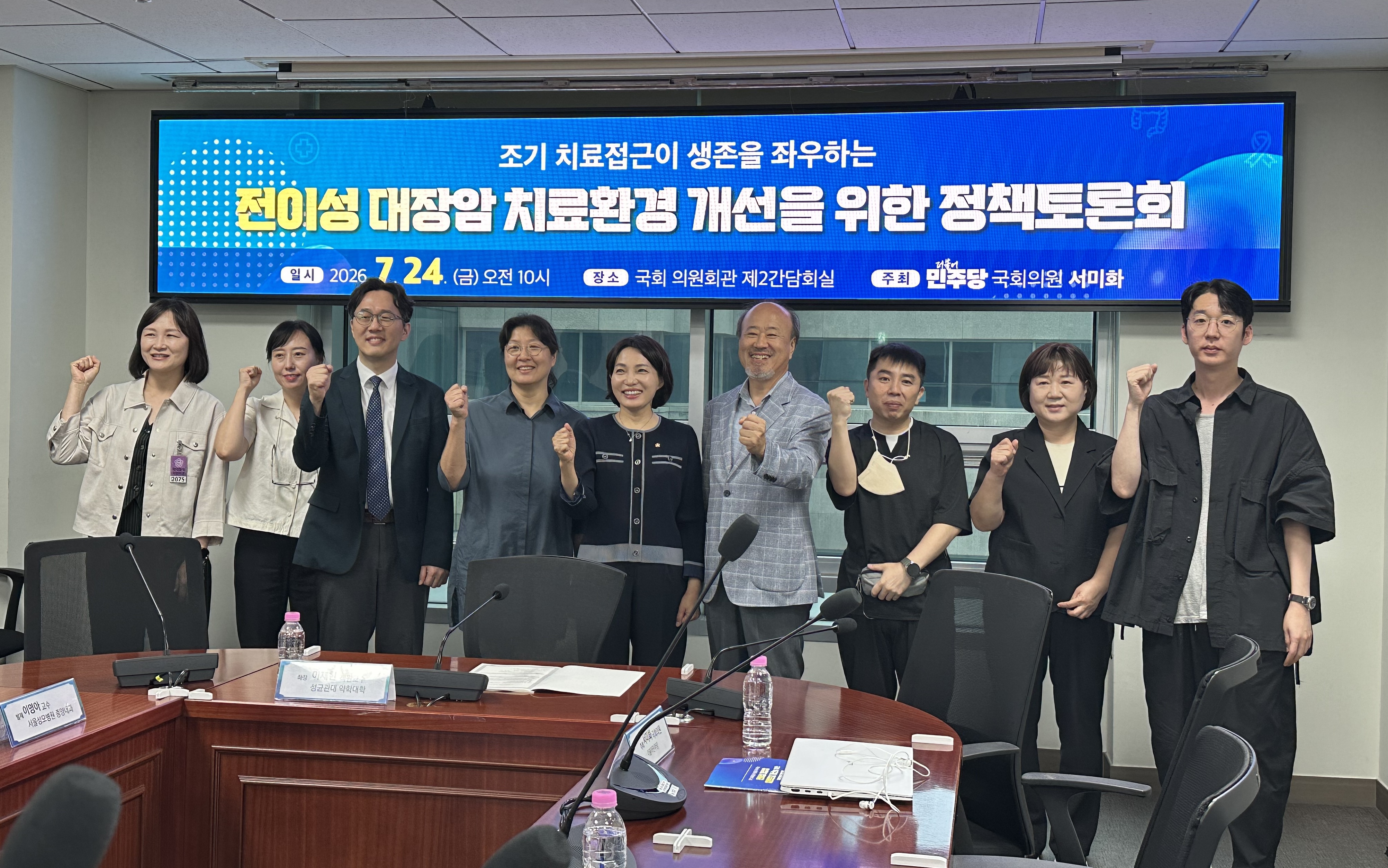
On the 24th, a symposium titled "Policy Forum for Improving the Treatment Environment for Metastatic Colorectal Cancer Where Early Treatment Access Determines Survival" was held at the National Assembly, hosted by Representative Mihwa Seo of the Democratic Party of Korea.
Rep. Seo stated, "In metastatic colorectal cancer, treatment timing and therapeutic access exert a direct impact on overall survival, yet reimbursed options in third-line are not available in South Korea," and added, "A rational reimbursement framework must be established to prevent patients from forfeiting treatment due to financial toxicity."
Third-line treatments are not reimbursed...Leading to drops in treatment rates
Presenting at the forum, Professor Myung Ah Lee of the Division of Oncology at Seoul St. Mary's Hospital diagnosed that as patients with metastatic colorectal cancer progress through sequential lines of therapy, acquired resistance and disease progression progressively deteriorate their systemic performance status. Dr. Lee explained that non-reimbursed drug costs starting at the third-line setting lead to a sharp decline in the proportion of patients maintaining ongoing treatment.
Professor Lee pointed out, "Reimbursement is well-integrated through first- and second-line systemic chemotherapy, resulting in a manageable financial burden for patients. However, from the third-line setting onward, patients with good performance status are frequently unable to receive treatment simply because no reimbursed agents exist," and added, "An increasing number of patients are discontinuing treatment despite viable therapeutic opportunities due strictly to financial constraints."
Currently, first-line therapy for metastatic colorectal cancer primarily utilizes oxaliplatin- or irinotecan-based cytotoxic chemotherapy in combination with targeted biologics. Second-line treatment involves switching to the alternative chemotherapy backbone not administered in the first-line setting.
However, the treatment landscape shifts dramatically following failure of both lines. While a small subset of patients with specific biomarkers can access immune checkpoint inhibitors or targeted agents, the eligible patient population remains narrow.
For the majority of patients, global standard-of-care regimens recommended in guidelines, such as the combination of 'Lonsurf (trifluridine/tipiracil)' plus 'Avastin (bevacizumab)', 'Stivarga (regorafenib)', and 'Fruzaqla (fruquintinib)', are all non-reimbursed in South Korea.
Professor Lee emphasized, "In the U.S. and Europe, Stivarga, Lonsurf-Avastin combination, and Fruzaqla are recommended from the third-line setting, but none of these regimens are reimbursed in South Korea," and added, "We need a regulatory environment where therapeutics capable of preserving quality of life alongside overall survival can enter the national health insurance benefit umbrella more rapidly."
Access to Next-Generation Sequencing (NGS) testing for precision oncology was also pointed out to be resolved, as the absence of genomic profiling data restricts patient eligibility for biomarker-driven novel drugs and clinical trial enrollment.
Professor Lee stated, "While international practice is moving toward routine genomic profiling for patients with metastatic or recurrent solid tumors, domestic reimbursement in Korea remains restricted outside of specific cancer types," and expressed concerns that "Consequently, patients who wish to participate in clinical trials for novel therapies often cannot enroll due to a lack of genetic sequencing results."
Experts urged that even in third-line and subsequent settings, clinicians must have the therapeutic flexibility to decide the sequence of care based on patient performance status, prior treatment history, and specific toxicity profiles.
Professor Dong-Hoe Koo of the Division of Hematology-Oncology at Kangbuk Samsung Hospital explained, "Each therapeutic option possesses distinct efficacy as well as unique toxicity profiles, such as fatigue, thrombocytopenia, hand-foot syndrome, and hypertension,” and added, “Drug selection should be personalized according to prior treatment exposure and individual patient vulnerability to specific adverse events."
Dr. Koo added, "Because third-line therapeutics established as global standards remain non-reimbursed in Korea, a patient's financial status directly dictates therapeutic choices," and added, "Reimbursement access must be improved so that patients with preserved performance status can gain survival opportunities through third-line and subsequent therapies."
Discussions continue on regulatory reforms to address unmet medical need
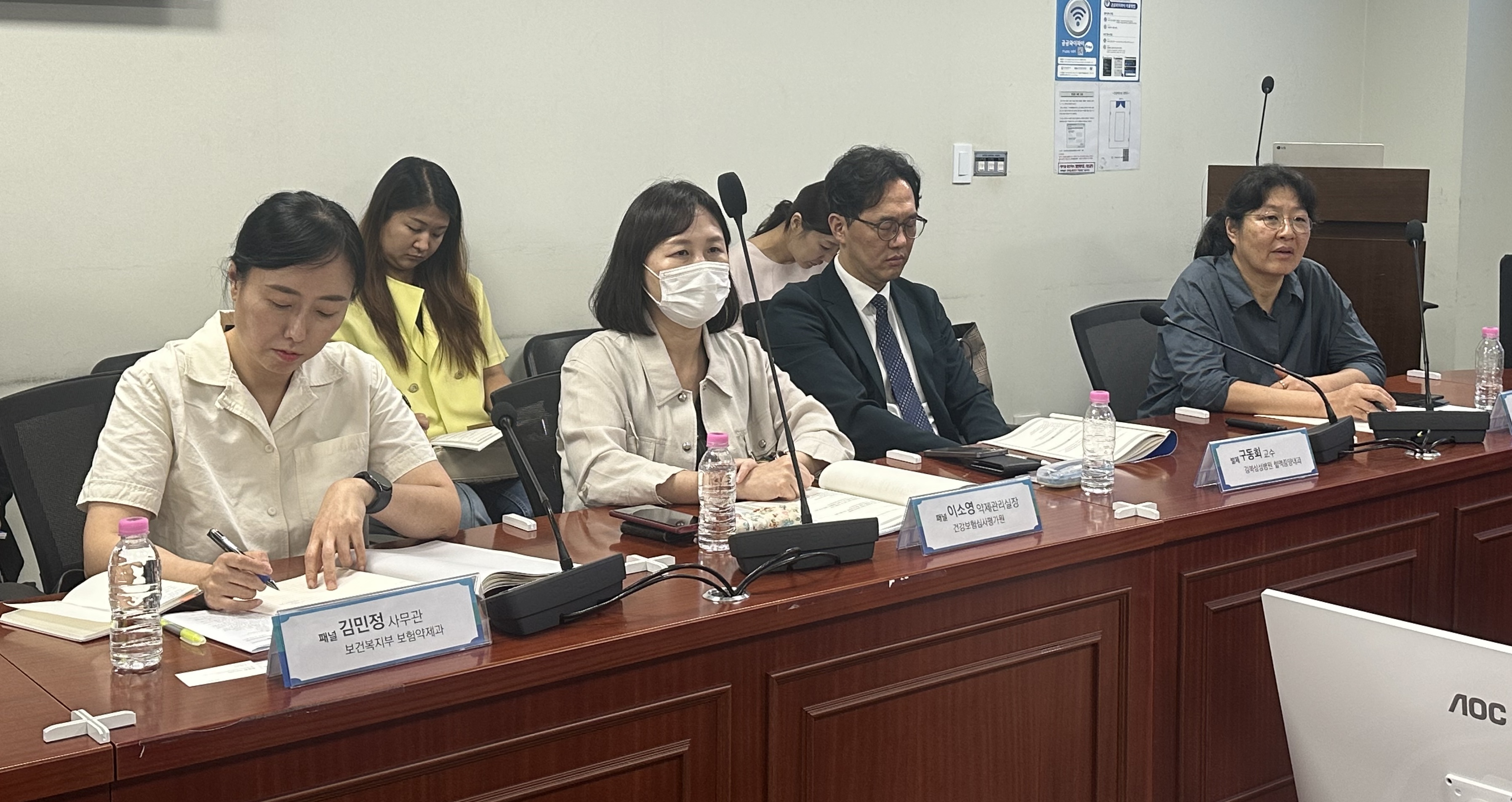
During the panel discussion, structural limitations in the pharmacoeconomic evaluation process and directions for regulatory reform emerged as key agenda items.
Reporter Yun-Ho Eo of DailyPharm pointed out that novel therapeutics approved via placebo-controlled clinical trials face structural disadvantages during pharmacoeconomic evaluations, as they are forced to compete against outdated comparator drugs.
Eo stated, "Recently, we have observed significant delays between passing the Cancer Disease Review Committee (CDRC) and being tabled before the Pharmaceutical Reimbursement Evaluation Committee (PREC)," and added, "Special policy mechanisms need to be considered for diseases where a new treatment landscape has formed, but cost-effectiveness is inherently difficult to prove due to outdated comparator drugs."
Eo added, "Even if a drug does not qualify for a full pharmacoeconomic evaluation waiver or an elevated Incremental Cost-Effectiveness Ratio (ICER) threshold, we need flexible regulatory pathways for drugs occupying an intermediate tier," and added, "Multinational pharmaceutical subsidiaries in Korea must also actively negotiate with their global headquarters rather than abandoning reimbursement due to challenging external environments."
Government representatives acknowledged the severity of the coverage gap in third-line metastatic colorectal cancer. They explained that regulatory reforms are underway to incorporate high unmet medical needs into reimbursement decision-making.
Lee stated, "We are aware of the reality that patients face due to a lack of options in third-line therapy, and we feel a deep sense of responsibility," and added, "Under the principle that unmet medical needs in life-threatening severe diseases should be evaluated through dedicated mechanisms, we are accelerating regulatory reforms."
The government currently operates a "conditional early listing with post-evaluation" pathway for high-cost novel drugs that demonstrate substantial unmet medical need despite limited clinical evidence. Separately, health authorities are evaluating flexible ICER thresholds for therapies indicated for severe diseases where applying standard ICER benchmarks is unfeasible.
Lee stated, "A research initiative evaluating the application of flexible ICER thresholds is scheduled for completion around November of this year, after which implementation will proceed," and added, "Even before the completion of this research, working-level staff is thoroughly reviewing data so that the evaluation committee can adequately consider disease characteristics and unmet needs."
Lee noted, "In reviewing third-line treatments, including Fruzaqla, we are re-examining the reasons why previous agents failed to secure reimbursement, the criteria applied at the time, and our newly evolved administrative procedures," and added, "Even before the research findings are published, we will fully consider the third-line colorectal cancer reimbursement gap within the committee's existing criteria and authority."
Min-Jung Kim, Manager of the Division of Health Insurance Benefits at the Ministry of Health and Welfare, noted, "Because National Health Insurance operates within a finite budget, we must strike a balance between patient access and fiscal sustainability," and added, "We are striving to establish rational reimbursement solutions by comprehensively reviewing the clinical value of therapeutics and their impact on patient quality of life."
Kim added, "It is important for pharmaceutical companies to demonstrate proactive negotiation and a willingness to improve patient access," and concluded, "The government will continue driving regulatory improvements to ensure that essential therapeutics are supplied to patients more rapidly."
-

- 0
댓글 운영방식은
댓글은 실명게재와 익명게재 방식이 있으며, 실명은 이름과 아이디가 노출됩니다. 익명은 필명으로 등록 가능하며, 대댓글은 익명으로 등록 가능합니다.
댓글 노출방식은
댓글 명예자문위원(팜-코니언-필기모양 아이콘)으로 위촉된 데일리팜 회원의 댓글은 ‘게시판형 보기’와 ’펼쳐보기형’ 리스트에서 항상 최상단에 노출됩니다. 새로운 댓글을 올리는 일반회원은 ‘게시판형’과 ‘펼쳐보기형’ 모두 팜코니언 회원이 쓴 댓글의 하단에 실시간 노출됩니다.
댓글의 삭제 기준은
다음의 경우 사전 통보없이 삭제하고 아이디 이용정지 또는 영구 가입제한이 될 수도 있습니다.
-
저작권·인격권 등 타인의 권리를 침해하는 경우
상용 프로그램의 등록과 게재, 배포를 안내하는 게시물
타인 또는 제3자의 저작권 및 기타 권리를 침해한 내용을 담은 게시물
-
근거 없는 비방·명예를 훼손하는 게시물
특정 이용자 및 개인에 대한 인신 공격적인 내용의 글 및 직접적인 욕설이 사용된 경우
특정 지역 및 종교간의 감정대립을 조장하는 내용
사실 확인이 안된 소문을 유포 시키는 경우
욕설과 비어, 속어를 담은 내용
정당법 및 공직선거법, 관계 법령에 저촉되는 경우(선관위 요청 시 즉시 삭제)
특정 지역이나 단체를 비하하는 경우
특정인의 명예를 훼손하여 해당인이 삭제를 요청하는 경우
특정인의 개인정보(주민등록번호, 전화, 상세주소 등)를 무단으로 게시하는 경우
타인의 ID 혹은 닉네임을 도용하는 경우
-
게시판 특성상 제한되는 내용
서비스 주제와 맞지 않는 내용의 글을 게재한 경우
동일 내용의 연속 게재 및 여러 기사에 중복 게재한 경우
부분적으로 변경하여 반복 게재하는 경우도 포함
제목과 관련 없는 내용의 게시물, 제목과 본문이 무관한 경우
돈벌기 및 직·간접 상업적 목적의 내용이 포함된 게시물
게시물 읽기 유도 등을 위해 내용과 무관한 제목을 사용한 경우
-
수사기관 등의 공식적인 요청이 있는 경우
-
기타사항
각 서비스의 필요성에 따라 미리 공지한 경우
기타 법률에 저촉되는 정보 게재를 목적으로 할 경우
기타 원만한 운영을 위해 운영자가 필요하다고 판단되는 내용
-
사실 관계 확인 후 삭제
저작권자로부터 허락받지 않은 내용을 무단 게재, 복제, 배포하는 경우
타인의 초상권을 침해하거나 개인정보를 유출하는 경우
당사에 제공한 이용자의 정보가 허위인 경우 (타인의 ID, 비밀번호 도용 등)
※이상의 내용중 일부 사항에 적용될 경우 이용약관 및 관련 법률에 의해 제재를 받으실 수도 있으며, 민·형사상 처벌을 받을 수도 있습니다.
※위에 명시되지 않은 내용이더라도 불법적인 내용으로 판단되거나 데일리팜 서비스에 바람직하지 않다고 판단되는 경우는 선 조치 이후 본 관리 기준을 수정 공시하겠습니다.
※기타 문의 사항은 데일리팜 운영자에게 연락주십시오. 메일 주소는 dailypharm@dailypharm.com입니다.