
- LOGIN
- MemberShip
- 2026-05-20 10:25:11

- Policy
- Virtual academic conferences consider e-booth as alternative
- by Kim, Jung-Ju May 25, 2020 06:26am
- Corporate booth participating in an offline academic conference (Source: Daily Pharm DB) Academic conferences in Korea are going through changes as many of academic events around the world are either canceled or postponed amid COVID-19 outbreak. While the medical experts predict the outbreak would not end anytime soon, a number of medical academia have either convened virtual conference or are planning on one to replace their offline conference. But as the regulations related to virtual conferences are not yet specified, the government, pharmaceutical industry and the affected academic societies have decided to revise the relevant regulations. On May 20, officials from the government, industry and academic societies held a press conference and announced the regulations would be amended within this month for the fall conferences to refer to. According to Ministry of Health and Welfare (MOHW), the current Fair Competition Agreement only stipulates offline sponsorship of academic conference by pharmaceutical companies, which does not reflect the recent circumstances. In fact, Korean Diabetes Association has already conducted an online conference, but the pharmaceutical company sponsorship was not properly managed by the relevant regulation. Medical academic conferences are essential events to share the latest medical findings and to educate healthcare professionals. Pharmaceutical and medical device companies make significant financial contribution to the conferences as they use the events to showcase their products in development or latest clinical outcomes through presentations by medical professionals. The academic societies spend the most on labor, venue rental, food and beverage and other out-of-pocket costs, which were usually covered by the companies’ donation, advertisement fee and incidental expenses. Regardless, from now on virtually formatted events would be more sought after as recently the conventional offline conferences have been restricted amid COVID-19 outbreak. The shift in the format of local and international conferences would inevitably result in change in method of sponsorship. The most mentioned method of sponsorship is virtually provided ‘e-booth.’ Already the pharmaceutical companies are inquiring their associated organization about the feasibility of sponsorship through e-booth and relevant method and level of contribution. The Korean government and industry officials elaborated, under the code of Fair Competition Agreement set by the Fair Trade Commission, the healthcare product suppliers are supposed to receive approval on the academic conference sponsorship, but the details on online sponsorship is still ambiguous. Meanwhile, MOHW, medical industry and pharmaceutical and medical device industry organization have recently established ‘Revised Academic Conference Sponsorship Standard’ to ban redundant sponsorship of providing donation and other advertisement fee and incidental expense. In other words, the advertisement fee and incidental expense can be provided if the company does not give donation. Medical academia “Confusion may get worse for the fall conferences without regulatory preparation” Academic societies struggling with offline conferences now fear the sluggish preparation of online event sponsorship regulation would eventually delay the fall conferences and cause turmoil. Korean Society for the Study of Obesity (KOSSO), for instance, is organizing an international conference in coming September. But it is now greatly challenged with inviting foreign speakers. The societies urge more attentions are also needed for international conference as well. KOSSO official commented with concerned voice that “The government should acknowledge the online attendance and quickly establish regulation on virtual or video conference, or even consider temporarily alleviating related regulations,” if not, “the academic societies would experience confusion with the conference management until next year.” Korean Academy of Medical Sciences is having similar concerns. The academy noted, “If the COVID-19 would continue to affect fall conferences, the academic societies would experience a massive confusion,” and “the societies are even considering on opening an option of ‘double booth.’ Also, we are expecting the government to allow banner and in-stream ads spots as well as sponsored product introduction time for the virtual conference.” Pharmaceutical industry “Needs to quickly work on long-term plan,” and Government “Newly revised regulation would be available next month” Regarding the situation, the pharmaceutical industry representatives firmly stated relevant regulation should be established as soon as possible, however, they should be constructed in efficient and reasonable fashion. Korea Pharmaceutical and Bio-pharma Manufacturers Association (KPBMA) official said, “We are getting endless inquires from the member companies. As sponsoring the academic conference is integral in sharing the latest developments and findings to healthcare professionals, it should be provided in any form or style,” and “the organization would closely cooperate on figuring out the feasible form of alternative sponsorship and appropriate level of the sponsorship.” Korean Research-based Pharmaceutical Industry Association (KRPIA) officials also stated, “We have task force discussing the matter in-depth. The organization is closely collaborating with the government to stipulate operating virtual booth and to work on other essential details through the Fair Competition Agreement,” and “We expect the discussion to efficiently build the framework for alternative sponsorship that can minimize the impact of COVID-19 on academic activities.” Accordingly, the government, medical industry and supplier organizations have recently convened a meeting and agreed on the necessity of the online conference sponsorship regulation. The meeting also concluded that another meeting should be convened early next month to finalize the amendment to the regulation. MOHW official said, “Based on the prospective that Post-Corona Era would prefer holding local and international conferences virtually, everyone agreed online sponsorship like ‘e-booth’ should be deliberated.” The official added, “The details would be decided in next month’s meeting. The alternative sponsorship would be sorted out promptly for the fall conference to utilize.”

- Company
- Qsymia puts a brake on Saxenda in Q1 obesity drug market
- by An, Kyung-Jin May 22, 2020 06:17am
- Product images of Saxenda (left) and Qsymia The Korean obesity treatment market has fluctuated significantly in the year. The so-called ‘Gangnam Diet Injection,’ Saxenda lost its solid market leadership and now shares the top spot with Qsymia. Saxenda’s sales has halved as soon as Qsymia entered the market and took over a significant part of it. On May 20, pharmaceutical market research firm IQVIA reported the Korean obesity treatment market in the first quarter showed noticeable changes among the top sellers. In the first quarter of 2020, Novo Nordisk’s Saxenda has generated 5.9 billion won, decreased by 44.4 percent against the same time last year. Launched in March 2018, Saxenda has made over 10 billion won in the first quarter last year and has been easily leading the market until the fourth quarter last year. But now its top spot is challenged by a new comer taking away half of its sales in a quarter. Quarterly sales performance of top selling anti-obesity treatments in Korea (Unit: KRW 1 million) Source: IQVIA Saxenda (liraglutide 3.0 mg) is the world’s first glucagon-like peptide-1 (GLP-1) receptor agonist approved as an obesity treatment. GLP-1 hormone, naturally secreted in human body after food intake, binds to receptors in the hypothalamus and reduces hunger while increasing the feeling of satiety. Saxenda shares the same substances as a treatment prescribed to patients with type 2 diabetes, Victoza (liraglutide 1.8 mg), but they differ in dose and administration method. Working in the same mechanism as GLP-1 in human body, liraglutide lessens appetite and induces weight-loss effect. Saxenda’s promising market leadership was crippled when Qsymia stepped into the Korean market in last January. In only three months, Qsymia generated 4.3 billion won in the quarter and ranked itself on the second place. The narrow sales gap between the two is 1.6 billion won. The newly launched drug sold more than double the amount of Daewoong Pharmaceutical’s Dietamin, which used to come in second after Saxenda until the fourth quarter last year. In 2017, Alvogen Korea shook hands with the U.S.-based Vivus and won the sales and marketing right over Qsymia (phentermine hydrochloride plus topiramate) in Korea. At the end of last year, Alvogen Korea also signed a co-marketing deal with Chong Kun Dang and started their first sales and marketing activity from early this year. Alvogen Korea’s rich experience in the anti-obesity medication market gained through Furing and Furimin seems to have been boosted by Chong Kun Dang’s massive sales power. Besides Qsymia, other obesity drugs generally showed stagnating performance. Except for Alvogen Korea’s Furimin, products with average quarterly sales of 1 billion won have slipped in the first quarter compared to the previous quarter. Furimin’s sales have increased by 15.7 percent in the first quarter against the same time last year by making 1.0 billion won. On the contrary, Daewoong Pharmaceutical’s Dietamin generated 2.2 billion won in the first quarter, taking 4.6 percent dip compared to the same time last year. Huons’ Hutermin (1.4 billion won) and Alvogen Korea’s Furing (1.2 billion won) have also made 0.2 percent and 3.8 percent less than the year before. The anti-obesity medication market was expecting a fierce competition as Belviq that used to make 10 billion won a year was removed from the shelf due to cancer risk. Regardless, the COVID-19 outbreak and Qsymia have put a hard brake on other products in the market.
- Company
- MOHW-KRPIA meeting canceled as confirmed COVID-19 reported
- by Eo, Yun-Ho May 22, 2020 06:16am
- A confirmed case of COVID-19 was reported from Twin City Namsan building that houses the office of Korean Research-based Pharmaceutical Industry Association (KRPIA). Accordingly, the meeting originally scheduled on May 21 to convene Ministry of Health and Welfare (MOHW) Division of Pharmaceutical Benefits officials and KRPIA and multinational pharmaceutical companies’ market access and government affair executives have been canceled. KRPIA sent back their employees home and started working from home immediately after they received the news. The recently appointed Director Yang Yoon Seok of Pharmaceutical Benefits Division was supposed to meet with KRPIA officially for the first time. Deputy Director Choi Kyung Ho was to accompany Director Yoon to hear the industry officials’ opinion and discuss prospective approach of the drug pricing policy. The industry organization official commented, “It is regrettable the meeting with MOHW official had to be canceled due to an unfortunate circumstance. KRPIA was planning to talk about recommendations on the revised risk sharing agreement (RSA) and the pricing reduction on original product undergone corporate restructuring. We have agreed to reschedule the meeting soon.” The confirmed case has reportedly came into office until May 19, but went into a self-isolation after finding out on May 20 that the individual came in contact with other confirmed case. Around 8 a.m. on the same day, the self-quarantined individual was confirmed to have contracted the disease.
- Policy
- Concerta OROS'll be moved overseas to complete registration
- by Lee, Tak-Sun May 22, 2020 06:16am
- Janssen Korea, which decided to operate a domestic factory by 2021, is in a hurry to convert imports of licensed items. Following the transition to an overseas manufactory earlier this year, six items have been changed in permission, and in June, the manufacturing plant of the ADHD treatment, Concerta OROS ER will also be moved overseas to complete registration. According to the industry on the 21st, Janssen Korea plans to change the permit in June as the location of the manufacturing plants that manufacture Concerta OROS ER 18 mg and 27 mg has been changed. Concerta OROS ER 36mg and 54mg were imported and approved in 2015. Concerta OROS ER 18mg and 27mg were approved as domestic manufactured items in 2008 and have been produced at the Hyangnam Plant. However, with the decision to withdraw the Hyangnam Plant, the company plans to move the manufacturing of Concerta OROS ER 18mg and 27mg to the Janssen plant in Puerto Rico. Janssen said it is expected to change the permit in June, and has sent an official letter to the distributor saying that it may be difficult to supply items temporarily due to the administrative process following the import conversion. Imported products will be supplied normally in October. Janssen changed permission by converting six items to imports this year. Jurnista 4mg, Topamax Sprinkle cap 25mg & 50mg, Invega ER 3mg, 6mg & 9mg were converted from Hyangnam factory to imported factory. Janssen is expected to push forward the conversion of domestic manufacturing items to the manufacturing plant until the operation of the Hyangnam plant ceases in the future. Currently, products such as Ultracet are known to plan to transfer manufacturers to domestic pharmaceutical companies like Handok. Currently, there are 33 remaining manufacturing license items at Hyangnam Plant.
- InterView
- Improvement is urgent for many generic drugs
- by Lee, Tak-Sun May 22, 2020 06:16am
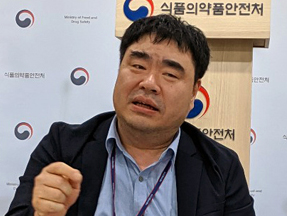
- Chae Gyu-han, the section chief of the MFDSAfter the Regulatory Reform Committee recommended the withdrawal of the joint bioequivalence test restriction policy in April, the Ministry of Food and Drug Safety's first reaction was to respect the recommendation to withdraw, but said that there was still a problem with the issue of generic restructuring. In a briefing with reporters on the 19th, Chae Gyu-han, the section chief of the MFDS, commented on the recommendation to withdraw the joint bioequivalence test restriction policy that everyone will agree that there is a need to somehow solve many of the generic drugs in the market, and one of them was the joint bioequivalence test restriction policy. We respect the recommendation to withdraw from the Regulatory Reform Committee, but that doesn't mean we have given up on the problem itself. There is no change in the policy direction itself to prevent generic insufficiency. In addition, he added that domestic generic drugs should have international competitiveness and contribute to public health. The public-private council for the competitiveness of generic drugs is expected to operate for the first time at the end of April, and plan to improve for two months. Some improvements have already been made. Until the comprehensive review of the consigned generics by the evaluation agency, the consigned generics are so-called 'bundled permission management' without separate examination. Because this system is aimed at efficiency in generic screening, some people were interested in amendments to the contents of submitting three batches of production data when the entrusted generic license was announced in November last year. In terms of efficiency, it is from the perception that this system is not necessary. However, Chae Gyu-han, the section chief said, “We have opinions through legislative notices, and final regulatory review is required. But, there is no change at this time.” In addition, Mr. Chae said, "There are some agreements in the public-private council. For example, discussions to strengthen the labeling system to give more consumer information and to implement a licensing system centered on complete pharmaceuticals with a bundled licensing system. It's being negotiated well," he said. "However, it is difficult to find a way to secure export competitiveness." Reinforcing the labeling of generic drugs is discussed not only on the product packaging by borrowing ICT technology, but also on how to communicate information through a prescription preparation system or a drug safety country. "I think it is the responsibility of the Ministry of Food and Drug Safety to satisfy the information the general public needs to know," said Chae. Regarding the investigation of impurities such as NDMA of Metformin, a diabetes treatment that is currently in progress, he briefly responded that he would pursue policy decisions in the direction of minimizing public inconvenience. Meanwhile, this briefing was meaningful in that it was the first policy communication position with the reporters after the COVID-19 incident.

- Policy
- COVID-19 vaccines/quarantine items road map details released
- by Kim, Jung-Ju May 22, 2020 06:16am
- Kwon Joon-wook, deputy general manager of the Central Quarantine Headquarter for quarantine managementThe quarantine authorities will release a detailed road map for 'COVID-19' vaccine and quarantine products next week. Regarding vaccines, the area of greatest interest, R & D of nucleic acid vaccines, such as those under development by Moderna, is also actively being conducted in Korea. Kwon Joon-wook, deputy general manager of the Central Quarantine Headquarter for quarantine management, answered the related questions at the regular briefing of the Central Quarantine Headquarter for quarantine management held on the afternoon of today (19th). th the successful formation of a neutralizing antibody as a candidate for the COVID-19 vaccine, which is currently being developed by Moderna, USA. Eight out of 45 trials confirmed the formation of neutralizing antibodies. This vaccine is called the 'nucleic acid vaccine'. In response, deputy general manager Kwon said, “This nucleic acid vaccine is capable of rapid development and mass production or utilization within a short period of time, and many research and development developers are fiercely challenging.” With regard to the clinical trials by Moderna, deputy general manager Kwon said, "As we understand now, Moderna aims to produce about 1 billion doses per year for mass production in the first half of next year, and the schedule could be much faster," also he added that in this regard, the President and the Minister of Health and Welfare of the Republic of Korea also spoke through the WHO General Assembly, but if developed anywhere in the world, every country should make every effort to use it without deficiency." In particular, he said the quarantine authorities are currently setting up a road map for vaccines and quarantine products. "The quarantine authorities will release the vaccine and quarantine road map in detail next week," said deputy general manager Kwon. He said that he will do his best in Korea, and even if the time is delayed, he will make more efforts to use our vaccine with COVID-19 as an opportunity. Lastly, he said, There are great achievements at home and abroad in relation to the development of vaccines. Right now, because we can't avoid sporadic infections other than" putting it in distancing in daily life. He asked, "Please keep distancing in daily life and the prevention of infectious diseases more thoroughly."
- Policy
- There are 17 cases of COVID-19 tx with stem cells worldwide
- by 박상준 May 21, 2020 06:01am
- As world-renowned pharmaceutical bio companies such as Gilead Sciences Korea, Novartis, and Pfizer have announced the development of COVID-19 treatment and vaccines, domestic pharmaceutical companies are also revealing their intentions through various mechanisms and strategies. In particular, it has attracted attention by offering various possibilities from cytokine anti-inflammatory drug candidates through stem cells to drug repositioning and therapeutics that directly target the RNA genome of COVID-19 using RNA interference technology. On the 20th, Bio Korea set up a special session on the development trend of COVID-19 treatment, and provided a place to promote the development of new drugs by sharing precautions for clinical and non-clinical development for treatment development and sharing cases of treatment development by domestic companies. Six sessions of industry-academia, including academic research institutes such as the Institut Pasteur Korea and the Korea Research institute of Chemical Technology (KRICT), and Cellivery, which received attention as an in vivo transport technology for pharmacological substances, participated in this online session. .Soon-wook Song, vice president of SCM Life Sciences, which first published a case study on the development of a stem cell therapy for treatment of COVID-19 (SCM-AGH), explored the possibility that stem cells could be used for COVID-19 treatment through anti-inflammatory functions .▲Stop cytokines, Stem cell anti-inflammatory mechanism "There is a worldwide search for ways to use stem cells for the treatment of COVID-19," said vice president Song ."Currently, clinical trials registered with stem cells called Mesenchymal Stem Cells (MSCs) have been registered worldwide." The number of cases reached 17," he said .Soon-Wook Song Vice President, SCM Life Sciences#"In the first clinical trial of stem cell therapy in China, 10 COVID-19 confirmed patients participated, 7 were included in the stem cell treatment group, and 3 were included in the control group." "Patients who participated in this trial received 1x10⁶ cells / kg stem cells once, and usually started to respond after 2-4 days," he said .It has been found in animal experimental models that stem cell administration reduces inflammatory cytokines that cause cytokine storms and activates immune T cells that are effective in suppressing viruses .COVID-19 confirmed patients are exposed to the immune system's cytokine when the virus penetrates the human body, and the 'cytokine storm' phenomenon that attacks normal cells is expressed ."We have our own original technology for separating stem cells with high purity, and we are producing high-efficiency and low-cost stem cell therapies based on this technology," said Song ."We have already demonstrated its effectiveness in animal models of mild and severe acute pancreatitis with these high-efficiency stem cell therapies," he explained .He said, "In particular, stem cells reduce the inflammatory cytokines TNF-alpha, INF-gamma, IL-1beta, and IL-6, which cause cytokine storms, and increase the anti-inflammatory cytokines IL-4 and IL-10 .And activated T cells ." Also he said, "The expected therapeutic effects of SCM-AGH stem cell therapy are also cytokine storm control," In addition, "regulatory T cells are activated to increase IL-10 secretion, so immune cells such as abnormally activated T- and B-cells can also be regulated." It is expected to induce efficacy .Stem cell therapy is expected to induce the long-term treatment efficacy by rapidly normalizing the patient's immune system," he added .Cellivery, which has recently emerged as a technology for in vivo transport of pharmacological substances, is also developing therapeutic agents with a focus on anti-inflammatory properties .▲Regulate the signal of nuclear location in cells, Possible to suppress hyperinflammatory reaction Dae-Woong Cho, CEO of Cellivery, who announced 'Development of iCP-NI treatment for acute inflammation suppression', said, "Intracellular transmission of a nuclear localization signal can suppress inflammation by regulating the expression of cytokines / chemokines." "COVID-19 induces a cytokine storm, leading to death, and excessive inflammatory cytokines and chemokines can lead to destruction of bronchial and alveolar tissue, leading to permanent lung damage, such as lung fibrosis," he said .Dae-Woong Cho, CEO of Cellivery#"The iCP-NI, which we are developing, aims to regulate the expression of excessive inflammatory cytokines and chemokines," he said ."The nuclear location signal transmitted into the cell prevents stress-responsive transcription factors (SRTFs) from moving from the cytoplasm to the nucleus .It is a mechanism to limit and suppress the inflammatory response." As a result of animal experiments, iCP-NI showed the effect of regulating the expression of chemokines (MCP-1: -89%) and a cytokine (TNF-α: -79%, IL-6: -91%, IL-12: -110% & IL) in bronchial-alveolar fluid in an inhaled pneumonia model similar to RNA virus infection .-10: + 574%) .In addition, Bleomycin-induced pulmonary fibrosis in animal models reduced pulmonary fibrosis by 50% and iCP-NI protects leukocytes in staphylococcal enterotoxin B and acute pneumonia animal models (CD3+ T cell: 100%, CD4+/CD3+ T cell: 96%, B220+ B cell: 85%, CD45+ macrophage: 100%), and splenocyte cell apoptosis was reduced by 97% .These results indicate that iCP-NI is a potential as a new treatment for inflammation of various infectious diseases such as COVID-19, which is accompanied by cytokine storms and severe sepsis .▲Mutable RNA virus, solved by RNA interference Dong-ki Lee, CEO of Olix, announced the current status of COVID-19 RNA interference treatment .The challenge for COVID-19 is the high rate of RNA-based mutations .This is because vaccine development is not easy due to the possibility of mutation as well as resistance to therapeutic agents ."We are developing treatments for various diseases through our own RNA interference technology .Among domestic companies, only Olix is entering clinical trials with RNA interference technology." said CEO Lee .He explained that RNA viruses have a high variability, so they can easily develop resistance to therapeutic agents, but RNA technology can be used to directly target the viral RNA genome .RNA interference technology has advantages such as targeting a region that is not prone to mutation, or minimizing the possibility of mutation by allowing multiple asymmetric small-interference ribonucleic acids (siRNA) to target the genome at once .In addition, the Institut Pasteur Korea focused on 'Drug Repositioning' that utilize existing treatments in COVID-19 ."There are currently no vaccines or treatments available for COVID-19, and drug repositioning is the only alternative," said Dr .Seung-Tak Kim, researcher at the Institut Pasteur Korea ."To discover, we first screened about 3,000 antiviral drugs against the SARS coronavirus, which was prevalent in 2002 to 2003." He said that 48 FDA-approved drugs were selected and the drugs were tested for SARS coronavirus-2 antiviral activity again .As a result, a total of 24 drugs with significant antiviral efficacy against SARS coronavirus-2 were found.
- Product
- Hospitals ready to prescribe another CDK inhibitor Kisqali
- by Eo, Yun-Ho May 21, 2020 06:01am
- Following after Ibrance and Verzenio, a third cyclin-dependent kinase 4 and 6 (CDK 4/6) inhibitor is landing its prescription code in Korean general hospitals. Pharmaceutical industry sources reported drug committees at eight major general hospitals like Seoul National University Hospital, Seoul Asan Medical Center, National Cancer Center, Korea University Anam Hospital and Konkuk University Hospital have recently cleared Novartis’ Kisqali (ribociclib). While awaiting Drug Reimbursement Evaluation Committee’s (DREC) nod after passing Health Insurance Review and Assessment Service (HIRA) Cancer Deliberation Committee in last January, Kisqali is preparing for prescription code-in process at major hospitals. Unlike Ibrance (palbociclib) and Verzenio (abemaciclib), Kisqali can be prescribed to premenopausal and postmenopausal patients who have not had an oophorectomy. Phase III MONALEESA-7 study evaluated Kisqali plus endocrine therapy (either an aromatase inhibitor or ovarian function suppression) against existing endocrine single therapy as first-line treatment for pre and perimenopausal women with HR+/HER2- advanced or metastatic breast cancer. The result found that the combination therapy significantly extended patient’s overall survival (OS). Specifically, the study confirmed the patient group receiving Kisqali combination therapy had median progression free survival (mPFS) of 23.8 months, whereas the group receiving endocrine therapy alone had mPFS of 13 months. In an Asian subgroup analysis, Kisqali combination therapy group reached mPFS of 24.7 months, about 14 months longer than endocrine therapy only group. Moreover, MONALEESA-3 study confirmed Kisqali extending the OS of pre and postmenopausal women. At 42 months, estimated rates of survival were 58 percent for Kisqali combination therapy group and 46 percent for fulvestrant alone. Professor Im Seock-ah of Hemato-oncology Department at Seoul National University Hospital elaborated, “MONALEESA-7 was actively proposed and led by Asian researchers. The fact that 30 percent of patients registered for the clinical study were Asians reflects the demand for new breast cancer treatment option for premenopausal patients is high in the Asian region.”

- Company
- Promising shingles vaccine market halved by COVID-19
- by Chon, Seung-Hyun May 21, 2020 06:01am
- Product images of Sky Zoster (left) and Zostavax The Korean shingles prevention vaccine market has halved this year. SK Bioscience' Sky Zoster has been maintaining high growth since its launch in 2018, but the market itself plummeted recently due to the COVID-19 outbreak. According to pharmaceutical market research firm IQVIA, this year’s first quarter shingles vaccine market marked 12.2 billion won taking a 37.8-percent fall from last year’s first quarter generating 19.7 billion won. Compared to last year’s fourth quarter making 27.9 billion won, the overall shingles vaccine market shrunk by 56.1 percent. Currently, Zostavax by MSD and Sky Zoster by SK Bioscience are the only two shingles preventive vaccines in Korea. Zostavax was dominating the market initially, until Sky Zoster came about in the market in late 2017. The first quarter shingles vaccine market has hit a historic low since Sky Zoster was launched. Quarterly review on shingles vaccine market (Unit: KRW 1 million) Source: IQVIA Apparently, the spread of COVID-19 has significantly impacted the preventive vaccine market. First, the vaccine recipients refrained from visiting healthcare institutes and lowered the number of vaccination. And the fact that it was not an urgent treatment, but a preventive vaccine could have influenced the users avoiding the vaccination. After Sky Zoster was introduced, the shingles vaccine market continued to grow. The market volume skyrocketed by 16.3 percent in merely two years from 24 billion won in the fourth quarter of 2017 to 27.9 billion won in the fourth quarter of 2019. As Sky Zoster is priced about 10 percent lower than Zostavax, the market had even bigger surge in use. But the volume plunged when COVID-19 started disturbing the market. Quarterly review on Zostavax and Sky Zoster sales (Unit: KRW 1 million) Source: IQVIA The research firm reported both Zostavax and Sky Zoster took a steep fall in sales volume. Zostavax made 7.3 billion won in the first quarter, which was 39.3 percent less than last year first quarter and 56.9 percent less than the last fourth quarter. Sky Zoster made 4.9 billion won, generating 35.5 percent less than last year. From the last fourth quarter, the Korean-made vaccine took a sharp 55.0 percent dip. Taking the steep fall together, Zostavax and Sky Zoster respectively maintained about the same market share as previous quarter. Sky Zoster’s first quarter market share marked 40.3 percent, when the previous quarter marked 39.3 percent.
- Policy
- Lilly’s Baricitinib begins clinical trial of COVID-19
- by Lee, Tak-Sun May 21, 2020 06:00am
- Global pharmaceutical company Eli Lilly's rheumatoid arthritis treatment, 'Baricitinib' (Olumiant) is conducting sponsor-investigator trials on COVID-19 patients. So far, 10 drugs have been approved for clinical trials in COVID-19 patients, including Baricitinib. The MFDS approved a sponsor-investigator trials investigating COVID-19 for Baricitinib submitted by Seoul National University Hospital on the 18th. The trial will be conducted from May 2020 to March 2023, and will target 1032 COVID-19 confirmed patients worldwide. In Korea, it will be held at Seoul National University Hospital and Bundang Seoul National University Hospital for 100 patients. Baricitinib is the ingredient name of rheumatoid arthritis treatment drug 'Olumiant', which was released in December 2017 by Lilly Korea. Baricitinib is expected to be a potential COVID-19 treatment and is being tested in clinical trials worldwide. The anti-inflammatory effect of Baricitinib may help to suppress the COVID-19's reaction in the human body, Lilly said. In addition, the National Institutes of Health (NIH) recently launched sponsor-investigator trials to see if Gilead's Remdesivir and Baricitinib can be used to treat COVID-19 infection. With the clinical approval of Baricitinib, the number of drugs that have been approved for clinical trials in COVID-19 patients has increased to 10. In Korea, starting with Remdesivir, Abbvie's AIDS treatment Kaletra, Hydroxychloroquine praised by US President Trump, asthma treatment Alvesco inhaler, Shinpoong's malaria drug Pyramax, EC-18 by Enzychem, SK Chemicals' Futhan, Young Poong’s Ferodil, and Bukwang’s Levovir are conducting clinical trials on COVID-19 confirmed patients. However, no treatment has been proven to be effective in Korea.
