
- LOGIN
- MemberShip
- 2026-05-16 15:56:28
- Company
- It was improved by changing the targeted therapy formulation
- by Eo, Yun-Ho Feb 23, 2022 05:50am
- According to related industries, Pfizer Korea's breast cancer treatment Ibrance(Palbociclib) has obtained an item license in a type of tablet not a capsule, six years after its launch in Korea. Also, Takeda is also preparing to introduce a tablet formulation of "Zejula (Niraparib toosylate monohydrate)," a treatment for ovarian cancer. It's easy to use both "Ibrance tablet" and PPI Ibrance is the first targeted anticancer drug developed among CDK4/6 inhibitors to be used as a standard treatment along with endocrine therapy in the treatment of patients with progressive or metastatic hormone receptor-positive breast cancer. In postmenopausal women, it is used in combination with "Aromatase inhibitors" for primary treatment and with Fulvestrant for secondary treatment, lowering the risk of disease progression and death in stage 4 breast cancer patients and prolonging survival. Pfizer changed the existing Ibrance capsule formulation to tablets and improved the patient's administration convenience. Ibrance tablet contains biologically the same active ingredient as conventional capsules, but can be taken regardless of food. By coating the tablet with a film, it can also be administered with a Proton Pump Inhibitor or antacids used to control gastrointestinal disorders and diarrhea, which are treatment side effects that usually appear in cancer patients. Zejula, minimize the number of pills pt takes Zejula is a PARP inhibitor and targets the BRCA gene. Lynparza of AstraZeneca Korea, a drug of the same family, has already been released in Korea. The conversion of PARP inhibitors to tablet formulations has the advantage of minimizing the number of pills. This drug has a variety of indications, including monotherapy in adult patients (including ovarian cancer or primary peritoneal cancer) who responded to ▲1st and 2nd platinum-based chemotherapy, and ▲3rd or higher chemotherapy, that is, quaternary monotherapy. Among them, benefits for primary and secondary maintenance therapy are recognized, and benefits are not applied to BRCA-negative patients. The new formulation requires a separate benefit registration procedure. Even if the indications may be different and the same indication is the same, the validity of the changed formulation should be confirmed. It remains to be seen whether anticancer drugs with new formulations will be able to quickly convert prescriptions.
- Policy
- Competition in full swing for the ₩100 bil Humira mkt
- by Lee, Tak-Sun Feb 23, 2022 05:50am
- Competition in the domestic Humira biosimilar market is expected to unfold with Celltrion's entry into the market. On how the market that was once dominated by its only biosimilar option, Samsung Bioepis’ Adalloce, will change with the entry of Celltrion in the market, remains the focus of attention. Humira, which is mainly used to treat rheumatoid arthritis, has formed a market worth ₩100 billion in Korea. Celltrion’s Humira (Abbvie, adalimumab) biosimilar ‘Yuflyma pen injection 40mg/0.4mL)’ will be reimbursed from March 1st. Its insurance price cap was set at ₩244,877, identical to Samsung Bioepis’s ‘Adalloce.’ As the price ceiling for the original drug, Abbvie’s ‘Humira,’ was set at ₩288,091, the price difference between the three products is not large. Humira recorded $20.69 billion (₩24 .8 trillion) in global sales in 2021 and has maintained the lead in pharmaceutical sales for 10 consecutive years since 2012. According to IQVIA, the drug also boasted much use in Korea, recording ₩91.2 billion in sales in 2021. This is a drop from the ₩104 billion sold in 2020, but the decrease was inevitable as Humira’s price cap was reduced by 30% with the approval of Adalloce. Humira is a monoclonal antibody drug that is used to treat various conditions. In addition to rheumatoid arthritis, Humira is indicated for the treatment of psoriasis arthritis, axial spondyloarthritis, adult and pediatric Crohn's disease, psoriasis, ulcerative colitis, Behcet’s disease, hidradenitis suppurativa, uveitis, pediatric idiopathic arthritis, and pediatric plaque psoriasis. With the rapid entry of Humira biosimilars, the industry expects Humira to encounter a crisis within the next two years. In particular, K-biosimilars are emerging as a vanguard that may break down the stronghold held by Humira. Samsung Bioepis launched a Humira biosimilar in the European market in 2018 and has been competing for the first and second place in the biosimilar market ever since. Celltrion is also busy tackling the European market based on the approval it received last year. In 2023, K-biosimilars’ entry into the Humira market is expected to increase further with Humira’s patent expiry in 2023. Pic of Humira and Adalloce In Korea, Samsung Bioepis received reimbursement approval for its ‘Adalloce’ in April last year and released the product. Yuhan Corp, which has a large distribution network, is in charge of its marketing and sales of Adalloce. With the introduction of Adalloce, Humira’s drug price had also been discounted 30%, and therefore may not be able to guarantee its annual sales of ₩100 billion this year. In the meantime, competition between AbbVie, which wishes to maintain its market share, and the biosimilar companies Samsung Bioepis and Celltrion is expected to further accelerate with the reimbursement approval granted for Celltrion. Due to the conservative characteristic of the Korean market, generics or biosimilars generally have difficulty penetrating the Korean market. In particular, latecomers of injections that are administered in general hospitals like Humira have more difficulty entering the market. However, as Celltrion’s Remicade biosimilar ‘Remsima’ successfully penetrated the market and earned ₩20 billion in Korea, attention is focused on whether Humira’s biosimilar may also perform this ‘K-magic.’
- Company
- Lilly-RosVivo signed a contract to transfer diabetes txs
- by Eo, Yun-Ho Feb 23, 2022 05:49am
- Nexturn Bio announced on the 22nd that its U.S. subsidiary RosVivo Therapheutics has signed a "MTA (Material Transfer Agreement)" with Eli Lilly for commercial development of a new drug candidate for diabetes treatment, "RSVI-301. MTA is a contract concluded by the counterparty to verify the efficacy and research results of the drug through experiments. Lilly will review and acknowledge animal experiment data and reaffirm the excellence of RSVI-301 through this MTA. RosVivo's RSVI-301 is a new drug candidate that can fundamentally treat diabetes by restoring the function of beta cells that secrete insulin, the cause of diabetes, and lowering insulin resistance. In the last RSVI-301 diabetes-causing animal test, it was found to be effective in treating obesity, fatty liver, and gastrointestinal disorders. An official from RosVivo said, "The signing of an MTA with Eli Lilly, a global diabetes treatment company, proves the possibility of new drug candidates," adding, "Love calls from various global pharmaceutical companies continue."
- Policy
- Jae-Myung Lee pledges to enact Special Bio Act
- by Lee, Jeong-Hwan Feb 23, 2022 05:49am
- Presidential candidate Jae-Myung Lee of the Democratic Party of Korea announced that he will prepare an appropriate compensation system for domestically developed drugs and new drugs that conduct clinical trials in Korea and enact a ‘Special Act on the Development of the Biohealth Industry’ to foster and develop the Korean bio-health industry into a global leader. Lee also expressed his ambition to establish a public-private matching-fund type megafund to drive the transformation of Korea's bio-health industry. In addition, Lee pledged more specific healthcare policies such as the legislation of public late-night pharmacies, the establishment of a state-led public e-prescription system, voluntary reporting, empowering judicial police power to the NHIS to eradicate illegal establishment of hospitals and pharmacies owned by non-medical personnel, reevaluation of insurance reimbursement for off-patent drugs, and the preapproval of ultra-high priced drugs. These pledges are contained in Lee's policy manifesto that was disclosed by the Democratic Party of Korea for the 20th presidential election on the 22nd. ◆Pharmacuetical and bio-industry pledges = Candidate Jae-Myung Lee had accepted many of the policies proposed by Korea's pharmaceutical and bio-industry, as represented by the Korea Pharmaceutical and Bio-Pharma Manufacturers Association. Although the new establishment of a control tower for new drugs under the immediate control of the president that was proposed by KPBMA and KRPIA was not included in the pledge, Lee promised to enact a ‘Special Act on the Development of the Biohealth Industry’ to foster the Korean bio-health industry into a global leader and to introduce a Deputy Prime Minister System for science and technology innovation. Lee’s vision is focused on reinforcing national competitivity for responding to infectious diseases and on driving Korea’s growth to become a leader in the bio-health industry. Therefore, Lee will promote bio-health policies under a pan-ministry unified system and enact a special law for the bio-health industry, and form a private-led bio-health industry supercluster. The system will help Korea secure the basis for developing the original technology necessary for domestic vaccines and treatments used for new infectious diseases and reinforce the country’s manufacturing capabilities to become a global vaccine hub. Also, Lee plans to prepare measures to expand self-sufficiency in the manufacture of materials, parts, and equipment required for vaccine manufacturing as well as APIs and key parts of medical devices. In addition, Lee will establish a public-private joint mega-fund and expand it to support the development of Phase III trials for blockbuster drugs, expand R&D tax support, develop innovative new drugs, and provide incentives to GMP-certified pharmaceutical companies of advanced countries. For the transformation of the pharmaceutical industry, the subject and criteria for government support will be clarified, and its practicality will be improved through all-cycle integrated support. Also, the pledge includes an appropriate reform of the compensation system for domestically developed and trial conducted new drugs. Also, the pledge includes measures to improve patient access to new drugs such as orphan drugs and high-priced anticancer drugs and raise a patient support fund whose cost will be shared with pharmaceutical companies to fulfill social responsibility. Also, measures to provide stable support of essential medicines that are difficult to supply through a public production system by utilizing government investment facilities and idle private facilities. Also, the candidate plans to secure fiscal sustainability of NHI finances by conducting reevaluations on insurance reimbursements of off-patent drugs, introduce a preapproval system for ultra-high priced drugs through the prescription preapproval system, and prepare a safe and rational medicine use management system. ◆Healthcare pledges= Lee also pledged to establish a policy that grants judicial police power to the NHIS and eradicate the illegal establishment of hospitals and pharmacies owned by non-medical personnel. Also, by reinforcing incentives for voluntary reporting and immunity for whistleblowers, Lee plans to support internal self-purification efforts within the medical community by strengthening criminal penalties for those establishing illegal establishment, realigning basic regulations for the restitution of unfair profit, promoting succession of dispositions such as closure orders and confiscation of non-reimbursed medical expenses. Also, policies to secure vaccine sovereignty and healthcare security through domestic vaccine development and public manufacture of essential medicines will be implemented. For self-sufficiency in the supply of vaccines used in the National Immunization Program, Lee will focus investment on R&D and actively foster expert personnel. Lastly, policies to expand public healthcare such as the assignment of primary care physicians extended NHI reimbursement to dental implants, hair loss treatment, and severe atopic dermatitis in children and adolescents, the establishment of public hospitals and university hospitals, as well as the introduction of local doctors and nurse system that Lee had continuously emphasized, were also included in the pledge.
- Opinion
- [Reporter's view]Will it be different this time?
- by Kim, Jin-Gu Feb 23, 2022 05:49am
- Earlier this month, the government announced "Comprehensive Measures for Stable Supply of National Essential Drugs." In the wake of the COVID-19 crisis, the importance of stockpiling and supplying essential medicines has increased, and the government has stepped up. National essential drugs refer to drugs that are essential for health care, but are difficult to supply stably only with market functions. It will be designated by the MOHW and the MFDS through consultation. Currently, 511 items are designated as national essential medicines. The government announced a comprehensive measure of the same name in 2016. At that time, instead of COVID-19, MERS served as a catalyst for establishing countermeasures. Even then, the government said that a stable supply of national essential medicines is important to cope with the public health crisis. After the announcement of comprehensive measures in 2016, did the stockpiling and supply of national essential drugs improve? The prevailing assessment is that this is not the case. Rather, the suspension of supply of essential national drugs is expanding every year. After the establishment of comprehensive measures, the "Lipiodol incident" occurred in 2018. The reason for repeated supply interruptions is simple. This is because pharmaceutical companies no longer supply them. Currently, the government is compensating pharmaceutical companies that produce and import national essential drugs at the "cost" level. However, the pharmaceutical industry argues that this alone is not enough. Who will step up for the public interest in a structure in which the more they produce, the more damage they incur. The government seems to be fully aware of this reality. In fact, the measures announced in 2016 included contents such as "support for the supply of essential medicines for stockpiling" and "establishment of support measures when the supply is suspended." However, adequate support has not been provided, and the national essential medicine system has been lax and has reached this day. Similar information is included in the measures announced this time. The government said it will support production costs for drugs that have been suspended due to poor profitability. In addition, the government said it would purchase all of its production in the case of rare disease treatments that have less domestic demand than the minimum production. The pharmaceutical industry's response is not positive. It has not yet been decided how much production costs will be supported, but the pharmaceutical industry believes that the scope of support is limited to "production costs," which will be far from appealing to companies. Appropriate compensation is an essential solution for a stable supply of national essential drugs. If a company is judged to make any physiological profits, it will jump into the production of national essential medicines even if the government stops them. You cannot forever appeal to the pharmaceutical industry only for the "public interest." We hope that the details of this measure will include reasonable and appropriate compensation.
- Policy
- Galvus generics to be reimbursed despite exclusivity period
- by Lee, Tak-Sun Feb 22, 2022 05:55am
- Ahn-gook Pharmaceutical’s that was released 55 days before other generics with generic exclusivity approved by partially invalidating Galvus’s substance patent. Generic versions of the anti-diabetic DPP-4 inhibitor ‘Galvus (vildagliptin)’ will be released on the 5th of next month in the marketing exclusivity period that is approved for first generics. This is due to the substance patent period of Galvus that will expire the day before. Therefore, Ahn-gook Pharmaceuticals’ marketing exclusivity will also expire in 2 months. According to industry sources on the 21st, 7 products from 7 companies including Genuone Sciences 'Vildaport tablet 50mg (vildagliptin)’ are preparing to release their products on the 5th of next month. These are all single-agent drugs containing the main active ingredient vildagliptin. Currently, the single-agent drugs listed for reimbursement with the main API as vildagliptin are Novartis Korea’s ‘Galvus tab. 50mg,' and Ahn-gook Pharmaceutical and Ahn-gook New Pahrm’s ‘Avus tab. 50mg,’ and ‘Vildatin tab. 50mg.’ Although other follow-ons containing vildagliptin as an active ingredient were introduced on January 9th, only 2 products, from Ahn-gook Pharmaceutical and its subsidiary Ahn-gook New Pharm, contain vildagliptin as the main active ingredient. All the others contain salt-modified products. Hanmi Pharmaceutical's ‘Vildagle 50mg’ contains ‘vildagliptin hydrochloride,’ and ‘Vilda tab.’ contains ‘vildagliptin nitrate.’ Ahn-gook Pharmaceutical and Hanmi Pharmaceutical invalidated 55 days of the extended patent term of Galvus’s substance patent and was allowed to release their drugs with reimbursement on the 9th of this month. However, other products with the same main active ingredient (vildagliptin) as the original Galvus and Ahn-gook Pharmaceutical’s ‘Avus tab’ were unable to be released despite the 55-day shortened term of Galvus's extended patent. The reason was due to Ahn-gook Pharmaceutical’s ‘first generic exclusivity.’ Ahn-gook, which had succeeded in invalidating part of the patent term, was the first to apply for the marketing approval of its drug among latecomers and to receive approval, therefore becoming the only company to receive generic exclusivity. Ahn-gook Pharmaceutical’s subsidiary Ahn-gook New Pharm’s ‘Vildatin tab’ also received generic exclusivity after satisfying the same conditions. The marketing exclusivity period was set from January 9th, the day when Ahn-gook Pharmaceutical launched its product, to May 29th. In the same period, drugs with the identical ingredient and formulation as Ahn-gook Pharmaceutical’s ‘Avus tab’ were banned from sale. Therefore, although the Supreme Court ruled in favor of Ahn-gook Pharmaceutical and the company succeeded in invalidating part of the extended patent term, no other single-agent drug containing the same main active ingredient (vildagliptin) was allowed for sale. However, with the patent period for Galvus expiring on March 4th, the effect of the sales ban provided by generic exclusivity will also expire accordingly. Under Article 50-10 (1)-2 of the Pharmaceutical Affairs Act, the effect of the exclusive marketing approval expires ‘the day a registered patent is rendered ineffective due to finalizations of a trial ruling or ruling that the registered patent is invalid.’ However, this excludes the petition for a trial or litigation filed by the person who has obtained exclusive marketing approval. This ‘but clause’ is what generic companies are basing their release with reimbursement on, on March 5th. An official from the company said, “Our drug will be listed for reimbursement on March 1st, and will be sold from the 5th upon patent expiry. Our CMO Genuone Sciences received confirmation from the Ministry of Food and Safety that we can release our drugs. First generic exclusivity usually stays effective for 6 months. However, this time, as the patent term expired only 55 days after the launch of its generics, only around 2 months were left for the company to exercise such rights. This is why the industry analyzed that the benefits reaped with Ahn-gook Pharmaceutical's victory in invalidating 55 days of Galvus’s patent was small.
- Policy
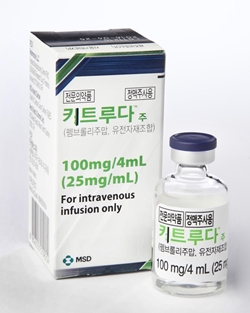
- Keytruda to be reimbursed as first-line treatment for NSCLC
- by Lee, Tak-Sun Feb 22, 2022 05:54am
- A new category will be added to reimburse MSD’s NSCLC treatment ‘Keytruda’ as a first-line treatment. This is the first anticancer immunotherapy released in Korea to be reimbursed for NSCLC, five years into its approval as a first-line treatment for non-small-cell lung cancer in Korea. The drug passed deliberations by the Health Insurance Reimbursement and Assessment’s Drug Reimbursement Evaluation Committee, which decided to extend the national health insurance coverage for Keytruda as first-line treatment for NSCLC. HIRA announced the results above while collecting opinions on the 'revisions on the announcement made for drugs prescribed and administered to cancer patients' on the 18th. The revisions showed that a new reimbursement category has been added for Keytruda as first-line therapy and will take effect from March. Keytruda is a cancer immunotherapy drug that specifically binds to PD-1 (programmed death 1) proteins expressed at the surface of activated T cells, thereby inhibiting its binding to PD-L1 proteins existing on the surface of tumor cells and induces T cells to attack the tumor cells. Therefore, the drug can be used in various cancer patients with PD-L1 expression and was approved as a first-line treatment in Korea in March 2017 for the treatment of metastatic NSCLC. However, its reimbursement did not gain momentum until last year, when the agenda passed HIRA’s Cancer Disease Review Committee and then passed DREC review in January this year. In the proposed revision, Keytruda can now be reimbursed as ▲first-line treatment for PD-L1 positive (Tumor Proportion Score (TPS)≥50%), advanced NSCLC (Stage IV) patients with no EGFR or ALK mutation, ▲ first-line treatment of metastatic nonsquamous NSCLC patients with no EGFR or ALK mutation in combination with pemetrexed platinum-based chemotherapy, ▲ first-line treatment of metastatic squamous NSCLC patients in combination with pemetrexed or paclitaxel (or albumin-bound paclitaxel), ▲as monotherapy for the treatment of adult patients and pediatric patients aged 2 years or older with relapsed or refractory classical Hodgkin lymphoma (cHL) who have relapsed after at least two types of therapy or failed or is ineligible for allogeneic hematopoietic stem cell transplantation (HSCT). This is the first time a cancer immunotherapy is reimbursed as a first-line treatment for NSCLC. A clinical trial conducted on NSCLC patients as monotherapy for the reimbursed indication showed that its median OS was 30 months and median PFS 10.3 months, both better than the control group (14.2 months, 6.0 months), raising expectations on the treatment effect the drug will bring to the field. The ORR in the Keytruda-treated group was 69%, higher than the 42% of the control group. A qualitative improvement is expected in the field of NSCLC treatment in general with the increased treatment options and the improved patient access to new options. Meanwhile, the revision also added a new reimbursement standard for the acute myeloid leukemia (AML) treatment ‘Xospata (Astellas, gilteritinib).’ A new reimbursement standard will be added for the second-line or higher use of Xospata as monotherapy in patients with FLT3 mutation-positive relapsed or refractory AML.
- Company
- Endless evolution of cancer immunotherapy
- by Eo, Yun-Ho Feb 22, 2022 05:54am
- According to related industries, news of approval for the expansion of domestic indications of cancer immunotherapy Opdivo (Nivolumab) and Keytruda (Pembrolizumab) in PD-1 inhibition mechanisms continues. Although it is the same mechanism, it is competing by securing different indications. In the case of Opdivo, two postoperative adjuvant therapy and three combined therapy indications were added. Postoperative adjuvant therapy in patients with esophageal cancer or gastroesophageal junction cancer with residual pathological diseases after receiving chemotherapy (CRT) as a preoperative adjuvant therapy and Postoperative adjuvant therapy in patients with root resection were added. Combination therapy with Carboplatin, Paclitaxel, and Bevacizumab as the primary treatment for metastatic or recurrent non-small cell lung cancer patients without EGFR or ALK mutation and combination therapy with Cabozantinib as the primary treatment of advanced Neoplasmine, and Fluoropyrimidine, Oxaliplatin and combination therapy with Yervoy (Ipilimumab) was also added to the treatment of adult patients with metastatic direct bowel cancer with microsatellite instability-high (MSI-H) or dMMR that recurred after Irinotecan treatment. As a result, Opdivo can be used alone or with other treatments such as melanoma, non-small cell lung cancer, malignant pleural mesothelioma, renal cell cancer, typical Hodgkin lymphoma, head and neck squamous cell cancer, urinary epithelial cell cancer, gastric cancer, gastroesophageal adenocarcinoma, esophageal cancer, and direct bowel cancer. In the case of Keytruda, it entered the field of renal and endometrial cancer through Lenvima combination therapy. The permission for the first-line treatment indication for renal cell cancer was based on data from the CLEAR study (KEYNOTE-581/Study 307), a phase 3 clinical trial. In the CLEAR study, Keytruda-Lenvima combination therapy demonstrated statistically significant Progression-Free Survival (PFS) and Overall Survival (OS) improvements over the existing treatments Sunitinib. Keytruda-Lenvima combination therapy reduced the risk of disease progression or death by 61% and the risk of death by 34% compared to Sunitinib.
- Company
- Samsung Bioepis' biosimilar had ₩1.5 trillion
- by Chon, Seung-Hyun Feb 22, 2022 05:54am
- Samsung Bioepis products sold overseasBiosimilar products developed by Samsung Bioepis generated 1.5 trillion won in sales overseas last year. It increased by more than 10% from the previous year, the largest ever. According to Samsung Bioepis on the 18th, five biosimilars recorded a total of $1.255.1 billion (about 1.5 trillion won) in overseas markets last year. It achieved maximum sales, up 11% from $1.125.8 billion in 2020. With Samsung Bioepis' marketing partner Biogen, it is a statistic that collects Organon's performance. Biogen sells three types of biosimilars in Europe: Enbrel, Remicade, and Humira for autoimmune diseases. Organon sells these three products in the rest of the country except Europe and Korea. In the United States, only Remicade biosimilar are sold. Organon is also in charge of overseas sales of two types of biosimilars, Herceptin and Avastin. Last year, sales of biosimilars sold by Biogen reached $831.1 million, up 4% from the previous year. Sales of organon rose 28% year-on-year to $424 million. Samsung Bioepis explained, "We achieved the largest annual product sales in overseas markets last year based on close marketing cooperation with partners and thorough supply chain management." Samsung Bioepis was approved for sale of biosimilar SB11 of Lucentis, an ophthalmic disease treatment, in Europe and the United States last year. SB11 will be sold by Biogen under the product name Byooviztm in the United States and Europe. Under the license agreement with Genentech, Samsung Bioepis can sell its products in the United States from June 2022 before Genentech's expiration of the relevant SPC (Additional Protection Certification, Supplementary Protection Certification). In other regions, it can be sold after Genentech's SPC expires. An official from Samsung Bioepis said, "Based on last year's results, we plan to work closely with our partners this year to expand product sales," adding, "We will further strengthen our position as a leading company in the global biosimilar industry by expanding our product portfolio to eye diseases."
- Company
- Kymriah is expected to be able to register insurance benefit
- by Eo, Yun-Ho Feb 21, 2022 05:59am
- Kymriah, an ultra-high-priced one-shot treatment, is expected to be covered by insurance benefits as early as April. According to related industries, Novartis Korea's CAR-T new drug Kymriah officially began drug price negotiations with NHIS in the last week of the same month after passing the Drug Benefit Evaluation Committee of the HIRA on January 13. Considering that the drug price negotiation deadline is 60 days, the negotiations should be completed at the end of March. If so, the Health Insurance Policy Committee, the final decision body for drug benefits, is usually held at the beginning of each month, and if Kymriah's price negotiations are concluded in March, it will be possible to register them in April. Pharmaceutical price negotiations themselves may break down, and the possibility cannot be ruled out that discussions will not end within the negotiation deadline. Recently, more and more cases are extending the deadline for negotiations. Since Kymriah is ultra-high-priced, it is not expected that it will be smooth to find an agreement between the government and pharmaceutical companies. Kymriah's indications are ▲Diffuse Large-B-Cell Lympoma (DLBCL) adult patient treatment after two or more systemic treatments and ▲ post-transplantation recurrence or secondary recurrence in children and young adult patients under the age of 25 and subsequent B-Acute Lymphoblastic leukemia (B-ALL). There is a difference in standards for Kymriah's two indications. B-ALL applies only to Expenditure Cap, but in the case of DLBLC, a performance-based type was added. This means that pharmaceutical companies share part of the drug price according to treatment performance for all DLBCL patients. The problem is that unlike conventional drugs that are mass-produced, the manufacturing cost is astronomically high due to the nature of Kymriah, which produces one batch of cells extracted from patients, and the cost burden of pharmaceutical companies increases in the event of a patient with an Expenditure Cap or higher. Novartis Korea's efforts are essential to the goal of conclusion of drug price negotiations, but it remains to be seen whether this will lead to achievement. About 200 DLBCL and B-ALL patients who have refused or recurred to existing treatment are in critical condition, with only six months of life expectancy due to no alternative treatment options or no standard treatment until Kymriah is approved. The median survival period of DLBCL patients who failed secondary treatment in Korea is around 4.73 months, and about 70% of patients who failed secondary treatment repeatedly perform rescue chemotherapy.
