
- LOGIN
- MemberShip
- 2026-05-16 02:53:01
- Opinion
- [Reporter’s View] Deleting exemptions for industry dev.
- by Lee, Jeong-Hwan Apr 07, 2022 06:10am
- Until now, the pharmaceutical authorities had partially exempted the safety and efficacy review for ETCs and OTCs listed on drug formularies of 8 advanced countries – the US, Japan, UK, Germany, France, Italy, Switzerland, and Canada - for the prompt introduction of drugs to Korea. This special exemption system for drugs listed in foreign drug formularies was introduced and operated to promote domestic drug approval and production in 1970 in consideration of Korea’s relatively low drug development capabilities then. For the past several years, the system has been repeatedly criticized for impeding the development of the pharmaceutical industry and increasing unnecessary waste of health insurance finances, and there is little need to maintain the system. The Ministry of Food and Drug Safety accepted the National Assembly’s request for discontinuation of such special administrative measures and the regulation that exempts part of the data required for ETC and OTC drug approvals will be deleted from November this year. As a result, the safety and efficacy hurdle for OTC and ETC drugs listed on foreign drug formularies will be raised somewhat compared to now. The domestic industry and MFDS should use the amendment as a turning point to increase the quality and safety level of drugs in Korea. Breaking away from the past when the drugs were more leniently approved just because they were used in advanced countries, the regulatory environment should be restructured in which pharmaceutical companies directly generate and submit safety and efficacy clinical data, and the MFDS reinforces its review expertise in granting marketing authorizations. The Korean pharmaceutical industry today has secured competitivity by improving its own capabilities and even some global competitivity. In addition, the domestic pharmaceutical industry now bears the fate of needing to continuously evolve and develop as the new growth engine and national key industry. Based on the competitivity acquired in the pharmaceutical industry, experts believe that the government should generalize the verification process without exempting approval and review data for drugs taken by the people in Korea to further foster basic growth of the pharmaceutical industry and increase the possibility of development. In addition, more meticulous verification of the efficacy and safety of ETCs that are granted marketing authorization should be made for the more efficient management of health insurance finances. Some have raised the concern that non-essential regulations may be added due to the deletion of the special regulations for drugs listed on the foreign drug formulary, but it is predicted that the domestic pharmaceutical industry and approval and review authorities will be able to discover and approve effective and safe drugs based on the capabilities it had built until now. In 2020, in response to the NA’s criticism regarding the special exemption system for drugs listed in foreign drug formularies, the MFDS Minister at the time, Eui-Kyung Lee, had answered that “The domestic industry has enough expertise to conduct review and assessments..” With the revised regulations this time, it is the reporter’s hope that the pharmaceutical companies prepare data for pharmaceutical approvals based on scientific evidence, and that the MFDS strengthen the drug review environment through self-reviews to strengthen quality-based drug approvals and public trust.
- Company
- Organon Korea "No NDPA detected in Singulair”
- by Apr 07, 2022 06:10am
- Organon Korea announced on the 6th that no impurities were detected in ‘montelukast,’ the active ingredient of the allergic rhinitis and asthma treatment ‘Singulair.’ Organon Korea had conducted an impurity investigation for N- nitrosodipropylamine (NDPA) in January after the Ministry of Food and Drug Safety ordered companies to investigate the possibility of impurities. The company had brought in the active pharmaceutical ingredient used for the manufacture of Singulair for investigations in Korea. The company used a liquid chromatography-mass spectrometry device (LC-MS/MS) that could detect minimal amounts of the impurity. The results of the investigation and assessment data will be submitted to the MFDS soon. NDPA is a type of nitrosamine impurity that can be formed in the presence of amines or amine sources together with nitrite or nitrite equivalent reagents. The company explained, "The process was not included in the montelukast synthesis process, and it was found that there is no possibility of cross-contamination in the final manufacturing process." The company had also reached the same conclusion in an impurity investigation conducted at the request of the European Medicines Agency (EMA) in 2019. Keon-Young Jung, Managing Director of Marketing at Organon, said, “Organon Korea has confirmed the safety of its products from impurities through evaluation of the manufacturing process and quantitative analysis on the API of all its formulations. We hope that the tests will help HCPs and patients to resolve concerns about impurities in the original Singulair.”
- Company
- Competition for Pelubi's generics worth ₩30 billion
- by Kim, Jin-Gu Apr 07, 2022 06:10am
- Pelubi It is expected that generic competition will take place in earnest in the Pelubi market, a osteoarthritis treatment worth 30 billion won per year. Following Youngjin Pharmaceutical, which launched generic alone, Huons and Chong Kun Dang are predicting their entry into the market. Daewon Pharmaceutical, which faces the challenge of generic, is in a situation where it is confronting each other by releasing follow-up drugs such as original formulation change and salt change products. ◆Generic for exclusivity of first generics ends According to the pharmaceutical industry on the 6th, the period of Youngjin's Pelubi will end on the 25th of this month. Phelps is the first generic of Daewon Pharmaceutical. Youngjin Pharmaceutical received generic for exclusivity. Accordingly, except for Youngjin Pharmaceutical, the other generic companies were not able to release the same-active ingredients within the generic for exclusivity period. Huons and Chong Kun Dang are expected to release Generics in earnest when Phelps' priority sales period expires on the 25th of this month. Like Youngjin Pharmaceutical, the two companies have surpassed patent of Pelubi. In April and May last year, generics for Pelubi received product approval, respectively. Huons has already received insurance benefits. When generic for exclusivity expires, generic can be released immediately within this month. Daewon Pharmaceutical, the original company, is developing strategies such as developing follow-up drugs and adding indications. Daewon Pharmaceutical plans to release Pelubi S, which was approved as a salt-changing product last year, soon. Daewon Pharmaceutical explained that it improved drug solubility and side effects of GI disorders through salt changes. In the case of Pelubi SR, which was released earlier, it already has more performance than Pelubi. According to UBIST, a pharmaceutical market research firm, Pelubi and Pelubi SR's outpatient prescriptions amounted to 32.5 billion won last year. Among them, Pelubi SR's prescription performance is said to account for about 70% of the total. It is analyzed that the addition of indications had a significant impact on the expansion of Pelubi SR's prescription performance. Daewon Pharmaceutical added "post-traumatic pain" as an indication of Pelubi SR in May 2020. It is an indication that Pelubi does not have. ◆ Unfinished patent dispute, Pelubi SR's New Patent Challenge Variables There are two main variables of generic competition in Pelubiprofen market in the future. One is the Pelubi patent dispute. Youngjin Pharmaceutical, Huons, and Chong Kun Dang won in the first trial, but Daewon Pharmaceutical objected to the decision. If Daewon Pharmaceutical wins, sales of Pelubi generic will be discontinued. Generics companies are also forced to compensate for damages caused by patent infringement is inevitable. There is a possibility that Daewon Pharmaceutical's delayed drug price reduction may be executed according to the subsequent ruling. Daewon Pharmaceutical filed a lawsuit with the Seoul Administrative Court to cancel the drug price reduction, dragging the patent dispute against Pelubi to the second trial. If Daewon Pharmaceutical loses in the second trial, the drug price of Pelubi will be reduced by 30%. Another variable is the new patent challenge for Pelubi SR. With Pelubi SR performing more than Pelubi, Huons, Chong Kun Dang, and Mothers are reportedly preparing to challenge composition patent of Pelubi SR . Mothers Pharmaceutical has already begun BA test of generics for Pelubi SR. Mothers Pharmaceutical was approved by the MFDS in July 2020 for a clinical trial for BA evaluation of Pelubi SR and Pelum SR.
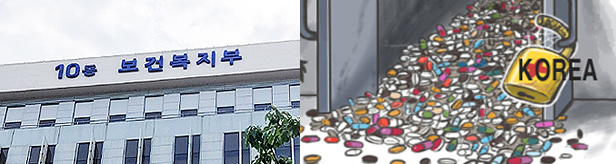
- Policy
- The negotiation period for patent expired drugs ,shortened
- by Lee, Jeong-Hwan Apr 07, 2022 06:10am
- The Regulatory Reform Committee passed a regulation that would shorten the negotiation period for lowering the drug price of the original patented drug from 60 days to 20 days, effectively confirming its implementation. According to the results of the drug price reduction dispute, the revision of the law, in which the government refunds damages to pharmaceutical companies, was judged unregulated and was not reviewed by the Regulatory Reform Committee. The MOHW announced on the 4th that it received the results of a preliminary review of the Rules Amendment to the Standards of National Health Insurance Care Benefits" from the Regulatory Reform Committee. According to the MOHW, the Regulatory Reform Committee judged that among the contents of the regulations, a regulation strengthening plan to shorten the negotiation period for the reduction of drug prices from the current 60 days to 20 days is a "non-important regulation." The Regulatory Reform Committee also agreed with the MOHW's decision that the deadline for negotiations on ex officio adjustment is not needed until 60 days if the original drug price is lowered due to the registration of first generics. Regulations, which have been judged as non-critical in the preliminary review of the Regulatory Reform Committee, can be introduced immediately after going through the procedures of the Ministry of Legislation in the future. The system to shorten the original price reduction negotiation period to 20 days is expected to be implemented as scheduled, and the refund system for the price reduction lawsuit will be implemented based on the results of internal discussions by the MOHW. The timing of implementation is still difficult to estimate. This is because the MOHW must finalize the revision of the medical care benefit rule and set the effective date through all remaining administrative procedures. An official from the MOHW said, "The regulation to reduce the negotiation period for the original ex officio adjustment to 20 days has passed the Regulatory Reform Committee. The system was not reviewed by the Regulatory Reform Committee because it was judged unregulated. "We are discussing internally the revision of the rules for medical care benefits, including the two systems."
- Policy
- 76 generics for DM tx Jardiance Duo have been approved
- by Lee, Hye-Kyung Apr 06, 2022 06:06am
- Generics for Jardiance Duo, a diabetes treatment complex affiliated with SGLT-2 inhibition of Beringer Ingelheim, have been approved. On the 4th and 5th, the MFDS approved 76 items of Empagliflozin/Metformin HCl from 26 pharmaceutical companies. Generics for Jardiance Duo are commissioned by Dongkoo Bio. Empagliflozin/ Metformin for the original Jardiance Duo, which expired on March 11, 2025, but Chong Kun Dang succeeded in avoiding the patent by challenging the crystalline patent of Jardiance and Jardiance Duo, which ends on December 14, 2026. In January 2018, it was the first Korean company to request a passive judgment on the scope of rights, and the decision to establish some of them was confirmed in June 2019. Later in November last year, unlike Jardiance Duo, it was first licensed as CKD Empagliflozin Metformin, which combines Empagliflozin, Metformin HCl with L-Proline, a type of amino acid, and obtained generic for exclusivity. However, Chong Kun Dang's exclusive sale period is from August to December this year, and competition in the diabetes complex market is expected to intensify as 76 items that have been approved have also obtained generic for exclusivity. According to the drug market research firm UBIST, sales of Jardiance was 40.8 billion won last year, up 10% from 36.9 billion won in 2020, and Jardiance Duo also recorded 24.4 billion won, up 47% from 16.6 billion won a year earlier. The pharmaceutical companies that have been approved for Jardiance Duo's generics are Kookje, Hutecs , Shin Poong, Daehan Nupharm, Korea Medica, Guju, Theragen Etex, Aju, Samsung, Daewon, Dongkoo Bio, Jin Yang, SCD Pharm, Samik, Dongkwang, PharmGen Science, Myungmoon Pharm, Withus Pharmaceutical, Il Yang, Young Poong, Hana, JW Shinyak, Daewoong Bio, Dae Hwa, Daewoo, and Ahn-Gook.
- Opinion
- [Reporter’s View] Still no news on SGLT-2 combo reimb.
- by Eo, Yun-Ho Apr 06, 2022 06:06am
- Still no news nor progress has been made on the discussions regarding reimbursement of combination therapies using SGLT-2 inhibitors. After a long three years, the Health Insurance Review and Assessment Service called for a diabetes expert meeting to discuss expanding reimbursement of SGLTL-2 inhibitors in September last year. At the meeting, the experts saw consensus on integrating and accepting the ‘class effect’ of DPP-4 and SGLT-2 inhibitor combinations as well as three-drug combinations for reimbursement. Such results had sparked hope that the non-reimbursed combination drugs would also be finally listed for reimbursement. But that was the last spark of hope. The year has passed and April has come with no news on the reimbursement of SGLT-2 combos that is now subject to formal review by the Health Insurance Review and Assessment Service. Recognizing the expected efficacy of drugs with the same mechanism of action is an issue that requires consideration. However, with the interests of various experts and pharmaceutical companies clashing, and the opinions of the experts divided, the issue was dealt with case-by-case. However, consistency was the issue for the reimbursement deliberation of SGLT-2 inhibitors. The authorities recognized the class effect of some drugs are recognized regardless of their indication and applied the same reimbursement standard, while other cases of reimbursement for some classes differ by each drug. In 2013, the diabetes society played a leading role in discussing the reimbursement extension of DPP-4 inhibitors and TZD class combos and claimed the need and justification for the extension. The society emphasized the importance of clinical experience and expert judgment over fiscal impact, and the government accepted the expert’s decision based on disease characteristics and drug use experience. What has changed since then? The academic society changed its position on the reimbursement of SGLT-2 inhibitors in 2018 and pushed back the plans for the proposed improvement. Many drugs were expected to be affected by the plan, not only SGLT-2 inhibitors such as ‘Jardiance (empagliflozin),’ ‘Forxiga (empagliflozin),’ ‘Suglat (ipragliflozin),’ ‘Steglatro (ertugliflozin)’ but DPP-4 inhibitors such as ‘Januvia (sitagliptin),’ ‘Galvus (vildagliptin),’ ‘Trajenta (linagliptin),’ ‘Zemiblo (gemigliptin)’ were affected. However, the amendments that were made thereon were encouraging. The society had reached a consensus and submitted an opinion that reimbursement should be extended to combination therapies, which was accepted by the Ministry of Food and Drug Safety. The MFDS then announced it would ‘simplify’ the diabetes treatment indications in August of the same year, from listing the ingredients to ▲monotherapy or ▲combination therapy, adding momentum. The various movements made had borne fruit. And then the baton was handed over to the government. The SGLT-2 inhibitors are now also subject to PMS. Most of the drugs are required to submit their PMS results between 2023-2024. In other words, the companies only have around a year or two left. For the PMS study, hundreds to thousands of patients need to be recruited and registered. However, due to the characteristic of the diabetes market, it is hard to secure a stable proportion of prescriptions for a non-reimbursed drug. Unless the reimbursement issue is resolved, the companies will not be able to recruit the necessary amount of patients required by the MFDS. Now is the time to conclude this issue once and for all, and decide on extending reimbursement for SGLF-2 inhibitors.
- Policy
- Oral COVID-19 drugs prescribed to 1 in 100 patients
- by Lee, Jeong-Hwan Apr 06, 2022 06:06am
- One out of every 100 confirmed COVID-19 patients were found to have been prescribed oral COVID-19 treatments (Paxlovid·Lagevrio). According to the data NA’s Health and Welfare Committee member Hyun-Young Shin of the Democratic Party of Korea received from the Korea Disease Control Prevention and Control Agency on the 5th, a total of 124,571 patients were administered oral treatments from January 14th to March 26th of this year. A total of 39,747 patients were reported to have been administered the drug at medical institutions. 87.8% of the patients were over the age of 60. Specifically, 35.8% were in their 60s, 24.1% were in their 70s, and 27.9% were 80 years old or older. In particular, one in every 100 confirmed COVID-19 patients was prescribed oral COVID-19 treatments, and the prescription rate for the treatments was higher in non-metropolitan areas than in metropolitan areas. Among non-metropolitan regions, the Gyeongbuk region (1.83%), Honam region (1.55%), and Gangwon region (1.54%) received the most amount of prescriptions with Jeju (0.75%) recording the lowest. NA member Shin said, “We were able to confirm that securing a medical system that allows prescriptions in addition to procuring the treatments is important in Korea. It is necessary to ensure that the processes from prescription, dispensing, to drug delivery are provided in a quick and safe manner while allowing the establishment of clinical data for infectious diseases so that the prescription data can be properly collected and analyzed." Shin added, “To improve Korea’s medical system for the complete recovery of the nation from COVID-19, we need to start addressing the unfinished tasks in this era of infectious diseases now. With 220,000 more courses of COVID-19 treatments soon to arrive, we need to analyze the need for expanding subjects eligible for the use of oral treatments and their effect in more detail to increase the effectiveness of Korea’s COVID-19 response.”
- Policy
- It will not be easy to reflect generic positive list system
- by Lee, Tak-Sun Apr 06, 2022 06:05am
- The NHIS has completed a study of external services that only provides a positive list of excellent generics, but it is not expected to be easy to reflect the policy. This is because the research was promoted by the current government and it is still unreasonable to lead to policies. On the 31st of last month, the NHIS registered a "research report on the positive list system plan for excellent drugs" in the management information disclosure system of public institutions. However, the research results are set to be private, so it is not known what conclusions are contained. This study was conducted by Professor Bae Eun-young of Kyungsang National University College of Pharmacy. The list of published research results ▲ Current status and problems of the drug market after patent expiration, ▲ Review of foreign drug screening systems, ▲ Results of interviews with stakeholders on drug screening standards and methods, ▲ Drug screening model after patent expiration. Inferring the results through this, it is interpreted that a generic drug screening model suitable for the reality of Korea was proposed. Some foreign countries discriminate against generic drugs by dividing them into grades. In the case of Vietnam, only high-grade generic drugs are eligible for bidding. Regarding the non-disclosure of the study, Jeong Hae-min, head of the NHIS Pharmaceutical Management Office, said, "This study is a basic study focusing on foreign cases related to the generic drug screening model, and there are still things to be reviewed." The study was reportedly conducted under the direction of Kim Yong-ik, former chairman of The NHIS, who is progressive. Therefore, there is a possibility that the next conservative government will postpone the promotion. Moreover, since strong opposition from the domestic pharmaceutical industry, which has a high proportion of generic drugs, is expected, it is also expected to be cautious about reviewing policy reflection.
- Company
- Sales of AZ COVID vaccine increased 32% to 655.3 billion won
- by Apr 06, 2022 06:05am
- AstraZeneca Korea surpassed 600 billion won in sales last year by supplying the COVID-19 vaccine. According to an audit report by AstraZeneca Korea, the company recorded 655.3 billion won in sales last year. The figure is up 31.6 percent from the previous year's 498.1 billion won. Operating profit was 26 billion won, up 7.5% from 24.2 billion won a year earlier. It is analyzed that the increase in operating profit was relatively small because there was little difference between the purchase amount and domestic sales amount purchased globally. AstraZeneca Korea, which has improved its performance with anticancer drug Tagrisso, saw its performance jump significantly last year when it supplied the COVID-19 vaccine AZD1222 in Korea. After gradually increasing sales to 383.1 billion won in 2018, 438.9 billion won in 2019, and 498.1 billion won in 2020, sales jumped more than 100 billion won last year when the COVID-19 vaccine was introduced in earnest. AstraZeneca started researching vaccines with a research team at Oxford University in the UK as COVID-19 spread around the world. In particular, it received attention by signing a contract with SK Bioscience, a Korean company, to produce the COVID-19 vaccine on consignment. Last year, SK Bioscience commissioned the production of AstraZeneca vaccine extract and the complement and supplied them to the global and domestic markets. The Korean government signed a purchase contract with AstraZeneca early last year and introduced the vaccine in earnest. At the beginning of the inoculation, when the supply and demand of the Pfizer vaccine were not smooth, AstraZeneca supplied most of the supplies. Although it received the EUA around the same time as Pfizer, the increase in AstraZeneca sales is relatively small. In the case of Pfizer Pharmaceutical Korea, which supplied the COVID-19 vaccine, sales reached a record high of 1.69 trillion won last year. The figure increased by 332.3% from 391.9 billion won in the previous year. Pfizer Pharmaceutical Korea generated about 1.3 trillion won worth of vaccine sales. The difference in vaccine supply had a significant impact on the performance of the two companies. This is because the use of the Astrazeneca vaccine has gradually declined as the number of vaccinations in Korea has been limited due to rare side effects, and the volume of modern and Pfizer vaccines has increased. According to the Korea Centers for Disease Control and Prevention, the total amount of Astrazeneca vaccinations over the first to third rounds is 20.32 million doses, which is one-third of Pfizer's 74.23 million doses. In the first inoculation, about 25% of the total were vaccinated against Astrazeneca, but in the third inoculation, only 4% were vaccinated against Astrazeneca. Vaccine prices have also led to differences in sales. According to the company's stance that it will not make profits from the COVID-19 vaccine, the price of the AstraZeneca vaccine was set at $4 per dose, the cheapest. It is only one-sixth the price of a Pfizer vaccine ($24).

- Company
- Sales of MSD in Korea exceeded 500 billion won
- by Apr 05, 2022 09:32am
- MSD Korea surpassed 500 billion won in sales last year. Keytruda's effect increased 1% year-on-year. Analysts say that it will be able to quickly recover its past sales of 800 billion won before Organon's spin-off. According to MSD audit report, the company recorded 541.9 billion won in sales last year. The figure is up 11.8% from the previous year's 486.8 billion won. During the same period, operating profit shifted from a deficit of 5.8 billion won to a surplus of 58 billion won. Sales of Keytruda, an immuno-cancer drug of MSD Korea, are evaluated to have been good. Keytruda's sales were not specified, but according to pharmaceutical research firm IQVIA, Keytruda surpassed 200 billion won in annual sales for the first time last year. The figure rose 28.5% to 2.1 billion won from the previous year's 155.7 billion won. The growth of Gardasil 9 and others also contributed to the expansion of sales. Based on IQVIA, Gardasil 9 recorded 72.6 billion won last year, up 70.9% from 42.5 billion won a year earlier. Another representative item of MSD Korea, the Januvia, reached 171 billion won in outpatient prescriptions last year. The expansion of MSD's performance is expected to continue in the future. This is because Keytruda's indication continues to expand, and from this year, it will be paid in the primary treatment of non-small cell lung cancer and the secondary treatment of Hodgkin's lymphoma. In fact, even when it was first listed in August 2017, Keytruda's sales rose vertically from 10 billion won to 100 billion won. At this rate, it is expected that the scale before the organon spin-off will be restored within a few years. According to an audit report by MSD Korea two years ago, when the obligation to disclose audit reports of limited companies was implemented, the sales of all companies of Organon spin off are estimated to be about 800 billion won. In the calculation of discontinued business profit and loss due to the division, the sales of organon products in the sales of organon products amounted to 326.8 billion won as of 2019. As of 2019, product sales of MSD accounted for 98% of total sales, and product sales are total sales. At that time, MSD's total sales amounted to 471.6 billion won. Operating profit turned into a surplus last year as other sales increased and management costs due to spin-off decreased. MSD Korea lost 18.4 billion won in 2019 and 5.8 billion won in 2020. Last year, other sales rose 42.8% year-on-year to 15.8 billion won, while sales and administrative costs fell 2.9% to 97.2 billion won. MSD Korea said, "Representative items such as Keytruda, Gardasil 9, and Januvia have driven sales growth, and we invested about 74.6 billion won in clinical research last year, up 33% from the previous year, which accounts for 13% of total sales."
