
- LOGIN
- MemberShip
- 2026-05-11 10:50:35
- Company
- US approval of Celltrion Yuflyma was delayed
- by Feb 24, 2023 05:53am
- Celltrion has confirmed that the U.S. Food and Drug Administration (FDA) will complete the Yuflyma final approval review by May of this year. Celltrion announced on the 23rd that it had confirmed that the final approval review of Yuflyma would be completed by May of this year while continuing discussions with the FDA. Earlier, the U.S. approval process for Yuflyma was somewhat delayed as foreign finished drug manufacturers in charge of finished product production received criticism from the FDA. Celltrion emphasized that the delay in FDA approval of Yuflyma was due to the situation of overseas finished manufacturing plants that had nothing to do with Celltrion's own technology. Overseas finished drug manufacturing plants received an appropriate grade by resolving the issues pointed out after FDA inspections. The conformity level is a level given when a manufacturer voluntarily requests corrective action when unreasonable matters are found but the violation is not serious. Celltrion Group will be able to sell Uplyma in the US from July 1 after reaching a patent agreement with a company that owns Yuflyma's original drug. Apart from FDA approval, we are working on a pre-work to introduce the product to the US market in time for the launch. Celltrion Healthcare acquired Celltrion USA in August last year for direct sales in the United States, securing a license and distribution network for pharmaceuticals in the United States. It has completed securing local experts to lead the US business by recruiting Thomas Nusbickel, who has extensive experience in biosimilar commercialization at global pharmaceutical companies, as CCO of the US corporation.
- Company
- Shingrix may be prescribed in 93 general hospitals in Korea
- by Eo, Yun-Ho Feb 24, 2023 05:52am
- The shingles vaccine ‘Shingrix’ has quickly landed in medical institutions in Korea after starting vaccinations. According to industry sources, GSK Korea’s recombinant vaccine Shingrix passed review by drug committees of 93 medical institutions in Korea, including tertiary hospitals - Samsung Medical Center, Seoul National University Hospital, Asan Medical Center - as well as general hospitals - Kangbuk Samsung Medical Center, Kyung Hee University Medical Center, Korea University Hospital (Buro, Anam, Ansan), Soonchunhyang University Hospital Seoul, Ajou University Hospital, and Hanyang University Hospital. Considering how vaccination had started in December in earnest, the vaccine has settled quickly in the market. Shingrix is the first shingles vaccine approved in Korea that combined a non-live antigen with GSK's vaccine adjuvant. It offers protection from shingles in adults over 50 who are at increased risk of shingles from age-related decline in immunity. In two Phase III clinical trials (ZOE-50, ZOE-70) that were conducted on 15,411 adults aged over 50 years of age, Shingrix showed a 97.2% efficacy compared to the non-vaccinated group and over 90% efficacy in those aged 70 years and above. The rate of serious adverse events was similar in the Shingrix arm and the placebo arm. The interim analysis of the ZOSTER-049 (ZOE-LTFU) extension study that was conducted to follow up ZOE-50 and ZOE-70 showed that Shingrix’s shingles prevention effect continued for at least 10 years after vaccination. Also, Shingrix’s safety profile was confirmed through 5 clinical trials that were conducted on immunocompromised patients aged 18 years and older. Based on such evidence, patients who received autologous hematopoietic stem cell transplantation or have solid cancer, blood cancer, or received solid organ transplants that have an increased risk of shingles are also eligible to receive vaccination with Shingrix. Kyung Young Yoon, Professor of Infectious Disease at Korea University Anam Hospital, said, “Complications from shingles greatly reduce patients' quality of life. Therefore, it is important to prevent this in advance. As the first and only non-live recombinant vaccine approved in Korea that demonstrated a prevention effect and safety profile through global clinical trials, I believe Shingrix will open a new paradigm in shingles prevention in Korea.” Meanwhile, GC Biopharma and Kwangdong Pharmaceutical signed a co-promotion and distribution agreement with GSK for Shingrix in Korea and are carrying out promotional activities for the vaccine.
- Policy
- Expansion of insurance coverage for diabetes drugs
- by Lee, Tak-Sun Feb 24, 2023 05:52am
- SGLT-2 inhibitory antidiabetic drugs (from left: Forxiga, Jardiance, Xigduo XR, Jardiance Duo)While the combination benefit between SGLT-2 diabetes treatment and other treatments is expected to be applied from April, the two-drug regimen between SGLT2 and DPP4, which was omitted from the current discussion, is also expected to be reviewed. It is expected that if the SGLT2+DDP4 complex is applied for reimbursement, it will naturally be sorted out through discussion. According to the industry on the 23rd, some SGLT2+DPP4 combinations have applied for reimbursement to the HIRA. It is known that AstraZeneca's 'Qtern', Boehringer Ingelheim's Esglito, and LG Chem's SGLT-2 inhibitory antidiabetic drugs (from left: Forxiga, Jardiance, Xigduo XR, Jardiance Duo) applied for benefits. MSD's Steglujan is also expected to apply for benefits sooner or later. These items are being promoted to be registered as a benefit in time for April when the benefit is expanded. This is because they are products developed by the original developer of original ingredients, so they can be registered as products regardless of patents. However, 82 products of Dapagliflozin + Sitagliptin approved by domestic pharmaceutical companies are scheduled to be registered after September 1, when the substance patent for Sitagliptin (Januvia) expires. While pharmaceutical companies with combination drugs welcome the news of an increase in reimbursement, attention is focused on whether reimbursement for two-drug combination therapy is also applied. The concomitant benefit drugs currently being discussed for benefit expansion are triple therapy such as metformin + SGLT-2 + DPP-4, metformin + SGLT-2 + TZD, and some SGLT-2 items + sulfonylurea or insulin combination therapy. This is because the 2+DPP-4 two-drug regimen is missing. If the benefit expansion plan is applied as planned, the two-drug combination of SGLT2 + DPP4 should be used as a three-drug regimen with Metformin. As SGLT2 or DPP4 drugs are currently used alone, the pharmaceutical industry insists that these two-drug therapies should also be covered. The HIRA believes that if the SGLT2+DPP4 complex is applied, it is highly likely that the second drug will also be reviewed. An official from The HIRA said, “If a two-drug combination drug is applied for, we will not organize traffic regarding whether or not the second drug will be covered.” There is," he explained. If the review of whether or not to pay for the second system is prolonged, it cannot be ruled out that the third system will be started first, and whether or not the second system will be covered will be discussed later. Judging from the discussion so far, the three-drug combination of metformin + SGLT2 + DPP4 is advantageous in terms of ease of administration, but there are currently no domestically approved drugs.
- Policy
- Daewoong also enter the Vemlidy late-stage drug market
- by Lee, Tak-Sun Feb 23, 2023 05:46am
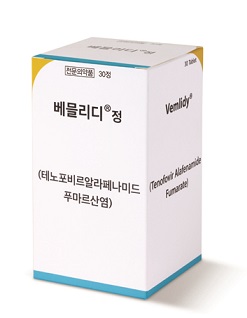
- Gilead’s hepatitis B treatment Daewoong Pharmaceutical and Chong Kun Dang will also enter the late-stage drug market for Vemlidy, a chronic hepatitis B treatment previously occupied by Dong-A ST. Daewoong and Chong Kun Dang's products received a month's delay in obtaining approvals, and their benefits were also applied a month later. According to the industry on the 20th, from March 1, Daewoong Pharmaceutical's Vemlidy and Chong Kun Dang's Tenofobell-A will be covered. The two products are salt-modifying drugs of Gilead Sciences' 'Vemlidy'. Daewoong Vemlidy has Tenofovir Alafenamide HemiFumarate as the main ingredient, and Chong Kun Dang Tenofobell-A has Tenofovir Alafenamide Succinate as the main ingredient. These products succeed in the patent challenge through salt change, obtain generics for exclusivity, and are released before generics when the patent has not expired. The drug price calculation standard for salt-changing drugs is 90% of the original. Daewoong Vemliver costs 2828 won, which is 80% of the original Vemlidy (3,535 won). Chong Kun Dang Tenofobell-A costs 2,439 won, which is 69% of the original price. This amount is cheaper than Donga ST Vemlia's 2,474 won, which was previously applied for benefits. Each generic has a different drug pricing strategy, and it is noteworthy how it will affect market sales. Meanwhile, Jeil Pharm's 'Tecavir-D', which was licensed in the same month as Daewoong's and Chong Kun Dang's, is not on the March reimbursement list. Vemlidy is an upgraded version of Gilead's existing hepatitis B treatment 'Viread'. The patent is scheduled to expire on August 15, 2032, and a generic drug with the same ingredient will have to wait another nine years. Last year, Vemlidy's outpatient prescriptions (based on UBIST) were 47.1 billion won, up 18% YoY.
- Policy
- 9 bepotastine besilate antihistamines listed for reimb
- by Lee, Tak-Sun Feb 23, 2023 05:46am
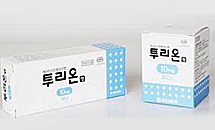
- Leading bepotastine besilate product Sustained-release antihistamine drugs that contain bepotastine besilate will be listed for reimbursement for the first time in Korea. The original bepotastine besilate product developed by Mitsubishi Tanabe Pharma Corporation is Tarion. Tarion was sold by Dong-A ST in 2004 in Korea, and the company withdrew from the Korean market in December 2017 after the drug’s patent expired. Therefore, only its generics that contain the same ingredients and salt-modified products are currently being sold in the Korean market. According to industry sources on the 21st, 9 sustained-release antihistamine products will be listed for reimbursement at a ceiling price of KRW 326 from March 1st. Companies that own related products are the CMO Dongkoo Bio&Pharma, and Mother’s Pharmaceutical, Eden Pharma, Yungjin Pharm, Kukje Pharma, Shin Poong Pharm, Hutecs Korea Pharmaceutical, Myungmoon Pharm, and Union Korea Pharm. This is the first time a sustained-release product that contains bepotastine besilate was listed, and currently ninety-two 10mg bepotastine besilate is taken twice a day, and one once-daily 5mg product is available in the market. Currently, the ceiling price for all the 10mg products is KRW 148 per tablet. By daily dose, the 10mg short-acting drugs cost KRW 296, which is cheaper than the sustained-release drugs, which cost KRW 326. In addition to bepotastine besilate, bepotastine salicylate products that contain a different salt is also available. Also, there are sustained-release products available for bepotastine salicylate. 5 short-acting products and 6 sustained-release products are available each. The ceiling price for these drugs is also KRW 148 for the short-acting product and KRW 326 for the sustained-release products. However, bepotastine besilate products have been showing better performance. Among the major items, Dong-A ST’s Twolion sold the most, recording KRW 9.5 billion in outpatient prescriptions (UBIST), followed by the KRW 4.6 billion made by Daewon Pharmaceutical’s Bepostarbi, then KRW 3.2 billion by Dong Kook’s Bepotan. Among the three products, Twolion and Bepostarbi are bepotastine besilate products and Bepotan is a bepotastine salicylate product. Although the salt-modified sustained-release tablets did not perform so well in the market until now, as sustained-release tablets that contain the same ingredient as the original were released, attention is being paid to whether they will break the existing market structure and drive the market. Antihistamines work as antagonists to excess histamine caused by antigen-antibody reactions and is used for allergic conditions and early cold treatment. In the early days of COVID-19, the market size shrank with the decline in the number of respiratory patients, but last year, it was also used for COVID-19 patients, which led to an upward trend. However, it is difficult for individual companies to develop their products into blockbusters. Competition is fierce in the market with over 100 generics and salt-modified products, and there are several second- and third-generation antihistamines including bepotastine, therefore, it is not easy to foster one product. However, even if the drugs cannot become a blockbuster, the drugs show performance continuously, therefore, industry officials expect the sustained release products can also successfully settle in the market, with sales and marketing activities.
- Company
- Tabreca can now be prescribed at general hospitals in Korea
- by Eo, Yun-Ho Feb 23, 2023 05:46am
- The first MET-targeted anticancer drug, ‘Tabrecta’ can now be prescribed at hospitals in Korea. According to industry sources, Novartis Kore’s Tabrecta (capmatinib) passed the drug committees of the Big-5s general hospitals including Samsung Medical Center (SMC), Seoul National University Hospital (SNUH), Sinchon Severance Hospital, and medical institutions including the National Cancer Center, Pusan National University Hospital, etc. MET mutation is a rare type of cancer that is present in approximately 3-4% of patients with non-small-cell lung cancer (NSCLC). No treatment option had been available in this type until now, which is why attention has been rising for new drugs in the area. Tabrecta targets c-MET and was first approved as a treatment for MET exon 14 skipping mutation in NSCLC in the US in May 2020. However, the issue of reimbursement still remains an obstacle. The company applied for reimbursement in November 2021 after receiving marketing authorization in Korea. However, the agenda was unable to pass review in both Health Insurance Review and Assessment Service’s Cancer Disease Review Committee meetings in August and last month this year. Whether Novartis will apply for and succeed in listing the drug for reimbursement remains to be seen. The drug’s efficacy was confirmed through the GEOMETRY mono-1 trial in 97 patients with METex14. In the pivotal GEOMETRY mono-1 trial, Tabrecta demonstrated a 68% objective response rate (ORR) and 41% ORR in treatment-naïve and previously treated patients, respectively. The duration of response (DoR) was 12.6 months and 9.7 months, respectively. Meanwhile, Novartis is also actively studying the combined use of Tabrecta with other therapies. In particular, its combined use is expected to be able to address the issue of resistance that patients acquire after treatment with EGFR inhibitors. As such, combined use of Tabrecta with AstraZeneca’s 3rd generation EGFR TKI Tagrisso (osimerbinib) is also underway. More specifically, the study will evaluate the treatment effect of Tabrecta+Tagrisso in comparison to platinum-based chemotherapy in NSCLC patients with epidermal growth factor receptor (EGFR) mutation, T790M negative, MET-amplified who progressed following treatment with 1st/2nd generation EGFR tyrosine kinase inhibitors (TKIs) or Tagrisso. Professor Ji-Youn Han, Department of Hemato-oncology, National Cancer Center, said, “Patients who have MET amplification or overexpression have a very poor prognosis. In this sense, with the prompt introduction of MET inhibitors becoming ever important, the approval of Tabrecta, a treatment that demonstrated clear efficacy in MET exon 14 skipping mutation, holds great significance.”
- Company
- Neulasta's sales surpassed those of Neulapeg
- by Kim, Jin-Gu Feb 23, 2023 05:46am
- Neulasta and NeulapegNeulasta and Neulapeg are competing for the lead in the neutropenia treatment market. In the fourth quarter of 2021, Neulapeg took the lead by surpassing the original product, Neulasta, for the first time after its release, but from the first quarter of last year, Neulasta took the lead again, widening the gap with Neulapeg. In the pharmaceutical industry, there is an analysis that the change is due to the replacement of sales partners. Boryung led rapid growth by co-selling Neulapeg with GC Pharma until 2021 but started co-selling Neulasta in partnership with Kyowa Kirin last year. According to IQVIA, a pharmaceutical market research institute, on the 23rd, sales of Neulasta last year were 31.4 billion won. It increased by 29% compared to 24.5 billion won in 2021. During the same period, Neulapeg showed a decrease of 6% in one year from 22.8 billion won to 21.5 billion won. Neulasta is classified as a second-generation neutropenia treatment. Neutropenia treatment is a drug that prevents the side effects of lowering immunity due to a decrease in the number of neutrophils in the body when cancer patients are administered anticancer drugs. Neulapeg is a kind of Biobetter product upgraded from Neulasta. GC Pharma applied PEGylation technology, which attaches polyethyleneglycol only to a specific location, to increase purity and stability and increase the half-life of the drug compared to existing treatments. By 2021, the neutropenia treatment market has developed in such a way that Neulapeg is chasing Neulasta. Released in 2014, Neulapeg had minimal initial commercial success. Until 2018, most quarterly sales were less than 1 billion won. However, as Boryung's sales power increased, it began to show a steep upward trend. GC Pharma signed a joint sales contract with Boryung in October 2018 for Neulapeg. Since then, it has exceeded 3 billion won in the 4th quarter of 2019, 4 billion won in the 4th quarter of 2020, and 5 billion won in the 2nd quarter of 2021, respectively. In particular, in the fourth quarter of 2021, it recorded quarterly sales of 6.3 billion won, surpassing Neulasta (5.6 billion won) and rising to the top of the market. Neulasta, new sales in one year ↑ 29% In the pharmaceutical industry, it is analyzed that the change of sales partner had a significant impact on the change in the market landscape. Boryeong, which led Neulapeg's growth until 2021, started selling Neulasta instead of Neulapeg last year. Boryeong, which contributed to Neulapeg's rise to the top at the end of 2021, led to the recapture of Neulasta, a competing product. Jeil has been co-selling GC Pharma Neulapeg since last year. Jeil had experience co-marketing Neulasta from 2014 to 2017. The gap between Neulasta and Neulapeg is widening after the change of sales partners. The gap between the two products, which was only 700 million won in the first quarter, Neulasta 6.5 billion won and Neulapeg 5.8 billion won, widened to 3.4 billion won in the fourth quarter, 8.4 billion won and 5 billion won. ◆Rolontis, a third-generation new drug, sales of KRW 1.8 billion in 2 months after the launch Rolontis is a third-generation treatment that appeared in the neutropenia treatment market after 16 years. Hanmi Pharmaceutical's Labscovery technology was applied. Compared to existing drugs, the half-life in blood was longer, so the frequency of administration was reduced to once every 3 weeks. Hanmi Pharm received domestic approval for Rolontis in March 2021. In November of last year, Rolontis was listed on the health insurance benefit list. In just two months of benefit, Rolontis posted sales of 1.8 billion won, proving its growth potential. Sales of Handokteva Lonquex and Dong-A ST Dulastin, which were second-generation products, exceeded the 4Q sales. Lonquex and Dulastin posted sales of 1 billion won and 600 million won, respectively, in the fourth quarter of last year.
- Policy
- SGLT-2 DM Combi Benefit Expansion Expected to be applied
- by Lee, Tak-Sun Feb 23, 2023 05:45am
- Expansion of reimbursement for the combination of SGLT-2 diabetes treatment and other treatments is expected to be applied from April. It is said that the government accepted the wage increase after receiving details of voluntary reductions from related companies earlier this month. According to the industry on the 20th, it was reported that the Ministry of Health and Welfare, which is discussing the expansion of the combined benefit of SGLT-2 diabetes treatment, has set up a plan to apply for the benefit in April. Currently, the concomitant benefit drugs being discussed are triple therapy such as metformin + SGLT-2 + DPP-4, metformin + SGLT-2 + TZD, and some SGLT-2 items + sulfonylurea or insulin combination therapy. The Ministry of Health and Welfare estimates that these combined benefits will cost tens of billions of won. The Ministry of Health and Welfare induced 11 companies with benefits expansion drugs to voluntarily lower the maximum amount in order to share finances as it requires enormous financial resources. However, in November of last year, the government received a voluntary cut rate and started an analysis of the fiscal impact, but there was no further progress as it exceeded the expected range. As a result, by the beginning of this month, the voluntary reduction rate was once again received, but this time it is interpreted that the financial range was satisfied. It is said that the companies have expanded the reduction rate and submitted it to the Ministry of Health and Welfare. For drugs that are voluntarily reduced to expand the range of use, benefits can be applied quickly because only a quality supply contract is required with the NHIS, bypassing the review by the Drug Evaluation Committee of the HIRA. In response, the government is said to be planning to apply for benefits from April through a report to the deliberation committee next month. As related combination drugs are currently waiting for approval, it is expected that the expansion of the combination benefit will become a new trend in the diabetes treatment market.
- Company
- Celltrion Eyelea expands U.S. patent
- by Feb 22, 2023 05:55am
- Celltrion researcher is conducting formulation research.(Photo by Celltrion)Celltrion is conducting an additional trial for invalidation of the U.S. patent for the eye disease treatment "Eylea." According to industries on the 17th, Celltrion recently filed an IPR (Inter Parts Review) with the U.S. Patent and Trademark Office, claiming that Eylea's composition patent developed by Regeneron is invalid. Eylea is a biopharmaceutical for treating ophthalmic diseases that treat macular degeneration and diabetic macular edema. It is a blockbuster drug that recorded $9.4 billion (about 12 trillion won) in global sales in 2021. Celltrion is developing the Eylea biosimilar 'CT-P42'. In April last year, it completed the recruitment of global phase 3 clinical patients. A total of 13 countries, including Germany and Spain, recruited patients with diabetic macular edema, which are clinical targets. Celltrion claimed that paragraph 1-18 of US patent number US 10464992 was invalid in this IPR. The patent is about polysorbate 20, sodium phosphate buffer, sucrose, etc., which are commonly used to stabilize vascular endothelial cell growth factor (VEGF) inhibitors such as Eylea. The IPR petition number is PTAB IPR2023-00462. In the petition, Celltrion stressed that the method of utilizing polysorbate 20, sodium phosphate buffer, and sucrose applied to Ailia is not novel content that can be protected by patents. Earlier in November last year, Celltrion won the first trial of an invalidation lawsuit against Regeneron for two Eylea patents (patent number US 9254338, US 9669069). This lawsuit is a lawsuit in which Celltrion jointly participated in the IPR filed by Mylan against the original company Regeneron in May 2021 through an application for participation in the lawsuit in December 2021. Celltrion also filed a lawsuit against one patent (patent number US10857231) related to Eylea formulation in September 2021. In March last year, Regeneron, the patent holder, declared the final abandonment of the patent, leading to a victory in the invalidation lawsuit. Celltrion plans to commercialize CT-P42 in time for the expiration of material patents and monopoly rights after the development of CT-P42 is completed. The patent for Eylea material is scheduled to expire in June this year in the U.S. and in May 2025 in Europe, respectively. The expiration date of the U.S. market monopoly has been extended to May 2024.
- Policy
- The ruling party promotes the establishment of a serious dz
- by Lee, Jeong-Hwan Feb 22, 2023 05:54am
- In order to strengthen health insurance coverage for anticancer drugs and treatments for severe rare diseases, legislation will be promoted to separately establish "severe disease accounting." On the 20th, Rep. Lee Jong-sung of the People's Power proposed a partial amendment to the National Health Insurance Act. Rep. Lee Jong-sung argued that health insurance coverage for treatments for severe and rare diseases has been reduced over the past five years of the Moon Jae In government. Lee explained that President Yoon Suk Yeol pledged to expand the application of health insurance for treatments for severe and rare diseases and adopted "relaxing the burden of high-priced medical expenses, such as the rapid registration of treatments for severe and rare diseases." Lee included a clause in the bill to establish a separate accounting for severe diseases for the benefit of treatments directly related to the lives of severely ill people in the health insurance finance. It is a method of using the finances saved by the re-evaluation of drug benefit adequacy and the risk-sharing system (RSA) as financial resources for accounting for severe diseases. Specifically, provisions such as grounds for the establishment and operation of accounting for serious diseases and financial resources for accounting for serious diseases were included. He said, "It is a plan to cover the necessary funds for the treatment of severe diseases without additional financial investment. Since the inauguration of the Yoon administration, expensive anticancer drugs and rare disease drugs have improved the lives of severely ill patients, but they are still suffering from double burdens of disease and economic burden. He added, "If the law is revised, the blind spot of the current medical expense support system for severely ill patients will be partially resolved."
