
- LOGIN
- MemberShip
- 2026-05-10 15:29:13
- Company
- Organon is focusing on expanding the women's health lineup
- by Mar 07, 2022 05:49am
- The demand for unmet diseases related to women's entire life cycle was relatively high. Organon will focus on improving treatment accessibility so that all women can enjoy healthier daily lives." At a press conference held by Organon for the first time since its launch at The Plaza Hotel in Jung-gu, Seoul on the morning of the 2nd, CEO Kim So-eun made the remarks about the company's vision. Kim Soeun, CEO of Oganon Korea Organon, which spun off from MSD, was officially launched in June last year. Founded in the Netherlands in 1923, Organon was merged with Organon and absorbed into MSD. After about a decade, it was separated from MSD again. Organon, headquartered in New Jersey, USA, has subsidiaries and six manufacturing facilities in more than 60 countries around the world. More than 60 products are supplied to 140 countries. Organon focuses on three areas: women's health, chronic diseases, and biosimilars. Women's health includes women's inherent diseases or diseases that can have a significant impact on women. In chronic diseases, it has about 50 treatments for cardiovascular, respiratory, dermatology, musculoskeletal system, and urinary system. Biosimilars have five products in cooperation with Samsung Bioepis. Fosamax, Atozet, Cozaar, Propecia, etc. are representative. The chronic disease sector accounts for the majority with 70%. CEO Kim said, "We plan to expand our portfolio by identifying women's health needs that are not met in all women's life cycles such as pregnancy and childbirth, and we plan to explore new indications and expand our lineup in chronic diseases." Since its actual launch, Organon has aggressively expanded its portfolio. In June last year, it acquired Alydia Health, a women's health medical device company. Alydia is a company that developed the JADA system, a postpartum bleeding solution. In July, it signed a global license agreement with ObsEva, which developed a premature birth treatment solution. In December, it then acquired Forendo, which has a pipeline of endocrinology-related treatment solutions such as endometrium. CEO Kim said, "We are working on commercializing postpartum bleeding solutions and endocrine treatments outside the United States, and we will make sure that new solutions can be accessed as soon as possible." Organon is preparing for competition of generic for Atozet, which accounts for the largest portion of sales. CEO Kim said, "Generics for Atozet were released last year. We plan to make efforts to expand sales. "We plan to introduce JADA, which was released first in the U.S., in Korea in the near future, and we are looking for new opportunities such as expansion and introduction of indications in other chronic diseases."
- Company
- First RSA drug ‘Erbitux’ to receive second reevaluations
- by Eo, Yun-Ho Mar 04, 2022 05:57am
- The term of risk-sharing agreements of major anticancer drugs are again nearing expiry. Starting with Merck’s ‘Erbitux (cetuximab), the first drug to be reimbursed with the RSA scheme in Korea, a series of other drugs are also awaiting reevaluations until 2023. According to industry sources, the colorectal cancer treatment Erbitux’s RSA term expires in June. Also, RSA terms for Astella’s ‘Xtandi (enzalutamide),’ Amgen’s ‘Kyprolis (carfilzomib),’ Lilly’s ‘Cyramza (ramucirumab),’ Janssen’s ‘Darzalex (daratumumab),’ Biogen’s ‘Spinraza (nusinercen),’ Sanofi’s ‘Dupixent (dupilumab)’ is nearing expiry. With reevaluations imminent, the mixed concerns held by the stakeholders (government, pharmaceutical companies, patients) are resurfacing. For Erbitux, this is the second time the drug is up for RSA renewal. As all these drugs would need to cut prices, therefore whether the company may reach a consensus with the government and succeed in renewing its agreement remains a focus of attention. Of course, no drugs have failed to renew their RSAs yet, but as the price of the drugs would need to inevitably fall as re-evaluation progresses, every news renewal brings tension to its stakeholders. In Korea, RSA drugs are required to undergo evaluations for clinical efficacy and cost-effectiveness every time their term expires, unlike general drugs that demonstrate their cost-effectiveness at the time of approval through pharmacoeconomic evaluations. The cost-effectiveness evaluations are inevitably affected by the price of its alternatives at the time of evaluations, and during the 5-year RSA term, the price of the alternative drugs are cut through various post-management mechanisms (reduction of original drug prices due to generic listings, volume-price linkage system, price cap discounts due to reimbursement expansions, etc). In addition, the revisions made in 2020 now allow latecomers to sign RSA agreements, therefore the price of the latecomers can now directly affect the cost-effectiveness of the first entrants. This has added to the already-long list of issues that had been constantly raised about RSA renewals in the industry. However, the entry of latecomer drugs into the RSA scheme has been a long-awaited wish from the industry’s perspective, and the government made the decision to expand RSA benefits after various discussions. Also, it is not unreasonable for price adjustments to be made for drugs that have alternatives with the same mechanism of action, even if their indications are not identical. An official from a multinational pharmaceutical company said, “All companies ahead of reevaluations have their own concerns. If the government alleviates the standards by resetting the reevaluation period or by simplifying the data required for submissions, it will be easier to reach an agreement,” he said. He added, “If the RSAs are not renewed and the drugs become non-reimbursed, the confusion will only be transferred to the field and the patients. It is now time to prepare the right mechanism to maintain the RSA system, the main scheme that is being used to list high-priced drugs.”
- Company
- ↓↓Sales of smoking cessation txs by 75% in 4 yrs
- by Ji Yong Jun Mar 04, 2022 05:56am
- The market for Varenicline, a non-smoking supplement, has fallen to a quarter in four years. This is because the distribution of the original drug Pfizer Champix, which led the market, was suspended due to an impurity crisis in the second half of last year. According to IQVIA, a pharmaceutical research institute, sales of Varenicline last year were 16.2 billion won, down 22.1% from the previous year. Compared to the sales of the Varenicline system of 65 billion won in 2017, it decreased by 75.1% in four years. (Data: IQVIA) Most of the sales of Varenicline products came from the original product Champix. However, as Champix's sales fell, the overall market size also fell. Champix's sales fell 65.6% from the previous year to 9.2 billion won last year. The reason for the sharp drop in sales of Champix last year is the impurity crisis. In June last year, Champix's worldwide distribution was suspended due to excessive detection of NNV, which is believed to be a carcinogen. Of the 9.2 billion won in sales posted by Champix last year, 93.4% posted in the first half. Champix's sales in the third and fourth quarters of last year were only 600 million won and 28,000 won, respectively. Champix was released on the market in 2007 with permission from the MFDS. Varenicline partially binds to nicotine receptors in the brain to relieve smoking needs and withdrawal symptoms. Compared to anti-smoking aids that absorb Nicotine into the body to control withdrawal symptoms and smoking needs, Champix gradually stood out with this mechanism. Sales of Champix increased sharply as the government's anti-smoking treatment support policy began in 2015. The smoking cessation treatment support policy is a policy that provides full support for drug prices to participants who complete all smoking cessation treatment programs for 12 weeks. Drugs such as Varenicline, Bupropion, and Nicotine supplements are fully supported. Champix's sales in 2015 amounted to 24.2 billion won, nearly quadrupling from the previous year. Since then, it has risen vertically to 48.8 billion won in 2016 and 65 billion won in 2017. However, since 2018, sales have declined due to a decrease in drug prices and a decrease in participants in smoking cessation treatment support projects. Champix's sales fell nearly half from 41.2 billion won in 2018 to 20.7 billion won in 2020. Sales of generic Jeil's Nico Chams are increasing as Champix is kicked out of the market due to controversy over impurities. Ten generics are currently on sale in the Varenicline market, but sales are not very large except for Nico Chams. Nico Chams is an item manufactured by Jeil. Nico Chams recorded 2.9 billion won in sales last year. Nico Chams appeared in the market in the third quarter of 2020 and sales were 40 million won until the second quarter of last year. Sales of Nico Chams have grown since the third quarter of last year. Nico Chams' sales rose sharply from 700 million won in the third quarter of last year to 2.2 billion won in the fourth quarter. Nico Chams replaced Champix because the amount of impurities detected in Varenicline drugs met the standards of the MFDS. In September last year, the MFDS allowed NNV to be released only if it was 185 ng/day or less. Initially, in Korea, CTC Bio and Jeil were in charge of manufacturing Varenicline product of seven domestic pharmaceutical companies and 24 domestic pharmaceutical companies, respectively. Among them, only the Varenicline produced by Jeil had NNV detection of 16.70 to 43.28 ng/day, which was lower than the MFDS' standard, enabling distribution. CTC Bio's manufacturing items exceeded the shipping availability standard. Jeil is planning to increase Nico Chams' prescription. Nico Chams is prescribed in 9,000 out of 15,000 hospitals and clinics.
- Company
- Kyowa Kirin·Boryung to copromote sale of 2 neutropenia txs
- by Chon, Seung-Hyun Mar 04, 2022 05:55am
- Kyowa Kirin Boryung Pharmaceutical and Kyowa Kirin Korea will be jointly selling 2 types of neutropenia treatments in Korea. On the 2nd, Kyowa Kirin Korea and Boryung Pharmaceutical announced that the companies signed a co-promotion agreement to jointly sell the neutropenia treatments ‘Grasin (filgrastim)’ and ‘Neulasta (pegfilgrastim)’ in Korea. Neutropenia treatments prevent cancer patients from developing the side effect of a weakened immune system due to decreased neutrophil levels when they receive anticancer therapies. Neutrophils are a type of white blood cell that fight infections from bacteria, etc. Grasin and Neulasta are each 1st and 2nd generation neutropenia treatments. The two drugs have differences in half-life and duration of action. Both drugs are grossing ₩20 billion annually in Korea. Kyowa Kirin Korea said, “We plan to continue expanding the market share of Grasin and Neulasta in Korea through synergy with Boryung Pharmaceutical’s diverse solid cancer portfolio while strengthening our focus in field of blood cancer.” From Boryung Pharmaceutical’s perspective, the company expects to expand its portfolio by selling the leading adjuvant therapies for cancer with Kyowa Kirin Korea. Boryung Pharmaceutical has occupied the lead in Korea’s anticancer drug market based on its specialized anticancer drug team and their evidence-based academic sales marketing stategy. Also, the company has experience selling GC Pharma’s neutropenia treatment ‘Neulapeg’ from 2018 to last year. Young-Seok Kim, Head of Boryung Pharmaceutical's Oncology Division said, “We are pleased to be able to provide the leading neutropenia treatments Grasin and Neulasta to more patients and HCPs in Korea. Based on the competitivity and know-how we accumulated in the field of oncology, we plan to continue expanding the products’ share in the market.” Sang-Hun Lee, President of Kyowa Kirin Korea, said, “We are pleased to be able to work with Boryung Pharmaceutical, which has shown rapid growth in the anticancer drug business. By focusing on each of our key areas, our superior products, and Boryung’s strong sales capabilities, we look forward to being able to provide our excellent products and services to more patients in a wider array of fields.”
- Company
- Saxenda and Qsymia tops the growing obesity market
- by Chon, Seung-Hyun Mar 03, 2022 06:01am
- The obesity treatment market has grown to break its own record for 3 consecutive years. The introduction of a new type of obesity treatment such as ‘Saxenda’ and ‘Qsymia’ had also led to market expansion.’ The two drugs have dominated the share of existing products and have occupied about half of the total market. According to market research institution IQVIA on the 3rd, the obesity treatment market size recorded ₩143.6 billion last year, a 0.4% increase from the previous year. The obesity treatment market has been breaking new records every year since 2019. Total sales in 2019 amounted to ₩134.1 billion won, up 38.6% from the previous year, and exceeded 100 billion won for the first time in a decade since 2009 immediately before sibutramine was withdrawn from the market. In 2020, the market showed YoY growth of 6.6%. The obesity treatment market showed slower growth this year compared to 2019 and 2020 but still succeeded in breaking the 2020’s largest-ever market record again to reach a new high. Compared to 2018, the market grew 48.4% in three years. The recent additions, Saxenda and Qsymia, had led the overall market expansions. Novo Nordisk’s Saxenda sold the most among all obesity treatments, recording ₩36.2 billion in sales. Although this was a 1.7% decrease from the previous year, the drug succeeded in holding its lead for 3 consecutive years since 2019. Saxenda is the world’s first a GLP-1 (Glucagon-Like Peptide 1) analogue approved to treat obesity. It contains the same ingredients as the company’s 'Victorza (liraglutide)’ that is used to treat diabetes but has a different dosage and administration. The drug enjoyed explosive popularity as it acts with the same mechanism of action as the human body's GLP-1 and suppresses the patient’s appetite to induce weight loss, forming the perception that it is relatively safe. In only one year since its release, the drug topped the market with ₩42.6 billion in sales in 2019. In terms of quarterly sales, the drug rose the lead for the first time with ₩5.6 billion in Q4 2018, then maintained its lead for 13 consecutive quarters ever since. However, its growth rate has slowed down somewhat. Saxenda’s average quarterly sales exceeded ₩10 billion in 2019, but fell to ₩9.1 billion last year. This is analyzed to be due to Qsymia’s introduction to the market. Qsymia’s sales rose 16.6% YoY to record ₩26.2 billion last year. Qsymia is a combination drug that contains ‘phentermine’ and ‘topiramate’ that Alvogen Korea gained exclusive marketing rights for in Korea from the US company Vivus. Alvogen Korea signed a copromotion agreement with Chong Kun Dang at the end of 2019 and started to sell the drug in earnest in Korea. Earning ₩4.3 billion in sales in Q1 2019, Qsymia rose to rank No.2 in sales immediately after its release. From Q2 2020, it recorded sales of ₩5-6 billion, breaking Saxenda's monopoly in the market and establishing a two-way race between the two drugs. Analysts believe that Qsymia's rapid penetration into the market was possible due to the synergistic effect of the sales network owned by Alvogen Korea and Chong Kun Dang in the obesity treatment market from selling ‘Furing’ and ‘Furimin.’ Also, the fact that it contains relatively antipsychotics and may be prescribed long-term although it is an oral formulation acted as a success factor. Last year, Saxenda and Qsymia’s share of the market reached 43.5%. Their share has continued to increase from the 31.8% in 2019 and 41.5% in 2020. Although 100 types of obesity treatments in the market in Korea, the performance of all other obesity treatments excluding Saxenda and Qsymia were relatively poor. Daewoong Pharmaceutical's ‘Dietamine’ ranked third with sales of ₩8.3 billion last year, which was a 9.8% YoY drop from the previous year. Sales of Huons' ‘Hutermin’ also fell 12.7% YoY to record ₩5.3 billion last year.
- Company
- BRAF I Braftovi can be prescribed at the Big 5
- by Eo, Yun-Ho Mar 03, 2022 06:01am
- Along with the progress of the insurance benefit procedure, "Braftovi," which lowers the BRAF, will be prescribed at general hospitals. According to related industries, Braftovi (Encorafenib), a treatment for colorectal cancer in Ono Pharmaceutical Industry, passed the Pharmaceutical Affairs Committee (DC) of Korea University Anam Hospital, including Samsung Medical Center, Seoul National University Hospital, Seoul St. Mary's Hospital, and Asan Medical Center. Braftovi can be used as a combination therapy with Erbitux (Cetuximab) of Merck Korea in adult patients with direct bowel cancer with previous treatment experience and confirmed BRAF V600E mutation. It is currently in the process of registering benfits, and has passed the HIRA Cancer Disease Review Committee for the first time this year in January. It will be the first drug that can be prescribed for metastatic colorectal cancer with confirmed mutations in BRAF V600E with previous treatment experience. Combination therapy with Braftovi was confirmed to be effective through a phase 3 clinical BEACON CRC study in patients with non-removable progressive or recurrent direct bowel cancer with BRAF V600E mutations after primary or secondary treatment. In the study, combination therapy of Braftovi-Cetuximab showed statistically significant extensions (HR 0.60, p=0.0003) in the overall survival period (OS) compared to the control, Irinotecan-Cetuximab-based combination therapy. The median OS value was 8.4 months in the Braftovi group and 5.4 months in the control group. In the objective response rate (ORR) according to the independent central review (BICR), the combination therapy of Braftov-Cetuximab was 20%, showing a statistically significant improvement compared to 2% of the control group. The median progression-free survival period (PFS) was 4.2 months for combination therapy of Braftov-Cetuximab and 1.5 months for the control group. In this study, there was no unexpected toxicity of combination therapy of Braftov-Cetuximab. Positive BRAF V600E gene mutation occurs in 4.7% of patients with direct bowel cancer in Korea. If there is a BRAF V600E mutation, the prognosis is known to be worse than that of patients who do not. There was no approved drug based on its efficacy and effectiveness in direct bowel cancer with BRAF gene mutation, so a new treatment option was needed.
- Company
- Entresto settles in as early-stage heart failure treatment
- by Eo, Yun-Ho Mar 03, 2022 06:01am
- The heart failure treatment ‘Entresto’ will now be covered by insurance benefits in the first line as well. According to industry sources, reimbursement for Novartis Korea’s chronic heart failure treatment ‘Entresto (sacubitril)’ will be expanded to cover patients with acute decompensated heart failure who are in a stable hemodynamic condition after hospitalization regardless of their administration of ACE inhibitors or angiotensin II receptor blockers from March 1st. On the 14th, the authorities approved an additional indication for Entresto in patients with chronic heart failure whose left ventricular ejection fraction (LVEF) level is below normal to ‘reduce risk of cardiovascular deaths and hospitalization from heart failures.’ The reimbursement expansion this time is based on the PIONEER-HF study that was conducted on the indicated patient group as well as references from textbooks, guidelines from Korea and overseas, and academic opinion. In the PIONEER-HF study, a significant reduction of NT-proBNP was identified from Week 1 of treatment, and the clinical efficacy of Entresto was consistent among various patient groups including patients newly diagnosed with heart failure and RASi-naïve patients. Also, the 12-week open-label extension results that were presented at JAMA Cardiology 2019, the drug demonstrated consistent treatment effect and safety at Week 12. The difference between the two treatment groups, such as readmission within 8 weeks, was not narrowed for 4 weeks, confirming the clinical necessity on the initial use of Entresto. Entresto is currently recommended as the standard-of-care in heart failure treatment guidelines in Korea and abroad. The European Society of Cardiology (ESC) and the American College of Cardiology (ACC) recommends Entresto as a first-line treatment option, and in January 2021, the 2021 update to the ACC Expert Consensus Decision Pathway amended the guidelines to recommend Entresto ahead of ARB or ACE inhibitors. Also, the ESC’s Heart Failure Guidelines that was updated in August 2021 emphasizes a combined treatment strategy that simultaneous initiates the use of 4 essential drugs including ARNI-class drugs (Entresto) that reduce the risk of death from heart failures Meanwhile, Entresto is a first-in-class angiotensin receptor-neprilysin inhibitor (ARNI) that directly works on the heart. It works on two hormonal pathways, to activate the NP nerve hormones that benefit the cardiovascular system while inhibiting RAAS which is harmful to the cardiovascular system.
- Company
- Omicron confirmed cases continue to occur in companies
- by Ji Yong Jun Mar 02, 2022 05:55am
- Due to the spread of COVID-19 Omicron, there are a series of in-house confirmed cases within pharmaceutical bio companies. Pharmaceutical bio companies are responding by operating the Omicron emergency system and granting additional telecommuting to close contacts. According to the Central Disease Control Headquarters on the 2nd, the number of new confirmed cases as of the 1st was 138,993. Compared to last week (February 25), the number of confirmed patients increased 1.4 times and more than 6.0 times from four weeks ago (February 1st). As a result, the cumulative number of confirmed patients in Korea is 3,273,449. As the spread of Omicron increases, it is known that confirmed cases occur one after another in pharmaceutical bio companies. Pharmaceutical Company A reportedly had a commotion in which all employees classified as close contacts at the time left work after an in-office employee was recently confirmed. Pharmaceutical B is also known to have returned home to all those who worked in the same department the previous day after an in-office employee was confirmed by a self-diagnosis test before going to work. An official from a pharmaceutical company said, "All of the contacts have been converted to telecommuting because the number of employees on duty has been confirmed," adding, "Some pharmaceutical companies also know that the number of confirmed cases by employees is increasing." There have been no reports of mass infections in pharmaceutical bio companies yet, but there are confirmed cases all over the company, so we are paying attention to the management of confirmed cases. According to the guidelines of the quarantine authorities, they are paying more attention to the corporate quarantine system as it enters self-management according to the situation. Hanmi Pharmaceutical operates an emergency situation room in the CSR team to manage confirmed patients at work. The emergency room manages employees who have symptoms such as fever, cough, and body aches, or who have been in close contact with confirmed patients in their families. Even if an employee classified as a close contact is tested negative in a self-diagnosis test, additional telecommuting is given according to the health status and intention of the employee. Dong-A Socio Group has increased the proportion of telecommuters among its in-house workers to 50%. This is to reduce unnecessary contact between employees. In addition, in the event of an in-house confirmed patient, the scope is set and managed larger than the government's close contact standard (more than 15 minutes within 2m). In addition, the government is taking measures to reduce contact between employees by varying the hours of use of the cafeteria or to support diagnostic tests and work from home for employees with suspected COVID-19 symptoms. HK inno.N recommends telecommuting for all employees except for essential field workers to reduce contact with employees at workplaces nationwide, which has been underway since January. It also established a system in which each department creates an emergency contact network to report symptoms or to the head of the department when the cohabitant is confirmed. If a confirmed patient comes out in-house, it is conducting its own quarantine guidelines to check close contacts and return home along with internal sharing. However, pharmaceutical companies are also concerned about work disruptions as a series of self-quarantine people follow due to close contact. Concerns are growing that telecommuting on a large scale in essential field groups such as factories and research institutes could disrupt production schedules. Since the 1st, the government has applied eased self-quarantine guidelines that require the government to exempt families living with confirmed patients from quarantine regardless of whether they are vaccinated or not. Most pharmaceutical bio companies recommend working from home if their cohabitants are confirmed, and the key is whether employees will reorganize their quarantine standards to minimize work gaps. An official from a large pharmaceutical company said, "In addition to the flexible work system and wearing regular masks, we are striving for internal quarantine in a stronger way than the government guidelines." However, as the government's quarantine guidelines are easing, there are many cautious parts about how to set the number of quarantine personnel in case of in-house confirmed patients, he said.
- Company
- Keytruda may make ₩300 billion with 1st-line reimb
- by Mar 02, 2022 05:55am
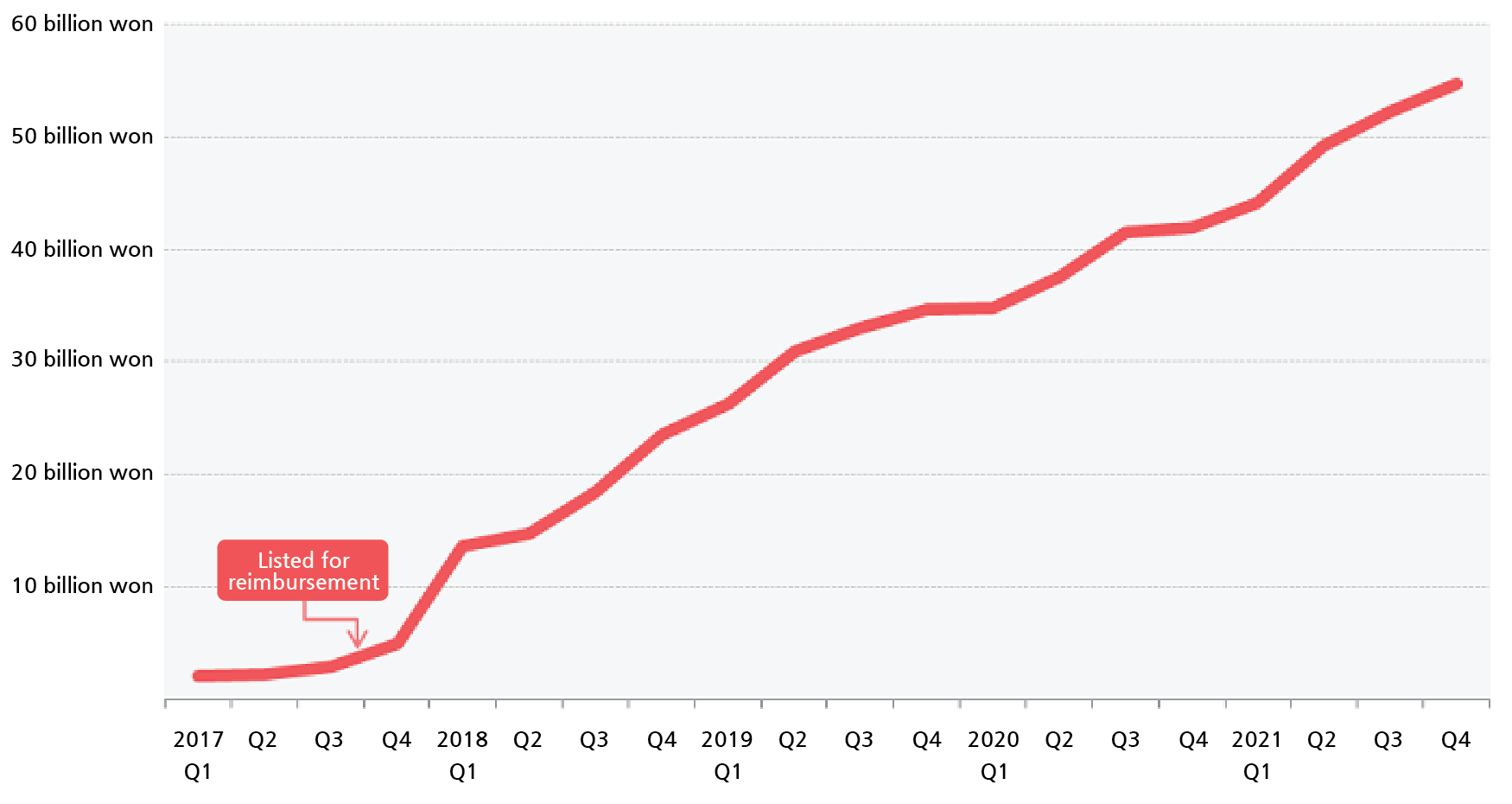
- The reimbursement expansion approval of Keytruda is expected to add wings to the sales growth of an already leading product in the domestic pharmaceutical market. It is expected that the company may achieve ₩300 billion in sales with its reimbursement expansion to the first-line, which has more patients, from the ₩200 billion sold last year. According to industry sources, the insurance benefit for MSD’s PD-1 inhibitor Keytruda (pembrolizumab) will be expanded to first-line treatment of NSCLC. This is the first time an immunotherapy drug was granted reimbursement for the first-line treatment of cancer. Also, a new reimbursement category was prepared for the drug’s use as second or higher-line monotherapy in Hodgkin’s lymphoma. Patient groups that will be newly benefitting from the reimbursement expansion are ▲ Patients with advanced (Stage IV) NSCLC (PD-L1 positive (TPS≥50%) without EGFR or ALK mutations, ▲ patients with metastatic non-squamous NSCLC without EGFR or ALK mutations (in combination with chemotherapy) ▲ metastatic non-squamous cell lung cancer without EGFR or ALK mutation (in combination with chemotherapy) ▲ adult and ages 2 or older patients who have relapsed/refractory typical Hodgkin’s lymphoma and have failed two or more therapies and failed or cannot receive autologous stem cell transplants (ASCT). The reimbursement expansion this time is expected to become a ‘catalyst’ for the explosive growth of Keytruda’s sales. Based on IQVIA, Ketyruda’s sales had surpassed ₩200 billion for the first time last year. This is a 28.5% increase from the ₩155.7 billion made in the previous year. The drug has topped the ranks with its sales for the second consecutive year. With its reimbursement expanded to first-line treatment, an area with relatively more patients, Keytruda is expected to be the first to exceed ₩300 billion in annual sales. The health authorities believe 4,000 additional metastatic NSCLC and Hodgkin lymphoma patients will receive insurance benefits with the expanded reimbursement. Simple calculation of once every three weeks (2 vials) administration at the discounted price (₩2,107,642) will bring around ₩72 million in annual sales per patient. In other words, even if only half of these potential patients are treated with Keytruda, this will bring in ₩140 billion in sales. Quarterly sales of Keytruda (Source=IQVIA) Keytruda's sales had surged when it was initially approved for reimbursement. Its sales, which stayed at ₩10 billion after its release in Korea in 2015, skyrocketed to ₩70.4 billion after it started being reimbursed as a second-line treatment for NSCLC in August 2017. In 2019, its sales exceeded ₩100 billion. It has been analyzed that the reimbursement approval played a big part in Keytruda's sales exceeding ₩200 billion only 6 years since its release. Less than 10 products including Lipitor, Avastin, Tagrisso, and Humira, had made over ₩100 billion in annual sales in the domestic prescription drug market. Among the products, Keytruday was the only product that recorded over ₩200 billion in sales as a single product. If patients start using Keytruda for first-line treatment, its annual sales may easily reach ₩400 billion. Of course, due to the expenditure-cap type RSA that was agreed upon for the reimbursement, the company’s profit may not be proportional to the increased sales. This is because the company and the authorities agreed to increase the company's share of the cost burden after undergoing 9 deliberations by the Cancer Disease Deliberation Committee. The reimbursement extension was also good news for the patients. The immune checkpoint inhibitor Keytruda treats cancer with a different mechanism of action than other existing anticancer drugs. It inhibits PD-1 (programmed death 1) proteins expressed at the surface of activated T cells, thereby inhibiting its binding to PD-L1 and activating the immune system to treat cancer. The introduction of Keytruda had changed the treatment paradigm for NSCLC, which was untreatable using targeted therapies. However, its high cost had acted as a high barrier in its access. Until now, the non-reimbursed use of Keytruda had cost nearly ₩100 million, an amount difficult to come up with unless you have private medical indemnity insurance or go to hospitals that are applied the new DRG system. However, with the reimbursement expansion, its price had fallen 25.6%, and patients will now only need to bear 5% of the cost as a copayment, which is around ₩3.5 million a year.

- Company
- Tylenol's sales amounted to ₩83.1 billion last year
- by Chon, Seung-Hyun Mar 02, 2022 05:54am
- OTC Tylenol recorded the highest sales ever. Sales more than doubled last year from the previous year due to a surge in demand for COVID-19 vaccinations. However, growth slowed in the second half of last year as demand for Tylenol was resolved. According to IQVIA, a pharmaceutical research institute, sales of the Tylenol series last year amounted to 83.1 billion won, up 118.4% from 38.1 billion won a year earlier. It is sales of four types: Tylenol, Tylenol 8-hour ER, Tylenol Cold, and Women's Tylenol. Sales of the Tylenol series did not change much from 20 billion won to 30 billion won every year, but soared suddenly last year. Sales of Tylenol and Tylenol 8-hour ER, which are used as antipyretic analgesics, surged. Sales of Tylenol and Tylenol 8-hour ER totaled 80.2 billion won last year, up 133.4% from the previous year. Tylenol's sales surged 159.4% from 24.3 billion won in 2020 to 62.9 billion won last year, while Tylenol's 8-hour ER sales rose 71.1% from the previous year to 17.3 billion won last year. It is analyzed that sales have increased significantly as COVID-19 vaccinations started purchasing Tylenol in preparation for fever and muscle pain. As COVID-19 vaccinations began in earnest in Korea from the beginning of last year, demand for Tylenol surged. Tylenol ranked first in sales among all OTCs last year. It was also pointed out that the government contributed to the surge in Tylenol's sales. The quarantine authorities informed those subject to vaccination in March last year, "If side effects such as fever occur, it is better to take Tylenol." Since then, the demand for purchasing Tylenol has soared, leading to a shortage. According to quarterly sales of acetaminophen single-drug Tylenol, it surged in the first half of last year and slowed down somewhat in the second half. Sales of Tylenol and Tylenol 8-hour ER more than tripled from the previous quarter from 10.7 billion won in the first quarter of last year to 32.9 billion won in the second quarter. In the case of Tylenol, sales more than tripled from 8.1 billion won in the first quarter of last year to 25.5 billion won in the second quarter, while Tylenol 8-hour Al also expanded from 2.6 billion won to 7.5 billion won during the same period. Sales of Tylenol and Tylenol 8-hour ER jumped sharply from the previous year to 20.4 billion won and 16.2 billion won in the third and fourth quarters of last year, respectively, but decreased from the second quarter. Sales in the fourth quarter of last year fell by half compared to the second quarter. It is analyzed that the unstable supply and demand of Tylenol has been resolved and sales of Tylenol have been on the decline through the purchase of generics. In May last year, the MFDS disclosed information that more than 60 acetaminophen single agents were on sale in addition to Tylenol, inducing the purchase of other products with the same ingredients. In June last year, the MFDS decided to cooperate with KPA, KPBMA, and KPDA in the smooth supply of Acetaminophen. KPDA also urgently implemented a plan to supply Acetaminophen drugs, which are supplied first from producers, to pharmacies nationwide.
