
- LOGIN
- MemberShip
- 2026-05-08 12:49:27
- Company
- Biktarvy, applies to the expansion of pediatric indications
- by Eo, Yun-Ho Jan 18, 2023 06:04am
- HIV treatment Biktarvy is aiming to expand pediatric indications in Korea. According to related industries, Gilead Science Korea recently submitted an application to expand indications for pediatric patients who weigh at least 14kg to 25kg of the HIV compound Biktarvy and have no experience in antiretroviral treatment or have been suppressed by existing antiretroviral treatment. The efficacy of Biktarvy in pediatric patients was confirmed through data from cohort 3 of clinical trials in a single clinical trial with phase 2/3 open markers. In the study, Biktarvy low-dose tablets were found to be generally drug-resistant and effective for 24 weeks in HIV-1-infected children with suppressed virus levels. Child patients enrolled in cohort 3 were continuously treated for 48 weeks and were able to continue receiving medication during the extended phase. 91% (20/22) of participants maintained virus level suppression at week 24 after switching to Biktarvy, with an average CD4% change of 0.2%. Biktarvy entered the market in earnest by applying salary in July of the same year after receiving approval from the Ministry of Food and Drug Safety in January 2019. According to IQVIA, a pharmaceutical market research firm, Biktarvy showed its potential from the first year of its launch, and its sales jumped from 400 million won to 4.6 billion won in just one quarter. In 2020, quarterly sales increased to 6.6 billion won, 7.9 billion won, and 9.8 billion won, respectively.
- Company
- Curing terminal cancer without treatment options
- by Jan 17, 2023 06:02am
- Mr. A, a 60-year-old Korean male patient, was diagnosed with gastric cancer several years ago. After struggling to treat the disease for several years, the hospital told A that there was no other treatment option available for him and that he may not be able to live for more than 6 months. As a last resort, A registered to enroll in the KOSMOS study and was told there was a breast cancer treatment available for the genetic mutation he was found with during genetic testing. The breast cancer drug stayed effective for over a year, and after seeing a significant reduction in tumor size, A left his hospital bed and was able to receive the outpatient treatment he had only dreamed of. The stage has been set to create a Korean-style precision medical ecosystem that can provide personalized treatment opportunities for cancer patients with terminal cancer who no longer have treatment options like Mr. A. A large-scale project involving academic societies, hospitals, research institutes including the Korean Society of Medical Oncology, Korean Cancer Study Group, Korea Health Industry Development Institute, National Cancer Center, Roche Korea, and Lunit Inc. is set to start this year. ◆Use without indication or approval ’OK’…brings new hope to terminal cancer patients The clinical project, KOSMOS2(KOrean precision medicine networking group Study of MOlecular profiling guided therapy based genomic alterations in advance Solid tumors II), will be recruiting 1,000 patients for 3 years. Subject patients are those with terminal-stage cancers that have a life expectancy of 6 months or less. In general, these patients are advised to leave the hospital because there is no other drug available for their use in the hospital. Therefore, their caregivers travel from hospital to hospital in search of one that can take care of their beloved’s illness just a little more. When left with no other option, most of them end up receiving hospice care. Enrolling in the KOSMOS2 study could open up new opportunities for these patients. First, patients who enroll in the KOSMOS2 study receive next-generation sequencing (NGS) to check for genetic mutations. Roche Korea provides an NGS-based comprehensive genomic profiling (CGP) Foundation Medicine Service. The results are stored on ‘Navify Tumorboard,’ Roche Diagnostic Korea’s multidisciplinary tumor board (MTBs) that was developed specifically for cancer treatment. It is a multicenter MTB that has been first attempted in the KOSMOS project that allows associated companies to share data. Academic specialists in pathology, oncology, and bioinformatics formed 6 teams to meet twice a week to analyze the patients' mutation status and discuss available drugs and treatment strategies. In the KOSMOS2 study, patients can attempt to be treated with drugs that are not approved in Korea or has no indication for their cancer if the doctors deem the drug appropriate. Therefore, the patient can receive treatment with a new drug that is not normally available, and the drug cost is borne by the pharmaceutical company. Of course, not all patients can receive treatment with new drugs. A drug that targets the patient’s mutation that had been identified through genetic testing has to first exist. The academic society estimated that around 30% of the patients will be able to receive treatment with new drugs. However, in the KOSMOS1 study, which became the basis for the KOSMOS2 study, more patients than expected were provided treatment opportunities. This was an unexpected achievement of precision medicine that even surprised the specialists. ◆Organic cooperation for Korean precision medicine...established a system for a virtuous cycle In the KOSMOS2 study, academic societies, research institutes, hospitals, and pharmaceutical companies organically work together to bring out the best results for each patient. The Korean Society of Medical Oncology and the Korean Cancer Study Group will lead the study, developing the specific design for the study and generating clinical and genomic data. As the Ministry of Food and Drug Safety’s designated national cancer data center, the National Cancer Center will be providing the technology and infrastructure required to build an integrated database for precision medicine. The NCC will also select and classify the collected data to provide a high-quality DB. Roche Korea will support pharmaceuticals and the optimal precision medical platform. To promote the project, the Korea Health Industry Development Institute will connect institutions, domestic and foreign pharmaceutical companies, and genome and software companies for collaboration. The first patient was recently enrolled in the KOSMOS2 study, which has been recruiting patients since the second half of last year. The study will enroll patients for 2 years, follow up for 1 year, and conclude the study after 3 years. The KOSMOS2 research project will provide patients with new treatment opportunities, and enable academia to realize precision medicine in the true sense regardless of their affiliation or region. Research institutes and industries can use high-quality genetic DB of cancer patients to conduct new research such as new drug development. In other words, a virtuous cycle of precision medicine and innovative new drug development will be created. Yong-Woo Kim, Lead of the Biopharmaceutical Industry Team at KHIDI, said, “It is important to build an integrated clinical genomic database as the basis for precision medicine and new drug development of pharma and bio companies in Korea. The organic cooperation between the government, academia, hospitals, and companies, will not only bring destructive innovation in precision medicine, but it will also mark the starting point for the revitalization of precision medicine in Korea."
- Company
- Despite the largest export of diagnostic kits ever, we canno
- by Kim, Jin-Gu Jan 17, 2023 06:02am
- Exports of domestic diagnostic kits broke the record last year. However, export performance in the second half of the year is on the decline. Analysts say that as the global COVID-19 situation calms down, exports of diagnostic kits, which have been on a high march, are returning to the level of previous years. According to the Korea Customs Service on the 16th, exports of diagnostic kits in Korea amounted to USD 3.34908 billion last year. It increased 63.6% from $2.047.32 billion in 2021. This is the highest performance ever. Domestic diagnostic kits have grown rapidly with the spread of COVID-19. Exports of diagnostic kits, which stood at only $253.26 million until 2019, rose vertically to $2.170.87 billion in 2020. It then recorded $2.047.32 billion in 2021. In the first half of last year, export performance increased further. Early last year, the average monthly exports soared to $435 million due to the simultaneous resurgence of COVID-19 around the world. Exports of diagnostic kits also plunged as the global COVID-19 crisis has subsided since the second half of last year. The average monthly export of diagnostic kits in the second half of last year was only $123 million. As the global pandemic is nearing an end, it is predicted that the export performance of diagnostic kits will also return to the level of previous years. Major diagnostic kit companies are also coming up with various measures to prepare for a decrease in global demand. SD Biosensor focused on expanding its appearance and entering the global market through mergers and acquisitions. In July last year, it announced that it would acquire Meridian Bioscience, a U.S. in vitro diagnostic company, for 2 trillion won. The acquisition will be jointly carried out by SD Biosensor and private equity fund operator SJL Partners. SD Biosensor and SJL Partners will take over at a rate of 60% and 40% respectively and invest in Columbus Holding Company, a special purpose corporation (SPC) jointly established in the United States. Madeira Acquisition and Meridian, SPC subsidiaries 100% of Columbus Holding Company, merge and enter Columbus subsidiary. SD BioSensor has been steadily expanding its global distribution network since last year. On top of that, the acquisition of Meridian made it official to enter the world's largest diagnostic market and focused on expanding the global distribution network. On top of that, the company plans to further expand its global territory through additional acquisitions. Seegene is focusing on developing diagnostic kits other than COVID-19. Seegene is developing reagents and equipment that diagnose diseases other than COVID-19 through massive R&D expansion. They include reagents for diagnosing cervical cancer (HPV), sexual intervention (STI), and respiratory diseases other than COVID-19.
- Company
- Stelara biosimilar of Dong-A ST succeeded in clinical trials
- by Chon, Seung-Hyun Jan 17, 2023 06:02am
- Dong-A ST announced on the 16th that the Stelara biosimilar DMB-3115 has confirmed its safety and effectiveness in clinical trials. On the same day, Dong-A ST introduced the results of DMB-3115's global phase 3 clinical trial top line and announced that it would apply for item permission to the U.S. and European health authorities in the first half. Dong-A ST conducted a global phase 3 clinical trial of the Stelara biosimilar DMB-3115 on a total of 605 patients in nine countries, including the United States, Poland, and Estonia, from 2021 to the end of last year. Developed by Janssen, Stelara is a treatment for inflammatory diseases such as plate psoriasis and psoriatic arthritis, Crohn's disease, and ulcerative colitis. It is a blockbuster product that recorded sales of $9.134 billion in 2021. In clinical trials, DMB-3115 has proven its validity for European and U.S. item licensing. As a result of evaluating psoriasis area and severity index, which are the primary evaluation variables for European EMA item licensing, DMB-3115 statistically demonstrated therapeutic equivalence with Stella. In the US FDA evaluation index for item licensing, DMB-3115 confirmed the equivalent validity of Stelara. The safety assessment also confirmed that DMB-3115 is equivalent to Stelara. The proportion of subjects with even one new or worsening adverse reaction after administration of clinical trial drugs was about 54% in the group administered DMB-3115 and about 57% in the group administered Stelara. At 28 weeks, about 55% of the group change from Stella to DMB-3115 occurred, and no clinically significant difference was observed. The proportion of subjects with even one serious adverse reaction was similar, about 2% in the group administered DMB-3115 and about 3% in the group administered Stella. It did not occur in the group that changed from Stelara to DMB-3115 at 28 weeks. Dong-A ST said, "We plan to apply for DMB-3115 item permits in major overseas countries such as the United States and Europe in the first half of this year."
- Company
- Novartis charged with 'rebate' has been fined
- by jung, sae-im Jan 16, 2023 07:47pm
- Novartis and Media Fines…Suspension of imprisonment for those involved Novartis Korea, accused of providing illegal rebates of about 2.6 billion won to doctors, was finally fined by the Supreme Court. On the 12th, the Supreme Court rejected the appeal filed by Novartis Korea, related parties, and media outlets who were convicted in the original trial for violating the Pharmaceutical Affairs Act, and confirmed a fine of 40 million won issued to Novartis Korea. They were indicted in 2016 on charges of giving a total of 18.1 billion won in product advertising expenses to media outlets such as medical journals between 2011 and 2016, and paying 2.59 billion won to doctors in the name of manuscript fees or advisory fees. The lower court sentenced Novartis Korea to a fine of 40 million won and the media to a fine of 10 million won to 25 million won, respectively. Novartis Korea officials were sentenced to one year in prison, suspended, and fined. All five media representatives involved were sentenced to prison and suspended. Novartis Korea's former CEO was acquitted.
- Company
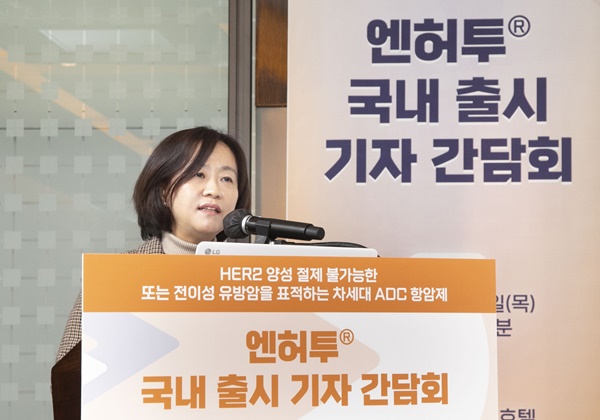
- Next-Generation ADC Enhertu launches in Korea
- by jung, sae-im Jan 16, 2023 07:39pm
- Enhertu, which Korean breast cancer patients urged for quick permission last year, was released in Korea this month. Analysts say that it will change the paradigm of secondary treatment for HER2-positive breast cancer with a superior effect compared to existing treatments. Daiichi Sankyo held a press conference at the Westin Chosun Hotel on the 12th to commemorate the launch of the ADC (antibody-drug conjugation) new drug Enhertu in Korea. Enhertu is an anticancer new drug approved by the Ministry of Food and Drug Safety in September last year. It can be used for HER2-positive breast cancer (secondary) and stomach cancer (third). Park Yeon-hee, Professor of Hematology and Oncology at Samsung Medical Center Enhertu is a next-generation ADC jointly developed by AstraZeneca and Daiichi Sankyo. ADC is a drug made by connecting "Antibody" that binds to a specific target antigen on the surface of cancer cells and a "Payload" that has the function of apoptosis with "Linker." It is a drug that selectively acts only on cancer cells to increase treatment effects and minimize side effects. Existing ADCs have caused tumor resistance for various reasons, resulting in some poor efficacy. Enhertu was developed to compensate for these shortcomings and provide optimal anti-tumor effects. Drugs with a new mechanism of action were applied, and a high and uniform drug and antibody ratio was set. ◆"The breast cancer data is amazing"…Expected to expand the indication Park Yeon-hee, a professor of hemato-oncology at Samsung Medical Center, who was the speaker at the meeting, introduced Enhertu's major data and welcomed it, saying, "I'm happy to release Enhertu in Korea, which has proven excellent effects in breast cancer clinical trials." Major breast cancer clinical studies in Enhertu include DESTINY-Breast01 and Breast03. The Breast01 study measured the effectiveness and safety of Enhertu in tertiary or higher patients with extensive treatment. The Breast03 study is a phase 3 clinical trial compared to Kadcylla (T-DM1) when Enhertu was used as a secondary treatment. As a result of the final updated Breast01 study in March 2021, N Hutu achieved the first evaluation variable with an objective response rate (ORR) of 62%. The median reaction duration (mDOR) was 18.2 months, the median progression duration (mPFS) was 19.4 months, and the median total survival period (mOS) was 29.1 months, respectively. Enhertu Professor Park said, "In the clinical trial, Enhertu recorded a high number of 19.4 months of PFS. "OS also showed 29.1 months even though there was no drug available after this," he explained. Enhertu also demonstrated excellent effectiveness in direct comparison with the first-generation ADC treatment Kadcylla. As a result of the Breast03 study, Enhertu reduced the risk of disease progression or death by 72% compared to Kadcyla by 34.1% with a progression-free survival rate of 75.8% at 12 months. Kadcyla's mPFS was 6.8 months, while Enhertu did not reach the evaluation value. Professor Park also expressed high expectations for Enhertu's additional indications. HER2 is low-expression breast cancer. These patients account for half of breast cancer patients, but they are not suitable to use existing HER2-targeted treatments, which is an area with high unmet demand. In a clinical trial announced last year, Enhertu first introduced it in the area of HER2 underexpression by reducing the risk of disease progression or death by 50% compared to the chemotherapy group. Currently, it has acquired an American indication. Professor Park said, "I personally have high expectations for HER2 low-expression breast cancer indications," and added, "I hope the expansion of domestic indications will not be delayed further." ◆"Highly toxic but manageable, Enhertu's benefit should be applied" Enhertu has a high risk of side effects as much as its excellent effect. The most common adverse event in the Breast03 study was interstitial lung disease (ILD), which was cited as the most cautious side effect when using Enhertu. The rate of epileptic lung disease in the Enhertu group was 10.5%, which was higher than that of the Kadcylla group at 1.9%. Professor Park said, "It is true that it is more toxic than conventional drugs," but added, "But it can be managed sufficiently by dose control." He then said, "Fatal side effects were mainly found in Japanese patients, and I don't think this case can be expanded to the entire Asian region." Side effects are something to be careful about, but the prognosis varies depending on how a specialist manages them. "From my experience, I think it is manageable," he added. Professor Park urged Enhertu to register his benefit quickly. Professor Park stressed, "At least the indication received now should be covered by insurance benefits as soon as possible." Daiichi Sankyo is known to have applied for a salary registration for Enhertu breast cancer and gastric cancer on December 28 last year. The HIRA is awaiting the introduction of the Cancer Disease Review Committee. Kang Bo-sung, head of the marketing division of Daiichi Sankyo's anti-cancer drug division, replied, "We will actively discuss with health authorities to register our quick benefit."
- Company
- Last year's drug trade deficit was the largest ever
- by Kim, Jin-Gu Jan 16, 2023 06:03am
- Vaccine exports hit an all-time high, but have been on the decline since the second half of the year. Last year, pharmaceutical exports fell 23% year-on-year. The export performance of medicines, which had been on a high march for two years from 2020 to 2021, is gradually returning to the previous year's level as the global spread of COVID-19 subsides. Drug imports exceeded $10 billion for the first time last year. The drug trade deficit soared to more than $4 billion as pharmaceutical exports plunged and import performance increased slightly. Vaccines, a representative COVID-19 beneficiary item, also recorded the highest version ever last year, but monthly, the decline has been evident since the second half of the year. Drug exports in the last 10 years (US$ million, data and customs office) According to the Korea Customs Service on the 16th, Korea's drug exports last year amounted to 6.27421 billion dollars compared to $8.12144 billion in 2021, which decreased by 22.7%. Domestic drug exports steadily increased until 2021. In particular, exports had increased steeply since 2020 when COVID-19 began to spread around the world. Drug exports rose vertically from $3.695.9 billion in 2019 to $6.8935 billion in 2020. In 2022, it increased further to $8.12144 billion. In other words, it has increased 2.2 times in two years when the pandemic is prolonged. However, since the second half of last year, the spread of global COVID-19 has gradually subsided, leading to a decrease in domestic drug exports. In particular, as the end of the year approaches, exports are clearly decreasing. Exports, which averaged $584 million in the first quarter of last year, fell to $446 million in the fourth quarter. It is the first time since the first quarter of 2020, just before the spread of the COVID-19 crisis that the average monthly drug exports reached the $400 million range. Drug imports topped $10 billion for the first time. Last year, pharmaceutical imports amounted to USD 10.27534 billion, an increase of 4.5% from the previous year. While pharmaceutical exports plunged, imports increased slightly, widening the drug trade deficit to the largest ever. Last year, the drug trade balance recorded a deficit of $4.0113 billion. It is the largest since $3.211 billion in 2014. Drug imports in the last 10 years (US$ million, Data and Customs Service) ◆K-Vaccine Achieves Highest Export Performance Ever…a sharp drop in the second half of the year Following 2021, vaccines contributed to exports last year. Last year, domestic vaccine exports amounted to 941.12 million dollars up 81.5% from the previous year. Vaccines also account for a significant increase in total drug exports. Until 2020, the proportion of vaccine exports was only 2.5%, but in 2021, it more than doubled to 6.4%. Last year it rose further to 15.0%. Exports of domestic vaccines have surged since December 2021. Novavax and Moderna vaccines produced by SK Bioscience and Samsung Biologics have begun to be exported in earnest. Last year, exports averaged nearly 130 million dollars in the first half of the year. However, since the second half of last year, exports of vaccines have decreased significantly. The average monthly vaccine exports in the second half of last year were only $27 million. Analysts say that it has returned to a similar level to before the consignment production of the COVID-19 vaccine. As the global COVID-19 vaccination rate decreases, exports of domestic vaccines are also expected to remain at the previous year's level.
- Company
- GM Lee Seung-woo to leave Gilead Sciences Korea
- by Eo, Yun-Ho Jan 16, 2023 06:02am
- General Manager Paul Seung-woo Lee Paul Seung-woo Lee (65), who has served as the General Manager of Gilead Sciences Korea and led the company since its establishment, will be leaving the company. According to industry sources, Lee has recently expressed his intent to resign upon the expiry of his term to the company. Accordingly, Gilead is currently in the process of hiring Lee’s successor. Lee is known to have decided to retire with his resignation. Lee is regarded as a symbolic figure as CEO of multinational pharmaceutical companies in Korea’s pharmaceutical industry. After graduating from the University of Alberta and receiving an MBA from Columbia Business School, Lee worked at Johnson & Johnson and Korea Research-based Pharma Industry Association. In 1996, after being appointed as Managing Director of MSD Korea, Lee served as CEO of Korean subsidiaries of various multinational companies including AstraZeneca and Wyeth (currently Pfizer). In 2011, Lee was appointed the founding head of Gilead’s Korean subsidiary and has held the position ever since. In other words, Lee has served as CEO of multinational companies for over 25 years. Considerable changes are expected in the organization as other founding members of the company including Senior Director Yeonsim Jeong are expected to retire soon in addition to GM Lee. Also, a fierce competition is expected in the hiring of CEO Lee’s replacement as a large number of applicants applied for the position. Also, the company is also currently in the process of hiring other executive-level personnel for MA, marketing, etc.
- Company
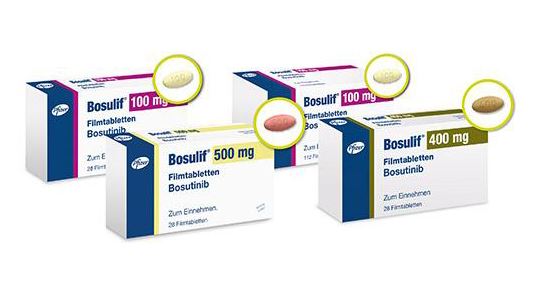
- Bosulif approved in Korea 11 years after US approval
- by Jan 16, 2023 06:02am
- Bosulif(bosutinib.(Pic=Pfizer)The Ministry of Food and Drug Safety approved the new drug for chronic phase Philadelphia chromosome-positive chronic myelogenous leukemia (Ph+ CML), ‘Bosulif (bosutinib)’ in Korea. The drug was first approved in the US in 2012. With the approval, the treatment options for Ph+CML increased to 6, excluding the first-generation drug. According to industry sources on the 14th, the MFDS approved 3 dosages (100·400·500mg) of Pfizer Korea’s new drug for Ph+ CML Bosulif on the 12th. The drug is now indicated for the treatment of newly diagnosed chronic Ph+ CML or chronic, accelerated, or blast-phase Ph+ CML with resistance or intolerance to prior therapy. Bosulif is a second-generation treatment that is taken orally once daily. Bosulif was first approved by the US Food and Drug Administration (FDA) in 2012 for the treatment of Ph+ CML with resistance to prior therapy. Its indication as a first-line treatment for newly diagnosed Ph+ CML has been additionally approved in the US in 2017, and in 2018 in Europe. The drug was finally approved in Korea 11 years after it was first approved by the FDA. A Pfizer Korea official said, “We received approval for Bosulif in Korea this year based upon our strategic judgment of the domestic CML treatment market.” Chronic myeloid leukemia including PH+ CML is a malignant hematologic disease that occurs when the bone marrow produces white blood cells. CML is a very slow, chronically progressing blood cancer, and over 90% of patients with CML are found with a characteristic gene abnormality in the Philadelphia (Ph) chromosome, which causes an increase in white blood cells and platelets. The Ph chromosome forms when chromosome 9 and chromosome 22 break and exchange portions, and the byproduct that appears in the process can grow cancer cells. Bosulif’s safety and efficacy were verified through a Phase III trial (NCT02130557) on the drug’s use as a first-line therapy that was conducted on patients with newly-diagnosed Ph+ CML. The major efficacy outcome measure was major molecular response (MMR) at 12 months. Results showed that MMR at 12 months was 47% in the Bosulif arm and 36% in the Glivec (imatinib) arm. MMR at 60 months was 74% in the Bosulif arm and 66% in the Glivec arm. The median time to MMR in respondents after 60 weeks of follow-up was 9.0 months in the Bosulif arm and 11.9 months in the Glivec arm. The indication for chronic, accelerated, or blast phase Ph+ CML with resistance or intolerance to prior therapy was obtained based on Phase I/II trial (NCT00261846), which evaluated the efficacy and safety of the once-daily administration of the 500mg dose of Bosulif. Its major efficacy endpoints included the rate of attaining major cytogenetic response (MCyR) by Week 24 and the duration of MCyR. 40% of patients that had previously received Glivec monotherapy reached MCyR by Week 24. The most common adverse reactions in the 814 patients that participated in the two trials were diarrhea (80%), rash (44%), nausea (44%), abdominal pain (43%), vomiting (33%), fatigue (33%), hepatic dysfunction (33%), respiratory tract infection (25%), pyrexia (24%), and headache (21%). 22% of the 268 patients that were newly diagnosed with Ph+ CML showed serious adverse reactions. Serious adverse reactions reported in >2% of patients included hepatic dysfunction (4%), pneumonia (3%), coronary artery disease (3%), and gastroenteritis (2%). In Korea, first to fourth-generation drugs are available for the treatment of Ph+ CML. Bosulif is a second-generation drug. The first-generation treatment is Novartis Korea’s Glivec, and generic versions of the drug have been released upon its patent expiry. The second-generation treatments include Novartis Korea’s ‘Tasigna (nilotinib),’ BMS Korea’s ‘Sprycel (dasatinib),’ Il-Yang Pharmaceutical’s ‘Supect Capsule (radotinib),’ etc. Otsuka Pharmaceutical Korea’s Iclusig (ponatinib)’ is a third generation treatment. As a fourth-generation treatment, there is Novartis Korea’s Scemblix (asciminib). Scemblix was approved in June last year as a treatment for adult patients with Ph+ CML in the chronic phase previously treated with two or more tyrosine kinase inhibitors (TKIs), However, the drug has not yet been applied for reimbursement in Korea.
- Company
- RET-targeted Retevmo lands in general hospitals in KOR
- by Eo, Yun-Ho Jan 13, 2023 06:02am
- The RET-targeted anticancer therapy ‘Retevmo’ may now be prescribed at general hospitals in Korea. According to industry sources, Lilly Korea’s, Lilly Korea’s Retevmo (selpercatinib) passed the drug committees of tertiary hospitals in Korea including the Samsung Medical Center, Seoul National University Hospital, and Seoul St. Mary’s Hospital. Some hospitals were found to have set local drug codes after holding emergency Drug Committee meetings. Therefore, if Retevmo is listed for reimbursement, the listing is expected to quickly lead to actual prescriptions. Retevmo, which received marketing authorization in March last year, was unable to pass CDDC review for reimbursement in May, but then passed review in November and is awaiting deliberation by the Drug Reimbursement Evaluation Committee. Retevmo is indicated for: ▲adult patients with metastatic RET fusion-positive non-small cell lung cancer (NSCLC); ▲adults and pediatric patients 12 years of age or older with advanced or metastatic RET-mutated medullary thyroid cancer who require systemic therapy; and ▲ adult patients who are refractory to radioactive iodine therapy and who have prior sorafenib and/or lenvatinib treatment, with advanced or metastatic RET-fusion benign thyroid cancer who require systemic therapy. The drug demonstrated its efficacy through the LIBRETTO-001 trial that was conducted on 702 patients with advanced or metastatic solid cancer with RET mutations. Patients with RET fusion-positive NSCLC, RET-mutated medullary thyroid cancer, and RET fusion-positive thyroid cancer patients with or without prior treatment experience were enrolled in the LIBRETTO-001 trial. The primary endpoints of the trial were the objective response rate (ORR) and duration of response (DOR) as assessed by the independent review committee. In patients with RET fusion-positive NSCLC without platinum-based treatment experience, the ORR in the Retevmo-treated group was 85%. Although the median DoR was not yet reached, 79% of the patients showed a durated response during the follow-up period (median 7.4 months). In patients with platinum-based treatment experience, the ORR was 64%, and the median DoR was 17.5 months. Professor Min-Hee Hong of Oncology at Yonsei Cancer Center said, “Lung cancer patients with RET mutations are twice more likely to experience CNS metastasis, but had to be treated with chemotherapy due to the lack of options until now, which is less effective and more prone to toxicity.” Hong added, “Retevmo demonstrated a significant response in the LIBRETTO-001 trial, as well as an 82% ORR in patients with CNS metastasis. 23% of these patients achieved complete response.”
