
- LOGIN
- MemberShip
- 2026-05-07 23:25:57
- Company
- Rise of new drugs... subject of NA and public petitions
- by Eo, Yun-Ho Apr 07, 2023 05:54am
- Specific product names of new drugs are being mentioned at the National Assembly audit and public petitions calling for the application of reimbursement for specific drugs have gathered 50,000 consents. Such activities, which would not have happened 5 years ago, are actually arising in Korea. The emergence of government affairs (GA) and patient advocacy (PA) managers are not irrelevant to the rise of such new drug issues and are more fundamentally related to the industry’s entry into an era of high-priced new drugs. ◆Awakening of the patients and rising public interest=" Please doctor, you are our only hope. Please save me.’ Times have changed. Patients and their families that used to cling to their doctors and plead for help now independently search papers and find new drugs in the clinical trials database, Clinicaltrial.gov. If a drug approved in Korea is stuck in the reimbursement process, civil complaint emails and calls pour into the webpages and offices of relevant ministries including the National Health Insurance Service and the Ministry of Health and Welfare. The same goes for the pharmaceutical companies that supply the new drugs. Some have described that the complaints have been "hindering work to the point of paralysis." The magnitude of the anger in the patients and their families looking at ‘existent but unreachable drugs’ are not so different from before. However, the current generation, which consists of a larger proportion of highly educated people, has ‘administrative power.’ The rising voice has reached the National Assembly. The NA questioned and criticized the Ministry of Health and Welfare and its affiliated agencies (HIRA, NHIS) in their audit. Professional terms related to reimbursement, such as the pharmacoeconomic evaluation exemption system, ICER value, and Cancer Disease Review Committee, are also commonly mentioned. Pressure from the National Assembly and patients, not from pharmaceutical companies, is imposing an incomparable weight on the health authorities. It will also inevitably affect the reimbursement listing process. The PA and GA managers at pharmaceutical companies focus on handling issues arising from these situations. This is why the government often accuses pharmaceutical companies of triggering this phenomenon. In a way, it is a reasonable doubt. When sharing the same interest, patients can work as the best weapon for pharmaceutical companies. Also, the accusations are not 100% false. Some companies use patient groups to raise public opinion and criticize the government. In addition, there are companies that drop the introduction of some drugs due to lack of marketability in Korea despite public criticism, and companies that deliberately delay drug price negotiations to be included in the government’s coverage enhancement plan. They all do exist. However, patients are now a 'double-edged sword' for the companies as well. Patients are moving faster than the listing plan set by the companies after approval, and the reimbursement standards the company sets through discussion with the authorities arouse impatience and anger amongst ineligible patients. The PA and GA meet with the National Assembly and patients to explain, clarify issues, and discuss support plans. Due to the highly sensitive nature of the work, education is essential to avoid crossing the line. One thing clear is that the position was created due to the prevailing trend, even more so than for the company’s pursuit of profit. A PA official at a multinational pharmaceutical company said, "Even support programs for non-reimbursed treatments are also required to abide by the Fair Trade Act. Although people may suspect that we have alternative purposes, I believe everyone will feel the same way when they meet actual patients and their families. There are times I clash with the company due to such effect.” The official added, “Among the issues patient organizations always raise, there are many opinions that the government (especially the MOHW) should prepare an official communication channel (with dedicated personnel and departments) for patients and implement a system that regularly and continuously holds an ear out to the patients' voices. It is now the time for both the government and the pharmaceutical industry to accept the patients’ request." ◆Drug become better and more expensive, system’s scope narrows=Patients that were incurable in the past are now allowed to live their life with the benefit of a drug and even dream of a cure. Advanced cutting-edge new drugs we encounter now offer surprising efficacy and safety. In addition to one-shot CAR-T therapies, approvals for new drugs with various mechanisms of action such as targeted anticancer drugs, cancer immunotherapies, and ADCs, as well as new drugs applied to specific targets or all-comers are lining up their applications. Korea’s reimbursement system has also evolved. Institutional devices for the introduction of high-priced new drugs, such as the Risk Sharing Agreement (RSA) scheme and pharmacoeconomic evaluation exemption system have been prepared, and many drugs have been listed with reimbursement thanks to such systems. Nonetheless, the current system seems too narrow to accommodate these rising new drugs. Although the companies applied for reimbursement listing, more and more drugs remain in the discussion stage for 1 to even 3 years at most. Also, the rejection rate in the CDDC stage, which is an essential gateway to reimbursement for anticancer drugs, has peaked. A study found that 76% of respondents in the industry pointed to the expansion of the RSA system and the separation of the refund-type RSA as ways to improve the current insurance reimbursement system, and 16% answered that the reimbursement listing system needed fundamental improvement. In other words, an increasing number of pharmaceutical companies are looking to change the reimbursement system to list their new drugs, rather than finding a way within the system. GAs play a pivotal role in this context. If the MA appeals to the MOHW, NHIS, and HIRA on the need for a drug, GAs play a broader role in drawing a public picture. This is also the reason why an increasing number of GAs in the industry are former NA aides. However, internal and external conflicts still remain. Internally, MAs, who are typically pharmaceutical industry experts, have a good understanding of drugs and the drug pricing system, but GAs are often not from the pharmaceutical industry. In other words, the perception that 'GAs don't know the industry well' exists in compnaies. One manager explained that internal disputes arise between the MA that speaks on behalf of HIRA, and the GA that speaks on behalf of the NA. A GA manager from a multinational company said, "I feel most upset when people mistakenly believe that I’m not working because I have to work outside the office to meet various people. Pharmaceutical companies also follow the trend and communicate better internally. Only pharmaceutical companies that can create synergy with various internal departments can succeed in leveraging GA. Integrate the internal message first to progress further."
- Company
- LG Chem releases DPP-4+SGLT-2 combo Zemidapa Tab
- by Kim, Jin-Gu Apr 06, 2023 05:53am
- On the 4th, LG Chem announced it will be releasing its new antidiabetic combination drug ‘Zemidapa Tab’ on the 8th. Zemidapa is a fixed-dose combination of the DPP-4 inhibitor class market leader Zemiglo (gemigliptin) and SGLT-2 inhibitor class market leader dapagliflozin (Product name: Forxiga). Zemidapa is the only option that offers a combination of the said two ingredients. According to the amendment made to the reimbursement of antidiabetic combination therapies that are applied from this month, Zemiglo will be allowed to be additionally prescribed to patients taking metformin and SGLT-2 inhibitors whose glucose level is not properly controlled. Zemidapa will be allowed to be prescribed with reimbursement starting on the 1st of next month. LG Chem conducted a Phase III trial on 748 patients whose blood sugar is not adequately controlled with existing two-drug combination therapy. The company had invested over KRW 20 billion in the clinical trial. Results showed that the three-drug Zemiglo+metformin+dapagliflozin combination has a greater blood glucose level improvement effect than the two-drug combination (metformin+dapagliflozin or Zemiglo+metformin). In-Cheol Hwang, Head of LG Chem’s Chronic Disease Business Unit, said, "The combination of the DPP-4 inhibitor that stimulates insulin production and the SGLT-2 inhibitor that excretes glucose from the body, have a complementary therapeutic effect. By securing large-scale clinical evidence in domestic patients, and building on the unique competitiveness of Zemidapa of being the only combination of the two ingredients, we plan to continue to lead the KRW 1 trillion domestic diabetes market.” In line with the release of Zemidapa, LG Chem plans to hold symposiums to inform about the clinical efficacy of Zemidapa for healthcare professionals in the nation. After launching Zemiglo, a new diabetes drug developed by LG Chem in 2012, the company has additionally launched the combinations Zemimet and Zemiro based on Zemiglo. According to UBIST, a market research institute, prescriptions for the Zemiglo product line last year recorded KRW 133 billion.
- Company
- NeuroBo, a subsidiary of Dong-A ST, applies for NASH candida
- by Apr 06, 2023 05:53am
- A researcher at Dong-A ST is testing a candidate substance. (Photo by Dong-A ST)Dong-A ST announced on the 4th that its US subsidiary NeuroBo Pharmaceuticals has applied to the US Food and Drug Administration (FDA) for a phase 2 clinical trial plan for NASH treatment candidate DA-1241. This clinical trial will be conducted for 16 weeks on 87 patients with NASH. It is a multicenter, randomized, double-blind, placebo-controlled, parallel-comparison clinical trial to confirm the efficacy and safety of DA-1241. NeuroBo plans to initiate phase 2 clinical trials for DA-1241 in the US within the third quarter of this year. The target study end date is the second half of 2024. DA-1241 is a first-in-class mechanism of action on GPR119. The possibility of developing it as a NASH treatment was confirmed in preclinical trials. After administration of DA-1241, improvement effects such as liver cirrhosis, inflammation, fibrosis, lipid metabolism, and glucose control were observed. NASH is a disease in which triglycerides accumulate in liver cells regardless of alcohol intake. It is characterized by inflammation and fibrosis in the liver. If the symptoms are severe, they can cause liver diseases such as liver cirrhosis, liver cancer, and liver failure. Its prevalence is 2-4% worldwide and 3-5% in the United States, but it is a disease with high unmet medical demand because there is no treatment yet. NeuroBo is a NASDAQ-listed company located in Boston, USA, and is responsible for the global development and commercialization of DA-1241 and DA-1726. DA-1726 is being developed as a treatment for obesity and NASH. It is a candidate substance that induces weight loss by simultaneously acting on the GLP-1 receptor and the glucagon receptor to suppress appetite, promote insulin secretion, and increase peripheral basal metabolism. In addition to the weight loss effect, the possibility of developing a NASH treatment was confirmed through preclinical studies. NeuroBo plans to apply for a phase 1 clinical trial of DA-1726.
- Company
- Zuellig Pharma Korea turns profitable in 6 years
- by Apr 06, 2023 05:53am
- Zuellig Pharma Korea, a global drug distribution company, escaped from complete capital impairment last year (total capital was negative). Operating profit also turned to black for the first time in six years. We are concentrating our efforts on improving performance by significantly reducing SG&A. According to the Financial Supervisory Service on the 4th, Zuellig Pharma Korea recorded sales of 885.3 billion won and an operating profit of 900 million won last year. Sales decreased by 2.7% from 909.9 billion won in the previous year, but operating profit turned to black from a deficit of 13.9 billion won. This is the effect of reducing SG&A by more than W10bn. In 2021, Zuellig Pharma Korea spent 94.1 billion won on SG&A. Last year, it decreased by 11.3 billion won to 82.8 billion won. In particular, the amount of wage payments plummeted from 32.5 billion won the previous year to 18.4 billion won. Earnings improved, and the company was able to escape from a complete capital impairment that had lasted for two years. Complete capital encroachment refers to a state in which a company has no surplus due to a large deficit, and even the paid-in capital has been eroded, resulting in a negative total capital. Zuellig Pharma Korea was completely capital impaired with a total capital of -1.5 billion won and -14.5 billion won in 2020 and 2021. Last year, the capital impairment rate was significantly lowered to 85.4%. Even if not complete capital impairment, partial capital impairment, in which the total capital is smaller than the capital stock, continues. This is because the company still has a deficit of 22 billion won. Zuellig Pharma Korea's poor performance began in earnest in 2017. A situation where sales increased but no profit occurred for five consecutive years. In 2017, the company's sales increased by 9.2% from the previous year to 971 billion won, while net profit turned into a loss from 3.1 billion won to -1.8 billion won. In 2019, sales exceeded 1 trillion won for the first time, but the net loss widened further. The loss in 2021 reached 10 billion won. Every year, the net loss led to the depletion of retained earnings and the accumulation of deficits, causing the debt ratio to rise out of control. The debt ratio, which was 1340% in 2017, soared to 30,000% at the end of 2019. In the end, it fell into complete capital encroachment in 2020. Although performance improved last year, the debt ratio is still at a risky level of 15435%. As Zuellig Pharma Korea is an unlisted company, there are no direct sanctions for capital erosion. Listed companies are subject to delisting if they have a complete capital impairment or a capital impairment rate of 50% or more for two consecutive years. However, excessive debt can adversely affect business operations. Trade payables account for most of Zuellig Pharma Korea's total liabilities. Trade payables, which are money to be paid to pharmaceutical companies that purchased drugs, reached 271.9 billion won as of the end of last year.
- Company
- Onureg, PO acute leukemia drug, is scheduled to be proposed
- by Eo, Yun-Ho Apr 06, 2023 05:53am
- Onureg, a maintenance therapy for acute myeloid leukemia, is on its way to entering insurance coverage. As a result of the coverage, Onureg is scheduled to be presented to the Pharmaceutical Reimbursement Evaluation Committee of the Health Insurance Review and Assessment Service on the 6th. It has been about four months since the passage of the Cancer Diseases Review Committee in December of last year. On March 23, 2022, this drug was approved for maintenance therapy in adult patients with acute myeloid leukemia who achieved CR or CRi after induction therapy, with or without consolidation therapy, and for whom HSCT is unsuitable. As the first and only treatment option that clinically extended the survival period for AML patients unable to undergo hematopoietic stem cell transplantation who had failed to prolong OS despite several R&D attempts over the years, the critical question is whether Onureg can be recognized for its clinical value. Onureg confirmed the efficacy and safety in phase 3 clinical trial of QUAZAR AML-001 in 472 patients with AML. As a result of the study, the mOS of the patient group who took Onureg was 24.7 months, extending the survival time by about 10 months compared to 14.8 months of the placebo group. At 1 year and 2 years of treatment, the survival rate in the Onurec group was 73% (vs. 56% vs. placebo group) and 51% (vs. 37% vs. placebo group), respectively, all higher than those in the placebo group. RFS also confirmed that the Onureg group reached 10.2 months, 5.4 months longer than the placebo group (4.8 months), reducing the risk of recurrence. The proportion of patients without recurrence after 6 months of treatment was 67% in the Onureg group and 45% in the placebo group. Meanwhile, Onureg has been recognized for its clinical usefulness in major overseas countries such as the UK and Australia and is being recommended for reimbursement to patients to be treated.
- Company
- Patients and policy are trending in the pharma industry
- by Eo, Yun-Ho Apr 06, 2023 05:53am
- The opening of new positions that didn’t exist before indicates the considerable need for the positions. Recently, Korean subsidiaries of multinational pharmaceutical companies that mainly supply new drugs have opened up two new positions - GA (Government Affairs) and PA (Patient Advocacy). The changes seem to be in line with the trend in the new drug industry. In the era of ‘high-priced new drugs,’ the government and pharmaceutical industries are having difficulty seeing eye-to-eye when setting the drug price, and the reimbursement listing of new drugs has become the factor that determines the success or failure of a new drug. Issues that cannot be resolved through direct communication with ‘relevant ministries’ have been accumulating,, and pharmaceutical companies have been searching for new methods of communication like the National Assembly. As a result, the need to connect with the National Assembly, patients, the government (other than directly related ministries), and the media has risen. ◆External affairs personnel increased by 1.6 times during the past 5 years...18 people were newly hired So how many have actually increased? According to Dailypharm's coverage, the GA and PA personnel at 15 major multinational companies increased by 158% over the past five years. The number, which had been 31 people in 2018 became 49 as of 2023. 9 companies have increased recruitment during the period, and one company had newly established a department. Companies including Novartis, Takeda Pharmaceutical, Sanofi, Astellas Pharma, Amgen, and Janssen have all more than doubled their relevant workforce. MSD has the most related personnel of 7 , followed by Janssen (6), Novartis (5), AstraZeneca (5), and Pfizer (5). More specifically, the 15 companies had 20 GA and 16 PA managers in total. Also, more than half of the multinational pharmaceutical companies had personnel in charge of the GA and PA tasks combined, a choice that the companies may have made due to the size of the company. Whatever the reason, the choice also reflects the fact that the two positions are closely related to each other. Among the 6 companies that showed no changes in the number of personnel in the area, 3 are planning to recruit more personnel this year. An executive from multinational pharmaceutical company A said, “Most of the companies had no GA or PA representatives 5 years ago. Usually, the MA representatives took care of the entire external affairs tasks. Considering the size of the Korean subsidiaries of multinational pharmaceutical companies, the number of people in the area has been increasing rapidly.” The official added, "Our company also has a small number of employees dealing with external affairs, but we have decided to hire two new people this year. Just as the MAs had in the past, we expect the roles of GA and PA will become increasingly important." ◆KRPIA organizes a separate committee...to increase patient focus The Korean Research-based Pharmaceutical Industry Association (KRPIA) is also focusing on its ‘Policy’ committee that focuses on government affairs. The Healthcare Policy Committee had been originally concurrently run by MA managers, and there was not much activity. But the times have changed. The committee is now receiving support from its board of directors which consists of multinational pharmaceutical company CEOs. A member of the board of directors at KRPIA said, "In addition to patients, the public's interest in new drugs has been increasing. Due to the rising interest, the association’s need to communicate with the National Assembly, civic groups, and patient groups has also increased. In order to reflect these needs, the KRPIA’s Healthcare Policy Committee needs to also increase its activity. This is a big agenda that the KRPIA is concentrating on these days.” A separate committee has not yet been established for patients. However, a separate task force in charge of ‘patients’ has been established and is active under KRPIA’s Public Affairs & Communications Committee. A KRPIA official said, “With the new drug reimbursement environment becoming increasingly difficult and patients' voices for rapid reimbursement of new drugs rising, pharmaceutical companies are seeking to find a win-win solution through communication and cooperation with the government and patients.” The official added, “The involvement of patient associations or patient groups is a basic consideration in most stages from the development of new drugs by pharmaceutical companies to the policy decision-making process of the government in the United States and Europe. The process of how well we work with the government and patients will become ever more important in drawing a social consensus."
- Company
- Active M&A for global cell and gene therapy
- by Hwang, Jin-joon Apr 05, 2023 05:47am
- OVIS BCMA CAR-T, KyuloselIn the field of cell and gene therapy, which is considered a next-generation drug, an M&A worth 3.4 trillion won was completed. Domestic biopharmaceutical companies are conducting R&D in the field of cell and gene therapy as a future food source. CDMO companies are entering the CDMO business for cell and gene therapy through M&A and factory expansion. ◆ 3.4 trillion won worth of M&A According to the industry on the 4th, Sartorius, a German-based global biopharmaceutical company, announced on the 31st of last month (local time) that it would acquire French Polyplus, a producer of raw materials for cell and gene therapy, for 2.4 billion euros (approximately 3.4 trillion won). Sartorius carried out this M&A to strengthen its capabilities in the field of cell culture medium portfolio and key material provision services related to cell gene therapy. The M&A will be conducted through Sartorius Stedim Biotech, a Sartorius subsidiary in France. The acquisition process is expected to be completed in the third quarter of this year. Expectations for the growth potential of the cell and gene therapy market are high. According to pharmaceutical market research firm Evaluate Pharma, the global cell and gene therapy market grew at an average annual rate of 49.1% from $7.47 billion in 2021. Yes, it is expected to grow to 55.59 billion dollars by 2026. During the same period, it is expected to show higher growth compared to the average annual growth rate of 5.7% for chemically synthesized drugs and 5.2% for antibody drugs. ◆Domestic pharmaceuticals are also interested in the field of cell and gene therapy Domestic biopharmaceutical companies have selected the field of cell and gene therapy as one of their new growth engines and are conducting R&D. Chong Kun Dang established 'Gen2C', a gene therapy research center, in the Omnibus Park of Seoul St. Mary's Hospital last year. It is a strategy to strengthen expertise in the field of gene therapy and establish itself as a leading company centered on Gen2C. Centered on researchers in the field of gene therapy at Hyojong Research Institute, the company plans to develop rare and incurable treatments for undruggable targets, which have high unmet needs and have been difficult to develop with existing methods. Chong Kun Dang also signed an MOU with CDMO, a cell gene therapy product, and ENCell, a next-generation stem cell therapy development company, for strategic investment and joint research on cell and gene therapy products. It plans to accelerate joint R&D and production processes for advanced biopharmaceuticals. Since last year, LG Chem has been concentrating its capabilities on advancing the establishment of an innovative cell therapy platform technology. LR19023, a next-generation CAR-T cell therapy, is under development. In the preclinical stage, the effect is confirmed through cancer model animal tests. LG Chem plans to develop LR19023 as a solid cancer treatment. HK inno.N paid attention to cell therapy products such as CAR-T and CAR-NK as future growth engines in 2020 and built a cell and gene therapy platform in Hanam, Gyeonggi Province. Currently, four CAR-T and CAR-NK cell therapies are being developed with the Bio Research Center as the main focus. To increase the success rate of treatment development and speed up market entry, technology for blood cancer and solid cancer treatment was transferred from global companies. For the localization of the technology, it is also researching CAR-T and CAR-NK cell therapy products on its own. Earlier this year, GC Cell transferred the technology of 'AB-205', a drug candidate for T-cell lymphoma, to Artiva Biotherapeutics, a US affiliate. This is an allogeneic umbilical cord blood-derived NK cell therapy using CAR that targets CD5 expressed in T-cell lymphoma. GC Cell will work with Artiva Biotherapeutics to lead a phase 1 clinical trial that meets domestic and US Food and Drug Administration (FDA) guidelines. GC Cell and Artiva Biotherapeutics plan to jointly develop drugs by conducting phase 2 clinical trials in the Asian and North American markets, respectively. CDMO companies such as SK Pharmteco, Samsung Biologics, and Lotte Biologics are accelerating their entry into the field of cell and gene therapy. Based on its localization strategy in 2021, SK Pharmteco entered the CDMO business, mainly in the US and Europe. By acquiring Yposkesi in France in 2021, it began targeting the cell and gene therapy CDMO field. Last year, it became the second largest shareholder of CBM, an American cell and gene therapy CDMO company. Samsung Biologics plans to start a business in the CDMO field of next-generation medicines, such as cell and gene therapy, through the establishment of the fifth plant. Samsung BioLogics CEO John Lim said, "We will continue to expand production capacity by promoting the establishment of the 2nd Bio Campus in Songdo, Incheon" after the board of directors' resolution in March. We plan to build facilities and research facilities to nurture next-generation drug technology.” Lotte Biologics entered the pharmaceutical CDMO field by acquiring BMS' Syracuse plant in the US in January. The Syracuse plant plans to make additional investments to strengthen its capabilities, including new product orders and process development. In addition to the antibody-drug CDMO, the facility is planned to be converted so that it can produce finished drugs (DP) and cell and gene therapies.
- Company
- Celltrion discloses interim results of global phase 3 Eylea
- by Hwang, Jin-joon Apr 05, 2023 05:45am
- Researchers at Celltrion are researching candidate materials. (Photo by Celltrion)On the 3rd, Celltrion disclosed the interim results based on the 24th week of the global phase 3 clinical trial of CT-P42, an eye disease treatment Eylea biosimilar. Celltrion is conducting clinical trials for 52 weeks on 348 DME patients in 13 countries, including Germany and Spain. The interim results released this time are the results of clinical progress up to 24 weeks. Celltrion is conducting clinical trials by dividing it into two groups: the CT-P42 administration group and the original drug administration group. The primary endpoint is the change in BCVA value measured at week 8 from baseline. As a result of the measurement, CT-P42 satisfied the predefined equivalence criteria. Secondary evaluation indicators, such as efficacy, safety, and immunogenicity evaluation, showed similar trends to the original drugs. Celltrion plans to complete the remaining phase 3 clinical trials and apply for CT-P42 approval to major countries such as the US and Europe within this year. Eylea, the original drug of CT-P42, is a blockbuster eye disease treatment developed by Regeneron in the US. It is used as a treatment for DME and wAMD. Eylea's material patent is set to expire in June this year in the US and in May 2025 in Europe. As of last year, Eylia's global sales were $9.75699 million.
- Company
- CHMP gave a positive opinion on the approval of Soliris
- by Jung, Sae-Im Apr 05, 2023 05:44am
- On the 31st of last month, Samsung Bioepis announced that it had obtained a positive opinion for the item approval of 'EPYSQLITM (Eculizumab)', a treatment for rare diseases, from the Committee for Medicinal Products for Human Use (CHMP) under the European Medicines Agency (EMA). EPYSQLITM is a biosimilar of Alexion's paroxysmal nocturnal hemoglobinuria (PNH) treatment 'Soliris'. It is an expensive drug with annual treatment costs of hundreds of millions of won, and its annual global sales reached 3.762 billion dollars (approximately 4.7 trillion won) last year. EPYSQLITM is the first product developed by Samsung Bioepis in the field of hematology. It is expected that it will be able to obtain official sales permission after the final review by the European Commission (EC), which usually takes about 2 to 3 months. Samsung Bioepis has currently commercialized a total of six biosimilar products in the European market. With the recommendation of EPYSQLITM permission, it has been able to diversify its business portfolio into hematology following autoimmune, oncology, and eye disease treatments. The company demonstrated pharmacokinetic equivalence between EPYSQLITM and the original drug through a phase 1 clinical trial conducted on healthy volunteers from November 2018 to March 2019. Then, from August 2019 to October 2021, a phase 3 study was conducted on patients with PNH to confirm clinical equivalence with the original drug. Samsung Bioepis has also carried out an extended supply of SB12 free of charge for up to two years to patients participating in the clinical trial, considering the burden of drug price for PNH treatment. An official from Samsung Bioepis said, "EPYSQLITM is a drug that can realize the essential meaning of biosimilar development by enabling improved patient accessibility of ultra-high-priced biopharmaceuticals," adding, "Providing more treatment opportunities for patients suffering from rare diseases. I will try to do it," he said.
- Company
- Hanmi internationally introduces 7 new drug candidates
- by Hwang, Jin-joon Apr 04, 2023 05:53am
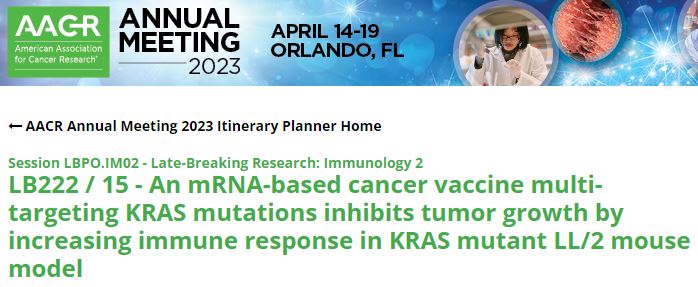
- Hanmi Pharmaceutical unveils mRNA cancer vaccine and new targeted anticancer lead compound at AACR2023. (Photo AACR) Hanmi Pharmaceutical is revealing its messenger ribonucleic acid (mRNA) cancer vaccine and new targeted anticancer lead compounds. The company reinforced its anticancer pipeline by adding next-generation anticancer drug technologies and targets to its existing major anticancer drug pipeline that has been making smooth progress in preclinical trials. According to industry sources on the 2nd, Hanmi Pharmaceutical will be presenting 7 abstracts related to its anticancer pipeline at the American Association for Cancer Research (AACR) Annual Meeting 2023 held in Orlando, Florida from the 14th (local time) to the 19th. At AACR 2023, the company will unveil abstracts about 2 lead compounds in its new anticancer pipeline. One will be about enhancing antitumor activity by inhibiting the YAP/TAZ-TEAD that targets the Hippo pathway, and the other is about an mRNA cancer vaccine. Also, Hanmi Pharmaceutical will be making abstract presentations on how its novel SOS1 inhibitor, HM99462, demonstrates antitumor activity against KRAS-mutant cancers, how its EZH1/2 dual inhibitor HM97662 demonstrates antitumor activity in T-cell lymphoma, the effect of combining use of HM97662 with an immune checkpoint inhibitor, the antitumor effect of its IL-2analog, HM16390, and how BH3120, a bispecific antibody that targets the G-1BB and PD-L1 simultaneously, stimulates T cells in tumor tissue preferred manner. The published abstracts showed that Hanmi’s lead compounds that target the Hippo pathway exhibited dose-dependent growth inhibitory effects in Hippo pathway-altered cancer cell lines. Its safety profile was also confirmed in vitro. Hanmi’s lead compounds that target the Hippo pathway also showed effective tumor growth inhibition activity within tolerable doses in cancer cell xenograft mouse models. The company plans to initiate preclinical studies after establishing a candidate substance for a preclinical study. In addition to the lead compound for the new anticancer drug that targets the Hippo pathway, Hanmi Pharmaceutical also disclosed the results of preclinical studies related to 4 candidates in its major pipeline through abstracts in advance. According to the abstracts, the SOS1 inhibitor HM99462 showed effective tumor growth inhibition activity within tolerable doses when administered alone in cancer cell xenograft mouse models harboring various KRAS mutations. Also, the combination of HM99462 with KRAS G12C or MEK inhibitors led to synergistic anti-tumor activity in both in vitro and in vivo models. HM99462 is currently in IND enabling GLP-toxicity studies and is palnning to initiate a clinical study in early 2024. At the meeting, Hanmi Pharmaceutical also disclosed the antitumor activity of HM97662 in T-cell lymphoma. The enhancer of zeste homology 2 (EZH2) and its homolog EZH1 are types of enzymes known to induce solid cancers like blood cancer. Hanmi confirmed the tumor growth inhibition effect of oral administration of HM97662 in EZH1/2 co-expressed lymphoma cell mouse xenograft model. The company also presented two papers on preclinical studies conducted on its IL-2 analog, HM16390. After administering HM16390 once a week for two weeks in mouse models with melanoma, complete response (CR) was observed in 89% and 100% of the mice at 2.1mg/kg and 8.5 mg/kg, respectively. The median overall survival was also dose-dependently prolonged median overall survival from 15 to 38 days at the dose range of 0.34 to 42 mg/kg. Also, in mouse models with melanoma, the combined use of HM16390 with PD-1 targeted immune checkpoint inhibitors once a week for 4 weeks, CR was increased from 22% with monotherapy to 88% with combination therapy. In addition, Hanmi’s Chinese subsidiary, Beijing Hanmi Pharm disclosed preclinical study results of its bispecific antibody that is designed to target two different targets imultaneously with the Pentambody™ platform. Pentambody is a next-generation, bispecific antibody platform technology that allows one antibody to bind to two different targets simultaneously. Beijing Hanmi Pharm confirmed that BH3120 showed strong antitumor efficacy in multiple tumor models, and that the combination of BH3120 with a PD-1 antagonist showed synergic effects of continuing to activate the T-cells while reducing immune-related side effects. In he toxicology studies conducted so far with cynomolgus monkeys, the No Observed Adverse Effect Level (NOAEL) of BH3120 was determined to be 200 mg/kg. Abstracts of preclinical studies related to mRNA cancer vaccines have not yet been published. The contents that will soon be disclosed are the preclinical results of a clinical study suppressing tumor growth in a KRAS mutant LL/2 mouse model using a multi-target mRNA-based cancer vaccine. Previously, Hanmi Pharmaceutical announced that it had successfully developed its own mRNA platform at the JP Morgan Healthcare Conference 2022 held in January last year. In addition to developing a COVID-19 vaccine, the company has been promoting the application of the mRNA platform in the fields of metabolic diseases, anticancer, cardiovascular and renal diseases, enzyme replacement therapy, etc.
