
- LOGIN
- MemberShip
- 2026-05-07 00:36:00
- Company
- New anemia tablets offer increased options
- by Nho, Byung Chul Oct 23, 2023 05:14am
- Whether the introduction of tablet formulations that offer improved convenience in intake in the KRW 100 billion renal anemia treatment market will shift the market paradigm and offer new options for anemia patients is gaining attention. Until now, erythropoietin stimulating agents were the mainstream treatment for anemia caused by chronic kidney disease, but in 2021, 2022, 2023, AstraZeneca·JW Pharmaceutical·Mitsubishi Tanabe Pharma Korea each received approval for their Evrenzo Tab(Roxadustat)· Enaroy Tab(Enarodustat)· Vadanem Tab(Vadadustat) from the Ministry of Food and Drug Safety, respectively, and showed the new potential held by hypoxia-inducible factor-prolyl hydroxylase inhibitors (HIF-PHI). According to drug distribution data, the size of Korea’s domestic renal anemia treatment market is around KRW 100 billion, and the same market is worth KRW 10 trillion in overseas markets where HIF-PHI is also prescribed Evrenzo, which was approved in Korea in 2021, can be administered to patients regardless of dialysis status to treat symptomatic anemia in patients with chronic kidney disease. Patients can benefit from its use as switching from ESA agents is allowed. Evrenzo activates the hypoxia-inducible factor (HIF), which regulates gene expression by regulating the formation of red blood cells. It targets the HIF and reversibly inhibits HIF-proline hydroxylase (HIF-PH). This stimulates the natural response that normally occurs when oxygen levels are low, including the production of erythropoietin and hemoglobin, reducing the symptoms of anemia. Its high efficacy has been confirmed in three clinical trials (ANDES, OLYMPUS, ALPS), and the trials confirmed that the drug can maintain hemoglobin concentration in patients who switch from ESA therapy. The drug, which was co-developed by AstraZeneca and FibroGen, was first approved in China in December 2018 and was approved in Japan the following year. JW Pharmaceutical’s Vadanem which was approved in 2022 is indicated for the treatment of adult patients with chronic kidney disease who are receiving hemodialysis. It is a HIF-PH inhibitor that stimulates ‘erythropoietin,’ a hormone that promotes the production of red blood cells while reducing ‘hepcidin,’ which regulates iron metabolism to improve the patient’s hemoglobin level. Unlike existing injections, it was developed as an oral formulation and is offered in 3 doses-1 mg, 2 mg, and 4 mg - improving the convenience of intake for the patients. In 2016, JW Pharmaceutical signed a licensing agreement with the Japanese company Japan Tobacco for the domestic development and distribution rights of 'JTZ-951', a new drug candidate for anemia of CKD. Afterward, the efficacy and safety of JTZ-951 were proven through Phase III bridging trials at 28 domestic hospitals. The trial confirmed the candidate’s non-inferiority to the existing treatment. ‘darbepoetin alfa.’ Mitsubishi Tanabe Pharma Korea’s new anemia treatment for patients with chronic kidney disease, Vadanem, was also approved by the Ministry of Food and Drug Safety in March this year. This drug is also indicated as a treatment for adult patients with chronic kidney disease who are receiving hemodialysis. It promotes red blood cell production by inhibiting proline hydroxylase, which degrades hypoxia-inducible factor (HIF). At the time of its approval, the Ministry of Food and Drug Safety, said, “The MFDS will continue being committed to the rapid provision of safe and effective treatment for the Korean people based on its expertise in regulatory science.” Evrenzo Tab, Enaroy, and Vadanem are all tablet (pill) formulations that offer significantly improved convenience over existing injection formulations. They are evaluated to be highly cost-effective in treating patients. Meanwhile, renal anemia is a common complication in patients with kidney disease that is caused by abnormal kidney function. The kidneys secrete erythropoietin (EPO), a hormone that promotes the production and maturation of red blood cells and helps the bone marrow that facilitate the production of red blood cells. However, when EPO production capacity decreases along with kidney function decline, hematopoiesis decreases, leading to anemia. Renal anemia reduces the patient's activity as it reduces energy production in organs due to a lack of red blood cells and lack of oxygen supply. It is also accompanied by fatigue, loss of appetite, decreased exercise ability, insomnia, and depression, lowering the quality of life and also affecting the patient's mortality rate. Currently, there are more than 700 million people with chronic kidney disease around the world, and 1 in 7 are known to suffer from anemia. Since it takes a long time for the symptoms of renal anemia to appear, many patients are known to lack awareness of their condition.
- Company
- Forxiga generics take over 30% of market in 6 mths
- by Kim, Jin-Gu Oct 23, 2023 05:14am
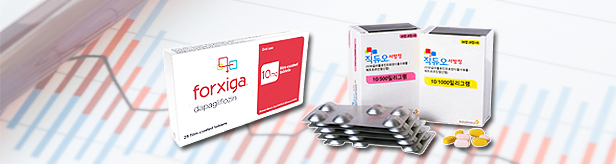
- Generic versions of ‘Forxiga (dapagliflozin)’ have increased their share in the market to 30% in half a year since the original Forxiga’s patent expiry. Since April of last year, 63 companies have been fiercely competing in the market after concurrently releasing their respective generic versions, and Boryung Pharmaceutical, Hanmi Pharm, Aju Pharm, Kyung Dong Pharma, and Daewon Pharmaceutical have recorded cumulative prescriptions worth more than KRW 1 billion in Q2 and Q3. On the other hand, 50 (79%) of the 63 companies that released generics posted cumulative prescriptions of less than KRW 300 million. Forxiga market increases from KRW 24.9 bil to KRW 35.8 bil…share of generic drugs increase to 30% According to the market research institution UBIST on the 21st, the volume of outpatient prescriptions for dapagliflozin single-agent drug and metformin combinations as of Q3 amounted to KRW 35.8 billion. This is a 44% increase in one year compared to KRW 24.9 billion it had made in Q3 last year. The analysis is that the large number of generics that joined the market drove the market expansion. The combined prescription performance of Forxiga and Xigduo generics in Q3 amounted to KRW 10.6 billion. Their share reached 30%. In just half a year after the generic drugs entered in bulk, their market share has increased to 30%. The generic companies have poured out products since Foxiga’s patent expiry in April. A total of 90 companies have received approval for their generic versions of Forxiga and Xigduo, 63 of which have released their products. The generic drugs have rapidly expanded their share in the market following their release. In Q2 last year, about 60 companies accounted for 18% of the market share with a combined prescription amount of KRW 5.9 billion. The companies then increased their market share to 30% in 3 months. Quarterly presriptions of Forxiga and Xigduo In particular, the penetration of generic drugs in the single-agent market is fast. In Q3, the original Forxiga recorded prescription sales of KRW 13.7 billion and generic drugs of KRW 6.8 billion in cumulative sales. The market share is around 33%. Generics accounted for one-third of the market within half a year of launch. In the case of combination drugs, original drugs recorded KRW 11.6 billion and generic drugs recorded KRW 3.8 billion. The proportion of market share is 75% to 25%. #SB Boryung and Hanmi’s cumulative prescriptions account for over KRW 2 billion... 50 out of 63 places earn less than KRW 300 million Amid fierce competition between generic companies, Boryung and Hanmi Pharmaceuticals achieved cumulative sales of more than KRW 2 billion. Boryung recorded KRW 2.3 billion in Q2 and Q3 with its single-agent drug Trudapa and its Trudapa+metformin combination TrudapaM. Hanmi Pharm recorded prescription sales of KRW 2.1 billion with its Dapalon and Dapalon Duo. Aju Pharm, Kyung Dong Pharma, and Daewon Pharmaceutical also recorded prescriptions of over KRW 1 billion in Q2 and Q3 combined. Aju posted sales of KRW 1.4 billion, Kyung Dong Pharma KRW 1.3 billion, and Daewon Pharmaceutical KRW 1.1 billion. However, with so many companies entering the competition at the same time, most companies showed performance that was below expectations. Among the 64 companies that released their respective products, 50 companies' cumulative prescription performance in Q2 and Q3 was less than KRW 300 million. This means that 4 out of 5 (79%) distributors of Forxiga generics are having difficulties in this market. The average prescription amount per generic company in Q2 and Q3 only amounted to KRW 260 million. Original Forxiga and Xigduo fare well despite generic entry…prescriptions rise 2% YoY The original Forxiga and Xigduo have also achieved not bad results. Rather, the total prescriptions for the two products combined amounted to KRW 25.3 billion, up 2% YoY. Forxiga recorded prescription sales of KRW 13.7 billion in Q3. Compared to Q3 last year (KRW 13.1 billion), prescriptions increased by 4%. In the case of Xigduo, prescriptions amounted to KRW 11.6 billion. No significant change has been made compared to Q3 last year (KRW 11.7 billion). Industry evaluation is that the original drugs are faring well considering the aggressive expansion of generic drugs in the market. AstraZeneca, the company that manufactured the original drug, had postponed the drug price reduction that was applied following the release of generics through administrative litigation. AstraZeneca filed an administrative suit against the Ministry of Health and Welfare's ex officio adjustment of insurance ceiling prices because Forxiga’s indications are not only for diabetes but also for heart failure. At the same time, an application for suspension of execution was filed to postpone the disposition until the conclusion of the main lawsuit. The court accepted this request, and the drug price cut for Forxiga and Xigduo was postponed until February of next year.
- Company
- Reimb pricing negotiations for Luxturna start in KOR
- by Eo, Yun-Ho Oct 23, 2023 05:14am
- The one-shot retinal dystrophy treatment ‘Luxturna’ has entered its last stage to reimbrursement in Korea. According to industry sources, Novartis Korea recently entered drug pricing negotiations for its Inherited Retinal Dystrophy (IRD) treatment Luxturna (voretigene neparvovec) with the National Health Insurance Service. Luxturna passed the Health Insurance Review and Assessment Service’s Drug Reimbursement Evaluation Committee review on September 7th. The company had applied for reimbursement of its drug in September 2021, but no progress had been made at the time. In March, Luxturna failed to pass the Drug Reimbursement Evaluation Committee review and set reimbursement standards. The company had supplemented and reapplied for the drug’s reimbursement, thanks to which the company was able to start reimbursement negotiations. The government and company had been unable to reach an agreement in Luxturna's evaluation process due to differences in opinion regarding the terms of the Risk Sharing Agreement (RSA) (refund type, etc.). In this situation, Novartis has submitted supplementary data to apply again for reimbursement, and both the government and pharmaceutical companies have shown a strong will to reimburse the drug in Korea. Therefore, it remains to be seen whether the drug price negotiations can be completed. By replacing the defective or defective RPE65 gene - one of the causes of IRD - with a normal gene, Luxturna restores the visual function of an IRD patient with a single administration. In other words, the drug provides a fundamental cure for IRD. In the US, the drug was granted a Breakthrough Therapy Designation by the FDA in 2014, the drug was approved as an orphan drug in 2016, then was granted Priority Review and a Fast-Track designation in 2017. Meanwhile, the efficacy of Luxturna was demonstrated through a Phase III trial that was conducted on IRD patients with confirmed biallelic RPE65 mutations. Study results showed that the group of patients that received Luxturna demonstrated statistically significant improvements in their functional vision compared to the control group at one year of treatment. Using the mean score of the multi-luminance mobility test (MLMT), which evaluates the ability to complete the obstacle course at low light levels by recreating the daily walking environment, as the primary endpoint at one year of treatment, the MLMT score change in the Luxturna treatment group was 1.8 points, 1.6 points higher than the 0.2 points in the control group.
- Company
- The DPP4i+SGLT2i diabetes combination drug market
- by Kim, Jin-Gu Oct 23, 2023 05:14am
- Qtern>Zemidapa> Esgliteo, Sugadapa product photo (clockwise from top left) The market for diabetes two-drug combination drugs that combine DPP-4 inhibitors and SGLT-2 inhibitors appears to be growing slowly despite the expansion of combination benefits at the beginning of the year. Since last May, two-ingredient combination drugs have appeared on the market one after another, but the cumulative prescriptions for related products in the five months until last September amounted to only 3.6 billion won. The pharmaceutical industry is paying attention to the possibility that the market will expand, focusing on generic drugs, as the combination drug of dapagliflozin + sitagliptin has been released since the Januvia patent expired in September. The cumulative prescription amount for 5 months: Qtern 1.1 billion won > Zemidapa 1 billion won > Esgliteo 800 million won. According to UBIST, a pharmaceutical market research firm, on the 23rd, the cumulative prescription amount for the two-drug combination of DPP-4 inhibitor and SGLT-2 inhibitor is 3.6 billion won. This market was formed last May with the launch of LG Chemical's Zemidapa, AstraZeneca's Qtern, Boehringer Ingelheim's Esgliteo, MSD's Stegluzan, and Chong Kun Dang's Exiglu-S. In June, Donga ST Sugadapa joined. These are all companies that possess original drugs in the DPP-4 inhibitor series. They began releasing related products last April when the health authorities expanded the combination coverage of diabetes treatments to the 'DPP-4 inhibitor + SGLT-2 inhibitor + Metformin' triple therapy. At that time, the patent for Forxiga, an SGLT-2 inhibitor type diabetes treatment, expired. They developed and released a combination drug by combining their original DPP-4 inhibitor drug with Dapagliflozin or their own SLGT-2 inhibitor drug. In the case of Chong Kun Dang, as it was about to acquire the domestic distribution rights to Januvia from MSD, it was able to release a combination drug of sitagliptin and Dapagliflozin before Januvia's patent expired. Despite the expansion of concurrent benefits, the related market appears to be growing slowly. By month, it is 300 million won in May, 400 million won in June, 600 million won in July, 900 million won in August, and 1.3 billion won in September. Based on the cumulative prescription amount, AstraZeneca Qtern is the highest at 1.1 billion won, followed by LG Chem's Zemidapa (1 billion won), Boehringer Ingelheim's Esgliteo ( 800 million won), Chong Kun Dang's 'Exiglu-S' ( 300 million won), and Dong-A ST's Sugadapa (200 million won ), etc. After Januvia’s patent expires in September, generics enter the market… Will there be a turnaround after the fourth quarter? In the pharmaceutical industry, as DPP-4 inhibitors and SGLT-2 inhibitors have shown high prescription performance in the existing diabetes treatment market, predictions have been raised that combination drugs combining the two ingredients will also rapidly expand the market size. Looking only at prescription performance through the third quarter, it is evaluated that the performance is somewhat below expectations. In fact, the prescription performance of dapagliflozin expanded very rapidly during this period. In the case of dapagliflozin single drug, prescription sales amounted to 20.5 billion won in the third quarter of this year. Compared to the third quarter of last year, it increased by 47% in one year. The price of the Dapagliflozin + Metformin combination increased by 31% from 11.7 billion won to 15.3 billion won during the same period. The key is the prescription performance after the fourth quarter when many combination drugs of dapagliflozin and sitagliptin will be released. This is because, with the expiration of Januvia's patent last month, combination drugs combining the two ingredients are entering the market one after another. According to the Ministry of Food and Drug Safety, to date, 89 pharmaceutical companies have received approval for two-ingredient combination drugs. Among these, 14 pharmaceutical companies released products last September, excluding Chong Kun Dang, which holds the distribution rights to Januvia. Many of the remaining 80 pharmaceutical companies are expected to release products after the fourth quarter.
- Company
- LG Chem-BR Pharm signs MOU for HP Vitaran in CHN
- by Lee, Seok-Jun Oct 20, 2023 05:31am
- On the 19th, LG Chem announced it had signed a Memorandum of understanding (MOU) with BR Pharm, a regenerative medicine technology research and manufacturing company, for the development and approval of its PN (polynucleotide) skin booster 'HP Vitaran' in China. BR Pharm's 'Vitaran', which LG Chem introduced to the Korean market in September this year, is a PN skin booster medical device created from purified DNA extracted from the reproductive cells of salmon fish. PN suppresses cytokines that cause skin inflammation and promotes skin tissue regeneration by proliferating fibroblasts. In a clinical trial for 'Vitaran Eye' that involved 250 Koreans, the treatment significantly improved the wrinkles around the corners of the eyes. Hye-ja Kim, Vice President of LG Chem (head of the aesthetics division), said, "We are focusing on expanding market influence through direct sales in China. For this, we have established an aesthetics sales corporation in China in 2021. We seek to create differentiated customer value in China’s aesthetics market through this reinforced partnership with BR Pharm.” Seok-Sun Kim, CEO of BR Pharm, said, “We will accelerate our entry into the Chinese market based on the synergy between the company’s manufacturing competitiveness and LG Chem’s Chinese aesthetic business capabilities.”
- Company
- Gilead’s TNBC drug Trodelvy is released in KOR
- by Son, Hyung-Min Oct 20, 2023 05:31am
- Gilead Sciences Korea announced on the 18th that it has launched its metastatic triple-negative breast cancer drug ‘Trodelvy (sacituzumab govitecan)’ in Korea. Until now, Trodelvy has been supplied through the Korea Orphan & Essential Drug Center, but from the 18th, Gilead will supply it domestically, and patients will be able to use it with prescriptions at hospitals. Trodelvy, a Trop-2 targeting antibody-drug conjugate (ADC), consists of a monoclonal antibody that binds to the cell surface antigen Trop-2 and a TOP1 inhibitor payload ‘SN-38’ that destroys cancer cells. By targeting only Trop-2, which is highly expressed in various types of cancers, including more than 85% of breast cancers, the cytotoxic drug is delivered with minimal impact on normal cells. Trodelvy was approved by the Ministry of Food and Drug Safety in May for the treatment of adult patients with unresectable locally advanced or metastatic triple-negative breast cancer (mTNBC) who have received two or more prior systemic therapies, at least one of them for metastatic disease. Excluding cytotoxic anticancer drugs, Trodelvy is the only treatment approved by the MFDS for the entire patient population, regardless of genetic mutation or biomarker, as a second-line or higher treatment for patients with mTNBC. The National Comprehensive Cancer Network (NCCN) breast cancer treatment guidelines recommend Trodelvy as Category 1 for the second-line or higher lines of treatment of adult patients with metastatic triple-negative breast cancer. Jae-yeon Choi, General Manager of Gilead Sciences Korea, said, “We are pleased to provide Trodelvy, which has been shown to significantly improve survival in patients with metastatic triple-negative breast cancer, as a new treatment option for those who have been long waiting for an innovative treatment option. We will continue to protect the daily lives of our cancer patients in Korea, including those with triple-negative breast cancer, and strive to not only supply innovative treatments but to also increase disease awareness and improve the treatment environment.” Triple-negative breast cancer is a subtype of breast cancer that is clinically negative for the expression of estrogen and progesterone receptors (ER/PR) and HER2. It is known to be the most aggressive among breast cancers. It also has a poor prognosis due to its high risk of metastasis and recurrence compared to other subtypes and high risk of metastasis to the brain (30%) or lungs (40%). Its five-year survival rate is only 12%, compared to the 30% in other breast cancer types.
- Company
- War between the U.S. and Russia spreads Middle East risk
- by Kim, Jin-Gu Oct 19, 2023 05:29am
- Amid bloody conflicts continuing around the world, it was found that there was no direct impact on pharmaceutical export performance. The analysis is that this is because the proportion of pharmaceutical exports to countries in conflict is very small in the first place. However, it is predicted that if the conflict spreads to nearby areas due to the worsening local situation, it will have a significant impact on pharmaceutical exports. The share of pharmaceutical exports to Russia and Ukraine is around 0.8%. According to the Korea Customs Service on the 18th, pharmaceutical exports to Russia and Ukraine as of the third quarter of this year amounted to $33.22 million (about 44.9 billion won). It decreased by 16.1% compared to the same period last year. Last year, $39.61 million was exported through the third quarter. Although the decrease is relatively large, it is analyzed that it did not have a significant impact on Korea's overall pharmaceutical export performance. This is because the two countries account for a very small proportion of the total pharmaceutical export performance in the first place. Total cumulative pharmaceutical exports in the third quarter amounted to $4,255.12 million. Among these, Russia and Ukraine account for only 0.8%. Russia is 0.6% and Ukraine is 0.2%. The share of pharmaceutical exports to these two countries has consistently remained below 1%. The decline in vaccine exports to Australia and Taiwan took a direct hit rather than the Russo-U.S. war. By the third quarter, Korea's total pharmaceutical export amount was $4,255.12 million, a 13.8% decrease from $4,936.4 million in the same period last year. Analysis also suggests that it is difficult to interpret this as a direct effect of the war between Russia and Ukraine. The decline in overall pharmaceutical exports this year is largely due to the sharp decline in the supply of coronavirus vaccines to Australia and Taiwan. In fact, by the third quarter, exports to Australia had decreased by 92.7% from $428.99 million last year to 31.1 billion won this year. In the case of Taiwan, it decreased by 83.3% from $301.04 million to $5.03 million during the same period. In the case of Australia, it accounted for 8.7% of total exports until the third quarter of last year, but this year it shrunk to 0.7%. Last year, it had the fourth largest export volume after the United States, Germany, and the Turkic Republic, but this year it fell to 16th place. The proportion of exports to Taiwan also decreased from 6.1% to 1.2%. In 2021 and 2022, the Moderna vaccine produced on consignment by Samsung BioLogics has been exported to Australia as a vaccine. 10% of exports to the Middle East... Watch to see if the Israeli conflict will spread to nearby areas In this extension, the prevailing view is that the recent Israeli conflict will not have a direct impact on Korea's pharmaceutical exports. This is because pharmaceutical exports to Israel amounted to $3.84 million as of the third quarter of this year or only 0.2% of the total. There is also the prospect that if the conflict spreads to neighboring Middle Eastern countries, it will have a significant impact. As of the third quarter, pharmaceuticals exported from Korea to the Middle East totaled $408.98 million, accounting for about 9.6% of the total. Among these, Turkiye accounts for the majority (71.4%) with $291.92 million, and Saudi Arabia, Jordan, the United Arab Emirates, Egypt, and Iraq also account for a significant portion, at around $20 million.
- Company
- Korean new drug cash cows bring in KRW 100 bil in 3 quarters
- by Chon, Seung-Hyun Oct 19, 2023 05:29am
- Domestically developed drugs are continuing to show strong performance in high ranks in Korea’s outpatient prescriptions market. Prescriptions of Hanmi Pharm’s combination new drug Rosuzet and HK Inno.N's K-CAB have exceeded KRW 100 billion in just 3 quarters. Daewoong Bio's brain function enhancer Gliatamin also performed well. According to the market research institution UBIST on the 19th, Viatris’s hyperlipidemia treatment, Lipitor, recorded the highest cumulative outpatient prescription amount of KRW 146.8 billion in Q3 this year. Although it decreased by 2.6% compared to the same period last year, it maintained its leading position. Lipitor, which was introduced to the domestic market in 1999, has been in the market for over 20 years. Despite the fierce competition with the entry of around 100 generics after patent expiry, the original Lipitor has been boasting its strong influence over the prescription drug market. Although it continued to exert a strong influence in the prescription drug market despite the entry of its generics after patent expiry, the growth seems to have slowed down recently. Lipitor had posted the most outpatient prescription sales for 5 consecutive years from 2018 to last year. Rosuzet and K-Cap, which were each developed by the domestic companies Hanmi Pharmaceutical and HK InnoN, continued on their high march at the forefront of the market, raising more than KRW 100 billion in just 3 quarters. Rosuzet ranked second overall, recording KRW 130.9 billion in cumulative prescriptions as of last September, a 19.5% increase from the previous year. Rosuzet, which was launched at the end of 2015, is a combination drug for hyperlipidemia consisting of 2 ingredients, rosuvastatin and ezetimibe. Rosuzet is experiencing rapid growth thanks to its market preoccupation strategy and the growing popularity of statin and ezetimibe combination drugs. The preference for the statin/ezetimibe combination drug has been increasing because the combination is excellent for lowering low-density low-protein cholesterol (LDL-C) and cost costs less than taking the two drugs separately. K-CAB's cumulative prescription performance in Q3 was KRW 114.1 billion, up 18.7% from the previous year. K-CAB’s prescription amount in Q3 was KRW 40 billion, up 20.6% YoY. The drug has been recording unceasing growth, rising 88.1% over the past 3 years from KRW 21.3 billion in Q3 2020. K-CAB is continuing to grow rapidly due to its advantages of showing an effect faster than existing proton pump inhibitor (PPI) products and the fact that it can be taken regardless of meal intake. K-CAB’s prescription volume exceeded KRW 100 billion in only the third year since its launch in 2021 and exceeded 100 billion won for 2 consecutive years until last year. This year, it already saved its spot in the ‘KRW 100 billion prescription club’. In addition to being approved for the treatment of erosive and non-erosive gastroesophageal reflux disease, and gastric ulcer, K-CAB acquired 5 additional indications, including as an antibiotic combination therapy for the eradication of Helicobacter pylori in patients with peptic ulcer and/or chronic atrophic gastritis, and as maintenance therapy after treatment of GERD. Initially, the drug was granted reimbursement for the GERD and gastric ulcer indication and was additionally granted reimbursement for the other indications. Therefore, its growth rate is expected to continue only increase further. Among domestically developed new drugs, Daewoong Bio’s brain function enhancer Gliatamin’s prescriptions rose 23.5% YoY to record KRW 115 billion to rank third place. Gliatamin’s influence in the prescription market increased despite the difficulties faced due to narrowed reimbursement standards, controversy over its efficacy, and the order to start negotiations on refunded reimbursement claims amount. Chong Kun Dang Gliatirin, which contains choline alfoscerate, also continued its high march, recording a 12.2% YoY rise in prescription amount. Organon Korea's hyperlipidemia combination drug Atozet also made the top ranks with cumulative prescriptions in Q3 of KRW 74.9 billion, up 11.9% YoY. Atozet is a combination drug that combines atorvastatin and ezetimibe. Starting in 2021, more than 100 domestic companies entered the atorvastatin and ezetimibe markets with their generics, Atozet continued to show a solid rise in sales. The drug is being sold by Chong Kun Dang in Korea.
- Company
- Global 1 trillion won project
- by Kim, Jin-Gu Oct 19, 2023 05:29am
- Domestically developed new drugs in the P-CAB (Potassium-competitive gastric acid secretion inhibitor) series are accelerating their overseas expansion. HK inno.N K-CAB and Daewoong Pharmaceutical Fexuclue both set a global sales goal of 1 trillion won within five years. To this end, K-CAB has obtained product approval in 7 countries. In addition, the company announced expansion into a total of 35 countries, including technology and finished product export contracts. Fexuclue also obtained product approvals in four countries and signed technology and finished product export contracts with a total of 15 countries. According to the pharmaceutical industry on the 19th, Daewoong Pharmaceutical recently received product approval for Fexuclue from Mexican health authorities. As a result, the number of countries for which Fexuclue has obtained product approval has expanded to four countries. Daewoong Pharmaceutical received product approval in the Philippines in November of last year, followed by Ecuador and Chile in February and March of this year. The analysis is that the company is accelerating its overseas expansion in the second year of its domestic launch. Daewoong Pharmaceutical launched Fexuclue in Korea in July last year. Since then, the company has quickly begun targeting overseas markets by submitting product approval applications to a total of 12 countries. Among these, formal approval has been obtained in four countries, and approval is being reviewed in eight countries, including China, Vietnam, Indonesia, Thailand, Saudi Arabia, Brazil, Colombia, and Peru. If adding the countries with which technology and finished product export contracts have been signed, Fexuclue is expected to enter a total of 15 countries. The total contract size is estimated to be more than 700 billion won. Daewoong Pharmaceutical signed a technology export and finished product export contract worth $44.42 million with Mexico's 'Moksha8' in January 2020. In August, a contract worth $72.58 million was signed with Brazil's EMS. In March 2021, a contract worth $339.55 million was signed with China's 'Shanghai Haini Pharmaceutical'. In June of the same year, a development and commercialization license agreement worth $430 million was signed with Neurogastrx in the United States and Canada. However, this contract was terminated in June of this year. Daewoong Pharmaceutical announced that it has begun negotiations with multiple multinational pharmaceutical companies to enter big markets not only in North America but also in Europe and Japan. In addition, a contract was signed with 'Pharma Consulting Group (BIOPAS)' to transfer local licensing and sales rights in four Central and South American countries, and with 'Aghrass Healthcare Limited' to supply Fexuclue to six Middle Eastern countries, including Saudi Arabia, for the next 10 years. contracts were signed respectively. Daewoong Pharmaceutical plans to expand the number of countries applying for Fexuclue approval to 30 countries by 2025. The goal was to enter a total of 100 countries by 2027, including technology and finished product export contracts. Daewoong Pharmaceutical's plan is to achieve global sales of 1 trillion won through this. K-CAB launches products in 7 countries, exports contracts with 35 countries K-CAB, which entered the global market ahead of Fexuclue, also set its global sales target at 1 trillion won. Prior to this, the goal was to enter a total of 100 countries by 2028. The product has already been released in seven countries with product approval. Since April 2022, HK Innoen has released products one after another in China, the Philippines, Indonesia, Singapore, Mongolia, Mexico, and Peru. What is attracting attention is the Chinese market. China is known as the world's largest anti-ulcer drug market. According to IQVIA, a pharmaceutical market research firm, the size of China's anti-ulcer drug market last year amounted to approximately 3.3 trillion won. HK Innoen released a non-sales service under the name ‘泰欣赞’ in April last year. In March of this year, this product was applied for insurance benefits. Product approval has been applied for in Vietnam, Malaysia, and Chile. HK inno.N plans to apply for product approval in three to four additional countries in Central and South America within this year. HK inno.N has signed technology and finished product export contracts with a total of 35 countries, including this one. In October 2015, a technology transfer contract worth a total of $95 million was signed with Chinese pharmaceutical company Luoxin. Then, in February 2019, a contract was signed with Carnot, a Latin American pharmaceutical company, to export finished products to 17 Central and South American countries, including Mexico and Argentina. The total contract size is $84 million. Since September of the same year, contracts have been signed to export finished products to six Southeast Asian countries. In December 2021, a technology transfer agreement in North America was signed with the US pharmaceutical company Braintree. The contract size is $540 million, and phase 3 clinical trials are being conducted locally starting in September 2022. Last year, technology and finished product export contracts continued. In April last year, a contract was signed with Indian pharmaceutical company Dr.Reddy's to supply finished products to India, South Africa, Russia, Kazakhstan, Uzbekistan, Ukraine, and Belarus. In December of the same year, a technology transfer agreement was signed with Eurofarma to enter the Brazilian market. The total contract size is undisclosed.

- Company
- Drug exports reduced by 14%... COVID-19 effect vanished
- by Kim, Jin-Gu Oct 18, 2023 05:48am
- Cumulative pharmaceutical exports in Q3 this year have fallen 13.8% YoY to a record KRW 5.8 trillion. With the global transition to a COVID-19 endemic, exports of COVID-19 vaccines fell sharply, leading to a decline in exports. According to the Korea Customs Service on the 17th, the cumulative pharmaceutical exports in Q3 this year amounted to USD 4.255 billion (about KRW 5.8 trillion). Compared to the USD 4.936 billion exported during the same period last year, the amount decreased by 13.8%. When expanding the period, the amount has been on a decline for 2 consecutive years. In Q3 2021, cumulative total exports recorded USD 5.760 billion. Korea has been enjoying a sales spike during the COVID-19 crisis that arose in 2020. In particular, in 2021 and 2022, the export performance of COVID-19 vaccines sharply increased. The Moderna vaccine produced on consignment by Samsung Biologics achieved high performance as it was exported to countries including Australia and Taiwan. Exports of homegrown domestic vaccines were around USD 173 million by 2020, but the amount tripled in one year to USD 519 million in 2021. In 2022, the amount further increased to USD 941 million. However, after the global COVID-19 pandemic turned into an endemic earlier this year, exports of COVID-19 vaccines also plummeted. In fact, domestic vaccine exports in 1H this year amounted to USD 167 million, down to 1/5 of the USD 778 million it had posted in 2022. Analysis suggests that domestic pharmaceutical export sales are returning to the level in the previous years. When comparing the numbers to Q3 2019, before the COVID-19 outbreak, the amount increased by 60.7% from USD 2.648 billion in 4 years. Additionally, exports of pharmaceuticals other than vaccines have been increasing compared to the same period last year. The same goes for imports as well. During the prolonged COVID-19 crisis, imports with the import of Pfizer and Moderna vaccines, but the amount has also stabilized somewhat this year. Korea's Q3 cumulative pharmaceutical imports increased 1.5 times in 3 years, from USD 4.840 billion in 2019 to USD 5.537 billion in 2020, USD 6.879 billion in 2021, then USD 7.482 billion in 2022. However, in Q3 of this year, it recorded a cumulative USD 7.155 billion, which is a decrease from the same period of the previous year. This year is the first time that cumulative pharmaceutical imports have decreased YoY in Q3.
