
- LOGIN
- MemberShip
- 2026-05-06 16:56:06
- Company
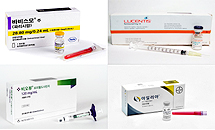
- Eylea continues to lead AMD mkt despite new competition
- by Son, Hyung-Min Feb 26, 2024 05:24am
- The entry of new drugs in the macular degeneration treatment market made little impact on Eylea’s sales. Eylea continued to top the macular degeneration treatment market last year, posting sales of KRW 96.7 billion. The Eylea biosimilars Vabysmo and Lucentis, which were released last year, have shown little presence in the market yet. According to the market research institution IQVIA on Thursday, Eylea’s revenue last year was KRW 96.7 billion, up 20.2% from the KRW 80.4 billion it had made in 2022. Eylea is a vascular endothelial growth factor-A (VEGF-A) inhibitor for macular degeneration that was developed by Bayer and Regeneron. The drug was approved in Korea in 2013 and entered the market in earnest the following year after receiving reimbursement approval. Although Eylea’s sales were lower than that of its competitor Lucentis until 2015, the market demographic changed in Q3 2016. Since then, Eylea’s sales have continued to grow, reaching KRW 46.8 billion in 2019, and then KRW 60.3 billion in 2020. In 2022, it surpassed the KRW 80 billion mark and reached the KRW 100 billion mark the last year. However, Eylea now has to fend off an onslaught of biosimilar competitors due to the expiration of its patent last month. Celltrion, Samsung Bioepis, and Sam Chun Dang Pharm have all made a bid with their Eylea biosimilars. The original developers, Bayer and Regeneron, are preparing to develop a higher-dose version of Eylea in preparation for the entry of biosimilars. The companies plan to launch a higher-dose formulation to increase the dosing interval. The two companies plan to seek approval for the higher-dose Eylea for all of their approved indications, including diabetic macular edema (DME), wet age-related macular degeneration (wAMD), and retinal vein occlusion. Novartis’s Lucentis posted sales of KRW19.8 billion last year, down 20.2% from the previous year. Lucentis’s sales have declined steadily since 2020, when it generated KRW 37 billion in sales. In 2022, the company reported sales of KRW 29.4 billion, and even less, to record sales of less than KRW 20 billion last year. Lucentis uses the same mechanism of action to inhibit VEGF-A as Eylea but has a shorter dosing interval. Lucentis must be administered once a month, compared to Eylea, which can be administered once every two months. Eylea’s efficacy had demonstrated superior vision improvement to Lucentis in patients with severe vision loss due to diabetic macular edema. Therefore, Novartis plans to focus on marketing its next macular degeneration drug, Beovu. Like Eylea, Beovu can be dosed once every 2 months. Beovu, which was released in Korea in Q3 2021, generated sales of KRW 8.6 billion in the same year. Since then, its sales have continued to grow, generating sales of KRW 16.5 billion in 2022 and KRW 21.3 billion last year. Total sales of new drugs and biosimilars that entered the market last year amount to KRW 19 billion The Lucentis biosimilars and Roche's Vabysmo, which were newly launched last year, did not make much of an impact in the market the past year. Chong Kun Dang’s LucenBS, which was the first Lucentis biosimilar to enter the market, sold KRW 500 million, and Amelivu, which is comarketed by Samsung Bioepis and Samil Pharm, sold KRW 800 million last year. Chong Kun Dang sought to turn the atmosphere around with a price cut. The company cut the price of Lucentis from KRW 300,000 to KRW 150,000 this month. The original Lucentis costs KRW 580,000 per vial and Samsung Bioepis' Amelivu costs KRW 350,000 per vial. Because its competitor has significantly reduced the price of its drug, attention is rising to what Samsung Bioepis will do in the next as well. Vabysmo, which had gained great attention even before its launch, generated KRW 600 million in sales last year. However, the real competition is expected to start this year, as Vabysmo was granted reimbursement in October last year. Vabysmo is a macular degeneration treatment that was developed by Roche. The drug not only inhibits VEGF but also blocks the angiopoietin-2 (Ang-2) pathway to inhibit neovascularization. Blocking both pathways independently has been shown to be more effective than blocking VEGF alone in reducing inflammation, leakage, and abnormal blood vessel growth. In particular, in clinical trials, Vabysmo improved visual acuity at a level non-inferior to that of Eylea in the TENAYA and LUCERNE trials that compared its safety and efficacy with Eylea. Its duration of response lasted 24 months. In other words, Vabysmo achieved comparable efficacy to other treatments with once every 4 months dosing compared to the once every 1-2 month dosing required for other treatments. In the global market, Vabysmo’s sales are already closing in on that of Eylea. Vabysmo generated approximately USD 3.56 trillion in global sales last year, more than half of Eylea’s $7.8 trillion, in just 2 years after its launch.
- Company
- Kay Bae appointed as KRPIA chair, also overseeing NZ, AUS
- by Eo, Yun-Ho Feb 26, 2024 05:24am
- Kay Bae, KRPIA Chair Kay Bae (53), Sanofi-Aventis Korea Country Lead, literally has become the ‘center’ of the pharmaceutical company. Bae, who was recently appointed as a Country Lead to manage subsidiaries including Korea, New Zealand, and Australia of the Sanofi Group, is appointed as a new Chair of the Korean Research-based Pharmaceutical Industry Association (KRPIA). As the head of the organization representing Korean multinational companies and big pharma Sanofi’s major Asian-Pacific countries, Bae emerged as a key player in multifaceted communication. Bae’s KRPIA appointment was a surprise because Bae declined an offer for the position multiple times when the KRPIA chair position became vacant. Bae’s interests and Korean-like modesty may likely have influenced her previous decisions, but the analysis suggests that Bae may have declined offers previously because of her commitment to her primary appointment (Sanofi-Aventis Korea Country Lead). This time, Bae may have been in a situation where she could no longer decline KRPIA’s offer. KRPIA’s board of directors (BOD) list shows that new members have joined the board following many CEO transfers within the multinational pharmaceutical companies in one to two years. Rumor has it that Sang Kyung Noh (61), Amgen Korea’s CEO, was the only other candidate besides the previous Chairman Oh Dong-Wook (54), Pfizer Korea’s CEO, for the head of KRPIA. The KRPIA board of directors 2024 (Member companies in alphabetical order): Soyoung Kang of AbbVie Korea, Sang Kyung Noh of Amgen Korea, Junil Kim of Astellas Pharma Korea, JinA Lee of Bayer Korea, Hye Young Lee of BMS Pharmaceutical Korea, Jaeyeon Choi of Gilead Sciences Korea, Maurizio Borgatta of GSK Korea. Christoph Hamann of Merck Korea, Ji-young Sohn of Moderna Korea, Albert Kim of MSD Korea, Jae (Byungjae) Yoo of Novartis Korea, Dong-Wook Oh of Pfizer Korea, Kay Bae of Sanofi-aventis Korea.Although her business responsibilities have expanded, Bae has taken on the role of the chair. Sanofi has recently undergone a restructuring that combines Korean, New Zealand, and Australian corporations. In addition, Sanofi will integrate business divisions previously operated independently into a unified business system. In other words, Bae will have greater decision-making power and expanded roles within the company. There will be many overseas business trips as well. There are concerns regarding whether Bae can commit to the organization since she has additional business in the busiest period. On the other hand, Bae is expected to do well, considering her role as a control tower. In an era of high drug prices, KRPIA works diligently for drug pricing of new drugs. The KRPIA plays a critical role in the organization, suggesting reform in drug pricing system and communicating with the government. Amid this situation, Bae will be responsible for determining the core message of the organization representing pharmaceutical companies in Korea while also overseeing New Zealand and Australia, which are Korea’s drug pricing reference counties. After a long period of vacancy, the primary positions of KRPIA are now filled, indicating vitality. New wheels are turning. It is to be watched whether the executive team under Bae's leadership can achieve more than just protecting drug prices. They need to negotiate with health authorities using sound reasoning and judgement, resulting in an agreement that prioritizes 'improving patient accessibility.' “Global pharmaceutical companies face a rapid healthcare and medical atmosphere. Based on KRPIA’s patient-centered vision, we will engage in various efforts to provide patients in Korea with rapid and broadened treatment benefits of innovative new drugs,” Bae stated as she was appointed as KRPIA’s chair. Meanwhile, Bae became the longest-serving CEO of a multinational company last year when Kim Dae-jung (64), former CEO of Daiichi Sankyo, retired. Bae was appointed as the CEO of Genzyme Korea in 2010 and has served as the Country Lead of the Sanofi-Aventis Korea and Sanofi integration management committee (then Sanofi-Aventis, Sanofi Pasteur, Genzyme, Merial) for over ten years since 2013. Bae represents a female CEO in a multinational pharmaceutical company. Bae started her business career at Novartis and later joined Genzyme. Bae led the integration process when Genzyme was fully acquired by Sanofi in 2019.
- Company
- New Alzheimer’s drug Leqembi closer to drug marketing
- by Eo, Yun-Ho Feb 26, 2024 05:24am
- Leqembi (lecanemab), a drug jointly developed by Eisai and Biogen. A new Alzheimer’s treatment ‘Leqembi’ is expected to receive approval for marketing in Korea. The Ministry of Food and Drug Safety (MFDS) is conducting a final assessment of Leqembi (lecanemab), a drug jointly developed by Eisai and Biogen, for marketing approval. Leqembi’s application for approval was submitted last year, indicating an expected approval date in the first half of the year. The drug will be indicated as a treatment of ‘Mild cognitive impairment (MCI) due to Alzheimer’s disease (AD) and mild AD dementia.’ Leqembi has been shown to reduce the rate of disease progression and to slow cognitive and functional decline through selectively binding to β-amyloid (βA), which is known as an agent that causes Alzheimer’s disease. This drug achieved statistically significant results in both the primary endpoint and secondary endpoint in the Clarity AD study. Notably, Leqembi-treatment group had reduced functional decline of the brain by 27% compared to the placebo group during the 18 months. Although Leqembi is recognized for its effectiveness in delaying dementia in the market for Amyloid-targeted therapy, the characteristic side effects associated with the treatments have remained a recurring issue. Leqembi-associated ARIA side effects refer to brain swelling and small spots of bleeding detected in magnetic resonance imaging (MRI) scans. Depending on how side effects appear, the side effects are further categorized as ‘ARIA-E,’ defined by vasogenic edema of the brain and sulcal effusion, and ‘ARIA-H,’ defined as microhemorrhage and hemosiderosis. It remains to be watched whether Leqembi can overcome side-effects associated with amyloid-targeting new drugs and make a mark in the Alzheimer’s market. Leqembi was approved in China last January, following the United States (July 2023) and Japan (September 2023).
- Company
- Alecensa prepares to solidify its lead in lung cancer mkt
- by Son, Hyung-Min Feb 23, 2024 05:49am
- Alecensa is showing a strong position in the targeted therapy market for ALK-positive lung cancer in Korea. Last year, Alecensa generated KRW 34.9 billion in sales, far outpacing the runner-up, Takeda Alunbrig's KRW 13.6 billion. As the only ALK-targeted therapy that has demonstrated efficacy in early-stage lung cancer, Alecensa is likely to continue its lead in the market for the foreseeable future. According to the market institution IQVIA on the 22nd, Alecensa sold KRW 34.9 billion last year, up 0.5% from KRW 34.7 billion in 2022. Alecensa's sales have been on a steady rise since surpassing KRW 5 billion in Q3 2019 and have posted average quarterly sales of over KRW 8 billion since 2021. Alecensa is a second-generation ALK-positive targeted therapy developed by Roche. Targeted therapies for ALK-positive cancer are classified into 3 categories: first-generation drugs like Pfizer’s Xalkori; second-generation drugs like Roche’s Alecensa and Takeda’s Alunbrig; and third-generation drugs like Pfizer’s Lorviqua. With the possibility rising for Alecensa’s use in early-stage lung cancer, the drug is expected to continue solidifying its lead in the market According to clinical data presented at last year's European Society for Medical Oncology Congress 2023 (ESMO 2023), Alecensa showed effect as adjuvant chemotherapy. In the clinical trial, Alecensa improved disease-free survival (DFS) over platinum-based chemotherapy. The Alecensa-administered group showed a 76% reduction in recurrence or death and a 78% reduction in the risk of CNS progression or death. Although Alecensa does not yet own an indication for early-stage lung cancer in Korea if it adds the indication, the drug will likely remain the market leader for some time. Takeda's Alunbrig posted sales of KRW 13.6 billion last year, up 23.6% YoY. Alunbrig's sales have been growing steadily since surpassing KRW 2 billion in Q3 2021. Alunbrig's strength is that it can be taken once daily with or without meals. In the case of Alecensa, 4 capsules need to be taken twice daily, for a total of 8 capsules per day. Also, Alunbrig is available in 3 different strengths to help patients find the right dose. Pfizer's Lorviqua generated KRW 11.7 billion in sales last year, a 216.2% increase from 2022. Lorviqua, which was released in the Korean market in Q1 2022, has posted more than KRW 3 billion in sales since Q3 2022 after a level period of KRW 200 million in sales in Q1 and Q2. Lorviqua’s sales rise started in full swing after being granted reimbursement as a second-line treatment for ALK-positive lung cancer in September 2022. Currently, Lorviqua is only available for patients who have failed with the use of Xalkori, Alunbrig, or Alecensa. Pfizer is currently seeking to expand its reimbursement to the first line. On the other hand, Pfizer's Xalkori was the only ALK-targeted therapy to see a sales decline. Xalkori generated KRW 9.9 billion in sales last year, which was a 13.1% YoY decline. After generating KRW 8 billion in sales in Q1 2019, Xalkori’s sales plummeted to KRW 4.8 billion in Q2. The decline in Xalkori sales is related to the release of second- and third-generation targeted therapies. These drugs demonstrated a higher effect with improved safety over Xalkori. Second- and third-generation targeted therapies are said to have lower drug toxicity, fewer adverse events, and better efficacy than first-generation drugs. Also, Second- and third-generation targeted therapies also have the advantage of a greater penetration rate into the central nervous system (CNS), including the brain.
- Company
- Alteogen expands license agreement with MSD
- by Kim, Jin-Gu Feb 23, 2024 05:49am
- Alteogen officially announced on the 22nd that it will receive an additional USD 20 million (approximately KRW 26.7 billion) from the multinational pharmaceutical giant MSD under the terms of their modified agreement. In June 2020, Alteogen signed a non-exclusive licensing agreement with MSD for its proprietary human hyaluronidase technology (ALT-B4). At the time, The upfront payment was USD 160 million. MSD is using the technology to develop a subcutaneous (SC) formulation of Keytruda (pembrolizumab). Alteogen explained that the original agreement had been modified into an exclusive agreement. The company will grant exclusive licensing rights to the Keytruda line of products that MSD is developing by adding ALT-B4. However, the non-exclusive agreement will continue to apply to non-KEYTRUDA development projects. As part of the modified agreement, Alteogen will receive an additional USD 20 million in payments independent of the original upfront payment. This amount represents 93% of Alteogen's consolidated sales revenue of KRW 28.8 billion last year. The additional milestone payments Alteogen could receive have also been expanded. Alteogen was previously eligible to receive up to USD 3.865 billion in milestone payments based on regulatory approval, patent extension, and cumulative net sales of the Keytruda family of subcutaneous injection formulations that are applied to the ALT-B4 technology. The modified agreement increases the maximum amount of milestones Alteogen is eligible to receive by USD 432 million to USD 4.298 billion (KRW 5.7 trillion). A condition for royalties based on commercial sales has also been added. Alteogen will receive a percentage of sales of the Keytruda product line each year as royalties even after the agreement period for the patent term, until March 2040. An official from Alteogen said, "We expect to receive the additional payment under the modified agreement on or before the 25th of next month.”
- Company
- 2 ADC drugs being discussed for reimb after Enhertu
- by Eo, Yun-Ho Feb 23, 2024 05:49am
- Trodelvy and Padcev are now being considered for follow-up discussions in the Economic Evaluation Committee. The two next-generation ADC drugs following ‘Enhertu’ draw attention as they are currently being considered reimbursement listing in South Korea. Gilead Science Korea’s Trodelvy (Sacituzumab govitecan), used to treat triple-negative breast cancer (TNBC), and Astellas Pharma Korea’s Padcev (enfortumab vedotin), used to treat bladder cancer, have cleared the Cancer Disease Review Committee of the Health Insurance Review and Assessment Service (HIRA). The drugs are now being considered for follow-up discussions in the Economic Evaluation Committee. The two drugs are known as antibody-drug conjugates (ADCs) and have demonstrated improved benefits compared to existing therapies in clinical trials. However, determining their domestic prices is challenging due to their high pricing. ‘Enhertu (trastuzumab deruxtecan)’ set a precedent as ADC drugs. In May of last year, Enhertu cleared the review by the Cancer Diseases Review Committee, and within eight months, it passed the Drug Reimbursement Evaluation Committee (DREC). Currently, Enhertu has entered the negotiations for drug pricing. The clearance of Enhertu by DREC may indicate positive outcomes for Trodelvy and Padcev. Considering Enhertu’s limited flexibility in price range during cost-effectiveness evaluation, DREC's approval of Enhertu this round suggests government proposed an ICER value in the mid-to-late range of 50 million won. Trodelvy and Padcev may have a higher chance of positive outcomes. Of course, the course of listing may depend on the results of their clinical evaluation and values. It will be interesting to see the outcomes for two ADC drugs awaiting review from the DREC this year after clearing the Cancer Disease Review Committee. Trodelvy is the first Trop-2 targeting ADC. It is comprised of monoclonal antibody that binds Trop-2, an antigen expressed on cell surfaces, and a TOP1 inhibitor payload ‘SN-38’ that destroys cancer cells. Trodelvy, a second-line or later therapy for patients with metastatic triple-negative breast cancer, is the only approved treatment, excluding cytotoxic chemotherapy, by the Ministry of Food and Drug Safety (MFDS) for use in the entire patient population regardless of genetic mutations or biomarkers. The National Comprehensive Cancer Network (NCCN) guidelines classify Trodelvy as Category 1 for second-line or later therapy in adult patients with metastatic triple-negative breast cancer. Padcev has a Category 1 priority recommendation in the NCCN guidelines. Padcev is a novel treatment option for urothelial cancer patients who have disease progression or relapsed following cancer immunotherapy and platinum-containing chemotherapy and are not eligible for previous standard-of-care treatment options. In March of last year, Padcev was approved in Korea as a monotherapy for patients with locally advanced or metastatic urothelial cancer who had previous experience with platinum-containing chemotherapy or PD-1 or PD-L1 inhibitors.
- Company
- Yuhan ‘confirms the safety and efficacy of its allergy drug
- by Son, Hyung-Min Feb 22, 2024 05:49am
- Yuhan Corp announced on Tuesday that the results of the Phase 1a clinical trial of its allergy drug candidate YH35324 were published in the SCI-ranked International Journal of Immunopharmacology. YH35324 is a novel anti-immunoglobulin E (Anti-IgE) class Fc fusion protein drug. Its main mechanism of action improves allergy symptoms by reducing the level of free IgE in the blood. The Phase 1a clinical trial was the first time YH35324 was administered to humans (First-In-Human (FIH)). The study was conducted from September 2021 to January 2023 in allergy medicine departments of 4 Korean university hospitals and included a total of 68 patients. The study was conducted in two parts: Part A evaluated the safety, tolerability, pharmacokinetics, and pharmacodynamics of a single dose of YH35324 in a stepwise dose escalation manner compared to placebo or omalizumab 300 mg. Part B evaluated the safety, tolerability, pharmacokinetics, and pharmacodynamics of a single dose of YH35324 or omalizumab in patients with elevated serum total IgE levels (>700 IU/mL). Results demonstrated that YH35324 was well tolerated and safe at all doses, and was pharmacokinetically dose proportional. Also, YH35324 demonstrated more potent and sustained IgE inhibitory activity compared to placebo or omalizumab on serum-free IgE, a key pharmacodynamic biomarker. The notable factor was that Part B results demonstrated an excellent safety profile and more potent and sustained serum-free IgE inhibition compared to existing therapies, even in patients with elevated serum total IgE levels (>700 IU/mL). Part A top-line results from the Phase Ia study were previously presented at the 2023 European Academy of Allergy and Clinical Immunology (EAACI) Annual Congress last year. The top-line results of Part B top-line will be presented as a poster at the American Academy of Allergy, Asthma and Immunology (AAAAI) 2024 Annual Meeting this year. Dr. Hae-Sim Park, Professor of Allergy at Ajou University Hospital, who was the corresponding author for the paper, said, “YH35324 is an anti-IgE trap (Fc fusion protein). Not only was this trial the first successfully completed multicenter trial by Korean multicenter researchers, but it also showed encouraging results. We look forward to YH35324 being developed as a new treatment for patients with allergic diseases worldwide." Yeol-Hong Kim, R&D President of Yuhan Corp, said, “We are currently conducting a Phase 1b trial to evaluate the safety, tolerability, pharmacokinetics, and pharmacodynamics of YH35324 in repeated doses in healthy individuals with atopic dermatitis or patients with mild allergies, and will soon begin evaluating YH35324 in patients with moderate-to-severe atopic dermatitis.” Yuhan Corp licensed in the technology for YH35324 from GI Innovation in July 2020. The candidate substance is currently being researched and developed in collaboration with the two companies. Its global rights outside of Japan are held by Yuhan Corp, and GI Innovation transferred the Japanese sales rights for the drug to Maruho, a leading Japanese dermatology company, in October 2023.
- Company
- Samsung Bioepis starts Global P1T for Keytruda biosimilar
- by Kim, Jin-Gu Feb 22, 2024 05:49am
- Samsung Bioepis announced today that it has initiated a global Phase I clinical trial for a biosimilar of Keytruda (pembrolizumab), the world's No. 1 selling drug. The product, which is being developed under the name SB27, is the 11th biosimilar in Samsung Bioepis' pipeline. Samsung Bioepis has recruited 135 volunteer patients with NSCLC in 4 countries, including South Korea, for the Phase I study, which will compare the pharmacokinetics, efficacy, and safety of SB27 to the original drug. Keytruda is MSD's immuno-oncology drug. After confirming the drug’s effect in multiple solid tumors, MSD has been expanding its indication to various solid tumors, including melanoma, non-small cell lung cancer, breast cancer, and gastric cancer. The drug topped the global market last year. According to MSD, Keytruda generated USD 25 billion (KRW 33.1 trillion) in sales last year, up 19% from USD 20 billion (KRW 26.7 trillion) it had posted in 2022. In Korea, Keytruda continued to lead overall sales, posting KRW 398.7 billion in sales last year. This is the 4th consecutive year that Keytruda has held the lead in the domestic pharmaceutical market, after first taking the lead in 2020 with sales of KRW155.7 billion. Il-Sun Hong, the Product Evaluation Team lead at Samsung Bioepis, said, “Based on the global clinical trial operation know-how we have accumulated so far, we will do our best to complete clinical trials promptly so that we can provide patients with more treatment options as soon as possible.” With the development of the Keytruda biosimilar, Samsung Bioepis has now expanded its biosimilar pipeline to 11 products. Currently, the company is selling 7 biosimilars in the global market and has completed clinical trials on 3 products. The 7 types currently on the market are ▲SB4(Enbrel biosimilar) ▲SB2(Remicade biosimilar) ▲SB5(Humira biosimilar) ▲SB3(Herceptin biosimilar) ▲SB8(Avastin biosimilar) ▲SB11(Lucentis biosimilar), and ▲SB12(Soliris biosimilar). The 3 others that have completed clinical trials and are awaiting commercialization are ▲SB15(Eylea biosimilar) ▲SB16(Prolia biosimilar), and ▲SB17(Stelara biosimilar).
- Company
- Pfizer’s Zavicefta, sole CRE antibiotic in KOR, gets reimb
- by Son, Hyung-Min Feb 22, 2024 05:49am
- From the left, Professor Lee Dong-gun, Professor Yoon Young-kyung, and Pfizer Korea Medical Lead Choi Heeyeon. A new antibiotic has been added to the insurance reimbursement listing a year after Zerbaxa. Zavicefta, developed by Pfizer, is the only antibiotic that can be used to treat carbapenem-resistant Enterobacteriaceae (CRE). Experts have stressed the use of this drug only when necessary because there is a growing number of patients with antibiotic resistance. Pfizer Korea hosted a press conference at JW Marriot Seoul on the 21st to commemorate the reimbursement coverage of the new antibiotic drug, Zavicefta. Zavicefta is a combination of ‘ceftazidime,’ a third-generation cephalosporins-class antibiotic, and ‘avibactam,’ used to maintain microbial clearance. Zavicefta is the only antibiotic that can treat CRE infections in Korea. It can be used for treating patients with Gram-negative infections, including CRE. Starting on February 1st, Zavicefta has been covered by reimbursement for the treatment of gram-negative infections such as carbapenem-resistant Enterobacteriaceae, according to the Ministry of Health and Welfare (MOHW) announcement. Zavicefta is covered by reimbursement under one of the following conditions: ▲Complicated intra-abdominal infections, ▲Complicated urinary tract infections, ▲Pneumonia contracted within the hospital that is unresponsive to antibiotic treatment or when there is proof of multi-drug resistant P. aeruginosa or carbapenem-resistant Enterobacteriaceae. Zabicefta demonstrated non-inferiority compared to standard therapy in phase 3 clinical trials enrolling patients with various infections. In the RECLAIM study enrolling patients with complicated intra-abdominal infection, the clinical cure rate of the Zabicefta treatment group was 82.5%, similar to the 84.9% of the meropenem treatment group. In the RECAPTURE study enrolling patients with complicated urinary infections, the clinical cure rate of the Zabicefta was 90.3%, showing non-inferiority to the 90.4% of doripenem. Furthermore, Real World Data (RWD) has demonstrated the effectiveness of Zavicefta. In a clinical study involving patients with CRE infections and immune suppression, Zabicefta showed a clinical cure rate of 64.4% in patients with complicated intra-abdominal infection, 88.3% in patients with complicated urinary tract infections such as pyelonephritis, and 68.4% in patients with pneumonia contracted within the hospital such as ventilator-related pneumonia. Based on these results, the 2022 Infectious Diseases Society of America (IDSA) guidelines recommended Zavicefta as a preferred treatment option for CRE or complicated urinary tract infections, including difficult-to-treat pyelonephritis-related Enterobacteriaceae. Due to the growing number of CRE patients, the need to manage patients with antibiotic resistance is urgent Experts have raised concerns about the prevalence of multi-drug resistant infections and the growing number of resistant patients, emphasizing the need to secure adequate treatment options. New treatments are necessary when a patient develops antibiotic resistance, but there is concern that patients may eventually run out of treatment options. “It has been nine years since Zavicefta was developed. Upon reviewing patient cases, the rate of resistance stands at 10%,” Professor Yoon Young-kyung from the Department of Infectious Diseases at Korea University Anam Hospital stated. “In light of the growing number of antibiotic-resistant patients, it is recommended that Zavicefta should be used for patients with absolute needs to prolong its effectiveness,” Yoon emphasized. CRE infections that show resistance to carbapenem-class antibiotics are becoming prevalent globally. The number of CRE patients, 5,717 in 2017, doubled to 11,954 in 2018. Subsequently, it surpassed 23,000 in 2021 and recorded 30,546 in 2022, according to the Korea Disease Control and Prevention Agency (KDCA). “Medications used to treat infectious diseases are different from those used to treat conditions like diabetes or hypertension, where treatment begins after diagnosis, minimizing misuse. However, with antibiotics, there's a concern for misuse. Therefore, healthcare professionals and academia need to collaborate in exploring ways to use antibiotics appropriately,” Professor Lee Dong-gun of the Department of Infectious Diseases at Seoul St. Mary's Hospital said.
- Company
- K-made anticancer drugs Leclaza, Rolontis show sales growth
- by Chon, Seung-Hyun Feb 22, 2024 05:49am
- New anticancer drugs developed by Korean pharmaceutical companies are showing a steady growth path in the market. Yuhan’s Leclaza, a lung cancer treatment, surpassed 20 billion won in annual sales, becoming the first domestically developed anticancer drug to achieve this. Hanmi’s Rolontis, a treatment for neutropenia, reached 10 billion won in sales just two years after its launch. Last year, Leclaza generated 22.6 billion won in sales, showing a 40.3% year-over-year (YoY) growth, according to a drug market research company IQVIA on the 21st. Leclaza is the 31st domestically developed new drug approved in Korea for treating non-small cell lung cancer (NSCLC) in January 2021. Leclaza entered the prescription market after its reimbursement listing in July 2021. The following year after its launch, Leclaza’s sales surpassed 10 billion won, reaching 16.1 billion won. Last year, Leclaza surpassed 20 billion won in sales. Qauterly Leclaza sales trend (Unit: 1 million won, Source: IQVIA). Leclaza was the first domestically developed anticancer drug to surpass annual sales of 10 billion won and later achieved sales of over 20 billion won. Domestically developed new anticancer drugs receiving approval before Leclaza are Il-Yang Pharm's Supect, Dong-A Pharm's Milican, Chong Kun Dang's Camtobell, Samsung Pharm’s Riavax, and Hanmi Pharm's Olita. None of these drugs have exceeded annual sales of 10 billion won. The expanded reimbursement of Leclaza as a first-line treatment will likely drive rapid market growth. Initially, Leclaza was approved as a second-line treatment for locally advanced or metastatic NSCLC that had developed acquired resistance due to a specific genetic mutation (T790M) following the administration of first or second-generation epidermal growth factor receptor (EGFR) tyrosine kinase inhibitors (TKI). Then, Leclaza has received approval for use as a first-line treatment. Last June, the Ministry of Food and Drug Safety (MFDS) approved the application for approval of changes for expanding the use of Yuhan’s Leclaza to a ‘first-line treatment of NSCLC.’ Yuhan submitted an application to the Ministry of Health and Welfare (MOHW) for Leclaza’s reimbursement as a first-line treatment. The MOHW approved Leclaza’s reimbursement expansion to include its use as a first-line treatment last month. Starting this year, Leclaza became available for health insurance reimbursement as a ‘first-line treatment of locally advanced or metastatic non-small cell lung cancer (NSCLC) with specific genetic mutations.’ The MOHW has estimated that granting reimbursement of Leclaza as a first-line treatment option will require an additional budget of 88.1 billion won. Numerically, there is potential for Leclaza’s sales to surpass 1 trillion won next year. However, competition is expected to increase due to expanded reimbursement of Tagrisso, a similar drug in the same class. Hanmi’s Rolontis generated 11.4 billion won in sales last year, expanding three times compared to its 2022 sales of 3.2 billion won. Rolantis became the second domestically developed new anticancer drug, after Leclaza, to exceed annual sales of 10 billion won. Quarterly Rolontis sales trend (Unit: 1 million won, Source: IQVIA). Rolontis is administered to cancer patients who have undergone myelosuppressive chemotherapy as a treatment of neutropenia or as a preventative measure. Rolontis belongs to a granulocyte colony-stimulating factor (G-CSF) class, which stimulates granulocytes to enhance neutrophil production. It shows a mechanism of action similar to Amgen’s blockbuster drug, Neulasta. After it generated its first sales in Q1 of 2022, Rolontis showed a steady growth in sales. It surpassed 2 billion won in sales last Q1; later, it surpassed 3 billion won in the previous Q4. After its launch, Rolontis generated a cumulative sales of 14.6 billion won. Rolontis is a domestically developed new drug that also received approval from the U.S. Food and Drug Administration (FDA). In 2012, Hanmi Pharm made a technology transport of Rolontis to Spectrum. In September 2021, it won FDA approval under the U.S. product name of Rolvedon. Initially, Rolvedon secured FDA approval after Spectrum Pharmaceutical acquired Rolvedon’s technology transport. Following the approval, Assertio Holdings, a pharmaceutical company specializing in the central nervous system, pain, and inflammation, acquired Spectrum in April last year.
