
- LOGIN
- MemberShip
- 2026-05-04 06:32:17
- Company
- 'Camzyos' receives DREC’s reconsideration decision
- by Eo, Yun-Ho Jun 25, 2024 05:46am
- BMS Korea’s Camzyos (mavacamten). The final decision was not reached on the first attempt. The path to getting 'Camzyos,' the first novel drug for obstructive hypertrophic cardiomyopathy (oHCM), listed for reimbursement seems to be challenging. According to the industry sources, BMS Korea’s Camzyos (mavacamten), a novel drug used to treat obstructive hypertrophic cardiomyopathy (oHCM), was considered for review by the Drug Reimbursement Evaluation Committee (DREC) of Health Insurance Review and Assessment Service (HIRA) but received a 'reconsideration' decision. After clearing the Economic Evaluation Committee of Health Insurance Review, it was rapidly considered for the DREC review. However, as the drug is the first-in-class treatment option for the disease, it is likely not to have received a decision at the first attempt. Yet, since the government is making efforts to improve the value estimation of new drugs, including providing preferential measures for innovative new drugs, it is to be watched how these measures will affect the assessment of Camzyos in the upcoming DREC review. Camzyos is the only drug that selectively inhibits cardiac myosin-actin cross-bridge formation, which is the cause of oHCM. Its underlying mechanism involves dissociating myosin from actin, relaxing overstimulated heart muscle, and thereby improving left ventricular outflow tract (LVOT) structure and LVOT outflow obstruction. Because no treatments have been available to treat oHCM for a long time, Off-label medications were used to manage symptoms. Because of Camzyos, the European Society of Cardiology (ESC) updated its guidelines for managing cardiomyopathy for the first time in about nine years. Previously, the guidelines for HCM were based on evidence limited to small-scale monitoring data, retrospective analysis results, and consensus opinion. However, Camzyos has completely changed this situation. Two large-scale, phase 3 clinical trials conducted as randomized controlled trial (RCT) have confirmed the significant effect of Camzyos. Consequently, ESC guidelines recommend Camzyos with the highest evidence level A for the first time in treatment options. American College of Cardiology (ACC) and the American Heart Association (AHA) are preparing to update their guidelines. Furthermore, based on this phase 3 trial evidence, the U.S. FDA granted Camzyos Breakthrough Therapy Designation (BTD) and approval. Considering these factors, Camzyos appears to have met the criteria of an innovative new drug, announced by the government last year: ▲There are no alternative products, therapeutically equivalent products, or therapies available ▲Extending the survival period significantly and showing clinically meaningful improvements ▲Has been approved for MFDS’ GIFT (priority review designation), U.S. FDA’s BTD, or Europe’s EMA expedited review (PRIME). Meanwhile, Camzyos demonstrated efficacy through Phase 3 EXPLORER-HCM trials. In this trial, Camzyos improved primary endpoints, the patient’s symptoms (NYHA classification) and exercise capacity measured with peak oxygen uptake (pVO2), by more than twofold compared to the placebo. 20% of the Caymzyos treatment group met NYHA classification and pVO2 improvements. It also reduced the LVOT outflow obstruction index by fourfold after exercise. 10 out of 7 patients who received Camzyos treatment had improved indexes and ended up not considering surgery, and they maintained the effect for 30 weeks.
- Company
- K-Bios make bid into pancreatic cancer treatment environment
- by Son, Hyung-Min Jun 24, 2024 05:47am
- The domestic pharmaceutical and bio-industry has made a bid into the development of new drugs for pancreatic cancer through the use of combination therapy. Despite the development of various treatments to date, the five-year survival rate of pancreatic cancer has remained the lowest among the top 10 cancers, at 12.6%. Pancreatic cancer is difficult to detect early due to its organ location and is known for its poor prognosis. Domestic pharma and biotech companies have chosen 'combination therapy' as a strategy to improve the treatment effect of its pancreatic cancer treatments while reducing the side effects of existing platinum-based chemotherapy. Currently, NeoImmuneTech, CG Invites, MedPacto, and Prestige Biopharma have started development of new drugs for pancreatic cancer. Companies pursue new drug development as combination therapy…many enter clinical trials According to industry sources on the 22nd, NeoImmuneTech recently disclosed the results of its Phase IIa clinical trial that evaluated its new drug candidate NT-I7 in combination with Keytruda. NT-I7 is a treatment that amplifies T-cells and is currently being tested in patients with poor response to immuno-oncology drugs. The study evaluated the efficacy and safety of NT-I7 plus Keytruda in 50 patients with previously treated metastatic colorectal cancer and 48 patients with pancreatic cancer. Results showed that 3 of the 48 pancreatic cancer patients achieved a partial response (PR). The median overall survival (OS) was 11.1 months. In addition, NeoImmuneTech plans to investigate the feasibility of combining NT-I7 with an anti-cancer vaccine. CG Invites has finalized the dose and begun dosing patients in its Phase II clinical trial of ivaltinostat, which it is developing for pancreatic cancer. The company received investigational new drug (IND) approval from the U.S. Food and Drug Administration (FDA) to initiate its Phase Ib/II trial in 2022. Ivaltinostat is an HDAC histone deacetylase (HDAC) inhibitor class anticancer drug. This new drug candidate binds to HDAC inhibits tumor cell activity and regulates the expression of oncogenes, inducing cancer cell death. Ivaltinostat is known to inhibit HDACs 1, 2, 3, 6, and 10. The Phase II trial evaluated the efficacy of the ivaltinostat plus capecitabine combination in 52 patients with advanced or metastatic pancreatic cancer whose disease has not progressed after receiving folfirinox therapy. Medpacto is identifying potential new medicines for pancreatic cancer by combining its vactosertib with FOLFOX therapy, and with a protein arginine methyltransferase 5 (PRMT5) inhibitor, ‘T1-44.’ PRMT5 is an enzyme that promotes cancer growth and shows increased expression in a variety of cancers, including pancreatic cancer Vactosertib selectively inhibits the transforming growth factor-beta (TGF-β) signaling pathway, which impairs the therapeutic effect of immuno-oncology drugs. Medpacto plans to maximize its treatment effect by combining its use with a PRMT5 protein inhibitor, which inhibits the enzyme known to promote cancer growth. The recently published preclinical results showed that vactosertib plus T1-44 showed anticancer activity in a mouse model with pancreatic cancer. Specifically, the combination of vactosertib and T1-44 increased mouse model survival by 60% compared to T1-44 alone. The combination also showed changes in genes involved in apoptosis and the extracellular matrix processes. Prestige Biopharma has initiated a clinical trial for its antibody-drug candidate PBP1510 in the US. PBP1510 neutralizes the Pancreatic adenocarcinoma up-regulated factor (PAUF) protein, a target for the treatment of pancreatic cancer. Prestige Biopharma plans to confirm the safety and tolerability of PBP1510 in combination with gemcitabine in a Phase 1 clinical trial. In addition, GC Cell is investigating the combination of its anticancer immune cell therapy Immunecell-LC with gemcitabine as a potential new drug for pancreatic cancer. GC Cell is also looking to expand the indication for Immunecell-LC, which is currently approved for liver cancer. The company received approval to initiate a Phase III clinical trial in 2021 and began dosing patients.
- Company
- Pfizer reapplies for reimb listing of Vyndamax in Korea
- by Eo, Yun-Ho Jun 21, 2024 05:47am
- ‘Vyndamax,’ a new drug for transthyretin amyloid cardiomyopathy (ATTR-CM), is again attempting reimbursement listing in Korea. According to industry sources, Pfizer Korea had recently submitted an application for the insurance reimbursement of Vyndamax, its new drug for transthyretin amyloid cardiomyopathy (ATTR-CM). Vyndamax failed to receive the essential drug designation in its first reimbursement attempt in early 2021. The company then conducted a pharmacoeconomic evaluation in the first half of the same year and made its second attempt through the risk-sharing agreement (RSA) track, but to no avail. In April 2022, the drug again failed to pass the MFDS’s reimbursement standard subcommittee threshold again, then passed the threshold in July of the same year, but was rejected by the Drug Reimbursement Evaluation Committee after 9 months. It is believed that the government and the pharmaceutical company were unable to reach an agreement on the risk-sharing plan. Vyndamax is virtually the only treatment option available for ATTR-CM. ATTR-CM is a fatal condition with a poor treatment outcome due to a lack of specific treatment and is often mistaken for simple heart failure If not treated properly, patients with ATTR-CM have a survival period of only 2 to 3.5 years. In this area with a dire need, Vyndamax demonstrated a reduction of cardiovascular events in ATTR-CM patients and improvement in their functional athletic ability in the six-minute walk through the Phase III ATTR-ACT study. Based on these results, healthcare professionals in Korea are also insisting on the necessity of prescribing Vyndamax. Due to its high cost, the decision lies in the will of the government and the company. As the little attention paid to reimbursement listing of rare disease treatments is emerging as an issue, whether Vyndamax will bring a different result this time remains to be seen. Jung-Woo Son, Professor of Cardiology at Wonju Severance Christian Hospital, said, “The domestic ATTR-CM treatment environment has made rapid progress with the approval of Vyndamax last year, the only drug that provides practical survival benefits to ATTR-CM patients. However, the continued non-reimbursement of the drugs brought on the unfortunate situation where patients cannot start treatment even after diagnosis.”
- Company
- AprilBio licenses out novel drug to a U.S. firm
- by Son, Hyung-Min Jun 21, 2024 05:47am
- AprilBio, a company developing biopharmaceuticals, announced on June 20th that it has licensed out 'APB-R3,' an autoimmune diseases candidate, to the U.S.-based novel drug developer Evommune. It has been contracted for up to US$475 million (approximately KRW 655 billion), including a non-refundable upfront fee of US$15 million (KRW 20.7 billion), with a separate royalty payment for sales. APB-R3 is a biological candidate targeting interleukin (IL)-18. Since there are no commercialized products with the same mechanism, APB-R3 will be the first-in-class drug when it is commercialized. AprilBio demonstrated the drug tolerance and safety of APB-R3 in recently disclosed phase 1 trial results. A clinical trial enrolling 31 healthy adults showed that all recipients treated with APB-R3 did not have severe adverse reactions. Furthermore, there were no reported deaths related to the treatment. Evommune is a biotechnology company founded in April 2020. The company is developing novel drugs for inflammatory diseases and is working on developing treatments for atopic dermatitis and psoriasis.
- Company
- JW Pharmaceutical’s new drugs enter clinical trials
- by Son, Hyung-Min Jun 21, 2024 05:46am
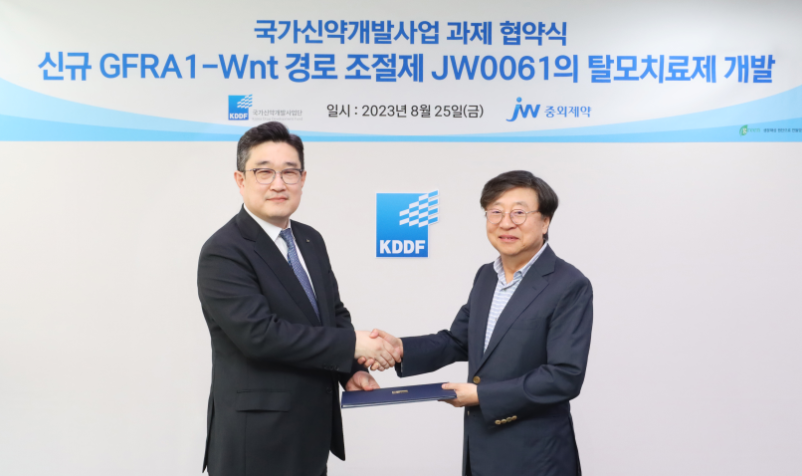
- JW Pharmaceutical is accelerating the development of innovative first-in-class drugs. Recently, the company's STAT3-targeted anticancer drug candidate entered Phase I clinical trials. In addition to targeted anticancer drugs, the company also owns first-in-class drug candidates in the fields of atopic dermatitis, hair loss, and blood cancer. JW Pharmaceutical's competitive edge in drug development is its R&D platform. JW Pharmaceutical is developing innovative new drugs by utilizing its own platforms JWELRY (JW Excellent LibraRY) and CLOVER (C&C researchLaboratoriesOmics serVER) and 3D cancer organoids secured through open innovation, and artificial intelligence (AI). 3 3 candidates enter clinical trials through the CLOVER platform...secures many first-in-class new drug candidates According to industry sources on the 21st, JW Pharmaceuticals received approval for its IND (investigational new drug application) to initiate a Phase I trial for its targeted anticancer drug candidate JW2286. The Phase I clinical trial will evaluate the safety and tolerability of JW2286 in 70 healthy Korean and Caucasian adults at Seoul National University Hospital. In the preclinical trial, JW2286 demonstrated efficacy and safety compared to standard of care in STAT3-overexpressing solid tumors. In particular, JW2286 showed an effect in hard-to-target triple-negative breast cancer. JW2286 is a first-in-class drug candidate that selectively inhibits STAT3. STAT3 is known to be one of the causes of various inflammatory diseases, autoimmune diseases, and cancer, and is highly expressed in various solid tumors, including gastric, colorectal, and triple-negative breast cancers. In the past, Japanese companies such as Sumitomo Dainippon Pharma and Otsuka Pharmaceutical have been developing STA3-targeted antitumor drugs, but have failed Phase I clinical trials due to lack of efficacy and toxicity issues. JW Pharmaceutical has secured a clear mechanism of action for targeting STAT3 through its drug discovery platform ‘CLOVER’. CLOVER can derive small molecules that inhibit or activate the STAT signaling pathway and is regarded as a platform that can perform holistic research on mechanisms and biomarkers. Through the platform, JW Pharmaceutical has been developing various new drugs through the efficacy of combining candidates with immuno-oncology drugs that utilize the characteristics of tumor immune microenvironment regulation and its biomarker development strategies. Currently, the company's new drug candidates that have entered clinical trials include JW2286, JW1601 for atopic dermatitis, and URC102 for gout. JW Pharmaceutical JW1601 has a dual mechanism of action that selectively acts on the histamine H4 receptor to block the activity and migration of immune cells that cause atopic dermatitis while inhibiting histamine signaling. Histamine is a neurotransmitter involved in allergic reactions. However, JW1601 reportedly failed to meet its primary endpoint in a global Phase II trial. As there are no atopic dermatitis drugs with this mechanism, it would have been the first new drug in its class if developed but was unable to reach the commercialization stage. JW Pharmaceutical plans to review the future development direction for JW1601 with the possibility of securing new indications in mind. URC102 is a best-in-class gout drug being developed by JW Pharmaceutical. The new drug candidate has a mechanism of action that inhibits urate transporter 1 (URAT-1), which allows uric acid to be absorbed back into the body and discharged well. It was approved for a Phase III clinical trial in Korea in 2022 and has entered clinical trials in China and Taiwan to confirm its commercialization potential. In addition to STAT3 anticancer drugs, JW Pharmaceutical is also exploring the possibility of developing a STAT3-targeted atopic dermatitis drug, STAT5/3 dual-targeted anticancer drug, and an antibody-drug conjugate (ADC) using the CLOVER platform. Makes bid into the development of first-in-class new drugs in the field of hair loss and blood cancer JW Pharmaceutical has secured the first-in-class new drug candidates 'CWP291' and 'JW0061' in the fields of hair loss and blood cancer. The two drug candidates, which target the Wnt signaling pathway, were derived from JW Pharmaceutical's ‘JWELRY’ platform. JW Pharmaceuticals has been studying the Wnt signaling pathway since the early 2000s and has accumulated data to develop the JWELRY platform. Wnt plays an essential role in cell proliferation or differentiation, and organ development and morphogenesis in animals. Wnt pathway inhibition inhibits the formation, proliferation, and metastasis of cancer cells in various tissues, inhibits cancer stem cell activity, and has an anti-fibrotic effect. On the contrary, activating the Wnt pathway is known to be involved in tissue regeneration by inducing stem cell and cell proliferation. JW Pharmaceutical is developing JW0061, a new drug candidate for hair loss, through the activation of the Wnt signaling pathway. The preclinical trial results that have been recently released show that JW0061 has demonstrated superiority in hair follicle production and hair growth compared to existing standard treatments. JW0061, a Wnt-targeted hair loss treatment, was selected as a ‘2023 1st National new drug development project In animal models with androgenetic alopecia, JW0061 was administered in four groups: low dose JW0061, high dose JW0061, standard of care (dutasteride or finasteride), and placebo. Results showed that both low and high doses of JW0061 accelerated hair growth compared to standard of care. JW Pharmaceuticals is also developing CWP291, which targets blood cancers by inhibiting the Wnt signaling pathway. CWP291 is a targeted anticancer drug that inhibits Wnt/β-catenin signaling. The potential of the drug candidate is being studied for multiple cancers, including acute myeloid leukemia, multiple myeloma, and gastric cancer. According to the Phase Ia trial results to date, one complete response (CR) and one partial response (PR) were confirmed among 54 patients with acute myeloid leukemia with CWP291.
- Company
- ‘Treatment access improved for Lysosomal Storage Diseases'
- by Son, Hyung-Min Jun 20, 2024 05:48am
- Dr. Jong-Hee Chae, professor of Clinical Genomic Medicine at Seoul National University Hospital "Lysosomal storage diseases show various symptoms throughout the body, making it difficult to diagnose the disease based on clinical manifestation alone. Therefore, it is important to diagnose it early and prevent the progression of symptoms with enzyme replacement therapy." On September 19, Sanofi held a press conference at the Lotte Hotel in Jung-gu, Seoul, to celebrate the reimbursement expansion of newborn screening tests for lysosomal storage disease, a rare inherited disorder. Experts at the conference emphasized the importance of early detection of lysosomal storage diseases. Lysosomal storage diseases (LSD) are genetically caused deficiencies in certain enzymes that lead to metabolic abnormalities. Lysosomes, which are organelles within cells, contain enzymes that break down substances that the body no longer needs. When these enzymes become abnormal or are not produced, substances that should be broken down gradually accumulate in the cell. Typical lysosomal accumulation diseases include ▲Pompe disease (motor dysfunction), ▲mucopolysaccharidosis (recurrent otitis media, hernia, or spinal deformity), ▲Gaucher disease (visceral enlargement, hematologic abnormalities), and ▲Fabry disease (peripheral pain). Dr. Jong-Hee Chae, professor of Clinical Genomic Medicine at Seoul National University Hospital, said, “Lysosomal storage diseases progress progressively from childhood and cause irreversible damage to the body. Early diagnosis and enzyme replacement therapy can prevent the development of symptoms before damage occurs." Currently, treatments for Pompe, mucopolysaccharidosis, Gaucher, and Fabry diseases are available, but accurate diagnosis remains difficult. 16.4% of patients suffer through a diagnostic odyssey, visiting four or more hospitals before receiving a final diagnosis. It took more than 10 years for 6.1% of these patients to receive the right diagnosis after recognizing their symptoms. This is why experts welcomed the reimbursement expansion that allows newborn screening tests to identify some lysosomal storage diseases starting this year. On January 1, the government included 6 enzyme assays for lysosomal storage diseases (GALC, GBA, GLA, GAA, IDUA, and ASM) to the reimbursement list. Beginning this year, newborns born within 28 days of birth can be screened to identify abnormalities in lysosomal enzymes at an early stage. This will allow newborns with lysosomal enzyme abnormalities to be screened at an early stage, allowing patients with these findings to go to a medical institution and receive accurate diagnosis and discuss treatment options. Dr. Jung Ho Lee, Professor of Pediatrics at Soonchun Hyang University Seoul Hospital, said, “Due to low awareness of the disease, patients had limitations in gathering information about lysosomal storage diseases. In line with the reimbursement expansion that covers newborn screening, we need to raise public awareness of each disease.” Dr. Lee added, “We should promptly conduct newborn screening to identify and treat patients with diseases for which treatments have been developed." Dr. Chae added, "New treatments have emerged for various lysosomal storage diseases, and advances in medical technology are increasing the number of patients who can be treated upon diagnosis. Early treatment after the detection of symptoms can help maintain normal growth and prevent symptoms from occurring, so we need to diagnose patients early and provide aggressive treatment.
- Company
- ‘Long-term treatment for osteoporosis is now possible'
- by Son, Hyung-Min Jun 20, 2024 05:48am
- Dr. Byung Ho Lee, professor of Orthopedic Surgery at Gangnam Severance Hospital The improved reimbursement standards for osteoporosis drugs have created a treatment environment that promotes fracture prevention. Healthcare professionals have pointed out that the treatment continuation rate of osteoporosis patients has been low stressing the importance of continuous treatment to minimize the risk of fracture. On Sept. 19, Amgen Korea held a media session at the Lotte Hotel in Jung-gu, Seoul, to introduce its treatment strategies in response to the changing osteoporosis treatment environment in Korea. The Ministry of Health and Welfare expanded the duration of reimbursement for major osteoporosis treatments last month. Previously, only patients with a T-score of -2.5 or lower using dual-energy x-ray absorptiometry (DXA) were eligible for reimbursement, but those with a T-score of -2.5 or higher and -2.0 or lower can now receive reimbursement for their treatments for up to 2 years. Experts such as the Korean Society of Osteoporosis and the Korean Society for Bone and Mineral Research have consistently raised the need to expand the reimbursement standards. The number of osteoporotic fractures in Korea is increasing every year, but only 36% of patients receive medication for their osteoporosis within a year after suffering a fracture. Patients with osteoporosis gradually lose bone mass, and experience fractures in the spine, femur, wrist, etc. at the slightest impact. However, because osteoporosis has no symptoms, it is often not actively treated. In particular, the percentage of patients who continue treatment is low due to limited reimbursement standards. Dr. Byung Ho Lee, professor of Orthopedic Surgery at Gangnam Severance Hospital, said, "Studies have shown that osteoporosis increases the risk of new fractures fivefold within 1-2 years after a fracture. The mortality rate within 1 year of hip and spine fracture is 30% and 20%, respectively. It is imperative that ultra-high-risk patients that are at high risk of fracture receive the drug treatment." The changed reimbursement standards are expected to increase the utilization of osteoporosis medications such as Prolia (denosumab), Evenity (romosozumab), and bisphosphonates. Osteoporosis drugs are divided into bone stimulators (such as Evenity), which build the bone, and bone resorption inhibitors (such as Prolia and bisphosphonates), which inhibit the differentiation and action of osteoclasts. Dr.Lee said, "Sequential treatment with a bone stimulator inhibitor followed by a bone resorption inhibitor is more effective than vice versa. Therefore, It is important to continue the use of bone resorption inhibitors after bone stimulators in high-fracture-risk patients.” Dr. Bum Joon Kim, professor of Endocrinology at Seoul Asan Medical Center, said, "The longer the treatment is administered, the better the effectiveness is for osteoporosis and the lower the risk of fracture. The treatment goal should be a T-Score of -2.0 or higher, not -2.0, which is the current reimbursement standard. For Prolia, there is no clinical limit set on the treatment duration. The extended reimbursement has fostered the environment for long-term treatment, so it is important now for us to continue administering the drug.” Dr. Bum Joon Kim, professor of Endocrinology at Seoul Asan Medical Center

- Company
- HK inno.N and others license out jointly developed candidate
- by Kim, Jin-Gu Jun 20, 2024 05:48am
- 'IMB-101(OXTIMA),' a dual-antibody candidate jointly developed by HK inno. N, IMBiologics, and Y-Biologics, was licensed out to a U.S. biotech company specializing in new drug development. The contract amounts to US$940 million (approximately KRW 1.3 trillion), including an up-front payment of US$20 million (KRW 27.6 billion). HK inno. N announced on June 17th that it has entered into a technology transfer agreement with Navigator Medicines, a U.S. new drug development company. The contract covers global countries except for Asia (Japan included). According to the contract, HK inno. N will receive a proportional share of the total contract. The company will also receive a royalty payment from sales after the launch. 'IMB-101,' under joint development of three companies, is a dual-antibody candidate that targets both OX40L antibody and TNF-α. It regulates both inflammatory cytokines and T-cells, targeting autoimmune diseases. This candidate was secured through joint research of HK inno. N and Y-Biologics commenced in 2016. Subsequently, it was transferred to IMBiologics in August 2020. IMBiologics is a company established by people who worked at HK inno.N. IMBiologics obtained the U.S. Food and Drug Administration (FDA) approval to conduct Phase 1 trials for 'IMB-101' in August of last year and accomplished license out before the completion of clinical trials. IMBiologics was responsible for heading the license out. An official from HK inno. N said, "It is meaningful that a jointly developed pipeline by three domestic pharmaceutical and biotech companies has shown potential for entry into the U.S. market by leveraging synergy in their respective areas." They added, "This achievement holds substantial significance. We will continue to strive for accelerated and visible outcomes through active open innovation across various aspects." An official from Y-Biologics said, "We commend the accomplishments of our joint development partners." They added, "We will continue to demonstrate the excellence of our antibody discovery platform and strive to become a global leader in novel antibody drug development."
- Company
- K-pharma speeds up Keytruda biosimilar development...
- by Kim, Jin-Gu Jun 19, 2024 05:46am
- Product photo of Keytruda. Biopharmaceutical companies in South Korea are fast-developing biosimilars referencing 'Keytruda (pembrolizumab),' which has ranked no.1 in global sales. Samsung Bioepis and Celltrion have initiated global phase 3 trials. Due to Keytruda’s leading position in global sales, competition is expected among the companies mentioned above, as well as U.S.-based Amgen and Swiss Sandoz, to develop biosimilars. Pharmaceutical companies in Korea and overseas are initiating global phase 3 trials for 'Keytruda biosimilar' According to industry sources on June 17th, Celltrion recently submitted an IND to the U.S. Food and Drug Administration (FDA) for its 'CT-P51,' which is being developed as a biosimilar referencing Keytruda. Celltrion will conduct a comparative effectiveness study to demonstrate equivalence between Keytruda, the original pharmaceutical, and CT-P51 in 606 patients with non-small cell lung cancer (NSCLC). Previously, Samsung Bioepis initiated a global Phase 3 trial for Keytruda biosimilar, 'SB27,' in April. Samsung Bioepis plans to conduct a phase 3 trial comparing the effectiveness and safety of SB27 to Keytruda, enrolling 616 patients with metastatic NSCLC across 14 countries. Samsung Bioepis (left), Celltrion. The analysis shows that competition to develop Keytruda biosimilars among companies, including biopharmaceutical companies in South Korea, globally is on the rise. Currently, U.S.-based Amgen and Swiss-based Sandoz have commenced phase 3 global clinical trials to develop Keytruda biosimilars. Amgen commenced a phase 3 global clinical trial for ABP234 in April of last year, and Sandoz initiated a phase 3 clinical trial for GME751 the same month. Keytruda’s substance patent expires after 2029…biosimilar companies aim for 'agreement' with the original company Global companies are expected to complete their biosimilar development between 2025 and 2026. Keytruda’s substance patent will expire in November 2029 in the United States and in January 2031 in Europe. Other patents, such as the use patent, formulation patent, therapeutic method-related patent, and process-related patent, tied to indications are still valid. Since Keytruda has over 30 approved indications, more than tens of patents are tied to these. The original company, with an 'evergreening' strategy, has secured the patent validity of Keytruda until after 2040 through numerous patents. Since there are more than tens of patents to overcome, companies developing biosimilars aim to reach an 'agreement' with the original company rather than launching products after patent challenges. Previously, in the cases of global pharmaceuticals, such as Humira and Enbrel, companies developing biosimilars launched their products through agreements with the original company, either by paying royalties or adjusting release dates. For these reasons, pharmaceutical industry experts anticipate that the timing of completing clinical trials will be a crucial variable for biosimilar developers. Completing biosimilar development quickly can provide an advantageous position over competing firms in negotiations over royalty payments to original companies or adjustments to launch dates. Top 10 pharmaceuticals in global sales prospects for 2024 (source: Evaluate) According to the pharmaceutical market research firm Evaluate, Keytruda generated US$25 billion (approximately KRW 33 trillion) in global sales last year, becoming the top-selling pharmaceutical globally. Previously, the top-selling pharmaceuticals were Humira from AbbVie from 2019 to 2020, and Pfizer's COVID-19 vaccine Comirnaty from 2021 to 2022. Keytruda is rapidly expanding sales through actively adding indications. After reaching US$10 billion (approximately KRW 13.3 trillion) in 2019, it showed steady growth topping US$20 billion (approximately KRW 26.7 trillion) in 2022. To date, Keytruda has secured more than 40 indications. In the Korean market, Keytruda is also a leading pharmaceutical with the highest sales. According to the pharmaceutical market research firm IQVIA, Keytruda generated sales of KRW 398.7 billion last year, up 66% from KRW 239.6 billion in 2022.
- Company
- Suhee Shin appointed new General Manager of Amgen Korea
- by Eo, Yun-Ho Jun 19, 2024 05:46am
- Suhee Shin, new General Manager of Amgen Korea Suhee Shin, the former head of Novartis Korea, is coming back to head another Korean subsidiary of a multinational pharmaceutical company after two and a half years. According to industry sources, Director Suhee Shin, who had been leading the Healthcare Innovation Cluster at Roche Korea, has been appointed to take over as the General Manager of Amgen Korea following the retirement of the current GM, Sang-kyung Noh. Shin resigned in 2022 when Novartis Korea's specialty drug and anticancer business units were merged as one and the current president, Byung-Jae Yoo took over as head of the new combined Novartis Korea. Since then, Shin joined Roche in February 2023. She left Roche last week after accepting the General Manager role at Amgen Korea. Since joining Handok Pharmaceuticals in 1999, Shin and has held commercial business unit leadership roles in various chronic disease areas including diabetes at Sanofi Korea and AstraZeneca Korea. In 2018, Shin served as the Head of the Hematology Business Franchise of Novartis Oncology and was appointed as the General Manager of Novartis Oncology in 2019, where she led the successful launch and reimbursement of various innovative oncology pipelines. Shin graduated from Ewha Womans University College of Pharmacy and earned an MBA from New York University Stern School of Business.
