
- LOGIN
- MemberShip
- 2026-05-04 06:32:25
- Company
- New drug 'Aquipta' for migraine available for prescriptions
- by Eo, Yun-Ho Jul 03, 2024 05:50am
- AbbVie Korea The new drug 'Aquipta,' an oral migraine treatment, is becoming available in general hospitals in South Korea. According to industry sources, AbbVie Korea’s Aquipta (atogepant), an oral calcitonin gene-related peptide (GRRP) receptor antagonist for migraine treatment, has passed the drug committee (DC) of the ‘Big 5’ tertiary general hospitals, including Seoul National University, Kangbuk Samsung Hospital, Hallym University Dongtan Sacred Heart Hospital, and Inha University Hospital. Since its official launch last month, it has expanded indications. Aquipta is drawing attention as the first and only oral treatment option within the same class. In 2021, the U.S. Food and Drug Administration (FDA) approved Aquipta for the prophylaxis of episodic and chronic migraine in adults. In August, it received European approval for the prophylaxis of migraine in adults who have four or more migraine days per month. The basis for the approval in South Korea was the PROGRESS, ADVANCE, and ELEVATE Phase 3 studies. In the PROGRESS study, the efficacy and safety of Aquipta in preventing chronic migraine was compared to those of placebo. In the study, 521 adult patients with a diagnosis of chronic migraine for at least a year (greater or equal to 15 headache days and at least 8 migraine days) were randomized 1:1 to the Aquipta treatment or placebo treatment. The primary endpoint was changes from baseline in monthly mean headache days across a 12-week treatment period. The results demonstrated that the Aquipta treatment group had a reduction in monthly mean headache days by 6.9 days from baseline, compared to 5.1 days for the placebo group. The ADVANCE study compared the efficacy of Aquipta in preventing episodic migraines to that of placebo. The study involved 458 patients with a history of chronic migraine 4 to 14 days per month. The results demonstrated that the Aquipta treatment group had a reduction of monthly mean migraine days from baseline by 4.2 days, compared to a reduction of 2.5 days for placebo. In the ELEVATE study, which evaluated the preventative effect of chronic migraine in patients who previously failed prophylaxis, Aquipta treatment showed more significant reduction in monthly mean migraine days compared to placebo. "CGRP treatment is significantly effective in preventing migraines. Previously released treatments of injection formulation required monthly hospital visits, whereas oral treatment provides patients with more treatment options," Byung-Kun Kim, Professor of Nowon Eulji Hospital, said.
- Company
- CSL Behring’s hemophilia B Tx Idelvion is reimbursed in KOR
- by Kang, Hye-Kyung Jul 03, 2024 05:50am
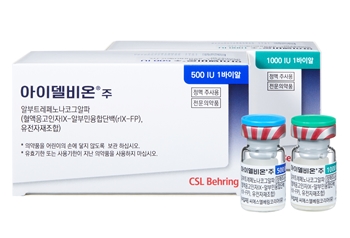
- CSL Behring Korea's hemophilia B treatment Idelvion (albutrepenonacog alfa,) will be reimbursed by Korea’s national health insurance starting in July for the treatment of adult and pediatric patients. Pic of IdelvionIdelvion is approved for the control and routine prophylaxis of bleeding in adults and pediatric patients and for perioperative management (control and prevention of bleeding during surgical procedures). According to the Ministry of Health and Welfare's 'Notification of Partial Amendment to the Details on the Application Standards and Methods of Medical Benefits (Pharmaceuticals)', its single dose is 23 IU/kg (30 IU/kg for children), and for moderate or severe bleeding, up to 39 IU/kg (up to 50 IU/kg for children) is allowed based on the medical judgment of the doctor. However, if hospitalization is required but outpatient treatment is provided, or if an increase in dose is absolutely necessary based on clinical symptoms and test results, it may be authorized with a physician's note. The standard for the number of doses is up to 2 doses at the patient's first visit every 4 weeks and 1 dose at the second visit (2 doses for severely ill patients). Patients may also be prescribed a total of 3 doses (4 doses for severely ill patients) at 1 visit every 4 weeks, at their physician’s discretion. Idelvion is a fusion protein formed by genetically fusing recombinant factor IX (rFIX) with recombinant human albumin (rFIX-FP). It is capable of maintaining high FIX trough levels and has a mean half-life of 143 hours at a 21-day dose (100 IU/kg). Professor Eun Jin Choi, Department of Pediatrics, Daegu Catholic University School of Medicine, said, "In the clinical trial, we found that more than 20% reached the lowest FIX trough level with prophylaxis at 7-day intervals in patients 12 years and older. The results were consistent in repeated PK measurements in a large number of patients, making it easy to predict its treatment effect." Professor Choi added, "Given the lifelong nature of hemophilia, which requires self-injection, we believe that the convenience of a once-every-3-weeks dosing regimen will also help patients manage their disease.” Idelvion was approved in Korea by the Ministry of Food and Drug Safety in March 2020 for the treatment of hemophilia B in children and adults based on top-line clinical results. It can be administered at intervals of up to 21 days as prophylaxis, making it the drug with the longest dosing interval among any extended half-life hemophilia B treatment approved in Korea.
- Company
- Daewoong and LG Chem launch Humira biosimilar 'Xelenka'
- by Kim, Jin-Gu Jul 03, 2024 05:50am
- Daewoong Daewoong Pharmaceutical and LG Chem said on July 1st that they have launched 'Xelenka,' a Humira (adalimumab) biosimilar. Daewoong Pharmaceutical and LG Chem signed a distributer agreement for domestic sales earlier. Under the agreement, LG Chem will supply Xelenka to Daewoong Pharmaceutical, and Daewoong will handle domestic sales and marketing. Xelenka is the third biosimilar to Humira, and it received market approval from the Ministry of Food and Drug Safety (MFDS) in December 2023. Since its release, Xelenka is priced at KRW 22,390 (40 mg) and is under insurance reimbursement. This is the most economical price among Humira biosimilars in South Korea. Both companies anticipate that Xelenka will relieve patients’ treatment burden and help reduce National Health Insurance finance. Xelenka is available in two formulations: a pre-filled syringe containing injectable drug and a pen-type autoinjector, which allows automatic injection of a drug through the device. Xelenka autoinjector is designed with LG Chem’s patient-friendly design. When using a conventional autoinjector, patients must place the device on an injection site and press a button. In contrast, Xelenka has been designed so that drug is injected automatically with a slight push at the injection site. The development, clinical trials, market approval, and production of Xelenka were carried out in South Korea. Because of the domestic production, issues arising during product manufacturing can be quickly solved. Furthermore, safety issues have been minimized by strictly regulating the distribution process, such as temperature control and storage conditions. Through joint research between South Korea and Japan, Korean physicians’ experiences in clinical settings were reflected. Comparative efficacy research demonstrated the equivalence of Xelenka to Humira. LG Chem conducted a clinical phase 3 trial, which evaluated the long-term efficacy and safety of Xelenka and Humira for 52 weeks in 383 patients with active rheumatoid arthritis in South Korea and Japan. The primary endpoint, 'DAS28-ESR score at 24 weeks compared to a reference value,' demonstrated Xelenka’s equivalence. Its safety profile was not significantly different from that of the group treated with Humira. The adverse reaction (AE) rate for the Xelenka group was 68.2%, and that for the Humira group was 71.2%. The AE rate for the entire study period (52 weeks) showed no significant difference. A patient group treated with Humira for the initial 24 weeks and then switched to Humira also showed no difference in efficacy and safety. Xelenka is indicated for the treatment, similar to Humira, of ▲Rheumatoid arthritis ▲Psoriatic arthritis ▲Ankylosing spondylitis ▲Chron’s disease in adults and children ▲Ulcerative colitis ▲Behcet disease ▲Uveitis ▲Hidradenitis suppurativa ▲Juvenile idiopathic arthritis ▲Juvenile plaque psoriasis. Daewoong Pharmaceutical will contribute to treating diseases and improving human quality of life through the continuing expansion of its biopharmaceutical pipeline, including biologics, and the development of various products. "We are delighted that the launch of Xelenka can reduce the cost burden for the nation and patients and also provide a reasonably priced treatment option in clinical settings,” Lee Chang-jae, CEO of Daewoong Pharmaceutical, said. And he added, "Daewoong Pharmaceutical will establish a foundation for growth as a global pharmaceutical company by expanding product lines in the biomedical market, including biosimilars."
- Company
- Hugel signs distribution partnership agreement with Benev
- by Nho, Byung Chul Jul 02, 2024 05:49am
- The global total medical aesthetics company Hugel(Chair: Suk-yong Cha) will officially enter the U.S. market through a strategic partnership with the U.S.-based Benev Company. The company began discussions on a partnership to sell its botulinum toxin product ‘(Letybo, Korean brand name: Botulax)’ in the U.S. in August last year, and finally decided to collaborate with Benev out of a total of 5 companies that had been competing for Hugel’s product. Established in California in 2000, Benev is an aesthetic company that researches, manufactures, and sells innovative aesthetic medical products such as exosomes, PDO threads, and radiofrequency micro-needles. It is one of the fastest-growing companies in the medical aesthetics market in the United States, with an average annual growth of more than 117% over the past 3 years. Hugel's decision to sell Letybo through its local partner, Benev, rather than directly, is said to have been made by the company’s capability to immediately launch products and scale sales in the U.S. market. However, rather than delegating all sales and distribution rights to its partner, as some of its competitors do, the two companies will work together on sales/marketing/education/research based on Benev’s strong sales network and is seeking to achieve a market share of approximately 10% in the U.S. within 3w years by leveraging Hugel's academic marketing capabilities and successful toxin business strategies in Australia and Canada. Hugel announced the launch of Letybo at the largest U.S. aesthetics show that was held in Las Vegas from June 27-30, and has completed initial production of the product for the U.S. launch. The first shipments are expected to begin in late July. Chairman Seok Yong Cha, said "We are delighted to be partnering with Benev on this transformational journey. Hugel has always been committed to the medical aesthetics philosophy of providing premium products and unparalleled academic programs. Our collaboration with Benev will forge a powerful alliance that will position Hugel as a true powerhouse in the global medical aesthetics market." Ethan Min, CEO of Benev, said, "We are proud to forge this strategic partnership with Hugel. We are confident that the combination of Hugel's unrivaled performance and Benev’s network will resonate with the market. With quality as our top priority, we look forward to expanding the scope of choice for healthcare professionals while providing a quality experience for our consumers as well."
- Company
- PNH drug Voydeya is approved…new treatment option for PNH
- by Hwang, Byung-woo Jul 02, 2024 05:49am
- A new option for adult patients with paroxysmal nocturnal hemoglobinuria (PNH) has been introduced in Korea with the approval of Voydeya (danicopan), a first-in-class oral factor D inhibitor. Logo of VoydeyaVoydeya is AstraZeneca Korea's PNH treatment that was approved by the Ministry of Food and Drug Safety (MFDS) on March 28th. Voydeya is a first-in-class oral factor D inhibitor and can be used as an add-on therapy to ravulizumab (Ultomiris) or eculizumab (Soliris) for PNH patients with symptoms or signs of extravascular haemolysis (EVH) i in patients who are already receiving a C5 inhibitor (ravulizumab or eculizumab). PNH is a rare disease caused by acquired genetic mutation that results in hemolysis and thrombosis, which can cause anemia, fatigue, hemoglobinuria, and even death. PNH Is treated with C5 inhibitors ravulizumab or eculizumab, which can reduce intravascular hemolysis and thrombosis. However, extravascular hemolysis can occur if defective red blood cells accumulate on C3 during treatment. The MFDS approval was based on the phase III ALPHA clinical trial. The study confirmed the superiority of Voydeya as add-on therapy in adult PNH patients treated with ravulizumab or eculizumab who developed significant EVH (haemoglobin ≤9.5 g/dL; absolute reticulocyte count ≥120 × 10⁹/L). Results showed that Voydeya met both the primary and secondary endpoints. The primary endpoint, change in hemoglobin concentration from baseline to week 12, was 2.94 g/dL for Voydeya versus 0-50 g/dL for placebo. The least squares mean (LSM) difference between Voydeya and placebo was 2.44 g/dL (95% CI 1.69 to 3.20; p

- Company
- GLP-1 uses↑…targets MASH, diabetes, and obesity
- by Son, Hyung-Min Jul 01, 2024 05:48am
- New drug candidates of the GLP-1 class target metabolic dysfunction-associated steatohepatitis (MASH) in addition to diabetes and obesity. Global pharmaceutical companies, such as Novo Nordisk, Eli Lily, Boehringer Ingelheim, and Korean pharmaceutical companies, including Dong-A ST and D&D pharmatech, are developing GLP-1 agents for the treatment of MASH. GLP-1 can aid weight loss by increasing fullness and can enhance blood glucose control by increasing insulin secretion and sensitivity. Weight loss can have a positive impact on patients, as MASH occurs when fat saturates in the liver of individuals who have had low or no alcohol consumption. Nonetheless, pharmaceutical companies are working on the potential of GLP-1 for the treatment of MASH in addition to diabetes and obesity. New drug development for MASH by multinational pharmaceuticals companies. (from the top) Madrigal Pharmaceuticals’ Rezdiffra, Intercept Pharmaceuticals’ Ocaliva, Galmed Pharmaceuticals’ Aramchol, Novo Nordisk’s semaglutide, akero’s efrixiferm, Regeneron Pharmaceuticals and Alnylam Pharmaceuticals’ ALN-HSD, Viking Therapeutics’ VK2809, and others. According to industry sources on June 12th, Boehringer Ingelheim’s 'survodutide' and Lily’s 'Tirzepatide' demonstrated the effectiveness in Phase 2 clinical trials. These two new drug candidates are a type of glucagon-like peptide 1 (GLP-1). In a Phase 2 trial, survodutide, targeting both GLP-1 and glucagon, showed effects in the percentage of symptom worsening at 48 weeks compared to the placebo. This trial assessed the Survodutide’s effectiveness in 295 adults with MASH and liver fibrosis regardless of having type 2 diabetes. Based on recent clinical results, the percentange of patients who significantly improved in MASH-associated liver diseases withought worseninig of fibrosis stage was 83% in the survodutide treatment group, whereas 18.2% in the placebo group. The survodutide treatment group also had a higher percentage of patients with decreased liver fat over 30%, compared to the placebo. Eli Lily also confirmed the effectiveness of tirzepatide in a phase 2 trial for MASH. Tirzepatide is a GLP-1·GIP dual targeting agent with the same ingredient as Lily’s type 2 diabetes drug Mounjaro and obesity drug Zepbound. The SYNERGY-NASH Phase 2 trial, evaluating the effectiveness of tirzepatide, involved 190 MASH patients who have biopsy-confirmed moderate-to-severe fibrosis. At 52 weeks, established as the primary endpoint, the percentage of symptom improvement without worsening fibrosis was 43.6%, 55.5%, and 62.4% for tirzepatide 5 mg, 10 mg, and 15 mg, respectively. Korean companies show progress in MASH clinical trials New drug development for MASH by pharmaceutical companies based in South Korea. (from the top) Hanmi Pharm’s efocipegtrutide, Dong-A ST’s DA-1241 and DA-1726, HK inno. N’s FM-101, D&D pharmatech’s DD01, Yuhan’s YH25724, Ildong Pharmaceutical’s ID119031166, LG Chem’s LG303174 and LG203003. Korean companies are also focusing on the potential of GLP-1. Dong-A ST is developing DA-1241 with an underlying mechanism of GPR119, a receptor on beta cells in the pancreas, and is also considering the potential for combination therapy with a GLP-1 agent. Neurobo, Dong-A ST’s subsidiary, recently confirmed the effect of semaglutide in combination with a MASH novel drug candidate, DA-1241. Dong-A ST is exploring the potential of semaglutide, a GLP-1 agent, as a combination therapy in addition to its phase 2 trial for DA-1241 monotherapy. The trial evaluated the efficacy and safety of administering DA-1241 in combination with semaglutide in a metabolically altered MASH mouse model. The clinical results showed that mice treated with combination therapy improved NAS (liver fat activity score) by greater than a score of 1. Furthermore, the genetic analysis of liver tissue showed that the combination therapy significantly improved the expression of genes related to inflammation and fibrosis. Dong-A ST plans to make clinical entry for the combination therapy and present global phase 2 trial results on DA-1241 monotherapy. D&D pharmatech is conducting a phase 2 trial in the United States. The company recently received IND approval from the U.S. Food and Drug Administration (FDA). In preclinical trials, D&D pharmatech’s DD01, an agent targeting both GLP-1 and glucagon, has shown a significant decrease in liver fat and a weigh loss effect. In a phase 1 trial, the four-week treatment of DD01 reduced the liver fat by 50%. DD01’s phase 2 trial will be conducted across 10 institutes in the United States, enrolling 68 patients with MASH-accompanying overweight and obesity. 'Rezdiffra,' the only commercially available MASH treatment has an underlying mechanism of targeting thyroid hormone receptor The only drug commercialized for MASH treatment is Rezdiffra from the U.S.-based Madrigal Pharmaceuticals. The drug targets the thyroid hormone receptor (THR)-β. The U.S.-based Viking Therapeutics also conducted a phase 2b trial for a pharmaceutical with a similar mechanism to Rezdiffra and recently secured a positive result. In the clinical trial, Viking Therapeutics’ MASH candidate, known as VK2809, has significantly reduced liver fat. In the clinical trial VOYAGE, up to 75% of VK2809 treatment group had a MASH response, compared to 29% of the place group. The adverse reactions associated with the VK2809 treatment were mostly mild or moderate.

- Company
- Companies to focus on developing trispecific antibodies
- by Son, Hyung-Min Jul 01, 2024 05:48am
- The pharmaceutical industry in South Korea and overseas has begun developing trispecific antibodies that bind three targets. Previously, these companies focused on bispecific antibodies, which can bind simultaneously to two different antigens or two antigenic epitopes on a single antigen. Crossing the blood-brain barrier (BBB) can increase the drug permeability, especially for anticancer drugs. Multi-targeted antibodies have the advantage of crossing the BBB by target binding to receptors on the BBB surface. Recently, more companies have begun developing multi-targeted antibodies by matching antibodies that bind to both antigens regulating immune cell activity and specific antigens on tumor cells. Korean biotech companies, such as Shaperon, Celltrion, and ISU Abxis, and global pharmaceutical companies, including Gilead Sciences and Sanofi, have begun developing these. Korean biopharmas are developing trispecific antibodies According to industry sources on June 28th, Shaperon recently signed a memorandum of understanding (MOU) with Dong-A ST to develop trispecific antibodies as part of a new drug development. Through this collaboration, Shaperon will be responsible for nanobody development and Dong-A ST will use its antibody commercialization technology to focus on new global drug development. Since 2021, two companies have collaborated on developing trispecific nanobody antibodies for the treatment of cancer. This technology uses nanoantibodies to bring T cells and cancer cells closer together. Using nanobody advantages, Shaperon is developing nanobody-based various protein pharmaceuticals, including antibody-drug conjugates (ADC) and radiopharmaceuticals. Last year, Celltrion started developing trispecific antibodies in collaboration with Cyron Therapeutics, specializing in antibody development. These companies plan to develop new drugs using the CD3-targeting T-cell-engagers (TCE) platform. TCE multi-targeted antibodies are treatments that induce anticancer effects by effectively attacking cancer cells through T-cells. Recently, many global pharmaceutical companies are exploring the potential of TCE multi-targeted antibody development. However, no TCE-targeting multi-targeted antibodies have been commercialized. ISU Abxis is also developing immunotherapy for cancer using its trispecific antibody platform. For this research, ISU Abxis signed a substance transfer contract with Biocytogen, China’s global biotech company, and obtained a CD40 antibody in 2021. Biocytogen’s ‘YH003,’ a CD40 antibody new drug candidate, is under phase 2 clinical trial. ISU Abxis is preparing to develop a trispecific antibody using ‘YH003’ and its antibodies. Korean and global pharmaceutical companies that develop trispecific antibodies: (Korean companies) Shaperon recently signed a memorandum of understanding (MOU) with Dong-A ST, Celltrion started developing a T-cell-engagers (TCE) platform in collaboration with Cyron Therapeutics, and ISU Abxis acquired CD40 antibody from China’s Biocytogen. (Global companies) Sanofi acquired Amunix Pharmaceuticals and secured a T-cell-engagers (TCE) platform. Gilead Sciences discovered a TAA bispecific antibody in collaboration with a Dutch biotech company, Merus. MSD acquired the U.S.-based Harpoon Therapeutics and secured a trispecific T-cell engagers (TCE) platform. Global pharmaceutical companies are also developing…still in the early phases of clinical trials Global pharmaceutical companies are also developing trispecific antibodies, superior to bispecific antibodies. However, these companies’ R&D of multi-targeted antibodies is still in the early phases. Most new drug candidates remain in the early phases of clinical trials. Sanofi is developing a multi-targeted antibody that targets HER2. In 2021, Sanofi acquired Amunix Pharmaceuticals, a U.S.-based biotech company, for US$1 billion (approximately KRW 1.2 trillion). Amunix Pharmaceuticals is developing ‘AMX-818,’ a HER-2-targeting TEC that activates immune responses and attacks cancer cells. Gilead Sciences began developing trispecific antibody for cancer in March in collaboration with a Dutch biotech company, Merus. These companies will conduct joint research to discover novel tumor-associated antigen (TAA) bispecific antibodies. Merus owns a trispecific antibody platform called Triclonics, which is analyzed to have the potential for developing antibodies that bind three targets simultaneously. MSD is developing trispecific antibodies through the U.S.-based Harpoon Therapeutics, which MSD acquired in January. Harpoon Therapeutics owns the trispecific TCE platform, bispecific antibody, and cell therapy technology. SystImmune is conducting three cases of a phase 1 trial for a trispecific antibody in collaboration with China’s biotech company.
- Company
- Various treatment options introduced for multiple myeloma
- by Eo, Yun-Ho Jul 01, 2024 05:48am
- New treatment options for multiple myeloma treatment are emerging one after another. According to industry sources on the 28th, drugs such as Pfizer’s ‘Elrexfio (elranatamab)’ and GSK’s ‘Blenrep((belantamab mafodotin)’ are receiving attention as promising candidates in the field of multiple myeloma. In the case of Elrexfio, the drug was recently approved in Korea. Elrexfio has been designated as the 4th GIFT (Global Innovative products on Fast Track) drug by the Ministry of Food and Drug Safety. Elrexfio’s efficacy was demonstrated through the Phase II MagnetisMM-3 trial, an open-label, multicenter, non-randomized study that was conducted on 123 who had not received prior BCMA-directed therapy (ie, BCMA-naïve patients). The study evaluated the efficacy and safety of elranatamab monotherapy in patients with relapsed or refractory multiple myeloma (RRMM) who had previously received at least 1 proteasome inhibitor, 1 immunomodulatory drug, and 1 anti-CD38 antibody. Results showed that the overall response rate (ORR), the primary endpoint, of adult patients with RRMM who have received three or more lines of therapy, including a proteasome inhibitor, an immunomodulatory agent, and an anti-CD38 antibody but had not received prior BCMA-directed therapy was 61.0% for the Elrexfio arm, 56.1% of which showed very good partial response (VGPR). Elrexfio is expected to compete with Janssen's bispecific antibody Tecvayli (teclistamab). Like Elrexfio, Tecvayli targets both the BCMA and the CD3 receptor. GSK recently presented data from the DREAMM-8 study on Blenrep at the American Society of Clinical Oncology Annual Meeting (ASCO 2024). The DREAMM-8 study compared the existing treatment for multiple myeloma, pomalidomide plus bortezomib and dexamethasone (PVd), with Blenrep with pomalidomide and dexamethasone (BPd). The study enrolled 300 patients who had failed at least one first-line treatment for multiple myeloma. According to the presented results, 71% of the patients who received BPd survived without disease progression at 1 year. This is approximately 48% higher than that of the PVd combination arm (51%). This translates to a reduction in the risk of further disease progression or death at 1 year after treatment from 49% to 29%, which translates to a nearly half reduction. In 2022, GSK decided to withdraw approval of its BPd therapy determining that it did not improve outcomes for patients with multiple myeloma. However, GSK has since continued to test the efficacy of Blenrep in late-stage clinical studies. Meanwhile, Janssen's CAR-T drug Carvykti (ciltacabtagene autoleucel) also recently unveiled an additional study on multiple myeloma at ASCO. The study showed that Carvykti improved survival compared to the existing second-line standard of care of pomalidomide plus bortezomib plus dexamethasone (PVd) or daratumumab plus pomalidomide plus dexamethasone (DPd) in patients with functionally high-risk (FHR) multiple myeloma.

- Company
- Samsung Bioepis targets Stelara market
- by Hwang, Byung-woo Jul 01, 2024 05:47am
- Samsung Bioepis is seeking to target the Stelara (Ustekinumab) market by directly marketing its Stelara biosimilar Epyztek in Korea. The company is adding Epyztek to the list of autoimmune disease treatments it has been selling directly since March, a strategy that is expected to strengthen its marketing capabilities while increasing profitability. A view of the Samsung Bioepis building in Songdo.Samsung Bioepis will launch Epyztek, an autoimmune disease treatment, in the Korean market in July. Epyztek is a biosimilar of Stelara, Janssen’s treatment for autoimmune diseases such as plaque psoriasis, psoriatic arthritis, Crohn's disease, and ulcerative colitis. Epyztek was approved by the Ministry of Food and Drug Safety in April. Stelara inhibits interleukin (IL)-12/23 activity, a class of inflammatory cytokines (signal transmitters). As of 2023, its annual global product was around KRW 1.4 trillion, and domestic market sales were around KRW 41.6 billion. According to the ‘Drug Reimbursement List and Reimbursement Ceiling Table' announced by the Health Insurance Review and Assessment Service as of July 1, Epyztek is priced at KRW 1,298,290 per 45mg/0.5ml prefilled syringe. This is about 40% lower than the price of the existing original drug. Although Stelara’s price will also be reduced following the launch of the biosimilar, Epyztek still has a price advantage. Professor A, Department of Gastroenterology at a tertiary hospital in Seoul, Korea, said, "There seems to be little doubt about the effectiveness of biosimilars as prescriptions have accumulated. The financial burden of Stelara’s initial intravenous infusion may serve to lower the threshold for the introduction of its biosimilars." The biggest characteristic of biosimilars is in their lower cost compared to the original. However, in Korea, the price difference is not large due to the low patient copayment rate applied through Korea’s insurance reimbursement system, but Stelara’s characteristics may still provide competitivity for the biosimilars. Another characteristic of Epyztek is that the company sells the product directly. Since March, Samsung Bioepis has switched to direct sales of 3 autoimmune disease drugs that it had been selling in partnership with Yuhan Corp. With the exception of anticancer and ophthalmic drugs, the company’s decision to switch to direct sales is interpreted as the company’s attempt to increase the profitability of the drugs. Currently, Samsung Bioepis has about 20 domestic sales personnel for direct sales, and in March, it secured a distribution network in the domestic market by signing a pharmaceutical third-party logistics contract (3PL) with Geo-Young. In the field, the prospect is that Epyztek’ssales will depend on Samsung Bioepis' marketing capabilities and how quickly it can land in the market. An industry official said, "It is true that the marketing capabilities cannot be ignored due to the nature of biosimilars. However, given how Samsung Bioepis already has experience in selling biosimilars for autoimmune diseases, we expect sales to be directly related to how quickly the drug can land in each hospital." A Samsung Bioepis official said, “We are able to offer various treatment opportunities for patients with autoimmune diseases with the launch of Epyztek. Based on the reasonable drug price, we expect the drug to address the unmet demand in the field and contribute to saving national health insurance finances."
- Company
- Ilaris’s reimbursement imminent in Korea
- by Eo, Yun-Ho Jul 01, 2024 05:47am
- The ultra-rare disease treatment Ilaris has finally passed the final hurdle to its reimbursement in Korea. Novartis Korea recently completed drug price negotiations with the National Health Insurance Service for Ilaris (canakinumab), a treatment for hereditary periodic fever syndrome. The company was quick to accept the conditional benefit decision from the National Health Insurance Review and Assessment Service's Drug Reimbursement Evaluation Committee in April, and quickly finalized what was expected to be a difficult drug price negotiation process. Novartis' determination for reimbursement is notable. The company resubmitted the application and received a re-deliberation from DREC on the 4th after receiving a conditional reimbursement decision in February, but received the same results. However, the reduced scope of data requested by the government opened up the possibility of reimbursement. In February, Novartis was unable to accept the condition proposed by DREC. However, during this round of review, DREC likely requested less additional supplemental data with the conditional reimbursement approval decision, which Novartis was able to accept this time. It is also notable how the government swiftly responded to the first claim and reduced the scope of the evidence that was required for submission. Ilrais’s reimbursement agenda will be passed along to the Health Insurance Policy Deliberation Committee, after which the company anticipates that the drug will be reimbursed starting in August. Ilrais is indicated for the following diseases in Korea: ▲Periodic fever syndromes (PFS), cryopyrin-associated periodic syndromes (CAPS), tumor necrosis factor receptor associated periodic syndrome (TRAPS), hyperimmunoglobulin D syndrome (HIDS)/mevalonate kinase deficiency (MKD), and familial mediterranean fever (FMF) ▲Active systemic juvenile idiopathic arthritis (Systemic JIA). For CAPS, the indication can be further categorized into the following symptoms: ▲Familial cold autoinflammatory syndrome (FCAS)/ familial cold urticaria (FCU) ▲Muckle-Wells syndrome (MWS) ▲Neonatal onset multisystem inflammatory disease (NOMID)/chronic infantile neurological, cutaneous and articular syndrome (CINCA).
