- LOGIN
- MemberShip
- 2026-09-21 04:09:54
- "Will make R&D partnerships, introduce new drugs in Korea"
- by | translator Alice Kang | 2022-04-14 05:56:40
The China Shanghai-based Antengene has started its activities in earnest in the domestic pharmaceutical market.
Marking its start with Xpovio (selinexor), a blood cancer drug that was approved in July last year, the company aims to introduce more new drugs in cancers with high unmet needs.
Antengene is an anticancer drug developer that has received investments from global pharmaceutical companies, including BMS.
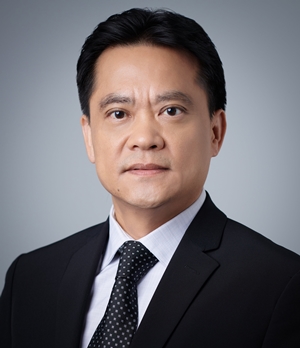
Its founder and CEO Jay Mei, has extensive experience in the field, working at the National Cancer Institute as well as various global pharmaceutical companies including Johnson & Johnson, Novartis, and Celgene, where he led global clinical trial programs.
Based on this experience, the CEO founded Antengene, with its key focus of interest in blood cancer.
Antengene is one of the few Chinese biotechs that have entered Korea.
The company decided to enter Korea as it considers the country an important base in the Asia-Pacific region.
The company is also actively engaged in open innovation with bio companies in Korea.
It is currently conducting joint research with LegoChem Bio.
Through such efforts, Antengene aims to address the unmet medical needs in the Asia-Pacific region, and further expand into a global company.
At a virtual interview with Dailypharm on the 14th, CEO Mei (57) said, “We had decided early on that we would need to enter Korea as the country owns a top-class healthcare system, a solid infrastructure for clinical trials, and has a good environment for R&D.
We plan to continue expanding our business through joint research in partnership with various Korean companies including Lego ChemBio.” The following is the QA with Antengene’s CEO Jay Mei.
What do you think of selinexor’s vision? =Selinexor was approved as a treatment for multiple myeloma (MM) and diffuse large B-cell lymphoma (DLBCL) treatment by the FDA in July 2019.
The drug has been also approved for the two indications in Korea in July last year.
Selinexor is an oral selective inhibitor of nuclear export (SINE) that can be used in combination and as monotherapy.
We are conducting trials in other blood cancers such as myelofibrosis and acute myeloid leukemia, and are investigating its use in T cell or NK cell-related lymphoma as well.
WE plan to continue expanding selinexor’s indication in consideration of its scalability.
-What is your key platform technology and pipeline? =Antengene has opted for a two-track approach in which the company seeks growth through partnership-based technology introductions and the development of original pipelines.
In addition to Karyopharm, we have made partnership agreements with AstraZeneca, Celgene, and LegoChem Bio.
For individual development, our scientists are developing new drugs by investigating new targets.
We have a total of 15 progress in progress ranging from non-clinical trials to Phase III trials that are investigating small-molecule drugs, monoclonal antibody therapies, bispecific antibody drugs, ADCs, etc.
The trials are underway in Asia and the United States, as well as in Japan and Europe.
-What other product do you have in plan to commercialize following selinexor? =We are developing a new drug substance that has the same XP01 inhibiting mechanism of action as selinexor.
We are conducting various clinical trials with Karyopharm for the drug, eltanexor (code name ATG016).
The target indication is the high-risk group with myelodysplastic syndrome, and a global clinical trial currently in progress is a pivotal clinical trial prepared to be used as the basis for approval reviews.
Also, Antengene is developing 6 other new drug candidates for commercialization.
First, ‘ATG008' is a new drug candidate that can be used with mTOR inhibitors for the treatment of cervical cancer.
The company plans to conduct a global trial if the ongoing clinical trial brings positive results.
Also, a clinical trial for a PD-1-based bispecific antibody ‘ATG101' is underway in Australia for patients who cannot see a further effect from existing PD-(L) 1-based immunotherapies.
Within the company, ATG101 is considered a unique substance that has the potential to become a ‘best-in-class’ drug.
-What is the background on your partnership with LegoChem Bio in Korea?
What is your prospect for ADC treatments?
= 'ATG022' that we have in our pipeline is an ADC-based treatment that targets claudin-1.
Claudin is quite often found in gastric cancer.
Antengene is deeply interested in cancers with high prevalence in Asia like gastric cancer and has taken an interest in next-generation ADCs while developing ADCs.
In our search for companies with new innovative technology for developing anticancer substances to conjugate with ADC platforms such as linkers or payloads, we came across LegoChem Bio.
We believe LegoChem Bio owns a unique technology and strong potential for next-gen ADC development.
Both companies have been searching intently for a new candidate substance after signing the partnership.
-In addition to Antengene, the global entry of China-based biotechs and their collaboration with big pharmas have been increasing recently.
What do you make of this trend? = Despite the remarkable economic development the region had made over the past 30 years, the unmet medical need in the Asian region is still relatively high.
Just in the fields of multiple myeloma and lymphoma that Antengene frequently monitors, only half of the drugs approved in the Western countries are approved in Asia.
As such, there are still many areas where patient accessibility needs to be increased.
Thanks to the development of the economy and healthcare systems, the talent pool is rapidly increasing in Asia as well.
As more and more Asian talents with graduate degrees or higher in biology, chemistry, and medicine enter society, there is now an abundant opportunity for Asia-based biopharmaceutical companies to utilize these talents.
We believe that these environmental changes played a part in increasing collaboration opportunities for Asian-based biotech companies that have not entered the global market before.
The entry of these companies will provide benefit the global patients by developing new drugs based on new technologies and medical knowledge.
If European and American companies had fared well in the past 50 or 60 years, I think it is not time for Asian-based companies, including Korea, to play this role now.
I think now is the right time to go global.
-Many Korean biotechs are also seeking to enter the global market.
However, the companies have trouble communicating with the FDA and designing the clinical trial protocols.
As a biotech that has commercialized various products, what know-how do you have to share with the Korean companies? =To become a successful bio-company, the company should first own a competitive product or candidate substance.
Next is talent.
The company needs to recruit a lot of talented people who have global vision and experience, a deep cultural understanding of various countries and can work smoothly as a team with people from other cultures.
In the case of our company, we had set the global strategy to expand into Asian countries including Korea, then to go global from the early stages of establishment.
So we thought securing the two factors mentioned above was of utmost importance.
In particular, as pharmaceuticals are one of the most highly regulated industries, collaboration with regulatory authorities is very important.
Also, we have put in a lot of effort to secure a talented workforce that owns such job competencies.
Also, finding a reliable local partner can be helpful if you don’t have enough time to set up a solid team in each market.
Finding a good partner is as important as securing good talent in-house.
This is why we have established partnerships with various companies including Karyopharm, AstraZeneca, Celgene, and LegoChem Bio.
-Your Korean branch celebrated its 1st anniversary this year.
What other activities do you have in plan for the Korean branch as well as other countries?
= Antengene has established subsidiaries in Korea, China, Australia, Singapore, Hong Kong, Taiwan, and the United States, and is aiming to continue expanding in the future in terms of expanding pipelines and talent pools in addition to geographic areas.
Currently, Antengene is positioning itself as an 'Asia+' company, and our urgent mission is to meet the unmet medical needs in many Asian countries.
Selinexor has been approved in for this purpose in Korea, Australia, Singapore, and China, and is scheduled to be approved in Taiwan and Hong Kong within the year.
The second step is to broaden the partnership with the self-developed substances to advance and become a truly global company.
I first visited Korea while serving as head of a global clinical program at Novartis, and was also able to broaden my business understanding of Asian counties at Celgene.
Building on my experiences, I am determined to drive Antengene's strong growth and expand its businesses in Asia.
-

- 0
댓글 운영방식은
댓글은 실명게재와 익명게재 방식이 있으며, 실명은 이름과 아이디가 노출됩니다. 익명은 필명으로 등록 가능하며, 대댓글은 익명으로 등록 가능합니다.
댓글 노출방식은
댓글 명예자문위원(팜-코니언-필기모양 아이콘)으로 위촉된 데일리팜 회원의 댓글은 ‘게시판형 보기’와 ’펼쳐보기형’ 리스트에서 항상 최상단에 노출됩니다. 새로운 댓글을 올리는 일반회원은 ‘게시판형’과 ‘펼쳐보기형’ 모두 팜코니언 회원이 쓴 댓글의 하단에 실시간 노출됩니다.
댓글의 삭제 기준은
다음의 경우 사전 통보없이 삭제하고 아이디 이용정지 또는 영구 가입제한이 될 수도 있습니다.
-
저작권·인격권 등 타인의 권리를 침해하는 경우
상용 프로그램의 등록과 게재, 배포를 안내하는 게시물
타인 또는 제3자의 저작권 및 기타 권리를 침해한 내용을 담은 게시물
-
근거 없는 비방·명예를 훼손하는 게시물
특정 이용자 및 개인에 대한 인신 공격적인 내용의 글 및 직접적인 욕설이 사용된 경우
특정 지역 및 종교간의 감정대립을 조장하는 내용
사실 확인이 안된 소문을 유포 시키는 경우
욕설과 비어, 속어를 담은 내용
정당법 및 공직선거법, 관계 법령에 저촉되는 경우(선관위 요청 시 즉시 삭제)
특정 지역이나 단체를 비하하는 경우
특정인의 명예를 훼손하여 해당인이 삭제를 요청하는 경우
특정인의 개인정보(주민등록번호, 전화, 상세주소 등)를 무단으로 게시하는 경우
타인의 ID 혹은 닉네임을 도용하는 경우
-
게시판 특성상 제한되는 내용
서비스 주제와 맞지 않는 내용의 글을 게재한 경우
동일 내용의 연속 게재 및 여러 기사에 중복 게재한 경우
부분적으로 변경하여 반복 게재하는 경우도 포함
제목과 관련 없는 내용의 게시물, 제목과 본문이 무관한 경우
돈벌기 및 직·간접 상업적 목적의 내용이 포함된 게시물
게시물 읽기 유도 등을 위해 내용과 무관한 제목을 사용한 경우
-
수사기관 등의 공식적인 요청이 있는 경우
-
기타사항
각 서비스의 필요성에 따라 미리 공지한 경우
기타 법률에 저촉되는 정보 게재를 목적으로 할 경우
기타 원만한 운영을 위해 운영자가 필요하다고 판단되는 내용
-
사실 관계 확인 후 삭제
저작권자로부터 허락받지 않은 내용을 무단 게재, 복제, 배포하는 경우
타인의 초상권을 침해하거나 개인정보를 유출하는 경우
당사에 제공한 이용자의 정보가 허위인 경우 (타인의 ID, 비밀번호 도용 등)
※이상의 내용중 일부 사항에 적용될 경우 이용약관 및 관련 법률에 의해 제재를 받으실 수도 있으며, 민·형사상 처벌을 받을 수도 있습니다.
※위에 명시되지 않은 내용이더라도 불법적인 내용으로 판단되거나 데일리팜 서비스에 바람직하지 않다고 판단되는 경우는 선 조치 이후 본 관리 기준을 수정 공시하겠습니다.
※기타 문의 사항은 데일리팜 운영자에게 연락주십시오. 메일 주소는 dailypharm@dailypharm.com입니다.