- LOGIN
- MemberShip
- 2026-09-15 01:09:42
- The key to treating stroke tx is preventing the recurrence
- by Kim, Jin-Gu | translator Choi HeeYoung | 2022-11-23 06:04:33

Whether the blood vessels in the brain are blocked (brain infarction) or burst (brain hemorrhage), blood should be supplied to the brain normally within a short period of time.
The medical community explains that the golden time of stroke is 4.5 hours.
This means that the problem can be solved only when the symptoms occur and arrive at the hospital within 4 hours and 30 minutes.
The importance of preventive treatment has been increasing.
As the results of stroke treatment have improved compared to the past, drug treatment to prevent the recurrence of patients with stroke once has become more important.
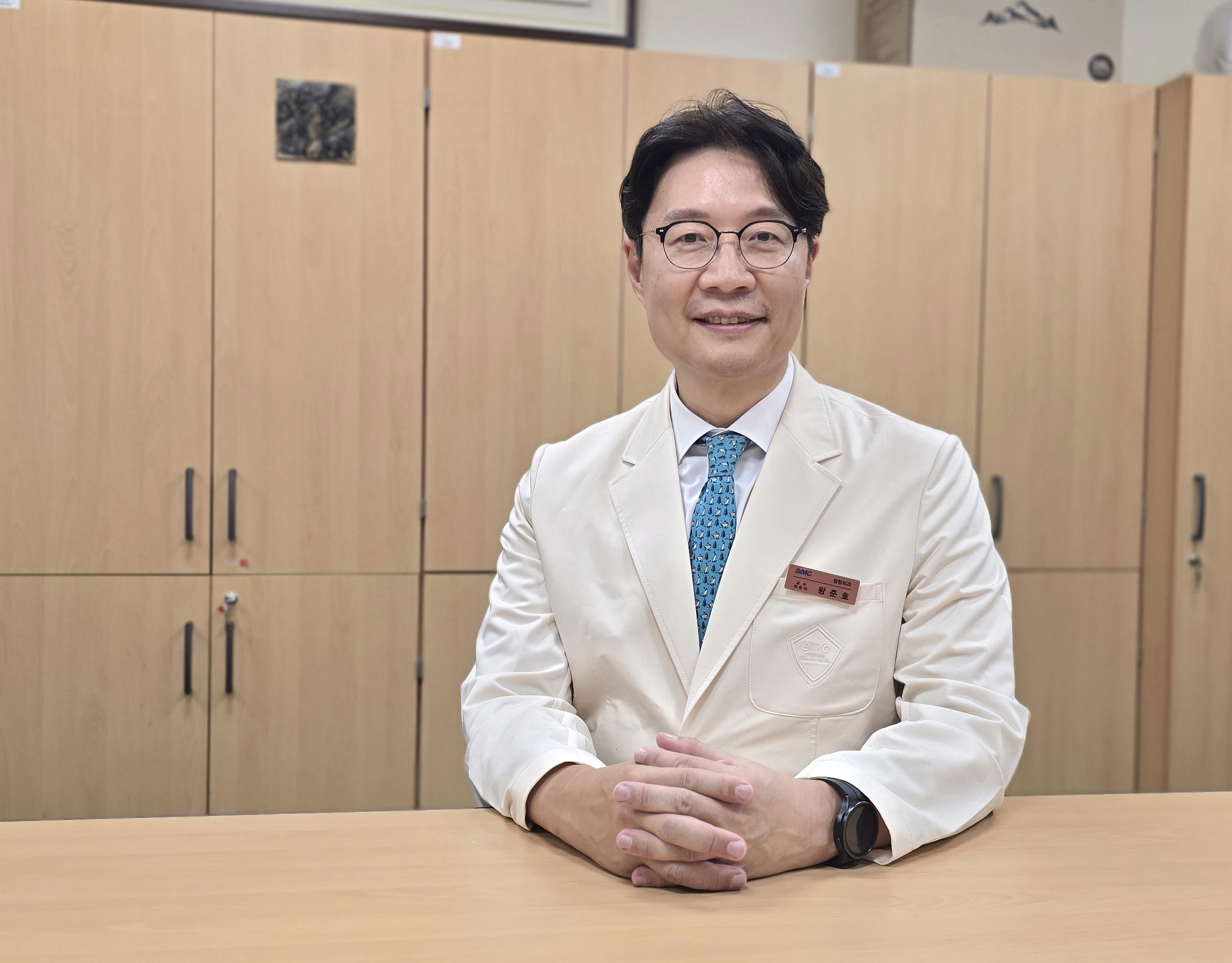
Park Jong-kyu, a professor of neurology at Cheonan Hospital affiliated with Soonchunhyang University, said, "The key to treating stroke drugs is to prevent a recurrence," adding, "Various drugs are used differently depending on the cause.
Since the brain is a drug used in special areas, it should be used carefully in consideration of the side effects of bleeding, he said.
◆ Antiplatelet agents for vascular stroke and anticoagulants for embolic stroke There have been changes in the treatment of stroke over the past decade.
In the past, even if a stroke occurred, it often came late.
Many patients fell down holding the back of their necks and visited the emergency room.
As such, the treatment period has been delayed.
Major surgery was needed and the prognosis was not so good.
As public awareness of stroke has been aroused, treatment performance has improved significantly recently.
Unlike in the past, more and more patients visit the hospital due to initial symptoms, such as poor speech, narrow vision, and poor finger grip.
Treatment methods are also changing.
The importance of drug treatment is increasing as a secondary preventive treatment to prevent recurrence after treating an initial stroke.
Professor Park Jong-kyu said, "Depending on the cause of stroke, drugs are used differently," adding, "In the doctor's opinion, if it is a vascular stroke caused by blood clots accumulating in the cerebral blood vessels, an anticoagulant is used." Professor Park emphasized, "In the case of anticoagulants, it may look better to prevent the recurrence of stroke in that it prevents blood itself from coagulating, but it should be used carefully because there is a high risk of side effects of bleeding." ◆"Anticoagulants have a high risk of bleeding side effects, so they should be used carefully for stroke" According to Professor Park, anticoagulants are mainly used for patients suffering from arrhythmia or heart valve disease at the same time.
The problem is when heart disease is not clearly diagnosed.
In this case, the doctor's judgment is involved.
Professor Park explains, "Clinically, it seems that an embolized blood clot came from under the heart and blocked the cerebral blood vessels, but if there is not enough evidence." It is right to use antiplatelet drugs, but he explains that he uses anticoagulants on a limited basis because there is often a high risk of stroke recurrence.
Multiple cerebral infarctions, in which several blood vessels in the brain are blocked at the same time, are a typical example.
If the left blood vessel of the brain is observed to be blocked when the blood vessel of the brain is photographed, the cerebral infarction area should also be on the left side of the brain.
However, there are patients who often have cerebral infarction on the right side of the brain.
At this time, the location where the blood clot occurred is presumed to be below the heart, not the brain.
At this time, if the patient has no history of heart disease, the anticoagulant is used under the judgment of a doctor that the patient lacks the basis for anticoagulant treatment, but the risk of recurrence is high.
If multiple cerebral infarctions are not the first time, or if cerebral infarction occurs during recurrence prevention treatment with antiplatelet drugs, anticoagulants are used.
Professor Park said, "Most of the patient's risk factors and mechanisms for cerebral infarction are identified and drug treatment is carried out accordingly to prevent a recurrence." ◆ Stroke is the fourth leading cause of death in Korea, and the number of young patients is increasing recently Severe or acute stroke is still treated surgically.
Patients with blocked large blood vessels in the brain or blocked heavy blood vessels and poor symptoms are the targets.
The key is to treat it as soon as possible.
Generally, patients should visit the hospital within 4.5 hours.
Professor Park said, "Finding and operating blood vessels is only possible when large blood vessels are blocked.
In the case of heavy blood vessels and small blood vessels, surgery is attempted only when the symptoms are severe.
He said, "Because there is a risk to the treatment itself, we solve it with thrombolysis through veins instead of surgery." Professor Park explained, "It can be rather harmful to perform surgery after golden time." He added, "This is because the bleeding occurs in weak areas in the process of penetrating blood vessels and supplying blood again, which can be dangerous for patients." Stroke is the fourth most fatal disease in Korea.
According to the HIRA, 590,000 patients were diagnosed with stroke as of 2020.
The perception of stroke has changed and the number of patients is increasing faster as the population ages rapidly.
This is due to the increase in patients with hypertension and hyperlipidemia, which are the underlying diseases of stroke.
The medical community estimates that the incidence rate doubles every 10 years after the age of 55.
Professor Park explained, "As you get older, the risk factors you have are more likely to cause problems, so it will affect the increase in stroke." He said, "Recently, the number of young stroke patients under the age of 45 is increasing rapidly increasing.
"There are concerns as risk factors for stroke, such as sleep apnea, are diversifying," he said.
-

- 0
댓글 운영방식은
댓글은 실명게재와 익명게재 방식이 있으며, 실명은 이름과 아이디가 노출됩니다. 익명은 필명으로 등록 가능하며, 대댓글은 익명으로 등록 가능합니다.
댓글 노출방식은
댓글 명예자문위원(팜-코니언-필기모양 아이콘)으로 위촉된 데일리팜 회원의 댓글은 ‘게시판형 보기’와 ’펼쳐보기형’ 리스트에서 항상 최상단에 노출됩니다. 새로운 댓글을 올리는 일반회원은 ‘게시판형’과 ‘펼쳐보기형’ 모두 팜코니언 회원이 쓴 댓글의 하단에 실시간 노출됩니다.
댓글의 삭제 기준은
다음의 경우 사전 통보없이 삭제하고 아이디 이용정지 또는 영구 가입제한이 될 수도 있습니다.
-
저작권·인격권 등 타인의 권리를 침해하는 경우
상용 프로그램의 등록과 게재, 배포를 안내하는 게시물
타인 또는 제3자의 저작권 및 기타 권리를 침해한 내용을 담은 게시물
-
근거 없는 비방·명예를 훼손하는 게시물
특정 이용자 및 개인에 대한 인신 공격적인 내용의 글 및 직접적인 욕설이 사용된 경우
특정 지역 및 종교간의 감정대립을 조장하는 내용
사실 확인이 안된 소문을 유포 시키는 경우
욕설과 비어, 속어를 담은 내용
정당법 및 공직선거법, 관계 법령에 저촉되는 경우(선관위 요청 시 즉시 삭제)
특정 지역이나 단체를 비하하는 경우
특정인의 명예를 훼손하여 해당인이 삭제를 요청하는 경우
특정인의 개인정보(주민등록번호, 전화, 상세주소 등)를 무단으로 게시하는 경우
타인의 ID 혹은 닉네임을 도용하는 경우
-
게시판 특성상 제한되는 내용
서비스 주제와 맞지 않는 내용의 글을 게재한 경우
동일 내용의 연속 게재 및 여러 기사에 중복 게재한 경우
부분적으로 변경하여 반복 게재하는 경우도 포함
제목과 관련 없는 내용의 게시물, 제목과 본문이 무관한 경우
돈벌기 및 직·간접 상업적 목적의 내용이 포함된 게시물
게시물 읽기 유도 등을 위해 내용과 무관한 제목을 사용한 경우
-
수사기관 등의 공식적인 요청이 있는 경우
-
기타사항
각 서비스의 필요성에 따라 미리 공지한 경우
기타 법률에 저촉되는 정보 게재를 목적으로 할 경우
기타 원만한 운영을 위해 운영자가 필요하다고 판단되는 내용
-
사실 관계 확인 후 삭제
저작권자로부터 허락받지 않은 내용을 무단 게재, 복제, 배포하는 경우
타인의 초상권을 침해하거나 개인정보를 유출하는 경우
당사에 제공한 이용자의 정보가 허위인 경우 (타인의 ID, 비밀번호 도용 등)
※이상의 내용중 일부 사항에 적용될 경우 이용약관 및 관련 법률에 의해 제재를 받으실 수도 있으며, 민·형사상 처벌을 받을 수도 있습니다.
※위에 명시되지 않은 내용이더라도 불법적인 내용으로 판단되거나 데일리팜 서비스에 바람직하지 않다고 판단되는 경우는 선 조치 이후 본 관리 기준을 수정 공시하겠습니다.
※기타 문의 사항은 데일리팜 운영자에게 연락주십시오. 메일 주소는 dailypharm@dailypharm.com입니다.