- LOGIN
- MemberShip
- 2026-09-14 09:10:02
- Immunotherapy for early lung cancer was used
- by | translator Choi HeeYoung | 2023-06-29 05:56:03
As immuno-anticancer drugs can be used in early lung cancer, the prognosis of patients is improving.
Unlike before, when chemotherapy and concurrent chemoradiation were all, it is evaluated that the number of cases of 'complete pathological remission' has increased.
Opdivo was approved by the Ministry of Food and Drug Safety in October of last year for adjuvant therapy before non-small cell lung cancer surgery.
This is the first case in which immuno-oncology drugs have advanced into adjuvant therapy before surgery.
Specifically, Opdivo can be used along with chemotherapy in non-small cell lung cancer patients with tumors larger than 4 cm or with positive lymph nodes.
The treatment proceeds by using 3 cycles of Opdivo + chemotherapy and undergoing surgery.

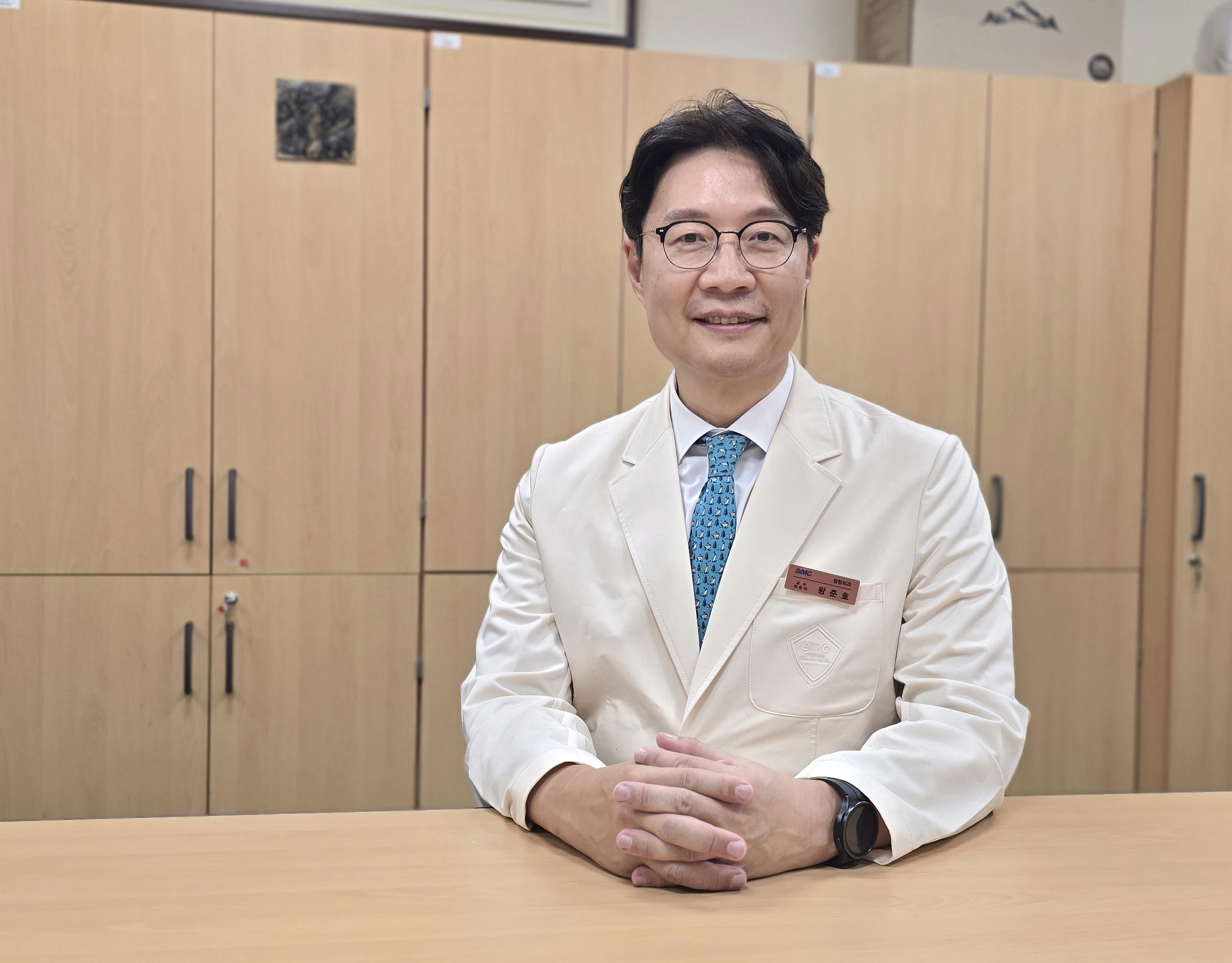
Lee Kun-guk (left), Prof.
Ahn Byeong-cheol (right), National Cancer Center Lee Kun-Guk, a professor of pathology at the National Cancer Center, gave a positive evaluation, saying, "The introduction of immuno-anticancer drugs has greatly increased the number of cases of pathological CR, which were rarely seen before." "CR was observed in 5 out of 7 cases at our hospital.
Through a conversation with Professor Lee and Professor Ahn Byeong-Cheol of the Department of Hematology and Oncology at the National Cancer Center, Daily Pharm examined the changes brought about by the advent of immuno-anticancer drugs in adjuvant therapy before lung cancer surgery.
-We know that the way to expect a complete cure for early lung cancer is through surgical treatment.
What is the percentage of patients who can undergo surgery by stage?
There are cases of recurrence even after surgery.
What if there has been an unmet need?
=Professor Ahn Byeong-Cheol (referred to as Professor Ahn): Looking at each stage, 80% of stage 1, 60% of stage 2, and 50% of stage 3A can be operated.
It is known that all stages 1 to 3A can be operated, but not all patients can operate because of the complex effects of various factors, such as the patient's psychological burden for surgery and the state of the disease, in addition to the stage.
Lung cancer is a carcinoma with a high recurrence rate, with studies showing that even stage 1 patients recur up to 40%.
Three out of four patients with stage 3 disease with a high stage show recurrence.
Therefore, there has always been an unmet need for therapies that can reduce the recurrence rate and improve the prognosis.
There have been many attempts to increase the success rate of surgery by reducing the size of the tumor as an adjuvant therapy before surgery for patients with a difficult surgery.
However, chemotherapy, which was a representative preoperative adjuvant therapy, did not show a therapeutic effect to such an extent that the pathological CR ratio remained in the single digits.
Simultaneous chemoradiation had limitations due to toxicity and side effects such as pneumonia, decreased lung function, and adhesions.
-Recently, immuno-anticancer drugs appeared in adjuvant therapy before lung cancer surgery in combination with chemotherapy.
I am curious to see how much treatment has been achieved with the experience of actually prescribing this therapy.
=Professor Lee Kun-Guk (Professor Lee): So far, immunotherapy was used as an adjuvant therapy before surgery in 7 cases, and in 5 of them, so-called pathological CR, in which lung cancer was not found, although lumps remained, could be confirmed.
Certainly, it shows a significantly improved treatment effect compared to previous preoperative adjuvant therapy.
Previously, pathological CR was rarely reached.
Therefore, it was difficult to evaluate the treatment effect.
If complete pathological remission is frequently achieved, as in the combination of Opdivo and chemotherapy, a significant part of the worry can be relieved from the perspective of medical staff.
If it is confirmed that there is no cancer mass when observed under a microscope, a lot of burdens is relieved for pathologists who have to quantify the treatment effect.
-Are there any concerns about missing the right time for surgery when treated with adjuvant therapy before surgery?
=Professor Ahn: I think it is homework to be solved in the preoperative adjuvant treatment.
Statistically, less than 10% of patients who were able to undergo surgery may miss the timing due to adjuvant therapy before surgery and may not be able to undergo surgery.
However, the ratio of patients who underwent surgery in clinical trials with this immunotherapy was 83.2%, higher than 75.4% of the chemotherapy alone group.
Ultimately, I think it is important for medical staff to select and treat patients who are suitable for preoperative adjuvant therapy.
-Opdivo + chemotherapy combination therapy has been approved for use regardless of the PD-L1 expression rate and major gene mutations.
Is there any difference in actual effect?
=Professor Ahn: The higher the PD-L1 expression rate, the higher the therapeutic effect of immuno-anticancer drugs.
The higher the PD-L1 expression rate, the lower the risk of recurrence and the higher the pathological complete response rate.
However, since it showed a significant improvement effect in all patient groups regardless of the PD-L1 expression rate, it is prescribed regardless of the actual clinical setting.
=Professor Lee: In patients with target gene mutations, the effect of immuno-anticancer drugs is relatively low, and a follow-up study on this is likely to be necessary.
However, I think it is meaningful in that the opportunity for adjuvant therapy before immuno-oncology surgery is open to all patients.
-It is expected that the importance of pathological examination will be further emphasized in lung cancer treatment.
What do you think the pathological diagnosis system needs to change in the future?
=Professor Lee: I think the pathology examination fee needs to be improved.
About 400 genes are identified by the NGS test at medical institutions, and the fee is 1.5 million won based on the main hospital, which is a secondary hospital.
This is a very small amount compared to about 6 million won in the United States.
In Korea, the number of genes required to be tested is low compared to the number of genes that need to be tested, making it difficult for NGS testing to be universalized.
Personally, I think NGS testing will become more common in more hospitals if NGS testing is lightweight and appropriately priced so that only necessary genes are tested rather than testing all 400 genes.
-

- 0
댓글 운영방식은
댓글은 실명게재와 익명게재 방식이 있으며, 실명은 이름과 아이디가 노출됩니다. 익명은 필명으로 등록 가능하며, 대댓글은 익명으로 등록 가능합니다.
댓글 노출방식은
댓글 명예자문위원(팜-코니언-필기모양 아이콘)으로 위촉된 데일리팜 회원의 댓글은 ‘게시판형 보기’와 ’펼쳐보기형’ 리스트에서 항상 최상단에 노출됩니다. 새로운 댓글을 올리는 일반회원은 ‘게시판형’과 ‘펼쳐보기형’ 모두 팜코니언 회원이 쓴 댓글의 하단에 실시간 노출됩니다.
댓글의 삭제 기준은
다음의 경우 사전 통보없이 삭제하고 아이디 이용정지 또는 영구 가입제한이 될 수도 있습니다.
-
저작권·인격권 등 타인의 권리를 침해하는 경우
상용 프로그램의 등록과 게재, 배포를 안내하는 게시물
타인 또는 제3자의 저작권 및 기타 권리를 침해한 내용을 담은 게시물
-
근거 없는 비방·명예를 훼손하는 게시물
특정 이용자 및 개인에 대한 인신 공격적인 내용의 글 및 직접적인 욕설이 사용된 경우
특정 지역 및 종교간의 감정대립을 조장하는 내용
사실 확인이 안된 소문을 유포 시키는 경우
욕설과 비어, 속어를 담은 내용
정당법 및 공직선거법, 관계 법령에 저촉되는 경우(선관위 요청 시 즉시 삭제)
특정 지역이나 단체를 비하하는 경우
특정인의 명예를 훼손하여 해당인이 삭제를 요청하는 경우
특정인의 개인정보(주민등록번호, 전화, 상세주소 등)를 무단으로 게시하는 경우
타인의 ID 혹은 닉네임을 도용하는 경우
-
게시판 특성상 제한되는 내용
서비스 주제와 맞지 않는 내용의 글을 게재한 경우
동일 내용의 연속 게재 및 여러 기사에 중복 게재한 경우
부분적으로 변경하여 반복 게재하는 경우도 포함
제목과 관련 없는 내용의 게시물, 제목과 본문이 무관한 경우
돈벌기 및 직·간접 상업적 목적의 내용이 포함된 게시물
게시물 읽기 유도 등을 위해 내용과 무관한 제목을 사용한 경우
-
수사기관 등의 공식적인 요청이 있는 경우
-
기타사항
각 서비스의 필요성에 따라 미리 공지한 경우
기타 법률에 저촉되는 정보 게재를 목적으로 할 경우
기타 원만한 운영을 위해 운영자가 필요하다고 판단되는 내용
-
사실 관계 확인 후 삭제
저작권자로부터 허락받지 않은 내용을 무단 게재, 복제, 배포하는 경우
타인의 초상권을 침해하거나 개인정보를 유출하는 경우
당사에 제공한 이용자의 정보가 허위인 경우 (타인의 ID, 비밀번호 도용 등)
※이상의 내용중 일부 사항에 적용될 경우 이용약관 및 관련 법률에 의해 제재를 받으실 수도 있으며, 민·형사상 처벌을 받을 수도 있습니다.
※위에 명시되지 않은 내용이더라도 불법적인 내용으로 판단되거나 데일리팜 서비스에 바람직하지 않다고 판단되는 경우는 선 조치 이후 본 관리 기준을 수정 공시하겠습니다.
※기타 문의 사항은 데일리팜 운영자에게 연락주십시오. 메일 주소는 dailypharm@dailypharm.com입니다.