- LOGIN
- MemberShip
- 2026-09-24 03:41:46
- "Disparity btwn innovation speed and policy… Economic Eval"
- by Son, Hyung Min | translator Hong, Ji Yeon | 2025-11-24 06:19:44

With the acceleration of technological development and the surge of high-cost innovative treatments for ultra-rare diseases, critics argue that the current framework, which focuses on cost-effectiveness, can no longer sustain the balance between patient access and financial sustainability.
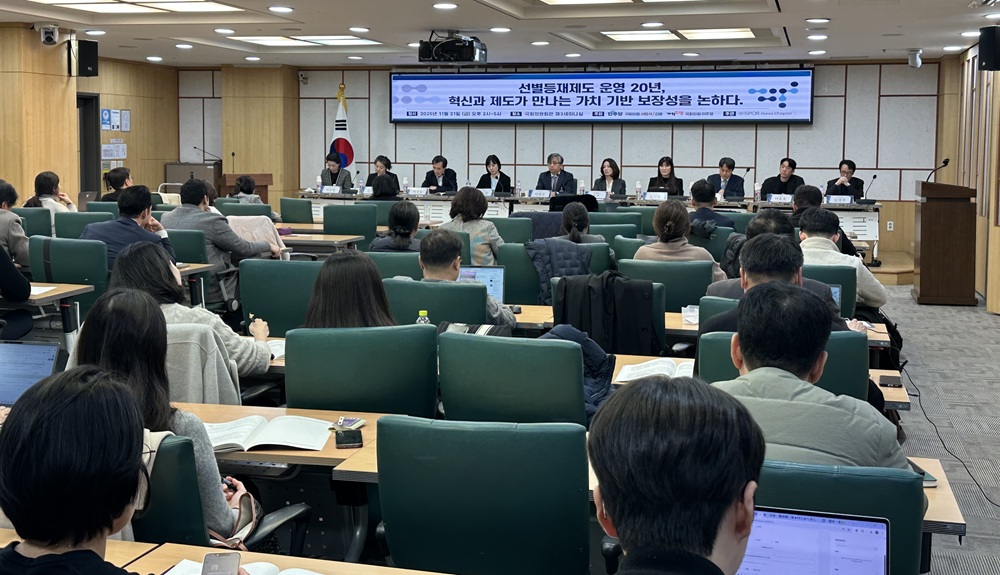
At the forum, '20 Years of the Positive List System for Pharmaceutical Reimbursement: Value-Based System Where Innovation Meets Regulation,' held in the National Assembly on November 21, academia, government, industry, and the media all agreed on the necessity of 'modernization of economic evaluation.' The event was jointly hosted by Democratic Party Rep.
Seo Young-seok and Rep.
Kim Yoon, and Reform Party Rep.
Lee Joo-young, and organized by the ISPOR Korea Chapter.
The system focused on cost-effectiveness limits evaluation of innovative new drugs Korea's economic evaluation system was introduced in 2006 with the government's announcement of the Drug Expenditure Rationalization Plan (DERP).
The PLS, introduced the following year, established the principle that all drugs must be jointly verified for clinical usefulness and economic value through the economic evaluation process, with only those drugs proven to be cost-effective included in the reimbursement list.
Although the Economic Evaluation Exemption track was established in 2015 to provide an exceptional pathway, the principle that cost-effectiveness proof is mandatory for new drug reimbursement has persisted for 20 years.
However, the industry points out that this cost-effectiveness-centric structure clashes with the rapidly evolving paradigm of innovative new drugs, creating a growing gap between regulation and technology that cannot be ignored.
BaeChan Kim, Unit Head at Boehringer Ingelheim Korea, directly criticized the current economic evaluation framework, stating that it has failed to keep pace with changes in treatment paradigms over the last decade.
Kim said, "The problem is that as the speed of innovation has accelerated, the complexity of clinical evidence has increased exponentially," and added, "The expansion of areas where standard Randomized Controlled Trials (RCTs) are practically impossible, such as ultra-rare disease treatments, has led to an increase in innovative new drugs approved based only on single-group trials.
However, the current economic evaluation and reimbursement system is still aligned with the RCT standard from 20 years ago.
Economic evaluation requires evolution, not reinforcement." Kim highlighted Korea's position by citing international comparisons.
According to data from the U.S.
Pharmaceutical Research and Manufacturers of America (PhRMA), analyzing reimbursement rates for innovative new drugs across nine developed countries, Australia, Korea, and Canada fall behind significantly, with reimbursement rates about half the average.
Kim pointed out, "It is a contradictory structure where countries called 'innovation leaders' are actually the furthest behind in access to innovative new drugs." There was also criticism that limiting economic evaluation to a cost-effectiveness-centric structure is no longer realistic.
Lee Sang-il, Head of the Department of Policy Planning at the National Evidence-based Healthcare Collaborating Agency (NECA), assessed, "The challenges of securing both patient access and financial sustainability have become incomparably difficult compared to the past, due to accelerated aging, the emergence of ultra-high-cost innovative drugs, and increased uncertainty in clinical evidence," and said, "We are in an era where cost-effectiveness alone cannot explain even half of the decision-making process." Lee particularly cited the absence of entry evaluations and the failure to establish a post-market evaluation system as the biggest structural problems.
Lee said, "For high-cost drugs where there is a disparity between RCT data and real-world clinical data, the insurer needs to conduct a health-economic evaluation directly or through objective verification by a third party.
The sustainability of drugs entering via the Risk-Sharing Agreement (RSA) or economic evaluation exemption tracks cannot be guaranteed without post-market management." He emphasized the need to establish a Korean-style Managed Entry Agreement (MEA) that defines the post-market evaluation system concurrently with the listing decision.
Seo Young-seok and Rep.
Kim Yoon, and Reform Party Rep.
Lee Joo-young, and organized by the ISPOR Korea Chapter. It has been confirmed that such a problem exists not only in the industry but also in the media covering the regulatory sector.
This suggests that the difficulties in the field are repeatedly exposed in official discussions and in practical, real-world cases.
Yun-Ho Eo, a journalist at DailyPharm, pointed out, "The core message from the field is that the reason for the increase in economic evaluation exemptions is not that companies want the exemption, but that the current health-economic evaluation itself has become impossibly difficult to handle." Eo added, "Companies are mobilizing law firms, economic evaluation expert agencies, and external consultants because they cannot manage the process using only in-house personnel," and stated, "This shows that Korea's economic evaluation procedures are extremely complicated and rigid on a global scale.
Korea's low drug prices and slow listing speed are recognized as a policy reality by the industry." Agrees on modernizing the economic evaluation system...Has proposed directions to strengthen review and evaluation In response to concerns raised by industry and academia, the government acknowledged the limitations of the existing economic evaluation framework and agreed on the need for institutional improvement.
However, it clarified that what is needed is not the reinforcement of the system, but its refined modernization.
The government highlighted securing evaluation flexibility and expertise, and establishing a post-market management system that reflects actual clinical outcomes after listing, as the core directions for reform.
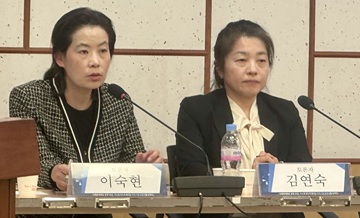
I realized the limitations firsthand after working in the field for five months," and added, "We cannot be satisfied with the current system." Kim then presented two tasks: first, the need to define 'innovativeness' more clearly and precisely in the guidelines adopted by HIRA; and second, the need to establish a structure that systematically evaluates actual clinical outcomes after listing and feeds that back into reimbursement.
Kim said, "Post-market evaluation is fundamental to all healthcare programs, but it is not yet fully established in Korea.
We must create a structure that confirms actual efficacy while minimizing the burden on the clinical and industrial sectors," and added, "Our system lacks flexibility and expertise compared to those of developed countries." We will develop the system in the most practical way possible." The Health Insurance Review & Assessment Service (HIRA) also acknowledged the conflict between technological innovation and the existing evaluation framework, stating that an adjustment to the evaluation structure is unavoidable.
Sook-hyun Lee, Head of HIRA's New DRG Review Division, said, "Ultra-high-cost innovative new drugs like cell and gene therapies, ADCs, and one-shot treatments are entering the actual listing stage," and added, "The question is whether the cost-effectiveness evaluation alone is sufficient to determine the appropriate price for these drugs." Lee stated, "We cannot process all drugs through the economic evaluation system, nor can we exempt all drugs from it," explaining the currently operating hybrid management system.
She emphasized that various forms of conditional reimbursement models have been introduced, including the refund-type RSA, the pre-listing/post-evaluation model, and the requirement for post-listing submission of clinical data.
Regarding the recent increase in economic evaluation exemptions, Lee stressed that this should be understood not as a hurdle-free passage, but as a conditional system intended to expand access.
Lee explained, "The uncertainty of ultra-high-cost/ultra-rare drugs cannot be resolved simply by increasing the ICER threshold or reinforcing the economic evaluation system," and concluded, "Given the variance in RWD quality, the gap in evidence levels, and the difficulty of quantitative evaluation, a comprehensive adjustment of the evaluation structure is necessary." Lee then added, "Economic evaluation and its exemption cannot be viewed as a simple dichotomy.
We will expand post-market management and value-based evaluation to match technological changes." The government largely agrees with industry and academia on the problems and has repeatedly emphasized that the time calls for a more sophisticated evaluation method, not for strengthening regulations.
The assessment is that the core task for the next 20 years will be precisely balancing the conflicting policy goals of access, sustainability, innovation, uncertainty, and pre- and post-market evaluation.
-

- 1
댓글 운영방식은
댓글은 실명게재와 익명게재 방식이 있으며, 실명은 이름과 아이디가 노출됩니다. 익명은 필명으로 등록 가능하며, 대댓글은 익명으로 등록 가능합니다.
댓글 노출방식은
댓글 명예자문위원(팜-코니언-필기모양 아이콘)으로 위촉된 데일리팜 회원의 댓글은 ‘게시판형 보기’와 ’펼쳐보기형’ 리스트에서 항상 최상단에 노출됩니다. 새로운 댓글을 올리는 일반회원은 ‘게시판형’과 ‘펼쳐보기형’ 모두 팜코니언 회원이 쓴 댓글의 하단에 실시간 노출됩니다.
댓글의 삭제 기준은
다음의 경우 사전 통보없이 삭제하고 아이디 이용정지 또는 영구 가입제한이 될 수도 있습니다.
-
저작권·인격권 등 타인의 권리를 침해하는 경우
상용 프로그램의 등록과 게재, 배포를 안내하는 게시물
타인 또는 제3자의 저작권 및 기타 권리를 침해한 내용을 담은 게시물
-
근거 없는 비방·명예를 훼손하는 게시물
특정 이용자 및 개인에 대한 인신 공격적인 내용의 글 및 직접적인 욕설이 사용된 경우
특정 지역 및 종교간의 감정대립을 조장하는 내용
사실 확인이 안된 소문을 유포 시키는 경우
욕설과 비어, 속어를 담은 내용
정당법 및 공직선거법, 관계 법령에 저촉되는 경우(선관위 요청 시 즉시 삭제)
특정 지역이나 단체를 비하하는 경우
특정인의 명예를 훼손하여 해당인이 삭제를 요청하는 경우
특정인의 개인정보(주민등록번호, 전화, 상세주소 등)를 무단으로 게시하는 경우
타인의 ID 혹은 닉네임을 도용하는 경우
-
게시판 특성상 제한되는 내용
서비스 주제와 맞지 않는 내용의 글을 게재한 경우
동일 내용의 연속 게재 및 여러 기사에 중복 게재한 경우
부분적으로 변경하여 반복 게재하는 경우도 포함
제목과 관련 없는 내용의 게시물, 제목과 본문이 무관한 경우
돈벌기 및 직·간접 상업적 목적의 내용이 포함된 게시물
게시물 읽기 유도 등을 위해 내용과 무관한 제목을 사용한 경우
-
수사기관 등의 공식적인 요청이 있는 경우
-
기타사항
각 서비스의 필요성에 따라 미리 공지한 경우
기타 법률에 저촉되는 정보 게재를 목적으로 할 경우
기타 원만한 운영을 위해 운영자가 필요하다고 판단되는 내용
-
사실 관계 확인 후 삭제
저작권자로부터 허락받지 않은 내용을 무단 게재, 복제, 배포하는 경우
타인의 초상권을 침해하거나 개인정보를 유출하는 경우
당사에 제공한 이용자의 정보가 허위인 경우 (타인의 ID, 비밀번호 도용 등)
※이상의 내용중 일부 사항에 적용될 경우 이용약관 및 관련 법률에 의해 제재를 받으실 수도 있으며, 민·형사상 처벌을 받을 수도 있습니다.
※위에 명시되지 않은 내용이더라도 불법적인 내용으로 판단되거나 데일리팜 서비스에 바람직하지 않다고 판단되는 경우는 선 조치 이후 본 관리 기준을 수정 공시하겠습니다.
※기타 문의 사항은 데일리팜 운영자에게 연락주십시오. 메일 주소는 dailypharm@dailypharm.com입니다.