
- LOGIN
- MemberShip
- 2026-04-24 08:27:20
- Product
- The Court rejects petitions on drug pricing negotiations
- by Kang, Shin-Kook May 03, 2024 05:53am
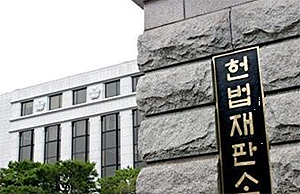
- The Constitutional Court of Korea. The Constitutional Court of Korea (hereafter referred to as the Constitutional Court) made a decision to reject pharmaceutical company’s petition, which alleged a constitutional violation related to the drug pricing negotiations order. The Constitutional Court recently announced that the clause of a claim, including the violation of the constitution, related to drug pricing negotiation does not fall under the category of exercising governmental authority subject to a constitutional petition. As a result, the request for petition has been declared invalid. The clause in dispute was 'Rules on Criteria for the Health Care Benefits of the National Health Insurance Service,' which allows the Minister of the Ministry of Health and Welfare (MOHW) to order the President of the National Health Insurance Service (NHIS) to negotiate with a manufacturer related to a pharmaceutical that already is reimbursable for health care benefits, acts related to the Minister of MOHW ordering President of the NHIS to negotiation with the petitioners, and acts related to the President of the NHIS disclosing negotiations schedule to the petitioners and notifying of submitting required documents. The Constitutional Court stated, "The clause in question is an organizational regulation that merely specifies the Minister of the MOHW to instruct the President of the NHIS to negotiate. Therefore, the rule does not infringe upon the petitioners' fundamental rights." The Constitutional Court ruled that "The Minister of the MOHW issued an internal order directing the President of the NHIS as a supervisory agency. It does not fall under the criteria of exercising governmental authority subject to constitutional appeals." And added, "Moreover, the Court highlighted that the notice does not directly affect the petitioners' rights and obligations. Therefore, historically, it does not qualify as a subject of a constitutional appeal."
- Product
- Will Prolia be able to continue on its high growth in KOR?
- by Moon, sung-ho Apr 24, 2024 05:45am
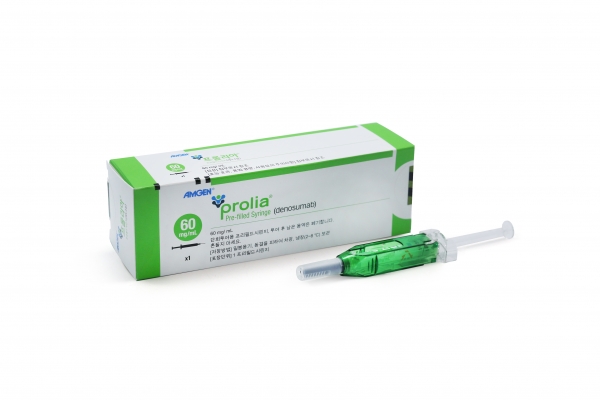
- The government will extend reimbursement for osteoporosis drugs, including Prolia (denosumab, Amgen). In particular, along with the reimbursement extension, the government has allowed switching between osteoporosis drugs. According to industry sources on the 20th, the Ministry of Health and Welfare recently issued an administrative notice of the ‘Details on the Standards and Methods for Applying Medical Benefits’ that outlined the contents above. Without special objections, the standards are expected to be in force from May. The main point of the amendment was to extend the reimbursement standard for major osteoporosis drugs used in the field. Specifically, the Ministry of Health and Welfare has decided to expand the criteria to allow borderline patients who have reached the T-score treatment goal to continue to receiving reimbursement for osteoporosis drugs. Patients who have been recognized as eligible for reimbursement for a T-score of -2.5 or less (T-score≤-2.5) when measuring bone mineral density using Dual-Energy X-ray Absorptiometry (DXA) of the central bone, will be eligible for an additional year of reimbursement if their T-score improves during treatment to a T-score greater than -2.5 but less than or equal to -2.0. If the T-score remains greater than -2.5 but less than or equal to -2.0 thereafter, reimbursement will be allowed for another year. In the additionally approved period, patients will be allowed to switch between raloxifene, bazedoxifene, bisphosphonate, and denosumab. The patients may also switch to zoledronic acid injections. The MOHW explained, "After referring to textbooks, guidelines, clinical papers, and academic society (expert) opinions, we decided to extend reimbursement to allow patients diagnosed with a T-score of -2.5 or less via DEXA to continue using the treatment if their T-score improves to -2.5 but less than or equal to -2.0." Meanwhile, the government's reimbursement extension for osteoporosis drugs sheds light on Prolia, which currently dominates the osteoporosis prescription drug market. Since this year, the MOHW has been scrutinizing osteoporosis drugs, known as selective focus review, due to the sharp rise in their claims. In essence, the government’s focus is on Prolia, among osteoporosis drugs. According to the drug research institution IQVIA, Prolia generated KRW 151.1 billion in prescription sales last year after posting KRW115.7 billion in 2022 in Korea. As a single product, it is second only to Keytruda (pembrolizumab), an immuno-oncology drug with unrivaled sales, in the domestic prescription market. The single drug’s sales in the domestic prescription market are comparable to those of mid-sized pharmaceutical companies Despite the government's scrutiny, Prolia's growth is expected to continue with the osteoporosis drug's reimbursement expansion and switching. An industry insider who requested anonymity said, "Last year, the top three items in terms of sales were Keytruda, Prolia, and Lipitor, and the sales of each exceeded the total sales of all mid-sized domestic pharmaceutical companies. Given the level of influence a single item can have on market trends, we need to consider reclassifying the threshold for blockbusters to drugs that post more than KRW 50 billion in annual sales.”
- Product
- ‘Wholesale inventory of 110 antitumor drugs at its lowest'
- by Kang, Hye-Kyung Apr 12, 2024 05:41am
- The Korean Pharmacists for Democratic Society (President: Kyung-Lim Jeon, KPDS) has pointed out the issue of antineoplastic drugs being out of stock. In the second week of April, the KPDS revealed through the ‘Stock Shortage Drugs of the Week Report’ that an estimated wholesale stock of 110 antineoplastic drugs has run out. The 110 items with less than 5% wholesale stock remaining include ▲ Xeloda Tab 500mg (Boryung), ▲Hydrine Cap 500mg (Korea United Pharm), ▲Agrylin Cap 0.5mg (Takeda Pharmaceuticals Korea), ▲ Tasigna Cap 150mg (Novartis Korea), ▲ Alecensa Cap 150mg (Roche Korea), ▲ Kisqali Tab 200mg (Novartis Korea), ▲ Alkyloxan Tab (JW Pharmaceutical), ▲ Purinetone Tab (Korea United Pharm,) ▲ Tasigna Cap. 200mg (Novartis Korea), ▲ Afinitor Tab 10mg (Novartis Korea), etc. The society reported "The number of items with a wholesale inventory of 5% or less compared to the supply was confirmed to be 110. This is the fourth consecutive week more than 100 items are having difficulties in wholesale supply, following 105 items in the third week of March, 117 items in the fourth week, and 108 items in the first week of April.” There were also 6 drugs with supply interruptions and shortages, which is an increase from the 3 in the previous week. The medicines discontinued or in short supply included 1 oral warfarin drug, 1 diabetic macular edema treatment, 2 eye surgery aids such as cataract surgery, and 2 anti-malignant tumor drugs. Among these, the shortage of the warfarin drug was due to the aftermath of the discontinuation of Jeil Pharmacuetical’s same product in February last year. Although a substitute is available for the warfarin formulation, the substitute is 30 times more expensive than the warfarin drug. The other drugs with supply interruptions and shortages are known to have substitutes available. The KPDS said, “The hospital-reported shortages included antineoplastic drugs, emergency hypertension drugs, enteral nutrition drugs, treatments for sexual precocity and prostate cancer, plasma protein albumin, ulcerative colitis drugs, and osteoporosis injections. The shortages of emergency hypertension drugs, enteral nutrition drugs, and albumin, which were pointed out as an issue in the previous report, do not seem to have been resolved due to the lack of substitutes."
- Product
- KPA, “to discuss ingredient prescribing in upcoming FAPA"
- by Kim JiEun Mar 05, 2024 05:49am
- The Korean Pharmaceutical Association (KPA) held ‘The 70th General Meeting of Senior Representatives’ for 2024. Kwang-Hoon Choi, President of the Korean Pharmaceutical Association (KPA), has announced that he would assign the proposal for active ingredient prescribing as the priority agenda for the Federation of Asian Pharmaceutical Associations (FAPA) Congress, which is scheduled to be held in October this year. Choi aims to convince the Korean citizens and the government to support active ingredient prescribing. In preparation for this proposal, the KPA is discussing with the government to simplify the substitute drug post-notification procedures. During ‘The 70th General Meeting of Senior Representatives’ on the 28th, KPA (President: Kwang-Hoon Choi) voted to partially revise last year’s KPA presidential election rules. Moreover, a Q&A session was held with the senior representatives and the executive branch to discuss current issues involving pharmacists During the meeting, KPA reviewed seven items, including ‘Revising the election rules for President of KPA and head of branch office,’ and reached decisions. The election rules were decided during last year’s meeting for senior representatives, but the rules were partially revised and finalized during this year’s meeting. In addition, KPA finalized the following matters: ▲2023 audits, and the approval of annual revenue and annual expenditure budget ▲Voting rights for the review of the 2024 business plan ▲Voting rights for the review of the 2024 approval of annual revenue and annual expenditure budget ▲Confirmation of the vice president’s position ▲Approval of a new member of the board of directors ▲Consideration of suggestions from the regional branch. Moreover, the management reports and audits of 2023 regarding KPA’s affiliated agencies, including K-Pharm news, Korea Institute for Pharmaceutical Policy Affairs (KIPPA), and Korea Pharmaceutical Information Center (KPIC), have been reported. During the meeting, the senior representatives voiced many questions about the welfare of the pharmacist society and current policies. The questions were mainly about resolving drug shortages, the system for transferring prescriptions, a system crash during the public transfer of prescriptions, and KPA’s support for introducing active ingredient prescribing. Furthermore, several representatives expressed their concerns regarding KPA’s affiliated agencies, such as KPIC and KIPPA, and ongoing businesses. Regarding KIPPA, there were concerns raised about the malfunctioning KIPPA website and the lack of research on current issues faced by pharmacists. Several senior representatives raised concerns about KPIC’s ongoing business for developing a cloud-based PSP system, which aims to be accomplished by the end of this year. Upon receiving questions and comments from the senior representative regarding the issue, Choi stepped forward and explained KPA’s stand and the association’s strategy. “With the expansion of telemedicine prescribing, there has been an increasing need for active ingredient prescribing. The KPA executive branch continues to support this proposal,” Kwang-Hoon Choi, President of the KPA, stated. “KPA regards simplifying the substitute drug post-notification procedures as a stepping stone for the next step and is discussing this issue with the government. During the FAPA Seoul congress, we aim to prioritize the proposal for active ingredient prescribing as an agenda and gain support from the Korean citizens and the government,” Choi added.
- Product
- NA Opp party in unison say ‘it's time for INN prescribing'
- by Kim JiEun Feb 29, 2024 06:03am
- Opposition lawmakers unanimously voiced the need to introduce International Nonproprietary Names (INN) prescribing and the resolution of the unstable drug supply and demand. The National Assembly representatives who attended the 70th Regular General Assembly of the Korean Pharmaceutical Association Delegates that was held at The K Hotel in Seoul on the 28th pledged their active support in resolving the pending issues and policies that remain in Korea’s pharmaceutical affairs. Rep. Ihk-pyo Hong (floor leader, Democratic Party of Korea), Rep. Min-seok Kim (member, Democratic Party of Korea), Rep Sang-hee Kim (member, Democratic Party of Korea) Speaking at the event, Rep. Ihk-pyo Hong, the floor leader of the Democratic Party of Korea, said, "International conflicts are even affecting the medicines I take. They have disrupted the global supply chain and affected the supply of medicines. The government needs to come up with a solution to resolve the issue of this unstable drug supply." Rep. Ihk-pyo Hong added, “We need to institutionalize and legislate INN prescribing. The concerns in health insurance finances caused by original drugs is an international issue. We need to make efforts to institutionalize INN prescribing." "The pilot project for non-face-to-face medical treatment is a major topic these days. A public electronic prescription system should be established in the process of institutionalizing non-face-to-face treatment to minimize side effects related to the current prescription transmission. Rep. Min-Seok Kim, a Democratic Party lawmaker (member of the Health and Welfare Committee), said, "It is problematic that the pilot project for non-face-to-face treatment was implemented in the name of deregulation. It is urgent to institutionalize a public electronic prescription delivery system. I have INN prescribing written down an agenda that needs legislation. We all know that it is a main issue that needs resolution for medical order and publicity in our society.” Rep. Min-seok Kim added, “INN prescribing is an issue that should be approached through a social agreement, and I hope the issue is presented for the first time in the next National Assembly. We need to discuss the working environment and grounds for young pharmacists. They would also want to work under a fair order. We will work to create that fair order with pharmacists who have served on the side of the people." Rep Sang-hee Kim, another member of the Democratic Party of Korea, said, "In no case should the public have difficulty buying medicine at pharmacies due to a lack of medicine. It is so difficult to restore medical school admissions to the number that was reduced after negotiation with doctors during the separation of prescribing and dispensing. Also, the Korean medicine pharmacist system was created as a result of the Korean medicine dispute. Such side effects of wrong policies are difficult to resolve and lead to public burden. I am grateful to the pharmacists for their participation in putting the people first."

- Product
- Forxiga return policy in question amid AZ-Daewoong dispute
- by Kang, Hye-Kyung Feb 05, 2024 05:54am
- Forxiga Tab. There was initial confusion among front-line pharmacies regarding the return policy for Forxiga, which is set to be withdrawn from the Korean market. However, it appears that the issue is now being resolved. According to the pharmacy industry sources, there has been a disagreement between AstraZeneca Korea and Daewoong Pharmaceutical regarding the return policy of Forxiga tablet following the decision for Forxiga withdrawal from the domestic market. In 2018, AstraZeneca Korea entered into a partnership agreement with Daewoong Pharmaceutical to co-promote Forxiga and Xigduo. After the end of the domestic distribution contract with Daewoong Pharmaceutical, confusion arose in the market. Currently, HK inno.N has taken over the sales of Forxiga. During this period, pharmacists were denied returning the drugs. A pharmacist commented on the experience such as "I have initially requested a return for the drug to the distributor, but the answer was 'We do not accept returns because the marketing and distribution agreement has ended. Instead, contact AstraZeneca.' However, AstraZeneca said, 'We do not take returns because we are no longer involved in the distributing business.' Both parties rejected returns." "When I was making returns due to changes in the prescription, having two parties reject the returns was confusing," said the pharmacist. It was reported that other pharmacies had also experienced confusions when processing returns. Daewoong has officially informed wholesalers, hospital pharmacy departments, and pharmacies that 'Starting from the 19th, distribution of Forxiga will be suspended due to the contract ending. Although the sales and distribution of existing stock will continue, any returns must be made through AstraZeneca Korea once the distribution and sales are suspended.' On the 30th, AstraZeneca clarified its return policy and informed that 'Returns can be processed through HK inno.N’s cooperating wholesalers, and the pharmacies that have direct transactions with Daewoong can continue to make returns through Daewoong.' On the 30th, AstraZeneca Korea and HK inno.N entered into a partnership agreement to distribute Forxiga and co-promote Xigduo Tab and Sidapvia Tab. "We will do our best to stabilize the supply of Forxiga for patients who are using it for the treatment of diabetes, chronic heart failure, and chronic kidney disease. AstraZeneca Korea will be responsible for the marketing and sales of Forxia and HK inno.N will manage the distribution of Forxiga by the end of this year," AstraZeneca Korea and HK inno.N stated.
- Product
- Shortage no more for Saxenda?...'will increase supply'
- by Kang, Hye-Kyung Jan 15, 2024 05:36am
- The supply of Saxenda, which had been showing stock shortages in pharmacies nationwide, is expected to soon increase in Korea. Novo Nordisk announced on the 10th that it has been gradually increasing the supply of Saxenda from this month. The increased supply is expected to reduce the hassle of pharmacies that have been sending patients away due to stock shortages and resolve the inconvenience of patients having to visit many pharmacies looking for any that have Saxenda in stock. In response to Dailpharm’s report on “Saxenda’s shortage prolonged…raises inconveniences,” Novo Nordisk said, "We are aware of the recent stock shortages of Saxedna at pharmacies that resulted from the increased demand for Saxenda due to due to increased interest in weight loss in the end-of-year and the beginning-of-year seasons. However, we have been continuously producing and distributing the drug to Korea. The company added that it has been gradually increasing the supply since January. Novo Nordisk said, "We are currently experiencing high global demand for all of our products, which is causing supply and capacity constraints across our product portfolio. Over the past 6 months, we have invested around KRW 11 trillion in our production facilities alone to ensure a stable supply of our products.” However, the company explained that is not easy to predict the exact timing of when the shortage will end, as it will take time for the increased supply to enter the market to ensure safety and quality. "We deeply understand the importance and need to ensure the continuity of treatment for our patients and are making the most efforts to stabilize the supply of our drugs for patients in Korea.” Meanwhile, there are still posts and inquiries being uploaded to local community cafes and beauty cafes asking for pharmacies or clinics that have Saxenda in stock. There are also posts uploaded to pharmacist communities asking about Saxenda supply plans or requesting exchanges.
- Product
- Saxenda’s shortage prolonged…raises inconveniences
- by Kang, Hye-Kyung Jan 10, 2024 05:42am
- Saxenda's prolonged out-of-stock status is inconveniencing consumers as well as pharmacies. As many patients set New Year’s resolutions of losing weight at the beginning of the year, the lack of Saxenda is causing dissatisfaction among pharmacies and consumers. Even diabetes patients are experiencing the inconvenience of insulin stockouts, including Saxenda. According to a local pharmacy, Saxenda’s stock shortage began to surface around November last year. Since then, supply and demand disruptions spread across the country, and it is now commonplace for patients to leave empty-handed from. pharmacies, even with prescriptions. Pharmacist A said, " Although many people are deciding to lose weight with the start of the new year, they can't fill their prescriptions because the pharmacies do not have the medicine. Many of those who come in with prescriptions complain that they have already visited several pharmacies due to Saxenda’s stock shortage.” While some doctors have reportedly notified the patients of this stock shortage and are not issuing prescriptions, many doctors who prescribe outpatient prescriptions do not give prior notice, leaving patients to do all the legwork. Pharmacist B said, "I've only heard that the manufacturer is experiencing difficulties in meeting the supply and that the supply will resume later this month, but I don’t know if this is accurate information. Most pharmacies will have also run out of stock due to the prolonged shortage.” Due to its rarity, local communities and diabetes communities are filled with posts asking which pharmacies still have remaining stock of Saxenda. This has led to some illegal trading between individuals or marketing by clinics. Because second-hand platforms forbid drug transactions between individuals, this has led to illegal transactions through open chat rooms. Dailypharm also covered the issue of second-hand trading of self-injectable drugs in open chat rooms in October last year. Pharmacist C said, “There are also posts that promote their clinics using the desperate psychology of consumers in finding Saxenda in stock. Although these advertisers use different nicknames for each internal cafe, the content is the same. I suspect these are PR posts uploaded by part-timers. It doesn't seem right that some clinics are using the stock shortage to promote their clinics when pharmacies are out of stock of Saxenda and unable to dispense the drug. Meanwhile, the Korean Pharmacists Association for a Healthy Society urged the government to take a responsible stance and address the out-of-stock drugs. "The severity of the problem is illustrated by dozens of posts on cancer cafes by cancer patients saying that they were unable to receive necessary treatment due to stock shortage, and the piling comments and inquiries on which hospitals have the necessary drugs. The government should take the best measures to ensure that citizens have the belief that the drugs they take today will be available tomorrow. We look forward to the government's efforts in ensuring the public to use essential medicines without worries."
- Product
- KPDS demands gov. action to end chemotherapy drug shortages
- by Kang, Hye-Kyung Jan 03, 2024 05:40am
- The Korean Pharmacists for Democratic Society (KPDS) The Korean Pharmacists for Democratic Society (CEO: Hyeong-geun Shin, KPDS) has criticized the government’s system for the stable supply of essential medicines. The KPDS stated on the 28th that “5-fluorouracil, referred to as 5-FU, is a chemotherapy drug used to treat several types of cancers, including colorectal cancer, esophageal cancer, pancreatic cancer, and breast cancer. It is considered essential for treatments that it has been listed in the WHO’s list of essential medicines, and in Korea, it has been designated and managed as a shortage prevention drug (SPD) since 2010. However, over the past month, the unstable supply and demand of 5-FU have led to delays in chemotherapy schedules, by 1 to 4 weeks, and frequent switches to alternative drugs in cancer patients. The gravity of the current issue concerning drug availability for cancer patients is evident in online communities. Many patients have shared their experiences of traveling from other cities to hospitals in Seoul, only to find that they cannot receive necessary treatments due to drug shortages. Furthermore, these online communities serve as a platform for patients to exchange information on which hospitals currently have the essential medications in stock. “The concern is that the drug-producing companies have not disclosed the reasons behind the causes of drug shortages and have failed to propose alternative solutions to resolve this issue. Instead, the company has only explained the challenges in the CRO processes as their explanation for the difficulties,” the KPDS insisted. And “The government's response to the issue has been inadequate,” the KPDS criticized, “The government claims that there is a system, through collaboration with related agencies and experts, in place for essential medicines for monitoring supply and demand stages and receiving reports from companies on supply halts. However, there is a lack of publicly available information on the government's actions and corrective measures. Additionally, the Ministry of Food and Drug Safety (MFDS) website does not provide the latest reports on supply halts, as required by the reporting system for supply-halted medicines.” The KPDS has requested a release of several information related to the 5-FU supply issue: ▲Reporting by JW Pharmaceutical regarding the supply halt of 5-FU (Products: 5-FU Injection Choongwae 5ml/10ml/20ml), as required by the reporting system for supply-halted medicines ▲Details on the government’s review of JW Pharmaceutical’s reports, as required by the reporting system for supply-halted medicines ▲Drug monitoring reports from MFDS and Korea Orphan & Essential Drug Center regarding the supply halt of 5-FU ▲Supply and demand monitoring results from HIRA’s Korea Pharmaceutical Information Service (KPIS) regarding the supply halt of 5-FU ▲Content of the contract between the government and JW Pharmaceutical regarding the designation of 5-FU as shortage prevention drug (SPD) ▲Additional reports submitted by JW Pharmaceutical to the Ministry of Health and Welfare (MOHW) and MFDS concerning the 5-FU issue, besides the reporting system for supply-halted medicines ▲Corrective measures implemented by MOHW regarding the fair distribution of 5-FU supply to patients in need ▲Additional corrective measures implemented by MOHW and MFDS to facilitate the 5-FU supply ▲Corrective measures to stabilize 5-FU supply in the future. “The government should take effective measures, or show responsible actions, to instill trust in citizens that essential medicines taken today will continue to be available in the future,” the KPDS urged, “We expect that the government will put efforts to ensure that citizens can access essential medicines without difficulty.”
- Product
- ‘Cutting budget for essential drugs neglects public health'
- by Kang, Hye-Kyung Nov 10, 2023 05:19am
- The Korean Pharmacists for Democratic Society (CEO Hyeong-geun Shin) criticized the full budget for the stable supply of essential national medicines and urged for additional budget allocation. On the 9th, before the National Assembly’s Health and Welfare Committee presented and deliberated on the next year's budget and proceeded with deliberation, KPDS submitted an opinion after analyzing the 2024 budget plan. Regarding the budget plan, KPDA said, “Regarding the development and support of the pharmaceutical and bio industry, the R&D budget has been expanded significantly, including the existing Research-Focused Hospital Development Project (approximately KRW 60.5 billion), the National New Drug Development Project (approximately KRW 57.9 billion), the Pharmaceutical Industry Development And Support Project (approximately KRW 35.9 billion), Pan-Ministerial Regenerative Medicine Technology Development Project (approximately KRW 35.3 billion), Global Research Cooperation Support Project (approximately KRW 28.7 billion), Electropharmaceutical Technology Development Project (approximately KRW 6.6 billion), Drug Delivery Treatment Technology Development Project (approximately KRW 7.6 billion), Biohealth Investment Infrastructure Linked R&D Project (KRW 2.7 billion), and the new Korean ARPA-H Project (KRW 49.5 billion) and the Joint Learning-Based New Drug Development Acceleration Project (approximately KRW 2.3 billion), etc. The investment is more noteworthy as the R&D budgets of only the Ministry of Health and Welfare, the Korea Disease Control and Prevention Agency, and the Ministry of Food and Drug Safety were increased among the 31 ministries in Korea.” However, KPDA pointed out, “Although it is a small amount compared to the budget plan set for developing new drugs and fostering the pharmaceutical and bio-industry, which costs hundreds of billions of won, we analyzed the budget plan and found some points worth pointing out to improve issues that the public can feel.” The first issue was regarding the budget implementation ▲to resolve concerns about the unstable supply and demand of medicines in the field KPDA said, “A total of 247 drugs were reported to have supply interruptions and supply shortages in 2022 to the MFDS, and 172 in the first half of 2023 alone. However, in MFDS’s 2024 budget, the budget that ensures a stable supply of national essential drugs was completely cut. The KRW 1 billion that was allocated to improve the supply of medicines through consignment manufacturing for 6 items in 2023 was cut.” Therefore, assuming that there are at least 25 drugs to which the government must respond, an additional KRW 7.5 billion should be allocated, KRW 300 million per drug. KPDA said, “One of the difficulties pharmacies complain about out-of-stock drugs is the lack of a way to explain when the out-of-stock issue will be resolved or explain the out-of-stock situation to patients or prescribers. This ultimately depends on the drug supply and demand situation. So we need to improve the transparency of information regarding the drug supply and demand. For this, the Ministry of Health and Welfare announced that it will disclose distribution information through the Korea Pharmaceutical Information Service Center (KPIS), but most medical practitioners are not aware of this, and even if they go to the website, it is difficult to find the information they want. Therefore, the KPIS webpage should be completely rebuilt so that pharmacies, medical institutions, and patients can easily check the status of out-of-stock items and be aware of the expected release date of necessary drugs.” The second was ▲expanding the budget for drug safety management and side-effect damage relief Under the Yoon Suk-Yeol administration, the Ministry of Food and Drug Safety announced a fast-track program for innovative products and announced that it would improve the system to allow faster approval of medical products, but the budget for licensing reviewers in charge of reviewing the medical products had not increased for several years. KPDA said, "In the 2024 budget, the number of personnel for registering clinical trial information and reviewing reports has been reduced from 7 to 3. There is a need to increase the related budget to expand the number of medical product-related review personnel to 500 people by 2024, as in Japan.” Regarding the Side Effect Damage Relief Fund, "Even though the related fund was established 10 years ago, many people are completely unaware of it, and there have been only about 100 cases of damage relief per year for several years. The government should have actively provided guidance and promotion so that people who have suffered damage from the side effects of medicines can seek relief, but its budget is only KRW 80 million. Considering how this year’s advertising budget for drug safety is KRW 3 billion, there is an urgent need to actively execute a promotion budget for the fund.” Regarding the budget for ▲expanding the publicness of pharmacies, KPDA requested, "The government must gradually expand the number of support pharmacies to ensure people's access to medicines, and expand the system so that at least one late-night pharmacy can be operated by each local governments in the future." In addition, KPDA also insisted on ▲securing a minimum budget to guarantee reproductive health. They said, “After the 2019 decision to deem abortion unconstitutional, guaranteeing women’s reproductive health became a major social issue, but all content related to reproductive health was missing from the 2024 budget. We ask for continued research, including the opening of a website for providing related information counseling services at the government level.” In particular, KPDA added, “It is more essential than ever to secure a budget for the out-of-stock drug situation that is still unresolved."
