
- LOGIN
- MemberShip
- 2026-04-25 01:06:15
- Product
- Only Paxlovid's prescription continues instead of Lagevrio
- by Jung, Heung-Jun Mar 29, 2022 05:54am
- Lagevrio, a Merck coronavirus PO treatment, has been supplied to pharmacies since the 26th, but has not yet been prescribed. According to pharmacies on the 28th, no code has been registered in the billing program. Pharmacy A in Seoul said, "In the case of clinics, prescriptions will only be possible if they are prescribed by hand," adding, "There is no prescription of Lagevrio yet." Other pharmacies received 20 supplies, but there was no prescription over the weekend, so Lagevrio's inventory remained the same. Another pharmacy B in Seoul said, "Only Paxlovid was prescribed over the weekend, and there was no prescription of Lagevrio. It will be prescribed little by little this week." As Paxlovid is relatively effective and is supplied first, the follow-up treatment, Lagevrio, is expected to play a complementary role. Paxlovid should be used to be taken in patients with liver disease and kidney disease. Lagevrio has fewer restrictions on taking than Paxlovid, but pregnant women or children and adolescents under the age of 18 are excluded from the medication. Pharmacy C in Gyeonggi do is expected Lagevrio to be used complementarily only for patients who do not have or cannot use Paxlovid." In this regard, the government also stipulates that Paxlovid should be prescribed first, but patients with limited medication or difficulty using other treatments can be prescribed Lagevrio.
- Product
- Butterfly effect caused by brand name purchase
- by Kim JiEun Mar 23, 2022 05:50am
- From Rx drugs to OTC drugs, front-line pharmacies have recently had much time since the outbreak of COVID-19. Some say that pharmacy sales are also the biggest boom since the division of labor. Obviously, sales of generic drugs for certain diseases in most pharmacies have increased. However, pharmacists point out that there are concerns about the current situation as sales increase due to increased OTC sales. From Rx to OTC Pharmacists are most concerned about the increased demand for OTC centered on consumers' specific brand name. Due to the incident that began with Director Jeong Eun-Kyeong's remarks, patients visited various pharmacies, so there was no stock of Tylenol. Nine months have passed since the outbreak in June last year, inventory of Tylenol has not been available at front-line pharmacies. Cold drugs Coldaewon, Theraflu, Cough syrup, Eunkyosan Ext., Pueraria Root have driven consumer demand. Due to the influence of SNS or online, demand has increased because a list of essential OTC drugs for COVID-19 home treatment has been shared on SNS or online. An official from a pharmacy chain said, "These days, consumers tend to stick to certain products or ingredients regardless of their diseases because they have such a strong belief in information they have encountered through the Internet or SNS." The official said, "In a series of situations, starting with the Tylenol crisis, followed by Coldaewon, Theraflu, Cough syrup, Eunkyosan Ext., and Pueraria Root, patients' unilateral nominations are prioritized over pharmacists' consultation and choice. I can recommend drugs depending on the patient's personal disease or condition through consultation with a pharmacist, but such an opportunity has disappeared." Accelerated cold-drug out of stock Butterfly effect brought about by demand for product name Some analysts say that the rapid influx of demand for certain generic drugs in the early stages of home treatment is the beginning of the current massive shortage of generic drugs related to colds. The demand for certain cold medicines has driven pharmacists to become anxious to secure inventory. They say that certain products are not easily purchased at pharmacies, stimulating consumer anxiety, leading to excessive demand for cold medicine. Pharmacists said that if the pharmacist had been able to choose and recommend products to suit the patient's symptoms or needs at a time when demand for cold medicine soared, the cold medicine shortage could have been less situation or delayed. A pharmacist in Seoul said, "Currently, there is generally no stock of products to sell when patients visit cold medicines, effects, or oriental medicine. Of course, demand has soared and this is the root cause of the cold medicine shortage crisis. However, it is true that it accelerated the shortage because it preferred certain products and certain ingredients." Pharmacist Lee said, "If the pharmacist had been able to combine or distribute drugs based on ingredients according to the patient's personal situation or disease, the current situation could have been further delayed." Pharmacist Lee added, "As demand is focused on Rx drugs and this leads to sold out, it has caused excessive demand due to anxiety."
- Product
- Paxlovid shortage to be resolved with Molnupiravir approval?
- by Jung, Heung-Jun Mar 21, 2022 05:55am
- The shortage of Paxlovid at pharmacies is expected to be partially resolved with the government's emergency approval of Merck (MDS)’s oral COVID-19 treatment ‘molnupiravir.’ On the 18th, the Central Disease Control Headquarters had announced that 88,276 courses of Paxlovid remain in stock in Korea. Also, with the grant of RAT(rapid antigen test)-based confirmation of COVID-19, the average daily prescription of Paxlovid increased over twofold from 2,404 in the second week to 5,184 in the third week of this month. With more than 300,000 new confirmed cases occurring steadily, the domestic inventory of Paxlovid is expected to be exhausted by the end of this month. The government is planning to introduce additional courses of Paxlovid in Korea soon, but many base pharmacies are already out of stock and unable to dispense the drug. Pharmacy A at Seoul said, “The amount and period of Paxlovid shipments aren’t constant, but we receive around 100 courses per shipment, and this doesn’t last a week at the current prescription rate. We have none in stock right now.” It is expected that the government seems to be working to expand treatment options through the emergency approval of molnupiravir. The government had previously conducted a review on the emergency use of the drug in November last year but had withheld approval due to poor preventive effects. Although the MFDS did not disclose the specific schedule for approval, the government did express its intention to start the review. If so, the drug is expected to be approved this month at the earliest. The Korean government had previously signed an advance purchase agreement with Merck for 242,000 courses of its drug. If the drug is approved under the emergency approval process, the drug is expected to be distributed through the existing base pharmacies because a real-time demand monitoring system has been well established in the pharmacies and is easily manageable by the local government. Pharmacy A said, “We have received no news about molnupiravir yet, but since there are already enough base pharmacies, I don’t think the government will separately designate more for the drug.” However, as the method of administration and eligible sublets differ for the two drugs, additional education and guidance will be provided for the use of molnupiravir. Both drugs are taken twice a day for 5 days, but the total amount of capsules taken differs, 30 for Paxlovid and 40 for molupiravir. Also, the kind of side effects that arise and the subjects allowed for use differ. Earlier, the Korea Pharmaceutical Association had prepared a medication guide for patients using Paxlovid. Therefore, a medication guide for molnupiravir is also expected to be prepared after its approval and indication are finalized.
- Product
- Defective tablets of Lipitor were found
- by Kim JiEun Feb 08, 2022 05:54am
- (left) A case of powder mixing in 90 tablets of 20 mg of Lipitor at the end of last year, and (right) a broken drug was recently found in the same product Defective drugs have been found one after another in Lipitor, one of the most frequent prescription drugs, requiring caution when preparing. According to a pharmacist in Seoul on the 3rd, a defective tablet was recently found in a bottle of Lipitor again following November last year. The pharmacist said he found a suspicious substance while charging the drug to ATC in November last year. A broken tablet came out of the medicine container, and the manufacturing number of the drug in which the problem was found is 100005333068. The pharmacist said he could not confirm whether the number of tablets was insufficient due to other drugs that had already been charged, as he found in the process of filling ATC with drugs. The pharmacist estimated that foreign substances were mixed during the manufacturing process. The problem is that more than two months after this happened, defects were found again in the same product recently. One of the tablets was broken into half. The pharmacist saw that the tablet was broken during the distribution process and looked at the medicine container again, but did not find any remnants of the broken tablet. The manufacturing number of the packaging, where the defective drug was found this time, is 180164582867. The pharmacist said, "I think the powder was mixed before the drug was made into tablets," adding, "As defective drugs were found one after another in the same drug, I thought it was necessary to check whether there was a problem in the manufacturing process." This pharmacist said, "It's famous original medicine". He added that he doesn't readily understand that such a defective drug is found. Pfizer said a precise confirmation process is needed for related content. As related information has been received, the government plans to take action through a pharmacy to confirm the drug in question. A company official said, "There have been no cases of defective drugs such as powder mixing or tablet damage in Lipitor, especially similar cases in related lot numbers," adding, "We need to collect related drugs and check them accurately." In the case of refining damage, we regularly check whether the amount set during the production process meets the set acceptance standards such as the presence or absence of refining abnormalities, but it is possible that we have not been able to completely distinguish the damage control during the packaging stage, in the case of powder mixing cases, additional confirmation is needed, he added.
- Product
- Actinum is a troublemaker?
- by Kim JiEun Feb 07, 2022 05:57am
- Actinum is out of stock due to lack of inventory. The key is to return distribution inventory after the 11th. Multivitamin Actinum, which ambitiously entered Korea, is in a position to become a headache. It is not expected to be easy to order at pharmacies for the time being. According to an official at Dongwha Pharm on the 14th, Actinum's sales ended in November. As of this day, the sales authority of Donghwa Pharmaceutical has expired. The problem is that domestic pharmaceutical companies that will take over the copyright of Actinum after Donghwa Pharmaceutical have not been decided, making it virtually unclear whether they will sell it in the future. Actinum is a domestic generic of Arinamin sold by Takeda. Immediately after its launch, aggressive marketing was conducted, such as conducting public advertisements through famous celebrities. However, it was directly hit by the boycott of Japanese pharmaceutical companies' drugs in 2019, and was pushed back by a series of competitive products. The industry believes that this situation has a direct impact on the selection of pharmaceutical companies after Dongwha Pharm. An official from Dongwha Pharm said, "I think Takeda is looking for a partner in a domestic pharmaceutical company." He said, "We also asked the headquarters to discuss inventory or settlement issues when the pharmaceutical company to be acquired is decided ahead of the end of the contract, but we are in a difficult situation as there has been little talk so far. The contract ended at the end of December, and we have agreed to sell it only until January 11th, he said. This situation has recently been reflected in front-line pharmacies. At major drug online malls, Actinum EX is currently out of stock and cannot be ordered. According to local pharmacy pharmacists, only a small amount of products can be ordered from some wholesalers. A local pharmacy pharmacist said, "Actinum is not a popular item, but we have secured inventory because there are cases where patients who have taken it before are looking for it, but it has not been easy to order recently," adding, "We have only ordered a small amount of it by asking the wholesaler." Dongwha Pharm said it is difficult to return or settle distribution inventory at the company level since the 11th when the sales contract expired. An official from Dongwha Pharm said, "It is frustrating that the copyright has not been clearly cleared up by the company," adding, "It will be difficult to settle or return inventory as it does not have its own authority on distribution inventory after January 11th. However, we plan to deal with all distribution products as much as possible in November, he said.
- Product
- The gov is pushing to supply COVID-19 PO tx with pharmacies
- by Kang, Shin-Kook Jan 12, 2022 06:04am
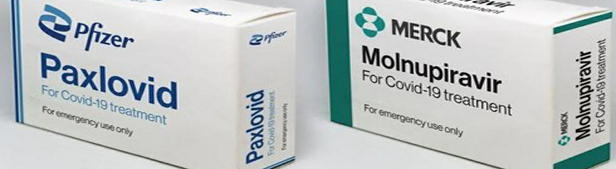
- The government is taking full-fledged steps to supply COVID-19 PO treatment to pharmacies. The Central Disaster and Safety Counters Headquaters (CDSCHQ) will hold an online meeting this afternoon (10th) with drug organizations participating and discuss oral corona treatment prescriptions and dispensing. In other words, the direction of the CDSCHQ has been virtually determined from prescription, preparation, and drug delivery. The CDSCHQ will then provide online education on preparation, medication guidance, and precautions to 270 pharmacies nationwide that are in charge of supplying oral corona treatments. The decision is based on the judgment that education is needed because the method of taking the medicine is complicated. The main dosage of Paxlovid should be taken Nimatrelvir 300 mg (2 pink tablets of 150mg) and Ritonavir 100mg , twice a day (12 hours) for 5 days. According to the CDSCHQ, Pfizer's Paxlovid is expected to enter Korea around the 13th, with initial supplies expected to be less than 50,000 people. According to the current status of government contracts, treatments for a total of 1 million and 44,000 people have been secured, including Paxlovid foe 762,000 people and MSD Molnupiravir for 242,000 people. Oral treatments can be used in mild and moderate patients with high probability of severe illness. However, as the volume is limited, it is highly likely to be administered to elderly patients aged 60 or older in hospitals or life treatment centers. People with underlying diseases such as chronic lung disease, diabetes, cancer, and obesity can also be targeted. The method of delivery of the drug has not been decided yet. More than 270 pharmacies nationwide, which are in charge of preparing drugs for home care patients, prepare and supply oral treatments as regional bases. Now, when a doctor gives a prescription, the pharmacy dispenses medicine, and public health centers and local government employees deliver the medicine to home treatment patients. Discussions are still underway over whether oral treatments will follow this method or whether pharmacies will be in charge of delivery. An official from the MOHW said, "We discussed with the Pharmaceutical Association on the 7th about the delivery method, but it was not concluded," adding, "In the beginning, it could be a direction to expand the role of pharmacies in the future."
- Product
- Lee’s pledge to reimburse hair loss drug creates buzz
- by Jung, Heung-Jun Jan 06, 2022 06:09am
- The news that presidential candidate Lee Jae-Myung's is considering reimbursement of hair loss treatments as his election pledge is drawing attention for days. However, as many unresolved issues including creating empathy on its need, budgetary projections, and review of beneficiaries remain, it is unclear whether this may be practically enforceable. Although most pharmacies are welcoming the pledge, the expectation is that some pharmacies that have been selling non-reimbursed hair loss drugs at a lower price will not be welcoming the reimbursement. Lee’s vow to review reimbursement of hair loss treatments has generated continuous buzz in online communities. Since the drugs cost over ₩30,000 every month and require continuous administration, their reimbursement is raising expectations of reducing the burden. However, the reimbursement of hair loss treatments may not benefit all those affected. Reimbursement will apply depending on the type of hair loss, cause, and degree of reimbursement. Therefore, unlike the rumors on social media, not all will be able to receive reimbursement. In Seok Oh, Pharmaceutical Benefit Director of the Korean Pharmaceutical Association, said, “Hair loss treatments are non-reimbursed, therefore their prices are set at a higher level. In general, patients pay over ₩30,000 every month for the drugs. If these drugs are reimbursed, a price ceiling will be set on the drugs, and a budgetary projection must be made. Also, reimbursing hair loss means that hair loss is recognized as a disease, thus specific classifications must also be made for this disease for insurance.” Oh added, “Also, not all people will be able to receive reimbursement, since the condition and type of hair loss vary greatly by person. Some may be due to stress, some due to skin irritation, and some may be at a stage where taking a drug may no longer be effective” If reimbursed, patients who had avoided treating their condition will also visit clinics and hospitals, increasing the number of patients. Consequently, pharmacies are also expected to see more hair loss patients. However, some local pharmacies that have attracted customers by selling hair loss drugs at a lower price may not welcome the change. Pharmacists A from Gyeonggi-do said, “It is good news for pharmacies that have not sold hair loss products before in the sense that their shares of the pie will increase. However, for pharmacies that specialize or sell many hair loss drugs that have attracted patients with a very low price, the harm may outweigh the benefits. Meanwhile, according to the market research institution IQVIA, the top-grossing hair loss treatments (finasteride, dutasteride) in Korea in 2020 were Propecia (₩41.3 billion), Avodart (₩38.4 billion), Monad (₩6.2 billion), Mypecia (₩ 5 billion), Damodat (₩3.3 billion), Finated (₩2.3 billion), Neodart (₩1.7 billion), Zygard (₩1.4 billion), Duted (₩1.2 billion) Jdart (₩1.3 billion).
- Product
- Is the price of Paxlovid reasonable?
- by Jan 03, 2022 05:55am
- On the 27th, Paxlovid, an oral treatment for COVID-19, was approved for EUA by the MFDS, and the Pharmaceutical Association for Health Society asked questions about the insolvency and effectiveness of the screening process on the 30th. The Health Pharmaceutical Association said, "Paxlovid is expected to be used in patients with high risk among mild and moderate coronavirus patients, and is known to have side effects such as taste abnormalities, diarrhea, and elevated blood pressure, and to be careful of various drugs such as anti-antibodymetic drugs." The Pharmaceutical Association said it would inquire about ▲ the inadequacy of the Ministry of Food and Drug Safety's examination process, ▲ possibility of effectiveness in the field, ▲ whether there is a treatment benefit for the use of mild patients, ▲ lack of efforts to solve the supply shortage problem,▲ in the absence of fair price negotiations, and▲ the lack of review of the supply of North Korean treatments. ▲How did Paxlovid finish its evaluation in 6 days?= Other new drugs also undergo a preliminary review process and have an average approval review process of 10 months. In addition, the data on the approval of new drugs are so vast that it is impossible to review all of them in six days. Therefore, there is a concern about insolvency screening, or it is doubtful whether it is a permit review relying on foreign regulators. ◆Is the restriction on clinical subjects actually effective?= Subjects of EPIC-HR, an important clinical trial of Paxlovid, were mainly mild and moderate patients who were not hospitalized, those with a high risk of COVID-19, those with one or more symptoms within 5 days, those who were not vaccinated, and those who participated as soon as possible after diagnosis.However, in actual clinical trials, those who have been vaccinated, those who are not at high risk, those who have passed five days of onset of symptoms, those who have been delayed from diagnosis to treatment, and patients with moderate or higher can also take medicine. Further research is needed on the effect of this. ◆Is it an appropriate treatment to administer to mild patients= So far, the proven effect of Paxlovid is the effect of lowering the risk of hospitalization and death. And the actual price is unknown, but the U.S. transaction price is said to be approximately 630,000 won. It is necessary to examine whether it is an appropriate price to administer 630,000 won to treatments to lower the risk of hospitalization and death of COVID-19 patients. The Institute for Clinical and Economic Review analyzed Remdesivir in a traditional cost-effectiveness method, and assessed that it had a therapeutic benefit of $2470 when used for secondary and severe patients, but only $70 when used for mild patients. The current COVID-19 is a global public health crisis. The Dominican government is considering generic for Paxlovid to respond to COVID-19. And it is known that this drug can be produced without any special technology. The government should prioritize public protection, not Pfizer's interests, to cope with infectious diseases. ◆Is the price of Paxlovid at the disposal of the seller? = Originally, drug pricing needs sufficient negotiation efforts between the government and pharmaceutical companies. Excessively high prices can undermine the patient's right to treatment and too low prices can undermine pharmaceutical companies' motivation for development. In order to simultaneously achieve patient accessibility and promotion of R&D in the pharmaceutical industry, fair drug prices should be considered. Drug price information should be disclosed as transparently as possible, but Pfizer continues to undermine price transparency with a public health crisis as a weapon in the COVID-19 situation. ◆Why don't we discuss the supply of Paxlovid to North Korea= North Korea is one of the few countries that have yet to start getting vaccinated against COVID-19. There are many reasons why vaccines are not supplied to North Korea, but it is known that there is a heavy burden on the storage conditions below the freezer and the exemption of side effects that occur in healthy people. Since Paxlovid is used in patients with COVID-19 symptoms, side effects can be avoided and storage can be done at room temperature for a long time, thereby overcoming these limitations. Since Pfizer doesn't apply Paxlovid patents in 95 low-income countries, including North Korea, the South Korean government will be able to consider producing and supplying generic for Paxlovid to North Korea using domestic pharmaceutical facilities for humanitarian purposes.
- Product
- Losartan's re-prescription & re-dispensing are imminent
- by Jung, Heung-Jun Dec 06, 2021 05:54am
- While the government's follow-up measures based on the results of Losartan impurity detection are expected to be announced this week, attention is being paid to the work guidelines for re-prescription and re-prevention. Items with problems with all manufacturing numbers are expected to be re-prescribed and re-manufactured, and items with problems with some manufacturing numbers will be exchanged. Earlier, the MOHW and the MFDS held two meetings with the Korean Medical Association and the KMA, the KHA, and the KSHP. In addition, meetings with the KPBMA and the KPDA were held and plans were made for follow-up measures such as cost settlement. According to the government's discussions with organizations so far, exchanges are likely to take the same measures as the detection of Azido impurities in September. If exchanged at a pharmacy according to patient needs, it will be changed to a normal lot number, and 110% of the drug price will be added to the drug price to settle by the pharmaceutical company. Since the Korean Pharmaceutical Association already has a related system and the exchange rate was low earlier, it is expected that there will be few problems with the exchange again this time. In the case of re-prescription, it will be a method in which the pharmaceutical company that received the claim details is reimbursed to the nursing institution every month. When a hospital or clinic re-prescribes the remaining amount of the patient's possession, the pharmacy proceeds with the claim through the existing claim program. It plans to assign a specific code to claims for re-dispensing. The HIRA and the NHIS check and deliver them to pharmaceutical companies every month. Since then, pharmaceutical companies have to pay hospitals, pharmacies, etc. within a set period (about a week). Detailed guidelines for the payment of expenses to nursing institutions of pharmaceutical companies are expected to be guided by the government through a confirmed guide. If mixed preparation is performed with powdered medicine, it is expected that drugs other than those subject to recovery will be exchanged. The size of the impurity detection items finally announced by the migrant government is expected to determine the impact on pharmacies.
- Product
- Why Tagrisso and Opdivo failed reimbursement expansions
- by Moon, sung-ho Dec 06, 2021 05:53am
- The 3rd generation targeted therapy for lung cancer, ‘Tagrisso (osimertinib)’ once again failed to expand reimbursement to first-line treatment. The reason was that the drug was more appropriate as a second-line treatment in terms of cost-effectiveness. By failing to expand reimbursement at the last Cancer Drug Review Committee meeting held this year, the two drugs will not have to wait until the next year to reattempt reimbursements. #According to the industry on the 26th, the National Health insurance Service held the 8th Cancer Drug Review Committee meeting on the 24th to deliberate on the reimbursement standards for drugs used by major cancer patients. As the last meeting planned for the year, the blockbuster drugs that were delayed deliberation due to data submissions from pharmaceutical companies and collecting academic opinions, the agenda of expanding reimbursement of the drugs was finally put on the table for deliberation. One representative drug that was put on the agenda for discussion was ‘Tagrisso (Osimertinib).’ With Tagrisso, which failed to extend reimbursement 3 times after adding an indication as a first-line treatment in lung cancer in December 2018, its company, AstraZeneca had attempted to receive approval once more with a more progressive cost-sharing plan. However, the company once again ‘failed.’ AstraZeneca had presented results from Phase III clinical studies conducted in China among others to support the need for extended reimbursement, however, the evidence provided by the company was not sufficient enough to convince the CDRC members. At the same time, the reimbursement approved for Tagrisso’s competitor, Yuhan Pharm’s ‘Leclaza (lasertinib),’ from the second half of this year as second-line treatment had also influenced the CDRC results. A CDRC official who requested animosity said, “We concluded that the use of Tagrisso or Leclaza as second-line treatment in line with the current reimbursement standards was more cost-efficient than using Tagrisso first-line as proposed. The cost-sharing proposal submitted by AstraZeneca was also adjusted and improved than before, it was not satisfactory. “ He added, “The discussions had been put on hold in the first half of this year because the level proposed by the company was not satisfactory in terms of cost-effectiveness. The other data submitted, such as the Chinese trial, were just referenced.” The CDRC also postponed the reimbursement extension for the cancer immunotherapy ‘Opdivo(nivolumab).’ Its company had applied to extend its reimbursement standards for melanoma, non-small-cell lung cancer, renal cell carcinoma, Hodgkin lymphoma, head, and neck cancer (240mg 2 weeks/480mg 4 weeks), but was unable to pass CDRC review. The CDRC official said, “Opdivo’s dosage was increased based on Europeans. Opdivo’s 240mg dose may be applied to Europeans in consideration of the 1kg/3mg dose recommendations as they weigh over 80kg.” He continued, “However, the average weight of Koreans is different from that of Europeans. They do not exceed 80 kg. Therefore calculating the dose by kg/3 mg is more cost-effective, but the company is attempting to expand reimbursement at a higher price.”
